

P0305 on 2014-2021 Dodge Charger: Cylinder 5 Misfire Causes and Fixes
P0305 on a Dodge Charger indicates a misfire in cylinder #5. The most common causes are a faulty ignition coil or a worn-out spark plug. These are affordable parts, typically costing $25-$100, and are straightforward to replace for a DIYer. However, on both V6 and V8 engines, this code can be the first sign of more serious, well-documented valvetrain failures.
- P0305 specifically points to a misfire in cylinder #5.
- The easiest and most likely fix is to replace the ignition coil or spark plug for that cylinder.
- Always start diagnosis by swapping the ignition coil from cylinder 5 to another cylinder to see if the misfire code follows it.
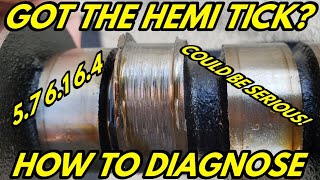
- If you have a HEMI V8 and hear a persistent ticking noise along with the misfire, be prepared for the possibility of a more serious camshaft/lifter failure.
- Driving for an extended period with a misfire can cause expensive damage to your catalytic converter.
What's Unique About the 2014-2021 Dodge CHARGER

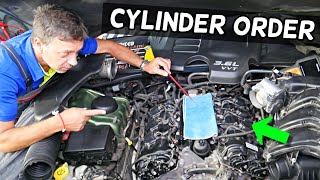
On the Dodge Charger, the location of cylinder #5 depends on your engine. 🎬 Watch: How to identify the cylinder order on your Charger. For V6 models, it's the rearmost cylinder on the passenger side. For all V8 HEMI engines, it's the third cylinder back on the driver's side. While ignition parts are the usual suspects for any engine, both powertrain families in the Charger have specific, well-documented mechanical failure points that can cause a P0305. The HEMI V8s (5.7L, 6.2L, 6.4L) are known for camshaft and lifter failure, often preceded by a distinct ticking sound. The 3.6L Pentastar V6 is known for failure of the rocker arm bearings, which also produces a ticking noise and can lead to camshaft damage.
Diagnostic Flowchart
Tap your situation to follow the diagnostic path that matches what you're seeing on this vehicle.
Symptoms You May Notice
- Rough or shaky idle.
- Flashing Check Engine Light, especially under acceleration.
- Hesitation or stumbling during acceleration.
- Noticeable loss of engine power.
- Engine vibrations.
- Fuel smell from the exhaust.
- A persistent ticking or tapping sound from the engine.
- Replacing oxygen sensors before diagnosing the misfire. An O2 sensor may report an issue, but it's usually a symptom of the misfire, not the cause.
- Assuming a ticking noise is a simple exhaust leak on HEMI engines. While exhaust manifold bolt leaks are common and cause a tick when cold, a tick that persists or worsens when hot is a strong indicator of lifter failure.
- Replacing only spark plugs and coils when a mechanical tick is present. If the misfire persists after ignition parts are swapped, mechanical inspection is necessary.
Most Likely Causes

- Faulty Ignition Coil 🔴 High Probability Ignition coils are a common wear item on most modern engines, including the various engines in the Charger.
How to confirm: Swap the ignition coil from cylinder 5 with another cylinder (e.g., cylinder 1). Clear the codes and drive. If the code changes to P0301, the ignition coil is bad. Also, inspect the coil's electrical connector for damage, as the wires can be damaged during spark plug changes.
Typical fix: Replace the faulty ignition coil. It is generally recommended to replace just the failing coil.
Est. part cost: $40-$90 - Worn or Fouled Spark Plug 🔴 High Probability Spark plugs are a routine maintenance item. The HEMI V8 engines use two spark plugs per cylinder, increasing the chance of a single plug failing.
How to confirm: After confirming the coil is good, remove the spark plug(s) from cylinder 5. Inspect for wear, damage, or fouling (black, wet, or white deposits). You can also swap the plug with another cylinder to see if the misfire follows.
Typical fix: Replace the spark plug(s) in cylinder 5. It is best practice to replace all spark plugs at the same time if they are near the end of their service life.
Est. part cost: $10-$30 per plug - Failed Camshaft Lobe / Lifter (HEMI V8 Engines) 🟡 Medium Probability The 5.7L, 6.2L, and 6.4L HEMI engines are known for a design issue where the roller on the valve lifter can fail, seizing and grinding down the camshaft lobe. This is often called the 'HEMI tick' and results in the valve not opening correctly, causing a persistent misfire. This is a widely discussed failure in owner forums.
How to confirm: Listen for a persistent ticking or tapping sound from the engine that gets louder as it warms up. A compression test on cylinder 5 may show lower-than-normal pressure, but not always. The ultimate confirmation is to remove the driver-side valve cover and observe the rocker arms while the engine is cranked (with fuel disabled). A rocker arm that moves less than the others points to a flattened cam lobe.
Typical fix: This is a major repair requiring replacement of the camshaft, all 16 lifters (often with an upgraded non-MDS design), head gaskets, and related components. 🎬 Watch: Full HEMI camshaft and lifter replacement with MDS delete. This repair can cost between $4,000 and $7,000 at a shop.
Est. part cost: $800-$2000+ - Clogged or Faulty Fuel Injector ⚪ Low Probability
How to confirm: Listen to the injector with a mechanic's stethoscope; it should have a consistent clicking sound. Compare it to an adjacent cylinder. You can also swap the injector with another cylinder; if the misfire code moves, the injector is the cause. A 'noid light' can be used to verify the electrical pulse is reaching the injector connector.
Typical fix: Replace the faulty fuel injector.
Est. part cost: $70-$150
Rare But Worth Checking
- Low Compression: If not caused by a failed lifter, low compression can result from a bad valve, worn piston rings, or a leaking head gasket. A compression test followed by a cylinder leak-down test is required to diagnose this.
- Vacuum Leak: A leak in the intake manifold gasket near cylinder 5 can lean out the air/fuel mixture and cause a misfire. A smoke test is the best way to identify a leak.
- Broken Rocker Arm Assembly (3.6L V6): On the V6 engine, there are many forum reports of the rocker arm needle bearings failing, causing the arm to seize or break. This leads to low compression and a misfire on the affected cylinder. TSB 09-002-17 addresses related valvetrain issues. The fix involves replacing the affected rocker arms and sometimes the camshaft if it is damaged.
Diagnosis Steps
- Confirm code P0305 with an OBD-II scanner. Note any other codes present.
- Identify Cylinder #5. For 3.6L V6 engines, it is the rear cylinder on the passenger's side. For 5.7L/6.2L/6.4L V8 HEMI engines, it is the third cylinder from the front on the driver's side.
- Swap the ignition coil from cylinder 5 with an easily accessible cylinder (like cylinder 1 or 3). Clear the codes, run the engine, and rescan. If the misfire code moves to the new cylinder (e.g., P0301), the ignition coil is faulty and needs replacement.
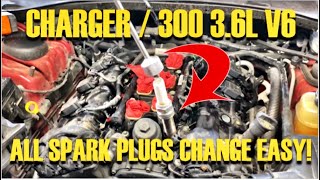
- If the misfire remains on cylinder 5, inspect and swap the spark plug(s) next. Move the plug from cylinder 5 to the cylinder you previously used. If the code follows the plug, it is faulty.
- If ignition components are good, check the fuel injector. Listen for a steady clicking sound. If it's silent or irregular, it may be clogged or failed. Consider swapping it with another cylinder to confirm.
- For HEMI V8s, listen carefully for a metallic ticking sound. If present, perform a compression test. If compression is good (e.g., 180+ PSI), the next step is to remove the valve cover to visually inspect the valvetrain for a wiped camshaft lobe, which can occur even with good compression.
- For 3.6L V6s, listen for a ticking sound from the passenger side of the engine. If present, a broken rocker arm is a very high probability. A compression test will show very low pressure on cylinder 5.
- If all else fails, check for vacuum leaks using a smoke machine or perform a cylinder leak-down test to pinpoint internal mechanical issues.
Parts You'll Likely Need
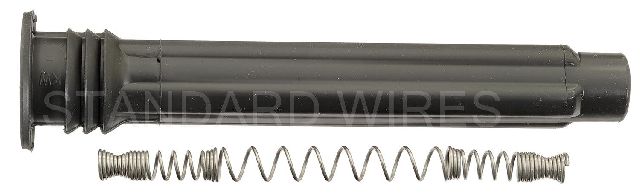
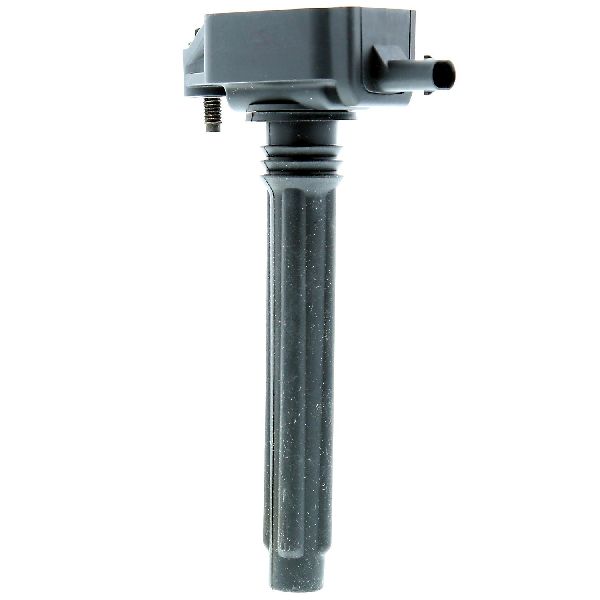
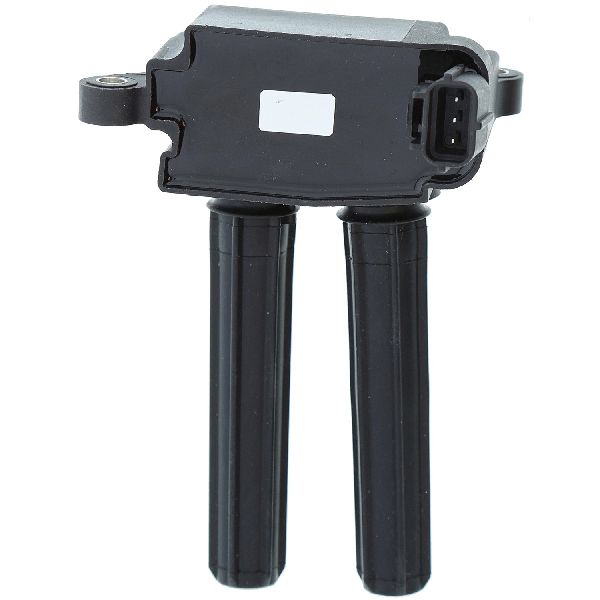
- Ignition Coil
(OEM #68238603AA (V8) / 5149168AI (V6))— This is the most common failure point for a single-cylinder misfire. It's responsible for creating the high voltage needed to fire the spark plug.
Trusted brands: Mopar, NGK, Delphi
OEM price range: $60-$90
Aftermarket price range: $40-$70 - Spark Plug
(OEM #SP142510AC (5.7L HEMI) / SP148183AB (3.6L V6))— Spark plugs are a maintenance item that wear out over time, leading to a weak or inconsistent spark.
Trusted brands: NGK, Champion
OEM price range: $15-$25
Aftermarket price range: $8-$15 - Camshaft and Lifter Kit (HEMI V8)
(OEM #Multiple, often purchased as a kit. Aftermarket non-MDS kits are a popular upgrade.)— In cases of lifter failure on HEMI engines, both the camshaft and all 16 lifters must be replaced to properly fix the issue and prevent recurrence. Metal shavings from the failure can contaminate the engine, requiring a thorough cleaning.
Trusted brands: Mopar, Melling, Comp Cams
OEM price range: $1000-$1500
Aftermarket price range: $700-$1200 - Rocker Arm Assembly (3.6L V6)
(OEM #05184296AH)— For the Pentastar V6, a ticking noise with P0305 is very often a failed rocker arm. It's recommended to replace all rockers on the affected bank.
Trusted brands: Mopar
Related Codes That Often Appear With This One
- P0300 — If the underlying cause, such as a failing camshaft or bad fuel, begins to affect other cylinders, a P0300 (Random/Multiple Cylinder Misfire) code may appear.
- P0205 — This code indicates a malfunction in the fuel injector circuit for cylinder 5. If you see P0305 and P0205 together, the fuel injector or its wiring is the most likely culprit.
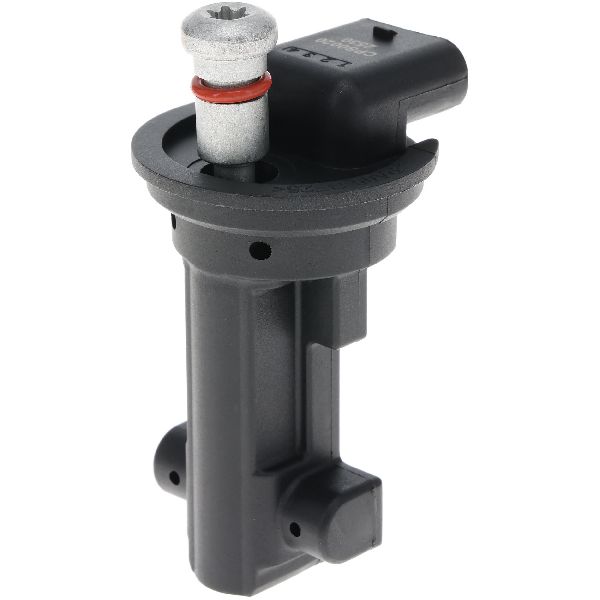
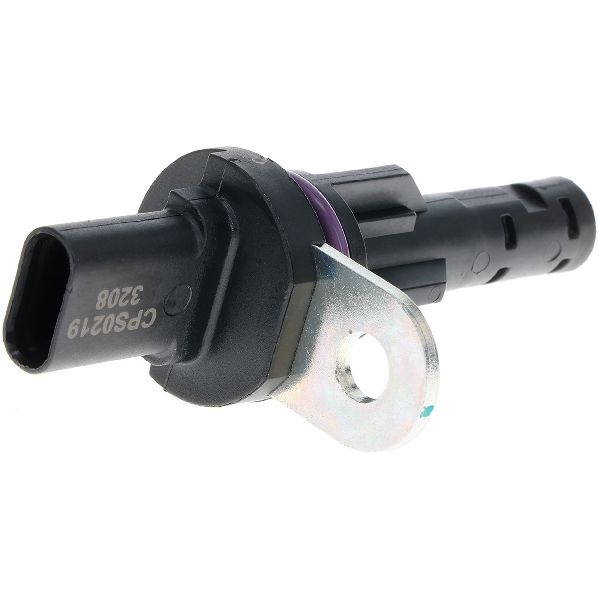
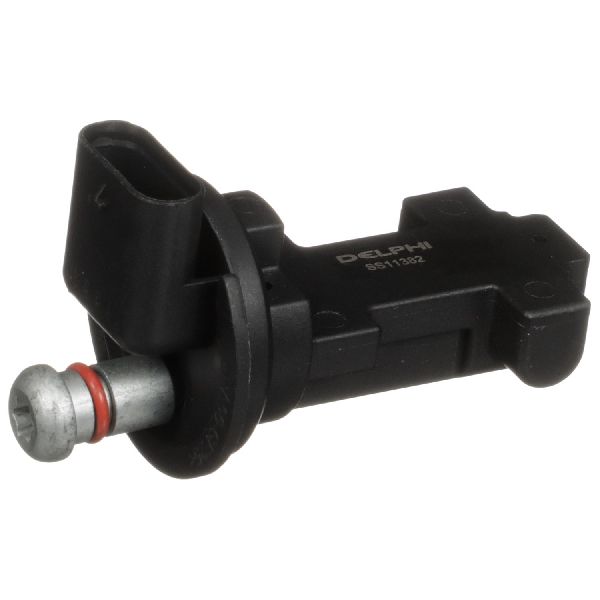
- P0339 — A failing crankshaft position sensor can cause intermittent misfire codes, including P0305, sometimes accompanied by stalling or hard starting.
Technical Service Bulletins (TSBs) & Recalls
- 1400322REVA - Lists P0305 as 'Cylinder 5 Misfire' and notes 'Rough idle' as a symptom.
- 18-094-16 - Lists P0305 as 'Cylinder 5 Misfire' among other potential diagnostic codes.
- 09-002-17 - Discusses an extended warranty for the left cylinder head on some 3.6L Pentastar engines due to valvetrain issues, highlighting the known problems with this engine family.
- 09-010-21 - Involves replacing exhaust rocker arm/lifter assemblies on 2021 3.6L engines for misfire and rough running conditions, even without a DTC being set.
Platform-Specific Known Issues

- A well-documented issue on 5.7L, 6.2L, and 6.4L HEMI engines is the failure of the valve lifter's roller bearing. This causes the lifter to seize and damage the camshaft lobe, resulting in a misfire and requiring extensive engine repair. This issue is often preceded by a 'HEMI tick' that is more pronounced when the engine is warm. Letting this issue continue can fill the engine with metal shavings, potentially requiring a full engine replacement.
- The 3.6L Pentastar V6 has a widely-known issue with premature failure of the rocker arm needle bearings. This failure causes a ticking noise, and if left unaddressed, the rocker arm can seize or break, destroying the camshaft lobe and causing a persistent misfire like P0305. TSBs like 09-002-17 and 09-010-21 have been issued for valvetrain problems on this engine family.
Mechanic-Grade Diagnostic Values
- Fuel Pressure (3.6L V6) — expected: Approximately 60 PSI. Failure: Significantly lower pressure (e.g., below 40 PSI) indicates a weak fuel pump or clogged filter.
- Fuel Pressure (General Chrysler) — expected: Approximately 39 PSI (269 kPa) with vacuum line disconnected from regulator.. Failure: Pressure not rising when the vacuum line is disconnected, or pressure significantly below spec.
- Spark Plug Gap — expected: 0.024 to 0.071 inches (General). Failure: Gap is outside the specified range or the plug shows physical damage.
Hidden / Shadow Codes Worth Checking
- Mode 6, Test ID $53 (example): Mode 6 data allows viewing of misfire counts per cylinder for the current and last 10 driving cycles. This can reveal which cylinder is misfiring intermittently even if the misfire count is not yet high enough to set a P030x code or turn on the check engine light. (see via A professional scan tool with Mode 6 capabilities is required. The tool decodes the raw data to show misfire counts for each cylinder.)
Scan Tool Commands That Help
- wiTECH or advanced professional scan tool: Cylinder Power Balance Test / Cylinder Contribution Test — Use this test when a misfire is felt but it's unclear which cylinder is at fault, or to confirm the location of the misfire. The tool deactivates one cylinder at a time (by cutting fuel or spark) and measures the RPM drop. A cylinder with a small or no RPM drop is not contributing power correctly.
- wiTECH: Reprogram PCM — For specific model years and engine combinations, a software update may be available to fix misfire detection logic or related issues. TSB 18-046-15 for 2015 5.7L models is an example where a PCM flash can resolve certain misfire DTCs.
Wiring & Ground Locations
- K16 & K38 Circuits — These are circuits within the wiring harness between the PCM and the engine. Specifically, K16 is the coil control circuit and K38 is the injector control circuit for cylinder 5.. A service manual diagnostic procedure for P0305 involves checking the K16 (coil) and K38 (injector) circuits for opens, shorts to ground, or shorts to voltage at the PCM C2 connector.
- G305 — For RWD Chargers, this ground point is located behind the right quarter panel (in the trunk area).. This ground serves multiple components, including the oil pump solenoid and rear lighting. While not a primary engine ground, poor grounding can cause unpredictable electrical issues that could potentially manifest as sensor or actuator problems.
- Main Engine/PCM Grounds — Key grounding points are typically found on the alternator bracket, on the cylinder head, and as a ground post under the front passenger seat carpet.. Corroded or loose PCM power and ground circuits are a potential cause of misfire codes. The PCM relies on a solid ground reference for all sensor readings and actuator commands.
Real Owner Repair Stories
- DodgeForum.com user (2009 Dodge Charger SE 3.5L) — Slight difference in idle, followed by Check Engine Light with code P0305.
❌ Tried (didn't work) Spark plugs, Ignition coil, Fuel injector
✅ What actually fixed it The owner took the cylinder head to a machine shop. They found a 'knick in the head' and a bent valve guide for cylinder 5. After machining the head and replacing the rocker arm assembly, the P0305 code was resolved. - Jeep JK-Forum user (relevant 3.6L Pentastar issue) (2015 Jeep JKU (3.6L Pentastar)) — Engine ticking, misfires, and badly chewed up camshafts.
❌ Tried (didn't work) Initial diagnosis was unclear.
✅ What actually fixed it Under a lifetime warranty, the dealer replaced the camshafts on both sides, all rocker arms, and all lifters. This is the standard repair for the common Pentastar valvetrain failure that also affects the Charger.
"I Checked Everything" — The Actual Cause
- In HEMI V8 engines, it's common for a P0305 misfire to persist even after ignition parts (coils, plugs), fuel parts (injector), and vacuum leak checks (smoke test) all come back clean. Even a compression test might show good numbers. The hidden cause in these cases is often a failing valve lifter roller that is starting to wear down the camshaft lobe. The valve isn't opening fully, causing the misfire, but the issue is purely mechanical and won't be found with standard electrical or fuel system diagnostics.
OEM Part Supersession History
5184296AD, 5184296AE, 5184296AF, 5184296AG→5184296AH— This is the rocker arm for the 3.6L Pentastar V6. The part has been revised multiple times, likely to address the widespread issue of premature bearing failure causing ticking and misfires.
Heads up: The newest part number (5184296AH) should be used for all repairs to ensure the latest design is installed.
Model Year Variations Within This Range
- 2014-2020 (3.6L V6): The known rocker arm failure is a potential issue across this entire range. However, reports suggest the problem was most frequent in earlier model years (pre-2016), with a sharp decrease in complaints for later years, though the possibility of failure still exists.
- 2015 (5.7L V8): For vehicles built on or before April 29, 2015, FCA issued Technical Service Bulletin #18-046-15. This bulletin involves reprogramming the PCM with updated software to address several DTCs, including P0307 (Cylinder 7 Misfire), and improve engine performance during MDS transitions. While this TSB doesn't list P0305 specifically, it shows that PCM updates were a factory solution for misfire issues on this specific model year.
Helpful Videos
Used OEM Parts in Stock


New Aftermarket Parts Available

The information in this article is provided for general reference and educational purposes only. Vehicle specifications, procedures, and part compatibility can vary by production date, trim level, and region. Always consult your vehicle's factory service manual and verify part numbers before purchasing or performing repairs. Safety-critical components such as airbags, seat belts, and braking systems should be installed by a qualified professional.
- Dodge CHARGER:
- 🎬 Helpful Videos
- 🛍️ Shop This Part
- What's Unique About the 2014-2021 Dodge CHARGER
- Diagnostic Flowchart
- Symptoms You May Notice
- Most Likely Causes
- Rare But Worth Checking
- Diagnosis Steps
- Parts You'll Likely Need
- Related Codes That Often Appear With This One
- Technical Service Bulletins (TSBs) & Recalls
- Platform-Specific Known Issues
- Mechanic-Grade Diagnostic Values
- Hidden / Shadow Codes Worth Checking
- Scan Tool Commands That Help
- Wiring & Ground Locations
- Real Owner Repair Stories
- "I Checked Everything" — The Actual Cause
- OEM Part Supersession History
- Model Year Variations Within This Range
- 🎟️ Get 5% Off