

P0305 on 2018-2025 Chrysler Pacifica: Cylinder 5 Misfire Causes and Fixes
P0305 indicates a misfire in cylinder #5. On the Pacifica's 3.6L V6, this is most often caused by a failed ignition coil or a worn spark plug. Swapping the coil from cylinder 5 to another cylinder is a quick, no-cost diagnostic step. However, be alert for a ticking noise, as this code can also be an early sign of the engine's known rocker arm failure.
- P0305 on a Pacifica means cylinder #5 is misfiring.
- The most likely causes are a bad ignition coil or spark plug. A simple coil swap is the first diagnostic step.
- Accessing cylinder 5 (rear bank) requires removing the upper intake manifold, adding labor time and requiring new gaskets.
- Listen for a ticking noise, as this could point to the 3.6L Pentastar's known rocker arm failure, a more serious mechanical issue.
- If the check engine light is flashing, stop driving immediately to prevent catalytic converter damage.
What's Unique About the 2018-2025 Chrysler PACIFICA

The 2018-2025 Chrysler Pacifica uses the 3.6L Pentastar V6 engine, which is generally reliable but has a well-documented history of valvetrain issues, specifically with rocker arm bearings failing. While a P0305 code is often a simple ignition issue, on this platform it can sometimes be an early symptom of this deeper mechanical problem, often accompanied by a distinct ticking noise known as the 'Pentastar tick'. The manufacturer's own Technical Service Bulletin #09-011-25 explicitly links misfire DTCs (including P0305) with "Valvetrain noise," corroborating this connection.
Diagnostic Flowchart
Tap your situation to follow the diagnostic path that matches what you're seeing on this vehicle.
Symptoms You May Notice
- Rough or shaky idle
- Rough running engine
- Flashing or solid Check Engine Light
- Noticeable loss of power and sluggish acceleration
- Valvetrain ticking or tapping noise that increases with engine RPM
- Poor fuel economy
- Hesitation during acceleration
- Replacing only the spark plugs when the ignition coil is the actual cause.
- Replacing fuel injectors before performing the simple ignition coil swap test.
- Assuming a simple tune-up will fix the issue when a ticking noise indicates a deeper mechanical rocker arm problem.
- Repeatedly replacing ignition components when the underlying cause is a slow head gasket leak causing the plug to foul.
Most Likely Causes

- Faulty Ignition Coil 🔴 High Probability Coil-on-plug systems are common failure points on many modern engines due to constant heat and vibration. It's a frequent first point of failure for a single-cylinder misfire.
How to confirm: Swap the ignition coil from cylinder 5 with another cylinder (e.g., cylinder 3). Clear the codes and drive the vehicle. If the code changes to P0303 (Cylinder 3 Misfire), the coil is faulty. On the transverse-mounted 3.6L, the rear bank (firewall side) contains cylinders 1, 3, and 5 from passenger to driver side. Cylinder 5 is on the driver's side, closest to the firewall.
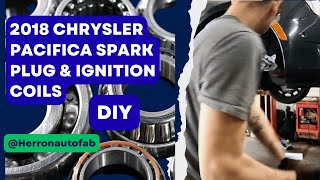
Typical fix: Replace the faulty ignition coil. It is recommended to use a quality OEM or aftermarket brand. It's also wise to apply a small amount of dielectric grease to the new coil boot. Since accessing cylinder 5 requires removing the upper intake manifold, many owners choose to replace all three rear coils (1, 3, 5) at the same time. 🎬 Watch this step-by-step guide to replacing coils and spark plugs.
Est. part cost: $35-$120 - Worn or Defective Spark Plug 🔴 High Probability Chrysler issued TSB #09-013-20 REV. A for some 3.6L engines, including the 2020 Pacifica, where original spark plugs could develop internal cracks, leading to misfires. The TSB recommends replacing all six plugs if a misfire is detected due to this known manufacturing issue. While the service interval is 100,000 miles, plugs can fail earlier.
How to confirm: After ruling out the ignition coil, remove the spark plug from cylinder 5. Inspect it for wear, carbon fouling, oil contamination, or cracks in the porcelain. A coolant-fouled plug (clean, white, or sweet-smelling) points to a more serious head gasket issue.
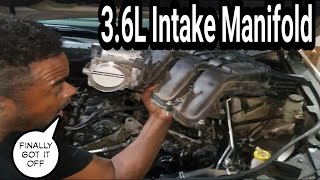
Typical fix: Replace the spark plug. If the plugs are near their service life, or if a TSB-related failure is suspected, it is best practice to replace all six. This requires removing the upper intake manifold gaskets (Mopar P/N 5184562AC or kit 68535427AA) which must be replaced upon reassembly. 🎬 See how to properly remove the intake manifold for access.
Est. part cost: $10-$25 per plug - Failed Rocker Arm/Lifter 🟡 Medium Probability The 3.6L Pentastar engine is known for premature failure of the rocker arm needle bearings, which can seize, causing the roller to drag on the camshaft lobe. This creates excessive valvetrain slack, leading to a misfire and a characteristic ticking sound. TSB 09-011-25 acknowledges this link between noise and misfires on the Pentastar Upgrade engine.
How to confirm: This requires removing the valve cover for the rear bank (Bank 1) to visually inspect the rocker arms for play and the camshaft lobes for scoring. A distinct, rhythmic ticking noise that increases with engine RPM is a strong auditory indicator.
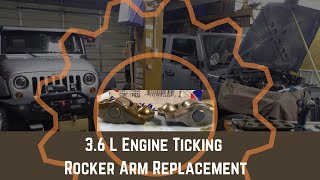
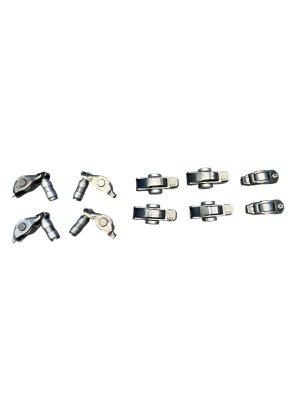
Typical fix: Replace all rocker arms (e.g., Mopar P/N 5047896AD) and lifters on the affected cylinder head. The camshaft must also be inspected for damage and replaced if any scoring is found. This is an advanced, labor-intensive repair. 🎬 Watch a mechanic demonstrate the Pentastar rocker arm replacement. Repair costs can range from $1,000 to over $2,000 at a shop.
Est. part cost: $200-$800 for parts, depending on camshaft replacement - Faulty Fuel Injector ⚪ Low Probability While less common than ignition issues, fuel injectors can become clogged or fail electronically, preventing the correct amount of fuel from reaching cylinder 5. An owner complaint (ODI #11531350) linked P0305 with P0205 (Injector Circuit Malfunction), pointing to a potential injector or wiring issue.
How to confirm: Listen to the injector with a mechanic's stethoscope; it should have a consistent clicking sound. A more advanced test involves checking the injector's resistance, which should be between 12 and 16 ohms. A 'noid light' can also verify it's receiving a pulse from the PCM. Swapping the injector with another cylinder is also possible but requires removing the intake manifold.
Typical fix: Replace the faulty fuel injector. This also requires removing the upper intake manifold.
Est. part cost: $60-$150
Rare But Worth Checking
- Head Gasket Leak: Multiple owner complaints and forum discussions point to head gasket failure as a cause for P0305 on this platform. A slow leak can allow coolant into cylinder 5, fouling the spark plug and causing a misfire, especially on startup. ODI #11593425 directly attributes a P0305 to a "blown head gasket and a coolant leak into the cylinder." Another complaint, ODI #11445531, states "Found head gasket leaking coolant into cylinder." This should be investigated if coolant loss is present or if the spark plug appears steam-cleaned.
- Low Compression: If all ignition and fuel components check out, a mechanical issue like a burnt valve, worn piston rings, or damage from a failed rocker arm could cause low compression, leading to a misfire. A compression test and cylinder leak-down test would be required to diagnose this.
Diagnosis Steps

- Read the code with an OBD-II scanner and confirm P0305 is present. Note any other codes, especially P0205 or P0300.
- Listen for a rhythmic ticking noise from the engine bay, particularly on the driver's side of the engine. A tick that increases with RPM strongly suggests a rocker arm issue.
- Perform an ignition coil swap. Move the coil from cylinder 5 (rear bank, driver's side) to cylinder 3 (rear bank, middle). This requires removing the upper intake manifold. Clear the codes and see if the misfire code moves to P0303. If it does, replace the bad coil.
- If the misfire remains on cylinder 5, inspect and replace the spark plug. While the intake manifold is off, it is highly recommended to replace all three rear plugs (1, 3, 5) and the upper intake manifold gaskets (e.g., Mopar P/N 5184562AC).
- Inspect the wiring and connector for the ignition coil and fuel injector on cylinder 5 for any damage or corrosion.
- If the issue persists, and especially if coolant loss has been noted, perform a cooling system pressure test and use a borescope to inspect cylinder 5 for coolant. A chemical test for combustion gases in the coolant can also confirm a head gasket leak.
- If a ticking noise is present and other steps fail, remove the valve cover to inspect the rocker arms and camshaft lobes for wear and damage.
- As a final step, a professional should perform a compression test and a cylinder leak-down test to check for mechanical engine damage like a bad valve or piston ring.
Parts You'll Likely Need
- Ignition Coil
(OEM #68223569AD)— This is the most common failure point for a single-cylinder misfire and the easiest to diagnose via swapping.
Trusted brands: Mopar, NGK, Delphi
OEM price range: $60-$100
Aftermarket price range: $35-$75 - Spark Plug
(OEM #RER8ZWYPB4)— A worn or fouled spark plug is the second most likely cause. TSB 09-013-20 REV. A notes a manufacturing defect in some plugs causing misfires.
Trusted brands: Mopar, NGK, Champion
OEM price range: $15-$25
Aftermarket price range: $10-$20 - Upper Intake Manifold Gasket Set
(OEM #5184562AC)— Required for any job that involves removing the upper intake manifold, such as replacing the rear bank's spark plugs, ignition coils, or fuel injectors. These are one-time-use gaskets.
Trusted brands: Mopar, Fel-Pro, Mahle
OEM price range: $25-$40
Aftermarket price range: $15-$30 - Rocker Arm
(OEM #5047896AD)— A known failure point on the 3.6L Pentastar engine, causing a ticking noise and misfires. If a rocker arm fails, it's recommended to replace all of them on that cylinder head.
Trusted brands: Mopar
OEM price range: $20-$35 per arm
Aftermarket price range: $15-$25 per arm
Related Codes That Often Appear With This One
- P0300 — If the misfire becomes more widespread due to a systemic issue (like a large vacuum leak or failing fuel pump), a P0300 (Random/Multiple Cylinder Misfire) may appear alongside P0305. It can also appear if multiple rocker arms are failing.
- P0205 — This code means "Injector Circuit/Open - Cylinder 5." An owner complaint (ODI #11531350) shows these two codes appearing together, indicating the problem is likely with the fuel injector for cylinder 5 or its wiring, not the ignition system.
Technical Service Bulletins (TSBs) & Recalls
- 09-011-25: Mentions P0301-P0306 misfire codes and symptoms including rough idle and valvetrain noise.
- 09-013-20 REV. A: Addresses P0301-P0306 misfire codes, which can be caused by cracked spark plugs, and notes a rough running engine symptom.
Platform-Specific Known Issues

- Rocker Arm Failure: The 3.6L Pentastar engine is known for rocker arm bearing failure, which causes a misfire and a ticking noise. TSB #09-011-25 mentions misfires along with "valvetrain noise," which directly relates to this common problem. [⭐ MANUFACTURER TSB — highest authority, 5, 24]
- Cracked Spark Plugs: TSB #09-013-20 REV. A was issued because the original spark plugs could develop internal cracks, leading to misfire codes including P0305.
Mechanic-Grade Diagnostic Values
- Fuel Injector Resistance — expected: 12.0 - 16.0 Ohms. Failure: A reading outside of this range indicates a faulty injector winding.
- Ignition Coil Secondary Resistance — expected: 15.70 kOhms. Failure: A significantly different reading suggests an internal coil failure.
- Ignition Coil Primary Resistance — expected: 0.46 Ohms. Failure: A reading far from this value points to a bad primary winding.
Hidden / Shadow Codes Worth Checking
- Mode $06, TID $53: This is not a trouble code, but a specific monitor within the generic OBD-II functions. It tracks the misfire count for each individual cylinder during the current and last driving cycles. A technician can view these counts before they are high enough to trigger a P0305 trouble code. (see via Requires a scan tool capable of reading Mode $06 data. Many affordable Bluetooth OBD-II dongles paired with smartphone apps like Torque Pro can access this information under 'Test Results'.)
Scan Tool Commands That Help
- Chrysler WiTech or equivalent professional scanner: Cylinder Power Balance Test — This function allows a technician to disable one cylinder at a time and measure the corresponding drop in engine RPM. If disabling cylinder 5 results in little or no RPM drop compared to other cylinders, it confirms that cylinder 5 is not contributing power, thus verifying the misfire.
Wiring & Ground Locations
- Fuse F07 — In the Power Distribution Center (under-hood fuse box) near the battery.. This 25-amp fuse supplies power to all ignition coils and fuel injectors. While a failure would likely cause multiple misfires (P0300), intermittent issues or a poor connection at the fuse block could potentially cause erratic behavior on a single cylinder.
- G100 / G101 / G102 — These are primary engine and chassis grounds located in the engine compartment, typically on the frame rail behind the headlight assembly or on the engine block itself.. A corroded or loose main ground can cause a wide range of electrical issues, including weak spark or erratic injector pulses that can lead to misfires. While not specific to cylinder 5, checking the main grounds is a crucial step in diagnosing any electrical fault.
- Cylinder 5 Injector/Coil PCM Pins — At the Powertrain Control Module (PCM) connectors. A wiring diagram is required for the specific pin numbers.. To definitively rule out a wiring issue, a technician can perform a continuity test from the injector and coil connectors back to the corresponding pins on the PCM. This checks for breaks or shorts in the harness.
Real Owner Repair Stories
- NHTSA ODI #11593425 (2018 Chrysler Pacifica, 53,000 miles) — Check engine light illuminated.
❌ Tried (didn't work) Not specified, but the code was diagnosed by a dealer.
✅ What actually fixed it The dealership diagnosed the P0305 code as being caused by a blown head gasket, which allowed coolant to leak into cylinder 5. The required fix was a head gasket replacement. - NHTSA ODI #11445531 (2018 Chrysler Pacifica) — Check engine light on.
✅ What actually fixed it The cause of the P0305 misfire was a head gasket leaking coolant into the cylinder. - NHTSA ODI #11531350 (2019 Chrysler Pacifica) — Check engine light intermittently illuminated.
✅ What actually fixed it The vehicle had both P0305 (Cylinder 5 Misfire) and P0205 (Injector Circuit/Open - Cylinder 5) codes, indicating the root cause was the fuel injector or its wiring, not an ignition or mechanical issue.
OEM Part Supersession History
68223569AB, 68223569AC→68223569AD— Standard part revision and improvement by the manufacturer.
Heads up: The parts are interchangeable; AD is the latest revision and should be used for all replacements.5047896AC→5047896AD— Standard part revision for the valvetrain rocker arm.
Heads up: The parts are interchangeable. The AD revision is the current replacement part for the 3.6L Pentastar engine.
Model Year Variations Within This Range
- 2018-2025: All Pacificas in this range use the 'Pentastar Upgrade' (PUG) engine, which was revised for 2016. This version features a two-stage variable valve lift (VVL), cooled EGR, and a higher 11.3:1 compression ratio compared to the first-generation Pentastar. It also uses different ignition coils and injectors. While a styling refresh occurred in 2021, the core engine mechanics relevant to a P0305 code remained the same.
Helpful Videos
We Have This Part in Stock



The information in this article is provided for general reference and educational purposes only. Vehicle specifications, procedures, and part compatibility can vary by production date, trim level, and region. Always consult your vehicle's factory service manual and verify part numbers before purchasing or performing repairs. Safety-critical components such as airbags, seat belts, and braking systems should be installed by a qualified professional.
- Chrysler PACIFICA:
- 🎬 Helpful Videos
- 🛍️ Shop This Part
- What's Unique About the 2018-2025 Chrysler PACIFICA
- Diagnostic Flowchart
- Symptoms You May Notice
- Most Likely Causes
- Rare But Worth Checking
- Diagnosis Steps
- Parts You'll Likely Need
- Related Codes That Often Appear With This One
- Technical Service Bulletins (TSBs) & Recalls
- Platform-Specific Known Issues
- Mechanic-Grade Diagnostic Values
- Hidden / Shadow Codes Worth Checking
- Scan Tool Commands That Help
- Wiring & Ground Locations
- Real Owner Repair Stories
- OEM Part Supersession History
- Model Year Variations Within This Range
- 🎟️ Get 5% Off