

P0305 on 2014 Chrysler 300: Cylinder 5 Misfire Causes and Fixes
P0305 on a 2014 Chrysler 300 indicates a misfire in cylinder 5. The most common fix is replacing the ignition coil and spark plug for that cylinder. However, on the 3.6L V6, it can be a sign of a failing rocker arm, and on the 5.7L HEMI V8, it can point to a failed MDS lifter, both of which are known mechanical issues for these engines.
- P0305 is a misfire on cylinder 5. Start diagnosis by checking the ignition coil and spark plug.
- Listen carefully for a ticking noise. On a 3.6L V6, this points to rocker arm failure. On a 5.7L V8, it strongly suggests lifter failure.
- Do not ignore a flashing check engine light or continued driving with a misfire, as it can destroy your catalytic converter.
- Due to the known mechanical issues with both available engines, a P0305 code on this car warrants a more careful diagnosis than just swapping ignition parts.
What's Unique About the 2014-2014 Chrysler 300
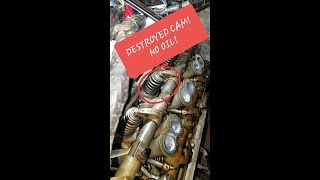
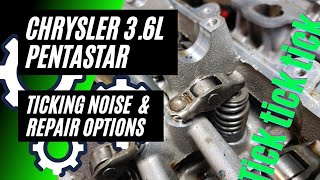
For the 2014 Chrysler 300, the cause of a P0305 misfire often depends on the engine. If equipped with the 3.6L Pentastar V6, this code, especially with a ticking noise, can be an early indicator of a well-documented valvetrain issue 🎬 Watch: See the Pentastar ticking noise and repair options. involving failing rocker arm bearings, which can seize and damage the camshaft. If the vehicle has the 5.7L HEMI V8, a P0305 code, particularly if accompanied by a ticking noise, is a classic sign of a failing lifter, often related to the Multi-Displacement System (MDS). The lifter's roller bearing can fail, causing it to grind the camshaft lobe, 🎬 Watch: How a dead cam and lifter causes this misfire. which sends metal shavings through the engine. While standard ignition parts are still the most common cause, these known mechanical weaknesses mean a P0305 should be investigated more thoroughly than on other vehicles.
Diagnostic Flowchart
Tap your situation to follow the diagnostic path that matches what you're seeing on this vehicle.
Symptoms You May Notice
- Rough or shaking idle.
- Hesitation or stumbling during acceleration.
- Noticeable loss of engine power.
- Flashing or solid Check Engine Light.
- A distinct ticking or tapping sound from the engine (can indicate a mechanical issue like a rocker arm or lifter).
- Reduced fuel economy.
- Replacing only the spark plugs when a faulty ignition coil is the root cause.
- Replacing ignition components when the actual cause is a mechanical failure like a rocker arm (3.6L) or lifter (5.7L), especially if a ticking noise is present.
- Attributing the 'Hemi tick' to an exhaust manifold leak when it is actually a failing lifter. While manifold leaks are common, a lifter tick is often more metallic and consistent.
Most Likely Causes
- Faulty Ignition Coil 🔴 High Probability
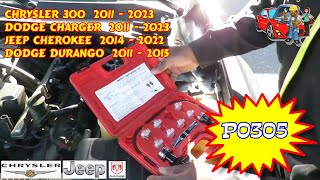
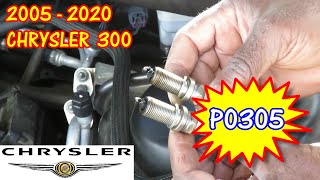
How to confirm: Swap the ignition coil from cylinder 5 with another cylinder (e.g., cylinder 3). Clear the codes and drive the vehicle. If the misfire code changes to P0303, the ignition coil is bad. This is the most common first diagnostic step. 🎬 See this quick walkthrough for diagnosing a P0305 code.
Typical fix: Replace the faulty ignition coil. It is often recommended to replace the corresponding spark plug at the same time.
Est. part cost: $45-$100 - Worn or Fouled Spark Plug 🔴 High Probability Spark plugs are regular maintenance items. The 5.7L HEMI uses two spark plugs per cylinder (16 total), increasing the chance of a failure.
How to confirm: Remove the spark plug from cylinder 5 and inspect it for wear, oil fouling, or damage. Compare it to a new spark plug. Check for proper gap; for the 5.7L HEMI, the gap is around 0.044 inches.
Typical fix: Replace the spark plug(s) for cylinder 5. It is best practice to replace all spark plugs at once if they are near the end of their service life.
Est. part cost: $10-$30 per plug - Failed Rocker Arm/Lifter (3.6L Pentastar V6) 🟡 Medium Probability The 3.6L Pentastar engine has a known issue with needle bearings in the rocker arms failing. This causes the roller to stop spinning and grind on the camshaft lobe, leading to a misfire and ticking noise.
How to confirm: Listen for a distinct ticking/tapping noise from the top of the engine, which increases with RPM. A visual inspection under the valve cover is required for definitive diagnosis, looking for a loose rocker arm or a scored camshaft lobe.
Typical fix: Requires replacing all rocker arms and lifters on the affected cylinder head. If the camshaft is damaged, it will also need to be replaced. This is a labor-intensive repair.
Est. part cost: $200-$800 for parts, depending on camshaft replacement. - Failed MDS Lifter (5.7L HEMI V8) 🟡 Medium Probability The Multi-Displacement System (MDS) lifters are a known failure point. The roller bearing on the lifter can fail, causing it to seize and grind against the camshaft lobe. This is often preceded by a 'Hemi tick'.
How to confirm: Listen for a persistent ticking noise. A compression test may show low compression in cylinder 5. The definitive diagnosis requires removing the cylinder head to inspect the lifters and camshaft. A failed lifter will often have a destroyed roller, and the corresponding cam lobe will be visibly worn down.
Typical fix: Replace all lifters (often with a non-MDS conversion kit for improved reliability) and the camshaft, as it is almost always damaged by the failed lifter. This is a significant and expensive repair.
Est. part cost: $800-$1500 for a cam and lifter kit. - Faulty Fuel Injector ⚪ Low Probability
How to confirm: Swap the fuel injector from cylinder 5 with another cylinder. If the misfire code follows the injector, it is faulty. This is more labor-intensive than swapping a coil as it may require removing the intake manifold. A P0205 code may appear alongside P0305 if the injector circuit is the issue.
Typical fix: Replace the faulty fuel injector.
Est. part cost: $50-$150
Rare But Worth Checking
- Vacuum Leak: A leak in the intake manifold gasket near cylinder 5 could lean out the air/fuel mixture and cause a misfire.
- Low Compression: Beyond lifter/rocker failure, this could be caused by a burnt valve or worn piston rings, though less common. A compression test would confirm this.
- Wiring Harness Issue: Damage or corrosion to the wiring for the ignition coil or fuel injector for cylinder 5 can cause an intermittent misfire.
- PCM/ECM Failure: In very rare cases, the Powertrain Control Module itself can fail, causing a false misfire code. This is usually diagnosed only after all other possibilities have been exhausted.
Diagnosis Steps
- Read the code with an OBD-II scanner to confirm P0305 is present and check for any other codes.
- Identify the engine (3.6L V6 or 5.7L V8) and locate cylinder 5. On the 3.6L V6, cylinder 5 is the middle cylinder on the passenger side (rear-most on the right bank). On the 5.7L HEMI V8, cylinder 5 is the third cylinder back on the driver's side.
- Listen for any ticking or tapping noises from the engine. A tick that increases with engine speed is a strong clue for a mechanical valvetrain issue (rocker arm or lifter).
- Perform an 'ignition swap test': Swap the ignition coil from cylinder 5 with another cylinder (e.g., cylinder 3). Clear the codes and run the engine to see if the misfire code moves to the new cylinder (P0303). If it does, the coil is bad.
- If the misfire does not move, repeat the swap test with the spark plug. Inspect the plug for wear, damage, or fouling.
- If ignition components are good, check the wiring and connector to the cylinder 5 ignition coil and fuel injector for any visible damage, corrosion, or loose connections.
- If a mechanical issue is suspected (due to noise or if other tests are inconclusive), perform a compression test on cylinder 5 to check for internal engine problems. Low compression points towards a mechanical failure.
- For a definitive mechanical diagnosis, remove the appropriate valve cover to visually inspect the rocker arms (3.6L) or the cylinder head to inspect lifters and the camshaft (5.7L).
Parts You'll Likely Need
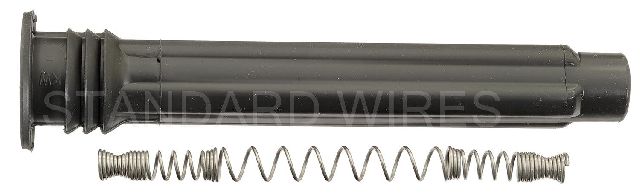
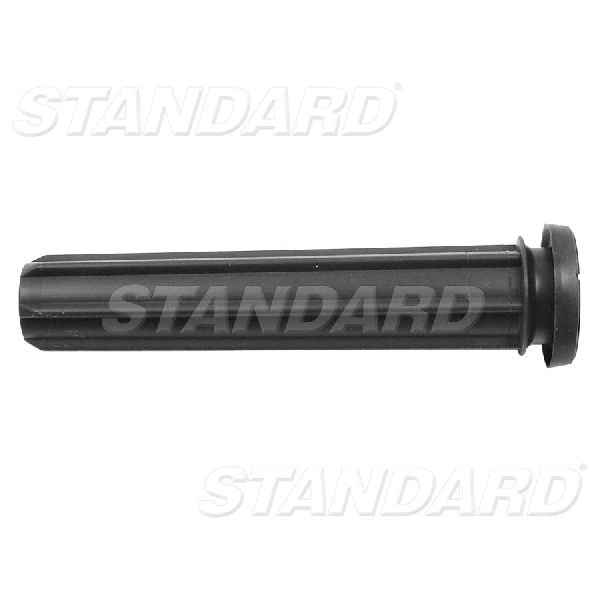
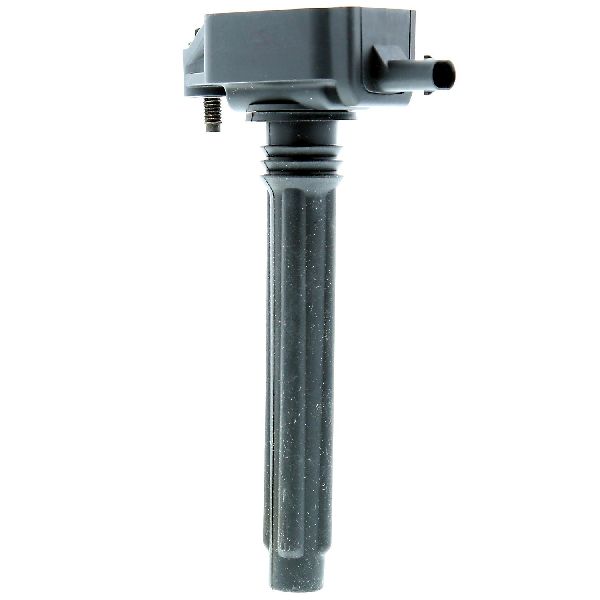
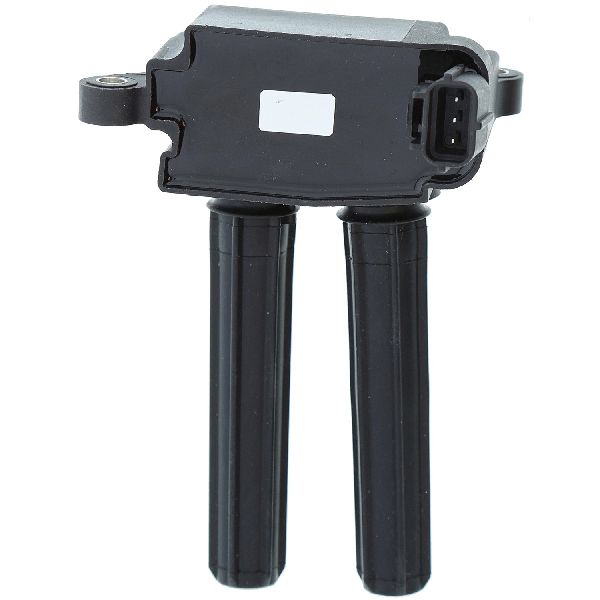
- Ignition Coil
(OEM #5149168AI)— This is one of the most common failure points for a single-cylinder misfire. The part number 5149168AI (or superseding number 5149168AJ) fits both the 3.6L and 5.7L engines for this year.
Trusted brands: Mopar, NGK, Denso, Bosch
OEM price range: $60-$90
Aftermarket price range: $45-$75 - Spark Plug (3.6L V6)
(OEM #SP149125AF)— Spark plugs are a routine maintenance item and a frequent cause of misfires. The 3.6L uses one plug per cylinder.
Trusted brands: NGK, Champion
OEM price range: $15-$25
Aftermarket price range: $10-$20 - Spark Plug (5.7L V8)
(OEM #SP143877AB)— Spark plugs are a routine maintenance item. The HEMI V8 uses two plugs per cylinder (16 total), making failures more probable.
Trusted brands: NGK, Champion
OEM price range: $15-$25
Aftermarket price range: $10-$20 - Rocker Arm & Lifter Kit (3.6L V6)
(OEM #5184296AH)— Addresses the common valvetrain failure on the Pentastar engine that causes misfires. It is recommended to replace all rocker arms and lifters on the affected cylinder head.
Trusted brands: Mopar, Mahle, Sealed Power
OEM price range: $300-$500
Aftermarket price range: $200-$400 - Camshaft and Lifter Kit (5.7L V8) — Required when a failed MDS lifter damages the camshaft. Kits often include a new camshaft, all 16 lifters, head gaskets, and bolts. Many owners opt for an MDS delete kit for improved long-term reliability.
Trusted brands: Mopar, Comp Cams, Texas Speed, Greene Racing
OEM price range: $1200-$1800
Aftermarket price range: $800-$1500
Related Codes That Often Appear With This One
- P0300 — If the misfire becomes more widespread or is intermittent across multiple cylinders, a P0300 (Random/Multiple Cylinder Misfire) may be triggered alongside P0305.
- P0205 — This code for 'Cylinder 5 Injector Circuit/Open' will often appear with P0305 if the fuel injector or its wiring is the root cause of the misfire.
Technical Service Bulletins (TSBs) & Recalls
- 18-094-16: Lists DTCs including P0305 - Cylinder 5 Misfire.
- S1709000010RevB: Links misfire complaints to potential excessive camshaft lobe wear and lifter failure.
Platform-Specific Known Issues
- TSB #S1709000010RevB notes that customer complaints of misfire, rough idle, and lack of power may be due to excessive camshaft lobe wear and lifter roller failure. This applies to both the 3.6L and 5.7L engines.
- For the 3.6L Pentastar V6, rocker arm bearing failure is a widely documented problem that leads to misfires. The failed rocker can score the camshaft, requiring a more extensive repair. A user on Chrysler Forum with a 2014 Dodge Journey (same engine) fixed a ticking and misfire by replacing a single failed rocker arm and other maintenance items for about $250 in parts.
- For the 5.7L HEMI V8, failure of the MDS (Multi-Displacement System) lifters is a common cause of ticking noises and misfire codes. The failure of the lifter's roller bearing is the typical root cause, which then destroys the camshaft lobe. A user on RamForum.com described their P0305 with a flashing CEL under load, a classic symptom that often points to a bad lifter and damaged cam.
Mechanic-Grade Diagnostic Values
- Ignition Coil Primary Resistance — expected: 0.38 - 0.60 Ohms. Failure: A reading significantly outside this range, or OL (open circuit), indicates a faulty coil.
- Ignition Coil Secondary Resistance — expected: 9.5 - 11.1 kOhms. Failure: A reading outside this range indicates a failure in the secondary winding.
- Fuel Injector Resistance (3.6L V6) — expected: ~12.0 - 12.5 Ohms. Failure: A reading significantly different from the other injectors (more than 0.5-1.0 Ohm deviation) or an open/short circuit indicates a bad injector.
- MDS Solenoid Resistance (5.7L V8) — expected: ~10 - 12 Ohms at room temperature. Failure: Resistance below 5 Ohms or an open circuit points to a failed solenoid.
- Cylinder Compression — expected: 100 - 200 PSI, with less than 20% variation between cylinders.. Failure: A reading in cylinder 5 that is significantly lower than the others points to a mechanical issue (e.g., bad valve, worn rings, or severe lifter/cam failure).
Hidden / Shadow Codes Worth Checking
- Mode 6, Test ID ~$53: Monitors the 'Misfire count for last 10 drive cycles' for each specific cylinder. This allows a technician to see if cylinder 5 is registering misfires even if the count is not yet high enough to trigger a P0305 trouble code. It is invaluable for diagnosing intermittent misfires. (see via A professional scan tool or an affordable OBD-II scanner with Mode 6 support. The data is presented as raw values that may need to be decoded, but many modern tools translate it.)
Scan Tool Commands That Help
- wiTECH (or advanced aftermarket): OBD II Monitors -> 'Which cylinder is misfiring' — Use this to view live misfire counts per cylinder. It helps confirm if the misfire is isolated to cylinder 5 or if other cylinders are also affected, which might suggest a P0300 (random misfire) condition.
- wiTECH (or advanced aftermarket): Actuator Test -> MDS Solenoid #5 Activation (5.7L V8) — This command energizes the MDS solenoid for cylinder 5. A distinct 'click' should be heard from under the intake manifold. If no click is heard, it indicates a failed solenoid or a wiring circuit problem, which is a direct cause of MDS-related lifter failure and misfires.
Wiring & Ground Locations
- PCM Connector C1, Pin 15 (5.7L) — At the Powertrain Control Module (PCM).. This is the pin for the ignition coil control circuit for cylinder 5 (DK BLU/YEL wire). A voltage or continuity test here can confirm if the PCM is sending a signal and if the wire is intact back to the coil.
- PCM Connector C1, Pin 18 (5.7L) — At the Powertrain Control Module (PCM).. This is the pin for the fuel injector control circuit for cylinder 5 (BRN/ORG wire). Testing this pin can rule out a wiring issue between the PCM and the injector.
- G101 / G901a — Main engine compartment grounds, typically on the right or left front inner fender/frame rail.. A corroded or loose main engine ground can cause intermittent and hard-to-diagnose electrical problems, including weak spark or erratic sensor readings that can lead to a false misfire code.
- Engine Block to Chassis Ground — A braided strap or heavy gauge wire running from the engine block to the vehicle's chassis/frame.. This is the primary ground path for the engine's electrical system. If compromised, the ignition coils may not receive a sufficient ground to produce a strong spark, leading to misfires.
Real Owner Repair Stories
- YouTube video title 'Hemi 5.7 P0305 Cylinder 5 Misfire - Dead Cam/Lifter' (2011 Chrysler 300C 5.7L HEMI) — P0305 cylinder 5 misfire.
❌ Tried (didn't work) Not specified, but diagnosis went straight to mechanical.
✅ What actually fixed it The camshaft was found to have a completely worn-out lobe for cylinder 5. The final fix was replacing the camshaft and associated lifters. - RamForumz thread member (2010 Ram 1500 5.7L HEMI (same powertrain)) — Flashing check engine light (P0305) under medium acceleration, noticeable ticking noise from engine.
❌ Tried (didn't work) Replaced spark plugs, Swapped ignition coil with another cylinder, Swapped fuel injector with another cylinder
✅ What actually fixed it The user was advised to inspect the valvetrain for a lifter/cam issue due to the ticking noise and failed parts swaps. Another user in the thread confirmed that a full camshaft and lifter replacement was the required fix for these exact symptoms. - Reddit user on r/mechanics (2016 Town & Country 3.6L Pentastar (same engine family)) — Hard misfire on cylinder 5 (P0305) immediately after a remanufactured long block was installed.
❌ Tried (didn't work) Swapped ignition coils, Swapped spark plugs, Replaced fuel injector
✅ What actually fixed it The story highlights that the original engine failed because rocker arms on cylinders 2, 5, and 6 failed and destroyed the camshaft lobes. The persistent P0305 on the new engine, after all external parts were ruled out, strongly implies an internal mechanical issue with the remanufactured engine itself (e.g., improperly seated rocker arm or defective lifter), demonstrating that even with a 'new' engine, this mechanical failure pattern is the ultimate root cause.
"I Checked Everything" — The Actual Cause
- On the 3.6L and 5.7L engines, it is common for a technician to perform a smoke test to check for vacuum leaks and find none. The P0305 misfire persists because the root cause is not an external leak but an internal mechanical failure. For the 3.6L, it's a failing rocker arm bearing; for the 5.7L, it's a seized MDS lifter roller. These issues affect the valve lift, causing a misfire that a smoke test cannot detect.
When the Usual Fixes Don't Work
- While standard procedure dictates checking ignition coils and spark plugs first, numerous owner and technician reports for the 2014 Chrysler 300 platform show that these common fixes often do not resolve a persistent P0305, especially if a ticking noise is present. In these documented cases, after spending time and money on ignition and fuel system parts, the actual cause was proven to be a catastrophic mechanical failure. For the 5.7L HEMI, this was consistently a failed MDS lifter that destroyed the camshaft lobe for cylinder 5. For the 3.6L Pentastar, the cause was a failed rocker arm bearing leading to camshaft damage. This evidence strongly suggests that for this specific vehicle, any P0305 accompanied by engine noise should have a mechanical inspection prioritized much earlier in the diagnostic process.
Helpful Videos
Used OEM Parts in Stock


New Aftermarket Parts Available

The information in this article is provided for general reference and educational purposes only. Vehicle specifications, procedures, and part compatibility can vary by production date, trim level, and region. Always consult your vehicle's factory service manual and verify part numbers before purchasing or performing repairs. Safety-critical components such as airbags, seat belts, and braking systems should be installed by a qualified professional.
- Chrysler 300:
- 🎬 Helpful Videos
- 🛍️ Shop This Part
- What's Unique About the 2014-2014 Chrysler 300
- Diagnostic Flowchart
- Symptoms You May Notice
- Most Likely Causes
- Rare But Worth Checking
- Diagnosis Steps
- Parts You'll Likely Need
- Related Codes That Often Appear With This One
- Technical Service Bulletins (TSBs) & Recalls
- Platform-Specific Known Issues
- Mechanic-Grade Diagnostic Values
- Hidden / Shadow Codes Worth Checking
- Scan Tool Commands That Help
- Wiring & Ground Locations
- Real Owner Repair Stories
- "I Checked Everything" — The Actual Cause
- When the Usual Fixes Don't Work
- 🎟️ Get 5% Off