

P0305 on 2012-2014 Chrysler 200 3.6L: Cylinder 5 Misfire Causes and Fixes
P0305 on a 2012-2014 Chrysler 200 with the 3.6L V6 engine indicates a misfire on cylinder 5. The most common causes are a faulty ignition coil or a worn-out spark plug. However, this engine is also known for valvetrain issues like failed rocker arms, which can cause this code, often accompanied by a distinct ticking sound.
- P0305 on a 2012-2014 Chrysler 200 means a misfire on cylinder 5, which is only possible on the 3.6L V6 engine.
- Always start your diagnosis with the simplest and most common causes: the ignition coil and spark plug for cylinder 5.
- A simple 'swap test' (moving the coil from cylinder 5 to another cylinder) is the fastest way to confirm a bad ignition coil.
- Listen carefully for a ticking sound from the engine, as this is a strong indicator of the known rocker arm failure on the 3.6L Pentastar engine, which requires a more involved repair.
- Do not drive the vehicle if the Check Engine Light is flashing, as this signals a severe misfire that can cause expensive damage to the catalytic converter.
What's Unique About the 2012-2014 Chrysler 200
This code only applies to the 3.6L V6 Pentastar engine, as the 4-cylinder option does not have a fifth cylinder. While ignition parts are a common cause, early Pentastar engines (2011-2013) are known for a specific left-cylinder head issue that caused misfires, leading Chrysler to extend the warranty (TSB 09-002-14). Although cylinder 5 is on the right bank, the entire engine family is widely known for valvetrain issues, specifically failing rocker arm needle bearings and lifters, which can cause a ticking noise along with a persistent misfire on any cylinder.
Diagnostic Flowchart
Tap your situation to follow the diagnostic path that matches what you're seeing on this vehicle.
Symptoms You May Notice
- Flashing or solid Check Engine Light
- Rough or vibrating idle
- Engine sputtering or jerking during acceleration
- Noticeable loss of power
- Reduced fuel economy
- Engine may be difficult to start
- Distinct ticking or tapping noise from the top of the engine, especially near the firewall.
- Replacing oxygen sensors. A misfire allows unburned oxygen to enter the exhaust, which can cause O2 sensors to report unusual readings and even set their own codes (like P113D or P113E). However, the O2 sensors are usually reporting the symptom, not causing the misfire itself.
Most Likely Causes
- Failed Ignition Coil 🔴 High Probability Coil-on-plug systems are common failure points due to constant exposure to high heat and vibration. It's the most frequent cause for a single-cylinder misfire and the easiest to diagnose.
How to confirm: Swap the ignition coil from cylinder 5 with another cylinder (e.g., cylinder 3, which is also on the rear bank). Clear the codes and drive the vehicle. If the code changes to P0303, the ignition coil is faulty.
Typical fix: Replace the failed ignition coil. It is often recommended to replace the spark plug at the same time. 🎬 Watch: How to replace spark plugs and coils on this engine.
Est. part cost: $30-$75 - Worn or Fouled Spark Plug 🔴 High Probability
How to confirm: After confirming the coil is good, remove the spark plug from cylinder 5. Inspect it for wear (eroded electrode), carbon buildup, or contamination from oil or coolant. The electrode should not be loose.
Typical fix: Replace the spark plug. It is best practice to replace all six spark plugs at once as they are a routine maintenance item, typically due every 100,000 miles.
Est. part cost: $10-$25 per plug - Failed Rocker Arm / Lifter 🟡 Medium Probability The 3.6L Pentastar engine is widely known for premature failure of the rocker arm's needle bearings. The bearings can fall out, causing the rocker arm to seize or move off-center, which grinds down the camshaft lobe. This prevents the valve from opening correctly, leading to a loss of compression and a persistent misfire, often accompanied by a distinct ticking sound.
How to confirm: Listen for a rhythmic ticking or tapping noise from the engine's top end, particularly from the rear bank near the firewall for cylinder 5. A mechanic can confirm by removing the valve cover to inspect the rocker arms and camshaft lobes for scoring, wear, or damage.
Typical fix: Requires replacement of all affected rocker arms and lifters for that cylinder bank. If the rocker arm has failed, the camshaft must be inspected for damage and replaced if any lobes are worn. This is a labor-intensive repair. 🎬 See this walkthrough on fixing the common Pentastar ticking noise.
Est. part cost: $100-$500+ (significantly more if camshafts are needed) - Clogged or Faulty Fuel Injector ⚪ Low Probability
How to confirm: If spark components are good, test the fuel injector. A code like P0205 (Injector Circuit/Open - Cylinder 5) often appears alongside P0305 if the injector is the cause. A mechanic can perform a fuel injector balance test. The resistance of a known-good injector for this engine is approximately 12 to 12.5 Ohms.
Typical fix: Replace the faulty fuel injector. This is more labor-intensive than ignition parts as it requires removing the upper intake manifold.
Est. part cost: $50-$150
Rare But Worth Checking
- Left Cylinder Head Failure (TSB 09-002-14): While TSB 09-002-14 Rev. B specifically calls out misfires on the left bank (cylinders 2, 4, 6), any major engine issue on this platform is worth noting. Chrysler issued an extended warranty (X56: 10 years/150,000 miles) for the left cylinder head on 2011-2013 models due to premature valve guide/seat wear causing a loss of compression. A cylinder leak-down test showing leakage of 25% or more is the diagnostic criteria. This is a separate issue from the rocker arm failures.
- Low Cylinder Compression: Internal engine damage, such as a burnt valve, worn piston rings, or a damaged camshaft lobe from a failed rocker arm, can cause low compression and a persistent misfire. A compression test followed by a cylinder leak-down test is required to diagnose this mechanical failure.
- Faulty PCV Valve: A stuck-open PCV (Positive Crankcase Ventilation) valve can create a vacuum leak, altering the air-fuel mixture and potentially causing misfires. On the 3.6L Pentastar, excessive oil blow-by through the PCV system can also lead to carbon buildup on valves, which can cause misfires and spark knock over time. The PCV valve is located on the valve cover and is a relatively inexpensive part to replace during a tune-up.
Diagnosis Steps
- Read the trouble codes with an OBD-II scanner to confirm P0305 and check for any other codes, especially P0300 or P0205.
- To rule out the ignition coil, swap the coil from cylinder 5 (rear bank, middle cylinder) with the coil from cylinder 3 (rear bank, front-most cylinder). Clear the codes and drive the car. If the code changes to P0303, the coil is bad.
- If the misfire remains on cylinder 5, inspect the spark plug. Check for wear, damage, correct gap, or fouling from oil or fuel.
- Listen carefully for a distinct ticking noise from the engine, especially from the rear (firewall side). This sound is a strong indicator of a rocker arm/lifter issue, a known problem on the 3.6L Pentastar.
- If ignition components are good and a ticking noise is present, the next step is to remove the valve cover for a visual inspection of the valvetrain (rocker arms, camshafts) for wear or damage.
- If no ticking is present and spark is good, check the wiring to the fuel injector on cylinder 5. If a P0205 code is also present, focus diagnostics here.
- If the cause is still not found, perform a cylinder compression test and a cylinder leak-down test to check for mechanical engine problems like bad valves, worn rings, or head gasket issues.
Parts You'll Likely Need
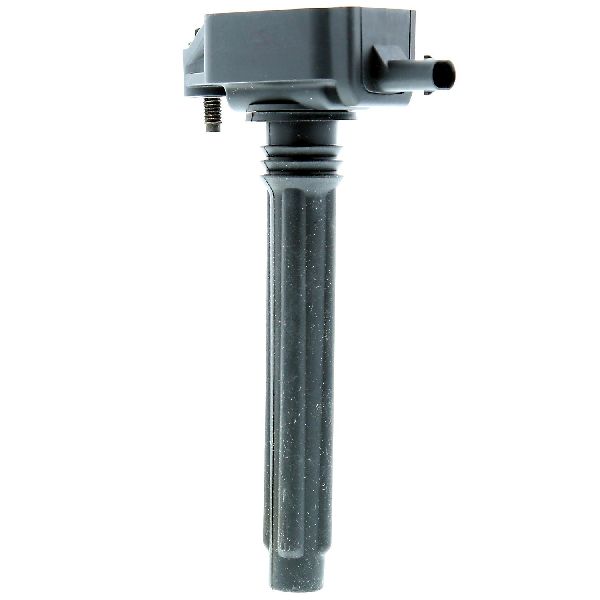
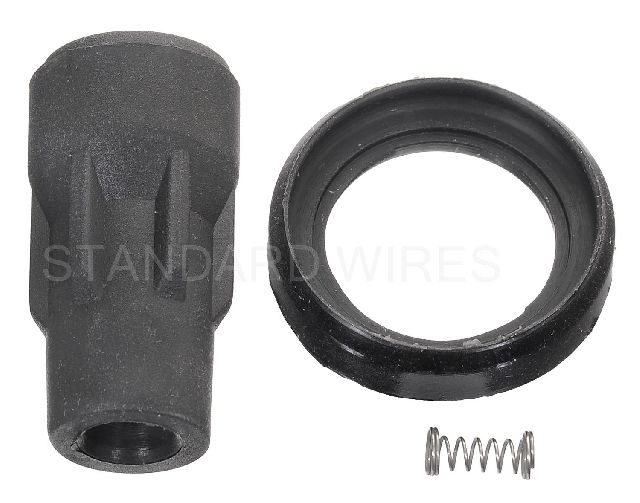
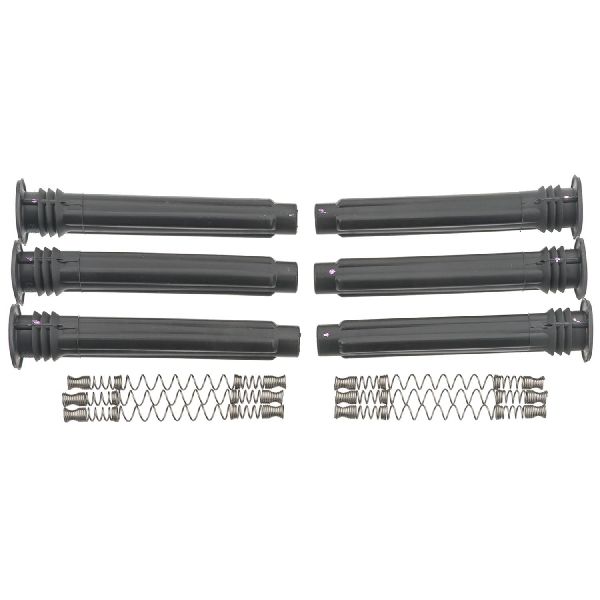
- Ignition Coil
(OEM #68223569AD)— This is one of the most common failure items for a single-cylinder misfire. It's a straightforward part to replace for diagnosis.
Trusted brands: Mopar, NGK, Delphi
OEM price range: $40-$60
Aftermarket price range: $25-$50 - Spark Plug
(OEM #SP149125AD)— Spark plugs are a maintenance item that wear out over time and can cause a weak or non-existent spark.
Trusted brands: Champion, NGK
OEM price range: $15-$25
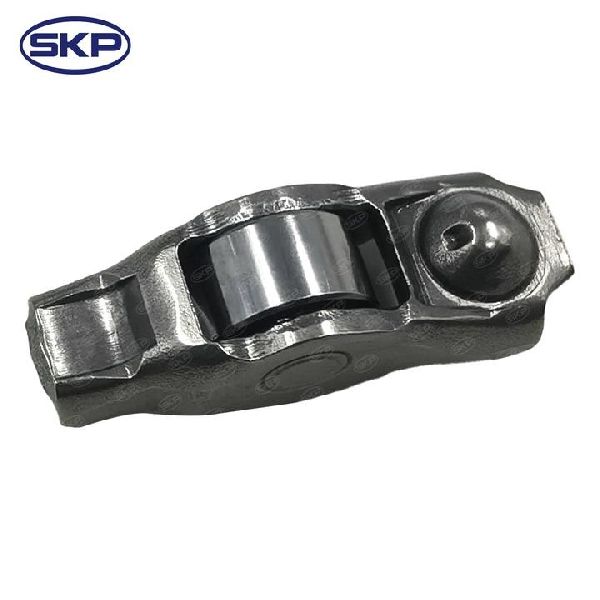
Aftermarket price range: $8-$15 - Rocker Arm
(OEM #5184296AH)— A well-documented failure point on the 3.6L Pentastar engine that leads to a ticking noise and misfires. This is an updated part number, superseding 5184296AD, AE, AF, and AG, which suggests a revised design.
Trusted brands: Mopar
OEM price range: $10-$20 each
Aftermarket price range: $5-$15 each
Related Codes That Often Appear With This One
- P0300 — If the condition causing the misfire on cylinder 5 begins to affect other cylinders or is intermittent, a P0300 (Random/Multiple Cylinder Misfire) code may be set.
- P0301, P0303 — Cylinders 1, 3, and 5 are on the same bank (Bank 1, the rear bank on this transverse engine). A problem affecting the entire bank, like a camshaft, timing issue, or a vacuum leak on that side of the intake manifold, could cause multiple misfire codes on this bank.
- P0205 — This code for 'Injector Circuit/Open - Cylinder 5' points directly to the fuel injector or its wiring as the cause of the misfire. If you see this code, diagnose the injector circuit first.
Technical Service Bulletins (TSBs) & Recalls
- 1810216: Confirms the definition of P0305 as Cylinder 5 Misfire among other misfire codes.
Platform-Specific Known Issues
- Extended Warranty for Left Cylinder Head (X56): Chrysler issued an extended warranty (10 years or 150,000 miles) for the left cylinder head on 2011-2013 vehicles with the 3.6L Pentastar engine, including the Chrysler 200. This was to address a condition causing misfires on cylinders 2, 4, and 6 due to excessive valve guide wear. While P0305 is for cylinder 5 (right bank), this highlights a known sensitivity in early Pentastar engines and is a separate issue from rocker arm failure.
- Rocker Arm/Valvetrain Failure: A more common issue across all years of the 3.6L Pentastar is the failure of rocker arm needle bearings. This leads to a distinct 'Pentastar tick' and can cause a misfire on any cylinder. If the failed rocker arm is not replaced, it will eventually destroy the camshaft lobe, requiring a much more expensive repair.
Mechanic-Grade Diagnostic Values
- Fuel Injector Resistance — expected: 12.0 - 12.5 Ohms. Failure: Readings significantly outside this range, such as 11.4 Ohms, may indicate a failing injector.
- Ignition Coil Primary Resistance — expected: ~0.355 - 0.59 Ohms. Failure: A reading far outside the expected range suggests a faulty coil.
- Engine Oil Pressure (Warmed Up, At Idle) — expected: 26 - 30 PSI. Failure: Significantly lower pressure could indicate internal engine wear or oiling system problems which can contribute to component failure.
- Engine Oil Pressure (Under Load) — expected: 60 - 70 PSI. Failure: Failure to build pressure under load points to issues with the variable displacement oil pump or other internal problems.
Hidden / Shadow Codes Worth Checking
- Mode $06 Misfire Data: Most advanced OBD-II scanners can access Mode $06 data, which includes misfire counts for each cylinder for the current and last 10 driving cycles. This allows a technician to see if cylinder 5 is actively misfiring and how frequently, even before the count is high enough to set a permanent P0305 code. (see via An OBD-II scan tool with Mode $06 support.)
Scan Tool Commands That Help
- wiTECH (Chrysler Dealer Tool) or advanced aftermarket scanners: Cylinder Misfire Counter / "Which cylinder is misfiring" — This function provides a live data view of misfire counts per cylinder. It is essential for confirming which cylinder is the problem, especially when dealing with an intermittent P0300 (random misfire) code, to isolate the fault to cylinder 5.
- Advanced aftermarket scanners (e.g., Xtool D8): Cam/Crank Relearn — After major engine work, such as replacing timing components, camshafts, or sometimes even after just clearing codes, the PCM may lose the correlation between the camshaft and crankshaft position sensors. Performing a Cam/Crank relearn forces the PCM to re-synchronize these signals, which can resolve persistent misfires that don't trace back to a specific component failure.
- Advanced bidirectional scan tools: Cylinder Drop Test / Power Balance Test — This active test allows the technician to disable one cylinder at a time (either by cutting fuel or spark). When a healthy cylinder is disabled, the engine RPM will drop noticeably. If cylinder 5 is disabled and there is little to no change in RPM or engine smoothness, it confirms that cylinder 5 was not contributing power, pinpointing it as the source of the misfire.
Wiring & Ground Locations
- G309 — Located on the left side of the engine compartment.. This is a primary ground point for the Powertrain Control Module (PCM) and various engine sensors. A poor connection at G309 can cause erratic sensor readings and intermittent issues, including phantom misfires. Ensuring this ground is clean and tight is a crucial step in diagnosing electrical faults.
- Cylinder 5 Ignition Coil Connector — On top of the right (rear) valve cover, on the middle ignition coil.. The signal to fire the coil comes from the PCM through this connector. A visual inspection for corrosion, pushed-out pins, or damaged wires is necessary. The 'Coil on plg drv 5' wire is the specific driver signal from the PCM for cylinder 5.
- Cylinder 5 Fuel Injector Connector — Under the upper intake manifold, connected to the middle fuel injector on the rear fuel rail.. The PCM sends a signal to this connector to operate the fuel injector. The specific wire is labeled 'Fuel inj 5 sig' in wiring diagrams. A fault in this circuit would typically set a P0205 code but can also be a root cause of a P0305 misfire.
Real Owner Repair Stories
- Jeep Wrangler JK Forum (2011 Jeep with 3.6L Pentastar, 245k miles) — Check Engine Light with misfires on cylinders 1, 3, and 5, mostly at idle or low load.
❌ Tried (didn't work) Replaced ignition coils, Replaced spark plugs, Replaced rocker arms and lifters, Replaced PCV valve, Replaced fuel injectors, Replaced throttle body (used), Replaced intake gaskets, Replaced O2 sensors
✅ What actually fixed it After all parts failed to fix the issue, the owner purchased a high-end scan tool (Xtool D8) and performed a 'Cam/Crank relearn' function. This procedure resolved most of the misfires, suggesting the root cause was a synchronization issue within the PCM rather than a mechanical part failure.
OEM Part Supersession History
5184085AC→5184085AD— This is a common supersession for the 3.6L Pentastar fuel injector. While the specific reason for the update is not officially documented, it often relates to minor improvements in manufacturing or materials.
Heads up: Using cheap, non-OEM, or even some remanufactured injectors on the Pentastar engine has been reported by owners to cause persistent rich codes (P0172/P0175) and rough running because the PCM is sensitive to precise flow rates. Sticking with genuine Mopar or high-quality new Bosch injectors is recommended.
Model Year Variations Within This Range
- 2011-2013: Early 3.6L Pentastar engines were subject to an extended warranty (X56) for the left cylinder head due to premature valve guide wear causing misfires on cylinders 2, 4, and 6. While this doesn't directly affect cylinder 5, it's a known issue for this specific year range.
- 2016+: Later versions of the Pentastar engine (not in this vehicle's range) were updated with Variable Valve Lift (VVL), which added complexity to the valvetrain with three-lobe camshafts. The 2012-2014 models have a simpler valvetrain design without VVL.
Helpful Videos
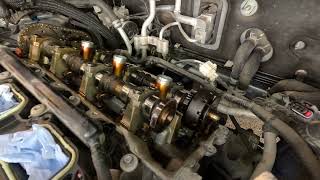
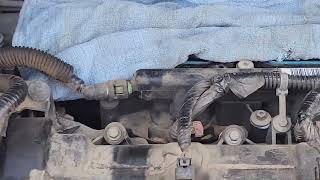
Used OEM Parts in Stock


New Aftermarket Parts Available
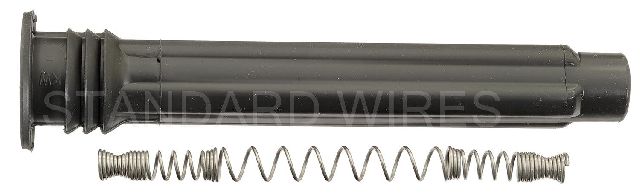
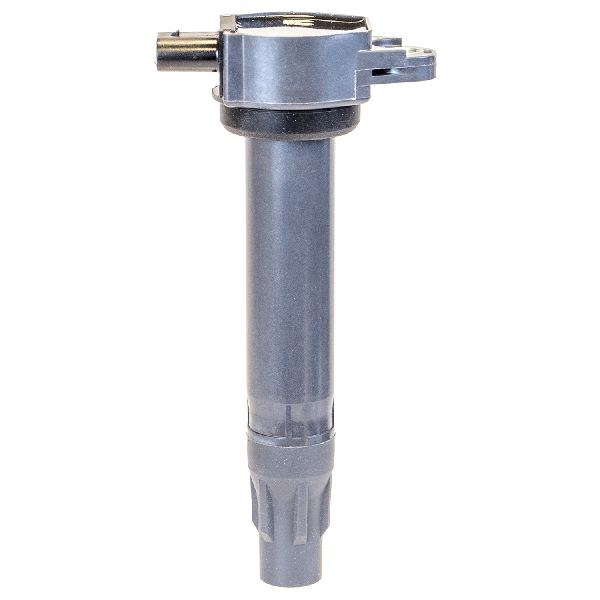

The information in this article is provided for general reference and educational purposes only. Vehicle specifications, procedures, and part compatibility can vary by production date, trim level, and region. Always consult your vehicle's factory service manual and verify part numbers before purchasing or performing repairs. Safety-critical components such as airbags, seat belts, and braking systems should be installed by a qualified professional.
- Chrysler 200:
- 🎬 Helpful Videos
- 🛍️ Shop This Part
- What's Unique About the 2012-2014 Chrysler 200
- Diagnostic Flowchart
- Symptoms You May Notice
- Most Likely Causes
- Rare But Worth Checking
- Diagnosis Steps
- Parts You'll Likely Need
- Related Codes That Often Appear With This One
- Technical Service Bulletins (TSBs) & Recalls
- Platform-Specific Known Issues
- Mechanic-Grade Diagnostic Values
- Hidden / Shadow Codes Worth Checking
- Scan Tool Commands That Help
- Wiring & Ground Locations
- Real Owner Repair Stories
- OEM Part Supersession History
- Model Year Variations Within This Range
- 🎟️ Get 5% Off