

P0305 on 2011-2018 Chevrolet Camaro: Cylinder 5 Misfire Causes and Fixes
For a P0305 code on a 2011-2018 Camaro, the most common culprits are a worn spark plug or a failed ignition coil on cylinder 5. Start by swapping the coil with an adjacent cylinder to see if the misfire follows. A new spark plug costs about $10-$25, and an ignition coil is around $40-$80 for an aftermarket part.
- P0305 means there is a misfire in cylinder #5.
- Do not drive if the check engine light is flashing to avoid catalytic converter damage.
- The most likely cause is a bad ignition coil or a worn spark plug.
- Always start diagnosis by swapping the cylinder 5 ignition coil with another cylinder to see if the problem moves.
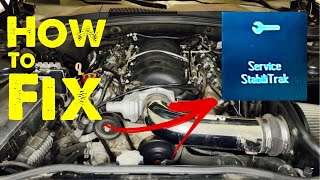
- A 'Service StabiliTrak' message is a common side effect of the misfire and does not usually indicate a separate problem.
What's Unique About the 2011-2018 Chevrolet CAMARO

The 2011-2018 Camaro spans two generations with different V6 and V8 engines. While the fundamental causes of a misfire are the same, specific parts and known issues can vary. For example, Technical Service Bulletin #21-NA-036 points to a damaged Oil Control Valve (OCV) solenoid as a potential cause for misfires including P0305 on 2016+ 3.6L LGX engines. Another TSB, #PIP4819A, highlights loose spark plug wires as a specific issue to check on earlier V8 models. [⭐] Owners on forums frequently report that the misfire triggers a "Service StabiliTrak" message on the dashboard, which is a secondary effect caused by the engine running rough and is not an issue with the stability system itself.
Diagnostic Flowchart

Tap your situation to follow the diagnostic path that matches what you're seeing on this vehicle.
Generation note: The 2011-2018 model years cover the end of the 5th generation (2011-2015) and the start of the 6th generation (2016-2018). The 5th gen offered 3.6L V6 (LFX) and 6.2L V8 (LS3/L99) engines. The 6th gen offered a different 3.6L V6 (LGX) and 6.2L V8 (LT1). P0305 applies to all V6 and V8 models. While causes are similar, part numbers for ignition and fuel components will differ between these engines.
Symptoms You May Notice

- Flashing or solid Check Engine Light
- Rough engine idle or shaking
- Noticeable loss of power and sluggish acceleration
- "Service StabiliTrak" message displayed
- Hesitation or sputtering during acceleration
- Increased fuel consumption
- Possible fuel smell from the exhaust
- Replacing all ignition coils when only one is faulty. The 'swap test' is crucial to isolate the single bad coil.
- Assuming a 'Service StabiliTrak' message means there is a problem with the traction control system itself, when it is actually a secondary warning 🎬 See how a misfire triggers the StabiliTrak message in this video. triggered by the engine misfire.
Most Likely Causes

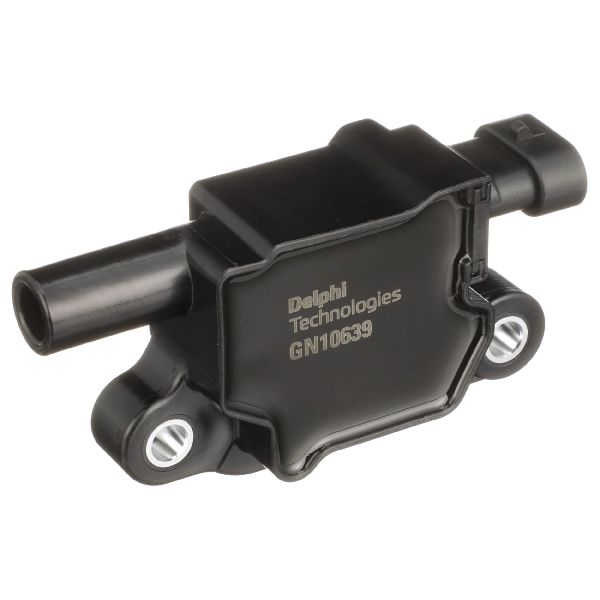
- Faulty Ignition Coil 🔴 High Probability Coil-on-plug systems are a common failure point on modern engines due to heat and vibration. A crack in the coil housing can cause spark to arc to the engine block instead of firing the plug.
How to confirm: Swap the ignition coil from cylinder 5 with an adjacent cylinder (like cylinder 3 on a V6 or cylinder 7 on a V8). Clear the codes and drive the vehicle. If the code changes to P0303 or P0307, the coil is bad.
Typical fix: Replace the faulty ignition coil. It is recommended to use a reputable brand like ACDelco or Delphi.
Est. part cost: $40-$80 - Worn or Fouled Spark Plug 🔴 High Probability Spark plugs are a regular maintenance item. A worn electrode, carbon fouling, or oil contamination can prevent a strong spark. In some cases, oil on the plug electrode points to more serious issues like bad valve seals or piston rings.
How to confirm: Remove the spark plug from cylinder 5 and inspect it. Look for a worn-down electrode, heavy carbon deposits, oil, or a cracked insulator. Compare it to a plug from a known good cylinder.
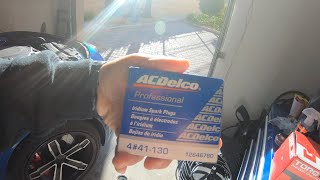
Typical fix: Replace the spark plug. It is best practice to replace all spark plugs at the same time to ensure consistent performance.
Est. part cost: $10-$25 per plug - Loose or Damaged Spark Plug Wire 🟡 Medium Probability TSB #PIP4819A specifically calls out loose spark plug wires as a cause for misfires on these vehicles. [⭐] The connection at the coil or plug can become loose, or the wire itself can be damaged by heat from aftermarket headers. Ensure the wire 'clicks' twice when installed on the coil pack.
How to confirm: Inspect the spark plug wire for cylinder 5. Ensure it is securely clicked onto both the ignition coil and the spark plug. Check for any visible damage, burns, or corrosion.
Typical fix: Reseat the wire firmly. If damaged, replace the spark plug wire set.
Est. part cost: $50-$100 for a set - Clogged or Faulty Fuel Injector 🟡 Medium Probability Fuel injectors can become clogged with deposits over time, preventing the correct amount of fuel from being delivered to the cylinder. This is a common point of failure after exhausting ignition-related causes.
How to confirm: A professional can perform a fuel injector balance test. A DIY method is to listen to the injector with a mechanic's stethoscope; it should have a regular, audible clicking sound. Swapping the injector with another cylinder is possible but is a more involved job than a coil swap.
Typical fix: Replace the faulty fuel injector. It's often recommended to replace the injector seal at the same time.
Est. part cost: $70-$150 - Damaged OCV Solenoid ⚪ Low Probability TSB #21-NA-036 notes that a damaged Oil Control Valve (OCV) solenoid can cause an oil leak and misfires, specifically mentioning P0305. This TSB is particularly relevant for the 2016+ 3.6L LGX V6 engine.
How to confirm: Inspect the OCV solenoid for signs of oil leakage or physical damage, such as a broken end piece which can get stuck in the camshaft cover bore.
Typical fix: Replace the damaged OCV solenoid and ensure no broken pieces are left in the engine.
Est. part cost: $50-$120
Rare But Worth Checking
- Low Engine Compression: If ignition and fuel systems check out, a mechanical issue could be the cause. This can be due to a worn piston ring, a bad valve, or a failed head gasket. A compression test is needed to confirm.
- Vacuum Leak: A leak in the intake manifold gasket near cylinder 5 can lean out the air-fuel mixture and cause a misfire, though this would often be accompanied by other codes.
- Broken Valve Spring: Forum users, particularly with V8 models (LS3 and LT1), have reported finding a broken valve spring after exhausting all other options. This was the confirmed cause for P0305 in some cases and requires removing the valve cover for inspection.
- Porous Cylinder Head: TSB #PIP5095G (now replaced by 21-NA-188) describes a rare condition where coolant or oil can leak into the spark plug tube due to porosity in the cylinder head casting, causing a misfire. The fix is to replace the entire cylinder head.
Diagnosis Steps
- Read the code with an OBD-II scanner to confirm P0305 and check for any other codes.
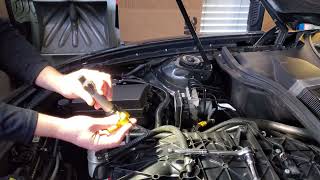
- Identify your engine (V6 or V8) to correctly locate cylinder 5. 🎬 Watch: Step-by-step diagnosis for a P0305 misfire on a V6. For V8s, it's the third cylinder back on the driver's side. For V6s, it's the rearmost cylinder on the passenger side.
- Inspect the spark plug wire (if applicable on V8s) for cylinder 5. Ensure it is fully seated on the coil and plug. Check for damage.
- Swap the ignition coil from cylinder 5 to a different cylinder (e.g., cylinder 3). Clear the codes and run the engine to see if the misfire moves to the new cylinder (e.g., P0303). If it does, the coil is bad.
- If the misfire does not move, remove and inspect the spark plug from cylinder 5. Look for wear, fouling, or damage. If it looks suspect, replace it.
- If the coil and plug are good, the issue may be with the fuel injector. Listen for a consistent clicking sound from the injector using a stethoscope.
- If the above steps don't resolve the issue, check for vacuum leaks around the intake manifold near cylinder 5.
- Perform a compression test on cylinder 5 to rule out mechanical engine problems like bad rings or valves.
- If you have a 3.6L LGX V6, inspect the OCV solenoid for leaks or damage as per TSB #21-NA-036.
- If all else fails, remove the valve cover to visually inspect for a broken valve spring, a known issue on some V8 models.
Parts You'll Likely Need

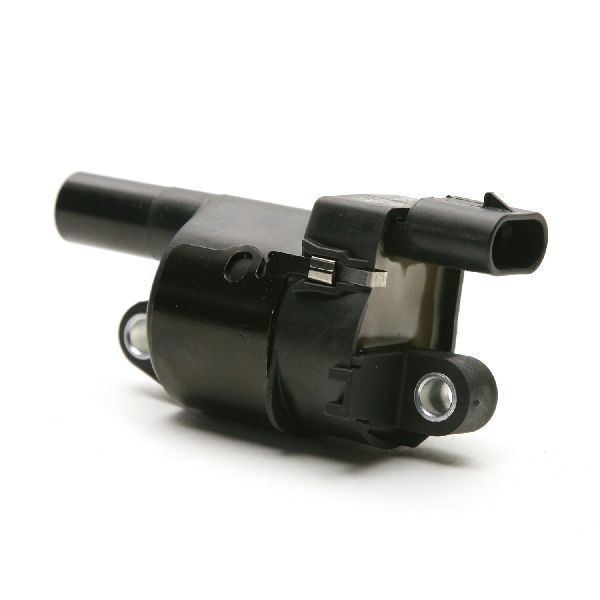
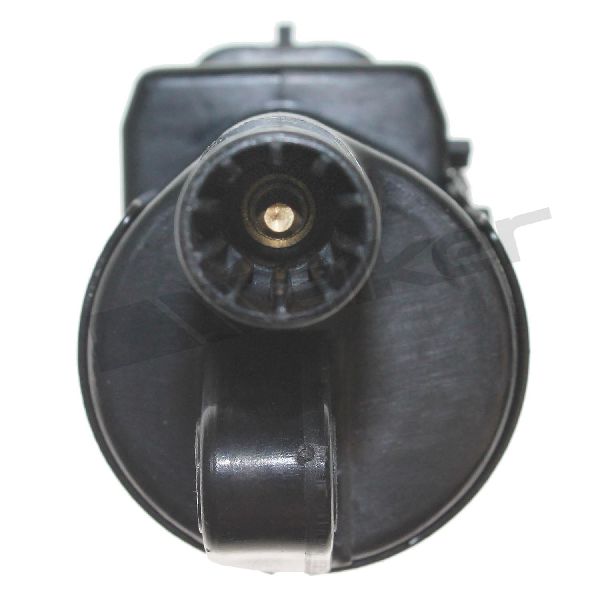
- Ignition Coil
(OEM #ACDelco D515C (V6 LFX); ACDelco D510C / 12611424 (V8 LS3/L99); ACDelco 12658217 (V8 LT1))— This is one of the most frequent failure points for a single-cylinder misfire. The coil-on-plug design exposes it to significant heat and vibration.
Trusted brands: ACDelco, Delphi, NGK
OEM price range: $60-$100
Aftermarket price range: $40-$80 - Spark Plug
(OEM #ACDelco 41-109 (V6 LFX); ACDelco 41-110 (V8 LS3/L99); ACDelco 41-162 (V8 LT1))— As a standard maintenance item, spark plugs wear out and are a primary cause of insufficient spark leading to a misfire.
Trusted brands: ACDelco Iridium, NGK Iridium IX
OEM price range: $15-$25
Aftermarket price range: $10-$20 - Spark Plug Wire Set (V8 Only)
(OEM #ACDelco 9748RR (V8 LS3/L99); ACDelco 9748SS (V8 LT1))— A loose or damaged wire can cause a weak or intermittent
Related Codes That Often Appear With This One
- P0300 — If multiple cylinders are misfiring, you will see a P0300 (Random/Multiple Cylinder Misfire) code alongside the specific cylinder code. This points to a problem affecting the whole engine, like low fuel pressure or a large vacuum leak.
- P0301, P0302, P0303, etc. — Seeing other specific cylinder misfire codes along with P0305 indicates a widespread issue. Both TSBs cited mention that P0305 may appear with other misfire codes. [⭐, ⭐]
Technical Service Bulletins (TSBs) & Recalls
- 21-NA-036
- PIP4819A
- 21-NA-278
- PIP5095G
Platform-Specific Known Issues
- TSB #PIP4819A notes that technicians should inspect for and replace any loose spark plug wires causing misfires (P0300-P0308) on 2011 models. [⭐]
- TSB #21-NA-036 identifies a potentially damaged OCV solenoid that can cause an oil leak and trigger misfire codes P0300, P0302, and/or P0305. [⭐]
- The ECM logic on the Camaro often disables the StabiliTrak system as a precaution when a misfire is detected, leading to a 'Service StabiliTrak' warning message that can confuse diagnosis.
Mechanic-Grade Diagnostic Values
- Fuel Injector Resistance (V6 Engines) — expected: 11.2 to 12.5 Ohms. Failure: A reading outside of this range indicates a faulty injector coil.
- Fuel Injector Resistance (V8 LT1/LS Engines) — expected: Approximately 12.0 to 14.5 Ohms. Failure: A significant deviation from this range or a large difference between injectors (e.g., one bank reading 14 Ohms and the other 17-18 Ohms) points to a problem.
- Engine Compression (V8) — expected: ~155 psi or higher, with minimal variation between cylinders. Failure: Significantly lower compression in cylinder 5 (e.g., 0 psi) points to a mechanical failure like a broken valve spring or bad piston rings.
Scan Tool Commands That Help
- GDS2 / Tech2 or high-end bidirectional scanner: Injector Balance Test / Cylinder Power Balance — Use this function after ruling out spark issues. The tool commands the ECM to shut off each injector one by one and measures the corresponding drop in RPMs or fuel rail pressure. A cylinder where the RPMs/pressure do not drop, or drop significantly less than others, indicates a non-functioning or clogged injector.
- GDS2 / Tech2 (for V8 engines with AFM): AFM Enable/Disable — If a collapsed Active Fuel Management (AFM) lifter is suspected on a V8, a technician can command AFM on and off. If the misfire or ticking noise changes or disappears when the AFM cylinders (1, 4, 6, 7) are deactivated, it strongly suggests a problem with an AFM lifter on one of those cylinders.
Wiring & Ground Locations
- G102 — Located at the left rear of the engine (driver's side, back of the cylinder head).. This is a primary ground point for the ignition coils on V8 engines. A loose or corroded G102 ground can cause intermittent and hard-to-diagnose misfires on one or more cylinders, including P0305.
- Passenger Cylinder Head Grounds (V6) — Two small ground studs are located on the back of the passenger side cylinder head.. On V6 engines, cylinder 5 is the rearmost cylinder on the passenger side. These grounds are critical for the ignition and sensor components on that bank. A loose connection here can directly cause a P0305 misfire.
- Ignition Coil Connector — The electrical connector on top of the ignition coil for cylinder 5.. The plastic locking tab can become brittle and break, or the connection can simply become loose over time due to engine vibration. A poor connection here will prevent the coil from receiving the signal to fire, causing a misfire. Always ensure it is fully seated and 'clicks' into place.
Real Owner Repair Stories
- Camaro5 Chevy Camaro Forum (2014 2SS Camaro (V8)) — Flashing CEL, Service StabiliTrak message, car went into limp mode shaking badly, smelled gas. Codes P0300, with dealer identifying misfires on #5 and #8.
❌ Tried (didn't work) Initial thought was a bad sensor due to the P0300 code.
✅ What actually fixed it A broken intake valve spring on cylinder #8 was found. After replacement, compression was good and the misfire on cylinder #5 also resolved, suggesting the severe imbalance from one dead cylinder caused a sympathetic misfire code on another. - YouTube user 'Diagnosing Cylinder Misfire on Camaro V6 P0305' (2013 Camaro V6) — P0305 code and Service StabiliTrak warning.
❌ Tried (didn't work) Swapping in a known good OEM ignition coil temporarily fixed the issue, but the code returned when the aftermarket coil was reinstalled.
✅ What actually fixed it The ignition coil connector was found to be very loose on the aftermarket coil. After removing, inspecting, and firmly reseating the connector until it clicked, the misfire was resolved. The final cause was an intermittent connection at the coil, not a faulty part. - Camaro5 Chevy Camaro Forum (2010 Camaro (engine not specified)) — P0305, rough running.
❌ Tried (didn't work) Initial diagnosis focused on common ignition and fuel parts.
✅ What actually fixed it The spark plug for cylinder 5 had oil on the electrode. The user traced this to a leaking valve cover gasket and spark plug tube seal. Replacing the valve cover gasket resolved the oil leak and the misfire.
OEM Part Supersession History
12629646, 12578224→12638824 (ACDelco D522C)— Part consolidation and potential design/material improvements.
Heads up: This part number is for the 2.4L 4-cylinder engine and is sometimes confused in parts catalogs. It does NOT fit the V6 or V8 Camaro engines. This highlights the importance of verifying fitment by VIN, not just by part number appearance. The correct V6 LFX coil is D515C.
Model Year Variations Within This Range
- 2011-2015 (5th Gen V6): These models use the 3.6L LFX engine. While reliable, it can be prone to timing chain wear at higher mileage, which could potentially manifest as misfire codes if timing becomes erratic.
- 2016-2018 (6th Gen V6): These models use the redesigned 3.6L LGX engine. It is a 'clean sheet redesign' with very few parts in common with the LFX. It features Active Fuel Management (V4 mode) and a different oiling system. TSB #21-NA-036 regarding a faulty OCV solenoid causing P0305 applies specifically to this engine generation.
- 2011-2015 (5th Gen V8): These models use the LS3 (manual) or L99 (automatic) 6.2L V8. The L99 features Active Fuel Management (AFM), making it susceptible to AFM lifter failures that can cause misfires.
- 2016-2018 (6th Gen V8): These models use the 6.2L LT1 V8 engine. While it also has AFM, the system is a newer generation. Broken valve springs have been noted as a cause of misfires on these engines.
Helpful Videos
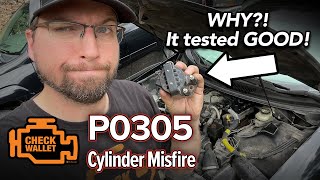
Used OEM Parts in Stock
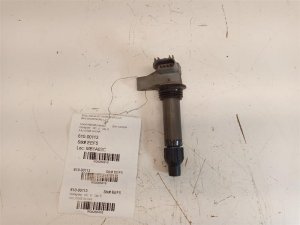
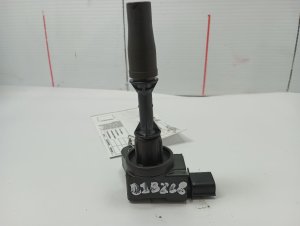

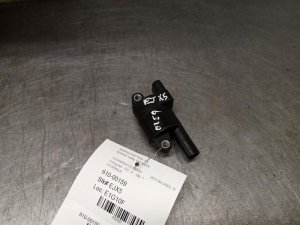
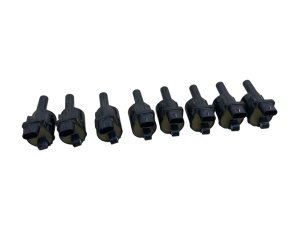
New Aftermarket Parts Available
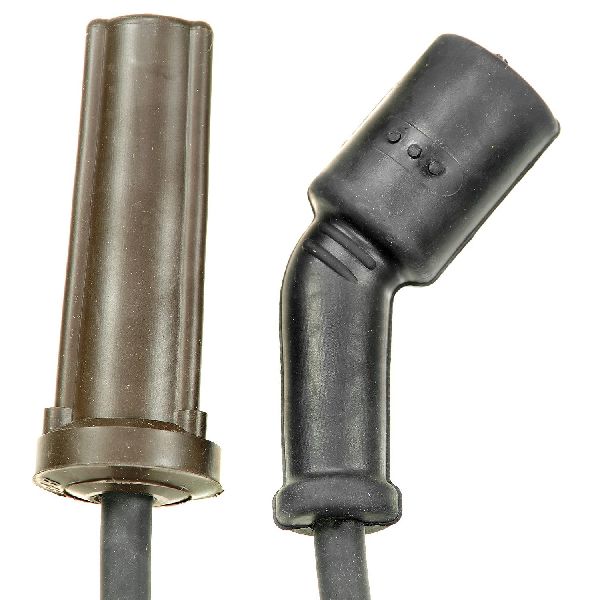


The information in this article is provided for general reference and educational purposes only. Vehicle specifications, procedures, and part compatibility can vary by production date, trim level, and region. Always consult your vehicle's factory service manual and verify part numbers before purchasing or performing repairs. Safety-critical components such as airbags, seat belts, and braking systems should be installed by a qualified professional.
- Chevrolet CAMARO:
- 🎬 Helpful Videos
- 🛍️ Shop This Part
- What's Unique About the 2011-2018 Chevrolet CAMARO
- Diagnostic Flowchart
- Symptoms You May Notice
- Most Likely Causes
- Rare But Worth Checking
- Diagnosis Steps
- Parts You'll Likely Need
- Related Codes That Often Appear With This One
- Technical Service Bulletins (TSBs) & Recalls
- Platform-Specific Known Issues
- Mechanic-Grade Diagnostic Values
- Scan Tool Commands That Help
- Wiring & Ground Locations
- Real Owner Repair Stories
- OEM Part Supersession History
- Model Year Variations Within This Range
- 🎟️ Get 5% Off