

P0305 on 2020-2021 Audi A6 Allroad: Cylinder 5 Misfire Causes and Fixes
P0305 on a 2020-2021 Audi A6 Allroad indicates a misfire in cylinder 5. The most common causes are a faulty ignition coil (OEM Part #06E905115G or newer) or a worn-out spark plug (OEM Part #06M905606F). A new ignition coil costs around $50-$150, and a spark plug is about $15-$30; both are simple DIY fixes. Swapping the coil from cylinder 5 to another cylinder is the fastest way to confirm the cause.
- P0305 means cylinder 5 (middle cylinder, driver's side) is misfiring.
- The most likely cause is a bad ignition coil, followed by a worn spark plug. Both are inexpensive and easy to replace.
- A simple way to diagnose a bad coil is to swap it with one from another cylinder and see if the fault code moves to that new cylinder.
- Do not ignore a flashing check engine light, as it indicates a severe misfire that can cause expensive damage to the catalytic converter.
What's Unique About the 2020-2021 Audi A6 ALLROAD
The 2020-2021 A6 Allroad uses a sophisticated 3.0L turbocharged V6 engine (part of the EA839 family) with a 48-volt mild-hybrid system. While the primary causes of a misfire are universal (spark, fuel, compression), this direct-injection engine is sensitive to the condition of its ignition components. The manufacturer has issued several Technical Service Bulletins (TSBs) related to misfire detection on this platform, which sometimes points to a software calibration issue that requires an update from a dealer rather than a physical part replacement. In some cases, misfires can also be an early symptom of a more serious internal engine issue related to rocker arm failure, a known problem in the EA839 engine family.
Diagnostic Flowchart
Tap your situation to follow the diagnostic path that matches what you're seeing on this vehicle.
Symptoms You May Notice
- Flashing or solid Check Engine Light
- Rough or vibrating idle
- Hesitation or stumbling during acceleration
- Noticeable loss of engine power
- Reduced fuel economy
- A smell of raw fuel from the exhaust
- Replacing the oxygen sensor. An O2 sensor might be flagged due to the misfire, but it's usually the symptom, not the cause.
- Assuming a major engine failure without performing basic ignition system checks first.
- Replacing fuel injectors before definitively ruling out spark plugs and ignition coils, which are far more common and easier to replace.
Most Likely Causes
- Faulty Ignition Coil 🔴 High Probability Ignition coils on modern VAG (Volkswagen Auto Group) engines are a common failure item due to high heat and electrical stress. Eldor is a known OEM supplier for these coils.
How to confirm: Swap the ignition coil from cylinder 5 with another cylinder (e.g., cylinder 4). Clear the codes, drive the car, and re-scan. If the code changes to P0304, the ignition coil is faulty. This is the universally recommended first diagnostic step.
Typical fix: Replace the faulty ignition coil. The OEM part number has several revisions; an example is 06E905115G. 🎬 Watch: Performance ignition coil and spark plug upgrade guide. Many owners and technicians recommend replacing all six coils at once as a preventative measure if they are original.
Est. part cost: $50-$150 - Worn or Fouled Spark Plug 🔴 High Probability Audi specifies a 40,000-mile replacement interval for spark plugs on this engine. Exceeding this interval, poor fuel quality, or other engine issues can lead to worn electrodes or fouling, preventing a strong spark.
How to confirm: After ruling out the ignition coil, remove the spark plug from cylinder 5. Inspect it for wear on the electrode, cracks in the porcelain, or heavy carbon/oil deposits. The OEM spark plug is part number 06M905606F.
Typical fix: Replace the spark plug in cylinder 5. It is best practice to replace all six spark plugs at the same time. The specified tightening torque is 20+5 Nm. A special thin-walled 14mm 12-point socket (e.g., VAS6919) is required for removal and installation. 🎬 Watch this DIY walkthrough for replacing coils and plugs.
Est. part cost: $15-$30 per plug - Faulty Fuel Injector 🟡 Medium Probability Direct-injection (TFSI) fuel injectors operate under high pressure and can become clogged with carbon deposits or fail electronically. As the B9/C8 platform ages, injector failures are becoming more reported.
How to confirm: This is more complex. A professional can perform a fuel injector balance test. A DIY method involves listening for a consistent clicking sound from the injector with a mechanic's stethoscope. A leaking injector may cause a strong fuel smell, while a clogged one will not. Swapping injectors is labor-intensive. A resistance test can be performed; injectors should measure between 13-16 ohms and be within 0.5 ohms of each other.
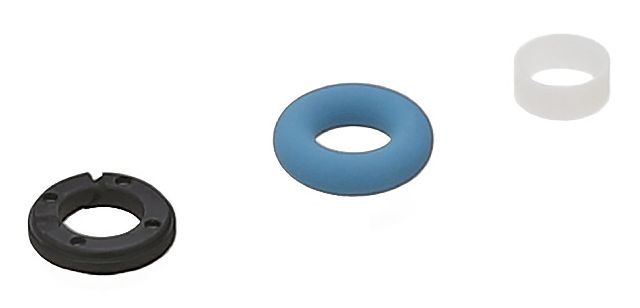
Typical fix: Replace the faulty fuel injector. This requires removing the fuel rail and replacing the injector's Teflon seals and O-rings is mandatory to prevent dangerous fuel leaks.
Est. part cost: $150-$300
Rare But Worth Checking
- Rocker Arm Failure: Early production EA839 engines (pre-August 2018) were prone to rocker arm bearing failure. This can cause a ticking noise that progresses to a misfire. If left unaddressed, it can lead to catastrophic engine damage requiring camshaft or full engine replacement. The updated part number is 0P2-109-417. 🎬 See what to expect during a rocker arm inspection.
- Low Cylinder Compression: While uncommon on a newer vehicle, internal engine issues like a failing piston ring or a problem with a valve can cause a loss of compression. A compression test is required to diagnose this. In some cases on the EA839 engine, this has led to a full engine replacement.
- Vacuum Leak: A leak in the intake system, particularly near cylinder 5, can lean out the air-fuel mixture and cause a misfire. This could be from a cracked hose or a failing gasket.
- Engine Control Module (ECM) Software: Audi has issued TSBs (e.g., 2069038) for misfire detection that are resolved with a software update. The update makes the ECM less sensitive to minor, non-critical misfire events, sometimes related to winter-blend fuels. If ignition and fuel components check out, it's worth checking with a dealer for available updates.
Diagnosis Steps
- Read the fault codes with an OBD-II scanner to confirm P0305 is present and note any other codes.
- Determine the location of cylinder 5. On the Audi 3.0L V6, the passenger side is Bank 1 (cylinders 1-2-3, front to back) and the driver's side is Bank 2 (cylinders 4-5-6, front to back). Cylinder 5 is the middle cylinder on the driver's side.
- Swap the ignition coil from cylinder 5 with the coil from cylinder 4.
- Clear the codes and drive the vehicle until the check engine light returns.
- Re-scan for codes. If the code is now P0304, the ignition coil is faulty and must be replaced.
- If the code remains P0305, swap the spark plug from cylinder 5 with the plug from cylinder 4 and repeat the test. Inspect the plug for fouling or wear.
- If the misfire still remains on cylinder 5, the problem is likely a fuel injector, wiring issue, or a mechanical compression problem.
- Visually inspect the wiring harness and connector for the cylinder 5 fuel injector and ignition coil.
- If the issue persists, check for applicable TSBs regarding an ECM software update. A professional diagnosis involving a fuel injector test or a cylinder compression/leak-down test is recommended to check for internal issues like rocker arm failure.
Parts You'll Likely Need
- Ignition Coil
(OEM #06E905115G (and later revisions))— This is the most common failure point for a single-cylinder misfire on this engine.
Trusted brands: Bosch, NGK, Eldor
OEM price range: $100-$150
Aftermarket price range: $50-$100 - Spark Plug
(OEM #06M905606F)— This is a routine maintenance item and the second most likely cause of a misfire if service intervals have been exceeded.
Trusted brands: NGK, Bosch
OEM price range: $25-$40
Aftermarket price range: $15-$30 - Fuel Injector — If spark components are good, a clogged or failed direct fuel injector is the next logical culprit.
Trusted brands: Bosch
OEM price range: $200-$300
Aftermarket price range: $150-$250
Related Codes That Often Appear With This One
- P0300 — If the misfire is intermittent or begins to affect other cylinders, a P0300 (Random/Multiple Misfire) code may appear alongside P0305.
- P0304, P0306 — These codes for adjacent cylinders (4 and 6) might appear if the root cause, like a vacuum leak or a failing ignition control module (on older platforms), affects the entire cylinder bank (Bank 2).
Technical Service Bulletins (TSBs) & Recalls
- A0123802069038_4 / TSB 2069038: Provides information for when the MIL is on with cylinder misfires, including P0305. The fix is often an ECM software update to change misfire detection sensitivity.
- A0124212069038_5: Provides information when the MIL is illuminated due to cylinder misfires, including P0305. This is a later revision of the same software-related TSB.
- A0123912069038_5: Provides information for when the MIL is illuminated with DTCs for cylinder misfires, including P0305. Also related to the software update campaign.
Platform-Specific Known Issues
- Audi has issued multiple Technical Service Bulletins (TSBs) that mention P030x misfire codes for this vehicle, indicating it's a recognized issue. The bulletins provided are: A0123802069038_4, A0124212069038_5, and A0123912069038_5. These TSBs often relate to updating the engine control module's software to be less sensitive to minor, non-critical misfire events, particularly with certain fuel blends.
- A more severe, though less common, issue on the EA839 engine is rocker arm failure, which can present as a persistent misfire. This requires more extensive mechanical repair.
Mechanic-Grade Diagnostic Values
- Low-Pressure Fuel System — expected: 4 to 6 bar (58 to 87 PSI). Failure: Pressure significantly below this range indicates a failing in-tank low-pressure fuel pump (LPFP) or a clogged filter.
- High-Pressure Fuel System (Direct Injection) — expected: Up to 200 bar (2900 PSI) under load. Failure: Inability to reach or maintain high pressure under load points to a failing High-Pressure Fuel Pump (HPFP) or a leak in the system.
- Fuel Injector Resistance — expected: 13 to 16 Ohms at room temperature. Failure: An open circuit (infinite resistance), a short (zero resistance), or a reading that deviates by more than 0.5-1.0 Ohm from the other injectors.
Hidden / Shadow Codes Worth Checking
- Live Misfire Counters: This is not a stored fault code, but live data that shows the number of misfire events for each cylinder in real-time. It is invaluable for seeing which cylinder is misfiring and under what conditions (idle, load, cold, hot) before a fault code is officially logged. (see via Using a VAG-specific scan tool like VCDS or OBDeleven. In VCDS, this is found in 'Advanced Measuring Values' by searching for 'misfire'. On older controllers, it was in Measuring Blocks 014, 015, and 016.)
Scan Tool Commands That Help
- VCDS (VAG-COM) or ODIS: Output Test Sequence (DTC 03) — This function allows a technician to command the ECU to activate specific components one by one, such as each individual fuel injector. This can confirm if the injector is receiving a signal and is mechanically actuating (an audible click should be heard) without having to remove it.
- ODIS (Official Dealer Software): Guided Fault Finding (GFF) — When a fault code like P0305 is present, GFF automatically generates a step-by-step diagnostic test plan for the technician to follow. It integrates component tests, expected values, and repair instructions, streamlining the process according to factory procedures.
Real Owner Repair Stories
- Reddit user on r/Audi (2020 Audi SQ5 (B9) with EA839 3.0T engine, 17,000 miles) — Persistent misfires on a single cylinder.
❌ Tried (didn't work) Not specified, but implied that basic ignition and fuel component swaps did not resolve the issue.
✅ What actually fixed it A dealer diagnosis found low compression in the misfiring cylinder. The issue was resolved with a complete engine replacement under warranty. The user noted this was a recurring issue for this cylinder in their region.
OEM Part Supersession History
06E-905-115, ...-A, ...-B, ...-C, ...-D, ...-E, ...-F→06E-905-115-G— Improved reliability and performance. Later revisions are designed to better withstand heat and electrical stress.
Heads up: The newest revision 'G' (or later) is recommended and is fully backward compatible. Using older stock is not advised.06M-109-417-H, 06M-109-417-L→0P2-109-417— Redesigned to address premature failure of the needle bearings in the original rocker arms on early EA839 engines.
Heads up: The updated part should be used for any repairs to prevent recurrence of the failure.
Model Year Variations Within This Range
- 2020-2021: There were no significant changes to the 3.0L V6 TFSI engine or its management system between the 2020 and 2021 model years that would affect the diagnosis or common causes of a P0305 code. Changes were primarily related to trim levels and optional packages.
Helpful Videos


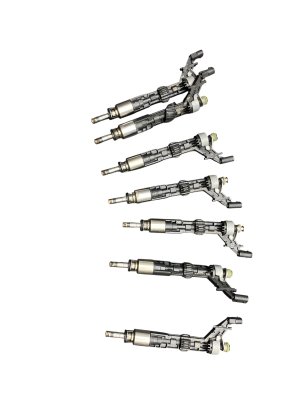
Used OEM Parts in Stock
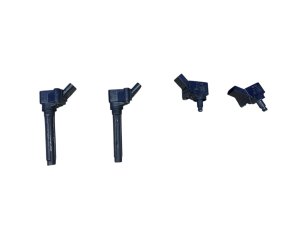
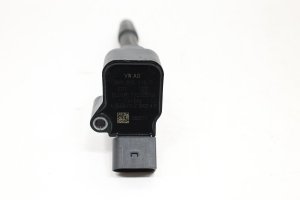
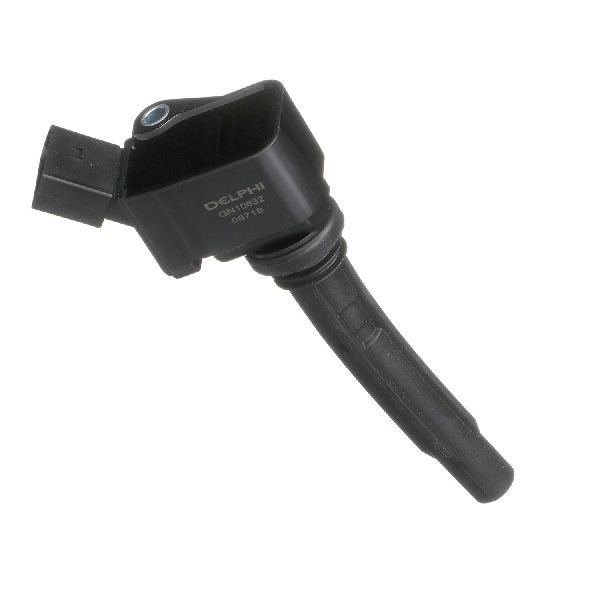
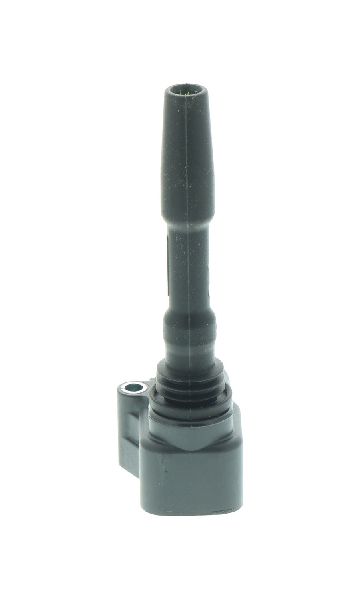
New Aftermarket Parts Available


The information in this article is provided for general reference and educational purposes only. Vehicle specifications, procedures, and part compatibility can vary by production date, trim level, and region. Always consult your vehicle's factory service manual and verify part numbers before purchasing or performing repairs. Safety-critical components such as airbags, seat belts, and braking systems should be installed by a qualified professional.
- Audi A6 ALLROAD:
- 🎬 Helpful Videos
- 🛍️ Shop This Part
- What's Unique About the 2020-2021 Audi A6 ALLROAD
- Diagnostic Flowchart
- Symptoms You May Notice
- Most Likely Causes
- Rare But Worth Checking
- Diagnosis Steps
- Parts You'll Likely Need
- Related Codes That Often Appear With This One
- Technical Service Bulletins (TSBs) & Recalls
- Platform-Specific Known Issues
- Mechanic-Grade Diagnostic Values
- Hidden / Shadow Codes Worth Checking
- Scan Tool Commands That Help
- Real Owner Repair Stories
- OEM Part Supersession History
- Model Year Variations Within This Range
- 🎟️ Get 5% Off