

P0304 on 2017-2022 Volkswagen Jetta: Cylinder 4 Misfire Causes and Fixes
P0304 on a 2017-2022 Jetta most often means a bad ignition coil or a worn-out spark plug for cylinder 4. A simple 'swap test' can identify the faulty part in under an hour. Expect to pay around $40-$80 for a new ignition coil or $15-$25 for a new spark plug. In some 2016-2017 models, an ECM software update may be required per a TSB.
- P0304 means cylinder 4 is misfiring. Do not drive if the check engine light is flashing.
- The most likely cause is a bad ignition coil or spark plug, which are DIY-friendly fixes.
- Use the 'swap test' to diagnose the ignition coil and spark plug before buying any parts.
- For 2016-2017 models, be aware that a dealer software update might be the required fix if ignition parts are good.
- Always replace spark plugs as a full set to ensure proper engine performance.
What's Unique About the 2017-2022 Volkswagen JETTA

The 2017-2022 Jetta, spanning the end of the Mk6 and the majority of the Mk7 generation, primarily uses the 1.4L TSI (engine code CZTA) or the later 1.5L TSI from the EA211 engine family. While generally reliable, these direct-injection engines are sensitive to ignition component health and fuel quality. Volkswagen has also issued Technical Service Bulletin V011620 (also numbered 2045602) for 2016-2017 models, indicating that the ECM's misfire detection could be overly sensitive, sometimes requiring a software update to resolve false P030x codes.
Diagnostic Flowchart
Tap your situation to follow the diagnostic path that matches what you're seeing on this vehicle.
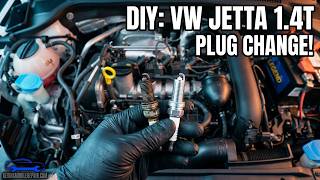
Generation note: This range covers two Jetta generations: the A6 (Mk6, 2017-2018) and the A7 (Mk7, 🎬 Watch this DIY guide for replacing spark plugs on 1.4T engines. 2019-2022). The primary engine in non-GLI models is the 1.4L TSI (EA211 family, code CZTA) and later the 1.5L TSI (EA211 Evo). The common causes and diagnostic process are nearly identical for both generations due to the shared engine architecture.
Symptoms You May Notice
- Check Engine Light is on or flashing
- Rough or shaky engine idle
- Hesitation or loss of power during acceleration
- Reduced fuel economy
- Engine stalling at stops
- Unusual engine noises like knocking or pinging
- Smell of unburnt gasoline from the exhaust
- EPC (Electronic Power Control) light may flash on the dashboard.
- Replacing the oxygen sensor, as a misfire can cause lean or rich readings, but the sensor is usually just reporting the problem, not causing it.
- Replacing the catalytic converter, which can be damaged by a persistent misfire but is not the root cause.
- Assuming a flashing EPC light is a separate throttle body issue, when it can be triggered by a severe misfire event.
Most Likely Causes

- Failed Ignition Coil 🔴 High Probability Coil-on-plug ignition systems are a common failure point on many modern engines, including VW's TSI engines, as they are subject to high heat and vibration. They are considered a frequent maintenance item by many owners.
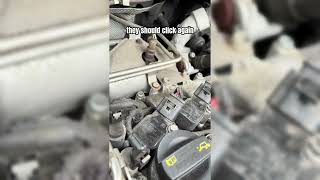
How to confirm: Swap the ignition coil from cylinder 4 with another cylinder (e.g., cylinder 3). Cylinder 4 is the cylinder closest to the transmission (driver's side in the US). Clear the codes and drive. If the code changes to P0303, the ignition coil is faulty. 🎬 See how to diagnose a P0304 misfire code on your Jetta.
Typical fix: Replace the failed ignition coil. It is often recommended to replace all four coils at the same time for preventative maintenance, but replacing just the failed one will solve the immediate problem.
Est. part cost: $40 - $80 - Worn or Fouled Spark Plug 🔴 High Probability Spark plugs are a regular maintenance item with a typical lifespan of around 40,000 miles on these engines. Turbocharged engines like the 1.4T can be harder on plugs, and extended service intervals can lead to wear that causes a misfire.
How to confirm: After ruling out the coil, swap the spark plug from cylinder 4 with another cylinder (e.g., cylinder 2). If the code moves to P0302, the spark plug is the issue. Visually inspect the plug for wear, carbon fouling, oil deposits, or an incorrect gap.
Typical fix: Replace the spark plug in cylinder 4. It is best practice to replace all spark plugs as a set to ensure even performance and avoid future misfires. Ensure they are gapped correctly, typically between 0.024 to 0.071 inches, though it's best to verify the exact spec for your 🎬 Watch: Step-by-step spark plug replacement for the Mk7 Jetta. model year.
Est. part cost: $15 - $25 per plug - Clogged or Faulty Fuel Injector 🟡 Medium Probability Direct injection (DI) fuel injectors operate under high pressure and can be susceptible to clogging from fuel deposits or carbon buildup over time, sometimes exacerbated by poor fuel quality.
How to confirm: This is more difficult for a DIYer. A mechanic can perform a fuel injector balance test. You can also swap the injector from cylinder 4 to another cylinder, but this is a more involved job. Listening for the injector's 'clicking' sound with a mechanic's stethoscope can confirm if it's activating.
Typical fix: Replace the fuel injector for cylinder 4. Some owners attempt a professional fuel system cleaning first, but replacement is often necessary for a permanent fix.
Est. part cost: $70 - $150
Rare But Worth Checking
- ECM Software Too Sensitive: VW released TSB V011620 (also listed as 2045602) for 2016-2017 Jettas with the 1.4T (CZTA) engine, stating the original ECM software was too sensitive for misfire detection. If ignition and fuel components are confirmed good, a dealer software update is the specified fix. This TSB also addresses other fault codes.
- Intake Valve Carbon Buildup: A known issue on many direct-injection engines, including the EA211 family. Carbon can build up on the back of the intake valves, restricting airflow and causing misfires, especially at idle or during cold starts. This typically requires professional cleaning (e.g., walnut blasting) and may become noticeable after 50,000-70,000 miles. Some owners have had their intake inspected with a borescope to confirm buildup before committing to the service.
- Loss of Compression: This is a serious mechanical engine issue, such as a bad valve, worn piston rings, or a damaged head gasket. A compression test is required to diagnose this. A healthy cylinder should have compression within 10-15% of the others. If cylinder 4 is significantly lower, further internal engine diagnosis is needed.
- Damaged Intake Manifold Runner Flaps: In some cases, the plastic flaps inside the intake manifold can break or become stuck, disrupting airflow to a specific cylinder and causing misfires. This may be accompanied by a P2004 code ('Intake Manifold Runner Control Stuck Open').
Diagnosis Steps

- Read the code with an OBD-II scanner and check for any other stored codes. Freeze frame data can show the engine conditions (RPM, load, temp) when the misfire occurred.
- Note if the Check Engine Light is solid or flashing. A flashing light means stop driving to prevent catalytic converter damage.
- Perform an ignition coil 'swap test': Move the coil from cylinder 4 to cylinder 3. Clear the codes and see if the misfire code changes to P0303. If it does, the coil is bad.
- If the coil is good, perform a spark plug 'swap test': Move the plug from cylinder 4 to cylinder 2. Clear the codes and see if the misfire code changes to P0302. If it does, the plug is bad.
- Inspect the wiring and connector for the ignition coil and fuel injector on cylinder 4 for any damage, corrosion, or loose connections. Damaged connector clips are common.
- If the misfire remains on cylinder 4, the issue may be the fuel injector. This is more complex to test and may require a professional.
- For 2016-2017 models, check with a VW dealer if TSB V011620 has been performed on your vehicle. If not, and other causes are ruled out, an ECM update may be the solution.
- If all else fails, perform an engine compression test to check for mechanical problems within cylinder 4.
- Consider a borescope inspection of the intake valves for carbon buildup, especially on vehicles with over 60,000 miles.
Parts You'll Likely Need
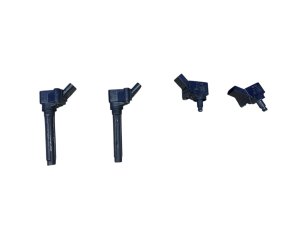
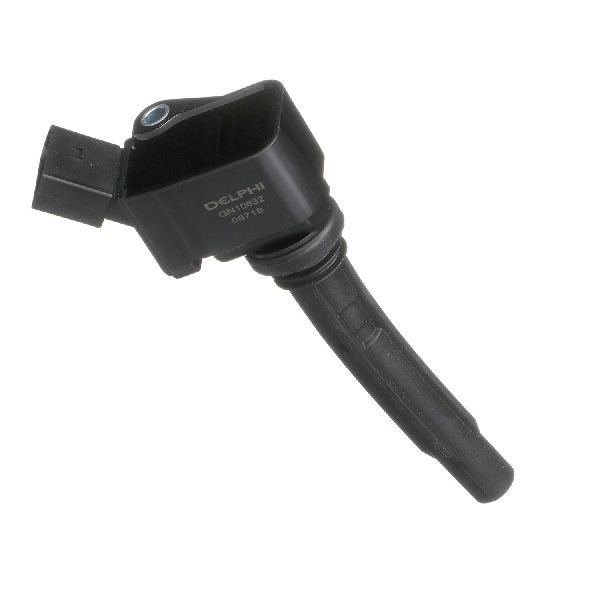
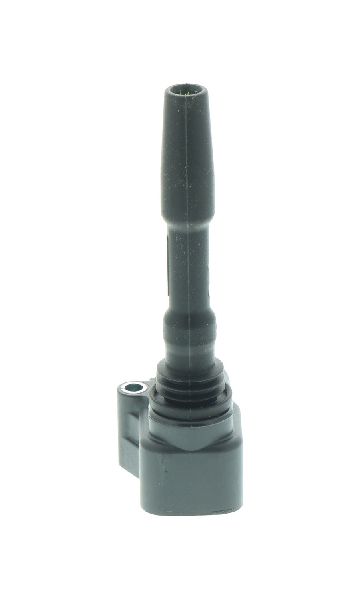
- Ignition Coil
(OEM #04E905110K (verify by VIN))— This is the most common cause of a single-cylinder misfire on this platform. It's a relatively easy and inexpensive part to replace.
Trusted brands: Bosch, NGK, Delphi, Eldor
OEM price range: $60 - $100
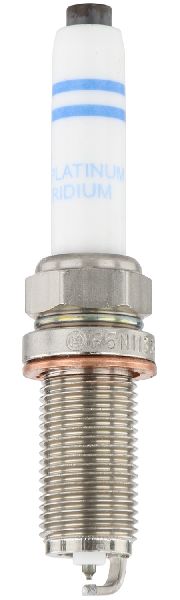
Aftermarket price range: $40 - $80 - Spark Plug
(OEM #04E905612C or 04E905601B (verify by VIN))— As a standard maintenance item, a worn spark plug is the second most likely culprit. It's recommended to replace all plugs at once.
Trusted brands: NGK, Bosch, Denso
OEM price range: $20 - $30
Aftermarket price range: $15 - $25
Related Codes That Often Appear With This One
- P0300 — If multiple cylinders are misfiring intermittently, you will see a P0300 (Random/Multiple Cylinder Misfire) code alongside the specific cylinder code.
- P0301, P0302, P0303 — These codes indicate misfires in cylinders 1, 2, and 3, respectively. Seeing them with P0304 points to a problem affecting the entire engine, like a major vacuum leak, low fuel pressure, or an issue with an ECM software update.
- P0354 — This code indicates a malfunction in the ignition coil primary or secondary circuit for cylinder 4. If you see this with P0304, it strongly points to a bad ignition coil or a problem with its wiring/connector.
Technical Service Bulletins (TSBs) & Recalls

- V011620 / 2045602: Update Programming, Fault Code P0300 P0301 P0302 P0303 P0304 Stored in ECM Fault Memory
- VIN4APIN20211116: Customer states MIL-on with any combination of P0300, P0301, P0302, P0303, P0304...
- VIN-4-A-PIN-2018: MIL-on with P0300-P0304
Platform-Specific Known Issues
- A Technical Service Bulletin (TSB #V011620 / 2045602) was issued for 2016-2017 Jettas with the 1.4T (CZTA) engine for overly sensitive misfire detection, which could trigger P0300-P0304 codes. The fix is an ECM software update performed by a dealer.
- The manufacturer TSB #VIN4APIN20211116 notes that P030x codes can appear in combination with various other engine faults, suggesting a comprehensive diagnostic scan is important.
- TSB #VIN-4-A-PIN-2018 also mentions P0300-P0304 codes appearing after a specific software update (level 0003), indicating that software can be both a cause and a solution.
Mechanic-Grade Diagnostic Values
- High-Pressure Fuel System Pressure — expected: 140 to 200 bar (2030 to 2900 PSI), depending on load and engine speed.. Failure: Pressure that is significantly below this range under load can indicate a failing High-Pressure Fuel Pump (HPFP) and cause misfires.
- Low-Pressure Fuel System Pressure — expected: 3.5 to 6 bar (50 to 87 PSI) at the high-pressure pump inlet.. Failure: A drop in this pressure indicates a weak in-tank fuel pump or a clogged filter, starving the high-pressure system.
- Engine Compression (1.4T/1.5T EA211) — expected: New engine: 160 to 203 PSI.. Failure: Wear limit is 101 PSI. The maximum allowable difference between any two cylinders is 43.5 PSI. Low compression on cylinder 4 is a mechanical fault.
Scan Tool Commands That Help
- VCDS (VAG-COM) by Ross-Tech: Advanced Measuring Values — To monitor live misfire counts for each cylinder. Search for 'misfire' and select the counters for cylinders 1-4. This allows you to see if the misfire is constant or intermittent and confirm if it stays on cylinder 4 after swapping components.
- VCDS (VAG-COM) by Ross-Tech: Measuring Blocks (older, non-UDS controllers) — On some earlier models in the vehicle range, misfire counters are found in Measuring Block Groups 015 and 016. Group 016 will show the counter for Cylinder 4.
Wiring & Ground Locations
- Engine/Transmission Ground Connection — A primary ground strap is typically located between the transmission housing and the vehicle's chassis, often underneath the battery tray area.. A corroded or loose main engine ground can cause a variety of electrical issues, including weak spark and erratic sensor readings that can lead to misfire codes.
- Main Engine Bay Ground Point — On the firewall/bulkhead, just above and behind the battery. It is a common attachment point for multiple brown ground wires.. This is a central grounding hub. Corrosion here can affect the entire engine management system, including the ignition coils' ground path, potentially causing misfires.
- Ignition Coil Connector (Cylinder 4) — The 4-pin electrical connector on top of the ignition coil for the cylinder closest to the transmission.. The plastic locking tab on these connectors can become brittle and break, leading to a poor connection that can cause a P0354 (Ignition Coil Circuit Malfunction) and a P0304. Ensure it is fully seated and the internal pins are not damaged.
Real Owner Repair Stories
- Reddit user in /r/jetta (2015 Jetta S (Mk6) with 277k miles) — Misfire under load between 2200-2800 RPM, not constant. Idles smoothly.
❌ Tried (didn't work) Replaced spark plugs (twice), Replaced ignition coil (twice) with aftermarket parts, Replaced ignition coil wiring connector, Performed a compression test which came back good.
✅ What actually fixed it The owner reported the final fix was using genuine VW OEM parts instead of aftermarket auto parts store brands for the ignition components. The car was sensitive to the part quality. - Reddit user in /r/jetta (2019 Jetta R-Line 1.4T at 70,000 km (approx. 43,500 miles)) — P0304 misfire code, check engine light, and a rotten egg smell from the battery area.
❌ Tried (didn't work) User took it to a mechanic for diagnosis rather than trying parts.
✅ What actually fixed it The consensus from other owners was that this was a combination of two separate, but common, maintenance issues: the misfire was likely a spark plug or coil (plugs are recommended around 60k miles), and the battery smell indicated a failing battery, which is typical after about 4 years.
OEM Part Supersession History
04E905110B, 04E905110E→04E905110K— Part revision and update by the manufacturer for improved reliability or change in supplier (e.g., Eldor).
Heads up: While physically interchangeable, it is highly recommended to replace all four coils with the same part number and brand (e.g., all Bosch or all Eldor) to ensure consistent performance. Mixing and matching can sometimes cause subtle performance issues.
Model Year Variations Within This Range
- 2017-2021: These model years primarily use the 1.4L TSI (EA211, engine code CZTA) engine.
- 2022: For the 2022 model year, the Jetta was updated with the 1.5L TSI (EA211 Evo) engine. While architecturally similar, some parts, including sensors and internal components, may differ from the 1.4T.
Helpful Videos
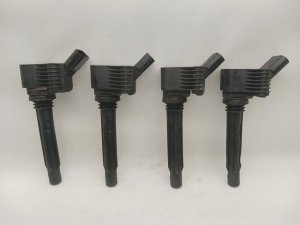
Used OEM Parts in Stock
New Aftermarket Parts Available


The information in this article is provided for general reference and educational purposes only. Vehicle specifications, procedures, and part compatibility can vary by production date, trim level, and region. Always consult your vehicle's factory service manual and verify part numbers before purchasing or performing repairs. Safety-critical components such as airbags, seat belts, and braking systems should be installed by a qualified professional.
- Volkswagen JETTA:
- 🎬 Helpful Videos
- 🛍️ Shop This Part
- What's Unique About the 2017-2022 Volkswagen JETTA
- Diagnostic Flowchart
- Symptoms You May Notice
- Most Likely Causes
- Rare But Worth Checking
- Diagnosis Steps
- Parts You'll Likely Need
- Related Codes That Often Appear With This One
- Technical Service Bulletins (TSBs) & Recalls
- Platform-Specific Known Issues
- Mechanic-Grade Diagnostic Values
- Scan Tool Commands That Help
- Wiring & Ground Locations
- Real Owner Repair Stories
- OEM Part Supersession History
- Model Year Variations Within This Range
- 🎟️ Get 5% Off