

P0304 on 2017 Volkswagen Golf R: Cylinder 4 Misfire Causes and Fixes
P0304 on a 2017 VW Golf R signifies a misfire in cylinder 4. The most common causes are a faulty ignition coil or a worn-out spark plug. These are relatively inexpensive parts, costing around $35-$75 for a coil and $15-$25 for a plug, and are simple to replace for a DIYer. Swapping the coil from cylinder 4 to another cylinder is the definitive first diagnostic step.
- P0304 on a 2017 Golf R is a misfire on cylinder 4, the one on the far right (driver's side).
- The most likely cause is a bad ignition coil. Always perform a 'coil swap' test first, as it's a free and definitive diagnostic step.
- If the coil is good, a worn spark plug is the next most probable cause.
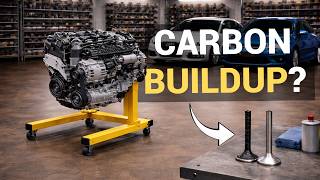
- Due to the direct-injection engine, carbon buildup on the intake valves is a significant possibility, especially if misfires happen mostly on cold starts.
- Do not ignore a flashing check engine light, as it indicates a severe misfire that can quickly destroy your catalytic converter, a very expensive repair.
What's Unique About the 2017-2017 Volkswagen GOLF R

The 2017 Golf R uses the EA888 Gen 3 2.0T engine, a direct-injection powerplant. While powerful and efficient, this design is known for a few specific issues that can lead to a P0304 code. Ignition coils are a very common failure point on these engines. Additionally, while some EA888 Gen 3 engines feature both port and direct injection (dual injection) to help mitigate carbon buildup, the primary injection method is direct. This means fuel is injected directly into the cylinder and doesn't wash over the intake valves, making them susceptible to carbon buildup from PCV system oil vapors over time. This buildup can disrupt airflow and cause misfires, especially on cold starts.
Diagnostic Flowchart

Tap your situation to follow the diagnostic path that matches what you're seeing on this vehicle.
Symptoms You May Notice
- Rough or shaking idle, especially on cold start
- Hesitation or stumbling during acceleration
- Noticeable loss of engine power
- Flashing or solid Check Engine Light
- Reduced fuel economy
- Engine stalling
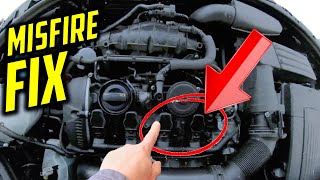
- Strong smell of unburned fuel 🎬 Watch: How to diagnose and fix a shaking engine misfire. from the exhaust
- Replacing only the spark plugs when the ignition coil is the actual culprit. The coil swap test is crucial to avoid this.
- Assuming a high-mileage car's misfire is plugs/coils when it's actually carbon buildup. If the misfire is worst on cold starts, carbon should be a primary suspect.
Most Likely Causes

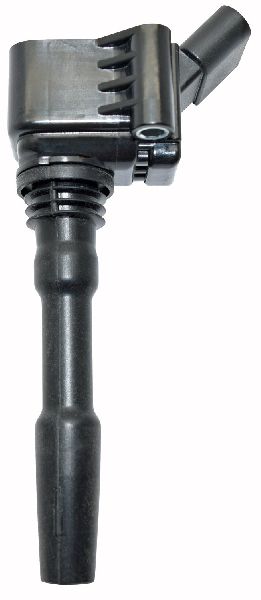
- Faulty Ignition Coil 🔴 High Probability Ignition coils are a well-documented, common failure item on modern VW/Audi engines, including the EA888. They often fail without warning, causing a dead misfire on a single cylinder.
How to confirm: Swap the ignition coil from cylinder 4 with another cylinder (e.g., cylinder 3). Clear the codes and drive the car. If the code changes to P0303, the ignition coil is faulty. This is the universally recommended first step.
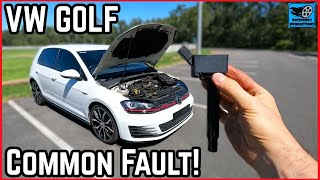
Typical fix: Replace the faulty ignition coil. It's recommended to use a quality OEM or reputable aftermarket brand like Bosch or NGK. Many owners choose to replace all four coils at once 🎬 Watch: Step-by-step guide to replacing your spark plugs and coils. for preventative maintenance.
Est. part cost: $35-$75 - Worn or Fouled Spark Plug 🔴 High Probability Spark plugs are a regular maintenance item with a typical service interval of 40,000-60,000 miles. On a turbocharged, direct-injection engine, they can wear out or become fouled more quickly, especially on tuned vehicles or if a faulty coil was not replaced promptly.
How to confirm: After ruling out the ignition coil, remove the spark plug from cylinder 4. Inspect it for wear (eroded electrode), carbon or oil fouling, or damage. A fuel-soaked plug may indicate an injector issue. Compare it to a new plug.
Typical fix: Replace the spark plug. It is best practice to replace all four spark plugs at the same time to ensure consistent performance and maintain the correct heat range.
Est. part cost: $15-$25 per plug - Carbon Buildup on Intake Valves 🟡 Medium Probability The EA888 is a direct-injection engine, meaning fuel doesn't clean the intake valves. Oil vapor from the PCV system can bake onto the valves, restricting airflow and causing misfires, particularly on cold starts that may clear up as the engine warms. This issue typically becomes significant enough to cause codes between 60,000 and 80,000 miles.
How to confirm: This is difficult to confirm without a borescope to visually inspect the intake valves. A misfire that occurs primarily on cold starts and is not resolved by new plugs and coils strongly suggests carbon buildup. A dealership or specialist shop can confirm the diagnosis.
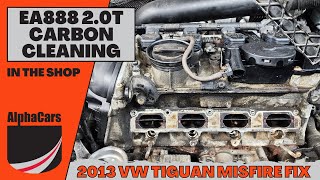
Typical fix: The intake manifold must be removed and the valves cleaned, typically through a process called walnut shell blasting. 🎬 See how a professional carbon cleaning service is performed. This is usually a job for a professional shop and can cost several hundred dollars.
Est. part cost: $0 (service cost is labor) - Failed Fuel Injector ⚪ Low Probability While less common than ignition parts, direct fuel injectors operate under very high pressure and can fail. They can become clogged, leak, or fail electronically, preventing the correct amount of fuel from being delivered to cylinder 4. A stuck-open injector can flood the cylinder with fuel.
How to confirm: This is a more advanced diagnostic step. A fuel-soaked spark plug is a strong indicator. A diagnostic tool like VCDS can be used to monitor fuel trims. Swapping injectors between cylinders is possible but labor-intensive and requires new seals.
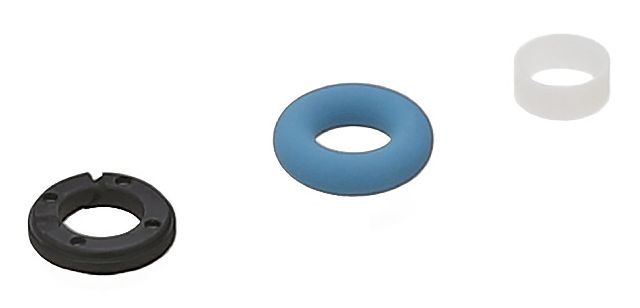
Typical fix: Replace the faulty fuel injector. It is critical to also replace the single-use Teflon seals when an injector is removed and reinstalled.
Est. part cost: $100-$200
Rare But Worth Checking
- PCV Valve Failure: A failing PCV (Positive Crankcase Ventilation) valve is a classic issue on the EA888 engine family. A torn diaphragm creates a large vacuum leak, which can lead to lean conditions (code P0171) and misfires across multiple cylinders, though it might initially present as a single cylinder misfire.
- Low Compression: A mechanical engine problem like a worn piston ring, a damaged piston, or a poorly sealing valve could cause low compression in cylinder 4. This is unlikely on a low-mileage engine but can be confirmed with a compression test and a leak-down test, which is recommended if plugs, coils, and injectors are ruled out.
- Damaged Ignition Coil Wiring: In some cases, the ground wire for the ignition coil can become frayed or damaged, leading to an intermittent connection and a persistent misfire on that cylinder even with a new coil. One owner on a forum found a twisted ground wire on cylinder 4 to be the culprit after replacing many other parts.
Diagnosis Steps
- Read the code with an OBD-II scanner and confirm P0304 is present. Note if the check engine light is flashing, which signals a severe misfire requiring immediate attention.
- Swap the ignition coil from cylinder 4 to cylinder 3. On the Golf R, cylinder 4 is on the far right (passenger side in the US).
- Clear the codes and drive the vehicle until the check engine light returns.
- Re-scan the codes. If the code is now P0303, the ignition coil is faulty and needs to be replaced.
- If the code remains P0304, the coil is likely good. Proceed to inspect the spark plug in cylinder 4. Check for wear, fouling, and correct gap. Consider replacing all four plugs if they are due for service.
- If new plugs and coils do not resolve the issue, the next likely causes are carbon buildup or a faulty fuel injector.
- For persistent cold-start misfires, use a borescope to inspect the intake valves for carbon buildup.
- For misfires under load or at high RPM, a faulty fuel injector is a stronger possibility. Check for a fuel-soaked plug on cylinder 4.
- If all else fails, a professional diagnosis including a compression and leak-down test may be necessary to check for mechanical engine issues.
Parts You'll Likely Need

- Ignition Coil
(OEM #06L905110K (supercedes 06H905115B, 06L905110C/D/F/H))— This is the most frequent cause of a single-cylinder misfire on the 2017 Golf R's engine. VW has released multiple revisions of this part.
Trusted brands: VW Genuine, Bosch, NGK, APR
OEM price range: $50-$75
Aftermarket price range: $35-$60 - Spark Plug
(OEM #06K905601B (NGK PLFER7A8EG))— As a primary ignition component and regular maintenance item, a worn spark plug is a very common cause for a misfire.
Trusted brands: NGK, Bosch
OEM price range: $20-$30
Aftermarket price range: $15-$25 - Fuel Injector
(OEM #06L906036K)— If ignition components are confirmed to be good, a clogged or electronically failed injector is the next most likely part to have failed.
Trusted brands: Bosch (OEM supplier)
OEM price range: $150-$200
Aftermarket price range: $80-$140
Related Codes That Often Appear With This One
- P0300 — If the misfire is intermittent or starting to affect other cylinders due to a shared cause like a major vacuum leak or fuel pressure problem, a P0300 (Random/Multiple Cylinder Misfire) code may appear alongside P0304.
- P0301, P0302, P0303 — Seeing misfire codes for other specific cylinders suggests a more widespread issue like severe carbon buildup, bad fuel, or a failing fuel pump.
- P0171 — This code for 'System Too Lean' can indicate a vacuum leak (like from a failed PCV valve) which is the root cause of the misfire.
- P130A — This manufacturer-specific code for 'hide cylinder' may be present. It indicates the ECU has intentionally shut down the cylinder to prevent damage from the persistent misfire.
Technical Service Bulletins (TSBs) & Recalls
- VIN-4-A-PIN-2018: A general bulletin that lists P0300-P0304 as one of many possible faults that may be logged in the ECM.
- TSB 2069038 / 24-70: References a software update for some 3.0T engines to correct misfire detection sensitivity, showing that VW sometimes resolves misfire codes via software patches. While not for the 2.0T, it shows precedent.
- TSB 01 13 73 / TPI 2033223: Notes that for EA888 engines, it may be necessary to reset misfire adaptations in the ECU after a repair by clearing fault codes three times in a row.
Platform-Specific Known Issues
- A Technical Service Bulletin (VIN-4-A-PIN-2018) mentions that misfire codes P0300-P0304 can occur after a specific software update (level 0003), indicating a potential software sensitivity issue.
Mechanic-Grade Diagnostic Values
- High-Pressure Fuel Rail (Actual) — expected: Up to 200 bar (2900 PSI) under load for stock vehicles. Tuners may request up to 240 bar (3480 PSI) with an upgraded pump.. Failure: Actual pressure significantly deviates from specified pressure requested by the ECM, or is unstable.
- Low-Pressure Fuel Pump (Actual) — expected: 5.0 bar +/- 0.5 bar at idle.. Failure: Pressure is significantly below 4.5 bar at idle, or the pump duty cycle exceeds 90% under load, indicating the LPFP cannot keep up with demand.
- VCDS Misfire Counters (Non-UDS) — expected: Using VCDS, navigate to Engine -> Measuring Blocks -> Groups 015 and 016. These blocks display a live count of misfires for each cylinder.. Failure: The counter for cylinder 4 increments, especially on a cold start or under specific load conditions.
Hidden / Shadow Codes Worth Checking
- P130A: This manufacturer-specific code means 'Hide Cylinder'. The ECU intentionally deactivates a cylinder to prevent damage from persistent, severe misfires. (see via This code may be stored alongside the P030x code and is visible with VCDS or other advanced VW-specific scan tools.)
Scan Tool Commands That Help
- ODIS (VW Dealer Tool): Clear all OBD DTCs (performed 3 times consecutively) — According to VW Technical Tip 01-17-03TT, this procedure is used to force a relearn of the crankshaft sensor profile adaptation. This is useful if a false misfire is being detected after an actual misfire repair has been completed, as the ECM may not automatically relearn.
- VCDS (Ross-Tech): Advanced Measuring Blocks - Misfire Counters — To get a live, numerical count of misfire events per cylinder, which is more precise than just waiting for a DTC to be set. This helps quantify the severity and conditions under which the misfire occurs (e.g., only on cold start, only at high RPM).
Wiring & Ground Locations
- Ignition Coil Grounding Point — For the Mk7/7.5 Golf R, the factory chassis grounding lug is located behind the passenger-side headlight.. The factory design grounds the ignition coils via the bolts securing them to the cam cover, which is made of soft aluminum. The threads can strip or corrode, leading to a weak ground, reduced spark energy, and misfires even with good coils. Aftermarket kits provide a dedicated ground wire from the coil harness directly to this chassis point to ensure a reliable ground.
- Ignition Coil Connector (Pin 2) — Pin 2 on the 4-pin ignition coil connector is the ground wire.. When diagnosing a persistent misfire or installing an upgraded grounding kit, this is the specific pin that needs to be tested for continuity to ground or de-pinned to add a new ground wire. A pin removal tool is required.
Real Owner Repair Stories
- golfmk7.com forum user (2017 Golf R Manual, 36k miles, Unitronic Stage 2 tune) — P0304 and EPC light came on during a hard acceleration, causing limp mode. Misfire only occurs above 6,000 RPM.
❌ Tried (didn't work) Replaced spark plugs, Replaced ignition coils, Swapped spark plugs between cylinders (misfire did not move), Swapped ignition coils between cylinders (misfire did not move), Swapped fuel injectors between cylinders (misfire did not move), Performed a compression test (results were good), Visually inspected for carbon buildup (none found)
✅ What actually fixed it The user did not post a final resolution, but the thread highlights a scenario where a high-RPM-only misfire was not caused by any of the common components (plugs, coils, injectors, carbon), pointing towards a more complex issue like valve train problems (e.g., valve float) or a software/tuning issue.
When the Usual Fixes Don't Work
- In one documented case on a tuned 2017 Golf R, a persistent P0304 misfire that only occurred at high RPM (above 6,000) was not resolved by replacing spark plugs, ignition coils, or fuel injectors. A compression test was also normal. This contradicts the common assumption that these parts will always fix the issue and points towards more complex, high-load-specific problems like weak valve springs (valve float) or specific tuning-related issues that aren't apparent during normal driving or basic testing.
OEM Part Supersession History
06L905110C, 06L905110D, 06L905110E, 06L905110F, 06L905110H→06L905110K— These are previous revisions of the ignition coil. VW/Audi frequently updates part numbers to improve reliability or change suppliers.
Heads up: All listed previous revisions are compatible and have been superseded by the latest -K revision. No known incompatibilities exist when replacing older versions with the newest one.
Helpful Videos
We Have This Part in Stock


The information in this article is provided for general reference and educational purposes only. Vehicle specifications, procedures, and part compatibility can vary by production date, trim level, and region. Always consult your vehicle's factory service manual and verify part numbers before purchasing or performing repairs. Safety-critical components such as airbags, seat belts, and braking systems should be installed by a qualified professional.
- Volkswagen GOLF R:
- 🎬 Helpful Videos
- 🛍️ Shop This Part
- What's Unique About the 2017-2017 Volkswagen GOLF R
- Diagnostic Flowchart
- Symptoms You May Notice
- Most Likely Causes
- Rare But Worth Checking
- Diagnosis Steps
- Parts You'll Likely Need
- Related Codes That Often Appear With This One
- Technical Service Bulletins (TSBs) & Recalls
- Platform-Specific Known Issues
- Mechanic-Grade Diagnostic Values
- Hidden / Shadow Codes Worth Checking
- Scan Tool Commands That Help
- Wiring & Ground Locations
- Real Owner Repair Stories
- When the Usual Fixes Don't Work
- OEM Part Supersession History
- 🎟️ Get 5% Off