

P0304 on 2010-2015 Toyota Prius: Cylinder 4 Misfire Causes and Fixes
P0304 on a 2010-2015 Prius is often caused by a clogged EGR circuit and intake manifold, a known issue for this generation. Before suspecting a head gasket, check basic ignition parts like the spark plug and coil for cylinder 4. Cleaning the intake manifold and EGR passages is a common, effective fix, though Toyota's TSB recommends replacement.
- P0304 on a 2010-2015 Prius is most often caused by a clogged intake manifold and EGR system, a known issue for this engine.
- Always perform basic diagnostics first: check spark plugs and swap ignition coils before assuming a more complex problem.
- A violent rattle on cold starts combined with coolant loss strongly suggests a failing head gasket, another known issue with this model.
- Cleaning the entire EGR circuit (cooler, valve, pipe, and intake manifold) is a common and effective repair that can prevent future issues, including head gasket failure.
- Referencing Toyota TSB T-SB-0116-15 confirms that replacing the intake manifold is the manufacturer-recommended fix for misfires caused by the EGR system.
What's Unique About the 2010-2015 Toyota PRIUS

The third-generation Prius (2010-2015) with the 2ZR-FXE engine is uniquely prone to carbon and oil sludge buildup in its Exhaust Gas Recirculation (EGR) system and intake manifold. This buildup can clog the small passages that distribute exhaust gases, leading to uneven air-fuel mixtures and causing misfires, particularly on cold starts or during light acceleration. While any cylinder can be affected, this issue, along with a higher-than-average rate of head gasket failure (often a consequence of the EGR issue), are the most notorious problems for this specific Prius generation and are frequently linked to P030x misfire codes.
Diagnostic Flowchart
Tap your situation to follow the diagnostic path that matches what you're seeing on this vehicle.
Symptoms You May Notice
- Engine shaking, rattling, or running rough, especially a violent 'death rattle' for a few seconds on a cold start.
- Flashing or solid Check Engine Light.
- Hesitation or stumbling during light acceleration.
- Noticeable loss of power.
- Decrease in fuel economy.
- Knocking or pinging sound from the engine under load.
- Unexplained loss of engine coolant from the reservoir with no visible leaks on the ground.
- Immediately assuming a head gasket failure without first checking ignition components (spark plugs, coils) or cleaning the EGR/intake system. The symptoms can be very similar, but the EGR cleaning is a much cheaper and more common fix.
- Replacing only spark plugs and coils when the root cause is a clogged EGR circuit. The misfire will inevitably return.
Most Likely Causes

- Clogged EGR Passages and Intake Manifold 🔴 High Probability The 2ZR-FXE engine's EGR system design leads to significant carbon buildup over time, which clogs the intake manifold's distribution channels. This is a well-documented issue and is the subject of Toyota Technical Service Bulletin T-SB-0116-15, which notes misfires during light acceleration.
How to confirm: Remove the intake manifold and visually inspect the EGR ports for heavy, gummy carbon deposits. The passages for each cylinder, especially those furthest from the EGR valve, may be completely blocked. The issue is so common that many owners preemptively clean the system every 75,000-100,000 miles.
Typical fix: Remove and thoroughly clean the EGR valve, EGR cooler, EGR pipe, and intake manifold. Replace all associated gaskets. Many owners on PriusChat recommend soaking components in an Oxi-Clean solution or using a pressure washer to break up the stubborn carbon. TSB T-SB-0116-15 officially recommends replacing the intake manifold with an updated part.
Est. part cost: $20-$50 for gaskets, $150-$400 for a new manifold assembly. - Failing Head Gasket 🟡 Medium Probability The 2010-2015 Prius has a known weakness with head gasket failure, often caused by localized engine overheating from a clogged EGR circuit. Coolant seeps into a cylinder overnight, causing a violent rattle on cold start as the piston tries to compress the liquid.
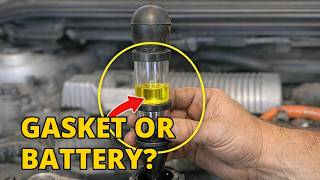
How to confirm: The primary symptoms are a violent engine rattle exclusively on cold starts, accompanied by unexplained coolant loss from the reservoir. A block tester (chemical test) can check for combustion gases in the coolant. A mechanic can also use a borescope to look for a 'steam-cleaned' piston, indicating coolant has been burning off 🎬 See: How to distinguish head gasket failure from battery issues in that cylinder.
Typical fix: This is a major repair that involves removing the cylinder head, having it inspected and resurfaced by a machine shop, and replacing the head gasket and associated seals. It is critical to also clean the entire EGR circuit during this repair to address the root cause.
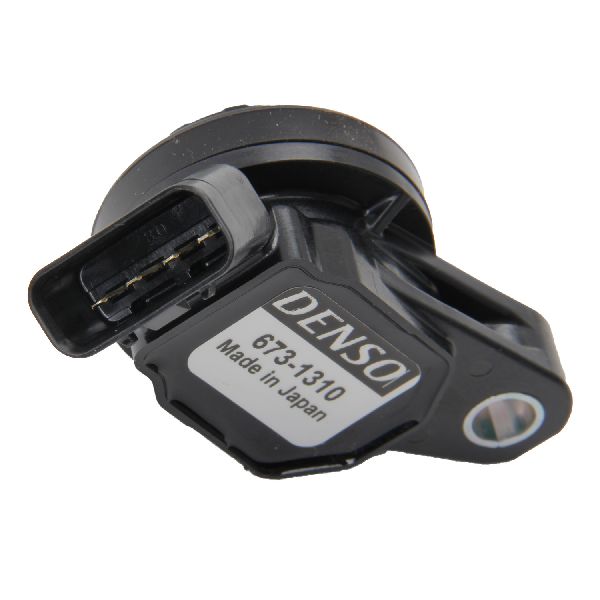
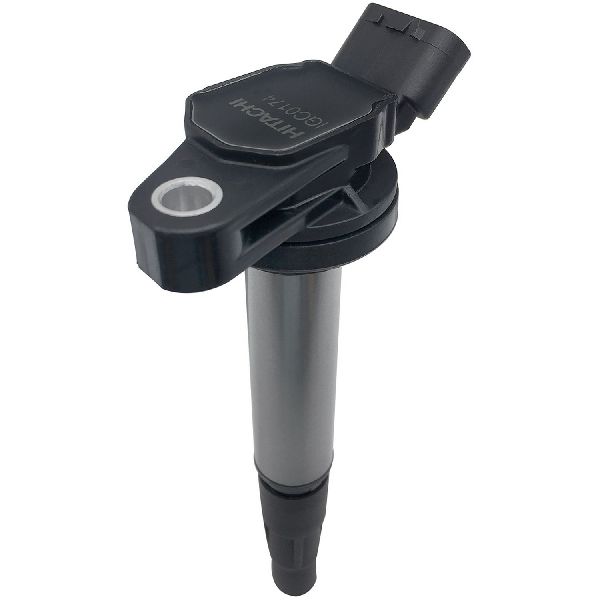
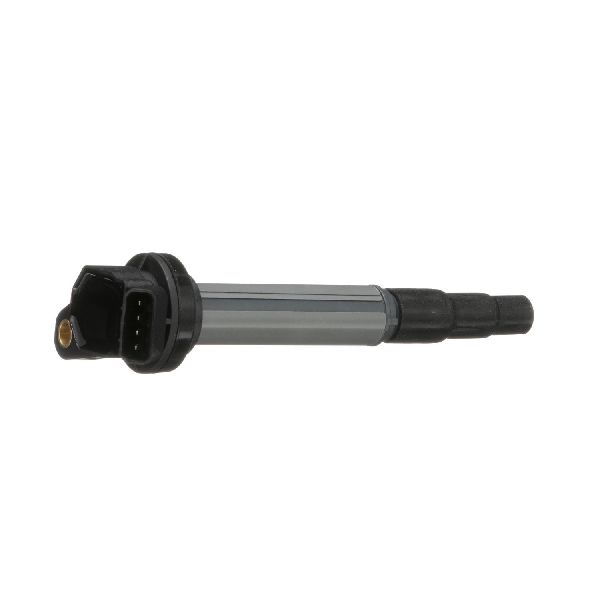
Est. part cost: $150-$300 for a head gasket set and new head bolts. - Failed Ignition Coil 🟡 Medium Probability
How to confirm: Swap the ignition coil from cylinder 4 with another cylinder (e.g., cylinder 2). Clear the codes and drive the vehicle. If the code changes from P0304 to P0302, the ignition coil is faulty.
Typical fix: Replace the faulty ignition coil. It is often recommended to replace all four if they are original and high-mileage. Use a reputable brand like Denso or NGK.
Est. part cost: $40-$90 per coil for a quality aftermarket brand like Denso. - Worn Spark Plug 🟡 Medium Probability
How to confirm: Remove the spark plug from cylinder 4 and inspect it for wear, fouling (oil, carbon, or coolant), or damage. A coolant-fouled plug will look unusually clean or white compared to others.
Typical fix: Replace the spark plug. It is best practice to replace all four spark plugs at the same time with OEM-spec (Denso or NGK) iridium plugs.
Est. part cost: $30-$60 for a set of four OEM-spec (Denso or NGK) iridium plugs. - Clogged or Faulty Fuel Injector ⚪ Low Probability
How to confirm: This is more difficult to confirm without specialized tools. A mechanic can perform a fuel injector balance test. Swapping injectors between cylinders is possible but is significantly more labor-intensive than swapping coils.
Typical fix: Replace the faulty fuel injector.
Est. part cost: $70-$150 per injector.
Rare But Worth Checking
- Powertrain Control Module (PCM) Logic: Toyota issued TSB T-SB-0147-16 for a rough idle and P030x codes at cold start on 2013-2015 models, which is addressed by a dealer-level ECM/PCM software update. This TSB specifically addresses a vibration or tapping noise and does not replace the need for mechanical repairs like EGR cleaning.
Diagnosis Steps

- Read the trouble codes with an OBD-II scanner and note any other codes present, especially P0401 or other P030x codes.
- Check the engine coolant reservoir. Is the level consistently low? This is a strong indicator of a head gasket leak.
- Listen to the engine on a cold start. Is there a violent shaking or rattling for the first few seconds? This points heavily towards a head gasket issue.
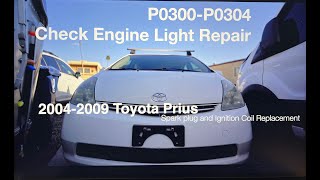
- Swap the ignition coil from cylinder 4 to a different cylinder (e.g., cylinder 1). Clear the codes and drive. If the code changes to P0301, the coil is bad. 🎬 Watch: Step-by-step guide to fixing a Cylinder 4 misfire
- If the misfire remains on cylinder 4, inspect the spark plug. Replace it if it's worn, fouled, or damaged. It's best to replace all four.
- If plugs and coils are good, the next step is to address the most platform-specific issue: remove and clean the intake manifold, EGR valve, EGR cooler, and EGR pipe. Be prepared for significant, stubborn carbon buildup.
- While the intake manifold is off, it is a good time to inspect and likely replace the PCV valve.
- If the misfire persists after cleaning the EGR circuit, perform a cylinder compression test and a leak-down test to check for mechanical engine problems, such as a bad valve or a failing head gasket.
- If a head gasket leak is suspected, use a combustion leak tester ('block tester') on the coolant reservoir to confirm the presence of exhaust gases.
- If all else fails, consider a faulty fuel injector or a wiring issue to the coil or injector.
Parts You'll Likely Need

- Intake Manifold Gasket
(OEM #17171-37020)— Required when removing the intake manifold for cleaning, which is the most common fix for this issue.
Trusted brands: Toyota OE, Fel-Pro
OEM price range: $15-$25
Aftermarket price range: $5-$15 - Ignition Coil
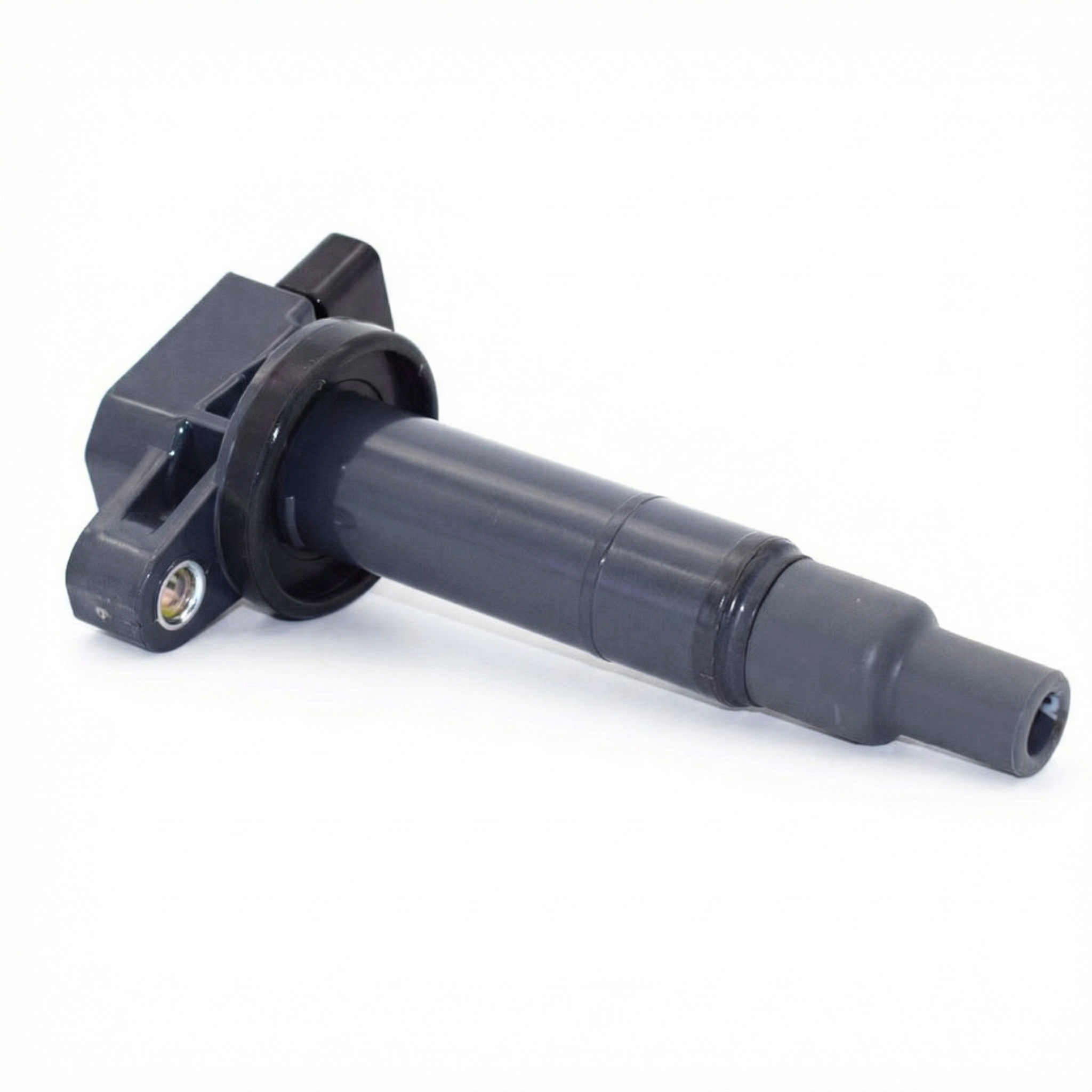
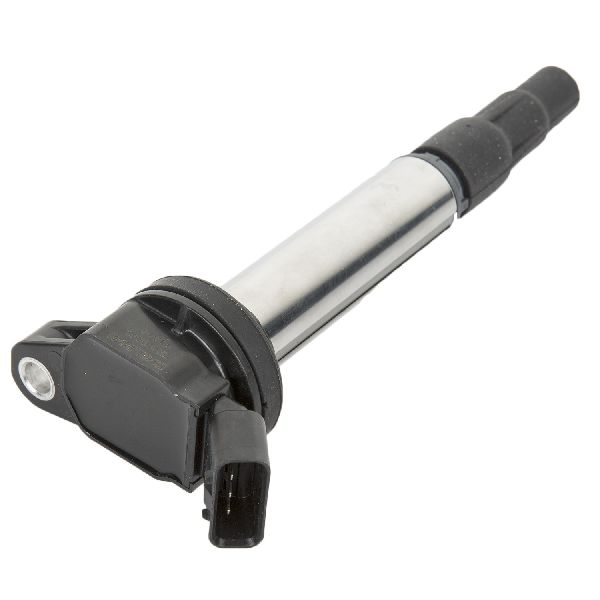
(OEM #90919-02258)— A common failure point for any vehicle and a primary cause of single-cylinder misfires.
Trusted brands: Denso, NGK
OEM price range: $90-$120
Aftermarket price range: $40-$90 - Iridium Spark Plugs (Set of 4)
(OEM #Denso SK16R11 or NGK IFR5A11)— A standard maintenance item and a common cause of misfires. Should be replaced as a set.
Trusted brands: Denso, NGK
OEM price range: $50-$70
Aftermarket price range: $30-$60 - Intake Manifold Assembly
(OEM #17120-37054 (supersedes 17120-37050, 17120-37051, 17120-37052, 17120-37053))— Recommended by TSB T-SB-0116-15 if cleaning is not sufficient or if the owner prefers to install the updated part design to mitigate future clogging.
Related Codes That Often Appear With This One
- P0300 — This is a 'Random/Multiple Cylinder Misfire' code. It often appears with P0304 if the underlying issue, like a clogged intake or failing head gasket, is affecting more than just cylinder 4.
- P0301, P0302, P0303 — These are misfire codes for cylinders 1, 2, and 3. Seeing them alongside P0304 points to a systemic problem like the EGR system, head gasket, or fuel delivery issue rather than a single bad coil or plug.
- P0401 — This code means 'EGR Flow Insufficient'. It is commonly seen with misfire codes on this Prius because the same carbon buildup that causes misfires also restricts flow through the EGR valve itself.
Technical Service Bulletins (TSBs) & Recalls
- T-SB-0116-15 REV: Addresses a 'runs rough' condition with P030x misfire codes during light acceleration due to the EGR system; recommends replacing the intake manifold assembly.
- T-SB-0147-16: Mentions P030x codes with rough idle/tapping noise at cold start and refers to a modification in the ECM logic as a fix.
- T-TT-0310-14: Notes a knocking sound and/or rough running on cold starts that may occur with P030x codes.
Platform-Specific Known Issues
- EGR System Clogging: As detailed in TSB T-SB-0116-15, the intake manifold passages, EGR cooler, and EGR valve become severely restricted with carbon. This is considered the primary design flaw leading to misfires on this platform.
- Head Gasket Prone to Failure: The frequent engine on/off cycles of the hybrid system, combined with potential overheating from a clogged EGR, puts extra stress on the head gasket, making failure more common than on non-hybrid vehicles.
- Cold Start Rattle: The combination of a potential head gasket leak and EGR condensation can cause a very distinct, violent engine shake for a few seconds on a cold start, which is a hallmark symptom for this generation of Prius.
Mechanic-Grade Diagnostic Values
- Fuel Injector Resistance — expected: 11.6 to 12.4 Ω at 20°C (68°F). Failure: A resistance reading outside of this range indicates a faulty injector.
- Ignition Coil Primary Resistance — expected: No official spec is published by Toyota. A practical test is to measure all four coils; an outlier often indicates a problem.. Failure: A coil with a significantly different resistance value (higher or lower) than the other three, or an open circuit (infinite resistance).
- Mode 6 Misfire Counts — expected: A value of 0 or a very low number during a normal drive cycle.. Failure: A high or rapidly increasing count for cylinder 4 (e.g., TID $41, MID $0c) confirms misfires are occurring, even if a CEL is not yet triggered.
Hidden / Shadow Codes Worth Checking
- Mode 6 Data (e.g., TID $41, MID $0c): Mode 6 is a diagnostic mode that provides test results for non-continuously monitored systems. For misfires, it can show raw counts for each cylinder from the current or last 10 drive cycles. This allows a technician to see which cylinder is misfiring before the count is high enough to trigger a P030x code and illuminate the check engine light. (see via An advanced OBD-II scan tool or app (like Torque) that can display Mode $06 data.)
Scan Tool Commands That Help
- Toyota Techstream: Misfire Count Live Data — To monitor real-time misfire events on each cylinder during a test drive under specific conditions (e.g., light acceleration, cold start) to confirm the P0304 is active and not intermittent or historical.
- Toyota Techstream: Active Test - Fuel Cut — This function allows the technician to individually disable the fuel injector for each cylinder. When cylinder 4's injector is cut, if there is no change in engine RPM or roughness, it confirms that cylinder 4 was not contributing power in the first place, pinpointing the misfire.
Wiring & Ground Locations
- Engine Harness Ground Cluster — On the driver's side of the engine bay, there are two main ground wire clusters that bolt directly to the chassis/frame.. A loose or corroded ground at these points can cause erratic behavior in the ignition system and sensors, potentially leading to misfire codes. While not specific to cylinder 4, it's a foundational check for any electrical-related engine code.
- Ignition Coil Connector — Directly on top of each ignition coil.. The connector for cylinder 4's ignition coil can become brittle from heat cycles, leading to a poor connection. The wiring harness leading to it can also chafe. A visual inspection and a 'wiggle test' of the connector and harness while the engine is running can sometimes reveal an intermittent connection causing the misfire.
Real Owner Repair Stories
- PriusChat Forum User (2010 Prius, 171k miles) — P0304 code, low coolant, car takes a while to pick up speed.
❌ Tried (didn't work) Initial diagnosis pointed towards battery issues or simple misfire.
✅ What actually fixed it The user's mechanic performed a compression check, which was good. The final fix involved replacing the overdue spark plugs and cleaning the entire EGR system (valve, pipe, cooler) and intake manifold. This combination of maintenance and cleaning resolved the misfire. - YouTube channel 'Abdel Car Fix' (2010 Toyota Prius) — P0302 and P0304 misfire codes, engine shaking.
❌ Tried (didn't work) The video focuses directly on the successful repair.
✅ What actually fixed it The problem was resolved by removing and thoroughly cleaning the EGR valve, the EGR passages, and the intake manifold. After cleaning and reassembly, a 15-minute test drive showed zero misfires on the scan tool. - Reddit user r/prius (2011 Prius, 214k miles) — Persistent P0304 misfire.
❌ Tried (didn't work) Replaced head gasket, timing chain, ignition coils, spark plugs, fuel injectors, PCV valve, water pump, and cleaned EGR cooler. Swapping coils and plugs did not move the misfire. Compression and leak-down tests were good.
✅ What actually fixed it The user suspected a leaking fuel injector O-ring after swapping injectors between cylinders 3 and 4. This is an unresolved story but highlights that even after extensive part replacement, a simple seal can be the cause, and swapping injectors (more labor intensive) is a valid diagnostic step after swapping coils fails.
"I Checked Everything" — The Actual Cause
- A common scenario for the 2010-2015 Prius is a P0304 that occurs with no vacuum leaks (a smoke test would be clean). The cause is often internal, not external. Coolant from a failing head gasket can leak into the cylinder overnight, fouling the spark plug on cold start and causing a misfire that may resolve as the engine warms up. Similarly, carbon buildup inside the intake manifold can break off and get stuck in a valve, causing a temporary misfire that a smoke test would not detect.
When the Usual Fixes Don't Work
- In one documented case on PriusChat, a user with a P0304 had performed extensive repairs including swapping injectors, replacing coils, cleaning the EGR, and even rebuilding parts of the engine, yet the misfire on cylinder 4 remained. This highlights that while the common causes (EGR, coils, plugs, head gasket) cover the vast majority of P0304 issues, there are rare instances where the root cause could be deeper in the engine's mechanicals, wiring harness, or even the ECM itself, defying the standard diagnostic path.
OEM Part Supersession History
90919-02252→90919-02258, 90919-C2003, 90919-C2005— Standard part evolution and supplier changes for the Denso ignition coil.
Heads up: The newer part numbers are generally backwards compatible for this application. Always verify fitment with VIN, but 90919-02258 is the widely accepted replacement for the 2ZR-FXE engine.
Model Year Variations Within This Range
- 2013-2015: A PCM/ECM software update was made available under TSB T-SB-0147-16 to address rough idle and misfire codes (P0300-P0304) that occur specifically at cold start. This suggests the logic for detecting misfires or managing cold-start conditions was altered in later models and can be retroactively applied by a dealer. This is a logic fix, not a mechanical one.
- 2010-2011 vs 2012-2015: While not a definitive change tied to P0304, owners and mechanics report that later models (2012+) seem to have a revised piston ring design to combat oil consumption issues. While this doesn't directly cause a misfire, excessive oil consumption can lead to fouled spark plugs, which is a primary cause of P0304. Therefore, earlier models may be more prone to oil-fouling-related misfires.
Helpful Videos

Used OEM Parts in Stock


New Aftermarket Parts Available


The information in this article is provided for general reference and educational purposes only. Vehicle specifications, procedures, and part compatibility can vary by production date, trim level, and region. Always consult your vehicle's factory service manual and verify part numbers before purchasing or performing repairs. Safety-critical components such as airbags, seat belts, and braking systems should be installed by a qualified professional.
- Toyota PRIUS:
- 🎬 Helpful Videos
- 🛍️ Shop This Part
- What's Unique About the 2010-2015 Toyota PRIUS
- Diagnostic Flowchart
- Symptoms You May Notice
- Most Likely Causes
- Rare But Worth Checking
- Diagnosis Steps
- Parts You'll Likely Need
- Related Codes That Often Appear With This One
- Technical Service Bulletins (TSBs) & Recalls
- Platform-Specific Known Issues
- Mechanic-Grade Diagnostic Values
- Hidden / Shadow Codes Worth Checking
- Scan Tool Commands That Help
- Wiring & Ground Locations
- Real Owner Repair Stories
- "I Checked Everything" — The Actual Cause
- When the Usual Fixes Don't Work
- OEM Part Supersession History
- Model Year Variations Within This Range
- 🎟️ Get 5% Off