

P0304 on 2011-2013 Subaru Forester: Cylinder 4 Misfire Causes & Fixes
P0304 on a 2011-2013 Forester is a cylinder 4 misfire, most often caused by a worn spark plug or a failing ignition coil. Before replacing parts, be aware that Subaru issued a Technical Service Bulletin (TSB #11-116-12R) for an ECM software update to fix 'phantom' misfire codes that appear without any actual driving issues. Oil consumption issues on the FB25 engine can also lead to fouled spark plugs, causing this code.
- P0304 on a 2011-2013 Forester is a misfire on the rear, driver's side cylinder.
- Always start diagnosis by swapping the cylinder 4 ignition coil with another cylinder (like #2) to see if the misfire follows.
- If you have no noticeable driving problems, be aware of TSB #11-116-12R, which points to a software glitch that can be fixed with an ECM update from a dealer.
- Worn spark plugs and failing ignition coils are the most common parts needed for a fix.
- Do not drive extensively if the Check Engine Light is flashing, as this can cause expensive damage to your catalytic converter.
What's Unique About the 2011-2013 Subaru FORESTER

For the 2011-2013 Forester with the FB25 engine, a P0304 code has unique considerations. Subaru issued TSBs indicating that misfire codes could be triggered by software glitches, requiring an ECM reprogram, especially when no drivability problems are felt. Additionally, early FB25 engines are known for potential oil consumption issues due to piston ring design, which can foul the spark plug in cylinder 4, leading to a persistent misfire. Other bulletins link misfires to issues within the camshaft position sensor systems, suggesting a broader diagnostic path than just the ignition components on some occasions.
Diagnostic Flowchart
Tap your situation to follow the diagnostic path that matches what you're seeing on this vehicle.
Symptoms You May Notice
- Rough or shaky idle, sometimes intermittent.
- Hesitation or stumbling during acceleration.
- Flashing or solid Check Engine Light.
- Reduced engine power, especially under load.
- Poor fuel economy.
- Difficulty starting the engine [Bulletin #11-130-13R, Bulletin #11-100-11R]
- Smell of raw gasoline from the exhaust.
- Unusual engine sounds like sputtering or popping.
- Replacing fuel injectors or other components before performing a simple ignition coil swap.
- Undertaking expensive mechanical repairs without first checking if the ECM software update from TSB #11-116-12R has been applied, especially if there are no drivability symptoms.
- Replacing spark plugs with an incorrect type or heat range. The FB25 engine is sensitive to plug specification.
Most Likely Causes

- Worn or Fouled Spark Plug 🔴 High Probability Spark plugs are regular maintenance items that wear out. On the FB25 engine, oil consumption can cause oil to foul the plugs, a common failure path. Leaking spark plug tube seals are another known issue that can cause oil to pool in the well and degrade the plug boot.
How to confirm: Remove the spark plug from cylinder 4 and inspect it. Look for a worn-down electrode (widened gap), heavy carbon buildup, or wet oil deposits. Compare it to a new plug.
Typical fix: Replace the spark plug. It is highly recommended to replace all four at the same time with the correct OEM-spec plugs to ensure even performance.
Est. part cost: $40-$80 for a set of four high-quality NGK Iridium plugs. - Failing Ignition Coil 🔴 High Probability
How to confirm: Swap the ignition coil from cylinder 4 with the coil from cylinder 2 (the front cylinder on the driver's side). Clear the codes and drive. If the code changes to P0302, the coil is bad. This is the most definitive DIY test. 🎬 See this walkthrough for diagnosing a Cylinder 4 misfire.
Typical fix: Replace the faulty ignition coil. It's often wise to use an OEM or Denso branded coil for longevity.
Est. part cost: $50-$120 for one OEM-quality coil. - ECM Software Glitch 🟡 Medium Probability Subaru specifically released TSB #11-116-12R to address misfire codes (P0301-P0304) that were being set without any actual drivability problems. This is often referred to as a 'phantom' code.
How to confirm: If new plugs and a coil swap do not resolve the code, and there are no noticeable performance issues, contact a Subaru dealer with your VIN. They can verify if the ECM update has been performed.
Typical fix: Reprogram the Engine Control Module (ECM) with the updated software file. This must be done by a dealer or a shop with a Subaru Select Monitor (SSM) tool.
Est. part cost: $0 if covered under a campaign, otherwise shop labor rates apply for reprogramming ($100-$250). - Clogged or Faulty Fuel Injector ⚪ Low Probability
How to confirm: After ruling out ignition issues, you can swap the cylinder 4 injector with another cylinder's injector (e.g., cylinder 2) to see if the misfire follows. This is more labor-intensive than a coil swap.
Typical fix: Replace the faulty fuel injector. It's recommended to replace the O-rings and seals when an injector is removed.
Est. part cost: $70-$150 per injector.
Rare But Worth Checking
- Camshaft Position System Fault: TSB #11-130-13R links misfire codes with a range of camshaft position sensor DTCs. If you have other codes like P0340, P0341, etc., the misfire is likely a symptom of a larger timing-related issue, which must be diagnosed first.
- Internal Engine Mechanical Problem: In rare cases, a loss of compression from a burnt valve, bad piston ring, or head gasket failure can cause a persistent misfire. This can be a consequence of severe oil consumption on the FB25 engine. A compression test is needed to diagnose this; a healthy cylinder should have 135-150+ PSI, and readings should be consistent across all cylinders.
- Vacuum Leak: A vacuum leak near cylinder 4's intake runner can lean out the air/fuel mixture and cause a misfire. This can be tested for by carefully spraying brake cleaner or propane near the intake manifold gasket with the engine running and listening for a change in idle speed.
Diagnosis Steps

- Read the code with an OBD-II scanner and check for any other stored codes. Note if the code is active or pending.
- Note the symptoms. Is the Check Engine Light solid or flashing? Is the engine running rough, and if so, at idle, under load, or all the time?
- If the engine is running rough, perform an ignition coil swap. Move the coil from cylinder 4 (rear, driver's side) to cylinder 2 (front, driver's side). Clear the codes and drive. If the misfire code changes to P0302, the coil is bad and needs replacement.
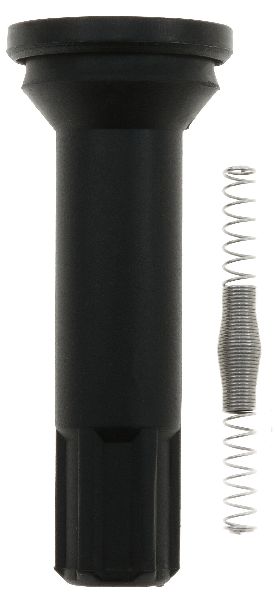
- If the misfire remains on cylinder 4, remove the coil and inspect the spark plug tube for any oil. Oil in the tube indicates a leaking spark plug tube seal (part of the valve cover gasket set).
- Remove and inspect the spark plug from cylinder 4. Look for a wide gap, oil fouling, or damage. If it's worn or fouled, replace all four spark plugs with the OEM-specified NGK Iridium plugs.
- If ignition components are confirmed good and there are no drivability issues, investigate the applicability of TSB #11-116-12R for an ECM reprogram.
- If other codes related to the camshaft position system are present, follow the diagnostic procedures outlined in TSB #11-130-13R.
- Check for vacuum leaks around the intake manifold near cylinder 4 using propane or brake cleaner and listening for idle changes.
- If all else fails, a fuel injector swap can be performed. If the misfire still persists on cylinder 4, perform a compression test to check for mechanical engine problems like a burnt valve or bad rings.
Parts You'll Likely Need
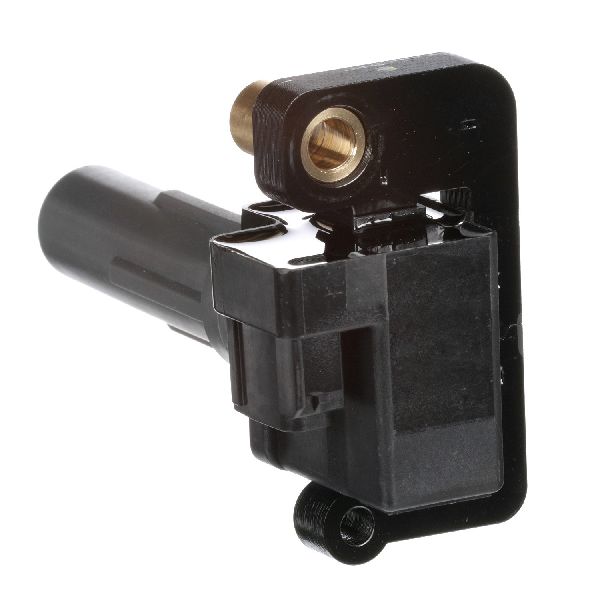
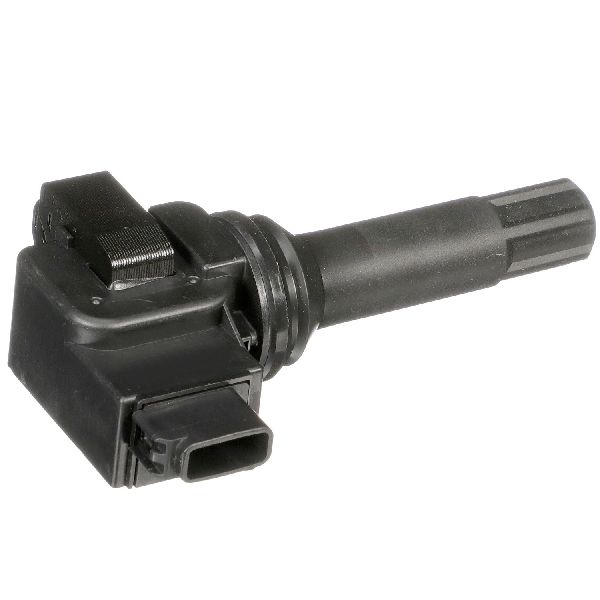
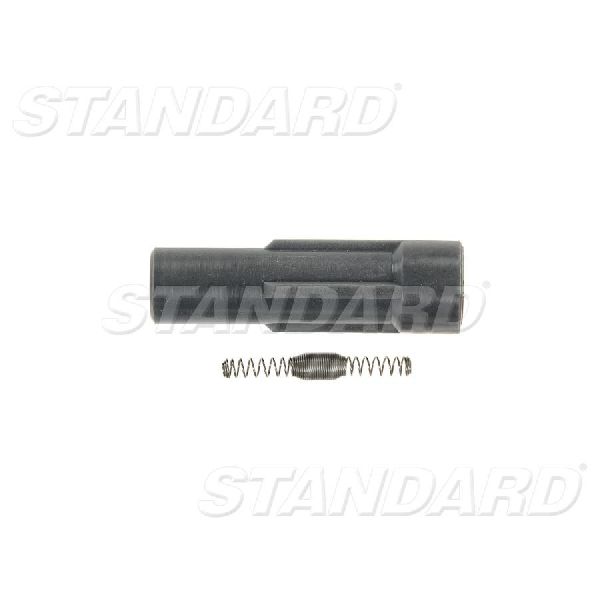
- Ignition Coil
(OEM #22433AA642)— Ignition coils are a very common failure point for isolated cylinder misfires. A simple swap test can confirm failure.
Trusted brands: Denso, NGK, OEM Subaru
OEM price range: $90-$120
Aftermarket price range: $50-$80 - Spark Plug
(OEM #22401AA781)— As a routine maintenance item, spark plugs wear out and can cause misfires. On the FB25, they are also susceptible to oil fouling. They are the first and cheapest part to inspect.
Trusted brands: NGK (SILZKAR7B11), Denso
OEM price range: $15-$25 per plug
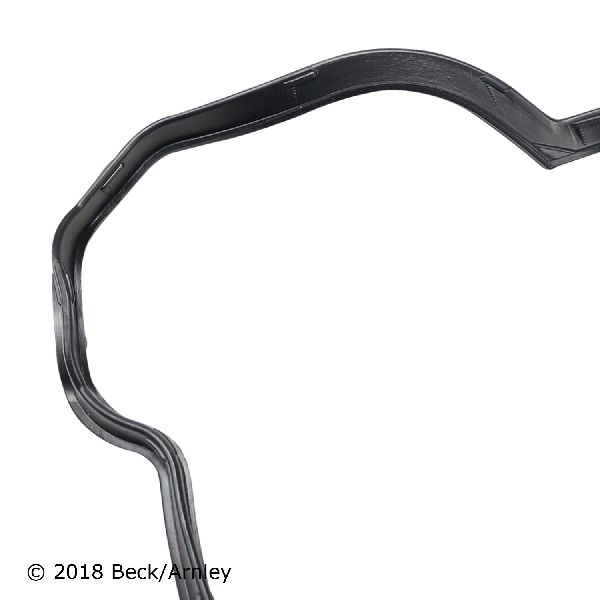
Aftermarket price range: $10-$18 per plug - Valve Cover Gasket Kit (with spark plug tube seals)
(OEM #13294AA070 (Gasket), 13293AA051 (Tube Seal))— If oil is found in the spark plug well, the tube seals have failed. They are typically replaced along with the valve cover gaskets. 🎬 Watch: How to replace valve cover gaskets and tube seals.
Trusted brands: OEM Subaru, Fel-Pro
OEM price range: $50-$70 for a full kit per side
Aftermarket price range: $30-$50
Related Codes That Often Appear With This One
- P0300 — Random Misfire Detected. If the misfire is intermittent or starting to affect other cylinders, P0300 may appear alongside P0304.
- P0302 — Cylinder 2 Misfire. Since cylinders 2 and 4 are on the same bank (driver's side), a shared issue like a clogged catalytic converter on that bank or a leaking valve cover gasket could potentially cause misfires on both.
- P0340, P0341, P0365, etc. — As per TSB #11-130-13R, camshaft position sensor codes can appear with misfire codes, indicating a potential timing system issue as the root cause.
- P0420 — Catalyst System Efficiency Below Threshold. A chronic misfire can dump unburnt fuel into the exhaust, damaging the catalytic converter over time and triggering this code.
Technical Service Bulletins (TSBs) & Recalls

- 11-130-13R: Links misfire DTCs P0301-P0304 with camshaft position sensor DTCs.
- 11-116-12R: Announces an ECM reprogramming to address 'phantom' misfire codes P0301-P0304 when no drivability condition exists.
- 11-100-11R: Connects misfire codes P0301-P0304 with difficulty starting and rough idle symptoms.
Platform-Specific Known Issues
- Subaru issued TSB #11-116-12R because the ECM could incorrectly set misfire codes P0301-P0304 when no actual misfire or drivability issue existed. The fix is a software update.
- TSB #11-130-13R and #11-100-11R both indicate a connection between various camshaft position sensor faults and the logging of misfire codes, including P0304.
- The early (2011-2014) FB25B engines were subject to a class-action lawsuit for excessive oil consumption. This issue can foul spark plugs, leading to misfires like P0304.
Mechanic-Grade Diagnostic Values
- Ignition Coil Secondary Resistance — expected: 9.5 - 12.9 kΩ. Failure: A reading outside of this range indicates a faulty coil winding.
- Fuel Injector Resistance — expected: 10 - 18 Ω. Failure: A reading significantly outside this range, or an open/short circuit, indicates a bad injector coil. All injectors should have similar readings.
- Short-Term (STFT) and Long-Term (LTFT) Fuel Trims — expected: Ideally +/- 5%, but up to +/- 10% can be acceptable.. Failure: A combined value consistently greater than +10% suggests the engine is running lean (e.g., vacuum leak) and adding fuel to compensate. A value consistently less than -10% suggests a rich condition.
- Engine Compression — expected: 135 - 150+ PSI, with minimal variation between cylinders.. Failure: A cylinder with significantly lower pressure than the others points to a mechanical issue like a burnt valve, worn piston rings, or head gasket failure.
Hidden / Shadow Codes Worth Checking
- Mode $06 Misfire Monitor: This is not a specific code, but a function within the OBD-II system that provides raw test data from the vehicle's onboard monitors. For misfires, it shows the actual count of misfire events per cylinder during a drive cycle, even if the count is not high enough to trigger a P030x trouble code and turn on the check engine light. (see via Use a professional-grade scan tool or a capable consumer OBD-II adapter with an advanced app (like Torque Pro) and look for 'Mode $06', 'Test Results', or 'On-Board Monitoring'. The misfire data for each cylinder will be listed under a specific Test ID (TID) and Component ID (CID).)
Scan Tool Commands That Help
- Subaru Select Monitor (SSM) or equivalent pro-level scanner: Current Data Display / Misfire Monitoring — This function is crucial for diagnosing intermittent or 'phantom' misfires. By watching the live misfire count for each cylinder, a technician can confirm if cylinder 4 is experiencing misfire events that aren't yet severe enough to set a persistent code. This is especially useful for verifying the 'phantom code' issue described in TSB #11-116-12R.
Wiring & Ground Locations
- GE2 — Bolted to the top, center, rear of the engine block, next to ground GE1.. This is a primary ground point for the ignition system. All four ignition coils are grounded at this location. A loose or corroded connection here can cause a weak or inconsistent spark, leading to misfires on one or more cylinders.
- GB-1 / GB-2 — GB-1 is at the right front of the engine compartment. GB-2 is in the left front wheelwell area.. These are major chassis and engine bay ground points. While not directly tied only to the ignition coils, poor connections at these locations can cause a variety of strange electrical issues, including problems with the ECM or its sensors, which could indirectly lead to a misfire code.
Real Owner Repair Stories
- YouTube video from channel 'PistonSlap' (2009 Subaru Forester (EJ engine, but principle applies)) — P0303 and P0304 codes (misfire on cylinders 3 & 4) appearing only at high RPM (around 5000 RPM) after an engine replacement. Engine ran smoothly otherwise.
❌ Tried (didn't work) Replacing spark plugs, Replacing spark plug wires, Replacing ignition coil, Replacing O2 sensor, Verifying timing belt was correctly installed
✅ What actually fixed it Replacing the crankshaft pulley (harmonic balancer). The original pulley, which was reused, was suspected to have a bent or damaged reluctor tang, sending an erratic signal to the crankshaft position sensor at high RPM, which the ECU misinterpreted as a misfire. - Reddit user in /r/SubaruForester (2014 Subaru Forester (FB25 engine)) — Persistent P0304 code after trying common fixes.
❌ Tried (didn't work) Not specified, but implied common fixes like plugs/coils were attempted.
✅ What actually fixed it The final diagnosis from a mechanic was a required engine replacement due to an internal mechanical failure, costing between $3,000 and $8,500. This represents the worst-case scenario where the misfire is a symptom of a catastrophic engine problem, likely related to the known oil consumption issues. - YouTube video from channel 'Subaru Fan' (Subaru Forester (year not specified, but similar symptoms)) — P0304 code.
❌ Tried (didn't work) Inspecting ignition wires with water mist test, Checking for vacuum leaks with propane and brake cleaner
✅ What actually fixed it The owner found that the spark plug in cylinder 4 was slightly loose. Although it had been replaced previously, it was not fully torqued down, which was believed to be the cause of the misfire.
"I Checked Everything" — The Actual Cause
- A case was documented where a persistent high-RPM misfire (P0303/P0304) was not caused by a vacuum leak, ignition, or fuel issue. The actual cause was a damaged crankshaft pulley (harmonic balancer) whose reluctor teeth were sending a bad signal to the crankshaft position sensor. Standard diagnostic procedures like a smoke test or ignition component swaps would not have identified this root cause.
When the Usual Fixes Don't Work
- While the most common fixes for P0304 are spark plugs and ignition coils, there are documented cases where the root cause is far more obscure. In one instance, after all standard ignition and fuel components were checked, the problem was traced to a damaged crankshaft pulley giving a false signal to the ECU at high RPM. In another, the final diagnosis was a catastrophic internal engine failure requiring a complete engine replacement, highlighting that P0304 can sometimes be a symptom of a much more severe mechanical problem beyond simple ignition components.
OEM Part Supersession History
22433AA642 (for Ignition Coil)→VIN-dependent; other numbers like 22433AA612 may be used on similar models/years.— Part updates and consolidation across model lines.
Heads up: While multiple ignition coils may look physically identical, their internal resistance or dwell time programming can differ. It is critical to use a part number confirmed for the vehicle's specific VIN to avoid introducing new performance issues.
Model Year Variations Within This Range
- 2011-2013: These model years use the first iteration of the FB25B engine. They are most susceptible to the excessive oil consumption issue caused by the original piston ring design. This problem was addressed in a 2014 engine update, making the 2011-2013 models more likely to experience P0304 due to oil-fouled spark plugs.
Helpful Videos
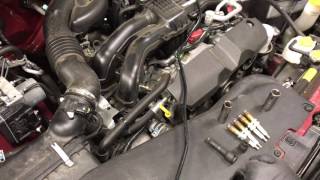
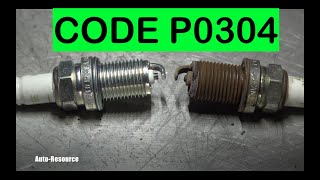


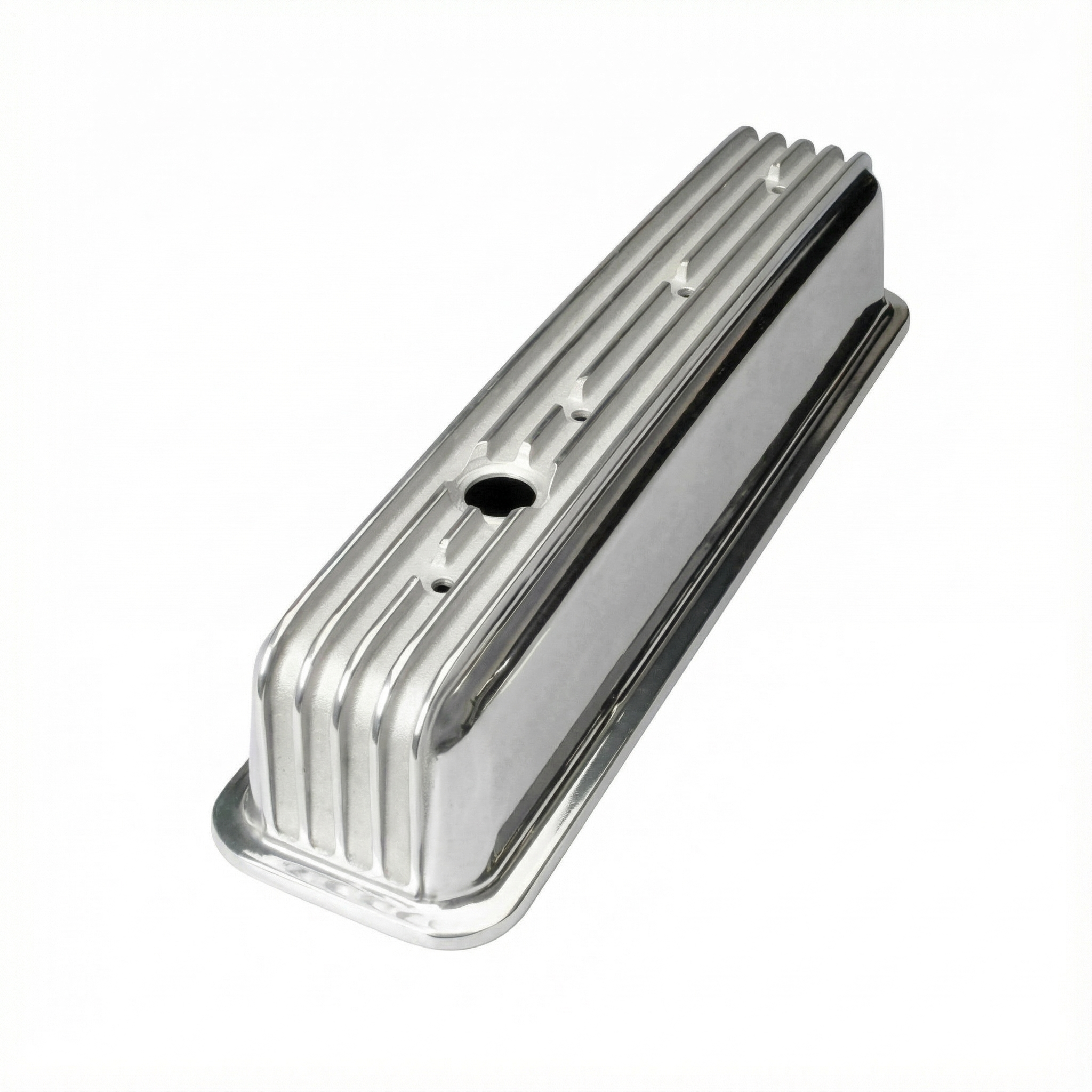
Used OEM Parts in Stock


New Aftermarket Parts Available


The information in this article is provided for general reference and educational purposes only. Vehicle specifications, procedures, and part compatibility can vary by production date, trim level, and region. Always consult your vehicle's factory service manual and verify part numbers before purchasing or performing repairs. Safety-critical components such as airbags, seat belts, and braking systems should be installed by a qualified professional.
- Subaru FORESTER:
- 🎬 Helpful Videos
- 🛍️ Shop This Part
- What's Unique About the 2011-2013 Subaru FORESTER
- Diagnostic Flowchart
- Symptoms You May Notice
- Most Likely Causes
- Rare But Worth Checking
- Diagnosis Steps
- Parts You'll Likely Need
- Related Codes That Often Appear With This One
- Technical Service Bulletins (TSBs) & Recalls
- Platform-Specific Known Issues
- Mechanic-Grade Diagnostic Values
- Hidden / Shadow Codes Worth Checking
- Scan Tool Commands That Help
- Wiring & Ground Locations
- Real Owner Repair Stories
- "I Checked Everything" — The Actual Cause
- When the Usual Fixes Don't Work
- OEM Part Supersession History
- Model Year Variations Within This Range
- 🎟️ Get 5% Off