

P0304 on 2007-2010 Pontiac G5: Cylinder 4 Misfire Causes and Fixes
P0304 on a Pontiac G5 means cylinder 4 is misfiring. This is most often caused by a worn spark plug or a failed ignition coil. Expect to spend $20-$100 for a DIY fix, which is relatively simple. The issue is common across platform-mates like the Chevrolet Cobalt and Saturn Ion.
- P0304 on a Pontiac G5 is a misfire on cylinder 4, most often caused by a bad spark plug or ignition coil.
- The easiest way to diagnose the problem is to swap the ignition coil from cylinder 4 with another cylinder and see if the code follows.
- Do not ignore a flashing Check Engine Light, as this indicates a severe misfire that can quickly damage your catalytic converter.
- Always replace spark plugs as a set with OEM-spec Iridium plugs (ACDelco 41-103) to ensure consistent engine performance.
- If basic ignition and fuel component checks do not solve the issue, a failed Ignition Control Module (ICM) or a more serious mechanical problem like low compression could be the cause.
What's Unique About the 2007-2010 Pontiac G5
The Pontiac G5 is mechanically almost identical to the Chevrolet Cobalt, Chevrolet HHR, and Saturn Ion, all sharing the GM Delta platform and Ecotec engines (2.2L L61 and 2.4L LE5). While these engines are generally robust, misfires are a common issue as ignition components wear out. A GM Technical Service Bulletin (TSB #PIP3333C) specifically addresses intermittent misfires on cylinder 4, noting it can occur during or after a right turn due to fuel contamination becoming trapped in the returnless fuel rail. This TSB suggests advising customers to use Top Tier gasoline after cleaning the fuel system.
Diagnostic Flowchart
Tap your situation to follow the diagnostic path that matches what you're seeing on this vehicle.
Symptoms You May Notice
- Check Engine Light is on or flashing
- Rough or shaky idle
- Engine hesitation or stumbling during acceleration
- Noticeable loss of power
- Reduced fuel economy
- Smell of unburned gasoline from the exhaust
- Difficulty starting the engine
- Replacing the fuel pump when only a single cylinder is misfiring. A fuel pump issue would typically affect all cylinders and likely trigger a P0300 (random misfire) or fuel pressure codes.
Most Likely Causes
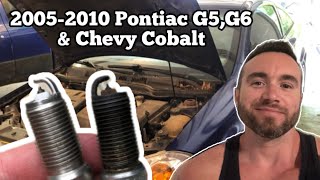
- Worn or Fouled Spark Plug 🔴 High Probability Spark plugs are a routine maintenance item and a primary failure point for the ignition system on any gasoline engine. The Ecotec engine is sensitive to spark plug wear, and a worn electrode can easily cause a misfire under load.
How to confirm: Remove the spark plug from cylinder 4 and inspect it. Look for heavy carbon deposits, oil fouling, a worn-out or flattened electrode, or an incorrect gap. Compare it to a plug from a different cylinder.
Typical fix: Replace the spark plug. It is highly recommended to replace all four spark plugs at the same time with OEM-spec Iridium plugs to ensure even performance and prevent future misfires.
Est. part cost: $30-$60 for a set of four Iridium plugs - Failed Ignition Coil 🔴 High Probability The Coil-on-Plug design is common, but individual coils on the Ecotec engine are a frequent failure item due to age and constant heat cycles, causing a misfire in a single cylinder.
How to confirm: Swap the ignition coil from cylinder 4 with another cylinder (e.g., cylinder 3). Clear the codes and drive the car. If the code changes to P0303, the coil is faulty. This is the most definitive DIY diagnostic step.
Typical fix: Replace the faulty ignition coil. Many owners recommend replacing all four coils at once, especially on higher mileage vehicles, to prevent having to repeat the job.
Est. part cost: $40-$100 for a single OEM-quality coil - Clogged or Faulty Fuel Injector 🟡 Medium Probability Fuel injectors can become clogged with deposits over time, especially if lower-quality fuel is used, preventing the correct amount of fuel from reaching the cylinder. The issue can be exacerbated by the returnless fuel system design mentioned in TSB PIP3333C.
How to confirm: Listen for a clicking sound from the injector with a mechanic's stethoscope to confirm it's activating. A more advanced test involves swapping injectors between cylinders (similar to the coil swap) or performing a flow test, though this is a more involved job.
Typical fix: Replace the faulty fuel injector. Sometimes, a professional fuel system cleaning can resolve minor clogs.
Est. part cost: $50-$150 - Failed Ignition Control Module (ICM) 🟡 Medium Probability On the 2.2L and 2.4L Ecotec engines, the ICM is mounted directly under the ignition coil assembly and is prone to failure from heat soak. A failing ICM often causes intermittent misfires (P0300, P0304) that appear or worsen as the engine warms up.
How to confirm: This is harder to diagnose. A common method is to see if the misfire starts only after the engine has been running for 15-20 minutes. A technician might carefully use a heat gun on the module with the engine running to see if it induces the misfire.
Typical fix: Replace the Ignition Control Module. It is often replaced along with the coil packs.
Est. part cost: $70-$150
Rare But Worth Checking
- Low Engine Compression: This is a more serious mechanical issue. If spark and fuel components are confirmed to be good, a compression test is the next step. A reading on cylinder 4 that is significantly lower than the others (e.g., 60 psi vs 150+ psi) points to a problem like a worn piston ring, a bad valve, or a leaking head gasket.
- Vacuum Leak: A vacuum leak from a cracked hose or a failed intake manifold gasket near the runner for cylinder 4 could lean out the air/fuel mixture and cause a misfire. This would often be accompanied by other codes like P0171 (System Too Lean).
- Contaminated Fuel: As detailed in TSB #PIP3333C, water or other contaminants in the fuel can cause an intermittent misfire specifically on cylinder 4 during right-hand turns as the fuel sloshes in the rail. The fix involves cleaning the entire fuel system and using high-quality fuel.
Diagnosis Steps
- Retrieve the code with an OBD-II scanner to confirm P0304 is the primary code. Note any other codes like P0300 or P0171.
- Inspect the spark plug for cylinder 4. Check for wear, damage, or fouling. If it looks bad, replace all four plugs with ACDelco Iridium plugs (Part No. 41-103 or equivalent).
- If the spark plug is okay, swap the ignition coil from cylinder 4 to another cylinder (e.g., cylinder 3). This is the easiest and most common diagnostic step.
- Clear the codes, drive the vehicle, and re-scan. If the code is now P0303, the ignition coil is the culprit and needs to be replaced. The ACDelco OEM part is D522C.
- If the code remains P0304, the issue is not the coil or plug. The next step is to check the fuel injector.
- Check the wiring and connector to the fuel injector on cylinder 4 for any visible damage or looseness.
- Listen to the injector with a stethoscope; it should make a consistent clicking noise. If it's silent or irregular, it may be faulty.
- If spark and fuel delivery seem okay, consider the possibility of a heat-related failure of the Ignition Control Module (ICM), a known issue on these engines.
- If all else fails, perform an engine compression test to check for mechanical issues. A low reading in cylinder 4 indicates a serious internal engine problem.
Parts You'll Likely Need
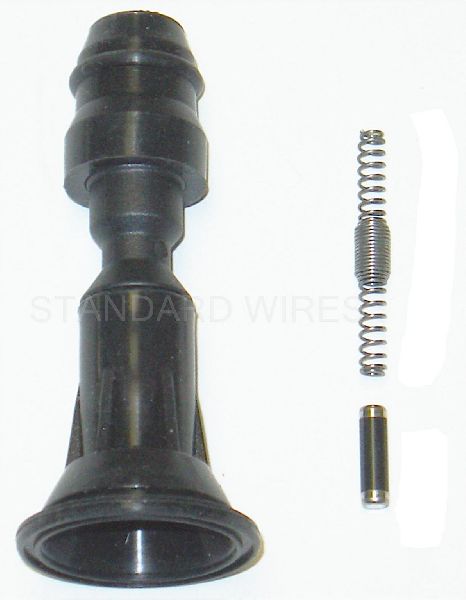
- Ignition Coil
(OEM #ACDelco D522C (GM 12638824))— Ignition coils are a very common failure point for single-cylinder misfires on the Ecotec engine.
Trusted brands: ACDelco, Delphi, NGK, DENSO
OEM price range: $60-$100
Aftermarket price range: $40-$75 - Spark Plugs
(OEM #ACDelco 41-103 (Iridium))— As a standard maintenance item, worn spark plugs are a leading cause of misfires. Using OEM-spec Iridium plugs is recommended for longevity.
Trusted brands: ACDelco, NGK, Bosch
OEM price range: $30-$60 (set of 4)
Aftermarket price range: $20-$40 (set of 4) - Fuel Injector — Less common than ignition parts, but a clogged or failed injector is the next likely cause if spark is good.
Trusted brands: ACDelco, Bosch, Standard Motor Products
OEM price range: $100-$150
Aftermarket price range: $50-$90
Related Codes That Often Appear With This One
- P0300 — If the misfire is intermittent or begins to affect other cylinders, a P0300 (Random Misfire) code may appear alongside the P0304.
- P0171 — If the misfire is caused by a vacuum leak or a clogged fuel injector, the engine may run lean, triggering a P0171 code.
Technical Service Bulletins (TSBs) & Recalls
- PIP3333C: Intermittent engine misfire and a Service Engine Soon Malfunction Indicator Lamp with DTC P0300, P0301, and/or P0304.
Platform-Specific Known Issues
- A Technical Service Bulletin (TSB #PIP3333C) was issued for 2007 models regarding intermittent misfires on cylinders 1 and 4. It specifically notes that a P0304 can occur during a hard right turn. This is caused by fuel contamination getting trapped in the returnless fuel rail. The recommended fix is to clean the fuel tank, lines, and rail, and advise the owner to use Top Tier fuel.
- The Ignition Control Module (ICM) located under the coil pack is a known failure point due to heat soak, often causing misfires (including P0304) that appear or worsen once the engine is fully warmed up.
Mechanic-Grade Diagnostic Values
- Fuel Pressure (Key ON, Engine OFF) — expected: 345-414 kPa (50-60 psi). Failure: Pressure below 50 psi suggests a weak fuel pump or clogged filter, which could contribute to a misfire under load.
- Fuel Injector Resistance (2.2L L61 & 2.4L LE5) — expected: ~12.5 Ohms. Failure: A reading significantly different from this value, or an open/short circuit, points to a faulty injector coil.
- Ignition Coil Primary Resistance — expected: 0.4 to 2.0 Ohms. Failure: A reading of OL (open circuit) or outside this range indicates a bad primary winding in the coil.
- Engine Compression (2.2L/2.4L Ecotec) — expected: Minimum of 100 psi, with all cylinders within 15% of each other. Healthy engines typically show 150 psi or higher.. Failure: A reading on cylinder 4 that is more than 15% lower than the others indicates a mechanical engine problem (valves, piston rings, head gasket).
Hidden / Shadow Codes Worth Checking
- Mode $06, Test ID $A2-$A5: This is not a shadow code, but rather a specific test monitor within the standard OBD-II system. Test IDs $A2 through $A5 correspond to misfire counts for cylinders 1 through 4, respectively. Accessing this data with an advanced scan tool can show raw misfire counts for cylinder 4 (Test ID $A5) even before the count is high enough to set a P0304, which is useful for diagnosing intermittent issues. (see via An OBD-II scan tool that supports Mode $06 data display.)
Scan Tool Commands That Help
- Tech2 / GDS2 (GM Dealer Tool): Cylinder Power Balance Test — This function allows a technician to individually disable the fuel injector for each cylinder while the engine is running. When cylinder 4's injector is disabled, if there is little to no change in the engine's RPM and smoothness, it confirms that cylinder 4 was not contributing power, pinpointing the misfire without swapping parts.
Wiring & Ground Locations
- G105 — Lower left front of the transmission case.. This is a major chassis and engine ground. Corrosion or a loose connection here can cause a wide range of intermittent electrical problems, including weak spark or erratic sensor behavior that could lead to a misfire code.
- G107 — Upper front, right side of the engine, near the exhaust manifold (on some diagrams listed as right rear of cylinder head).. This is a critical engine block/cylinder head ground. Since the ignition coils are grounded through the engine block, a poor connection at G107 can directly cause insufficient spark energy, leading to misfires, especially as the engine heats up.
- Cylinder 4 Fuel Injector Connector — Top of the engine, on the fuel rail, at the fourth cylinder from the passenger side.. The connector and its wiring are common points of failure. Check for a broken locking tab, corrosion on the pins, or chafed wires in the harness leading to the injector. A voltage check (should see battery voltage with key on) and a noid light test can confirm if the injector is receiving the signal to fire from the ECM.
Real Owner Repair Stories
- Chevy HHR forum user (Chevy HHR 2.4L (platform mate), 100k miles) — P0304 and traction control error light.
❌ Tried (didn't work) Replaced spark plugs, Swapped ignition coils (code did not move from cylinder 4)
✅ What actually fixed it The owner suspected a fuel injector issue. They purchased a used fuel rail with injectors, tested them on the bench (all read 12.5 ohms), and prepared to swap them. The discussion pointed towards a potential mechanical issue, like a bad valve, being more likely if the injector swap didn't solve it.
When the Usual Fixes Don't Work
- While ignition coils and spark plugs are the most common culprits for P0304, there are numerous documented cases on forums where owners replaced both without resolving the issue. In many of these instances, the next step was to investigate the fuel injector for cylinder 4. However, if swapping the injector also failed to move the misfire code, the problem was often traced back to a more serious mechanical issue requiring a compression test to diagnose, such as a bad valve or worn piston rings. This contradicts the idea that it's always a simple ignition fix.
Model Year Variations Within This Range
- 2007-2010: The 2007 model year 2.2L L61 engine received a significant update from previous years. It moved from a shared two-coil cassette system to an individual Coil-on-Plug ignition system, the same style used on the 2.4L LE5. It also received a new Gen II engine block, an improved cylinder head, and a 58X crankshaft reluctor ring (up from 7X), all controlled by a new E37 ECM. This means diagnostic procedures for pre-2007 Ecotec engines with ignition cassettes do not apply to the G5.
Helpful Videos


Used OEM Parts in Stock


New Aftermarket Parts Available



The information in this article is provided for general reference and educational purposes only. Vehicle specifications, procedures, and part compatibility can vary by production date, trim level, and region. Always consult your vehicle's factory service manual and verify part numbers before purchasing or performing repairs. Safety-critical components such as airbags, seat belts, and braking systems should be installed by a qualified professional.
- Pontiac G5:
- 🎬 Helpful Videos
- 🛍️ Shop This Part
- What's Unique About the 2007-2010 Pontiac G5
- Diagnostic Flowchart
- Symptoms You May Notice
- Most Likely Causes
- Rare But Worth Checking
- Diagnosis Steps
- Parts You'll Likely Need
- Related Codes That Often Appear With This One
- Technical Service Bulletins (TSBs) & Recalls
- Platform-Specific Known Issues
- Mechanic-Grade Diagnostic Values
- Hidden / Shadow Codes Worth Checking
- Scan Tool Commands That Help
- Wiring & Ground Locations
- Real Owner Repair Stories
- When the Usual Fixes Don't Work
- Model Year Variations Within This Range
- 🎟️ Get 5% Off