

P0304 on 2007-2010 Pontiac G3: Cylinder 4 Misfire Causes and Fixes
P0304 on a Pontiac G3 is most often caused by a worn spark plug or a faulty ignition coil pack. A very common underlying issue is a leaking valve cover gasket that allows oil to foul the spark plug in cylinder #4. Expect to spend $10-$20 for a spark plug, or $60-$150 for a new coil pack.
- P0304 indicates a misfire specifically in cylinder #4.
- Before buying parts, pull the ignition coil out of cylinder 4 and check for oil in the spark plug well. This is a very common issue on the Pontiac G3.
- If oil is present, you must replace the valve cover gasket. Also, replace the oil-soaked spark plug and consider replacing the ignition coil pack.
- If no oil is found, the most likely causes are a worn spark plug or a failed ignition coil pack.
- Do not drive for an extended period with a flashing check engine light, as this can quickly destroy your catalytic converter.
What's Unique About the 2007-2010 Pontiac G3
The Pontiac G3 is a rebadged Chevrolet Aveo, and they share the same 1.6L E-TEC II engine and its common faults. A frequently reported problem on this platform is the failure of the valve cover gasket, specifically the integrated seals around the spark plug tubes. This allows engine oil to leak into the spark plug wells, soaking the plug and ignition coil boot, which directly causes a misfire code like P0304. 🎬 Watch: Understanding the causes and fixes for a P0304 code. While standard ignition faults are common, this gasket leak is a well-documented, platform-specific issue to check for first. Additionally, the PCV valve system is integrated into the valve cover, and its failure can cause a vacuum leak, leading to lean codes (P0171) and misfires.
Diagnostic Flowchart
Tap your situation to follow the diagnostic path that matches what you're seeing on this vehicle.
Symptoms You May Notice
- Rough or erratic idle
- Engine hesitation or stumbling during acceleration
- Noticeable loss of power
- Flashing or solid Check Engine Light
- Reduced fuel economy
- Smell of unburned fuel from the exhaust
- Replacing only the spark plug without addressing an oil leak in the spark plug well. The new plug will soon become fouled with oil, and the misfire will return.
- Replacing the ignition coil pack when the true cause is an oil-fouled spark plug from a leaking valve cover gasket.
Most Likely Causes
- Leaking Valve Cover Gasket (Spark Plug Tube Seals) 🔴 High Probability The rubber seals integrated into the valve cover gasket become hard and brittle with age and heat, allowing oil to seep into the spark plug wells. This is a very common failure on the 1.6L E-TEC II engine found in the G3 and Aveo.
How to confirm: Remove the ignition coil from cylinder #4. Visually inspect the spark plug well and the end of the coil boot for the presence of liquid engine oil. The presence of oil is a definitive sign of a failed gasket.
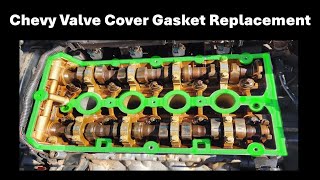
Typical fix: Replace the valve cover gasket assembly, which includes the outer perimeter gasket and the spark plug tube seals. 🎬 See this step-by-step guide to replacing the valve cover gasket. It is critical to thoroughly clean all oil from the spark plug tubes, the coil boot, and the spark plug itself before reassembly. Failing to clean out the oil will cause the misfire to return quickly.
Est. part cost: $25-$60 - Worn or Fouled Spark Plug 🔴 High Probability Spark plugs are a standard maintenance item. If they are oil-fouled from the common valve cover gasket leak, they must be replaced or meticulously cleaned. The correct spark plug gap for this engine is 1.1mm (0.043").
How to confirm: Remove the spark plug from cylinder #4. Inspect it for wear (worn electrode), carbon fouling, or oil contamination. To be certain, swap the cylinder #4 spark plug with one from another cylinder (e.g., cylinder #1), clear the codes, and drive. If the code changes to P0301, the spark plug is the confirmed cause.
Typical fix: Replace the spark plug. It is recommended to replace all four spark plugs at the same time with quality OEM-spec plugs, such as the NGK BKR6E-11.
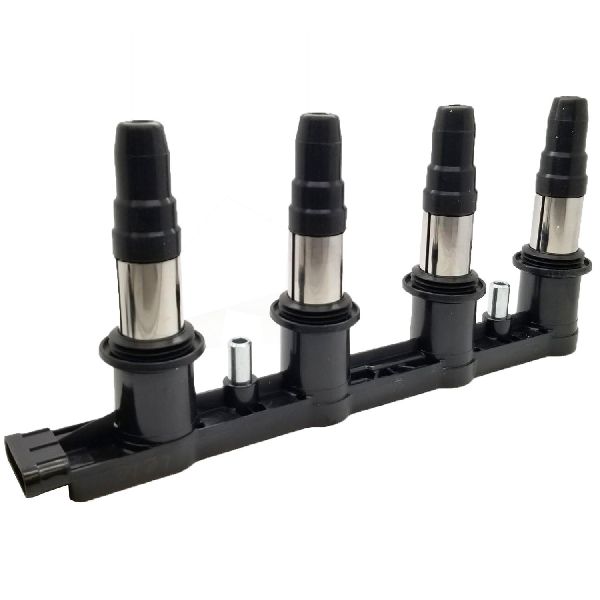
Est. part cost: $5-$20 per plug - Faulty Ignition Coil Pack 🟡 Medium Probability The single coil pack serves all four cylinders and is a common failure point due to age, heat, or chronic oil contamination from a leaking valve cover gasket. The housing can develop cracks, leading to weak or misdirected spark.
How to confirm: Inspect the coil pack for cracks or signs of arcing. Since it's a single unit, you cannot easily swap it to another cylinder for diagnosis. If plugs are new and there's no oil in the well, the coil pack is the next likely suspect. An inline spark tester can be used to verify spark output for cylinder #4.
Typical fix: Replace the entire ignition coil pack assembly. It is a single, unserviceable unit.
Est. part cost: $60-$150 - Clogged or Faulty Fuel Injector ⚪ Low Probability
How to confirm: Listen to the injector with a mechanic's stethoscope; it should have a consistent clicking sound. For a definitive test, swap the fuel injector from cylinder #4 with another cylinder (e.g., cylinder #2). Clear the codes and run the engine. If the misfire code moves to P0302, the injector is faulty.
Typical fix: Replace the faulty fuel injector.
Est. part cost: $40-$100
Rare But Worth Checking
- Low Engine Compression: A mechanical issue like a burnt valve or worn piston rings can cause a persistent misfire that doesn't resolve with ignition or fuel system parts. A compression test is required to diagnose this. A healthy cylinder should have compression close to the others (e.g., within 10-15%).
- Vacuum Leak: A leak in a vacuum hose or the intake manifold gasket can lean out the air-fuel mixture and cause a misfire. A common source on this engine is a failed PCV diaphragm inside the valve cover, which creates a significant vacuum leak. This would often be accompanied by a P0171 (System Too Lean) code and a loud sucking noise from the engine.
Diagnosis Steps
- Read the codes with an OBD-II scanner and confirm P0304 is present. Note any other codes, especially P0300 or P0171.
- Turn off the engine and remove the ignition coil from cylinder #4 (the cylinder closest to the driver's side).
- Inspect the spark plug well for any oil. If oil is present, the valve cover gasket is leaking and must be replaced. This is the most likely root cause.
- If no oil is present, remove the spark plug from cylinder #4. Inspect its condition for wear, fouling, or damage. Check that the gap is 1.1mm (0.043").
- To isolate the plug, swap the spark plug from cylinder #4 with the plug from cylinder #1. Reinstall the coil pack.
- Clear the codes and drive the vehicle until the check engine light returns. If the code is now P0301, the spark plug is faulty and should be replaced.
- If the code remains P0304, the spark plug is not the issue. The next most likely cause is the ignition coil pack or a fuel injector.
- If ignition components check out, consider swapping the fuel injector from cylinder #4 with another cylinder to see if the misfire follows the injector.
- If all ignition and fuel components are confirmed good, perform an engine compression test to rule out mechanical issues like a burnt valve.
Parts You'll Likely Need
- Valve Cover Gasket Kit — This is the most common root cause of oil-fouled spark plugs leading to a P0304 on this engine. The kit includes the main gasket and the crucial spark plug tube seals.
Trusted brands: ACDelco, Fel-Pro (VS 50727 R is a commonly cited aftermarket part number), Mahle
OEM price range: $40-$60
Aftermarket price range: $25-$45 - Ignition Coil Pack
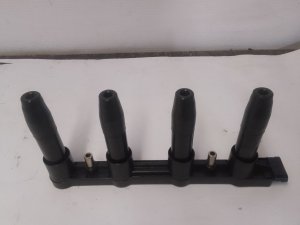
(OEM #96476979, 55561655, 25186687)— A common failure item for misfires. It can fail from age or be damaged by oil from a leaking valve cover gasket.
Trusted brands: Delphi, NGK, Standard Motor Products, ACDelco
OEM price range: $120-$180
Aftermarket price range: $60-$120 - Spark Plug — Spark plugs are a routine maintenance item and a primary cause of single-cylinder misfires. They are often replaced along with the coil pack or valve cover gasket.
Trusted brands: NGK (BKR6E-11 or ZFR6FIX-11), Denso (PK16TT), ACDelco, Bosch
OEM price range: $12-$20
Aftermarket price range: $5-$15
Related Codes That Often Appear With This One
- P0300 — If the underlying cause, like a failing coil pack, major vacuum leak, or low fuel pressure, begins to affect other cylinders, a P0300 (Random/Multiple Cylinder Misfire) may be stored alongside P0304.
- P0171 — If the misfire is caused by a vacuum leak from a failed PCV diaphragm in the valve cover, a P0171 (System Too Lean) code is often triggered as well. This failure is characterized by a strong suction at the oil cap when the engine is running.
Technical Service Bulletins (TSBs) & Recalls
- PIP3333C: Notes the potential for intermittent P0304 codes and advises following standard service information for diagnosis. This TSB acknowledges the issue but does not provide a specific non-standard fix.
Platform-Specific Known Issues
- A leaking valve cover gasket that allows oil to pool in the spark plug tubes is an extremely common cause for P030x misfire codes on the 2007-2010 Pontiac G3 and its sibling, the Chevrolet Aveo. Owners frequently report finding oil specifically in the #3 and #4 spark plug wells.
- The PCV valve is integrated into the plastic valve cover. When its internal diaphragm ruptures, it creates a large vacuum leak, often causing a loud sucking or whistling noise, a P0171 lean code, and a rough idle with potential misfires.
Mechanic-Grade Diagnostic Values
- Fuel Pressure (Key On, Engine Off Prime) — expected: 55-60 psi. Failure: Significantly lower pressure indicates a weak fuel pump or leak.
- Ignition Coil Primary Resistance — expected: 0.4 - 2.0 ohms. Failure: A reading outside this range (especially an open circuit) indicates a faulty coil.
- Ignition Coil Secondary Resistance — expected: 6,000 - 11,100 ohms (6.0 - 11.1 kOhms). Failure: A reading outside this range suggests a failure in the secondary windings.
- Engine Compression (Cold) — expected: Approx. 170-200 psi, with no cylinder deviating more than 15% from the others.. Failure: A reading below 100 psi or significantly lower than other cylinders points to a mechanical engine problem.
Hidden / Shadow Codes Worth Checking
- Mode $06, Test ID $A5: Provides the raw misfire count for cylinder 4. This allows a technician to see misfires that are occurring but are not yet frequent enough to set a P0304 trouble code. (see via A professional scan tool capable of displaying Mode $06 data. The specific Monitor ID (OBDMID) for cylinder 4 is typically $A5 on GM platforms of this era.)
Scan Tool Commands That Help
- Tech2 / GDS2: Cylinder Power Balance Test — This function allows the technician to disable one cylinder at a time and observe the corresponding drop in engine RPM. A cylinder that causes little or no RPM drop when disabled is not contributing power, confirming the misfire location.
- Professional Scan Tool: Fuel Injector Balance Test / Actuator Test — This allows for individually commanding each fuel injector to pulse. By listening for a click with a stethoscope or observing fuel pressure drop, a technician can verify if the injector is mechanically and electrically functional without removing it.
Wiring & Ground Locations
- G103 — On the engine block, below the Engine Control Module (ECM).. This is a primary engine control ground. A loose or corroded G103 can cause erratic behavior from sensors and actuators, including the ignition coil and fuel injectors, leading to unexplained misfires.
- G104 — On the engine block, next to the starter motor.. This is another critical engine ground. Poor connection here can affect starter operation and cause various electrical issues, including those that may manifest as misfires.
- ECM Connector Pin 47 — At the Engine Control Module connector.. This pin provides the control signal (ground pulse) to the fuel injector for cylinder #4. A technician can back-probe this pin to verify with a multimeter or oscilloscope that the ECM is commanding the injector to fire.
- ECM Connector Pin 2 — At the Engine Control Module connector.. On the waste-spark ignition system, this pin controls ignition coil #2, which fires cylinders 1 and 4. Verifying the signal at this pin can help determine if a no-spark condition on cylinder 4 is due to a faulty coil, wiring, or a problem with the ECM driver.
Real Owner Repair Stories
- AveoForum.com user (2009 Chevrolet Aveo, 79k miles) — Flashing Check Engine Light and HOLD light, rough running, loss of power during acceleration, P0304 code present.
❌ Tried (didn't work) Replaced all four spark plugs after finding them in very bad shape and oil in cylinder #3's well.
✅ What actually fixed it The misfire on cylinder 4 persisted after replacing the spark plugs. The owner then replaced the entire ignition coil pack assembly, which resolved the P0304 code and the misfire. Another user with a 2010 Aveo at 98k miles confirmed the same fix worked for them. - AveoForum.com user (2008 Chevrolet Aveo) — Runs decent but has a very rough idle. No specific codes mentioned initially, but symptoms are consistent with a misfire.
❌ Tried (didn't work) Replaced spark plugs., Replaced ignition coil., Replaced cracked air intake hose., Cleaned throttle body., Replaced IAT sensor.
✅ What actually fixed it The owner suspected the timing was off by one tooth. A Chevrolet dealer confirmed the timing was off, blaming a failing tensioner, and replaced it. The owner noted the rough idle began immediately after a previous timing belt change, suspecting the initial installation was incorrect. Correcting the timing resolved the idle issue.
"I Checked Everything" — The Actual Cause
- In cases where a misfire persists (especially on companion cylinders like 1 and 4) and major components like plugs and coils have been replaced, a nearly undetectable crack in the accordion-style folds of the main air intake hose can be the cause. This allows unmetered air to enter the engine, leaning out the mixture under load. A smoke test may not reveal this leak unless the hose is flexed and manipulated during the test.
OEM Part Supersession History
96476979→55561655, 25186687, 55570160— Standard part evolution and consolidation by GM.
Heads up: These part numbers are generally interchangeable for the specified application. Aftermarket cross-references include Standard Motor Products UF620 and Delphi D517C.
Model Year Variations Within This Range
- 2007-2008: Models from this period typically use the 1.6L LXT engine (RPO code LXT), which does not have Variable Valve Timing (VVT).
- 2009-2010: The refreshed 2009 model introduced the 1.6L LXV engine (RPO code LXV), which features dual Variable Valve Timing (VVT). While many core components are similar, parts related to the cylinder head, camshafts, and timing system can be different. This distinction is important when ordering engine-specific parts.
Helpful Videos

Used OEM Parts in Stock
New Aftermarket Parts Available


The information in this article is provided for general reference and educational purposes only. Vehicle specifications, procedures, and part compatibility can vary by production date, trim level, and region. Always consult your vehicle's factory service manual and verify part numbers before purchasing or performing repairs. Safety-critical components such as airbags, seat belts, and braking systems should be installed by a qualified professional.
- Pontiac G3:
- 🎬 Helpful Videos
- 🛍️ Shop This Part
- What's Unique About the 2007-2010 Pontiac G3
- Diagnostic Flowchart
- Symptoms You May Notice
- Most Likely Causes
- Rare But Worth Checking
- Diagnosis Steps
- Parts You'll Likely Need
- Related Codes That Often Appear With This One
- Technical Service Bulletins (TSBs) & Recalls
- Platform-Specific Known Issues
- Mechanic-Grade Diagnostic Values
- Hidden / Shadow Codes Worth Checking
- Scan Tool Commands That Help
- Wiring & Ground Locations
- Real Owner Repair Stories
- "I Checked Everything" — The Actual Cause
- OEM Part Supersession History
- Model Year Variations Within This Range
- 🎟️ Get 5% Off