

P0304 on 2019-2021 Mazda MAZDA3: Cylinder 4 Misfire Causes and Fixes
Code P0304 on a 2019-2021 Mazda3 means cylinder 4 is misfiring. The most common fixes are replacing a faulty ignition coil or spark plug. For 2.5L Turbo models, this code can also indicate a serious internal engine issue covered by Mazda TSB #01-001-23a, where a valve in the exhaust manifold seizes, leading to compression loss and requiring cylinder head replacement.
- P0304 is a misfire in cylinder 4. Do not ignore it, especially if the check engine light is flashing, to avoid catalytic converter damage.
- Start your diagnosis with the simple and common fixes: swap the ignition coil, then inspect the spark plug.
- If you have a 2.5L Turbo engine, be aware that P0304 could signal a serious internal engine problem covered by a Mazda TSB. A professional compression test is highly recommended if coils and plugs are not the cause.
- For all engines, if ignition parts are good, the next most likely cause is a faulty fuel injector.
- Replacing all four spark plugs and/or ignition coils at once is recommended for balanced engine performance and longevity.
What's Unique About the 2019-2021 Mazda MAZDA3

For the 2019-2021 Mazda3, the cause of a P0304 code can differ significantly between the standard and 2.5L Turbo engines. While common ignition or fuel issues affect both, the 2.5L Turbo engine is subject to a specific manufacturer TSB for misfires. This bulletin, #01-001-23a, details how a variable valve within the integrated exhaust manifold can seize. This failure causes excessive heat in the exhaust port, leading to uneven wear on the exhaust valve seat, which results in compression leakage and misfires. This is a known design issue that requires extensive engine repair. All engines in this generation are direct-injection, making carbon buildup on intake valves a long-term possibility, though many owners do not experience issues until higher mileage.
Diagnostic Flowchart

Tap your situation to follow the diagnostic path that matches what you're seeing on this vehicle.
Symptoms You May Notice
- Rough or vibrating idle, especially on a cold start.
- Poor acceleration or engine hesitation.
- Flashing or solid Check Engine Light.
- Noticeable loss of engine power.
- Unpleasant fuel smell from the exhaust.
- Engine may feel shakier when the A/C compressor is engaged.
- Replacing the O2 sensor. A misfire can disrupt exhaust readings and trigger O2 sensor codes, but the sensor is rarely the root cause of a single-cylinder misfire code.
- Replacing the mass airflow (MAF) sensor. A faulty MAF sensor typically affects all cylinders and would likely cause a random misfire code (P0300) or a lean/rich code, not a single-cylinder code like P0304.
- Replacing the PCM. In rare cases, a faulty PCM driver can cause a misfire, but this should only be considered after all other mechanical, fuel, and ignition components have been exhaustively tested.
Most Likely Causes

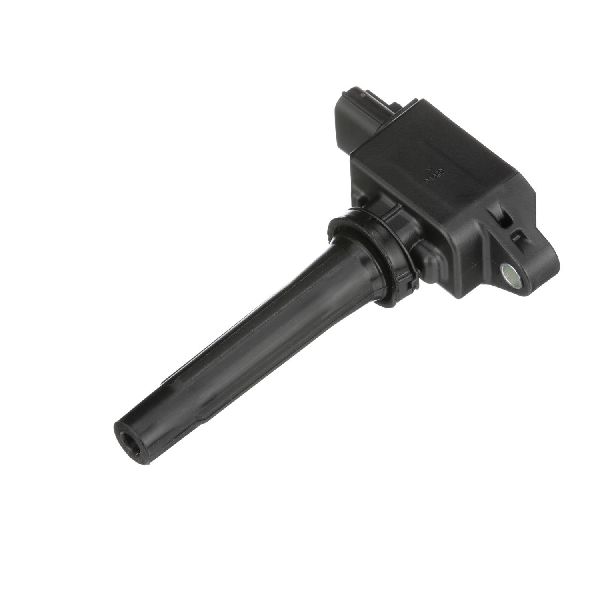
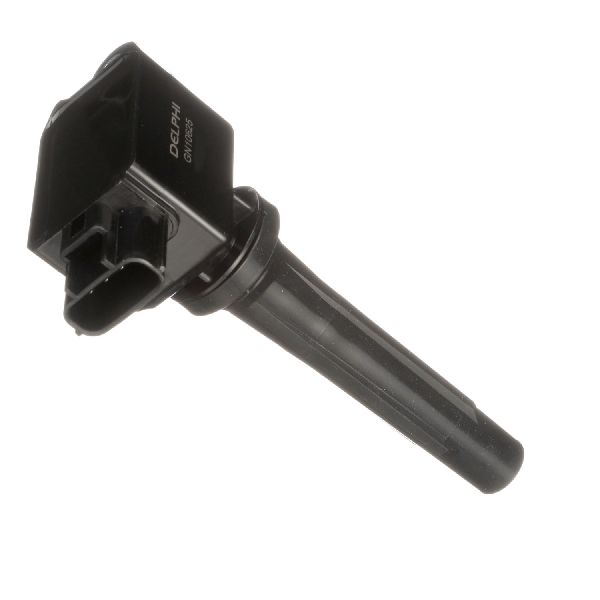
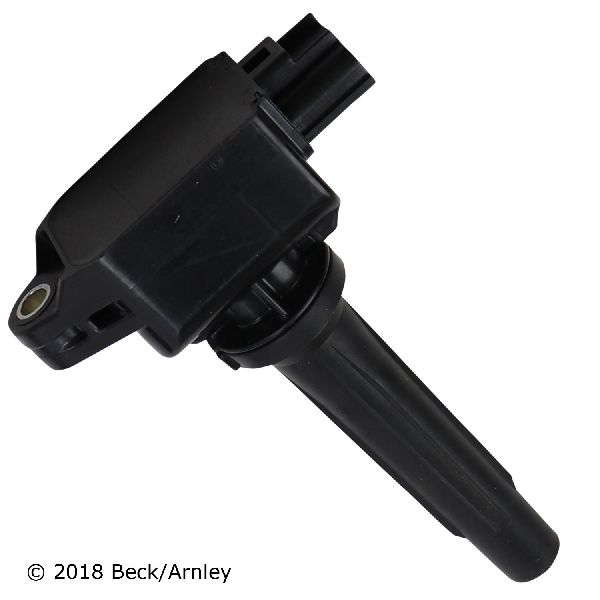
- Faulty Ignition Coil 🔴 High Probability Ignition coils are a common wear item that can fail from heat cycles over time, leading to a weak or absent spark.
How to confirm: The easiest way to confirm a bad coil is to swap the ignition coil from cylinder 4 with another cylinder (e.g., cylinder 3). Clear the codes and drive the car. If the trouble code changes to P0303 (for cylinder 3), the coil is the culprit. This is a widely recommended first diagnostic step in owner forums.
Typical fix: Replace the faulty ignition coil. Many owners choose to replace all four coils at the same time 🎬 Watch: Step-by-step tutorial for replacing Mazda 3 coils and plugs. as a preventative measure, especially if the vehicle is over 60,000 miles.
Est. part cost: $40-$80 per coil (aftermarket), $120-$150 (OEM) - Worn or Fouled Spark Plug 🔴 High Probability Spark plugs are a routine maintenance item with a finite lifespan. A worn electrode, carbon fouling, or oil contamination can prevent a strong spark.
How to confirm: After ruling out the ignition coil, remove the spark plug from cylinder 4. Inspect it for wear (worn electrode), carbon fouling (black and sooty), or oil/fuel contamination. A fuel-fouled plug may indicate a leaking injector. Compare it to a plug from a working cylinder.
Typical fix: Replace the spark plug in cylinder 4. It is best practice to replace all four spark plugs at the same time to ensure even performance. Mazda's recommended interval is typically every 40,000 miles for turbo models and 75,000 miles for naturally aspirated models.
Est. part cost: $15-$30 per plug - Clogged or Faulty Fuel Injector 🟡 Medium Probability As a direct injection engine, the injectors are subjected to high pressure and heat within the combustion chamber, which can lead to failure or clogging over time. A leaking injector can cause a rich condition and foul the spark plug.
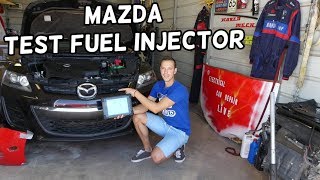
How to confirm: This is more difficult to diagnose. A professional can perform a fuel injector balance test. 🎬 Watch: How to test if your fuel injector is working. A DIY method involves swapping the injector from cylinder 4 with another cylinder, similar to the coil swap, but this is a much more labor-intensive job requiring removal of the intake manifold.
Typical fix: First, try a quality fuel system cleaner designed for GDI engines. If that fails, the injector may need professional cleaning or replacement.
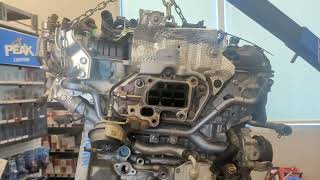
Est. part cost: $100-$250 per injector - Exhaust Manifold / Cylinder Head Failure (2.5L Turbo Only) 🟡 Medium Probability A known issue documented in Mazda TSB #01-001-23a affects 2.5T engines 🎬 See this breakdown of the 2.5T cylinder head failure issue. in the Mazda3 and its platform mates. A variable valve in the integrated exhaust manifold can seize, causing extreme heat that wears the exhaust valve seat, leading to a loss of compression.
How to confirm: A compression test is the definitive diagnostic step. If cylinder 4 shows significantly lower compression than the other cylinders (e.g., under 120 PSI when others are 160+), this TSB is the likely cause. This diagnosis should be performed by a professional.
Typical fix: This is a major repair involving the replacement of the complete cylinder head assembly with an updated part, as specified by Mazda. This repair is typically covered under Mazda's 5-year/60,000-mile powertrain warranty.
Est. part cost: $2000-$5000+ (often covered by warranty) - Carbon Buildup on Intake Valves ⚪ Low Probability As a gasoline direct injection (GDI) engine, fuel is sprayed directly into the cylinder, so it doesn't wash carbon deposits off the back of the intake valves. Over time, this can restrict airflow and cause misfires, particularly on cold starts.
How to confirm: Requires a borescope to visually inspect the intake valves. This is typically done after ruling out all ignition and fuel system issues. Owners on forums report this becoming a problem anywhere from 60,000 to 100,000 miles.
Typical fix: The intake manifold must be removed and the valves cleaned, often through a process called walnut blasting or manual scrubbing.
Est. part cost: $0 (if only cleaning is needed), but labor can be $400-$800
Rare But Worth Checking
- Restricted Exhaust from Frozen Water: TSBs for older models (#01-007-19-3541, #01-006-18-3429) note that water can accumulate and freeze in the muffler (main silencer), restricting exhaust flow and causing misfires, especially on cold starts in freezing climates. While for older models, the principle remains a possibility for vehicles driven for many short trips in winter.
- Low Compression (Other Mechanical Fault): Beyond the specific TSB for turbo models, a misfire can be caused by other mechanical issues like a burnt exhaust valve, worn piston rings, or a leaking head gasket, leading to a loss of compression in cylinder 4. A compression test and a cylinder leak-down test are the definitive diagnostic steps.
Diagnosis Steps
- Read the code with an OBD-II scanner and check for any other stored codes. Note if the check engine light is flashing.
- Ignition Coil Swap Test: Label and swap the ignition coil from cylinder 4 with the one from cylinder 3. Clear the codes and run the engine to see if the misfire code moves to P0303. If it does, you have a bad coil.
- Spark Plug Inspection: If the code remains P0304, remove and inspect the spark plug from cylinder 4. Look for signs of wear, fouling, or damage. A wet, fuel-smelling plug points towards an injector issue. Replace if necessary.
- Injector and Wiring Check: Visually inspect the wiring and connector for the fuel injector on cylinder 4 for any damage. If no damage is found, consider using a quality fuel injector cleaner as a first step.
- Compression Test: If the above steps do not resolve the issue, perform a compression test on all cylinders. This is a critical step. A significant loss of compression in cylinder 4 points to a mechanical problem. For 2.5L Turbo models, low compression is a strong indicator of the issue described in TSB #01-001-23a.
- Seek Professional Help: If you find low compression or cannot identify the cause, it's time to consult a professional mechanic or a Mazda dealership, especially given the potential for the serious TSB-related issue on turbo models.
Parts You'll Likely Need
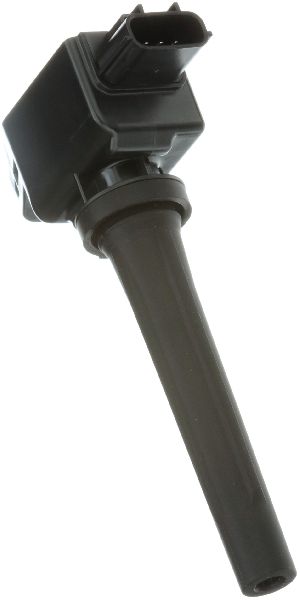
- Ignition Coil
Related Codes That Often Appear With This One
- P0300 — If the misfire becomes more widespread or is intermittent across cylinders, a P0300 (Random Misfire Detected) code may appear alongside P0304.
- P0301, P0302, P0303 — If other cylinders are also misfiring, their respective codes will be stored. This is common with the 2.5T cylinder head issue, which can affect multiple cylinders.
- P0204 — As noted in TSB #01-017-16-3242 for a previous model year, a misfire code can sometimes be accompanied by a fuel injector circuit code (P0204: Fuel Injector Circuit/Open Cylinder No.4), pointing directly to an issue with the injector or its wiring.
- P0172 — A code for 'System Too Rich' (P0172) can appear with P0304 if a fuel injector is stuck open or leaking, causing excess fuel to enter cylinder 4.
Technical Service Bulletins (TSBs) & Recalls

- 01-001-23a: Critical TSB for 2.5L Turbo engines regarding misfires (P0301-P0304) caused by a seized exhaust manifold valve leading to compression loss.
- 01-007-19-3541: Older TSB noting misfires from frozen water in the muffler.
- 01-006-18-3429: Similar to above, related to misfires caused by exhaust restriction in cold weather.
- 01-017-16-3242: Older TSB linking injector circuit codes (P020x) with misfire codes (P030x).
- SA-022-19: A service alert for other models linking valvetrain issues to misfire codes.
Platform-Specific Known Issues
- TSB for 2.5L Turbo Engines: Mazda issued TSB #01-001-23a for some 2020-2021 Mazda3 Turbo models (among others) for misfire codes including P0304. The cause is a seizing variable valve in the exhaust manifold, which leads to uneven wear on the exhaust valve seat and subsequent compression loss. The repair requires replacing the cylinder head and exhaust manifold with modified parts.
- Owner Complaint: NHTSA ODI #11656416 documents a 2021 Mazda3 owner experiencing a P0304 code with symptoms of vibration at idle from a cold start and the car limiting speed, corroborating common symptoms.
Mechanic-Grade Diagnostic Values

- High-Pressure Fuel System Pressure at Idle (2.5L Turbo) — expected: Approx. 3.0 MPa (435 psi). Failure: Significantly lower or higher pressure can indicate a fuel delivery problem.
- Short-Term Fuel Trim (STFT) at Idle — expected: Between -5% and +5%. Failure: A strong negative value (e.g., -20%) on the bank with the misfire points to a rich condition, often caused by a leaking fuel injector.
- Ignition Coil Primary Resistance — expected: Typically between 0.5 and 1.5 ohms. Failure: A reading outside this range indicates a faulty coil.
- Cylinder Compression — expected: 120 to 150 PSI, with minimal variation between cylinders.. Failure: Significantly lower compression in cylinder 4 indicates a mechanical engine problem.
Hidden / Shadow Codes Worth Checking
- Mode $06: This is not a code, but a diagnostic mode on an advanced scan tool that allows a technician to access test results for specific monitored components. For a P0304, a technician would use Mode $06 to view the raw misfire count data for each cylinder to confirm that cylinder 4 is the one actively misfiring and to see if other cylinders have intermittent counts. (see via Advanced OBD-II scan tool or dealer-level software like Mazda M-MDS.)
Scan Tool Commands That Help
- Mazda M-MDS (or equivalent advanced scanner): Cylinder Contribution / Power Balance Test — To actively test and determine if cylinder 4 is contributing less power than the other cylinders, helping to confirm the misfire is real and ongoing. This test electronically disables cylinders one by one and measures the RPM drop.
- Mazda M-MDS (or equivalent advanced scanner): PID/Data Monitor — Essential for viewing live data streams. For P0304, this is used to monitor Short and Long Term Fuel Trims (PID: STFT, LTFT) and High-Pressure Fuel Pressure (PID: FUEL_PRES) to diagnose fuel system-related causes.
Wiring & Ground Locations
- Engine Block and Transmission Grounds — There are several critical ground straps connecting the engine/transmission assembly to the chassis. Look for a primary ground on the top or front of the transmission case, and another on the engine block itself, often near the mounting points.. A poor or corroded engine ground can cause erratic behavior in ignition and fuel systems, leading to weak spark or incorrect sensor readings that can cause misfires. While not a common cause, it's a crucial check for persistent, hard-to-diagnose electrical issues.
- Chassis Ground — A main ground connection is typically found on the driver's side inner fender, connecting directly to the negative battery terminal via the main harness.. This is the master ground for many vehicle systems. Corrosion or a loose connection here can cause a wide range of seemingly unrelated electrical problems, including misfires.
Real Owner Repair Stories
- YouTube - Wilson's Auto Repair (Mazda with 2.5L Skyactiv-G engine) — Running rough with smoke coming from the exhaust.
❌ Tried (didn't work) Replacing the spark plugs did not solve the problem.
✅ What actually fixed it The car was also setting a P0172 'System Too Rich' code, and live data showed fuel trims at -20%. The spark plug in cylinder 4 was wet with fuel. The root cause was a leaking direct fuel injector on cylinder 4, which was replaced. - Reddit user on r/mazda3 (2012 Mazda 3 2.0 Skyactiv, 160k miles) — Code P0304 and limp mode activate specifically after highway driving. Rough idle.
❌ Tried (didn't work) Swapping spark plugs between cylinders., Swapping ignition coils between cylinders (misfire did not move from cylinder 4)., Replacing the Mass Airflow (MAF) sensor, which only partially improved symptoms.
✅ What actually fixed it The user's final diagnosis pointed to a faulty fuel injector. The previous owner had all four injectors replaced by a shop, and the user suspected either a defective aftermarket part was used or the installation was botched. This aligns with other confirmed injector failures on this platform.
"I Checked Everything" — The Actual Cause
- In cases where P0304 is accompanied by a rich code like P0172, a standard smoke test for vacuum leaks will likely come back clean. The actual cause is often internal to the fuel system, such as a leaking fuel injector dumping excess fuel directly into the cylinder. This condition would not be found by a smoke test, which only checks for un-metered air entering the intake.
When the Usual Fixes Don't Work
- While faulty ignition coils and spark plugs are the most common cause of P0304, a significant number of real-world repair stories for Skyactiv direct injection engines point to leaking fuel injectors as the true culprit, especially when the misfire is persistent and accompanied by a 'System Too Rich' (P0172) code. In these cases, simply replacing coils and plugs will not fix the root cause. A technician who confirmed the spark plug for cylinder 4 was wet with fuel and observed negative fuel trims on a scan tool correctly diagnosed the faulty injector.
OEM Part Supersession History
p51b18100, pe0118100, pe0118100a, pe2018100→PE20-18-100A— Standard part evolution and consolidation by the manufacturer.
Model Year Variations Within This Range
- 2019-2020: For these model years, the primary engine was the 2.5L naturally aspirated four-cylinder. The 2.5L Turbo engine was not yet widely available.
- 2021: In 2021, Mazda introduced the 2.5L Turbo engine as an option, alongside a new 2.0L base engine. Therefore, the TSB (#01-001-23a) regarding cylinder head failure on turbo models is primarily a concern for 2021 and newer vehicles equipped with that specific engine.
Helpful Videos

Used OEM Parts in Stock

New Aftermarket Parts Available


The information in this article is provided for general reference and educational purposes only. Vehicle specifications, procedures, and part compatibility can vary by production date, trim level, and region. Always consult your vehicle's factory service manual and verify part numbers before purchasing or performing repairs. Safety-critical components such as airbags, seat belts, and braking systems should be installed by a qualified professional.
- Mazda MAZDA3:
- 🎬 Helpful Videos
- 🛍️ Shop This Part
- What's Unique About the 2019-2021 Mazda MAZDA3
- Diagnostic Flowchart
- Symptoms You May Notice
- Most Likely Causes
- Rare But Worth Checking
- Diagnosis Steps
- Parts You'll Likely Need
- Related Codes That Often Appear With This One
- Technical Service Bulletins (TSBs) & Recalls
- Platform-Specific Known Issues
- Mechanic-Grade Diagnostic Values
- Hidden / Shadow Codes Worth Checking
- Scan Tool Commands That Help
- Wiring & Ground Locations
- Real Owner Repair Stories
- "I Checked Everything" — The Actual Cause
- When the Usual Fixes Don't Work
- OEM Part Supersession History
- Model Year Variations Within This Range
- 🎟️ Get 5% Off