

P0304 on 2014-2020 Mazda CX-5: Cylinder 4 Misfire Causes and Fixes
P0304 on a Mazda CX-5 most often points to a bad ignition coil or a worn spark plug on cylinder 4. However, Mazda has issued several Technical Service Bulletins (TSBs) for less common but significant issues, such as a muffler blocked by frozen condensation in cold climates or internal engine problems on specific 2.5L turbo models requiring a new cylinder head.
- P0304 signifies a misfire in cylinder 4. Start your diagnosis with the simple and common culprits: the ignition coil and spark plug.
- The easiest DIY diagnostic is to swap the ignition coil from cylinder 4 to another cylinder and see if the misfire code follows.
- Be aware of the unique issues for the CX-5: Mazda has issued TSBs regarding misfires caused by a muffler blocked with ice in cold weather.
- For 2.5L Turbo models, a P0304 code with performance issues could be a sign of a more serious internal engine problem that requires a professional.
- Driving with a misfire can cause expensive damage to your catalytic converter, so it's important to address the problem promptly.
What's Unique About the 2014-2020 Mazda CX-5

While the common causes for a P0304 misfire on the CX-5 are standard (plugs and coils), this vehicle is subject to some highly specific issues documented by Mazda. Several TSBs point to misfires caused by exhaust flow being restricted by frozen water in the muffler, a problem particularly relevant in cold climates for vehicles making short trips. Furthermore, 2019-2020 2.5L turbo models have a documented history of internal engine issues (worn exhaust valve seats due to a seized exhaust manifold valve) that can lead to misfires, making a correct diagnosis beyond the basics very important.
Diagnostic Flowchart

Tap your situation to follow the diagnostic path that matches what you're seeing on this vehicle.
Generation note: This range covers the first generation (2014-2016) and the second generation (2017-2020) of the Mazda CX-5. Most common causes apply to both. However, TSB #01-001-23a specifically addresses potential internal engine issues on 2019-2020 models with the 2.5L turbo engine, which may require cylinder head replacement.
Symptoms You May Notice
- Rough idling or shaking engine.
- Poor acceleration or lack of power.
- Check Engine Light is on or flashing.
- Engine hesitation or stumbling under load.
- Engine noise [TSB #SA-022-19].
- Reduced fuel economy.
- Smell of unburned fuel from the exhaust.
- Replacing only the spark plug when the ignition coil is the actual cause (or vice-versa).
- Overlooking the possibility of a blocked muffler in cold climates, leading to unnecessary replacement of ignition and fuel components.
- On 2.5T models, repeatedly replacing plugs and coils when the root cause is the internal engine issue described in TSB #01-001-23a.
Most Likely Causes

- Faulty Ignition Coil 🔴 High Probability Ignition coils are a common wear item on most modern engines, including the Mazda Skyactiv engines. Owners on forums frequently report replacing a single coil to fix a misfire.
How to confirm: Swap the ignition coil from cylinder 4 with another cylinder (e.g., cylinder 3). Clear the codes and drive the vehicle. If the code changes to P0303, the ignition coil is faulty. This is the standard DIY diagnostic step reported by many owners.
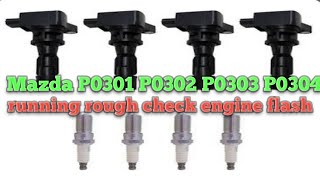
Typical fix: Replace the faulty ignition coil. It is often recommended to replace all coils at the same time if they are original and have high mileage, though many owners replace just the failed one. 🎬 Watch: Step-by-step guide to replacing your spark plugs and coils.
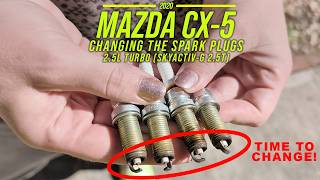
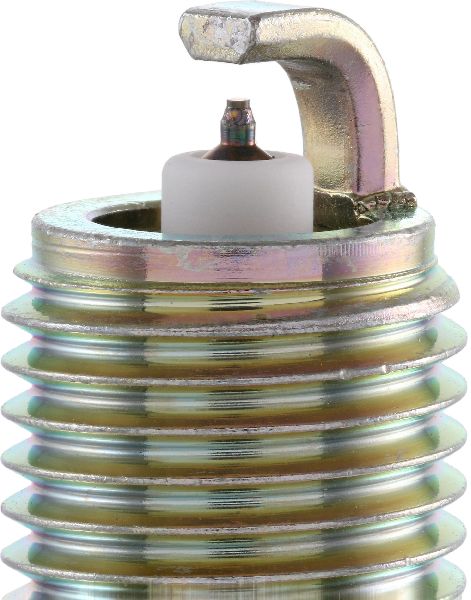
Est. part cost: $30-$70 per coil - Worn or Fouled Spark Plug 🔴 High Probability Mazda recommends replacing spark plugs at 75,000 miles for non-turbo engines 🎬 Watch this maintenance walkthrough for changing CX-5 spark plugs. and 40,000 miles for the 2.5T engine. Plugs that exceed this interval are a very common cause of misfires.
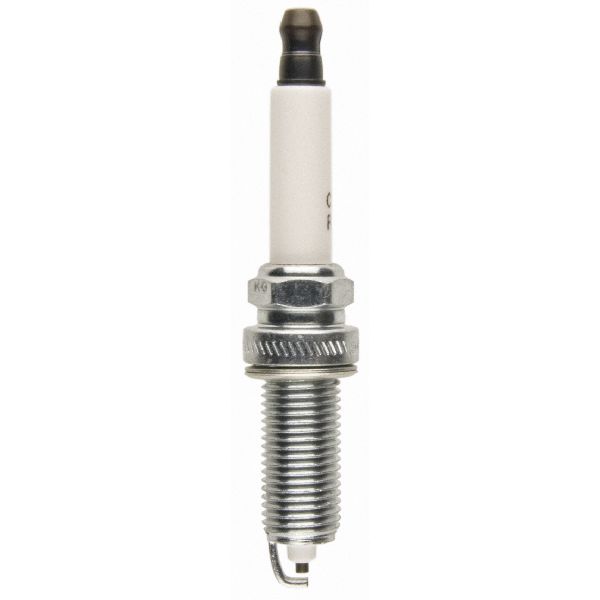
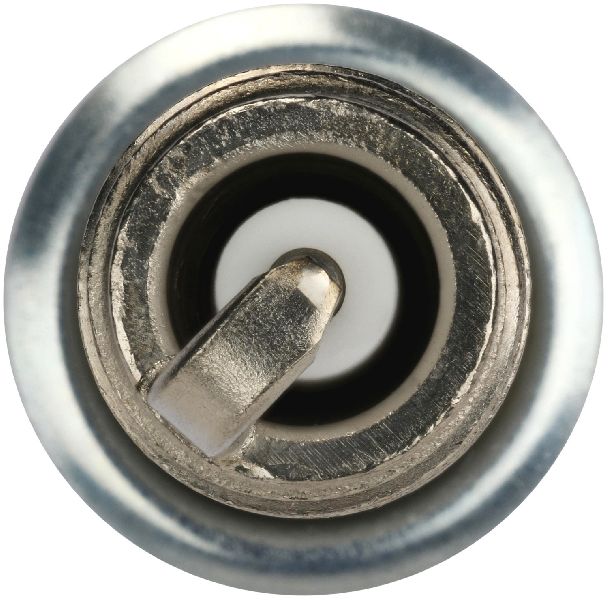
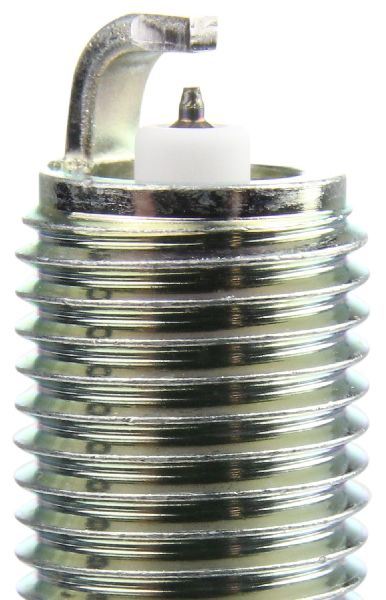
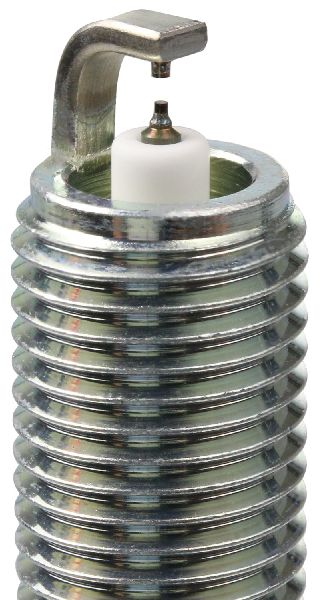
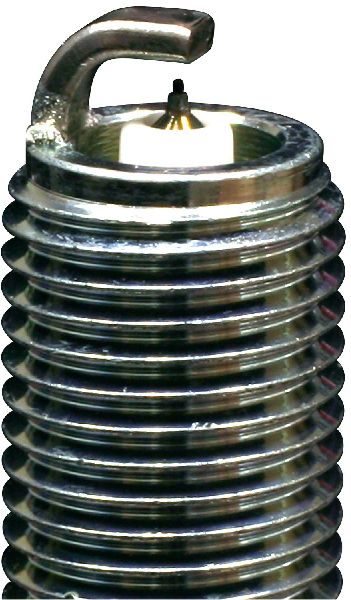
How to confirm: After confirming the coil is good, remove the spark plug from cylinder 4. Inspect it for wear (worn electrode), damage (cracked porcelain), or deposits (black and sooty for carbon, wet for fuel). A heavily worn or damaged plug is a clear cause. You can also swap it with another cylinder's plug to see if the misfire follows.
Typical fix: Replace the spark plug. It is best practice to replace all spark plugs as a set with OEM-spec (NGK or Denso) plugs.
Est. part cost: $15-$45 per plug - Blocked Main Silencer (Muffler) 🟡 Medium Probability Mazda TSBs #01-006-18-3429, #01-002-17-3299a, and #01-007/19 state that water can accumulate and freeze in the main silencer (muffler), especially in cold climates on vehicles driven for short distances. This restricts exhaust flow, creating backpressure that can cause misfires on one or more cylinders.
How to confirm: This issue occurs when starting the vehicle in freezing temperatures (below 32°F / 0°C). Check for reduced or no exhaust flow from the tailpipe on a cold start. A technician can perform an exhaust backpressure test. The TSB specifies that the replacement part has two drain holes to prevent recurrence.
Typical fix: Replace the main silencer assembly with the updated part.
Est. part cost: $250-$450 - Leaking or Clogged Fuel Injector ⚪ Low Probability Direct injection fuel injectors can become clogged or fail, leading to an improper air-fuel mixture. While less common than ignition issues, it's the next logical step if spark has been ruled out.
How to confirm: This is more difficult for a DIYer. A professional can perform a fuel injector balance test. A simpler, though less conclusive, test is to listen to the injector with a mechanic's stethoscope to ensure it's clicking. Swapping injectors is possible but much more involved than coils or plugs.
Typical fix: Replace the faulty fuel injector. This is a more involved job on a direct-injection engine and may require replacing seals as well.
Est. part cost: $100-$200 per injector
Rare But Worth Checking
- Internal Engine Issues (2.5L Turbo Only): TSB #01-001-23a is critical for 2019-2020 2.5T models. It states that misfire codes (P0301-P0304) with poor acceleration can be caused by a seized variable valve in the exhaust manifold. This leads to excessive heat, causing the exhaust valve seat to wear unevenly and leak compression. The fix is a major repair involving replacement of the cylinder head and the redesigned exhaust manifold.
- Intake Valve Carbon Buildup: Like many direct-injection (GDI) engines, the Skyactiv engine is susceptible to carbon buildup on the intake valves, which isn't washed by fuel. This can disrupt airflow and cause misfires, especially under load. Owners on forums report needing walnut blasting or manual cleaning around 70k-100k miles to resolve persistent, otherwise undiagnosable misfires.
- Valvetrain or Camshaft Issues: TSB #SA-022-19 links P0304 with other codes (P0340, P3400, etc.) to potential valvetrain problems on 2019 models. This indicates a mechanical timing or component issue that requires professional diagnosis by a dealer.
Diagnosis Steps
- Read the trouble codes with an OBD-II scanner and note any other codes present. Freeze frame data can show the conditions (engine temp, load) when the misfire occurred.
- To test the ignition coil, swap the coil from cylinder 4 with the coil from cylinder 3. Clear the codes, run the engine, and see if the misfire code changes to P0303. 🎬 See how to diagnose a P0304 code using the swap method. If it does, the coil is bad. This is the most common first step.
- If the coil is good, perform the same swap test with the spark plugs. Move the cylinder 4 plug to cylinder 2. If the code changes to P0302, the spark plug is bad. Inspect the plug for wear, carbon fouling, or damage.
- If the misfire remains on cylinder 4, inspect the fuel injector wiring and connector for damage.
- Check for vacuum leaks around the intake manifold, especially near cylinder 4, by spraying brake cleaner or starter fluid and listening for a change in engine RPM.
- If you live in a cold climate and the issue occurs on cold starts, investigate the possibility of a blocked muffler as described in Mazda TSBs #01-006-18-3429 and #01-002-17-3299a. Check for restricted exhaust flow.
- If basic steps do not resolve the issue, a compression test should be performed to check for mechanical engine problems. Low compression in cylinder 4 points to issues like worn piston rings, a bad valve, or a leaking head gasket.
- For 2019-2020 2.5L Turbo models with persistent issues and low compression, consult a Mazda dealer and reference TSB #01-001-23a, as a cylinder head replacement may be required.
Parts You'll Likely Need
- Ignition Coil
(OEM #PE20-18-100A)— This is one of the most common failure points for a single-cylinder misfire. The part number PE20-18-100A supersedes older versions like PE01-18-100.
Trusted brands: Mazda (OEM), NGK, Denso
OEM price range: $60-$90
Aftermarket price range: $30-$70 - Spark Plug
(OEM #PE5R-18-110)— Spark plugs are a routine maintenance item and a frequent cause of misfires as they wear out. The recommended interval is 40k miles for turbo and 75k miles for non-turbo.
Trusted brands: NGK, Denso
OEM price range: $25-$45
Aftermarket price range: $15-$30 - Main Silencer (Muffler)
(OEM #PY33-)— As per multiple TSBs, condensation can freeze and block the muffler in cold climates, causing misfires. An updated part with drain holes is the specified fix.
Trusted brands: Mazda (OEM)
OEM price range: $250-$450
Aftermarket price range: $150-$300
Related Codes That Often Appear With This One
- P0300 — If the misfire is intermittent or affects multiple cylinders, a P0300 (Random Misfire) code may appear alongside P0304. This is common with the frozen muffler issue.
- P0301, P0302, P0303 — These codes indicate misfires in other cylinders. Seeing them together can point to a common cause like a blocked exhaust, fuel delivery issue, or a major vacuum leak.
- P0171 — A 'System Too Lean' code can appear if a vacuum leak is causing the misfire or, as one forum user found, after cleaning carbon from intake valves changed the engine's airflow characteristics.
- P0340 — As per TSB #SA-022-19, this camshaft position sensor code can appear with P0304, indicating a potential valvetrain issue that needs professional inspection.
Technical Service Bulletins (TSBs) & Recalls
- 01-001-23a: Addresses poor acceleration and rough idle with P030x codes on turbo engines.
- SA-022-19: Links P0304 with other DTCs to engine noise and lack of power, pointing to valvetrain issues.
- 01-006-18-3429: Identifies frozen water in the main silencer as a cause for P030x misfires.
- 01-002-17-3299a: An earlier bulletin also identifying frozen water in the muffler as a cause for misfires.
Platform-Specific Known Issues
- Exhaust Blockage from Ice: TSBs #01-006-18-3429 and #01-002-17-3299a detail how frozen water in the main silencer (muffler) can restrict exhaust flow, causing P030x misfire codes. This is more likely in cold climates on vehicles driven for short distances where the exhaust doesn't fully heat up to evaporate condensation.
- Turbo Engine Internal Failure: TSB #01-001-23a warns that for 2019-2020 2.5L turbo models, P030x codes accompanied by poor acceleration could indicate a serious internal engine problem. A valve in the exhaust manifold can seize, causing valve seat wear and compression loss. A YouTube video shows a dealer performing this exact repair under warranty, replacing the cylinder head on a 2023 model, indicating the issue may persist beyond the original TSB model years.
- Intake Valve Carbon Deposits: As a direct-injection engine, the intake valves are not cleaned by fuel spray. Over time, carbon can build up and restrict airflow, causing hesitation and misfires that don't respond to ignition or fuel system repairs. A forum user on Mazdas247 documented cleaning significant buildup to solve a P0304 code.
Mechanic-Grade Diagnostic Values
- Fuel Injector Resistance — expected: ~12-13 Ohms. Failure: A reading of 0 Ohms (short) or a very high reading (e.g., 2000 Ohms, open circuit), especially when the engine is hot.
- High-Pressure Fuel Rail Pressure (at idle) — expected: Approx. 3.0 MPa (435 psi). Failure: Significantly lower pressure at idle after confirming low-pressure side is normal may indicate a failing high-pressure fuel pump.
- Spark Plug Resistance (internal) — expected: 5-6 kOhms. Failure: While a plug can read within spec and still be faulty due to an internal porcelain crack, this is a baseline check. A reading far outside this range indicates a definite failure.
- Compression Pressure (2.5L Turbo) — expected: Approx. 120-125 PSI. Failure: A reading as low as 60 PSI on the affected cylinder, especially when compared to healthy cylinders, points to a mechanical failure like a bad valve or head gasket issue as described in TSB #01-001-23a.
Scan Tool Commands That Help
- FORScan: Live Data Monitoring (PIDs) — FORScan is a powerful software tool for Ford and Mazda vehicles that can read manufacturer-specific codes and live data beyond standard OBD-II. It can be used to monitor individual cylinder misfire counts (Mode $06 data), fuel trims, and fuel pressure to help diagnose the root cause of P0304.
Wiring & Ground Locations
- G03 — Left front of the engine compartment.. This is a primary engine ground point. A loose or corroded connection here can cause a weak spark or erratic sensor readings, potentially leading to misfires.
- G01 / G02 — Under the left headlight assembly.. These ground points are tied to various front-end components, including the PCM and cooling fan relays, which are related to engine management. Poor grounding can cause unpredictable electrical issues.
- Ignition Coil Connector — On top of the valve cover, directly connected to the ignition coil for cylinder 4 (the rearmost cylinder on the 2.5L engine).. The connector itself or its wiring can become brittle, corroded, or damaged, leading to a poor connection and a misfire on that specific cylinder. The connector has 4 terminals.
Real Owner Repair Stories
- Reddit user /u/Initial-Goose8008 (2020 Mazda CX-5 2.5L Turbo) — Check engine light with code P0304.
❌ Tried (didn't work) Replacing all spark plugs.
✅ What actually fixed it The root cause was identified as the issue in TSB #01-001-23a. The fix required replacing the cylinder head (Part #PYY1-10-SJ0C) and the exhaust manifold (Part #PY8V-13-450K) with updated designs. - YouTube channel 'Slow Six Fix' (2023 Mazda CX-5 (under warranty, ~47,000 miles)) — Rough idle, vibration, shutter when taking off, and a P0304 code.
❌ Tried (didn't work) A dealer initially blamed aftermarket spark plugs and quoted $400 to replace them., Swapping ignition coils between cylinder 3 and 4 did not move the misfire.
✅ What actually fixed it A second dealer performed a compression and leak-down test. Cylinder 4 had only 60 PSI (compared to 120-125 in others) and was leaking into cylinder 3. The final diagnosis was a failed head gasket or cylinder head valve. Mazda authorized a full cylinder head replacement under the powertrain warranty. - Mazdas247 forum user (2013 Mazda CX-5 2.0L w/ 130k miles) — P0304 and sometimes P0300, with hesitation only under load at lower RPM.
❌ Tried (didn't work) Replaced all 4 spark plugs., Swapped coil #4 with #3 (misfire did not move)., Cleaned MAF sensor., Checked for vacuum leaks with carb cleaner., Replaced all 4 ignition coils per dealer recommendation (based on a TSB)., Used high-octane fuel and a fuel cleaner additive.
✅ What actually fixed it The user noted that Long Term Fuel Trims (LTFT) were maxed out and the rear O2 sensor was reading rich. The final fix was replacing the front wideband O2 sensor (Air-Fuel Ratio Sensor), which resolved both the P0304 and a subsequent P0171 (System Too Lean) code that appeared. The faulty A/F sensor was providing incorrect data, causing the PCM to create a poor fuel mixture that led to the misfire under load.
OEM Part Supersession History
PE01-18-100, PE01-18-100A, P51B-18-100→PE20-18-100A— Standard part evolution for improved reliability and manufacturing consistency for the Skyactiv-G ignition coil.
Heads up: The parts are generally interchangeable, but it is always best practice to use the latest superseded part number (PE20-18-100A) when replacing.
Model Year Variations Within This Range
- 2017-2020 (Second Generation): The 2017 model year marked a full redesign. While the base 2.0L and 2.5L engines were largely carried over, the chassis was updated with G-Vectoring Control, and the interior/exterior styling was significantly changed. For P0304 diagnosis, the core components (coils, plugs, injectors) are similar to the first generation.
- 2019-2020 (2.5L Turbo Engine): The introduction of the 2.5L Turbo engine brought a unique and critical failure mode. TSB #01-001-23a describes how a seized valve in the exhaust manifold can cause overheating and compression loss, leading to misfires. This issue requires a cylinder head and manifold replacement and does not apply to non-turbo engines.
Helpful Videos
Used OEM Parts in Stock

New Aftermarket Parts Available

The information in this article is provided for general reference and educational purposes only. Vehicle specifications, procedures, and part compatibility can vary by production date, trim level, and region. Always consult your vehicle's factory service manual and verify part numbers before purchasing or performing repairs. Safety-critical components such as airbags, seat belts, and braking systems should be installed by a qualified professional.
- Mazda CX-5:
- 🎬 Helpful Videos
- 🛍️ Shop This Part
- What's Unique About the 2014-2020 Mazda CX-5
- Diagnostic Flowchart
- Symptoms You May Notice
- Most Likely Causes
- Rare But Worth Checking
- Diagnosis Steps
- Parts You'll Likely Need
- Related Codes That Often Appear With This One
- Technical Service Bulletins (TSBs) & Recalls
- Platform-Specific Known Issues
- Mechanic-Grade Diagnostic Values
- Scan Tool Commands That Help
- Wiring & Ground Locations
- Real Owner Repair Stories
- OEM Part Supersession History
- Model Year Variations Within This Range
- 🎟️ Get 5% Off