

P0304 on 2012-2016 Land Rover Range Rover Evoque: Cylinder 4 Misfire Causes and Fixes
P0304 on a 2012-2016 Range Rover Evoque is a cylinder 4 misfire. The most common causes are a bad spark plug or ignition coil. However, faulty fuel injectors and even the high-pressure fuel pump are strong possibilities, as noted in Land Rover service bulletins. Start by swapping the coil and plug from cylinder 4 to another cylinder; if the code remains on cylinder 4, suspect a fuel system issue before assuming a major mechanical fault.
- P0304 is a misfire on cylinder 4, the cylinder closest to the transmission on the 2.0L engine.
- The most likely culprits are a bad ignition coil or spark plug, which are simple to diagnose by swapping components.
- Do not rule out a faulty fuel injector, as this is a documented issue for the 2012-2016 Evoque.
- Driving with a flashing check engine light is not advised, as it can quickly lead to costly catalytic converter damage.
- Always replace spark plugs in a full set to ensure even performance across all cylinders.
What's Unique About the 2012-2016 Land Rover RANGE ROVER EVOQUE
For the 2012-2016 Evoque with the 2.0L Si4 engine (a Ford EcoBoost derivative), while standard ignition issues are common, the fuel system is a significant and documented point of failure. Land Rover issued Special Service Message (SSM71894) to investigate fuel injector failures causing rough running and misfire codes, including P0304. Furthermore, TSB LTB00730NAS1 directly links misfire codes on this platform to internal faults within the high-pressure fuel pump (HPFP). This elevates both the fuel injectors and the HPFP from general possibilities to documented, vehicle-specific issues that should be considered earlier in the diagnostic process.
Diagnostic Flowchart
Tap your situation to follow the diagnostic path that matches what you're seeing on this vehicle.
Symptoms You May Notice
- Rough or unstable idle
- Engine hesitation or stumbling during acceleration
- Flashing or solid Check Engine Light
- Reduced engine power and poor performance
- Poor or hard starting
- A smell of unburned fuel from the exhaust
- Noticeable engine shaking or shuddering
- Replacing the oxygen (O2) sensor. While a faulty O2 sensor can cause performance issues, it will typically set its own specific codes and is unlikely to be the root cause of a single-cylinder misfire like P0304.
- Replacing the catalytic converter. A misfire can damage the catalytic converter, but the converter itself is not the cause of the misfire. The converter is the victim, not the culprit.
Most Likely Causes
- Faulty Ignition Coil 🔴 High Probability
How to confirm: Swap the ignition coil from cylinder 4 with another cylinder (e.g., cylinder 3). Clear the codes and drive the vehicle. If the code changes to P0303, the ignition coil is bad. This is the most common DIY diagnostic step.
Typical fix: Replace the faulty ignition coil. It is often recommended to replace all spark plugs at the same time for preventative maintenance.
Est. part cost: $40-$90 - Worn or Fouled Spark Plug 🔴 High Probability Spark plugs are a regular maintenance item and can fail due to age, carbon buildup, or oil fouling.
How to confirm: Remove the spark plug from cylinder 4 and inspect it for wear, carbon fouling, or oil/coolant contamination. Compare it to a plug from a working cylinder. A heavily fouled or damaged plug is a clear indicator.
Typical fix: Replace the spark plug. It is best practice to replace all four spark plugs as a set to ensure consistent performance.
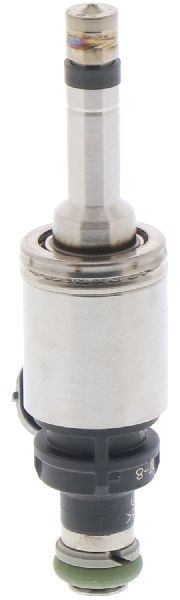
Est. part cost: $15-$35 per plug - Faulty Fuel Injector 🟡 Medium Probability Land Rover issued TSB #SSM71894 to specifically investigate fuel injector failures on this platform causing misfires. These are direct injection (GDI) injectors, which operate under high pressure and can be more prone to clogging or failure.
How to confirm: After ruling out spark plugs and coils, this is the next logical step. A professional can perform a flow test. A DIY method is to listen for the injector's clicking sound with a mechanic's stethoscope. Swapping injectors between cylinders is possible but is significantly more labor-intensive than swapping coils.
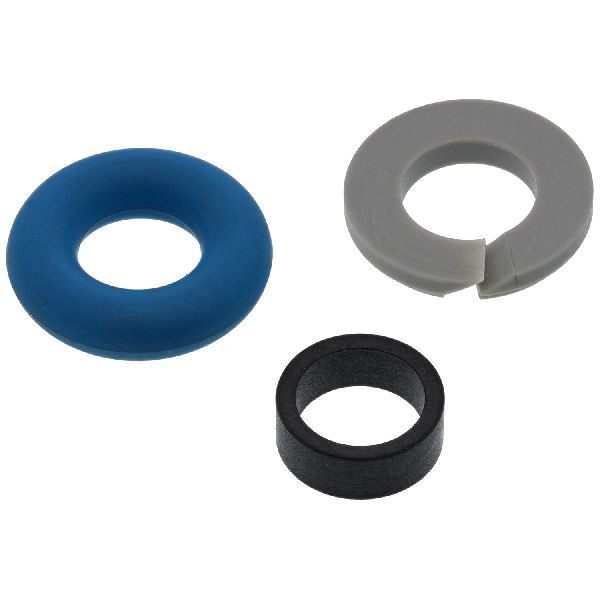
Typical fix: Replace the faulty fuel injector. It's recommended to replace the injector seal at the same time. Bosch is the OE supplier.
Est. part cost: $70-$150 - Faulty High-Pressure Fuel Pump (HPFP) ⚪ Low Probability TSB LTB00730NAS1 was issued for the 2012-2014 Evoque for misfires (including P0304) caused by an internal fault with the metering valve in the high-pressure fuel pump.
How to confirm: This is more difficult to diagnose without professional tools. A technician can monitor fuel rail pressure with a scan tool. If pressure is unstable or doesn't meet specified values, especially under load, the HPFP is a likely suspect after injectors are ruled out.
Typical fix: Replace the high-pressure fuel pump.
Est. part cost: $200-$700 - Vacuum Leak ⚪ Low Probability
How to confirm: Perform a smoke test on the intake system to find the source of the leak. Listen for hissing sounds around the intake manifold, vacuum hoses, or PCV valve. A cracked hose was noted by one owner of a platform-mate vehicle as the cause of a P0304 code.
Typical fix: Replace the cracked hose or faulty gasket that is causing the leak.
Est. part cost: $10-$100
Rare But Worth Checking
- Low Cylinder Compression: If ignition and fuel system checks do not reveal the cause, a mechanical engine issue could be the culprit. This could be due to worn piston rings, a burnt valve, or a leaking head gasket. A compression test is needed to confirm.
- Faulty Camshaft Position Sensor: In a forum thread on babyRR.com, an owner with a 2014 Evoque experienced persistent, intermittent misfires that were ultimately resolved by replacing faulty camshaft sensors after extensive diagnostics by the dealer.
Diagnosis Steps
- Read the codes with an OBD-II scanner and note any other codes present, paying close attention to codes like P0300, P1315, or fuel-pressure-related codes.
- Check for obvious issues like loose connectors or damaged wiring at the cylinder 4 ignition coil and fuel injector.
- Swap the ignition coil from cylinder 4 to cylinder 3. Clear the codes and run the engine. If the code changes to P0303, the coil is faulty and needs replacement.
- If the code does not move, swap the spark plug from cylinder 4 to cylinder 2. Clear codes and run the engine. If the code changes to P0302, the spark plug is faulty.
- If the misfire remains on cylinder 4, the issue is likely fuel or mechanical. Listen to the fuel injector on cylinder 4 with a stethoscope; it should make a regular clicking sound.
- Given the TSBs for this vehicle, the next step is to investigate the fuel system. A professional can monitor fuel rail pressure with a scan tool to check for issues with the high-pressure fuel pump (per TSB LTB00730NAS1).
- If fuel pressure is stable and correct, suspect the fuel injector (per TSB SSM71894). Consider having it professionally tested or replaced.
- If fuel and ignition are confirmed good, perform a compression test on cylinder 4 to check for mechanical engine problems like bad valves or piston rings.
Parts You'll Likely Need
- Ignition Coil
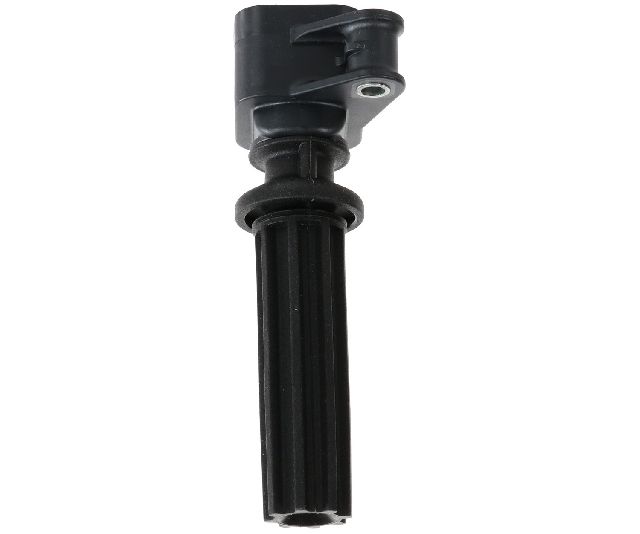
(OEM #LR084889 (supersedes LR030637, LR033979))— A common failure point for any modern engine, causing a lack of spark. It's the easiest component to swap for diagnosis.
Trusted brands: Bosch, Delphi, NGK, Carquest
OEM price range: $70-$120
Aftermarket price range: $40-$90 - Spark Plug
(OEM #LR025605)— A routine maintenance item that can wear out or become fouled, preventing a proper spark. Often replaced with coils.
Trusted brands: NGK (ILTR6R8G), Bosch (HR 7 NII 332 S), Denso
OEM price range: $25-$40
Aftermarket price range: $15-$30 - Fuel Injector
(OEM #BB5E9F593BA)— This specific part is a known issue on this engine, as documented by Land Rover TSB SSM71894, causing fuel delivery problems to the cylinder.
Trusted brands: Bosch (OE Supplier), Standard Motor Products, GB Remanufacturing
OEM price range: $150-$220
Aftermarket price range: $70-$150 - High-Pressure Fuel Pump
(OEM #LR025599)— A documented failure point on 2012-2014 models per TSB LTB00730NAS1, causing misfires and other running issues.
Trusted brands: Bosch (OE), Delphi
OEM price range: $600-$800
Aftermarket price range: $200-$450
Related Codes That Often Appear With This One
- P0300 — If the misfire is intermittent or affects multiple cylinders randomly, P0300 (Random/Multiple Cylinder Misfire) may appear alongside P0304.
- P0301, P0302, P0303 — These codes indicate misfires in cylinders 1, 2, and 3, respectively. Seeing them with P0304 points to a larger issue affecting the whole engine, like a major vacuum leak or a failing high-pressure fuel pump.
- P1315 — This is a manufacturer-specific code that is often stored with misfire codes on Land Rover vehicles, as noted in TSBs LTB01101NAS4, LTB01101NAS2, and LTB00730NAS1.
- P0316 — This code indicates a misfire was detected within the first 1,000 engine revolutions on startup. It often accompanies a specific cylinder misfire code like P0304, as seen in diagnostic reports for platform-mate vehicles.
Technical Service Bulletins (TSBs) & Recalls
- SSM71894: Notes that engineering is investigating fuel injector failures causing rough running and DTCs including P0304.
- LTB01101NAS4 / LTB01101NAS2: Mentions P0304 may be stored when the engine exhibits poor starting.
- LTB00902NAS2: States that if a specific electrical DTC is stored, P0304 is also likely to be stored.
- LTB00755NAS1: Indicates P0304 may be stored when engine instability is experienced.
- LTB00730NAS1: Links misfire codes, including P0304, to an internal fault in the high-pressure fuel pump on 2012-2014 models.
Platform-Specific Known Issues
- TSB SSM71894 highlights that Land Rover engineering was investigating fuel injector failures as a cause for misfires (P0300, P0301, P0302, P0304) and rough running on vehicles including the 2012-2014 Evoque.
- TSB LTB00730NAS1 identifies an internal fault with the high-pressure fuel pump's metering valve as a cause for rough running, hard starting, and misfire codes including P0304 on 2012-2014 models.
- Multiple TSBs (LTB00902NAS2, LTB01101NAS4, LTB00755NAS1) confirm that P0304 is a common diagnostic trouble code stored alongside other misfire codes when various engine performance issues are present.
Scan Tool Commands That Help
- Land Rover SDD (Symptom Driven Diagnostics): Power Balance Test — To graphically display the contribution of each cylinder, helping to confirm if cylinder 4 is underperforming compared to others in real-time. This can help isolate the misfire without swapping components.
- Advanced OBD-II Scanner (Autel, etc.): Mode 6 Misfire Counter — To view the raw number of misfire events per cylinder logged by the ECU. This is useful for identifying intermittent misfires that may not be severe enough to consistently trigger the check engine light.
- Land Rover SDD (Symptom Driven Diagnostics): Charge Air Cooler Coolant Pump Control Circuit Test — If a misfire occurs primarily under load or in hot weather, a fault with the intercooler system can cause excessively high intake temperatures, leading to poor combustion. One owner reported this as the root cause of their misfire.
Wiring & Ground Locations
- G1D122B — Lower left front of the engine compartment.. This is a primary ground point for engine components. A poor connection here can cause erratic behavior in sensors and actuators, including those in the ignition and fuel systems.
- Battery Junction Box (BJB) — Left front of the engine compartment.. This box contains fuses and relays critical for the Engine Control Module (ECM) and ignition system. A corroded terminal or faulty fuse (such as Link 5, 80A) can interrupt power to essential systems.
- Engine Control Module (ECM) — Located in the engine bay, typically near the battery or firewall.. All ignition coil and fuel injector signals originate from the ECM. Checking for corrosion or damage at the main ECM connectors is a crucial step if direct component tests are inconclusive.
Real Owner Repair Stories
- YouTube channel 'Franky Autos Limited' (Range Rover Evoque (year not specified, but within L538 generation)) — Engine shaking and misfire, particularly in hot weather or under load.
❌ Tried (didn't work) Initial diagnosis pointed to standard misfire causes.
✅ What actually fixed it The root cause was identified as a fault in the charge air cooler system ('charge air cooler coolant pump control circuit open'). The high intake air temperature was causing poor combustion and leading to the misfire on cylinder 4. The fix involved addressing the intercooler system fault, not the ignition or fuel components of the cylinder itself.
OEM Part Supersession History
LR030637, LR033979→LR084889— Updated design or change in manufacturer for the ignition coil.LR025599→LR030860— Updated design for the high-pressure fuel pump (HPFP).
Model Year Variations Within This Range
- 2012-2015: These model years used the Ford-derived 2.0L Si4 EcoBoost engine, to which the provided TSBs about fuel injectors and the HPFP apply directly.
- 2016 onwards: For the 2016 model year, Land Rover began phasing in its own 'Ingenium' 2.0L petrol engine. While symptoms of a P0304 misfire would be similar, the specific part numbers for coils, injectors, and fuel pumps, as well as common failure points, may differ from the earlier Ford-based engine.
Helpful Videos
Used OEM Parts in Stock


New Aftermarket Parts Available


The information in this article is provided for general reference and educational purposes only. Vehicle specifications, procedures, and part compatibility can vary by production date, trim level, and region. Always consult your vehicle's factory service manual and verify part numbers before purchasing or performing repairs. Safety-critical components such as airbags, seat belts, and braking systems should be installed by a qualified professional.
- Land Rover RANGE ROVER EVOQUE:
- 🎬 Helpful Videos
- 🛍️ Shop This Part
- What's Unique About the 2012-2016 Land Rover RANGE ROVER EVOQUE
- Diagnostic Flowchart
- Symptoms You May Notice
- Most Likely Causes
- Rare But Worth Checking
- Diagnosis Steps
- Parts You'll Likely Need
- Related Codes That Often Appear With This One
- Technical Service Bulletins (TSBs) & Recalls
- Platform-Specific Known Issues
- Scan Tool Commands That Help
- Wiring & Ground Locations
- Real Owner Repair Stories
- OEM Part Supersession History
- Model Year Variations Within This Range
- 🎟️ Get 5% Off