

P0304 on 2010-2014 Jaguar XJ: Cylinder 4 Misfire Causes and Fixes
The P0304 code on a 2010-2014 Jaguar XJ indicates a misfire in cylinder 4. The most common causes are a faulty ignition coil or a worn spark plug. Swapping the coil from cylinder 4 with another cylinder is the fastest way to diagnose the problem. If the Check Engine Light is flashing, driving should be stopped immediately to prevent catalytic converter damage.
- P0304 is a misfire on cylinder 4, which is the second cylinder from the front on the passenger side.
- The most likely cause is a bad ignition coil, followed by a worn spark plug.
- A simple diagnostic test is to swap the ignition coil from cylinder 4 with another cylinder to see if the fault code follows the coil.
- Do not ignore a flashing Check Engine Light, as this indicates a severe misfire that can quickly damage your catalytic converter.
- Using high-quality fuel may help prevent issues, as noted in a manufacturer service bulletin.
What's Unique About the 2010-2014 Jaguar XJ
The 2010-2014 Jaguar XJ (X351 generation) primarily uses the 5.0L V8 (AJ133) and later the 3.0L V6 (AJ126) engines, both featuring direct injection. These engines can be sensitive to fuel quality, and a Technical Service Bulletin (SSM-63697, later superseded by JTB00321NAS1) specifically notes that poor fuel can cause misfires due to clogged injectors. Additionally, forum discussions among technicians suggest that these direct-injection engines are susceptible to issues with fuel injectors and carbon buildup on intake valves, alongside the more common ignition component failures. The 2010-2012 models of the 5.0L engine are also known for a timing chain tensioner and guide flaw that can cause timing issues and lead to misfires, though this typically presents with multiple misfire codes.
Diagnostic Flowchart
Tap your situation to follow the diagnostic path that matches what you're seeing on this vehicle.
Symptoms You May Notice
- Flashing or solid Check Engine Light
- Rough or vibrating idle
- Engine hesitation or stumbling during acceleration
- Noticeable loss of power
- Smell of unburnt fuel from the exhaust
- Reduced fuel economy
- Vehicle enters 'Limp Mode' or 'Restricted Performance' mode
- Replacing oxygen sensors. While a misfire can affect O2 sensor readings, causing them to report a rich or lean condition, the sensor itself is rarely the cause of a single-cylinder misfire code.
Most Likely Causes
- Faulty Ignition Coil 🔴 High Probability Ignition coils are a common failure item on many modern engines, including Jaguar's V8 and V6, due to constant exposure to high heat and vibration. Oil leaks from the valve cover gaskets can also seep into the spark plug wells and saturate the coil boot, causing it to fail.
How to confirm: Swap the ignition coil from cylinder 4 with another cylinder (e.g., cylinder 2). Clear the codes and run the engine. If the code changes to P0302, the ignition coil is faulty.
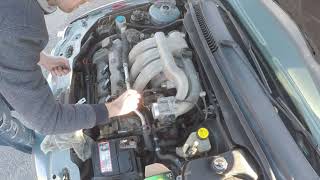
Typical fix: Replace the failed ignition coil. 🎬 See this walkthrough for replacing Jaguar coils and plugs It is often recommended by technicians and owners on forums to replace all coils on the same bank, or all coils at once, if they are original and have high mileage, as they have all been subjected to the same conditions.
Est. part cost: $50-$120 per coil - Worn or Fouled Spark Plug 🔴 High Probability Spark plugs are a regular maintenance item with a service life of around 100,000 miles. High-mileage plugs or oil leaking from a valve cover gasket can cause them to foul, leading to a weak or absent spark.
How to confirm: After confirming the coil is good, remove the spark plug from cylinder 4. Inspect it for wear (worn electrode), carbon fouling, oil contamination, or incorrect gap. Compare it to a new plug.
Typical fix: Replace the spark plug in cylinder 4. It is best practice to replace all spark plugs at the same time to ensure even performance and avoid future misfires.
Est. part cost: $15-$30 per plug - Faulty Fuel Injector 🟡 Medium Probability The direct injection systems on the AJ133 and AJ126 engines operate under high pressure and can be sensitive to fuel quality and deposits. Multiple TSBs have been issued regarding misfires caused by clogged or restricted injectors. Forum threads show numerous owner experiences where a single-cylinder misfire that wasn't resolved by a coil or plug was ultimately a bad injector.
How to confirm: This is more difficult for a DIYer. A professional can perform a fuel injector balance test. Swapping injectors between cylinders is possible but significantly more labor-intensive than a coil or plug swap. A tell-tale sign can be fuel trims showing a rich condition on one bank as the ECU tries to compensate.
Typical fix: Replace the faulty fuel injector. In some cases, a professional cleaning service or using a high-concentration PEA (polyetheramine) fuel system cleaner like BG 44K or Redline SI-1 may resolve clogging, but replacement is often necessary. When one injector fails, it's often recommended to replace the entire bank.
Est. part cost: $100-$250 per injector - Vacuum Leak ⚪ Low Probability Aging plastic and rubber hoses in the engine bay can crack and cause unmetered air to enter the intake manifold, leaning out the mixture. While this usually causes multiple or random misfires (P0300), a leak localized to the intake runner for cylinder 4 can cause a P0304.
How to confirm: A mechanic can perform a smoke test to find the source of the leak. Sometimes a hissing sound can be heard near the engine. Visually inspect all vacuum lines connected to the intake manifold.
Typical fix: Replace the cracked or broken vacuum hose or gasket.
Est. part cost: $10-$100
Rare But Worth Checking
- Low Engine Compression: This is a more serious mechanical issue. It could be caused by a worn piston ring, a burnt valve, or a leaking head gasket. A compression test is needed to confirm. A borescope can be used to inspect the cylinder walls and valve faces for damage.
- Carbon Buildup on Intake Valves: Direct injection engines can suffer from carbon buildup on the back of the intake valves, which can impede airflow into the cylinder and cause misfires, especially on cold starts. This issue is frequently discussed on Jaguar forums. A physical cleaning, such as walnut blasting, is required to resolve this.
- Faulty PCM Software Calibration: TSB JTB00533NAS1 addresses an issue where a fuel injection calibration issue can cause misfires on a cold start (coolant temperature below 75°C / 167°F). The fix is a software update to the Powertrain Control Module (PCM) performed by a dealer.
Diagnosis Steps
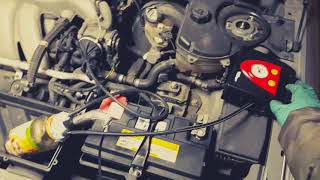
- Read the trouble codes with an OBD-II scanner to confirm P0304 and check for any other codes 🎬 Watch: Diagnosing misfire codes on a Jaguar V6 engine like P0300 or P0316.
- Identify the location of cylinder 4. For Jaguar V-engines (AJ133 V8 and AJ126 V6), the cylinder numbering follows the ISO standard. The right bank (passenger side in the US) is numbered 2, 4, 6, 8 from front to back. The left bank (driver's side) is 1, 3, 5, 7. Therefore, cylinder 4 is the second cylinder from the front on the passenger side.
- Swap the ignition coil from cylinder 4 with the coil from another cylinder (e.g., cylinder 2).
- Clear the codes, start the engine, and let it run for a few minutes. Re-scan for codes.
- If the code has moved to P0302, the ignition coil is the problem. Replace the faulty coil.
- If the code remains P0304, inspect the spark plug well for any oil contamination, which indicates a leaking valve cover gasket that needs replacement.
- If no oil is present, swap the spark plug from cylinder 4 with the one from the cylinder you just used for the coil swap. Clear codes and re-test. If the code moves, the spark plug was the issue.
- If the code still remains P0304, the issue is likely with the fuel injector, wiring, or a mechanical problem.
- Inspect the wiring and connector for the cylinder 4 injector and coil for any visible damage, chafing, or loose connections.
- If ignition and spark are ruled out, further diagnosis of the fuel system (injector balance test) or a mechanical compression test by a professional is recommended.
Parts You'll Likely Need
- Ignition Coil
(OEM #C2Z18619)— This is the most frequent cause of a single-cylinder misfire. They are electronic components that operate in a high-heat environment and fail over time.
Trusted brands: Bosch, Delphi, NGK, Denso
OEM price range: $90-$115
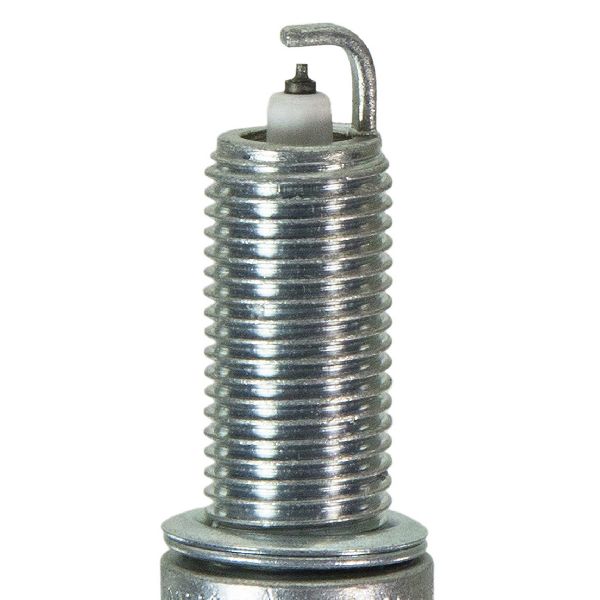
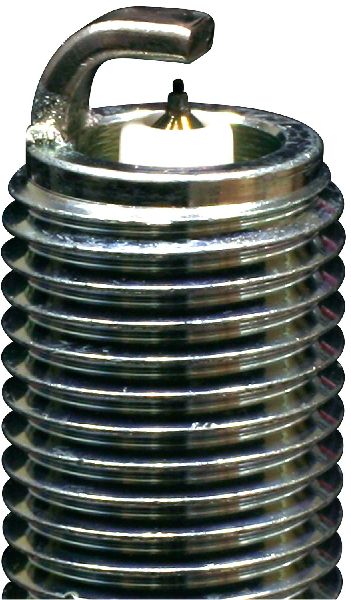
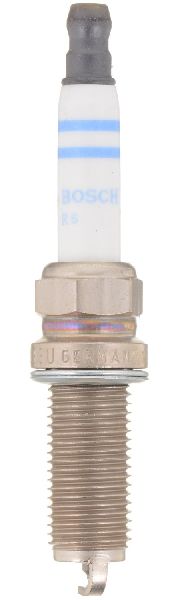
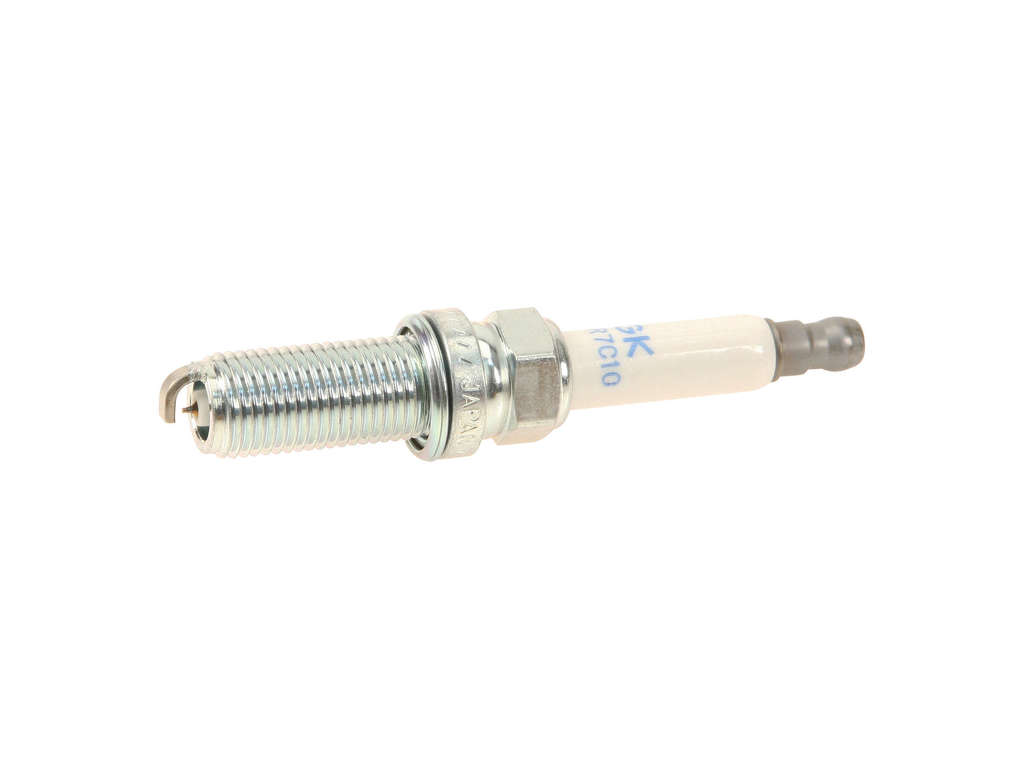
Aftermarket price range: $40-$80 - Spark Plug
(OEM #C2Z28434)— Spark plugs are a maintenance item that wear out, leading to a weak or inconsistent spark. The OEM plugs are made by NGK.
Trusted brands: NGK, Denso
OEM price range: $20-$30
Aftermarket price range: $10-$20
Related Codes That Often Appear With This One
- P0300 — If multiple cylinders are misfiring, a P0300 (Random/Multiple Cylinder Misfire) will be stored alongside the specific cylinder codes.
- P0316 — This code indicates a misfire was detected within the first 1,000 engine revolutions on startup. It is often seen with other P030x codes, as noted in TSB JTB00533NAS1, and can point towards issues like cold-start fuel calibration or carbon buildup.
- P0087 — A 'Fuel Rail/System Pressure - Too Low' code can appear with misfire codes if the issue is related to a failing high-pressure fuel pump or clogged injectors affecting the entire fuel rail.
Technical Service Bulletins (TSBs) & Recalls
- JTB00533NAS1: Notes that P0304 may be stored along with P0316 (misfire on startup) due to a fuel injection calibration issue on cold starts.
- SSM-63697: Identifies poor fuel quality or contaminants as a potential cause for misfire codes (P0301-P0308) and engine vibration at idle due to clogged injectors.
- JTB00321NAS1: Supersedes earlier TSBs and provides service instructions for diagnosing misfires caused by clogged fuel injectors due to poor fuel quality.
Platform-Specific Known Issues
- TSB SSM-63697 (and its successor JTB00321NAS1) explicitly mentions that poor fuel quality or contaminants can be a cause for misfire codes (P0301-P0308) due to restricted fuel injector flow rate on these vehicles.
- TSB JTB00533NAS1 notes that a software calibration issue can cause cold-start misfires (P0304 and others) and requires a PCM update from a dealer.
- Forum discussions among Jaguar technicians and owners frequently point to fuel injector failures on the direct-injection 5.0L engine, which may present as a single-cylinder misfire that is not fixed by plugs or coils.
- The 2010-2012 5.0L V8 engines are known to have timing chain guide and tensioner issues that can cause chain slack, leading to misfires. This usually presents as multiple misfires on one bank (e.g., P0302, P0304, P0306, P0308).
Mechanic-Grade Diagnostic Values
- Low-Pressure Fuel System Pressure — expected: 40-75 PSI (approximately 60-106 PSI on startup). Failure: Pressure significantly below this range may indicate a weak in-tank fuel pump.
- High-Pressure Fuel System Pressure (at idle) — expected: 500-600 PSI. Failure: Pressure significantly lower than this at idle can indicate failing high-pressure fuel pumps (HPFPs).
- High-Pressure Fuel System Pressure (under load / WOT) — expected: Can reach up to 2,900 PSI. One user reported 2100 PSI at startup.. Failure: A user with a P0087 code reported pressure dropping to 525-550 PSI at 6000 RPM, indicating a failure of the HPFPs to keep up with demand.
- Fuel Pressure Sensor Voltage (Low Pressure) — expected: A user reported 3.24V with key on/engine off and 2.33V with the engine running.. Failure: Significant deviation from these values could indicate a sensor or pump issue.
- Fuel Pressure Sensor Voltage (High Pressure) — expected: A user reported 1.35V with key on/engine off and 0.61V with the engine running.. Failure: Significant deviation from these values could indicate a sensor or HPFP issue.
Scan Tool Commands That Help
- Jaguar SDD (Symptom Driven Diagnostics): Fuel Prime Procedure — This command activates the in-tank low-pressure fuel pump. It can be used to test the pump's operation audibly and to prime the system if a low-pressure fuel issue is suspected, such as a crank-no-start condition.
- Jaguar SDD (Symptom Driven Diagnostics) or advanced generic scanner: Cylinder Power Balance Test — This test sequentially deactivates individual cylinders and measures the drop in RPM. If deactivating cylinder 4 causes little to no change in RPM compared to other cylinders, it confirms that cylinder 4 is not contributing power, thus verifying the misfire.
Wiring & Ground Locations
- G3D181AL — This is a major ground point located on the engine.. A poor engine ground can cause a host of electrical issues, including weak spark or erratic sensor readings that could lead to a misfire code. Ensuring this and other primary ground points are clean and secure is a critical step in diagnosing electrical faults.
- Injector/Coil Wiring — Engine harness leading to the individual components on cylinder 4.. The fuel injector and ignition coil for each cylinder have a common power wire and an individual ground-side driver wire controlled by the PCM. A break or short in the specific driver wire for cylinder 4 would cause a P0304, while a fault in the common power wire would likely affect multiple cylinders.
Real Owner Repair Stories
- Jaguar Forums user (Jaguar XJ Supersport (X351)) — Vehicle went into limp mode with a rough running engine. EML came on. Codes P0304 and P0316 were stored.
❌ Tried (didn't work) Deleting the codes did not resolve the rough running, as the ECU had likely shut off the fuel injector to protect the catalytic converter.
✅ What actually fixed it The user was advised that the most common causes are a failed spark plug, ignition coil, or fuel injector, and that the diagnostic process should start with swapping the ignition coil and then the spark plug to another cylinder to see if the fault follows. The thread implies this is the standard, effective procedure.
OEM Part Supersession History
AJ812988→C2Z28434— Part number update/revision for spark plugs.
Model Year Variations Within This Range
- 2013-2014: For the 2013 model year, Jaguar introduced a new 3.0L Supercharged V6 engine which replaced the naturally aspirated 5.0L V8 as the base engine. All engines from 2013 onwards were also mated to a new 8-speed automatic transmission, replacing the previous 6-speed. While the P0304 diagnosis is similar, technicians should be aware of which engine they are working on.
Helpful Videos
Used OEM Parts in Stock

New Aftermarket Parts Available


The information in this article is provided for general reference and educational purposes only. Vehicle specifications, procedures, and part compatibility can vary by production date, trim level, and region. Always consult your vehicle's factory service manual and verify part numbers before purchasing or performing repairs. Safety-critical components such as airbags, seat belts, and braking systems should be installed by a qualified professional.
- Jaguar XJ:
- 🎬 Helpful Videos
- 🛍️ Shop This Part
- What's Unique About the 2010-2014 Jaguar XJ
- Diagnostic Flowchart
- Symptoms You May Notice
- Most Likely Causes
- Rare But Worth Checking
- Diagnosis Steps
- Parts You'll Likely Need
- Related Codes That Often Appear With This One
- Technical Service Bulletins (TSBs) & Recalls
- Platform-Specific Known Issues
- Mechanic-Grade Diagnostic Values
- Scan Tool Commands That Help
- Wiring & Ground Locations
- Real Owner Repair Stories
- OEM Part Supersession History
- Model Year Variations Within This Range
- 🎟️ Get 5% Off