

P0304 on 2015-2018 Honda FIT: Cylinder 4 Misfire Causes and Fixes
On a 2015-2018 Honda FIT, P0304 is most often caused by carbon buildup on the intake valves, a known issue for this direct-injection engine. Other common causes are a bad ignition coil or spark plug. A coil/plug swap is a cheap DIY diagnosis; carbon cleaning is a more expensive professional job, often costing $500-$1200 at a dealer. A failing fuel injector can also be the cause and may lead to ECU damage.
- P0304 on a 2015-2018 Fit is very likely due to carbon buildup on the intake valves, a known issue with its direct-injection engine.
- Before assuming a major repair, perform a simple diagnostic by swapping the ignition coil and then the spark plug from cylinder 4 to another cylinder to rule them out.
- Honda has issued TSBs and a warranty extension for the carbon buildup problem. Contact a Honda dealer with your VIN to check for eligibility before paying for repairs.
- Do not ignore a flashing Check Engine Light, as it indicates a severe misfire that can quickly damage your expensive catalytic converter.
What's Unique About the 2015-2018 Honda FIT

The 2015-2018 Honda FIT uses a 1.5L direct-injection engine (L15B "Earth Dreams"). While efficient, this design is prone to a specific issue: carbon buildup on the intake valves. Unlike traditional port-injection engines, fuel is sprayed directly into the cylinder, so it doesn't wash over and clean the intake valves. Oil vapors from the PCV system bake onto the hot valves, restricting airflow and causing misfires. Honda has acknowledged this issue through multiple Technical Service Bulletins (TSBs), making it the most probable cause for P030x misfire codes on this specific vehicle.
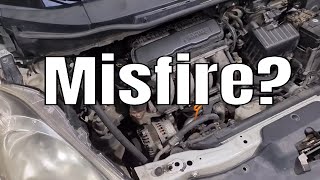
🎬 Watch: A guide to diagnosing and fixing common Honda Fit misfire codes.Diagnostic Flowchart
Tap your situation to follow the diagnostic path that matches what you're seeing on this vehicle.
Symptoms You May Notice
- Check Engine Light is on or flashing
- Rough or shaky idle
- Hesitation or stumbling during acceleration
- Reduced engine power
- Poor fuel economy
- Smell of unburned gasoline from the exhaust
- Replacing only fuel injectors without checking for carbon buildup. As noted in owner complaints and TSBs, carbon buildup is a primary cause, and new injectors may not solve the problem if the valves are restricted.
- Replacing ignition coils and spark plugs repeatedly when the underlying issue is severe carbon buildup or a failing fuel injector/ECU circuit.
Most Likely Causes

- Carbon Buildup on Intake Valves 🔴 High Probability The direct-injection fuel system design on the 1.5L Earth Dreams engine does not spray fuel over the intake valves, allowing oil vapors from the PCV system to bake onto them, restricting airflow and causing misfires. This is confirmed by Honda TSBs A21-007 and ABOM06022023906 and widely discussed by owners.
How to confirm: After ruling out ignition and fuel delivery components, a technician can use a borescope to visually inspect the intake valves for carbon deposits. This is the definitive diagnostic step before committing to the cleaning procedure.
Typical fix: The intake manifold must be removed and the intake ports must be cleaned, typically using a media blaster with fine walnut shells (a process known as 'walnut blasting'). Honda also issued a software update as part of the fix outlined in TSB A21-007 to help mitigate the issue.
Est. part cost: $20-$40 for gaskets - Faulty Ignition Coil 🟡 Medium Probability Coil-on-plug ignition coils are a common failure item on most modern vehicles as they age and are exposed to heat cycles.
How to confirm: Swap the ignition coil from cylinder 4 with another cylinder (e.g., cylinder 3). Clear the codes and drive the vehicle. If the code changes to P0303, the ignition coil is faulty.
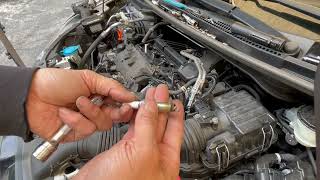
Typical fix: Replace the faulty ignition coil. It is often recommended to replace all four coils at the same time 🎬 See this walkthrough on how to remove ignition coils and spark plugs. if they are original and high-mileage.
Est. part cost: $50-$100 per coil - Worn or Fouled Spark Plug 🟡 Medium Probability
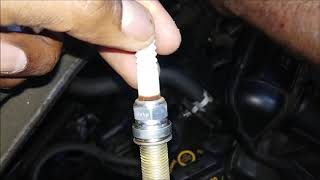
How to confirm: Remove the spark plug from cylinder 4 and inspect it for wear, damage, or heavy carbon/oil fouling. A plug that is black and sooty can be a symptom of the carbon buildup issue. You can also swap it with another cylinder's spark plug to see if the misfire code follows.
Typical fix: Replace the spark plug. It is best practice to replace all four spark plugs at the same time as a set, as they wear at a similar rate.
Est. part cost: $15-$35 per plug - Clogged or Faulty Fuel Injector Low-to-medium Probability Honda extended the warranty on fuel injectors for some 2015-2016 models due to issues causing misfires. Forum discussions indicate injectors can fail, become clogged from carbon, or even short out, causing further electrical problems.
How to confirm: A professional can perform a fuel injector balance test. Advanced DIY diagnosis involves checking the injector's resistance with a multimeter (should be ~10.3 ohms) and checking the voltage at the unplugged connector with the key on, engine off (should be ~7.3V). A voltage reading that is significantly off can indicate a damaged ECU driver.
Typical fix: Replace the faulty fuel injector. If the ECU driver is found to be faulty, the ECU must be repaired or replaced, which often requires dealership programming.
Est. part cost: $100-$200 per injector
Rare But Worth Checking
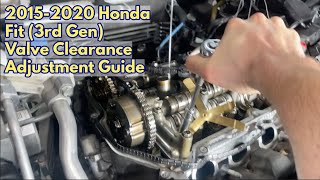
- Incorrect Valve Lash (Clearance): Honda engines can develop tight exhaust valve clearances over time, which can lead to poor sealing and misfires, especially when the engine is warm. This is a known maintenance item for Honda engines and is sometimes performed alongside carbon cleaning, though it is less frequently the root cause of a single cylinder misfire on this specific platform. 🎬 Watch: How to perform a valve clearance adjustment on your Honda Fit.
- Low Engine Compression: Though rare on a well-maintained engine, a mechanical issue like a burnt valve or worn piston rings could cause a persistent misfire on a single cylinder. A compression test would be needed to diagnose this.
- Faulty ECU Injector Driver: In some cases, a failing fuel injector can short circuit and damage the corresponding driver (mosfet) within the Engine Control Module (ECU). This results in a persistent misfire code for that cylinder that will not be resolved by replacing the injector alone. Diagnosis requires checking voltage at the injector harness, and the fix requires specialized electronics repair of the ECU.
Diagnosis Steps

- Read the code with an OBD-II scanner and check for any other pending or stored codes.
- To rule out the ignition coil, swap the coil from cylinder 4 with the coil from cylinder 3. Clear the codes and drive the car. If the code returns as P0303, the coil is bad.
- If the code remains P0304, swap the spark plug from cylinder 4 with the plug from cylinder 2. Clear codes and drive. If the code changes to P0302, the spark plug is bad.
- If the misfire remains on cylinder 4, visually inspect the wiring and connector for the cylinder 4 ignition coil and fuel injector.
- At this point, the most likely cause is carbon buildup on the intake valves. This requires professional diagnosis with a borescope to confirm. Check with a Honda dealer for any applicable warranty extensions (TSB ABOM06022023906).
- If carbon buildup is not the cause, proceed to advanced fuel system diagnostics. With the key on and engine off, check for ~7.3V at the injector harness. With the vehicle off, check for ~10.3 ohms of resistance across the injector terminals. Deviations may point to a bad injector or a faulty ECU.
- If all else fails, a mechanic may perform a compression test to check for mechanical engine health or a valve lash adjustment if the vehicle has high mileage.
Parts You'll Likely Need

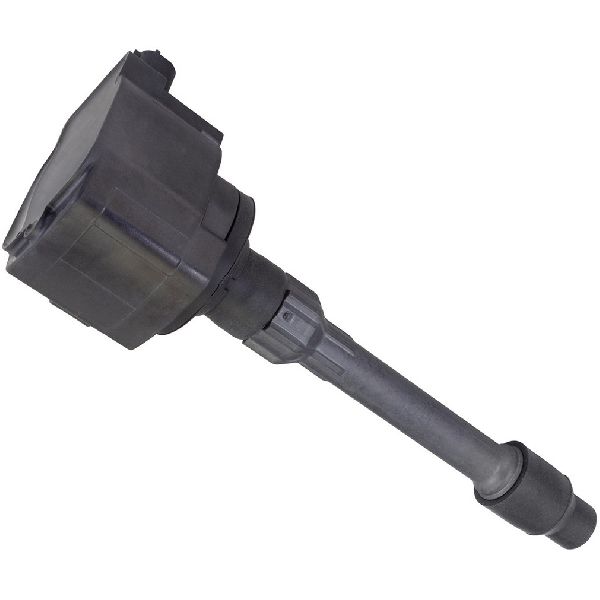
- Ignition Coil
(OEM #30520-5R0-013 (supersedes 30520-5R0-003))— A common failure point for single-cylinder misfires. Easy to diagnose by swapping between cylinders.
Trusted brands: Honda (OEM), NGK, Denso, Hitachi
OEM price range: $75-$105
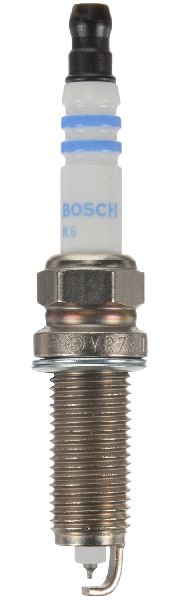
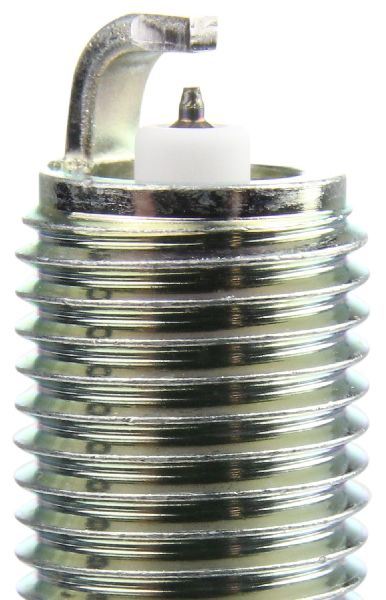
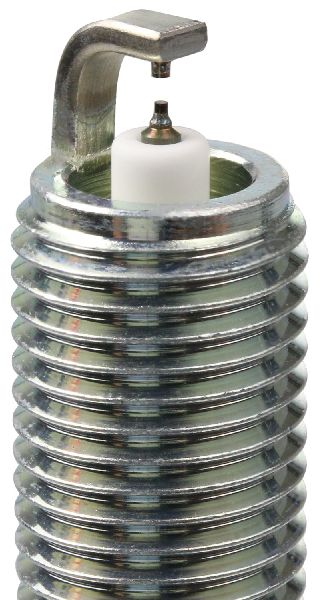
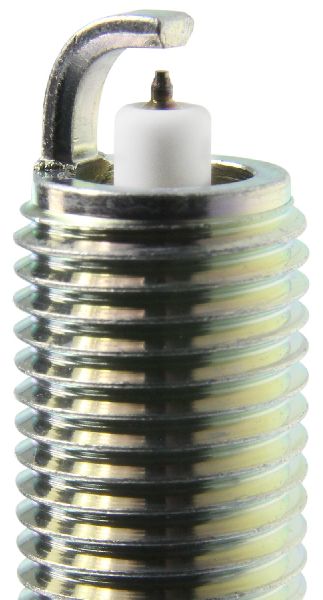
Aftermarket price range: $40-$75 - Spark Plug
(OEM #12290-5R0-003 (NGK DILZKAR7C11S, supersedes 12290-5R0-004))— A standard maintenance item that can wear out and cause a weak spark, leading to misfires.
Trusted brands: NGK (OEM), Denso (OEM)
OEM price range: $30-$45
Aftermarket price range: $15-$25 - Intake Manifold Gasket Set
(OEM #17105-5R0-004)— Required for the carbon cleaning procedure, as the intake manifold must be removed to access the valves. This part number is specified in TSB A21-007.
Trusted brands: Honda (OEM), Mahle, Fel-Pro
OEM price range: $20-$30
Aftermarket price range: $10-$20
Related Codes That Often Appear With This One
- P0300 — If the misfire condition is severe or affects multiple cylinders intermittently, a P0300 (Random Misfire Detected) code may appear alongside P0304.
- P0301, P0302, P0303 — If the underlying cause, such as widespread carbon buildup or a failing fuel system, affects other cylinders, you may see misfire codes for them as well.
- P0420 — A persistent misfire can send unburned fuel into the exhaust, damaging the catalytic converter over time and eventually triggering a P0420 (Catalyst System Efficiency Below Threshold) code.
Technical Service Bulletins (TSBs) & Recalls

- A21-007: States that the Check Engine Light with DTCs P0300–P0304 can be caused by carbon buildup on the intake valves. It outlines the repair procedure, which involves cleaning the intake ports and, for some model years, a software update.
- A16-034: An earlier bulletin also addressing MIL illumination with P0300-P0304 codes for 2015-16 models.
- ABOM06022023906: Details the warranty extension for valve cleaning and software installation due to carbon buildup causing misfire DTCs. It extends coverage to 10 years or 150,000 miles.
Platform-Specific Known Issues
- Carbon Buildup on Intake Valves: Honda has issued multiple Technical Service Bulletins (TSBs), including A21-007, acknowledging that carbon buildup can cause P0300-P0304 misfire codes. This is the most significant known issue for this engine related to this code, with owners reporting it can occur with as little as 30,000 miles.
- Warranty Extension for Carbon Buildup: Honda extended the warranty for valve cleaning and a software update on some vehicles to 10 years or 150,000 miles due to this carbon buildup issue.
Mechanic-Grade Diagnostic Values
- Low-Pressure Fuel System Pressure at Idle — expected: 320-370 kPa (47-54 psi). Failure: Pressure below or above this range indicates a problem with the in-tank fuel pump or pressure regulator.
- Fuel Injector Resistance — expected: ~10.3 ohms. Failure: A reading significantly different (by more than 0.2-0.3 ohms) suggests a faulty injector. This can lead to an ECU driver failure.
- Fuel Injector Connector Voltage (Key On, Engine Off) — expected: ~7.3V. Failure: A voltage reading that is much higher or lower than 7.3V points towards a damaged ECU injector driver, not just a bad injector.
- Valve Lash/Clearance (Cold Engine) — expected: Intake: 0.15-0.19 mm, Exhaust: 0.26-0.30 mm. Failure: Exhaust valves that are too tight (less than 0.26mm) are a common cause of misfires on Honda engines as they age.
Scan Tool Commands That Help
- Honda HDS (Honda Diagnostic System) or advanced aftermarket scanner: CKP (Crankshaft Position) Pattern Clear / CKP Pattern Learn — This procedure should be performed after any repair that could affect the crankshaft's rotational signature, such as replacing a CKP sensor, fuel injectors, or addressing a misfire. It erases the old pattern and forces the ECM to relearn the new one, which can resolve 'ghost' misfires or rough running after a repair.
- Honda HDS or advanced aftermarket scanner: Misfire Data Stream — To confirm a live misfire in real-time. The scan tool can display a live counter for each cylinder, definitively showing which cylinder is misfiring and under what conditions (idle, load, etc.).
- Honda HDS or advanced aftermarket scanner: ECM/PCM Reset — This is a more comprehensive reset than a simple DTC clear. It erases all learned values (except the CKP pattern) and is used when major components are replaced. An idle learn procedure must be performed afterward.
Wiring & Ground Locations
- G2 / G3 — Engine and Transmission ground cables. One main ground is typically from the battery negative terminal to the chassis, and another from the chassis to the transmission case.. A poor ground connection for the engine or transmission can introduce electrical noise and cause intermittent, hard-to-diagnose issues with sensors and actuators, including ignition coils and fuel injectors. Wiggling these grounds while the engine is idling can sometimes expose a bad connection.
- Cylinder 4 Injector/Coil Connector — Cylinder 4 is the cylinder closest to the driver's side (left side of the engine bay). The connectors are on the top of the engine for the coil and on the fuel rail for the injector.. Damage to the wiring or a loose/corroded connector for the cylinder 4 coil or injector is a direct cause of a P0304 code. The harness should be inspected for any signs of rodent damage, heat damage, or chafing.
Real Owner Repair Stories
- FitFreak.net forum user (2015 Honda Fit EX MT, 130,000 miles) — Persistent P0300, P0301, P0303 codes. Felt like it ran fine.
❌ Tried (didn't work) Replaced spark plugs, Replaced ignition coils, Performed a valve adjustment, Performed an intake valve (carbon) cleaning, Installed a PCV oil catch can
✅ What actually fixed it Replacing all four fuel injectors. The user found TSB 16-034 which described their exact issue, and replacing the injectors resolved the misfire codes completely. - FitFreak.net forum user (2007 Honda Fit (GE generation, but relevant diagnosis)) — Sudden, consistent P0304 misfire with flashing CEL after getting gas. Gutless performance.
❌ Tried (didn't work) Swapped ignition coil from cylinder 4 to 1, Swapped spark plug from cylinder 4 to 1, Performed a valve lash adjustment (found exhaust valves very tight)
✅ What actually fixed it The thread ended before a final resolution was posted, but the next diagnostic steps recommended by the community were a compression test (to check for a burnt valve caused by the tight lash) and cleaning EGR ports, highlighting that even after ignition and valve lash are addressed, mechanical issues can be the root cause.
OEM Part Supersession History
30520-5R0-003→30520-5R0-013— Standard part revision by the manufacturer, likely for improved durability or manufacturing process.
Heads up: The new part number (30520-5R0-013) is the correct replacement and is fully compatible. Always use the latest revision when replacing.
Model Year Variations Within This Range
- 2018: The 2018 model year was a mid-cycle refresh. It included cosmetic updates, more sound insulation, and an updated infotainment system. While the core L15B engine is the same, there were minor adjustments to horsepower and torque ratings for the CVT model, and potential steering/suspension tuning changes. These are unlikely to affect the root cause of P0304 but are important to note for part compatibility.
Helpful Videos
Used OEM Parts in Stock

New Aftermarket Parts Available


The information in this article is provided for general reference and educational purposes only. Vehicle specifications, procedures, and part compatibility can vary by production date, trim level, and region. Always consult your vehicle's factory service manual and verify part numbers before purchasing or performing repairs. Safety-critical components such as airbags, seat belts, and braking systems should be installed by a qualified professional.
- Honda FIT:
- 🎬 Helpful Videos
- 🛍️ Shop This Part
- What's Unique About the 2015-2018 Honda FIT
- Diagnostic Flowchart
- Symptoms You May Notice
- Most Likely Causes
- Rare But Worth Checking
- Diagnosis Steps
- Parts You'll Likely Need
- Related Codes That Often Appear With This One
- Technical Service Bulletins (TSBs) & Recalls
- Platform-Specific Known Issues
- Mechanic-Grade Diagnostic Values
- Scan Tool Commands That Help
- Wiring & Ground Locations
- Real Owner Repair Stories
- OEM Part Supersession History
- Model Year Variations Within This Range
- 🎟️ Get 5% Off