

P0304 on 2010-2012 Honda Crosstour: Cylinder 4 Misfire Causes and Fixes
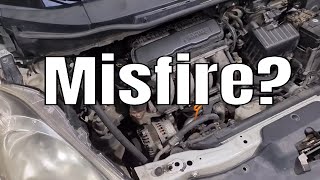
P0304 on a 2010-2012 Honda Crosstour is most often caused by a spark plug in cylinder 4 that has been fouled by oil. This is a well-documented issue related to the engine's Variable Cylinder Management (VCM) system and piston rings, and was covered by Honda's Technical Service Bulletin A13-079 and a subsequent warranty extension. The immediate fix is a new spark plug, but the underlying cause may require more extensive engine repair, such as piston ring replacement.
- P0304 on a 2010-2012 Crosstour is very likely due to an oil-fouled spark plug in cylinder 4.
- This is a known engine defect covered by Honda TSB A13-079, caused by the VCM system leading to oil consumption past the piston rings.
- A simple spark plug replacement is a temporary fix; the permanent solution may require a PCM update and/or piston ring replacement.
- Check your oil level immediately, as excessive oil consumption is a primary symptom and cause.
- The warranty extension Honda provided is likely expired, so repairs will be out-of-pocket.
What's Unique About the 2010-2012 Honda CROSSTOUR
The 3.5L V6 engine (J35Z2) in the 2010-2012 Crosstour features a Variable Cylinder Management (VCM) system designed to improve fuel economy by deactivating cylinders. However, this system, specifically the VCM-2 version, frequently deactivates cylinders 1-4, leading to lower operating temperatures and pressure in those cylinders. This condition allows oil to bypass the piston rings, which can align and create a path for oil to enter the combustion chamber. This fouls the spark plugs, directly causing misfire codes P0301, P0302, P0303, and P0304. This problem was so prevalent that it led to a class-action lawsuit, *Soto, et al. v. American Honda Motor Co., Inc.*, and a warranty extension from Honda to cover the necessary repairs.
Diagnostic Flowchart
Tap your situation to follow the diagnostic path that matches what you're seeing on this vehicle.
Symptoms You May Notice
- Flashing or solid Check Engine Light
- Rough or shaky idle
- Engine hesitation or stumbling during acceleration
- Reduced engine power
- Noticeable decrease in fuel economy
- Unpleasant smell from the exhaust
- Excessive oil consumption, requiring frequent top-offs between oil changes.
- Replacing only the ignition coil without inspecting the spark plug. The plug is the most common failure point due to the oil fouling issue, and a new coil will not fix a fouled plug.
- Attributing the misfire solely to a bad coil or injector without considering the widespread, documented oil consumption issue as the root cause.
Most Likely Causes
- Fouled Spark Plug in Cylinder 4 🔴 High Probability This is the primary symptom of the known piston ring issue described in Honda TSB A13-079. Oil contaminates the spark plug due to the VCM-related oil consumption problem, preventing a proper spark.
How to confirm: Remove the spark plug from cylinder 4 and visually inspect it for black, oily, or wet deposits.
Typical fix: Replace the fouled spark plug. This is often a temporary fix if the underlying piston ring issue is not addressed.
Est. part cost: $15-$30 - Internal Engine Issue (Piston Rings) 🔴 High Probability As per TSB A13-079, the piston rings on cylinders 1-4 can align, causing oil consumption and spark plug fouling. This is the root cause of the frequent misfires on this engine, directly linked to the operation of the VCM system.
How to confirm: A dealership can confirm this by following the diagnostic procedure in TSB A13-079, which involves checking for fouled plugs and specific PCM software versions. A cylinder compression or leak-down test can also indicate a problem.
Typical fix: The official Honda fix involves a two-stage approach: first, a PCM software update (for 2010-2011 models) to alter VCM behavior. If the problem persists, the second stage is cleaning the pistons and replacing the piston rings on the affected cylinders (1-4). This is a significant engine repair.
Est. part cost: $200-$500 for rings and gaskets, but labor is the major cost, potentially running into thousands of dollars. - Faulty Ignition Coil 🟡 Medium Probability
How to confirm: Swap the ignition coil from cylinder 4 with another cylinder (e.g., cylinder 5). Clear the codes and drive the vehicle. If the misfire code changes to P0305, the ignition coil is faulty.
Typical fix: Replace the faulty ignition coil.
Est. part cost: $40-$100 - Clogged or Faulty Fuel Injector ⚪ Low Probability
How to confirm: This is more complex to diagnose. It involves checking fuel trims with a scan tool or swapping injectors between cylinders, which is more labor-intensive. A noid light can be used to check for signal at the injector.
Typical fix: Clean or replace the fuel injector for cylinder 4.
Est. part cost: $50-$150
Rare But Worth Checking
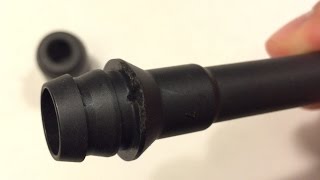
- Faulty PCV Valve: A stuck PCV valve can increase crankcase pressure and contribute to oil consumption, exacerbating the main issue.
- Valve Adjustment Needed: Incorrect valve lash can cause misfires, though this is less common than the oil-fouling issue.
Diagnosis Steps
- Check the engine oil level. If it is low, top it off. This is a critical first step given the known oil consumption issues.
- Scan the vehicle's computer for any stored trouble codes to confirm P0304 and check for other related codes like P0301-P0303 or P3400/P3497.
- Locate cylinder 4 on the 3.5L V6 engine. It is the front-most cylinder on the cylinder bank closer to the firewall.
- Remove the ignition coil and spark plug from cylinder 4.
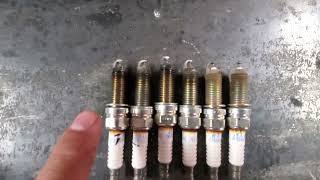
- Visually inspect the spark plug. If it is black, wet, or oily, it is fouled. This strongly suggests the TSB-related issue.
- If the plug is fouled, replace it with a new one. Consider replacing all plugs on the affected bank (cylinders 1-4).
- If the plug appears normal, swap the ignition coil from cylinder 4 with one from another cylinder (e.g., cylinder 5).
- Clear the codes and drive the vehicle. If the code returns as P0305, the ignition coil is the culprit and needs replacement.
- If the P0304 code returns and the spark plug continues to foul, the root cause is likely the piston ring issue. At this point, professional service that references TSB A13-079 is recommended.
- For a deeper diagnosis, a mechanic can perform a cylinder compression test or a leak-down test to assess the health of the piston rings.
Parts You'll Likely Need
- Spark Plug
(OEM #12290-R70-A01)— This is the most common part to fail due to the oil-fouling issue specific to this engine.
Trusted brands: NGK (ILZKR7B11), Denso (SXU22HCR11S)
OEM price range: $20-$35
Aftermarket price range: $10-$20 - Ignition Coil
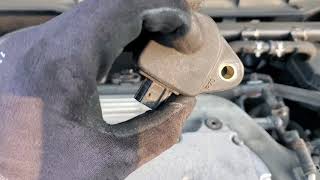
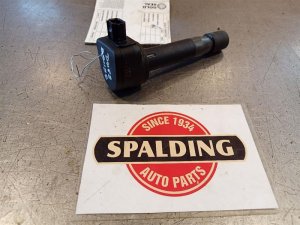
(OEM #30520-R70-A01)— A common failure item on any vehicle that can cause a single-cylinder misfire.
Trusted brands: Denso, Hitachi, NGK (U5304)
OEM price range: $80-$120
Aftermarket price range: $40-$80 - Piston Ring Set
(OEM #13011-R70-A02 (Standard))— Required for the permanent fix if the root cause is determined to be the aligned piston rings as per TSB A13-079.
Trusted brands: Honda Genuine, Riken
OEM price range: $50-$85 (per cylinder)
Aftermarket price range: $30-$60 (per cylinder)
Related Codes That Often Appear With This One
- P0300 — Indicates a random or multiple cylinder misfire. If the underlying oil consumption issue is severe, it may affect other cylinders.
- P0301, P0302, P0303 — These codes indicate misfires in cylinders 1, 2, and 3. The TSB from Honda explicitly states the piston ring issue affects cylinders 1 through 4, so it's common to see misfires on these cylinders together.
- P0420, P0430 — These codes indicate catalyst system inefficiency. A chronic misfire can dump unburnt fuel into the exhaust, damaging the catalytic converters over time.
- P3400, P3497 — These codes relate to the VCM system (VPS Stuck Off Bank 1/2) and are often triggered by a low engine oil level resulting from the consumption issue.
Technical Service Bulletins (TSBs) & Recalls
- A13-079: The primary TSB for this issue. Details the cause (piston ring alignment leading to spark plug fouling) and the corrective action (software update and/or piston ring replacement) for DTCs P0301-P0304.
- 11-033: Addresses excessive oil consumption and related DTCs P3400/P3497. It identifies the frequent switching of the VCM system as a contributor and prescribes a PGM-FI software update to improve VCM timing.
Platform-Specific Known Issues
- TSB A13-079 / Warranty Extension: Honda identified an issue where the piston rings on cylinders 1-4 of the 3.5L V6 engine could align, leading to increased oil consumption. This oil fouls the spark plugs, causing misfires (DTCs P0301-P0304). The fix involves a software update and/or replacing the piston rings. Honda extended the powertrain warranty to 8 years with unlimited mileage to cover this specific repair as part of the *Soto, et al. v. American Honda Motor Co., Inc.* class-action settlement. This warranty is likely expired for most vehicles now.
- VCM (Variable Cylinder Management) System: The root of the problem is the VCM-2 system's aggressive deactivation of the front bank of cylinders (1-4), which leads to the conditions causing oil to bypass the rings. Many owners in forums discuss using a 'VCM Muzzler' or 'VCM Tuner' device, which plugs into the coolant temperature sensor to trick the computer into thinking the engine isn't fully warmed up, thus preventing VCM from engaging. This is a popular community-driven preventative measure.
Mechanic-Grade Diagnostic Values
- Fuel Injector Resistance — expected: 10-13 Ohms. Failure: A reading significantly higher or lower than the expected range indicates a faulty injector coil.
- Fuel Pressure — expected: 50-65 PSI. Failure: Low fuel pressure would typically cause random misfires (P0300) or affect multiple cylinders, but it's a foundational value to check.
Hidden / Shadow Codes Worth Checking
- Mode $06, TID $53, CID $04: This is not a DTC but raw data from the PCM's self-tests. TID $53 is the Test ID for misfire monitoring. CID $04 is the Component ID for cylinder 4. Viewing this data with a capable scan tool allows a technician to see the raw misfire count for cylinder 4, even if the count is not high enough to set a P0304 code. This is useful for diagnosing intermittent misfires. (see via A professional-grade scan tool or a consumer OBD2 adapter paired with advanced diagnostic software (like Torque Pro) that can display Mode $06 test results.)
Wiring & Ground Locations
- G101 — On the right side of the engine, often on the intake manifold plenum or thermostat housing.. G101 is a primary ground point for the engine control module (ECU/PCM) and multiple sensors. A poor connection at this ground can cause erratic sensor readings and intermittent issues, including misfires, that are difficult to diagnose. Ensuring this ground is clean and tight is a critical step when troubleshooting elusive electronic problems.
- Cylinder 4 Injector Connector — On the fuel rail, connected to the fuel injector for the front-most cylinder on the bank closer to the firewall.. The wiring harness and connector for the injector can be a point of failure. A technician would test for battery voltage on one pin (with key on) and a pulsing ground signal from the PCM on the other pin using a noid light to confirm the circuit is functioning correctly.
Real Owner Repair Stories
- Unofficial Honda FIT Forums user ('08 Honda Fit (demonstrates a similar diagnostic path on a Honda engine)) — Random P0304 code, especially in the 1,800-2,300 RPM range, with a temporary drop in power but no felt stutter. Rough run on cold start that smooths out.
❌ Tried (didn't work) Replaced all four coilpacks (Hitachi), Replaced all four spark plugs (Denso Iridium), Replaced downstream O2 sensor, Cleaned EGR valve
✅ What actually fixed it The user suspected an incorrect or omitted valve lash adjustment from a previous mechanic. Performing a valve adjustment to factory specifications is a known, though less common, fix for persistent single-cylinder misfires on Honda engines.
OEM Part Supersession History
30520-R70-A01→30520-R70-S01— Standard part revision for performance, reliability, or manufacturing improvements.
Heads up: The parts are interchangeable. 30520-R70-S01 is the current replacement for the original part number.
Model Year Variations Within This Range
- 2010-2011: Honda TSB 11-033 specifically calls for a PGM-FI software update for 2010-2011 Accord and Crosstour models to change the VCM timing. The bulletin states that frequent VCM switching can increase oil consumption. This software update was the first step in addressing the root cause of the oil fouling that leads to P0301-P0304 codes.
Helpful Videos


We Have This Part in Stock


The information in this article is provided for general reference and educational purposes only. Vehicle specifications, procedures, and part compatibility can vary by production date, trim level, and region. Always consult your vehicle's factory service manual and verify part numbers before purchasing or performing repairs. Safety-critical components such as airbags, seat belts, and braking systems should be installed by a qualified professional.
- Honda CROSSTOUR:
- 🎬 Helpful Videos
- 🛍️ Shop This Part
- What's Unique About the 2010-2012 Honda CROSSTOUR
- Diagnostic Flowchart
- Symptoms You May Notice
- Most Likely Causes
- Rare But Worth Checking
- Diagnosis Steps
- Parts You'll Likely Need
- Related Codes That Often Appear With This One
- Technical Service Bulletins (TSBs) & Recalls
- Platform-Specific Known Issues
- Mechanic-Grade Diagnostic Values
- Hidden / Shadow Codes Worth Checking
- Wiring & Ground Locations
- Real Owner Repair Stories
- OEM Part Supersession History
- Model Year Variations Within This Range
- 🎟️ Get 5% Off