

P0304 on 2016-2018 Honda Civic: Cylinder 4 Misfire Causes and Fixes
P0304 means cylinder 4 is misfiring. On a 2.0L Civic, this is likely a bad spark plug or ignition coil. On the 1.5L Turbo, it's often more complex, involving faulty fuel injectors or a software issue addressed by Honda's TSB A19-033, which also extended the warranty. Check for warranty coverage before paying for repairs.
- P0304 is a misfire in cylinder 4. On the 2016-2018 Civic, the cause depends heavily on which engine you have (2.0L or 1.5L Turbo).
- For all models, start diagnosis by swapping the cylinder 4 ignition coil and then the spark plug with another cylinder to see if the code follows.
- If you have the 1.5L Turbo engine, this code is frequently linked to a known issue addressed by Honda TSB A19-033. This may involve faulty fuel injectors or require a software update from a dealer.
- Do not ignore a flashing check engine light, as it signals a severe misfire that can quickly destroy your expensive catalytic converter.
- When replacing parts, use high-quality OEM-spec brands like NGK or Denso for spark plugs and Hitachi or Denso for ignition coils to ensure reliability.
What's Unique About the 2016-2018 Honda CIVIC

The 2016-2018 Civic (10th generation) is unique regarding this code, especially models with the 1.5L Turbo engine. These engines are known for issues where fuel can dilute the engine oil, leading to various drivability problems, including misfires. Honda acknowledged this by issuing Technical Service Bulletin (TSB) A19-033, which involves a software update, and in some cases, replacing the A/C control unit to fix misfire and rich-running conditions (P0172). This TSB also included a warranty extension to 6 years/unlimited miles for affected components, highlighting that the problem goes beyond typical spark plug or coil failure.
Diagnostic Flowchart

Tap your situation to follow the diagnostic path that matches what you're seeing on this vehicle.
Symptoms You May Notice
- Flashing or solid Check Engine Light
- Rough or shaking idle
- Hesitation or loss of power during acceleration
- Reduced fuel economy
- Strange smell from the exhaust (often like gasoline)
- Multiple warning lights on the dashboard (e.g., Emissions System, Brake Hold, Hill Start Assist)
- Replacing only the spark plug without checking the ignition coil or fuel injector. On the 1.5T engine, a fouled plug is often a symptom of another problem, not the root cause.
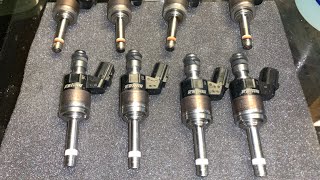
- Assuming the problem is only ignition-related when P0172 is also present. The combination of P0304 and P0172 strongly points towards a fuel injector 🎬 See how to replace injectors to fix a P0172 rich condition. or software issue on the 1.5T engine.
Most Likely Causes

- Faulty Ignition Coil 🔴 High Probability Ignition coils are common wear items. Owner complaints for this Civic generation specifically mention finding rusted ignition coils in cylinder 4, suggesting a possible issue with moisture intrusion. This is also a noted issue on the Civic Type R, where the hood scoop design can allow water to drip onto the cylinder 4 area.
How to confirm: The easiest way to confirm a bad coil is to swap the ignition coil from cylinder 4 with another cylinder (e.g., cylinder 3). Clear the codes and drive the car. If the code changes to P0303, the coil is faulty.
Typical fix: Replace the faulty ignition coil. Many owners choose to replace all four coils and spark plugs at the same time for preventative maintenance. Use a small amount of dielectric grease inside the boot to prevent future moisture issues.
Est. part cost: $40-$90 per coil - Worn or Fouled Spark Plug 🔴 High Probability Spark plugs are a standard maintenance item. On the 1.5L Turbo, issues like fuel dilution or faulty injectors can cause spark plugs to foul prematurely, often appearing completely black. TSB A19-033 procedure includes inspecting and potentially replacing the spark plugs.
How to confirm: After confirming the ignition coil is good, inspect the spark plug in cylinder 4. Look for heavy carbon buildup, fuel saturation, oil fouling, or a worn electrode. Compare it to a plug from a working cylinder.
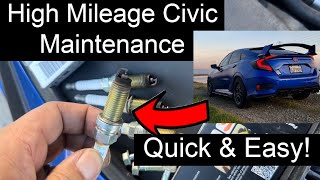
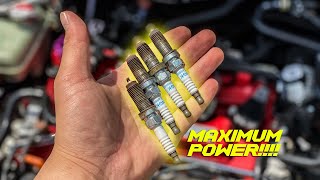
Typical fix: Replace the spark plug. It is recommended to replace all four spark plugs at the same time using OEM-spec NGK or Denso plugs. 🎬 Watch: Step-by-step spark plug replacement for the 1.5L Turbo engine.
Est. part cost: $40-$100 for a set of four - Clogged or Faulty Fuel Injector 🟡 Medium Probability This is a significant and well-documented issue on the 1.5L Turbo engine. The direct injection injectors can fail, causing a rich condition (P0172) and fouling the spark plug, leading to misfires. This is often the root cause when new plugs and coils do not fix the P0304 code.
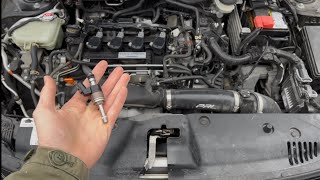
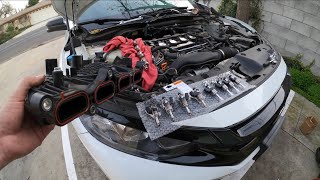
How to confirm: This is more difficult for a DIYer. A professional can perform a fuel injector balance test. A common DIY diagnostic path is arriving at this conclusion after spark plugs and ignition coils 🎬 Watch this walkthrough for replacing direct fuel injectors on 10th Gen Civics. have been ruled out. A resistance test can be performed with a multimeter; a reading outside the 10-13 Ohm range suggests a problem.
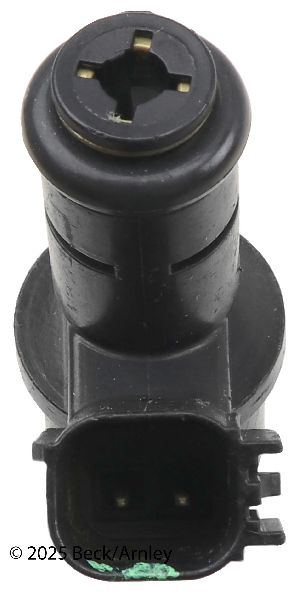
Typical fix: Replace the faulty fuel injector. Due to the labor involved in accessing the direct injectors under the intake manifold, many shops and owners opt to replace all four as a set. The OEM part number was updated from 16010-59B-305 to 16010-59B-315.
Est. part cost: $90-$150 per injector, or $400-$600 for a set - Outdated Engine Control Unit (ECU) Software 🟡 Medium Probability Specific to the 1.5L Turbo engine, Honda released software updates to address fuel dilution and misfire issues under certain driving conditions, particularly short trips in cold weather.
How to confirm: A Honda dealership or a qualified independent shop with access to Honda's service network can check if your vehicle's VIN is eligible for the update outlined in TSB A19-033.
Typical fix: The dealership will update the PGM-FI (engine) and TCM (transmission) software. The TSB also calls for an oil change and potentially an A/C control unit replacement as part of the procedure. This is often the first step a dealer will take.
Est. part cost: $0 if covered under warranty extension, otherwise shop labor rates apply for the update.
Rare But Worth Checking
- Low Engine Compression: While less common on a newer vehicle, internal engine problems like a leaking valve or a bad head gasket can cause a persistent misfire. A class action lawsuit mentioned coolant leaks into cylinders causing misfires on some 1.5L Turbo engines. A compression test can diagnose this.
- Blown Head Gasket: On modified 1.5T engines, or in some rare stock cases, the head gasket can fail between cylinders or between a cylinder and a coolant passage. This allows coolant to enter the cylinder, causing a misfire. Symptoms include white smoke from the exhaust, loss of coolant with no visible leak, and a 'steam-cleaned' or unusually clean spark plug and piston top in the affected cylinder. This is a major repair requiring upgraded head studs (e.g., ARP studs) to prevent recurrence.
Diagnosis Steps

- Read the code with an OBD-II scanner to confirm P0304 and check for any other codes, especially P0172.
- If you have a 1.5L Turbo model, contact a Honda dealer with your VIN to check for open recalls or eligibility for TSB A19-033 and the associated warranty extension.
- Swap the ignition coil from cylinder 4 to cylinder 3. Clear the codes and drive. If the code changes to P0303, the coil is bad and needs replacement.
- If the code remains P0304, inspect the spark plug from cylinder 4. Look for heavy fouling, wear, or damage. If it looks bad, replace all four plugs.
- Inspect the ignition coil connector for damage or corrosion. The owner complaint ODI #11418794 noted rust on the coil, so check for signs of moisture.
- If ignition parts are good and the code persists (especially with P0172), the next most likely cause on the 1.5L Turbo is a faulty fuel injector. This step may require professional diagnosis or can be a DIY job for experienced mechanics.
- If all else fails, perform a cylinder compression and leak-down test to check for mechanical engine problems like a bad valve or a failing head gasket.
Parts You'll Likely Need
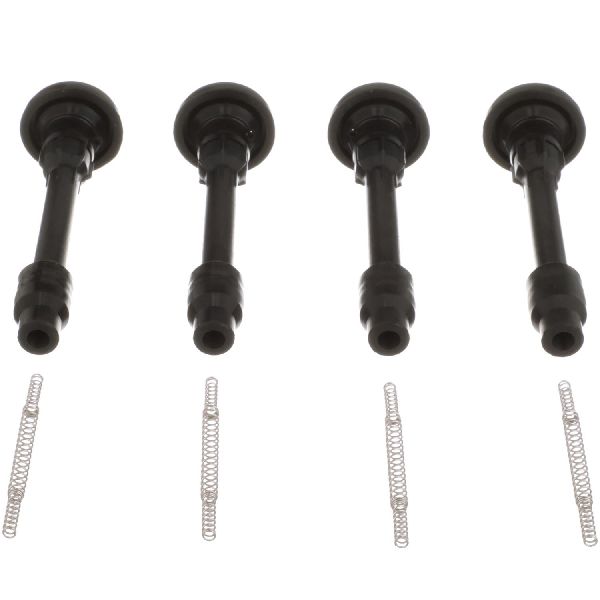
- Ignition Coil
(OEM #30520-59B-013)— A primary cause of single-cylinder misfires. Owner complaints also note these can fail due to moisture and rust. This part is shared across many Honda models including the CR-V and Accord.
Trusted brands: Hitachi (OEM supplier), Denso, NGK
OEM price range: $80-$120
Aftermarket price range: $40-$90 - Spark Plug
(OEM #9807B-5617W (NGK DILKAR7G11GS))— A standard maintenance item that can fail or become fouled, especially if other issues like faulty injectors are present.
Trusted brands: NGK, Denso
OEM price range: $20-$30
Aftermarket price range: $15-$25 - Fuel Injector Set
(OEM #16010-59B-315 (replaces 16010-59B-305))— A known major issue on the 1.5L Turbo engine, as documented by Honda's TSBs linking misfires to rich conditions. Often the true culprit when ignition parts don't solve the problem.
Trusted brands: Honda (OEM), Bosch
OEM price range: $420-$640 (for a set of 4)
Aftermarket price range: $250-$400 (for a set of 4)
Related Codes That Often Appear With This One
- P0300 — Indicates random, multiple misfires. If the problem is intermittent or affects other cylinders, P0300 may appear alongside P0304.
- P0301, P0302, P0303 — Misfire codes for other cylinders. Seeing them together can point to a systemic issue like a software problem, bad fuel, or a failing head gasket.
- P0172 — 'Fuel System Too Rich'. Honda's TSB A19-033 specifically links this code with misfires on the 1.5L Turbo, often pointing toward faulty fuel injectors or a software issue.
Technical Service Bulletins (TSBs) & Recalls

- A19-033: 'Warranty Extension: 2016-18 Civic 1.5L: Software Update with A/C Control Unit Replacement; DTC P0300, P0301, P0302, P0303, P0304, or P0172; Whirling Noise from Engine'. This is the primary TSB for the issue on the Civic.
- A19-037: A similar TSB for the 2017-18 Honda CR-V, showing the problem is platform-wide for the 1.5T engine.
- 19-038: A related TSB that mentions irregular wear of camshaft lobes as another potential cause for these DTCs on the 1.5L engine.
Platform-Specific Known Issues
- 1.5L Turbo Engine Fuel Dilution and Software Issue: Honda issued TSB A19-033 for 2016-2018 Civics with the 1.5L engine to address misfires (P0300-P0304) and rich conditions (P0172). The fix involves a software update, an oil ch
Mechanic-Grade Diagnostic Values
- Ignition Coil Primary Resistance (1.5L Turbo) — expected: 0.49 - 0.57 Ω. Failure: A reading outside this range indicates a faulty coil.
- Ignition Coil Secondary Resistance (1.5L Turbo) — expected: 9.5 - 11.1 kΩ. Failure: A reading outside this range indicates a faulty coil.
- Ignition Coil Resistance (2.0L K20C2) — expected: Primary: ~0.41 Ω; Secondary: ~9.81 kΩ. Failure: A reading significantly outside these values, especially an open circuit (infinite resistance).
- Fuel Injector Resistance (1.5L Turbo) — expected: ~10 to 13 Ω. Failure: A low reading suggests a shorted injector; an open circuit (infinite resistance) indicates a failed injector.
Hidden / Shadow Codes Worth Checking
- Mode $06 Misfire Data: This is a function, not a code, that provides raw data from onboard monitors. It includes misfire counts for each cylinder during the current and last 10 drive cycles before they are high enough to trigger a P030x code. (see via An advanced OBD-II scanner that can access Mode $06 test results.)
- Misfire Cycle Counter (e.g., CYL4 TOTAL MISFIRE): A live data parameter that shows the exact number of misfire events detected on a specific cylinder. This is invaluable for confirming which cylinder is the problem and if repairs are working. (see via Honda Diagnostic System (HDS) or a professional-grade scan tool with manufacturer-specific live data.)
Scan Tool Commands That Help
- Honda HDS or equivalent: Crank Pattern Clear / Crank Pattern Relearn — Used to resolve 'ghost misfires' where false codes are set due to signal interference. This procedure clears the learned crankshaft position sensor signal pattern from the ECU and forces it to relearn the correct pattern, which can resolve mis-detection issues.
- Advanced Scan Tool: Cylinder Contribution / Power Balance Test — This test measures the drop in RPM when each cylinder's fuel injector is sequentially disabled. A cylinder that shows little to no RPM drop when deactivated is not contributing power and is the source of the misfire.
Real Owner Repair Stories
- NHTSA Owner Complaint (2018 Honda CIVIC) — Loss of power and hesitation during acceleration, Check Engine Light on.
✅ What actually fixed it The owner scanned the computer and found code P0304. Upon removing the #4 ignition coil, rust was discovered on the coil, indicating a failure of the seal and moisture intrusion. Replacing the rusted coil resolved the issue. - Common narrative from CivicX.com and 10thcivicforum.com (2016-2018 Honda Civic 1.5T) — Persistent P0304 and often P0172 (System Too Rich), rough idle, hesitation, especially after a cold start.
❌ Tried (didn't work) Replacing all four spark plugs., Swapping ignition coils, or replacing all four ignition coils.
✅ What actually fixed it The misfire and rich codes persisted until the set of four direct fuel injectors were replaced with the updated OEM part number (16010-59B-315). This is a widely documented final fix for the 1.5T engine when ignition components do not solve the problem.
OEM Part Supersession History
16010-59B-305→16010-59B-315— This is the fuel injector set for the 1.5L Turbo. The part was likely updated to address the widespread issues of injector failure and contribution to fuel dilution and misfires in the early 10th generation models.30520-59B-013→30520-59B-023— This is the ignition coil for the 1.5L Turbo engine. Part updates often address reliability issues or improve performance.
Heads up: The older part number will still work, but the newer part is the recommended replacement.
Model Year Variations Within This Range
- 2016-2018: The root cause of P0304 differs significantly by engine. On the 1.5L Turbo (L15B7), it is frequently caused by faulty direct fuel injectors or software issues related to fuel dilution. On the 2.0L NA (K20C2), which uses port injection, the cause is more likely to be a traditional failure of a spark plug or ignition coil.
- 2016-2018 (1.5T): All 2016-2018 1.5T Civics were subject to the conditions causing fuel dilution and misfires. Honda's TSB A19-033 provides a software update to remedy this. Vehicles that have not had this update performed are more likely to experience P0304 related to this root cause.
Helpful Videos

Used OEM Parts in Stock


New Aftermarket Parts Available


The information in this article is provided for general reference and educational purposes only. Vehicle specifications, procedures, and part compatibility can vary by production date, trim level, and region. Always consult your vehicle's factory service manual and verify part numbers before purchasing or performing repairs. Safety-critical components such as airbags, seat belts, and braking systems should be installed by a qualified professional.
- Honda CIVIC:
- 🎬 Helpful Videos
- 🛍️ Shop This Part
- What's Unique About the 2016-2018 Honda CIVIC
- Diagnostic Flowchart
- Symptoms You May Notice
- Most Likely Causes
- Rare But Worth Checking
- Diagnosis Steps
- Parts You'll Likely Need
- Related Codes That Often Appear With This One
- Technical Service Bulletins (TSBs) & Recalls
- Platform-Specific Known Issues
- Mechanic-Grade Diagnostic Values
- Hidden / Shadow Codes Worth Checking
- Scan Tool Commands That Help
- Real Owner Repair Stories
- OEM Part Supersession History
- Model Year Variations Within This Range
- 🎟️ Get 5% Off