

P0304 on 2008-2015 Honda Civic: Cylinder 4 Misfire Causes and Fixes
P0304 on a 2008-2015 Honda Civic means cylinder 4 is misfiring. The most common causes are a worn spark plug or a bad ignition coil. A valve adjustment is also a frequent fix on these engines, especially on high-mileage R18s where exhaust valves tighten. Start by swapping the coil and plug from cylinder 4 to another cylinder to see if the code follows.
- P0304 on a 2008-2015 Civic is a misfire on cylinder 4. Do not ignore it, as it can cause expensive catalytic converter damage.
- Start your diagnosis with the simple and cheap parts: swap the ignition coil and then the spark plug from cylinder 4 to another cylinder to see if the misfire code follows.
- If coils and plugs are not the issue, a valve adjustment is a highly likely solution for this specific vehicle and should be your next step.
- Always use high-quality, OEM-spec spark plugs (NGK or Denso) for Honda engines.
- Be aware that other warning lights (VSA, Power Steering) may come on with the Check Engine Light; this is normal for Honda vehicles and they should clear once the P0304 fault is resolved.
What's Unique About the 2008-2015 Honda CIVIC

On 8th and 9th generation Honda Civics, particularly those with the R18 engine, misfire codes like P0304 are very common. While spark plugs and coils are the usual suspects, a unique and frequent cause on these engines is the need for a periodic valve lash adjustment. The valves, especially the exhaust valves, can tighten over time, reducing compression and leading to misfires, a fix many owners and technicians confirm. Additionally, it's a known Honda trait for multiple warning lights (like VSA, Check Emissions, and Power Steering) to illuminate alongside the check engine light for a single engine fault, which can be alarming but is often tied to the single misfire code.
Diagnostic Flowchart

Tap your situation to follow the diagnostic path that matches what you're seeing on this vehicle.
Generation note: This guide covers the 8th Generation (2006-2011) and 9th Generation (2012-2015) Honda Civic. The primary causes and diagnostic steps for P0304 are very similar for the common 1.8L R18 engine found in both generations. The Si models used different engines (K20Z3 and K24Z7), which also benefit from valve adjustments but may have different part numbers and specifications. The 8th Gen uses the R18A1 engine, while the 9th Gen uses the slightly more fuel-efficient R18Z1, but they are mechanically very similar.
Symptoms You May Notice

- Flashing or solid Check Engine Light
- Rough or shaky idle
- Engine hesitation or stumbling during acceleration
- Noticeable loss of power
- Reduced fuel economy
- Smell of unburned fuel from the exhaust
- Multiple warning lights on the dashboard (e.g., VSA, Power Steering, Check Emissions).
- Replacing oxygen sensors. While an O2 sensor can be affected by a misfire, it is rarely the root cause of a single-cylinder misfire code like P0304.
- Replacing the catalytic converter. A misfire can damage a catalytic converter, but a bad converter will not cause a P0304 code. A damaged converter usually results in codes like P0420.
Most Likely Causes

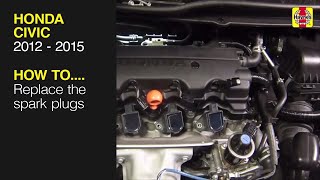
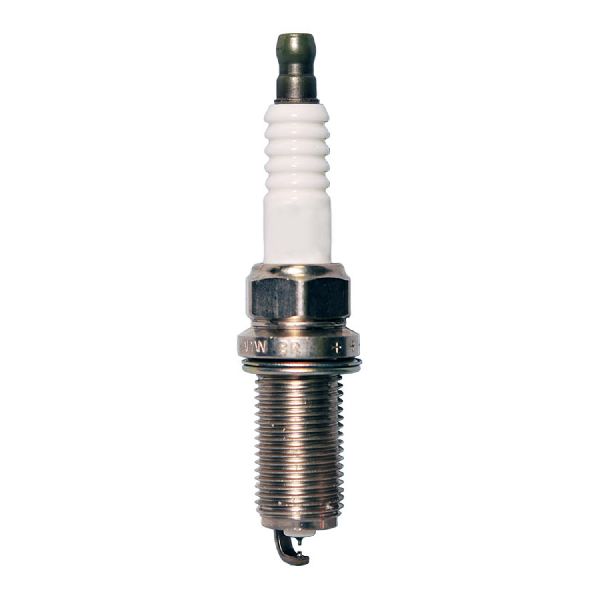
- Worn or Fouled Spark Plugs 🔴 High Probability Spark plugs are a regular maintenance item. Honda engines are sensitive to plug condition and type. Using non-OEM plugs (NGK or Denso are preferred) can cause issues. The service interval is around 100,000 miles, but they can fail sooner.
How to confirm: Inspect the spark plug from cylinder 4. Look for heavy carbon buildup, oil fouling, a wet appearance (fuel), or a worn/eroded electrode. Compare it to a plug from another cylinder.
Typical fix: Replace all four spark plugs with high-quality OEM-spec plugs (NGK or Denso). Ensure they are gapped correctly, although most come pre-gapped.
Est. part cost: $30-$60 - Faulty Ignition Coil 🔴 High Probability Ignition coils are a common failure point on most modern vehicles as they age. Heat and vibration cause the internal windings to break down. On some Civics, moisture can get past the coil seal, causing rust and failure, as noted in an NHTSA complaint.
How to confirm: Swap the ignition coil from cylinder 4 with the coil from another cylinder (e.g., cylinder 3). Clear the codes and drive the vehicle. If the code changes to P0303, the ignition coil is faulty.
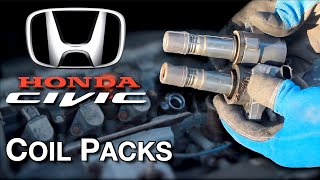
Typical fix: Replace the faulty ignition coil. It is often recommended to replace them in sets, but replacing only the failed one is acceptable 🎬 Watch: How to replace ignition coils on 2012-2015 models. for most owners.
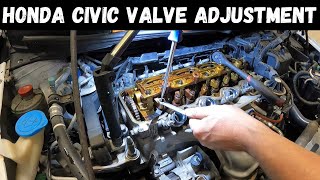
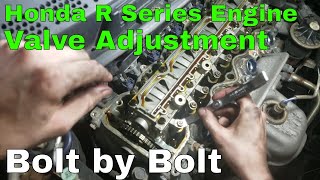
Est. part cost: $40-$100 - Incorrect Valve Clearance (Valve Lash) 🟡 Medium Probability Honda R-series and K-series engines use a mechanical valve train that requires periodic adjustment. Over time, typically every 100,000 miles, the valve clearances can tighten, especially on the exhaust side. This prevents the valve from fully seating, causing a loss of compression and leading to misfires, particularly when the engine is cold or at idle.
How to confirm: This requires a specific procedure using feeler gauges to measure the clearance between the rocker arms and valve stems with the engine cold. If the clearances are out of specification (tighter than spec is the common issue), they need adjustment.
Typical fix: Perform a valve lash adjustment. This involves removing the valve cover and adjusting each valve to factory specifications. The valve cover gasket and spark plug tube seals should be replaced at the same time.
Est. part cost: $15-$40 (for valve cover gasket set) - Clogged or Faulty Fuel Injector ⚪ Low Probability Fuel injectors can become clogged with deposits over time, preventing the correct amount of fuel from being delivered to the cylinder. This is less common than ignition or valve issues but does occur.
How to confirm: Listen to the injector with a mechanic's stethoscope to ensure it's clicking. For a more definitive test, you can swap the injector from cylinder 4 with another cylinder, similar to the coil swap test, though this is more labor-intensive. An advanced scan tool can also perform a power balance test.
Typical fix: Replace the faulty fuel injector. Sometimes, professional on-car fuel system cleaning can resolve a clogged injector. Honda may recommend replacing all injectors as a set.
Est. part cost: $50-$150
Rare But Worth Checking
- Low Engine Compression: This is a more serious mechanical issue. It could be due to a burnt valve (often from prolonged driving with tight clearances), worn piston rings, or a leaking head gasket. A compression test is needed to diagnose this. A seized spark plug can cause cylinder head damage, leading to this issue, as documented in NHTSA complaint #11708419.
- Clogged EGR Passages: On some Honda models, the EGR system can become clogged with carbon, which can disrupt airflow and cause misfires, sometimes isolated to a single cylinder depending on the intake manifold design. This is less common on these specific Civic models but possible.
- Blown Head Gasket: A failure of the head gasket between cylinder 4 and a coolant passage can cause coolant to enter the cylinder, fouling the spark plug and causing a misfire. This would typically be accompanied by other symptoms like unexplained coolant loss, white smoke from the exhaust, or milky-looking engine oil.
Diagnosis Steps
- Read the trouble code with an OBD-II scanner to confirm P0304 is present. 🎬 Watch: Diagnostic walkthrough for a Cylinder 4 misfire.
- Check the freeze frame data to see the engine conditions (RPM, load, temperature) when the misfire occurred. Misfires at idle may point to vacuum leaks or valve clearance, while misfires under load suggest ignition or fuel delivery issues.
- Swap the ignition coil from cylinder 4 to cylinder 3. Clear the codes and drive. If the code changes to P0303, the coil is bad. This is the most common and easiest first step.
- If the code remains P0304, swap the spark plug from cylinder 4 to cylinder 2. Clear codes and drive. If the code changes to P0302, the spark plug is bad. While swapping, inspect the old plug for wear, fouling, or damage.
- If ignition components are good, inspect the ignition coil connector and wiring for any damage or corrosion. Check for a solid click when it connects.
- If ignition components are good, and the vehicle has over 80,000-100,000 miles, the next most likely cause is tight valve clearances. Perform a valve lash adjustment.
- If the misfire persists, investigate the fuel injector on cylinder 4. Listen for a consistent clicking sound with a stethoscope. Consider swapping it with another cylinder's injector if you have the mechanical skill.
- As a final step for persistent issues, perform a compression test to check for mechanical engine problems like bad rings, burnt valves, or a head gasket leak. A leak-down test can further pinpoint the source of compression loss.
Parts You'll Likely Need
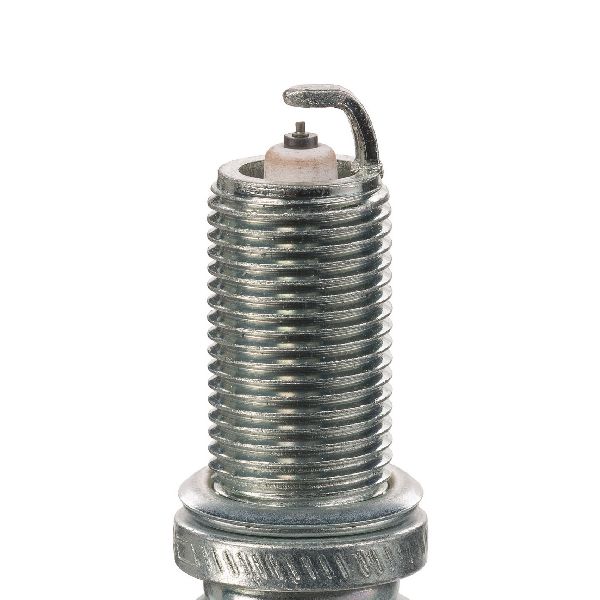
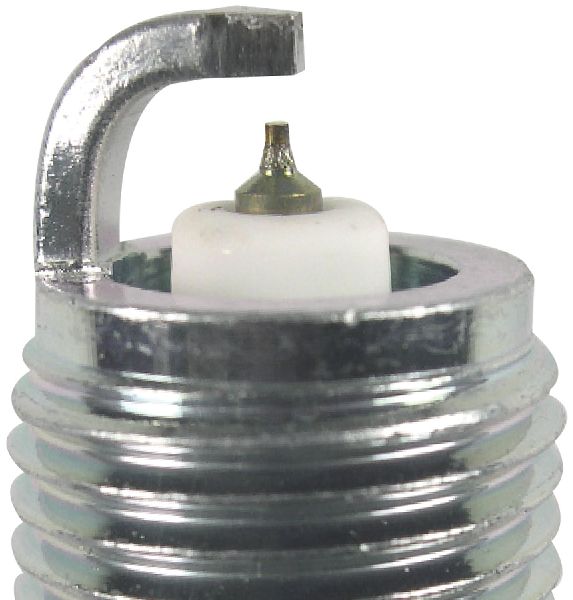
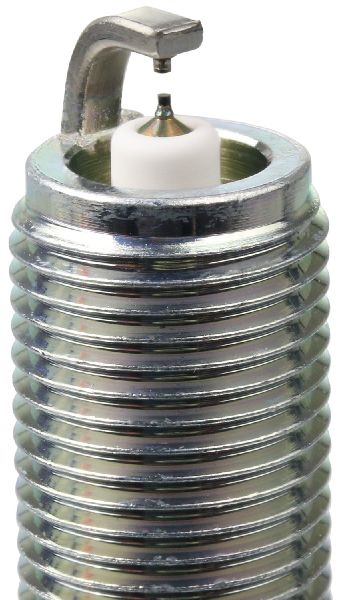
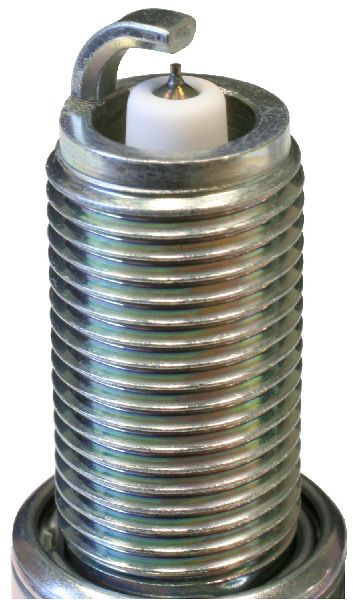
- Spark Plugs
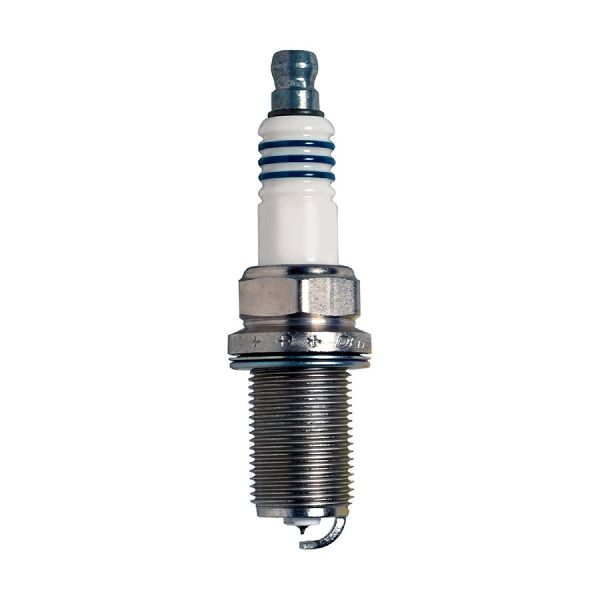
(OEM #12290-R1A-H01 (NGK DILZKR7A11GS) or 9807B-561BW (NGK IZFR6K11S for R18))— Worn spark plugs are the most common cause of a single-cylinder misfire and are a routine maintenance item.
Trusted brands: NGK, Denso
OEM price range: $40-$80
Aftermarket price range: $25-$50 - Ignition Coil
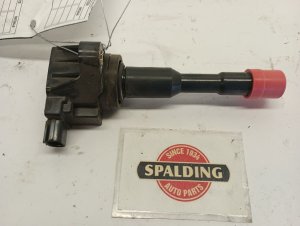
(OEM #30520-RNA-A01)— Ignition coils fail over time due to heat and vibration, making them a high-probability cause for P0304. This part number is widely used across 2006-2011 Civics with the 1.8L engine.
Trusted brands: Honda (OEM), Hitachi, Denso, NGK
OEM price range: $80-$120
Aftermarket price range: $40-$80 - Valve Cover Gasket Set
(OEM #12341-RNA-A01)— This gasket and the associated spark plug tube seals must be replaced when performing a valve adjustment, a common fix for misfires on the R18 engine.
Related Codes That Often Appear With This One
- P0300 — If the misfire becomes more frequent or other cylinders start misfiring, a P0300 (Random Misfire) code may appear.
- P0301, P0302, P0303 — If the cause is something that affects the whole engine, like low fuel pressure or a major vacuum leak, you may see misfire codes for other cylinders as well.
- P0172 — Code P0172 (Fuel System Too Rich) can sometimes appear alongside misfire codes, as noted in Honda TSBs A19-033 and A19-012, often related to software issues or other engine problems on newer models.
Technical Service Bulletins (TSBs) & Recalls
- APaS06132017901: Investigating rough idle or MIL on with DTCs P0300 through P0304 on 2008 Civic CNG models.
Platform-Specific Known Issues
- A Technical Service Bulletin (TSB) APaS06132017901 was issued for 2008 Civic CNG models to investigate misfire codes including P0304, indicating a known issue on that specific variant. Honda requested dealers collect parts before attempting a repair to diagnose the root cause.
- An owner of a 2012 Civic reported a P0304 code that was ultimately caused by a seized spark plug, which led to cylinder head damage requiring significant repair, as detailed in NHTSA complaint #11708419.
- TSB A19-033 (superseding A19-012) was issued for later model 2016-18 Civics with the 1.5L Turbo engine for misfire codes including P0304, often related to software logic and oil dilution issues. While not the same generation, it shows Honda's continued attention to misfire diagnostics.
- Forum discussions on 8thcivic.com and 9thgencivic.com frequently point to valve adjustments as the definitive fix for persistent, otherwise undiagnosable P030X misfires, especially after spark plugs and coils have been replaced.
Mechanic-Grade Diagnostic Values
- Ignition Coil Primary Winding Resistance — expected: 0.4 to 2.0 ohms (typical). Failure: A reading of OL (Overload/Open Loop) or significantly outside the typical range indicates a bad coil.
- Ignition Coil Secondary Winding Resistance — expected: 6,000 to 15,000 ohms (6kΩ - 15kΩ). Failure: A reading of OL (Open Loop) or far outside the expected range. Note that some multimeters require setting to the 20kΩ range to get an accurate reading.
- Fuel Pressure (at idle) — expected: 380-430 kPa (55-63 psi). Failure: Pressure significantly below this range indicates a potential fuel pump or regulator issue.
- Valve Clearance - Intake (R18 Engine, Cold) — expected: 0.20 mm (0.008 in) +/- 0.02 mm. Failure: A feeler gauge measurement that is too tight (gauge won't fit) or too loose (no drag on gauge) requires adjustment.
- Valve Clearance - Exhaust (R18 Engine, Cold) — expected: 0.25 mm (0.010 in) +/- 0.02 mm. Failure: Exhaust valves on the R18 engine tend to tighten over time, leading to misfires. If the 0.25mm gauge has no drag or a smaller gauge fits loosely, adjustment is needed.
- Mode $06 Misfire Count (Cylinder 4) — expected: Near zero during normal operation.. Failure: A high count for cylinder 4, even without a P0304 code being set, indicates an intermittent or developing misfire. This allows for early diagnosis before the Check Engine Light comes on.
Hidden / Shadow Codes Worth Checking
- Mode $06, Test ID $A5, Component ID $04: This is not a DTC, but the specific monitor for misfire counts on cylinder 4 in many Honda vehicles. A professional scan tool can read this data to show the raw number of misfire events detected by the PCM, even if the count is not high enough to trigger the P0304 code. (see via A professional-grade scan tool with Mode $06 capability. Some advanced consumer tools may also display this data.)
- P1399 (Honda-specific): Often appears as a temporary or pending code alongside P0300-P0304. It indicates a random misfire has been detected but may not have met the full criteria to set a specific cylinder code yet. If you see P1399, it's a strong indicator to check Mode $06 data for individual cylinder misfire counts. (see via Most standard OBD-II scanners will show this as a pending or stored code.)
Scan Tool Commands That Help
- Honda HDS (Honda Diagnostic System): Misfire Counter Data Stream — To monitor live misfire counts for each cylinder to confirm the fault is isolated to cylinder 4, especially for intermittent issues that don't always set a code. This is more precise than generic Mode $06 on some tools.
- Honda HDS (Honda Diagnostic System): CKP Pattern Clear — On some Honda/Acura models, the HDS requires a 'CKP Pattern Clear' before performing certain function tests. Failure to do so can sometimes induce misfires during testing. This is an important prerequisite before deeper diagnostics.
- Advanced Bi-Directional Scanners: Injector Kill / Cylinder Power Balance Test — This command allows the technician to disable the fuel injector for cylinder 4 and observe the change in engine RPM. If there is little or no change in RPM when cylinder 4 is disabled, it confirms that cylinder is not contributing power.
Wiring & Ground Locations
- G101 — On the engine, typically bolted to the thermostat housing or cylinder head area.. G101 is a critical ground point for the ECU/PCM and multiple engine sensors. A corroded or loose G101 connection can cause a host of erratic electrical problems, including phantom misfires, that are difficult to diagnose. The ECU relies on this ground as a reference for sensor readings and for firing the ignition coils and injectors.
- PCM Connector C, Pin C23 — On the Powertrain Control Module (PCM/ECU), which is typically located in the engine bay or behind the dashboard.. This is the specific pin that sends the trigger signal to the ignition coil for cylinder 4 on some Civic models. When diagnosing a no-spark condition that isn't caused by the coil itself, a technician would test for a signal at this pin to determine if the fault lies with the wiring or the PCM itself.
- PCM Connector C, Pin C08 — On the Powertrain Control Module (PCM/ECU).. This is the specific pin that controls the fuel injector for cylinder 4 on some Civic models. If an injector isn't firing and has power, testing for a ground pulse signal at this pin can confirm whether the PCM driver is functioning correctly.
Real Owner Repair Stories
- 8thcivic.com forum user (2008 Honda Civic LX, 1.8L R18, ~100,000 miles) — Rough idle, flashing check engine light, P0304 code.
❌ Tried (didn't work) Replaced spark plug for cylinder 4, Swapped ignition coil from cylinder 4 to cylinder 1 (code remained P0304), Replaced fuel injector for cylinder 4
✅ What actually fixed it A valve lash adjustment. The user reported the exhaust valves were extremely tight with almost zero clearance, a common issue on the R18 engine at this mileage. After the adjustment, the misfire was resolved. - NHTSA ODI #11708419 (2012 Honda Civic) — Multiple warning lights ("Check Emissions System," "Check VSA System," "Check Power Steering System") and engine misfire code P0304.
❌ Tried (didn't work) Initial diagnostics only identified the code.
✅ What actually fixed it The root cause was a seized spark plug which, upon attempted removal, caused damage to the cylinder head, leading to a compression-related misfire. The final repair required addressing the damaged cylinder head. - NHTSA ODI #11418794 (2018 Honda Civic (newer model, but relevant failure mode)) — Loss of power, hesitation, P0304 code.
❌ Tried (didn't work) Initial scan only pulled the code.
✅ What actually fixed it The owner discovered rust on the #4 ignition coil upon removal. The failure was due to a faulty seal on the ignition coil allowing moisture to enter, causing corrosion and failure. Replacing the ignition coil resolved the issue.
OEM Part Supersession History
30520-RNA-A01→This part number appears to be stable for the 2006-2011 Honda Civic 1.8L. While aftermarket equivalents exist, the OEM part number has not been officially superseded by Honda.— N/A
Heads up: Be aware that ignition coils for the 9th generation (2012-2015) may have a different part number and are not interchangeable, even though they look similar.
Model Year Variations Within This Range
- 2006-2011 (8th Gen) vs 2012-2015 (9th Gen): The 8th Gen Civic uses the R18A1 engine, while the 9th Gen uses the R18Z1. While mechanically very similar with identical power outputs, the R18Z1 has a slightly higher compression ratio (10.6:1 vs 10.5:1) and different i-VTEC tuning for improved fuel economy. Diagnostic procedures for P0304 are nearly identical, but internal engine parts and some sensors may not be interchangeable.
- 2008 Civic CNG: Honda issued TSB #APaS06132017901 specifically for the 2008 Civic CNG model with P0300-P0304 codes. It indicates Honda was investigating a specific underlying cause for misfires on this variant and requested dealers to collect parts before attempting repairs. This suggests the CNG fuel system adds unique potential causes for misfires not seen on gasoline models.
Helpful Videos

Used OEM Parts in Stock




New Aftermarket Parts Available

The information in this article is provided for general reference and educational purposes only. Vehicle specifications, procedures, and part compatibility can vary by production date, trim level, and region. Always consult your vehicle's factory service manual and verify part numbers before purchasing or performing repairs. Safety-critical components such as airbags, seat belts, and braking systems should be installed by a qualified professional.
- Honda CIVIC:
- 🎬 Helpful Videos
- 🛍️ Shop This Part
- What's Unique About the 2008-2015 Honda CIVIC
- Diagnostic Flowchart
- Symptoms You May Notice
- Most Likely Causes
- Rare But Worth Checking
- Diagnosis Steps
- Parts You'll Likely Need
- Related Codes That Often Appear With This One
- Technical Service Bulletins (TSBs) & Recalls
- Platform-Specific Known Issues
- Mechanic-Grade Diagnostic Values
- Hidden / Shadow Codes Worth Checking
- Scan Tool Commands That Help
- Wiring & Ground Locations
- Real Owner Repair Stories
- OEM Part Supersession History
- Model Year Variations Within This Range
- 🎟️ Get 5% Off