

P0304 on 2019-2024 Ford F-150: Cylinder 4 Misfire Causes and Fixes
P0304 indicates a misfire in cylinder 4. On the 2019-2024 Ford F-150, this is most often caused by a faulty ignition coil or a worn spark plug. For 3.5L PowerBoost models, a PCM software update may be required as per a Technical Service Bulletin. On 3.5L EcoBoost models, a faulty port fuel injector is a documented cause. Expect to pay $50-$150 for DIY parts.
- P0304 is a misfire on cylinder 4. Do not drive if the check engine light is flashing.
- The most likely fix is a new ignition coil or spark plug. Diagnose by swapping the coil from cylinder 4 with another cylinder to see if the misfire code follows.
- For 2024+ 3.5L PowerBoost F-150s, the cause may be a simple software glitch that a Ford dealer must fix per TSB 24-2191.
- If ignition parts don't solve the issue, the next step is to check the fuel injector, and if that fails, perform a compression test to rule out mechanical engine damage.
What's Unique About the 2019-2024 Ford F-150

For the 2019-2024 F-150, the cause of a P0304 code can vary significantly by engine. Newer 3.5L PowerBoost hybrid models are subject to a specific TSB (24-2191) where the misfire is due to a PCM software glitch, requiring a dealer update. On 3.5L EcoBoost engines, which use both port and direct injection, a faulty port fuel injector can be the culprit, as diagnosed in owner videos where switching between DI and PI modes isolates the fault to the port injector on cylinder 4. The 5.0L V8 has a known history in earlier generations of valve issues that can lead to compression loss and misfires on specific cylinders, including cylinder 4, a problem that can persist in this year range and is often discussed in owner forums.
Diagnostic Flowchart
Tap your situation to follow the diagnostic path that matches what you're seeing on this vehicle.
Generation note: This range covers the end of the thirteenth generation (2019-2020) and the fourteenth generation (2021-2024) of the Ford F-150. While the fundamental causes of a misfire are similar, specific issues like the PCM software problem noted in TSB 24-2191 are specific to the newer generation's 3.5L PowerBoost engine. TSB 21-2158 also points to a PCM software issue causing misfires on 2021 5.0L engines built before April 23, 2021.
Symptoms You May Notice
- Rough idle or shaking/vibrating engine.
- Hesitation or stumbling during acceleration.
- Flashing check engine light (especially under load).
- Solid (non-flashing) check engine light.
- Reduced engine power.
- Poor fuel economy.
- Smell of unburned fuel from the exhaust.
- Vehicle stalling.
- Replacing oxygen sensors. A misfire can cause an O2 sensor code, but the O2 sensor is rarely the root cause of a single-cylinder misfire.
- Replacing the catalytic converter. A severe, long-term misfire can destroy a catalytic converter, but the converter itself does not cause the misfire.
Most Likely Causes

- Faulty Ignition Coil 🔴 High Probability Coil-on-plug systems are common failure points on modern engines due to high heat and vibration. The issue is frequently reported by F-150 owners in forums, and for cylinder 4 specifically, its location at the rear of the engine bay can subject it to extra heat.
How to confirm: Swap the ignition coil from cylinder 4 with an adjacent cylinder (e.g., cylinder 3 on a V8 or cylinder 5 on a V6). Clear the codes and drive the vehicle. If the code changes to P0303 or P0305, the ignition coil is faulty.
Typical fix: Replace the faulty ignition coil and the boot. It's often recommended to replace all coils if they are original and the vehicle has high mileage.
Est. part cost: $40-$90 per coil - Worn or Fouled Spark Plug 🔴 High Probability Spark plugs are a regular maintenance item. EcoBoost engines, in particular, can be hard on plugs, requiring more frequent changes. A cracked porcelain insulator is a common finding.
How to confirm: After ruling out the coil, remove the spark plug from cylinder 4. Inspect it for wear, oil/carbon fouling, or cracks in the porcelain. Compare it to a new plug or a plug from a healthy cylinder.
Typical fix: Replace the spark plug. It is best practice to replace all spark plugs at the same time to ensure even performance.
Est. part cost: $10-$25 per plug - PCM Software Issue (3.5L PowerBoost & 5.0L) 🔴 High Probability Ford issued TSB 24-2191 specifically for 2024 F-150s with the 3.5L PowerBoost engine, stating that misfire codes including P0304 can be caused by the PCM software level. Additionally, TSB 21-2158 addresses rough running and misfire codes (including P0304) on 2021 5.0L F-150s due to software parameters.
How to confirm: This must be confirmed by a Ford dealer who can check the vehicle's VIN and software version against the TSB.
Typical fix: The dealer will reprogram the Powertrain Control Module (PCM) to the latest software version under warranty.
Est. part cost: $0 (if under warranty) - Clogged or Faulty Fuel Injector 🟡 Medium Probability On 3.5L EcoBoost engines with both port and direct injection, the port injectors can fail or become leaky, causing a misfire specific to one cylinder. A technician video for a 2019 F-150 with P0304 demonstrated this by using a scan tool to switch between fuel systems, confirming the misfire only occurred when the port injectors were active. 🎬 Watch: Diagnosing and replacing a faulty cylinder 4 port injector. For codes like P21D2 that specify 'Injector B Circuit', this points to the high-pressure direct injector.
How to confirm: After swapping the coil and plug, the fuel injector is the next likely component. A professional can perform a fuel injector balance test or use a scan tool to isolate the port and direct injection systems. A DIY method is to listen for a consistent clicking sound from the injector using a mechanic's stethoscope. Swapping injectors between cylinders is also possible but more labor-intensive.
Typical fix: Replace the faulty fuel injector. It's also recommended to replace the seals.
Est. part cost: $50-$120 per injector
Rare But Worth Checking
- Low Engine Compression: Although less common, internal engine problems like a burnt valve, worn piston rings, or a failed valve spring can cause a persistent P0304. One owner of a 2014 5.0L reported low compression in cylinders 4 and 6, requiring head work. This requires a compression and/or leak-down test to diagnose.
- Damaged Wiring Harness: A Reddit user with a 2014 5.0L reported that after extensive troubleshooting including replacing plugs, coils, and injectors, the P0304 was ultimately traced to a faulty wiring harness and connectors for the ignition coils, which fixed the issue. In another case on an Expedition with a similar engine, a melted vacuum line connector near cylinder 4 was the culprit.
- Intake Manifold Gasket Leak: A vacuum leak localized to the intake manifold runner for cylinder 4 can lean out the air/fuel mixture enough to cause a misfire. This can sometimes be found by carefully spraying brake cleaner or a smoke machine around the intake manifold gasket near cylinder 4 and listening for a change in engine idle.
Diagnosis Steps

- Read the trouble codes with an OBD-II scanner. Note if P0304 is alone or with other codes like P0300 or P0316.
- Determine your engine type and locate cylinder 4. For 5.0L V8s, cylinder 4 is the rearmost cylinder on the passenger side (Bank 1). For 3.5L V6 EcoBoost/PowerBoost, cylinder 4 is the frontmost cylinder on the driver's side (Bank 2).
- Swap the ignition coil from cylinder 4 with another cylinder (e.g., cylinder 3). Clear the codes, run the engine, and rescan. If the code moves (e.g., to P0303), the coil is bad.
- If the code remains P0304, swap the spark plug from cylinder 4 with the one from the cylinder you just moved the coil to. Clear codes and re-test. If the code moves, the spark plug is bad.
- If the misfire still stays on cylinder 4, inspect the fuel injector wiring and vacuum lines near cylinder 4 for damage. Listen to the injector with a stethoscope to confirm it's clicking like the others.
- If you have a 2024 3.5L PowerBoost or a 2021 5.0L, contact a Ford dealer to check if TSB 24-2191 or TSB 21-2158 (PCM updates) apply to your vehicle.
- If all else fails, perform a compression test on cylinder 4 to check for mechanical engine problems. A significant loss of compression compared to other cylinders points to an internal issue like a bad valve or piston ring. 🎬 Watch: What to check when new plugs and coils don't fix it.
Parts You'll Likely Need

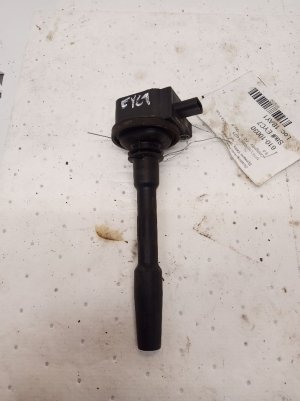
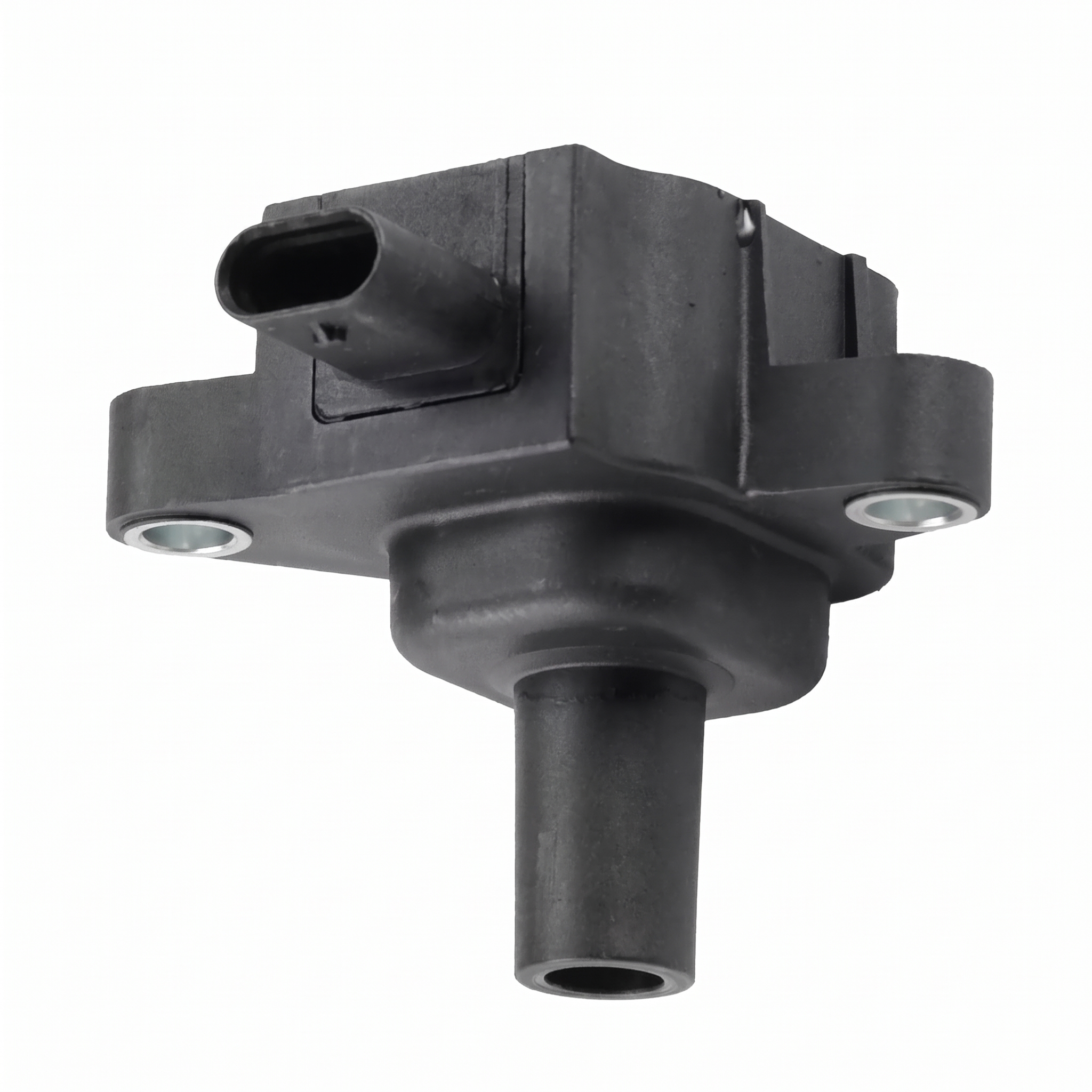
- Ignition Coil
(OEM #DG-594 (For 2021+ 3.5L V6), 14316DPJQ (For 2021-2023 5.0L V8))— This is one of the most common failure items causing a single-cylinder misfire. The diagnostic procedure of swapping coils is simple and definitive.
Trusted brands: Motorcraft, NGK, Denso
OEM price range: $60-$90
Aftermarket price range: $40-$70 - Spark Plug
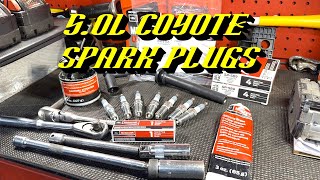
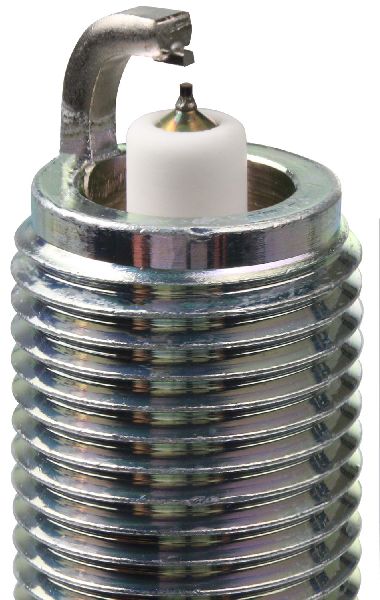
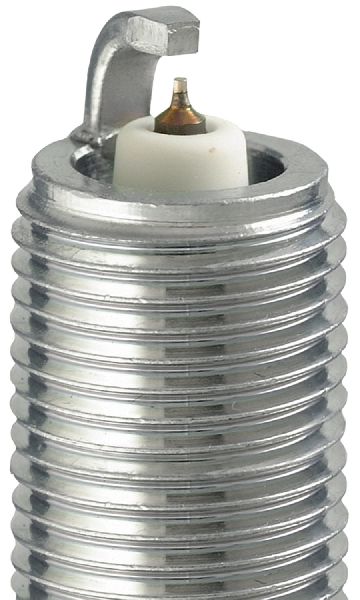
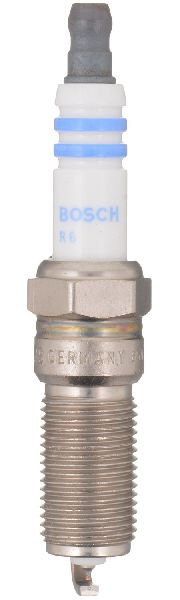
(OEM #SP-596 (For 2021+ 3.5L EcoBoost), SP-594 (For 2019-2021 3.5L EcoBoost))— A worn, fouled, or cracked spark plug is another primary cause of misfires and is a standard maintenance item. 🎬 See this step-by-step spark plug replacement walkthrough for the 5.0L.
Trusted brands: Motorcraft, NGK, Champion
OEM price range: $15-$25
Aftermarket price range: $10-$20 - Fuel Injector — If ignition components are good, a clogged or failed fuel injector is the next most likely cause, especially on dual-injection 3.5L EcoBoost engines.
Related Codes That Often Appear With This One
- P0300 — This is a 'Random Misfire' code. It may appear alongside P0304 if the misfire is intermittent or if other cylinders are also misfiring, pointing to a more systemic issue like a vacuum leak or fuel delivery problem.
- P0316 — This code means 'Misfire Detected on Startup (First 1000 Revolutions)'. It often accompanies specific cylinder misfire codes and is mentioned in several Ford TSBs along with P0304. [TSB 24-2191, TSB 19-2384, TSB18-2058]
- P21D2 — On dual-injection engines like the 3.5L EcoBoost, this code for 'Cylinder 4 Injector B Circuit / Open' can accompany a P0304. 'Injector B' refers to the high-pressure direct injector, pointing diagnosis toward that specific component.
Technical Service Bulletins (TSBs) & Recalls
- TSB 24-2191: Notes that 2024 3.5L PowerBoost models may exhibit misfire DTCs, including P0304, due to PCM software level.
- TSB 21-2158: Mentions DTCs including P0304 on 2021 models related to software parameters causing rough running.
- TSB 19-2384: Connects misfire codes like P0304 with excessive oil consumption on some 5.0L engines from a previous generation, which may still be relevant.
- TSB 18-2058: Lists P0304 as a possible code that can be set due to PCM issues without noticeable drivability concerns in the previous generation.
Platform-Specific Known Issues
- TSB 24-2191: Affects some 2024 F-150s with the 3.5L PowerBoost engine. A software issue in the PCM can cause various misfire codes, including P0304. The fix is a PCM reprogram by a dealer.
- TSB 21-2158: Pertains to some 2021 F-150s with the 5.0L engine built on or before April 23, 2021. It addresses rough running and misfire codes (P0301, P0304, P0306, P0307) caused by PCM software parameters, fixed by a dealer reprogram.
- 3.5L EcoBoost Port Injector Failure: As documented in a detailed YouTube diagnostic video on a 2019 F-150, a faulty port-side fuel injector can be the specific cause of a P0304, while the direct injection system works correctly.
- 5.0L V8 Valve/Compression Issues: Forum discussions for F-150s with the 5.0L engine, including years in this range, mention a tendency for low compression on certain cylinders (including #4) due to premature valve wear, requiring engine head repairs.
Mechanic-Grade Diagnostic Values
- Mode $06 Misfire Counts — expected: Near zero for all cylinders on a healthy engine.. Failure: A high count for cylinder 4, even without a CEL, indicates an intermittent misfire that hasn't yet met the threshold to trigger a code.
- VCT Advance Error PID (5.0L V8) — expected: Should hover around 0° (+/- 5°) during closed-loop operation.. Failure: A consistent deviation greater than 5 degrees can indicate a problem with the VCT system (phasers, solenoids) that could lead to misfires.
- Fuel Injector Resistance — expected: While specific values vary, a technician can test a known good injector and compare its resistance (ohms) to the injector from cylinder 4.. Failure: A reading that is significantly different, shows no resistance (open), or is shorted indicates a faulty injector.
Hidden / Shadow Codes Worth Checking
- Mode $06, TID $53: This refers to the onboard diagnostic test for misfire monitoring. Within this test, Component IDs (CID) correspond to specific cylinders (e.g., CID $01 for cylinder 1, CID $04 for cylinder 4). A technician can view the raw misfire count for each cylinder here. (see via A professional scan tool capable of displaying Mode $06 data.)
Scan Tool Commands That Help
- Ford IDS (or equivalent professional scanner): Power Balance Test — This is a critical diagnostic step. The tool graphically displays the power contribution of each cylinder in real-time. A cylinder with a misfire will show a significant drop or dip on the graph, confirming the location of the misfire without swapping parts. The technician can also selectively disable injectors to see the effect on the engine.
- Ford IDS (or equivalent professional scanner): Percentage of total fuel mass to be delivered by direct injection — On 3.5L EcoBoost engines with dual injection, this command allows a technician to force the engine to run on only the port injection system or only the direct injection (DI) system. If the P0304 misfire appears only when running on port injection, it definitively isolates the problem to the cylinder 4 port fuel injector.
- Professional Scan Tool: Cylinder Balance Test / Injector Kill Test — This function allows the user to disable one cylinder at a time. When a healthy cylinder is disabled, engine RPM should drop noticeably. If disabling cylinder 4 causes no change in engine RPM or smoothness, it confirms that cylinder was not contributing power in the first place.
Wiring & Ground Locations
- PCM Connector C1381E, Pin 87 (5.0L) — This is one of the main connectors on the Powertrain Control Module (PCM).. Pin 87 is the specific control circuit for the ignition coil on cylinder 4 (COP4). A technician can test for signal and continuity at this pin to diagnose a wiring issue between the PCM and the coil. The wire color is typically Green with a Violet stripe.
- Engine Block/Chassis Grounds (3.5L EcoBoost) — Key ground points include a location on the frame next to the battery on the passenger side, a body-to-chassis ground under the passenger front door, and a ground on the engine block in front of the passenger front tire.. A poor or corroded ground connection for the engine harness or PCM can cause erratic electrical behavior, including weak spark or incorrect sensor readings, leading to misfires. Ensuring these grounds are clean and tight is a crucial electrical diagnostic step.
- Ignition Coil Connector — Directly on top of the ignition coil for cylinder 4.. The 3-pin connector provides power, ground, and the trigger signal from the PCM. The pins can be tested for correct voltage (Pin 4 for run circuit power, Pin 6 for ground on some models). A damaged connector or wiring pigtail is a common point of failure.
Real Owner Repair Stories
- Reddit user joellittjukes on r/f150 (2014 F-150 FX4 5.0L (Note: older model, but demonstrates a valid failure mode for the platform)) — Persistent P0304 cylinder 4 misfire, with a brief P0300 random misfire code.
❌ Tried (didn't work) Replaced all spark plugs, Swapped ignition coils (misfire did not move), Used fuel injector cleaner
✅ What actually fixed it The owner's father ultimately diagnosed and fixed the problem by replacing the entire wiring harness, including the clips that attach to the coil packs. - YouTube channel 'Sparky's Answers' (2019 F-150 3.5L EcoBoost) — Rough running, P0304 misfire code.
❌ Tried (didn't work) Replaced ignition coil on cylinder 4, Replaced spark plug on cylinder 4, Customer tried fuel injector cleaner
✅ What actually fixed it Using a scan tool's bidirectional control to switch between direct injection (DI) and port fuel injection (PFI), the technician confirmed the misfire only occurred on PFI. This isolated the fault to the cylinder 4 port fuel injector, which was then replaced to fix the issue. - F150 Forum user 'TroyD80' (2018 F-150 5.0L (Note: slightly older model, but same engine generation)) — Violent shaking and audible backfires under load, flashing CEL, P0304, P219A (Air-Fuel Imbalance), P0313 (Misfire with Low Fuel).
❌ Tried (didn't work) Initial diagnosis focused on ignition system (plugs/coils).
✅ What actually fixed it After moving the fuel injector from cylinder 4 to cylinder 7, the misfire code followed the injector. The final fix was replacing the lower (direct) fuel injector for that cylinder.
"I Checked Everything" — The Actual Cause
- In cases involving the 5.0L engine, a standard smoke test for vacuum leaks might come back clean, but the actual cause could be a faulty Intake Manifold Runner Control (IMRC) actuator or a broken actuator arm inside the manifold. This doesn't always present as a typical vacuum leak but can disrupt airflow to a specific cylinder bank, causing lean conditions or misfires under certain loads.
Model Year Variations Within This Range
- 2024: F-150s with the 3.5L PowerBoost engine built on or before May 14, 2024, may exhibit a P0304 due to PCM software. TSB 24-2191 specifies a dealer-performed software update as the fix. [TSB 24-2191]
- 2021: F-150s with the 5.0L V8 may experience rough running and misfire codes, including P0304, due to PCM software parameters. TSB 21-2158 addresses this issue. [TSB 21-2158]
- 2019-2020: The 13th generation F-150 (pre-refresh) with the 3.5L EcoBoost features a dual-injection system where port injector failures have been documented as a specific cause for single-cylinder misfires like P0304.
Helpful Videos
Used OEM Parts in Stock




New Aftermarket Parts Available


The information in this article is provided for general reference and educational purposes only. Vehicle specifications, procedures, and part compatibility can vary by production date, trim level, and region. Always consult your vehicle's factory service manual and verify part numbers before purchasing or performing repairs. Safety-critical components such as airbags, seat belts, and braking systems should be installed by a qualified professional.
- Ford F-150:
- 🎬 Helpful Videos
- 🛍️ Shop This Part
- What's Unique About the 2019-2024 Ford F-150
- Diagnostic Flowchart
- Symptoms You May Notice
- Most Likely Causes
- Rare But Worth Checking
- Diagnosis Steps
- Parts You'll Likely Need
- Related Codes That Often Appear With This One
- Technical Service Bulletins (TSBs) & Recalls
- Platform-Specific Known Issues
- Mechanic-Grade Diagnostic Values
- Hidden / Shadow Codes Worth Checking
- Scan Tool Commands That Help
- Wiring & Ground Locations
- Real Owner Repair Stories
- "I Checked Everything" — The Actual Cause
- Model Year Variations Within This Range
- 🎟️ Get 5% Off