

P0304 on 2011-2018 Ford F-150: Cylinder 4 Misfire Causes and Fixes
P0304 indicates a misfire in cylinder 4. On the 2011-2018 Ford F-150, this is most often caused by a bad spark plug or ignition coil. A simple diagnostic is to swap the coil from cylinder 4 with another cylinder; if the code changes (e.g., to P0301), the coil is faulty. For 3.5L EcoBoost engines, incorrect spark plug gaps and intercooler condensation are also common culprits. This is a relatively easy and inexpensive DIY fix in many cases.
- P0304 is a misfire on cylinder 4. The most likely cause is a bad spark plug or ignition coil.
- Always perform the simple ignition coil swap test before buying any parts. It's a free and effective diagnostic step.
- Be aware of your engine type. 3.5L EcoBoost engines have unique issues like carbon buildup and intercooler condensation, while some 5.0L V8s can have valve problems.
- The location of cylinder 4 is different on V6 and V8 engines. V6: driver's side, front. V8: passenger's side, rear.
- If the check engine light is flashing, stop driving immediately to prevent expensive damage to the catalytic converter.
What's Unique About the 2011-2018 Ford F-150

For the 2011-2018 F-150, the cause of a P0304 code can be engine-specific. Early 3.5L EcoBoost V6 engines (approx. 2011-2014) were known for an intercooler condensation issue, where moisture would build up and get ingested by the engine, causing misfires, especially under hard acceleration in humid weather. Ford issued multiple TSBs (e.g., TSB 13-3-3, TSB 13-8-1) to address this. Some 5.0L V8 engines in this range, particularly 2011-2013 models, have been known to have issues with burnt or receding intake valves that can lead to low compression and a persistent misfire on one cylinder. It's also critical to know the correct cylinder location: on V8 engines (5.0L), cylinder 4 is the rearmost on the passenger side, while on V6 engines (3.5L EcoBoost, 3.7L), it is the frontmost on the driver's side.
Diagnostic Flowchart

Tap your situation to follow the diagnostic path that matches what you're seeing on this vehicle.
Generation note: This range covers the end of the 12th generation (2011-2014) and the beginning of the 13th generation (2015-2018) F-150. The 12th gen 3.5L EcoBoost is particularly noted for intercooler condensation issues causing misfires. The 13th generation introduced an updated 3.5L EcoBoost (starting in 2017) with both port and direct injection, which can help reduce carbon buildup issues seen in earlier direct-injection-only engines. TSB 19-2384 also notes potential cylinder head valve guide issues on some 2016-2017 2.7L EcoBoost engines that can cause misfires.
Symptoms You May Notice

- Rough or shaking idle
- Hesitation or stumbling during acceleration
- Flashing or solid Check Engine Light
- Noticeable loss of engine power
- Reduced fuel economy
- Smell of unburned fuel from the exhaust
- Engine shaking violently under hard acceleration (especially on EcoBoost models in humid weather)
- Replacing only the spark plug when the ignition coil boot is also bad. The boot can develop micro-cracks that allow spark to escape, causing a misfire even with a new plug.
- Assuming a fuel system problem when the cause is a simple ignition component.
- For EcoBoost engines, not gapping new spark plugs to the correct specification (often .028"-.030"), which can lead to a recurring misfire under load.
Most Likely Causes

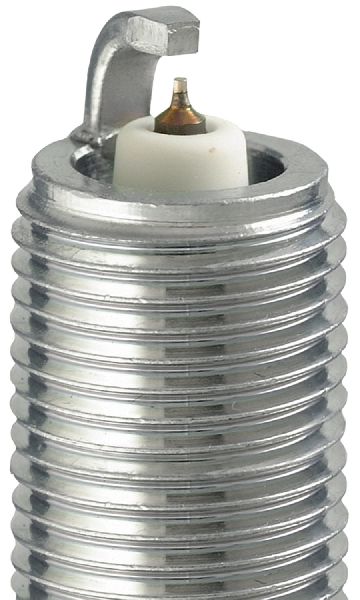
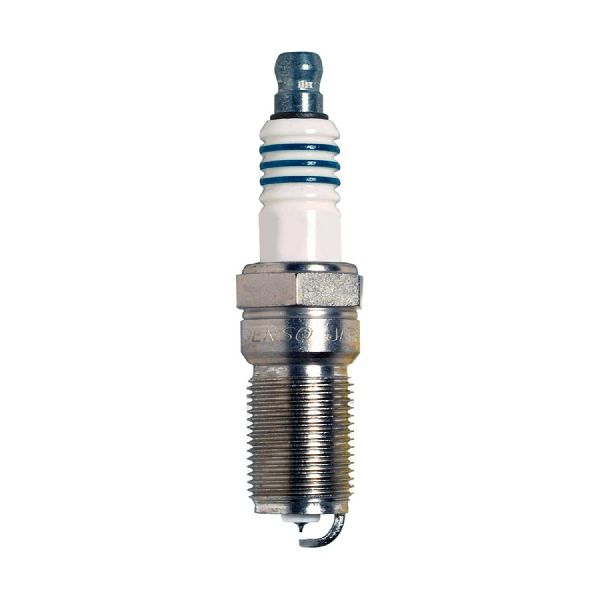
- Worn or Fouled Spark Plug 🔴 High Probability The 3.5L EcoBoost engines, being turbocharged and direct-injected, are harder on spark plugs. Ford has updated plug recommendations and a smaller spark plug gap (often .028"-.030") is critical to prevent misfires under boost. TSBs have been issued related to spark plugs and boots for misfire issues.
How to confirm: Remove the spark plug from cylinder 4 and inspect it. Look for a worn electrode, oil or carbon fouling, or cracks in the porcelain insulator. A thin black line on the porcelain is a sign of a crack where the spark is leaking.
Typical fix: Replace the spark plug. It is highly recommended to replace all spark plugs at the same time. On EcoBoost engines, ensure plugs are gapped correctly before installation. 🎬 Watch: Troubleshooting tips for EcoBoost misfire codes P0301-P0306
Est. part cost: $5-$20 per plug - Faulty Ignition Coil or Boot 🔴 High Probability
How to confirm: Swap the ignition coil from cylinder 4 with another cylinder (e.g., cylinder 1). Clear the codes and drive the vehicle. If the misfire code changes to P0301, the ignition coil is the culprit. Inspect the rubber boot for cracks or carbon tracking (pencil-thin black lines), which indicate the spark is grounding out.
Typical fix: Replace the faulty ignition coil and the rubber boot. It's good practice to apply dielectric grease to the inside of the new boot to seal it against moisture and ease future removal.
Est. part cost: $40-$80 - Clogged or Faulty Fuel Injector 🟡 Medium Probability
How to confirm: A mechanic can perform a fuel injector balance test. A DIY method is to listen to the injector with a mechanic's stethoscope; it should make a consistent clicking sound. Swapping injectors between cylinders is a more involved but definitive test.
Typical fix: Replace the faulty fuel injector. On 2017+ 3.5L EcoBoost and 2018+ 5.0L engines, there are two injectors per cylinder (port and direct) 🎬 Watch: Diagnostic walkthrough for 5.0L Coyote engine misfires, which complicates diagnosis. A 2019 F-150 with P0304 required a port injector replacement.
Est. part cost: $70-$250 - Intake Valve Carbon Buildup (3.5L EcoBoost) 🟡 Medium Probability Direct injection engines spray fuel directly into the cylinder, so gasoline detergents don't wash over the intake valves. This allows oil vapor from the PCV system to bake onto the valves, restricting airflow and causing misfires, often at idle.
How to confirm: This requires a borescope to visually inspect the intake valves, which usually means removing the intake manifold.
Typical fix: The intake valves need to be cleaned, typically by walnut blasting. This is a labor-intensive job, often costing between $500-$1000 at a shop.
Est. part cost: $0 (cleaning service)
Rare But Worth Checking
- Low Engine Compression: On some 2011-2013 5.0L V8s, a defective or burnt intake valve could cause low compression in one cylinder, leading to a persistent P0304, often accompanied by P0316 on startup. A compression test is required to confirm this mechanical issue.
- Damaged Wiring Harness: The wiring or connector for the ignition coil or fuel injector can become damaged, corroded, or have a pushed-out pin, causing an intermittent connection and misfires. One owner on Reddit reported a faulty wiring harness was the ultimate cause of a P0304 on a 2014 5.0L after replacing many other parts.
- Intercooler Condensation (2011-2014 3.5L EcoBoost): In humid conditions, early versions of the charge air cooler (intercooler) could accumulate condensation. During hard acceleration, this water would be ingested by the engine, causing a sudden, violent misfire and often setting codes for cylinders 4, 5, and 6. Ford's fix involved a deflector shield and PCM update (TSB 13-8-1). A popular DIY fix is to drill a 1/16" hole in the bottom of the intercooler to allow moisture to drain. 🎬 See how drilling the intercooler fixes this common EcoBoost misfire
- Cylinder Head Valve Guides (2016-2017 2.7L EcoBoost): TSB 19-2384 addresses an issue on some 2.7L EcoBoost engines where faulty valve guides can cause excessive oil consumption, rough idle, and misfire codes, including P0304. The fix is a cylinder head replacement.
Diagnosis Steps
- Read the code with an OBD-II scanner and confirm P0304 is present. Note any other codes, especially P0300 or P0316.
- Identify the correct location of cylinder 4 for your specific engine. For V6 engines (2.7L, 3.5L, 3.7L) it is the front cylinder on the driver's side (Bank 2). For V8s (5.0L) it is the rear cylinder on the passenger side (Bank 1).
- Swap the ignition coil from cylinder 4 with an easily accessible cylinder (like cylinder 1).
- Clear the codes and drive the vehicle until the check engine light returns.
- Re-scan the codes. If the code has moved to the cylinder you swapped with (e.g., P0301), the ignition coil is faulty and needs replacement.
- If the code remains P0304, remove the spark plug from cylinder 4. Inspect for wear, damage, or fouling. Check the gap, especially on EcoBoost engines. If it looks questionable, replace it. It's best to replace all plugs at once.
- While the coil and plug are out, inspect the coil boot for any tears or carbon tracking (black lines).
- If the misfire persists, the issue is likely with the fuel injector or a mechanical problem. Listen to the fuel injector on cylinder 4 with a stethoscope. It should have a steady, rhythmic clicking. Compare the sound to an adjacent injector.
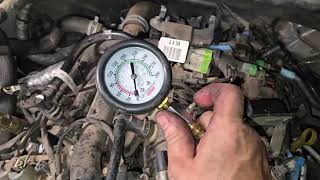
- If the injector is suspect or the problem is still not found, a compression test should be performed on cylinder 4 to check for mechanical engine problems like a bad valve or piston ring.
Parts You'll Likely Need
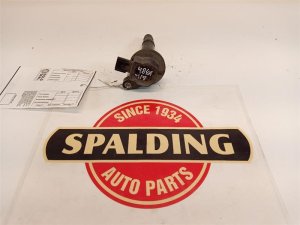
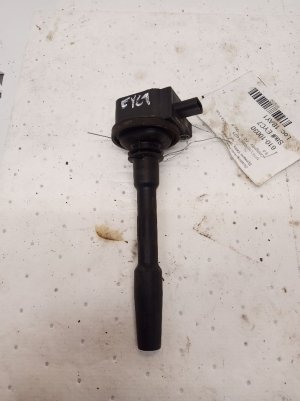
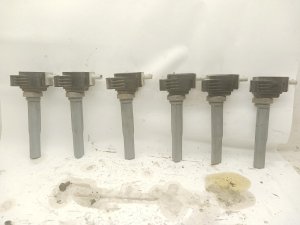
- Ignition Coil
(OEM #Motorcraft DG528 (for 5.0L), Motorcraft DG549 (for 3.5L EcoBoost))— Ignition coils are a very common failure item that directly causes a single-cylinder misfire.
Trusted brands: Motorcraft, NGK, Denso
OEM price range: $50-$90
Aftermarket price range: $30-$60 - Spark Plug
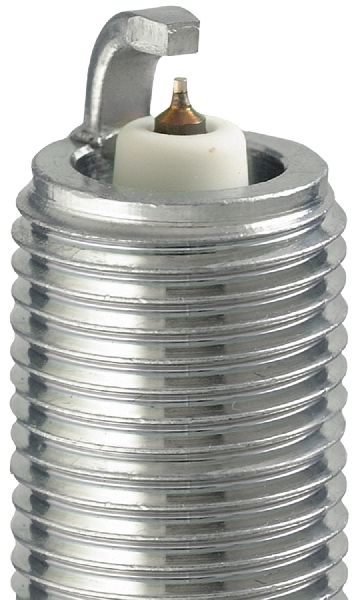
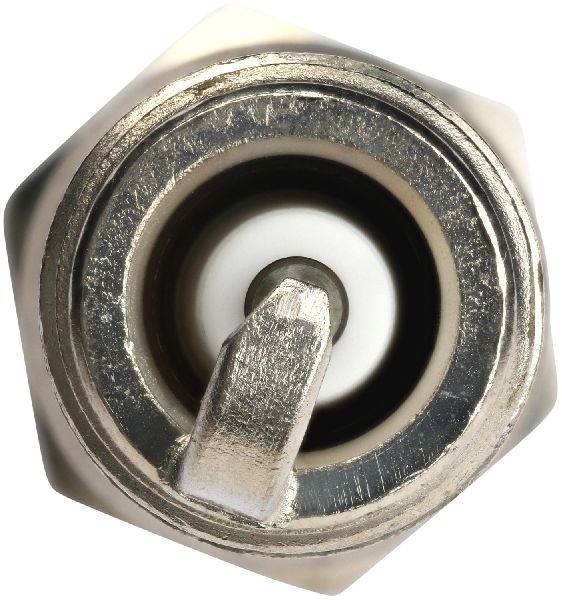
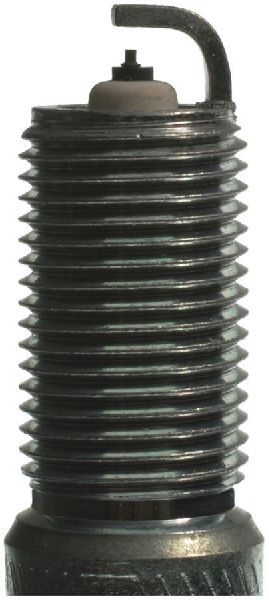
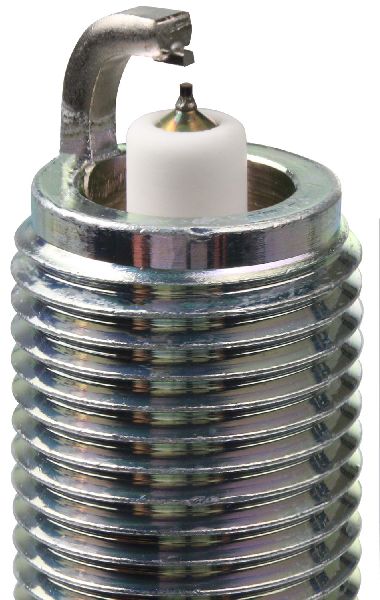
(OEM #Motorcraft SP-546 (for 5.0L), Motorcraft SP-580 (replaces SP-534 for 3.5L EcoBoost))— Spark plugs are a regular maintenance item and are the most common cause of a single-cylinder misfire.
Trusted brands: Motorcraft, NGK, Champion
OEM price range: $8-$15
Aftermarket price range: $5-$12
Related Codes That Often Appear With This One
- P0300 — This is a 'Random Misfire' code. It may appear with P0304 if the misfire is intermittent or if other cylinders are also beginning to misfire, which could point to a systemic issue like a vacuum leak or the EcoBoost intercooler problem.
- P0316 — This code means 'Misfire Detected on Startup (First 1000 Revolutions)'. It often accompanies a specific cylinder misfire code like P0304 and points to a problem present during a cold start, such as low compression or a faulty injector.
- P0305, P0306 — Multiple cylinder misfire codes on the same bank (Bank 2 for the 3.5L V6) along with P0304 strongly suggest a problem common to that side of the engine, such as the intercooler condensation issue on EcoBoost models.
Technical Service Bulletins (TSBs) & Recalls
- TSB 19-2384: For some 2016-2017 F-150s with the 2.7L EcoBoost, addresses rough idle, oil consumption, and misfire codes (including P0304) due to cylinder head valve guide issues, recommending cylinder head replacement.
- TSB 18-2058: For some 2018 F-150s with the 5.0L engine, addresses various misfire codes (including P0304) and cam/crank codes with no drivability concerns. The fix is a PCM reprogram.
- TSB 13-8-1 (supersedes 13-3-3): For 2011-2012 F-150s with the 3.5L EcoBoost, this TSB addresses the stumble/misfire during acceleration in humid conditions caused by intercooler condensation. The fix involves installing a deflector plate on the Charge Air Cooler (CAC) and a PCM update.
- TSB 14-0160: Mentions various misfire codes including P0304 for GTDI (EcoBoost) engines, related to general diagnostics.
- TSB 19-2058: Addresses excessive oil consumption on 2018 F-150 5.0L engines, which can lead to fouled plugs and misfires.
Platform-Specific Known Issues
- Intercooler condensation causing misfires under load, especially in humid weather. Also very sensitive to spark plug gap.
- Potential for burnt or receding intake valves leading to low compression and a persistent misfire in one cylinder.
- Faulty cylinder head valve guides causing oil consumption, rough idle, and misfires.
Mechanic-Grade Diagnostic Values
- Ignition Coil Primary Resistance (COP) — expected: Approx. 0.5 - 0.6 ohms. Failure: A reading significantly higher or an open circuit (infinite resistance).
- Ignition Coil Secondary Resistance (COP) — expected: Approx. 5,400 - 6,000 ohms. Failure: A reading significantly outside this range or an open circuit.
- Fuel Injector Resistance (Port Injection, e.g., 5.0L V8) — expected: 11 - 18 ohms. Failure: A reading outside this range.
- Fuel Injector Resistance (Direct Injection, e.g., 3.5L EcoBoost) — expected: 0.5 - 1.0 ohms. Failure: A reading outside this range.
- Engine Compression (5.0L V8) — expected: Approx. 160 PSI or higher, with minimal variation between cylinders.. Failure: A cylinder reading significantly lower than others (e.g., 90 PSI vs 160 PSI) indicates a mechanical engine problem. A reading of 130 PSI when others are 135 PSI is less conclusive but warrants further investigation.
Hidden / Shadow Codes Worth Checking
- Mode 6, Test ID $A2-$AF: This is not a DTC, but a function within an advanced scan tool (like FORScan) that displays misfire counts for each cylinder during the current and last 10 driving cycles. It can reveal intermittent misfires on cylinder 4 that haven't yet met the threshold to set a P0304 code. (see via Use a scan tool with Mode 6 capability, such as FORScan, and look for the misfire monitor data.)
- P0354: Ignition Coil 'D' (Cylinder 4) Primary/Secondary Circuit Malfunction. This code is more specific than P0304 and points directly to an electrical problem with the coil's circuit, such as the wiring harness or the PCM's coil driver, rather than a fuel or mechanical issue. (see via A standard OBD-II scanner. It may appear alongside P0304 in cases of an electrical fault.)
Scan Tool Commands That Help
- Ford IDS, FORScan: Power Balance Test — This is a crucial diagnostic step when a misfire is felt but the specific cylinder is unknown, or to confirm the location of the P0304 misfire. It displays a real-time graph of each cylinder's power contribution. A cylinder with a deep 'V' or trough in the graph is the one misfiring.
- Ford IDS, FORScan: Injector Disable / Cylinder Cutout — Use this after identifying the misfiring cylinder with the Power Balance test. Disabling the fuel injector to cylinder 4 should result in no change to the engine's idle if it's truly the source of the misfire. If disabling another cylinder (e.g., cylinder 1) makes the engine run worse, it confirms that cylinder was working correctly.
- Ford IDS, FORScan: Misfire Monitor Neutral Profile Correction — This procedure MUST be performed after any major engine repair, such as replacing a timing chain, crank sensor, or cylinder head. It allows the PCM to relearn the crankshaft position sensor's profile, which is essential for accurate misfire detection. If not performed, the misfire monitor may be disabled or give false readings.
- Ford IDS, FORScan (2017+ dual-injection engines): Percentage of total fuel mass to be delivered by direct injection — For diagnosing a fuel-related misfire on a 2017+ 3.5L or 2018+ 5.0L. By commanding the engine to run on 100% direct injection and then 100% port injection, you can isolate whether the fault lies with the DI or PI injector on cylinder 4.
Wiring & Ground Locations
- Firewall to Cylinder Head Ground Strap — On 12th Gen (2011-2014) models, this strap runs from the firewall, to the right of the PCM, and connects to a double-threaded stud on the back of the passenger-side cylinder head.. This is a critical ground path. A poor connection at this stud can cause intermittent electrical issues for sensors and actuators on that side of the engine, potentially leading to misfire codes.
- G104 - Main PCM Ground — Typically located on the passenger side inner fender, near the battery. Forum posts indicate this ground point can become loose even if the bolt feels tight, leading to a poor connection for the PCM.. An intermittent PCM ground can cause a wide range of erratic engine behavior, including phantom codes and misfires, because it affects the reference voltage for multiple sensors and actuators, including the ignition coils.
- Ignition Coil Connector (WPT-931) — Connects directly to the top of the ignition coil for cylinder 4.. The locking tabs on these connectors are notoriously brittle and often break during spark plug changes. A connector that isn't fully seated or has backed off will cause a P0304 and P0354. The entire wiring harness may become brittle, requiring replacement for a permanent fix.
Real Owner Repair Stories
- Reddit user joellittjukes, r/f150 (2014 F-150 FX4 5.0L) — Persistent P0304 code, briefly saw P0300.
❌ Tried (didn't work) Replacing all spark plugs, Swapping ignition coils (misfire did not move from cylinder 4), Using fuel injector cleaner
✅ What actually fixed it The entire engine wiring harness was faulty and had to be replaced, including the coil connectors. This resolved the misfire completely. - YouTube channel 'Dirt Life' (2013 F-150 5.0L (with ~300,000 km)) — Severe misfire on one cylinder (cylinder 8 in this case, but the fault is identical to what causes P0304 on cylinder 4).
❌ Tried (didn't work) Initial diagnosis pointed away from spark/fuel.
✅ What actually fixed it A compression test revealed very low compression (90 PSI vs. 160 PSI in other cylinders). The cause was a severely worn intake valve, a known issue on some early 5.0L Coyote engines. The fix required removing the cylinder head for valve replacement. - YouTube channel 'FordTechMakuloco' (2019 F-150 3.5L EcoBoost) — Rough running with a P0304 code.
❌ Tried (didn't work) Replacing the ignition coil and spark plug on cylinder 4.
✅ What actually fixed it Using a scan tool to switch between direct injection (DI) and port injection (PI), the technician found the engine ran smoothly on DI only, but terribly on PI only. This isolated the fault to the port fuel injector on cylinder 4, which was then replaced.
"I Checked Everything" — The Actual Cause
- In multiple documented cases, owners replaced all common ignition and fuel parts (plugs, coils, injectors) for a P0304 with no success. The root cause was not a component that can be easily swapped, but rather a more fundamental issue. One such case was a faulty engine wiring harness that required complete replacement. Another was low compression from a burnt/receded intake valve, which required a mechanical compression test to diagnose and cylinder head removal to fix. These cases highlight that when the simple part swaps don't work, the problem is likely in the wiring or is a base engine mechanical fault.
When the Usual Fixes Don't Work
- While the most common advice for a P0304 is to swap the coil and plug, numerous owner reports for the 2011-2018 F-150 show this often fails to resolve the issue. In a significant number of cases, especially on the 5.0L V8, the problem persists after replacing the coil, plug, and even the fuel injector. The ultimate cause is frequently found to be either a faulty engine wiring harness creating an intermittent electrical connection or a mechanical engine failure resulting in low compression in cylinder 4. This demonstrates that if the initial, simple fixes don't work, a deeper mechanical or electrical diagnosis is immediately required.
OEM Part Supersession History
Multiple (e.g., DG493, DG517, 2W4Z12029AC)→Motorcraft DG-528— Part consolidation and potential design updates over the years for the 5.0L V8 ignition coil.
Heads up: While older numbers are superseded, DG-528 is the current recommended service part for most 5.0L applications in this year range. Always verify with VIN.
Model Year Variations Within This Range
- 2017-2018 (3.5L EcoBoost) & 2018 (5.0L V8): These engines feature a dual-injection system with both a port fuel injector and a direct fuel injector for each cylinder. A P0304 could be caused by a failure in either injector. Diagnosis requires a scan tool capable of isolating the port and direct injection systems to see which one is causing the misfire.
- 2011-2013 (5.0L V8): Anecdotal evidence and repair stories suggest this earlier range of the 5.0L 'Coyote' V8 was more prone to issues with intake valves receding or burning, leading to low compression and persistent single-cylinder misfires that cannot be fixed with ignition or fuel system parts.
Helpful Videos
Used OEM Parts in Stock


New Aftermarket Parts Available

The information in this article is provided for general reference and educational purposes only. Vehicle specifications, procedures, and part compatibility can vary by production date, trim level, and region. Always consult your vehicle's factory service manual and verify part numbers before purchasing or performing repairs. Safety-critical components such as airbags, seat belts, and braking systems should be installed by a qualified professional.
- Ford F-150:
- 🎬 Helpful Videos
- 🛍️ Shop This Part
- What's Unique About the 2011-2018 Ford F-150
- Diagnostic Flowchart
- Symptoms You May Notice
- Most Likely Causes
- Rare But Worth Checking
- Diagnosis Steps
- Parts You'll Likely Need
- Related Codes That Often Appear With This One
- Technical Service Bulletins (TSBs) & Recalls
- Platform-Specific Known Issues
- Mechanic-Grade Diagnostic Values
- Hidden / Shadow Codes Worth Checking
- Scan Tool Commands That Help
- Wiring & Ground Locations
- Real Owner Repair Stories
- "I Checked Everything" — The Actual Cause
- When the Usual Fixes Don't Work
- OEM Part Supersession History
- Model Year Variations Within This Range
- 🎟️ Get 5% Off