

P0304 on 2011-2013 Dodge Grand Caravan: Cylinder 4 Misfire Causes and Fixes
P0304 indicates a misfire in cylinder 4. While this can be a simple fix like a spark plug or ignition coil, these vans are known for a serious left-side cylinder head defect that causes this exact code. The fix was so common Chrysler extended the warranty to 10 years/150,000 miles for this specific issue. If basic ignition parts don't solve it, a professional diagnosis for the cylinder head is necessary.
- P0304 on a 2011-2013 Grand Caravan is not a typical misfire code; it has a very high probability of being caused by a defective left cylinder head.
- Always perform the simple diagnostic swaps for the ignition coil and spark plug first, as these are cheap and easy to rule out.
- If the misfire persists after checking the coil and plug, do not continue replacing parts. The next step should be a professional compression and leak-down test.
- This issue was so common that Chrysler created a warranty extension (X56). Even if your vehicle is out of warranty, it's crucial to know this is a documented factory defect.
- If the cylinder head needs replacement, ensure the shop uses the updated part (RL141353AC or newer) to permanently fix the problem.
What's Unique About the 2011-2013 Dodge GRAND CARAVAN

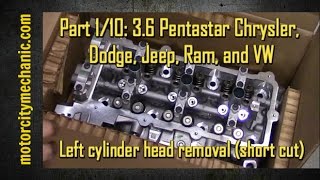
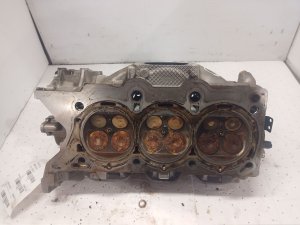
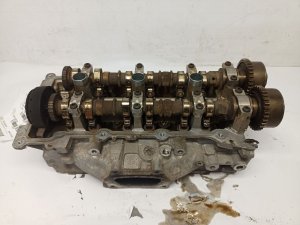
The 2011-2013 Dodge Grand Caravan is equipped with the early 3.6L Pentastar V6 engine, which is notorious for a specific design flaw. The left-side cylinder head (affecting cylinders 2, 4, and 6) was prone to premature wear in the valve guides and seats, causing a loss of compression and misfires. This defect commonly causes P0304, often alongside P0302 and P0306. The issue was so prevalent that Chrysler issued a warranty extension (code X56) for the left cylinder head to 10 years or 150,000 miles. The manufacturer also released Technical Service Bulletin (TSB) 09-002-14 Rev. B to guide technicians on the diagnosis and repair. The fix was implemented in production in mid-2012, using hardened valve guides and seats.
Diagnostic Flowchart

Tap your situation to follow the diagnostic path that matches what you're seeing on this vehicle.
Symptoms You May Notice

- Check Engine Light is on or flashing (a flashing light indicates a severe misfire)
- Rough or shaky idle
- Engine hesitation or stumbling during acceleration
- Noticeable loss of power
- Poor fuel economy
- Smell of unburned gasoline from the exhaust
- Engine may make a ticking or tapping sound, which can also be related to rocker arm failure, another known Pentastar issue.
- Replacing only spark plugs and ignition coils without investigating further. Many owners on forums report replacing these parts multiple times, only to have the P0304 code return because the root cause is the cylinder head.
Most Likely Causes


- Defective Left Cylinder Head 🔴 High Probability Early 3.6L Pentastar engines (2011-early 2013) had a manufacturing defect causing excessive wear on valve guides and seats on the left cylinder head (cylinders 2, 4, 6). This was acknowledged by Chrysler via TSB #09-002-14 Rev. B and warranty extension X56 (10 years/150,000 miles).
How to confirm: A professional mechanic should perform a cylinder leak-down test. Per Chrysler's TSB, leakage of 25% or more on cylinder 2, 4, or 6 confirms the failure. A compression test may also show low compression on cylinder 4.
Typical fix: The left cylinder head must be replaced with a revised part (e.g., part number RL141353AC or newer). This is a major engine repair that also requires replacing numerous gaskets.
Est. part cost: $450-$1000 for a remanufactured head assembly. - Worn or Fouled Spark Plug 🟡 Medium Probability
How to confirm: Remove the spark plug from cylinder 4 and inspect it for wear, carbon buildup, or oil fouling. Compare it to a new plug. A common diagnostic step is to swap the spark plug with another cylinder (e.g., cylinder 1) to see if the misfire code changes (e.g., to P0301).
Typical fix: Replace the spark plugs. It is recommended 🎬 Watch: Quick tutorial on replacing spark plugs and coils to replace all six at the same time.
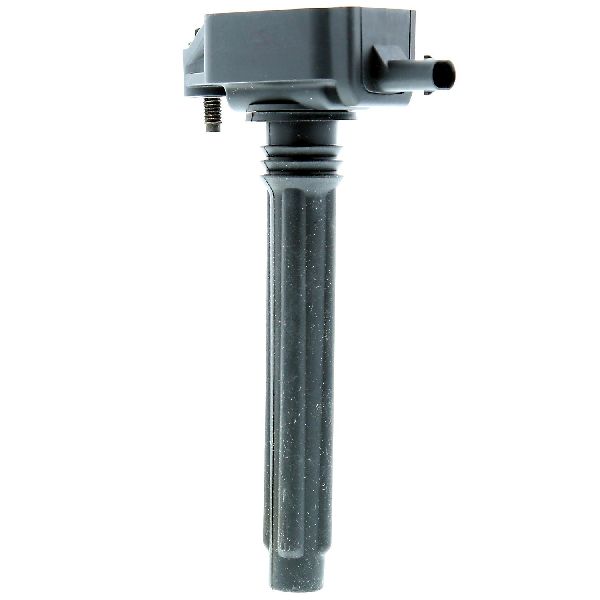
Est. part cost: $40-$100 for a set of six - Failed Ignition Coil 🟡 Medium Probability The coil packs on the 3.6L Pentastar are located in an environment with severe heat cycles, which can lead to dielectric breakdown in the epoxy potting, causing voltage leaks and premature failure.
How to confirm: Swap the ignition coil from cylinder 4 with one from another cylinder (e.g., cylinder 1). Clear the codes and drive the vehicle. If the code changes to P0301, the coil is bad.
Typical fix: Replace the faulty ignition coil.
Est. part cost: $30-$70 per coil - Faulty Fuel Injector ⚪ Low Probability
How to confirm: Listen to the injector with a mechanic's stethoscope to ensure it is clicking. For a more definitive test, check the resistance across the injector's two terminals; it should be between 12 and 13 ohms. You can also swap the injector with another cylinder, but this requires removing the intake manifold.
Typical fix: Replace the faulty fuel injector.
Est. part cost: $50-$120 per injector
Rare But Worth Checking
- Vacuum Leak: A leak in the intake manifold gaskets can cause unmetered air to enter the engine, leading to a lean condition and misfires. The upper and lower intake gaskets on the 3.6L can become brittle and must be replaced when servicing the cylinder heads or injectors.
- Worn Rocker Arms/Lifters: Failed rocker arm bearings are another well-documented issue with the 3.6L Pentastar engine, causing a distinct 'Pentastar Tick'. This can lead to improper valve operation and camshaft damage, resulting in a misfire. Inspection requires removing the valve cover to check for play in the rocker arms.
Diagnosis Steps
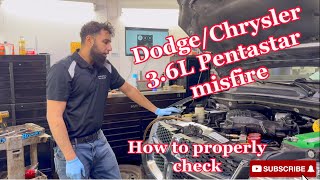
- Scan for any other trouble codes 🎬 Watch: A guide to diagnosing Pentastar misfire codes to see if the misfire is isolated or part of a larger issue (e.g., P0300, P0302, P0306).
- Swap the ignition coil from cylinder 4 with another cylinder (e.g., cylinder 1, which is on the opposite bank and easier to access). Clear the codes and see if the misfire moves to P0301. If it does, the coil is bad.
- If the misfire remains on cylinder 4, swap the spark plug with another cylinder. If the misfire moves, the spark plug is bad.
- Inspect the cylinder 4 spark plug well for any signs of oil or coolant contamination.
- Listen to the fuel injector on cylinder 4 with a stethoscope to confirm it is clicking. Compare the sound to a known good injector.
- If the above steps do not identify the issue, perform a cylinder compression test and a cylinder leak-down test on cylinder 4. This is the critical step. Significant loss of compression or high leakage (over 25%) strongly indicates the known cylinder head failure.
- While the engine is running, listen for a distinct ticking noise from the upper engine, which could indicate a separate (or related) rocker arm failure.
- Inspect the intake manifold gaskets for signs of cracking or leaks while performing other repairs, as this is a common source of vacuum leaks.
Parts You'll Likely Need
- Left Cylinder Head Assembly
(OEM #RL141353AC (reman), 05184445AI)— This is the most probable cause for a persistent P0304 on this specific vehicle due to a known factory defect. The part numbers listed are revised heads designed to fix the issue.
Trusted brands: Mopar (OEM), Clearwater Cylinder Head, Allied Motor Parts
OEM price range: $750-$1200
Aftermarket price range: $450-$1000. - Ignition Coil
(OEM #5149168AJ)— A common failure item for any misfire code and a logical first part to check via swapping.
Trusted brands: Mopar, Denso, NGK, Duralast
OEM price range: $60-$90
Aftermarket price range: $30-$70 - Spark Plug
(OEM #SP149125AF)— Spark plugs are a routine maintenance item and a frequent cause of single-cylinder misfires.
Trusted brands: NGK, Champion, Denso
OEM price range: $15-$25
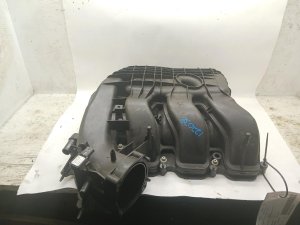
Aftermarket price range: $8-$15 - Intake Manifold Gasket Set (Upper and Lower)
(OEM #05184562AC (Upper), 05184331AC (Lower))— These gaskets must be replaced any time the intake manifold is removed, which is required for a cylinder head or fuel injector replacement. TSB 09-002-14 lists these as required parts for the head replacement job.
Trusted brands: Mopar, Fel-Pro
OEM price range: $40-$60
Aftermarket price range: $20-$40
Related Codes That Often Appear With This One
- P0300 — Indicates a random or multiple cylinder misfire. This often appears alongside P0304 when the cylinder head issue begins to affect more than one cylinder on the left bank.
- P0302 — Cylinder 2 misfire. This code is very commonly seen with P0304 as both cylinders are on the same problematic left cylinder head.
- P0306 — Cylinder 6 misfire. This code is also commonly seen with P0304 as all three even-numbered cylinders are on the affected left bank.
Technical Service Bulletins (TSBs) & Recalls
- Bulletin #09-002-14 Rev. B: Details the diagnostic procedure (cylinder leak-down test) and repair (left cylinder head replacement) for P0300, P0302, P0304, or P0306 codes under the X56 Warranty Extension. It applies to a wide range of 2011-2013 Chrysler/Dodge/Jeep vehicles with the 3.6L engine.
- Warranty Bulletin D-14-12 (US): Formally announces the extended warranty coverage for the left cylinder head to 10 years or 150,000 miles from the vehicle's in-service date for the condition described in TSB 09-002-14.
Platform-Specific Known Issues
- A widely documented defect on 2011-2013 models with the 3.6L Pentastar engine is a faulty left-bank cylinder head, which leads to premature valve guide and seat wear. This results in misfire codes, specifically P0302, P0304, and/or P0306. Chrysler issued Technical Service Bulletin #09-002-14 Rev. B and a warranty extension (X56) to cover this repair for 10 years or 150,000 miles. The repair involves replacing the cylinder head if a leak-down test shows 25% or more leakage.
Mechanic-Grade Diagnostic Values
- Fuel Pressure (Key On, Engine Off) — expected: 400 kPa +/- 14 kPa (58 psi +/- 2 psi). Failure: Significantly lower pressure indicates a weak fuel pump, leak, or faulty regulator.
- Fuel Pressure Leak-Down — expected: Pressure drop of less than 138 kPa (20 psi) over 30 minutes after engine shutdown.. Failure: A faster pressure drop indicates a leaking injector, check valve, or fuel pressure regulator.
- Fuel Injector Resistance — expected: 12.0 - 13.0 Ohms. Failure: A reading outside this range (open circuit or short) indicates a failed injector coil.
- Ignition Coil Primary Resistance (OEM) — expected: Approximately 0.62 Ω. Failure: Significant deviation from this value suggests a faulty coil winding.
- Mode 6 Misfire Count (Cylinder 4) — expected: 0 or a very low number.. Failure: A high or incrementing count for cylinder 4, even without a pending code, confirms it is the problematic cylinder.
Hidden / Shadow Codes Worth Checking
- Mode 6, TID $A2-$AD: These Test IDs monitor misfire counts for each cylinder. For example, TID $A5 may correspond to Cylinder 4. A professional scan tool can display the raw count of misfire events per cylinder for the current and last 10 driving cycles. (see via A professional scan tool or advanced DIY scanner with Mode 6 data capability is required. The tool will show a value for each cylinder's misfire counter.)
Scan Tool Commands That Help
- Chrysler wiTECH or equivalent professional scanner: Fuel Injector Kill / Cylinder Cutout Test — To isolate a misfire. When cylinder 4 is deactivated, if there is no change in engine RPM or smoothness, it confirms cylinder 4 was not contributing, pointing to a problem with that specific cylinder.
- Chrysler wiTECH or equivalent professional scanner: Fuel Injector Actuation Test — Used with a fuel pressure gauge connected. The scan tool commands the specific injector to open, and the technician watches for the corresponding pressure drop on the gauge to confirm the injector is mechanically functioning.
- Chrysler wiTECH or equivalent professional scanner: Fuel Pump Relay Actuation — To diagnose a no-start or low fuel pressure condition. This command bypasses the normal control logic and directly turns on the fuel pump, helping to determine if the pump itself is functional or if the problem lies in the control circuit (relay, TIPM, or PCM).
Wiring & Ground Locations
- PCM Connector C2, Pin 11 — The Powertrain Control Module (PCM) is located in the engine bay. C2 is one of the large multi-pin connectors attached to it.. This pin is for 'INJECTOR CONTROL 4'. The wire is typically Brown/Tan (BR/TN). A technician can perform a continuity test or check for a pulsed ground signal on this wire to verify the PCM is correctly commanding the fuel injector for cylinder 4.
Real Owner Repair Stories
- Reddit user on r/MechanicAdvice (2014 Dodge Grand Caravan SXT) — P0304 code returned after two years.
❌ Tried (didn't work) Not specified in the follow-up, but the user was seeking advice for a recurring issue.
✅ What actually fixed it The user reported that two years prior, the same P0304 code was resolved by replacing the fuel injector for cylinder 4. - iFixit Forum User (2012 Dodge Grand Caravan 3.6L V6) — P0304 code, Check Engine Light on.
❌ Tried (didn't work) Replaced all spark plugs, Replaced all ignition coil packs
✅ What actually fixed it The issue was not resolved by common ignition parts. The user was advised the next step was to replace the plenum gaskets, illustrating the common misdiagnosis path where the cylinder head is the likely culprit.
OEM Part Supersession History
Cylinder heads ending in 'AA' or 'AB'→RL141353AC or 68141353AC (or newer)— The original 'AA' heads had improperly hardened valve guides and seats. The 'AC' and later revisions use hardened materials to prevent premature wear and compression loss.Ignition Coil 5149168AI (for 2011-2015 3.6L)→N/A— N/A
Heads up: Ignition coils for the later model 3.6L Pentastar Upgrade (PUG) engine (e.g., part 68223569AD) are not interchangeable with the coils used on the 2011-2013 models.
Model Year Variations Within This Range
- 2011-early 2012: These models were originally equipped with the defective 'AA' left cylinder head. A P0304 code on these years has an extremely high probability of being caused by this issue.
- Mid-2012 to 2013: The redesigned 'AC' cylinder head was introduced into production during the summer of 2012. A reliable way to check is to find the date stamp on the head; a stamp of '2062' (the 206th day of 2012) or higher indicates the revised, more robust part. While these later models are less likely to have the head defect, early production 2013 models could still have the old head.
Helpful Videos
Used OEM Parts in Stock

New Aftermarket Parts Available



The information in this article is provided for general reference and educational purposes only. Vehicle specifications, procedures, and part compatibility can vary by production date, trim level, and region. Always consult your vehicle's factory service manual and verify part numbers before purchasing or performing repairs. Safety-critical components such as airbags, seat belts, and braking systems should be installed by a qualified professional.
- Dodge GRAND CARAVAN:
- 🎬 Helpful Videos
- 🛍️ Shop This Part
- What's Unique About the 2011-2013 Dodge GRAND CARAVAN
- Diagnostic Flowchart
- Symptoms You May Notice
- Most Likely Causes
- Rare But Worth Checking
- Diagnosis Steps
- Parts You'll Likely Need
- Related Codes That Often Appear With This One
- Technical Service Bulletins (TSBs) & Recalls
- Platform-Specific Known Issues
- Mechanic-Grade Diagnostic Values
- Hidden / Shadow Codes Worth Checking
- Scan Tool Commands That Help
- Wiring & Ground Locations
- Real Owner Repair Stories
- OEM Part Supersession History
- Model Year Variations Within This Range
- 🎟️ Get 5% Off