

P0304 on 2019-2025 Dodge Durango: Cylinder 4 Misfire Causes and Fixes
P0304 indicates a misfire in cylinder 4. On the 2019-2025 Dodge Durango, this is most often caused by a bad ignition coil or a worn spark plug. A DIY repair for these parts costs between $40 and $150. However, manufacturer bulletins also point to software issues that may require a dealer to update the powertrain control module. In some cases, particularly with an audible engine tick, it can be a sign of more serious mechanical failure like a worn camshaft or lifter.
- P0304 on a Durango is a cylinder 4 misfire, most commonly caused by a bad spark plug or ignition coil.
- Always start diagnosis by swapping the ignition coil, then the spark plug, from cylinder 4 to another cylinder to see if the misfire follows.
- Be aware that Dodge has issued TSBs indicating a software update may be required to fix misfires that occur specifically during engine start-up or warm-up.
- Driving with a flashing check engine light can cause expensive damage to your catalytic converter; address the misfire promptly.
What's Unique About the 2019-2025 Dodge DURANGO

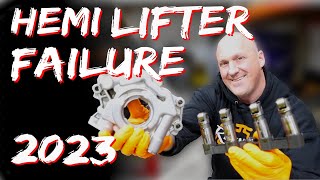
For this generation of Dodge Durango, the P0304 code isn't always a simple case of a bad spark plug or coil. Dodge has issued several Technical Service Bulletins (TSBs) indicating that misfires, including on cylinder 4, can be triggered by software glitches during specific conditions like cold starts or engine warm-ups. This means that in some cases, the fix isn't a new part, but a software update performed by a dealership. Additionally, the 3.6L Pentastar V6 and 5.7L/6.4L HEMI engines have known mechanical failure patterns. Pentastar engines can suffer from failing rocker arms which damage the camshaft, and HEMI engines are known for lifter failures that wipe out cam lobes, both of which can result in a persistent P0304 code often preceded by an engine ticking noise.
Diagnostic Flowchart

Tap your situation to follow the diagnostic path that matches what you're seeing on this vehicle.
Symptoms You May Notice
- Rough or shaky idle.
- Hesitation or stumbling during acceleration.
- Flashing or solid Check Engine Light.
- Reduced engine power and poor throttle response.
- Noticeable decrease in fuel economy.
- A smell of gasoline from the exhaust.
- Engine 'ticking' or 'tapping' noise, which could indicate a mechanical issue like a bad lifter or rocker arm.
- Repeatedly replacing spark plugs and ignition coils when the actual cause is a software issue that requires a PCM update, as noted in TSBs #18-032-26 and #18-039-26.
- Replacing an oxygen (O2) sensor, which is unlikely to cause a single-cylinder misfire. O2 sensor codes may appear as a result of the misfire, but are not the root cause.
- Ignoring a persistent engine tick and replacing only ignition parts when the true cause is a failing camshaft or lifter.
Most Likely Causes

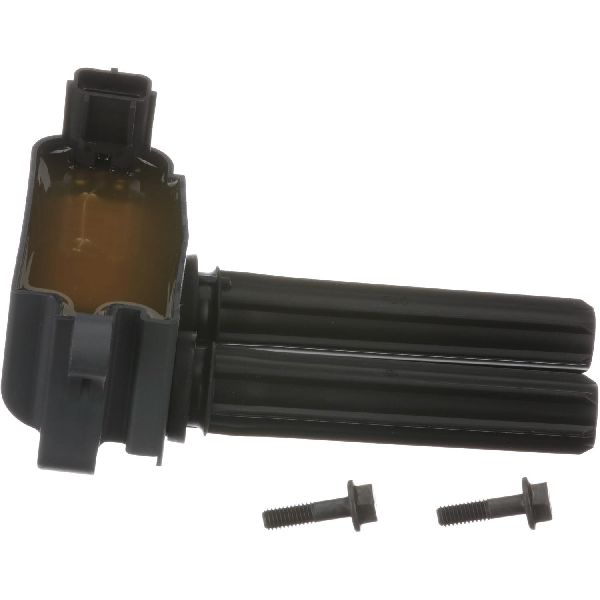
- Faulty Ignition Coil 🔴 High Probability Coil-on-plug systems are common failure points. Heat and vibration cause the internal windings to fail over time. Oil leaking from a valve cover gasket into the spark plug tube can also saturate and destroy the coil.
How to confirm: Swap the ignition coil from cylinder 4 with another cylinder (e.g., cylinder 2). Clear the codes and drive. If the code changes to P0302 (Cylinder 2 Misfire), the ignition coil is faulty.
Typical fix: Replace the faulty ignition coil. It's often recommended to replace the corresponding spark plug at the same time.
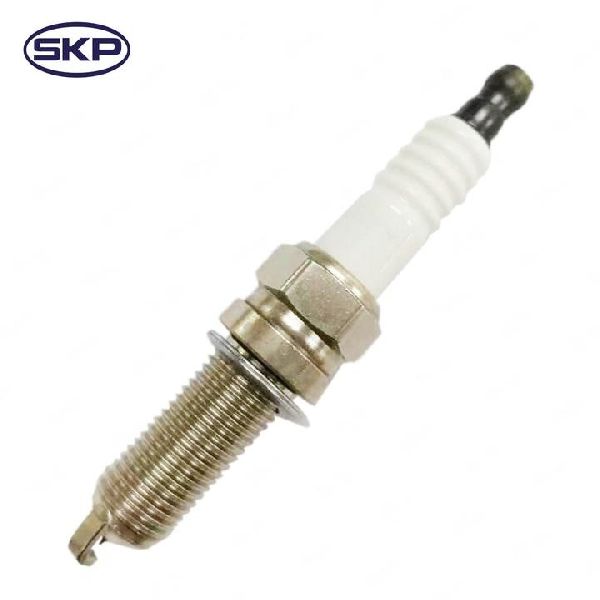
Est. part cost: $30-$80 - Worn or Defective Spark Plug 🔴 High Probability Spark plugs are a regular maintenance item. A cracked insulator, worn electrode, or incorrect gap can cause a weak or no spark. Some TSBs specifically mention cracked spark plugs as a cause for misfires on Dodge vehicles.
How to confirm: Remove the spark plug from cylinder 4 and inspect it for wear, carbon fouling, or damage. Compare it to a new plug. The gap should be checked with a gapper tool. You can also swap it with another cylinder's plug to see if the misfire follows.
Typical fix: Replace the spark plug. It is best practice to replace all spark plugs at the same time to ensure even performance.
Est. part cost: $10-$25 per plug - Powertrain Control Module (PCM) Software Update Needed 🟡 Medium Probability Multiple TSBs (#18-032-26, #18-039-26) specifically call out misfires on cylinder 4 (P0304) that are set during cold starts or engine warm-up, which can be resolved with a software reflash. This is often to adjust fuel trim or catalyst heating strategy.
How to confirm: This must be confirmed by a Dodge dealership or a qualified shop with access to OEM software (like wiTECH). They can check if the vehicle's PCM software is outdated and if these specific TSBs apply to your VIN.
Typical fix: A technician will reflash the PCM with the latest manufacturer software. This usually takes 30-60 minutes.
Est. part cost: $0-$200 (cost varies by dealer, may be covered under warranty) - Clogged or Faulty Fuel Injector ⚪ Low Probability
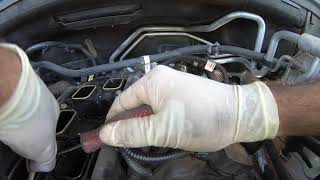
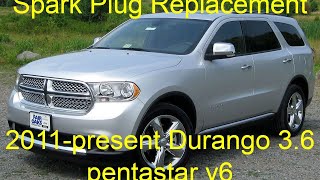
How to confirm: After ruling out spark and coil, you can swap the fuel injector from cylinder 4 with another cylinder. If the misfire code moves to the new cylinder, the injector is the problem. This is more labor-intensive than swapping a coil, especially on the 3.6L V6 where the intake manifold must be removed. 🎬 Watch this walkthrough for removing the intake and replacing coils.
Typical fix: Replace the faulty fuel injector. It's sometimes recommended to have all injectors professionally cleaned and tested at the same time.
Est. part cost: $50-$150
Rare But Worth Checking
- Mechanical Engine Failure (Lifter/Rocker Arm/Camshaft): A significant cause on both Pentastar and HEMI engines. For the 3.6L Pentastar, a failed rocker arm bearing can seize, wiping out the corresponding camshaft lobe. For the 5.7L/6.4L HEMI, a collapsed lifter roller can fail to follow the cam lobe, also causing lobe damage. This is often preceded by a distinct 'ticking' sound. A compression test and visual inspection of the valvetrain (by removing the valve cover) are necessary for diagnosis.
- Intake Manifold Gasket Leak: A vacuum leak near the intake runner for cylinder 4 can lean out the air/fuel mixture and cause a misfire. This can sometimes be detected by spraying brake cleaner or a smoke machine near the gasket with the engine running and listening for a change in idle speed or observing smoke being drawn in.
Diagnosis Steps
- Read the code: Use an OBD-II scanner to confirm P0304 is the active code. Note any other codes present and check freeze frame data.
- Listen for Noises: Before starting, listen for a distinct 'ticking' noise at idle. A tick can point towards a more serious mechanical issue like a rocker arm or lifter failure.
- Cylinder Location: Identify cylinder #4. On the 3.6L V6, it is the middle cylinder on the driver's side (Bank 2). On HEMI V8s, it is the second cylinder back on the passenger's side (Bank 2).
- Swap the Ignition Coil: Swap the ignition coil from cylinder 4 with one from an easily accessible cylinder (e.g., cylinder 2). Clear the codes, drive the vehicle, and rescan. If the code changes to P0302, the coil is bad.
- Swap the Spark Plug: If the misfire remains on cylinder 4, perform the same swap test with the spark plug. If the code moves, the plug is bad.
- Inspect Wiring: Visually inspect the wiring harness and connector for the cylinder 4 ignition coil and fuel injector for any signs of damage, corrosion, or loose connections.
- Check for Software Updates: If ignition components are good, contact a dealer with your VIN to see if TSBs #18-032-26 or #18-039-26 apply, which would indicate a software fix.
- Test the Fuel Injector: If all else fails, consider swapping the fuel injector to see if the misfire follows. This is a more involved job.
- Perform Mechanical Tests: If the misfire persists, a mechanical issue is highly possible. Perform a cylinder compression test and a leak-down test on cylinder 4. If compression is low, remove the valve cover to visually inspect the rocker arms, valve springs, and camshaft lobes for wear or damage.
Parts You'll Likely Need
- Ignition Coil
(OEM #5149168AJ (replaces 5149168AH, 5149168AI for 3.6L V6))— This is one of the most frequent causes of a single-cylinder misfire and is a straightforward part to replace.
Trusted brands: Mopar, NGK, Denso, Delphi
OEM price range: $50-$100
Aftermarket price range: $30-$80 - Spark Plug
(OEM #SP149125AE (for 3.6L V6); SPLZFR5C11 (for 5.7L HEMI))— As a standard wear item, a fouled or worn spark plug is a very common culprit for P0304. TSBs also point to cracked plugs as a known issue.
Trusted brands: Mopar, NGK, Champion
OEM price range: $15-$30
Aftermarket price range: $10-$25
Related Codes That Often Appear With This One
- P0300 — If the condition causing the misfire in cylinder 4 is also affecting other cylinders intermittently, a P0300 (Random/Multiple Cylinder Misfire) code may be stored as well.
- P0171/P0174 — If the misfire is caused by a vacuum leak affecting one bank of cylinders, a 'System Too Lean' code for that bank may accompany the P0304.
- P0204 — This code indicates a fault in the fuel injector circuit for cylinder 4. If P0204 is present with P0304, it strongly points to the fuel injector or its wiring as the root cause, rather than spark or mechanical issues.
Technical Service Bulletins (TSBs) & Recalls
- Bulletin #09-011-25: Notes P0304 can be associated with a rough idle complaint.
- Bulletin #18-032-26: Identifies P0304 occurring during cold start catalyst heating, potentially requiring a software update.
- Bulletin #18-039-26: Mentions P0304 occurring during the engine warm-up period, also pointing towards a possible software fix.
- Bulletin #1400322REVA: Lists P0304 as a common cylinder misfire DTC.
- Bulletin #09-013-20 REV. A: Links P0304 and other misfire codes to a rough running engine complaint.
Platform-Specific Known Issues

- Real-World Repair Chase on a 2015 Durango 3.6L: An owner on Reddit with 82,000 miles reported a persistent P0304 code despite replacing plugs, coils, and all intake gaskets. They even swapped rocker arms and the fuel injector with other cylinders, but the misfire code remained on cylinder 4. The vehicle passed compression and leak-down tests, and the only other symptom was an occasional heavy shake on cold start, highlighting how difficult this code can be to diagnose.
- Software Glitches on Cold Start: TSB #18-032-26 and TSB #18-039-26 indicate that a P0304 code can be set during cold starts or warm-up periods due to software calibration, not a hardware fault. This requires a dealer reflash of the PCM for resolution.
Mechanic-Grade Diagnostic Values
- Fuel Injector Resistance — expected: High-impedance injectors, typical of modern port injection systems, should measure between 11-15 ohms. All injectors should have readings within 0.5 ohms of each other.. Failure: A reading of 0 ohms indicates a short, while an infinite (OL) reading indicates an open circuit. A reading that is significantly different from the other injectors points to a failing injector.
- Engine Ground Voltage Drop — expected: Less than 0.4 volts between the negative battery terminal and various engine ground points with the engine running.. Failure: A voltage drop of 0.4 volts or more indicates a poor ground connection, which can cause erratic sensor readings and misfires.
Hidden / Shadow Codes Worth Checking
- Mode 6 Misfire Counters: While not a 'shadow code,' Mode 6 data on an advanced scan tool provides raw data from the PCM's self-tests. It shows misfire counts for each cylinder, even if they haven't reached the threshold to trigger a P0304 code. This can confirm if cylinder 4 is the only one misfiring or if others are also having issues. (see via An advanced OBD-II scanner or OEM tool like wiTECH that can display Mode 6 test results.)
Scan Tool Commands That Help
- wiTECH or equivalent professional scanner: Live Misfire Counter / Misfire Analyzer — Use this to watch misfire events on each cylinder in real-time. This is invaluable for confirming the misfire is isolated to cylinder 4 and observing if it occurs under specific conditions (idle, load, cold/hot) which can help differentiate between a software issue (per TSBs) and a hardware fault.
- wiTECH or equivalent professional scanner: Cylinder Cutout / Power Balance Test — This function allows the technician to disable fuel or spark to individual cylinders one at a time. When cylinder 4 is deactivated, if there is no change in engine RPM or smoothness, it confirms that cylinder was not contributing power, verifying the misfire. This is a definitive way to confirm a dead cylinder before tearing parts off.
Wiring & Ground Locations
- Cylinder 4 Location (3.6L Pentastar V6) — On the 3.6L V6, the cylinders on the driver's side (Bank 2) are, from front to back, 2-4-6. Cylinder 4 is the middle cylinder on the driver's side. Accessing its coil and spark plug requires removing the upper intake manifold.. Correctly identifying the cylinder is the first step. Misidentifying it leads to replacing parts on the wrong cylinder, wasting time and money.
- Cylinder 4 Location (5.7L/6.4L HEMI V8) — On HEMI V8 engines, the cylinders on the passenger's side (Bank 2) are, from front to back, 2-4-6-8. Cylinder 4 is the second cylinder from the front on the passenger's side.. Correctly identifying the cylinder is the first step. Unlike the V6, cylinder 4 on the V8 is relatively easy to access.
- Main Engine/Chassis Grounds — Key ground points are typically located near the battery negative terminal, on the chassis near the headlamps, and from the engine block to the firewall. A poor ground can cause insufficient voltage for the ignition coil to fire properly.. A weak or corroded ground can cause a weak spark, leading to intermittent misfires that are difficult to diagnose. Testing voltage drop at these points is a critical diagnostic step.
Real Owner Repair Stories
- Reddit user in /r/MechanicAdvice (2014 Dodge Grand Caravan SXT (with 3.6L Pentastar, same engine family)) — P0304 - Cylinder 4 misfire.
❌ Tried (didn't work) Swapping ignition coils, Swapping spark plugs
✅ What actually fixed it The user reported the final cause was a bad rocker arm on cylinder 4. This is a known mechanical failure point on the 3.6L Pentastar engine. - NHTSA Owner Complaint ODI #11698027 (2019 Dodge Durango) — Check engine light with code P0304 at 77,000+ miles.
❌ Tried (didn't work) Replacing ignition coil on cylinder 4, Replacing the set of spark plugs
✅ What actually fixed it The complaint is a record of the diagnostic process and does not state the final fix, but it highlights a common scenario where the simple fixes (coil and plugs) do not resolve the P0304 code, pointing towards a more complex issue like a fuel injector, wiring, or mechanical problem.
OEM Part Supersession History
5149168AH, 5149168AI→5149168AJ— Internal revisions by the manufacturer to improve reliability and performance.
Heads up: While all listed part numbers are for the 3.6L V6 ignition coil and are generally interchangeable, it is always best practice to use the latest revision (5149168AJ) when replacing a coil to benefit from the most recent engineering improvements.
Model Year Variations Within This Range
- 2021-2025: The Dodge Durango received a significant refresh for the 2021 model year, including interior and exterior updates. While the core 3.6L, 5.7L, and 6.4L engines remained, there could be minor changes in wiring harnesses, connector types, and software calibrations. TSBs related to software are often year-specific, so it's crucial to verify a TSB applies to your exact model year before pursuing a software update.
Helpful Videos

Used OEM Parts in Stock


New Aftermarket Parts Available


The information in this article is provided for general reference and educational purposes only. Vehicle specifications, procedures, and part compatibility can vary by production date, trim level, and region. Always consult your vehicle's factory service manual and verify part numbers before purchasing or performing repairs. Safety-critical components such as airbags, seat belts, and braking systems should be installed by a qualified professional.
- Dodge DURANGO:
- 🎬 Helpful Videos
- 🛍️ Shop This Part
- What's Unique About the 2019-2025 Dodge DURANGO
- Diagnostic Flowchart
- Symptoms You May Notice
- Most Likely Causes
- Rare But Worth Checking
- Diagnosis Steps
- Parts You'll Likely Need
- Related Codes That Often Appear With This One
- Technical Service Bulletins (TSBs) & Recalls
- Platform-Specific Known Issues
- Mechanic-Grade Diagnostic Values
- Hidden / Shadow Codes Worth Checking
- Scan Tool Commands That Help
- Wiring & Ground Locations
- Real Owner Repair Stories
- OEM Part Supersession History
- Model Year Variations Within This Range
- 🎟️ Get 5% Off