

P0304 on 2011-2018 Dodge Durango: Cylinder 4 Misfire Causes and Fixes
P0304 in a Dodge Durango means cylinder 4 is misfiring. The most common fixes are replacing the ignition coil or spark plug. However, on 2011-2013 models with the 3.6L V6 engine, this code is a strong indicator of a serious cylinder head problem that was covered by an extended warranty. For 5.7L HEMI engines, this code can be an early sign of lifter failure.
- P0304 signifies a misfire in cylinder 4.
- The easiest and most common fixes are a new ignition coil or spark plug. Always start your diagnosis there.
- If you have a 2011-2013 Durango with the 3.6L V6, P0304 is a major red flag for a known cylinder head defect. A professional diagnosis with a leak-down test is essential.
- Do not ignore a flashing check engine light, as this can lead to very expensive catalytic converter damage in a short amount of time.
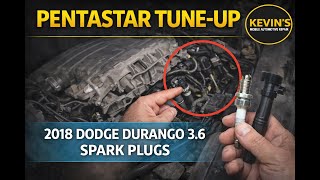
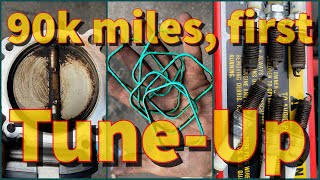
- On the 3.6L V6, replacing spark plugs is more involved as it requires removing the upper intake manifold. It's recommended to replace the intake gaskets at the same time.
What's Unique About the 2011-2018 Dodge DURANGO

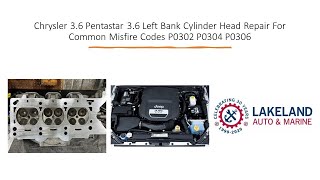
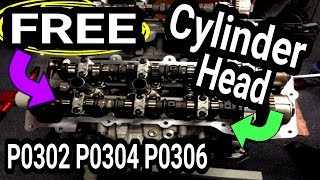
The 2011-2018 Durango was primarily equipped with the 3.6L Pentastar V6 and the 5.7L HEMI V8. While standard ignition issues cause P0304 on both, each engine has a significant, well-documented weakness. The early 3.6L Pentastar V6 (2011-2013) is notorious for a specific left-bank cylinder head defect due to premature valve guide and seat wear. This manufacturing issue often causes misfires on cylinders 2, 4, and 6, making P0304 a particularly concerning code on these models. Chrysler acknowledged this with TSB 09-002-14 REV. B and a warranty extension (X56) 🎬 Watch: How to get a free cylinder head under warranty. to cover cylinder head replacement. On the 5.7L HEMI, a P0304 code, especially if accompanied by a ticking noise, can be an early symptom of a failed MDS (Multi-Displacement System) lifter, which can lead to camshaft damage if not addressed.
Diagnostic Flowchart

Tap your situation to follow the diagnostic path that matches what you're seeing on this vehicle.
Symptoms You May Notice

- Rough idle or shaking, especially on a cold start.
- Check Engine Light is on or flashing
- Hesitation or stumbling during acceleration
- Noticeable loss of engine power
- Reduced fuel economy
- Smell of unburned gasoline from the exhaust
- For 5.7L HEMI, a distinct ticking or diesel-like sound from the engine bay
- Replacing oxygen sensors. A misfire will cause the O2 sensors to report unusual readings, but they are typically not the root cause of the P0304 code.
Most Likely Causes


- Faulty Ignition Coil 🔴 High Probability Coil-on-plug systems are a common failure point. Oil leaks from valve cover gaskets can also saturate the coil boot and cause failure.
How to confirm: Swap the ignition coil from cylinder 4 with another cylinder (e.g., cylinder 2 on a V6 or cylinder 6 on a V8). Clear the codes and drive. If the code changes to P0302 or P0306, the coil is bad.
Typical fix: Replace the faulty ignition coil. Many owners choose to replace all coils on the bank or all coils at once as a preventative measure.
Est. part cost: $30-$70 per coil - Worn or Fouled Spark Plug 🔴 High Probability Spark plugs are a maintenance item. The 3.6L V6 has a 100,000-mile replacement interval, which is often stretched, leading to wear-related misfires.
How to confirm: After confirming the coil is good, remove the spark plug from cylinder 4. Inspect it for wear, oil fouling, or damage. Compare it to a new plug. You can also swap it with another cylinder's plug to see if the misfire moves.
Typical fix: Replace the spark plug. It is best practice to replace all spark plugs at the same time. On the 3.6L V6, this requires removing the upper intake manifold.
Est. part cost: $10-$25 per plug - Defective Left Cylinder Head (2011-2013 3.6L V6 Only) 🔴 High Probability Early 2011-2013 3.6L Pentastar engines had a manufacturing defect causing excessive valve guide and seat wear on the left cylinder head, which houses cylinders 2, 4, and 6.
How to confirm: If spark plugs and coils are good, a cylinder leak-down test is the definitive diagnostic step. Per TSB 09-002-14 REV. B, leakage of 25% or more confirms the failure. This test identifies compression loss through the valves.
Typical fix: Replacement of the left cylinder head with an updated part (casting number ending in 'AC' or later). This was covered under Chrysler's X56 warranty extension (10 years/150,000 miles).
Est. part cost: $800-$1500 for the head assembly (if not covered by warranty) - Clogged or Faulty Fuel Injector 🟡 Medium Probability
How to confirm: If ignition and compression are good, swap the fuel injector from cylinder 4 with another cylinder. If the misfire code follows the injector, it is the cause. This is more involved as it requires removing the fuel rail.
Typical fix: Replace the faulty fuel injector.
Est. part cost: $50-$120
Rare But Worth Checking
- Vacuum Leak: A leak in the intake manifold gasket near cylinder 4 can lean out the air/fuel mixture and cause a misfire. On the 3.6L V6, the intake plenum gaskets can fail after being disturbed for a spark plug change.
- Camshaft Position Sensor Failure: A failing camshaft position sensor can cause misfires. One owner reported a P0340 code along with P0300 and P0304.
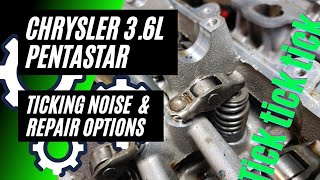
- Worn Camshaft Lobes / Rocker Arms: On later model Pentastar V6s (post-2013), and even some earlier ones, a ticking noise accompanied by a misfire code can point to a failed rocker arm with seized bearings, which then damages the camshaft lobe. This is a well-documented failure pattern separate from the early cylinder head issue. A visual inspection under the valve cover is required.
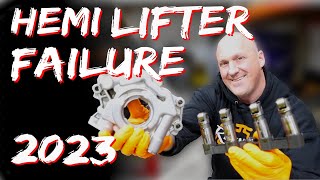
- Failed Lifter (5.7L HEMI): The Multi-Displacement System (MDS) lifters are a known weak point. A collapsed or seized lifter will fail to open the valve correctly, causing a persistent misfire and a loud ticking sound. This often requires replacement of the camshaft as well due to damage from the failed lifter roller. 🎬 See a mechanic's best tips for preventing Hemi lifter failure.
Diagnosis Steps
- Read freeze frame data to understand the engine conditions (speed, load, temperature) when the misfire was first detected.
- Scan for any other DTCs to get more context.
- Identify the location of cylinder 4. On the 3.6L V6, it's the middle cylinder on the driver's side (left bank). On the 5.7L V8, it's the second cylinder from the front on the passenger's side (right bank).
- Swap the ignition coil from cylinder 4 with an adjacent, easily accessible cylinder (like cylinder 2 or 6). Clear the codes and run the engine to see if the misfire code follows the coil (e.g., changes to P0302 or P0306).
- If the misfire remains on cylinder 4, perform the same swap test with the spark plug.
- Inspect the ignition coil connector and wiring for any damage or corrosion.
- If ignition components are ruled out, listen to the fuel injector with a mechanic's stethoscope to ensure it's clicking. Consider swapping it with another cylinder's injector if accessible.
- For 2011-2013 3.6L V6 models, if the above steps do not resolve the issue, a cylinder leak-down test is the next critical step. Per TSB 09-002-14 REV. B, if leakage is 25% or greater, the cylinder head is faulty and requires replacement.
- For all models, especially if a ticking noise is present, remove the valve cover to visually inspect the rocker arms and camshaft lobes for wear or damage related to cylinder 4.
Parts You'll Likely Need
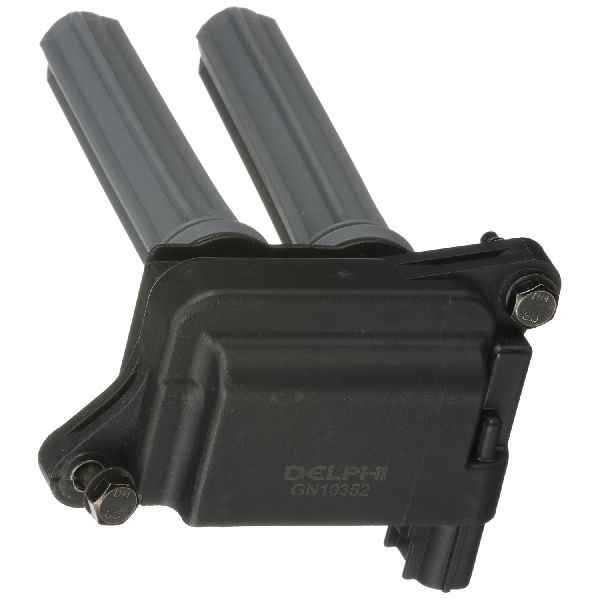
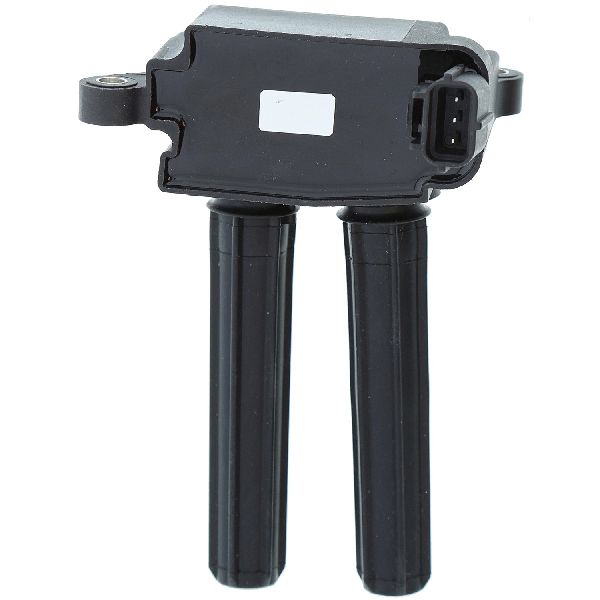
- Ignition Coil
(OEM #5149168AI (for 2011-2015 3.6L), 68223569AD (for 2016+ 3.6L))— This is one of the most common failure points for a single-cylinder misfire.
Trusted brands: Mopar, NGK, Denso
OEM price range: $50-$90
Aftermarket price range: $30-$60 - Spark Plug
(OEM #SP149125AF (3.6L), SP225755AB (later 3.6L))— Spark plugs are a routine maintenance item and a frequent cause of misfires as they wear out.
Trusted brands: Mopar, NGK, Champion
OEM price range: $15-$25
Aftermarket price range: $10-$20 - Left Cylinder Head Assembly (3.6L V6)
(OEM #RL141353AC (This is the updated replacement part number listed in TSB 09-002-14 REV. B))— This is the specific fix for the known defect on 2011-2013 Pentastar engines that causes P0304. The original faulty heads often had 'AA' or 'AB' casting designations.
Trusted brands: Mopar
OEM price range: $1000-$1500
Aftermarket price range: $800-$1200
Related Codes That Often Appear With This One
- P0300 — If the misfire is intermittent or other cylinders are also misfiring, a P0300 (Random/Multiple Cylinder Misfire) code may appear alongside P0304.
- P0302, P0306 — On 2011-2013 3.6L V6 engines, seeing these codes with P0304 strongly suggests the known left cylinder head issue, as all three cylinders are on the same bank and were specifically listed in the warranty extension TSB.
Technical Service Bulletins (TSBs) & Recalls
- Bulletin #09-011-25: Notes P0304 as a cylinder 4 misfire that can cause a rough idle.
- Bulletin #18-055-16 REV. A: Lists P0304 as Cylinder 4 Misfire as part of a software update for various DTCs.
- Bulletin #09-002-14 / #09-002-14 REV. B: The critical TSB for the X56 Warranty Extension. It applies to 2011-2013 models with the 3.6L engine and codes P0300, P0302, P0304, or P0306. It instructs technicians to perform a cylinder leak-down test and replace the left cylinder head if leakage exceeds 25%.
Platform-Specific Known Issues
- 3.6L V6 Cylinder Head Defect (2011-2013): The most significant issue for this platform. A defect in the left cylinder head could lead to premature valve guide and seat wear, causing compression loss and misfires on cylinders 2, 4, and/or 6. Dodge issued TSB #09-002-14 REV. B and warranty extension X56 (10 years/150,000 miles) to address this by replacing the cylinder head with an updated part.
- 3.6L V6 Rocker Arm/Camshaft Failure (All Years): Separate from the head defect, the Pentastar engine is also prone to rocker arm bearing failure. This causes a ticking noise that can lead to a misfire code like P0304 if the failure is on cylinder 4. The failed rocker often damages the camshaft lobe, requiring both to be replaced.
- 5.7L HEMI MDS Lifter Failure (All Years): A notorious issue on the HEMI is the failure of lifters, particularly those used for the Multi-Displacement System (MDS). A collapsed lifter will fail to open the valve correctly, causing a persistent misfire and a loud ticking sound.
Mechanic-Grade Diagnostic Values
- Ignition Coil Primary Resistance — expected: 0.4 to 2.0 ohms. Failure: A reading outside this range indicates a faulty coil.
- Ignition Coil Secondary Resistance — expected: 6,000 to 10,000 ohms. Failure: A reading outside this range suggests the coil's secondary winding has failed.
- Fuel Pressure (5.7L HEMI V8) — expected: 40.5 - 47 PSI at idle. Failure: Pressure below this range can indicate a weak fuel pump or clogged filter, leading to lean misfires.
- Cylinder Leak-down (3.6L V6 with suspected head issue) — expected: Less than 25% leakage. Failure: Leakage of 25% or more confirms the cylinder head failure as per TSB 09-002-14 REV. B.
Hidden / Shadow Codes Worth Checking
- Mode $06 Misfire Counts: This is not a specific code, but a function within any advanced OBD-II scanner. It allows viewing of the raw misfire count for each cylinder over the current and last 10 drive cycles. This can reveal which cylinder is misfiring the most, even before a specific P030x code is set. (see via Access Mode $06 data using an advanced OBD-II scan tool.)
Scan Tool Commands That Help
- wiTECH (OEM Chrysler/Dodge/Jeep Tool): OBD II Monitors -> 'Which cylinder is misfiring' — This function provides a live data block showing misfire counts for all cylinders, which is invaluable for isolating an intermittent or random misfire (P0300) to a specific cylinder like cylinder 4.
- Advanced Bidirectional Scan Tool (e.g., Autel): Cylinder Power Balance Test / Fuel Cut Test — This active test allows the technician to manually deactivate the fuel injector for each cylinder one by one. When deactivating a healthy cylinder, the engine RPM will drop noticeably. If cylinder 4 is deactivated and there is little or no change in RPM, it confirms that cylinder 4 was not contributing power, pinpointing the misfire.
Wiring & Ground Locations
- G906 — Front center of the engine compartment.. This is a primary engine compartment ground. A poor connection here can cause a variety of electrical issues, including weak spark or erratic sensor readings that could lead to a misfire code.
- Cylinder 4 Ignition Coil Driver Wire — Pin on the Powertrain Control Module (PCM) connector. The PCM is located in the right front of the engine compartment.. A wiring diagram is needed to identify the specific pin for the 'Coil on plg drv 4' circuit. Damage to this wire between the PCM and the coil will prevent the coil from firing, directly causing a P0304 code.
- Engine Ground Strap — Multiple straps exist. One key strap often connects the engine block or alternator to the chassis. For 2018+ 3.6L models, a thin ground strap attaches to the back of the alternator.. A broken or corroded engine ground strap can create resistance in the ignition system's ground path, leading to a weak spark and potential misfires.
Real Owner Repair Stories
- Reddit user on r/DodgeDurango (2015 Dodge Durango 3.6L V6, 82,000 miles) — Intermittent P0304 code over several months. Car runs perfectly fine with no vibrations, ticking, or power loss. Occasional heavy shake on cold start that lasts only 2-3 seconds.
❌ Tried (didn't work) Replaced all spark plugs, Replaced all ignition coils, Replaced plenum and intake manifold gaskets, Swapped rocker arms from cylinder 4 to 6, Swapped fuel injector from cylinder 4 to 2, Passed both a leak-down and compression test
✅ What actually fixed it The user was still diagnosing the issue at the time of the post, having exhausted all common fixes. The combination of a cold-start shake and a persistent, isolated misfire code despite good compression and swapped components points towards a more complex, intermittent issue, possibly within the wiring harness or the PCM itself. - Reddit user on r/Jeep (Pentastar Engine) (2023 Jeep Gladiator 3.6L V6 (engine shared with Durango)) — Engine ticking noise, followed by a check engine light and misfire.
❌ Tried (didn't work) Initial diagnosis focused on standard misfire causes.
✅ What actually fixed it A failed rocker arm bearing caused the rocker to stick and damage the camshaft lobe. The final repair was the replacement of the affected camshaft and rocker arm. This is a real-world example of the known Pentastar rocker arm failure pattern.
When the Usual Fixes Don't Work
- In one documented case for a 2015 Durango 3.6L, an owner with a persistent P0304 code had already replaced plugs, coils, and intake gaskets, and even swapped rocker arms and the fuel injector to other cylinders without the code moving. The vehicle also passed compression and leak-down tests. This demonstrates a scenario where the most common causes, including the well-known rocker arm failure, are not the root of the problem, forcing diagnosis toward more elusive causes like a wiring harness fault or an intermittent PCM driver issue.
OEM Part Supersession History
5149168AI, 5149168AH→5149168AJ— Standard part revision and improvement by the manufacturer.
Heads up: These part numbers are for the 3.6L V6 ignition coil and are generally interchangeable for the 2011-2015 model years.68223569AC, 68223569AB→68223569AD— Standard part revision for the ignition coil used in later model year Pentastar engines.
Heads up: This coil is for 2016 and newer 3.6L V6 engines and is not compatible with the earlier 2011-2015 models.Original 'AA' or 'AB' cylinder heads on 2011-2013 3.6L V6→RL141353AC (and later revisions)— To correct the manufacturing defect causing premature valve guide wear.
Heads up: The updated 'AC' head is the required replacement for any early model exhibiting the characteristic failure.
Model Year Variations Within This Range
- 2011-2013: These years used the early 3.6L Pentastar V6 design susceptible to the left cylinder head failure, making P0304 (along with P0302, P0306) a strong indicator of this specific issue.
- 2014-2018: For the 2014 model year, the Durango received a facelift and the 8-speed ZF automatic transmission replaced the older 5-speed, improving performance and efficiency. While the major cylinder head defect was resolved, these later 3.6L engines are still known for rocker arm bearing failures causing ticking and misfires.
- 2016-2018: The ignition coil part number for the 3.6L V6 changed starting in the 2016 model year to part number 68223569AD. The earlier coil (5149168AJ) is not compatible.
Helpful Videos

Used OEM Parts in Stock


New Aftermarket Parts Available




The information in this article is provided for general reference and educational purposes only. Vehicle specifications, procedures, and part compatibility can vary by production date, trim level, and region. Always consult your vehicle's factory service manual and verify part numbers before purchasing or performing repairs. Safety-critical components such as airbags, seat belts, and braking systems should be installed by a qualified professional.
- Dodge DURANGO:
- 🎬 Helpful Videos
- 🛍️ Shop This Part
- What's Unique About the 2011-2018 Dodge DURANGO
- Diagnostic Flowchart
- Symptoms You May Notice
- Most Likely Causes
- Rare But Worth Checking
- Diagnosis Steps
- Parts You'll Likely Need
- Related Codes That Often Appear With This One
- Technical Service Bulletins (TSBs) & Recalls
- Platform-Specific Known Issues
- Mechanic-Grade Diagnostic Values
- Hidden / Shadow Codes Worth Checking
- Scan Tool Commands That Help
- Wiring & Ground Locations
- Real Owner Repair Stories
- When the Usual Fixes Don't Work
- OEM Part Supersession History
- Model Year Variations Within This Range
- 🎟️ Get 5% Off