

P0304 on 2019-2021 Dodge Charger: Cylinder 4 Misfire Causes and Fixes
P0304 on a 2019-2021 Dodge Charger signals a misfire in cylinder 4. The most common cause is a faulty ignition coil or a worn-out spark plug. A DIY fix for these parts typically costs between $40 and $120. However, on both V6 and V8 engines, a persistent P0304 accompanied by a ticking noise can indicate a more serious internal engine issue like a failed rocker arm or lifter.
- P0304 indicates a misfire specifically on cylinder 4.
- Start your diagnosis with the cheapest and easiest fixes: swap the ignition coil, then the spark plug, to see if the misfire moves to another cylinder.
- Do not drive if the check engine light is flashing, as this can cause rapid and expensive damage to your catalytic converter.
- If you have the 3.6L V6 engine and also hear a ticking sound, be aware of the platform's history with valve train and cylinder head issues as a potential root cause.
- Always use an OBD-II scanner to clear the codes after each diagnostic step or repair to accurately track the problem.
What's Unique About the 2019-2021 Dodge CHARGER
For the Dodge Charger, the cause of P0304 can sometimes depend on the engine. While ignition components are the usual suspects across all engines, the 3.6L Pentastar V6 has a documented history of valvetrain issues. Early models (2011-2013) had cylinder head problems causing misfires on cylinders 2, 4, and 6, addressed by TSB #09-002-14 REV. B. On later models, including 2019-2021, this can manifest as a failed rocker arm bearing, leading to a ticking noise and a damaged camshaft. On 5.7L and 6.4L HEMI V8 engines, a failing Multi-Displacement System (MDS) lifter or solenoid, which deactivates cylinders to save fuel, can collapse and cause a persistent misfire on a specific cylinder, also often accompanied by a ticking sound.
Diagnostic Flowchart
Tap your situation to follow the diagnostic path that matches what you're seeing on this vehicle.
Symptoms You May Notice
- Rough or shaky idle
- Hesitation or stumbling during acceleration
- Noticeable loss of engine power
- Flashing or solid check engine light
- Increased fuel consumption
- Smell of unburned gasoline from the exhaust
- Audible ticking or tapping noise from the engine bay
- Replacing only the spark plug when the ignition coil is the actual cause.
- Replacing the fuel injector before properly diagnosing the ignition system.
- Assuming a major mechanical failure before swapping the coil and plug, which are the most common and easiest parts to test.
- Mistaking a valvetrain tick (rocker arm/lifter) for a simple exhaust leak, thereby delaying diagnosis of a serious mechanical issue.
Most Likely Causes
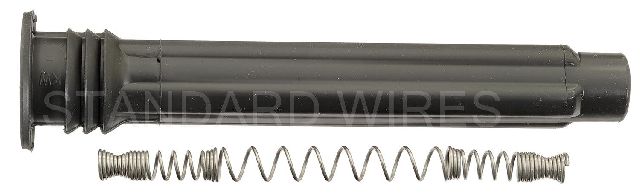
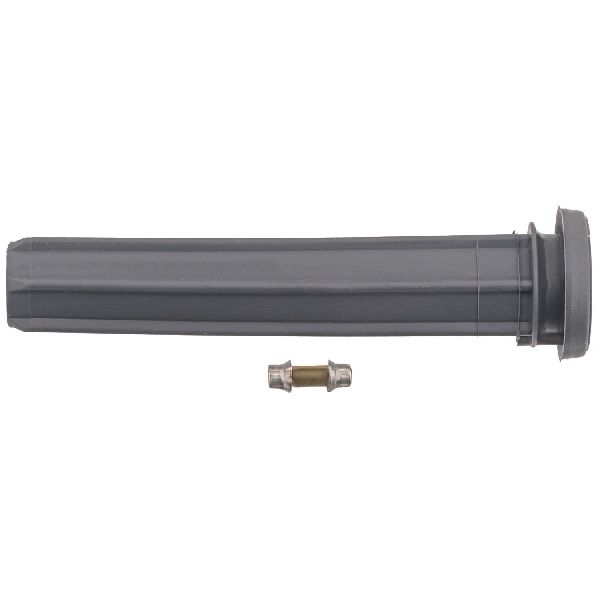
- Faulty Ignition Coil 🔴 High Probability Coil-on-plug systems are exposed to significant heat and vibration, leading to eventual failure of the internal windings. Oil leaks from the valve cover gasket can also saturate the coil and cause it to fail. This is a very common failure point across all Charger engines.
How to confirm: The easiest method is to swap the ignition coil from cylinder 4 with another cylinder (e.g., cylinder 2). Clear the codes and drive the vehicle. If the code changes to P0302, the coil is confirmed to be faulty. This is the first diagnostic step recommended by mechanics and experienced owners.
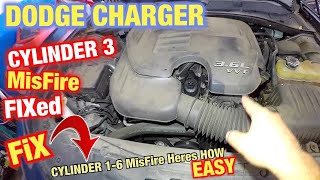
Typical fix: Replace the failed ignition coil. 🎬 Watch: A quick guide to replacing your ignition coil. Many technicians recommend replacing the corresponding spark plug at the same time.
Est. part cost: $30-$80 - Worn or Fouled Spark Plug 🔴 High Probability Spark plugs are a standard maintenance item. As they wear, the gap can widen, or electrodes can become fouled with carbon or oil, preventing a strong spark. An owner complaint for a similar model noted a P0304 code even after a recent tune-up, indicating the system's sensitivity. [ODI #11696128]
How to confirm: After swapping the coil, if the misfire remains on cylinder 4, remove the spark plug. Inspect it for wear, cracking on the ceramic insulator, oil fouling, or excessive carbon buildup. The correct gap should be between 0.024 and 0.071 inches, though this varies by engine.
Typical fix: Replace the spark plug. It is best practice to replace all spark plugs at the same time to ensure consistent performance.
Est. part cost: $10-$25 per plug - Clogged or Faulty Fuel Injector 🟡 Medium Probability
How to confirm: After ruling out the coil and plug, you can test the injector. Use a 'noid light' to confirm the injector is receiving an electrical pulse from the PCM. You can also listen for a clicking sound from the injector with a mechanic's stethoscope. Swapping the injector with another cylinder is also a valid, though more involved, diagnostic step.
Typical fix: Replace the faulty fuel injector. Sometimes, a professional fuel system cleaning can resolve a clogged injector.
Est. part cost: $50-$150
Rare But Worth Checking
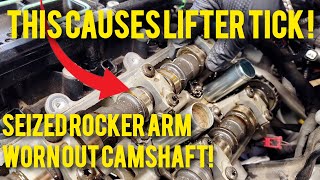
- Rocker Arm / Lifter Failure (3.6L V6): The 3.6L Pentastar V6 is known for rocker arm bearing failure, which creates the 'Pentastar Tick'. A failed rocker arm can't actuate the valve properly, causing a misfire. If left unaddressed, it can damage the camshaft. 🎬 See how a seized rocker arm damages the camshaft. A user on ChargerForums with a P0304 and ticking noise confirmed the fix was replacing the rocker arms and lifters on cylinder 4. This is a more evolved version of the cylinder head issue seen on pre-2014 models (TSB #09-002-14 REV. B).
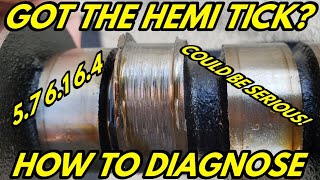
- MDS Lifter / Solenoid Failure (5.7L & 6.4L V8): On HEMI engines, the Multi-Displacement System (MDS) deactivates cylinders, including cylinder 4, to improve fuel economy. The hydraulic lifters associated with the MDS can fail or collapse, or the control solenoid can malfunction. This prevents the valve from opening correctly, causing a persistent misfire. This issue is often preceded by a ticking noise that is distinct from a simple exhaust leak.
- Intake Manifold Gasket Leak: A vacuum leak near the intake port for cylinder 4 can lean out the air/fuel mixture and cause a misfire. This would typically be accompanied by a lean code (P0171 or P0174) as well and a noticeably rough idle.
- Low Engine Compression: Internal mechanical problems like worn piston rings, a leaking head gasket, or a valve that isn't sealing properly can cause a loss of compression, leading to a misfire. A compression test is needed to diagnose this. If compression is low, a cylinder leak-down test can pinpoint the source of the leak.
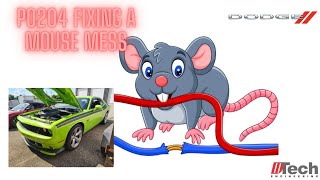
- Damaged Injector Wiring / PCM Driver: In a documented case on a 2019 Challenger with a P0304, rodent damage caused the injector 🎬 Watch: Diagnosing complex wiring and injector issues on a HEMI. wires for cylinders 2 and 4 to short together. Even after repairing the wires, the misfire persisted because the short had damaged the injector driver circuit inside the Powertrain Control Module (PCM), requiring a PCM replacement.
Diagnosis Steps
- Read the code with an OBD-II scanner and note any other codes present, such as P0300 or P0204.
- Listen for an engine tick. A rhythmic ticking noise, especially on the 3.6L V6 or HEMI V8s, can point directly to a valvetrain issue (rocker arm/lifter) and may warrant prioritizing a compression test.
- Swap the ignition coil from cylinder 4 with an adjacent, easily accessible cylinder (like cylinder 2 on the V6 or cylinder 6 on the V8).
- Clear the codes and test drive the vehicle. If the misfire code moves to the new cylinder (e.g., P0302 or P0306), the ignition coil is faulty.
- If the code remains P0304, swap the spark plug from cylinder 4 with the one from the cylinder you just used for the coil swap.
- Clear codes and test drive again. If the misfire moves, the spark plug is the issue.
- If the misfire still remains on cylinder 4, inspect the fuel injector wiring and connector for damage, including rodent damage. Use a noid light to verify the injector is getting a signal.
- If ignition and fuel signals are good, perform a compression test on cylinder 4 to check for mechanical engine problems. Compare the reading to the other cylinders.
- If compression is low, remove the valve cover to visually inspect the rocker arms and camshaft for damage (especially on 3.6L and HEMI engines).
- If compression is low, a cylinder leak-down test can also be performed to determine if the leak is from the intake valve, exhaust valve, piston rings, or head gasket.
Parts You'll Likely Need
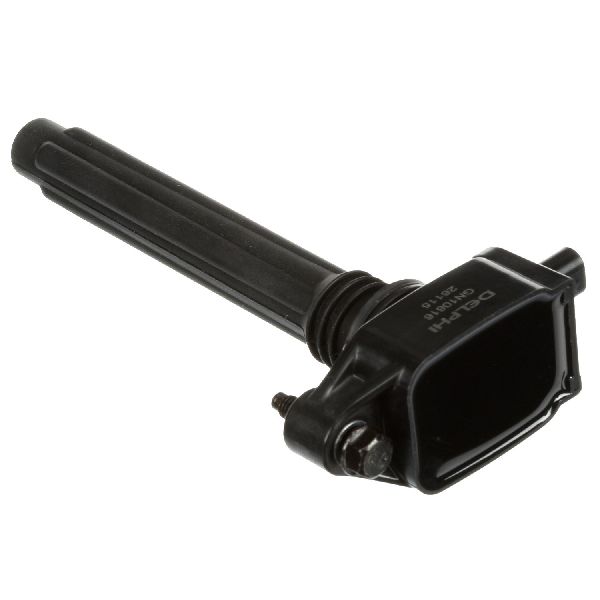
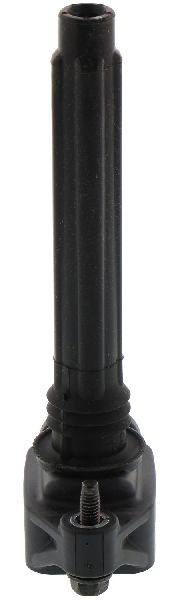
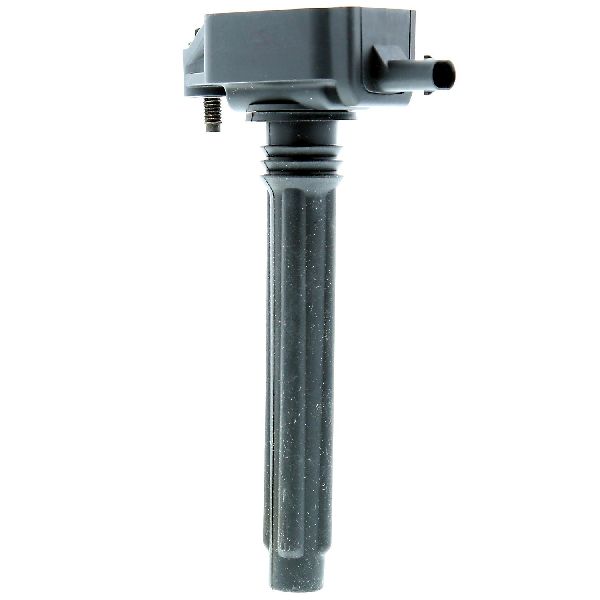
- Ignition Coil (3.6L V6)
(OEM #5149168AJ)— This is the most common failure point for a single-cylinder misfire due to constant exposure to heat and vibration. This part number is specific to the 3.6L V6 engine.
Trusted brands: Mopar, NGK, Denso, Delphi
OEM price range: $50-$90
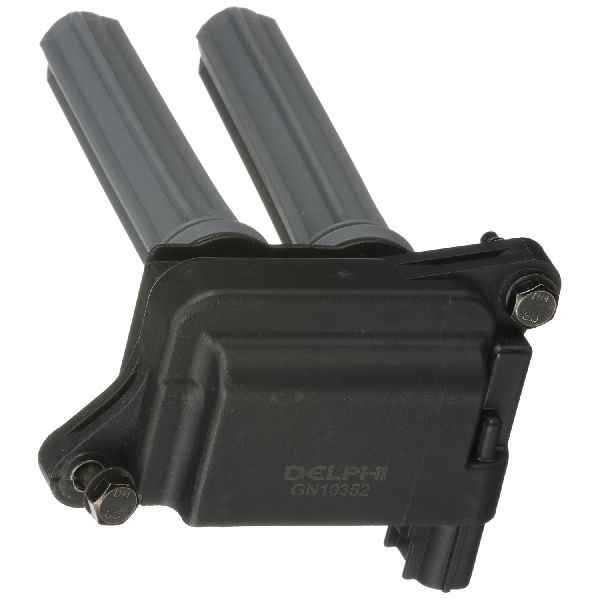
Aftermarket price range: $30-$70 - Ignition Coil (5.7L/6.4L V8)
(OEM #68238603AA)— This is the most common failure point for a single-cylinder misfire on the HEMI V8 engines due to heat and vibration.
Trusted brands: Mopar, NGK, MSD
OEM price range: $40-$70
Aftermarket price range: $25-$50 - Spark Plug (3.6L V6)
(OEM #SP149125AE)— As a routine maintenance item, a worn or fouled spark plug is a very frequent cause of misfires. This part fits the 3.6L engine.
Trusted brands: Mopar (Champion), NGK, Denso
OEM price range: $15-$30
Aftermarket price range: $8-$20 - Spark Plug (5.7L/6.4L/6.2L V8)
(OEM #SP070529AD (5.7L), 68170823AB (6.4L/6.2L))— A worn or fouled spark plug is a very frequent cause of misfires. HEMI engines require specific plugs for pro
Related Codes That Often Appear With This One
- P0300 — If the condition causing the misfire on cylinder 4 is also intermittently affecting other cylinders, a P0300 (Random/Multiple Cylinder Misfire) code may also be stored. [TSB #1400322REVA, 31]
- P0302, P0306 — On 3.6L V6 engines, if the cause is the historical cylinder head issue or a related valvetrain problem on the left bank, misfires on the other cylinders of that bank (2 and 6) may appear alongside P0304.
- P0204 — This code indicates a malfunction in the fuel injector circuit for cylinder 4. It can be triggered along with P0304 if the injector is electrically faulty, has a wiring issue, or if the PCM injector driver has failed.
Technical Service Bulletins (TSBs) & Recalls
- 1400322REVA: Mentions P0304 in a list of all possible cylinder misfire codes, though the bulletin is for an exterior lighting topic, suggesting a potential complex electrical link or a generic code list. [TSB #1400322REVA]
- 09-002-14 REV. B: Although for older models, this TSB is highly relevant as it details the diagnosis and repair (cylinder head replacement) for P0304 on the 3.6L V6 under a warranty extension. [TSB #09-002-14 REV. B]
- 0900214: An earlier version of the TSB for the 3.6L V6 cylinder head issue, specifically calling out P0304. [TSB #0900214]
Platform-Specific Known Issues
- 3.6L Pentastar V6 Valvetrain Failure: While primarily affecting 2011-2014 models with cylinder head wear (TSB #09-002-14 REV. B), the issue evolved in later models to be a failure of the rocker arm bearings. This causes a distinct 'Pentastar Tick' and will eventually lead to a misfire code like P0304 if the failed rocker is on cylinder 4. The fix requires replacing the failed rocker arms, lifters, and potentially the camshaft if it has been damaged by the seized rocker.
- 5.7L/6.4L HEMI V8 MDS Lifter Failure: The Multi-Displacement System (MDS) in HEMI engines can be a source of misfires. A common failure is the collapse of an MDS lifter roller, which stops tracking the camshaft lobe. This results in the valve for that cylinder not opening, causing a dead misfire (like P0304) and a ticking or tapping noise. The repair involves replacing all lifters on the affected bank, the camshaft (which is almost always damaged), the MDS solenoids, and associated gaskets.
Mechanic-Grade Diagnostic Values
- Ignition Coil Primary Resistance — expected: 0.4 to 2.0 ohms. Failure: A reading outside this range indicates a faulty coil.
- Ignition Coil Secondary Resistance — expected: 6,000 to 10,000 ohms. Failure: A reading outside this range suggests the coil's secondary winding has failed.
- Long-Term Fuel Trim (LTFT) — expected: -5% to +5%. Failure: High positive values (e.g., 15%+) suggest the PCM is adding fuel to compensate for a lean condition (like a vacuum leak), while high negative values suggest a rich condition.
Hidden / Shadow Codes Worth Checking
- Mode $06 Misfire Data: Advanced scan tools can access Mode $06 data, which includes raw misfire counts for each individual cylinder, even for misfires not frequent enough to set a specific P030x code. This can help confirm if cylinder 4 is the primary or sole offender. (see via An advanced OBD-II scan tool with Mode $06 capability, such as the dealer-level wiTECH tool or high-end consumer scanners.)
Scan Tool Commands That Help
- wiTECH or equivalent advanced scanner: Cylinder Kill / Power Balance Test — This function allows a technician to disable individual cylinders one by one while the engine is running. When cylinder 4 is deactivated, if there is little to no change in engine RPM and smoothness, it confirms that cylinder 4 was not contributing power, pinpointing the misfire.
- wiTECH or equivalent advanced scanner: Fuel Injector Actuator Test — This bidirectional command allows the technician to command the fuel injector for cylinder 4 to open and close with the engine off. An audible click should be heard from the injector. If no click is heard, it points to a failed injector or a wiring/PCM driver issue.
Wiring & Ground Locations
- Cylinder 4 Location (3.6L V6) — Driver's side of the engine (Bank 2), the middle cylinder (between 2 and 6).. Correctly identifying cylinder 4 is the first step for any hands-on diagnosis, such as swapping coils, plugs, or injectors.
- Cylinder 4 Location (5.7L/6.4L/6.2L V8) — Passenger's side of the engine (Bank 2), the second cylinder from the front (between 2 and 6).. Correctly identifying cylinder 4 is the first step for any hands-on diagnosis. Note that Chrysler considers the driver's side Bank 1 and passenger's side Bank 2 for V8s, which can be confusing.
- Powertrain Control Module (PCM) Ground — A wiring diagram for a 2019 model shows a primary ground (G910/G911) located behind the instrument cluster on the left side of the dash. Engine-related grounds are also critical and are typically found on the engine block and chassis.. A poor ground connection for the PCM or the engine harness can cause erratic behavior, including phantom misfires or weak spark, affecting any cylinder.
Real Owner Repair Stories
- ChargerForums user (2012 Dodge Charger 3.6L V6) — P0304 code and an audible ticking noise from the engine, known as the 'Pentastar Tick'.
❌ Tried (didn't work) Replacing spark plugs, Swapping ignition coils
✅ What actually fixed it The problem was diagnosed as a failed rocker arm on cylinder 4. Replacing the faulty rocker arm resolved both the misfire code and the ticking noise. - YouTube user 'Dasllamas' (2014 Dodge Charger R/T AWD (5.7L V8)) — Previous misfire issues, followed by a constant engine clatter/lifter slap, especially on startup. Diagnosed as a flattened lifter and damaged camshaft lobe due to MDS failure.
❌ Tried (didn't work) Initial diagnosis focused on spark plugs and coil packs for the misfire.
✅ What actually fixed it The required fix was a complete replacement of the camshaft and all lifters. The owner opted for an aftermarket non-MDS camshaft and an MDS delete kit, as the OEM parts were backordered, indicating the commonality of the failure.
OEM Part Supersession History
5149168AI, 5149168AH→5149168AJ— Standard part revision and supplier changes over time for the 3.6L V6 ignition coil.
Heads up: The parts are generally interchangeable for the specified engine, but using the latest revision (AJ) is always recommended.56029129AA, 56029129AB, 56029129AF, 68060346AA→68238603AA— Standard part revision for the HEMI V8 ignition coil, with the change noted after April 2015.
Heads up: The latest part number (68238603AA) is the correct replacement for 2019-2021 models and is backward compatible with earlier specified part numbers.
Helpful Videos

Used OEM Parts in Stock


New Aftermarket Parts Available

The information in this article is provided for general reference and educational purposes only. Vehicle specifications, procedures, and part compatibility can vary by production date, trim level, and region. Always consult your vehicle's factory service manual and verify part numbers before purchasing or performing repairs. Safety-critical components such as airbags, seat belts, and braking systems should be installed by a qualified professional.
- Dodge CHARGER:
- 🎬 Helpful Videos
- 🛍️ Shop This Part
- What's Unique About the 2019-2021 Dodge CHARGER
- Diagnostic Flowchart
- Symptoms You May Notice
- Most Likely Causes
- Rare But Worth Checking
- Diagnosis Steps
- Parts You'll Likely Need
- Related Codes That Often Appear With This One
- Technical Service Bulletins (TSBs) & Recalls
- Platform-Specific Known Issues
- Mechanic-Grade Diagnostic Values
- Hidden / Shadow Codes Worth Checking
- Scan Tool Commands That Help
- Wiring & Ground Locations
- Real Owner Repair Stories
- OEM Part Supersession History
- 🎟️ Get 5% Off