

P0304 on 2011-2018 Dodge Charger: Cylinder 4 Misfire Causes and Fixes
P0304 indicates a misfire in cylinder 4. On most Charger engines, this is commonly due to a bad ignition coil or spark plug. However, on 2011-2013 models with the 3.6L V6, this code can point to a serious, well-documented cylinder head issue that was covered by an extended warranty.
- P0304 is a misfire on cylinder 4. The most common fixes are a new ignition coil or spark plug.
- If you have a 2011-2013 Charger with the 3.6L V6, this code is a strong indicator of a potentially serious cylinder head defect that was covered by an extended warranty (X56).
- Do not ignore a flashing check engine light, as it signals a severe misfire that can destroy your catalytic converter.
- Always start diagnosis by swapping the inexpensive and easy-to-access ignition coil before moving to more complex components.
- On Hemi V8 engines, a faulty MDS solenoid can also be a cause for this specific cylinder misfire.
What's Unique About the 2011-2018 Dodge CHARGER

For the 2011-2018 Dodge Charger, the cause of a P0304 code heavily depends on the engine. While it's a standard ignition or fuel issue on the Hemi V8s, it's a major red flag on early 3.6L Pentastar V6 engines (2011-2013). These specific models suffered from a known manufacturing defect in the left cylinder head, which houses cylinders 2, 4, and 6. This defect could cause excessive wear on valve guides and seats, leading to compression loss and misfires. Chrysler acknowledged this by issuing Technical Service Bulletin #09-002-14 (later revised) and an extended warranty (X56) of 10 years/150,000 miles to cover the repair. [Bulletin #0900214a, Bulletin #0900214]
Diagnostic Flowchart

Tap your situation to follow the diagnostic path that matches what you're seeing on this vehicle.
Generation note: The 2011-2018 year range covers the seventh generation (LD) of the Dodge Charger. While the body style received a significant refresh for the 2015 model year, the underlying platform and engine options remained similar. The most critical distinction for this code is the engine type and model year, specifically the 2011-2013 3.6L V6, which is prone to a specific cylinder head failure.
Symptoms You May Notice
- Rough or shaky idle
- Hesitation or stumbling during acceleration
- Noticeable loss of engine power
- Flashing or solid Check Engine Light
- Increased fuel consumption
- Smell of unburned gasoline from the exhaust
- Audible ticking or tapping sound from the engine (can indicate rocker arm/lifter failure)
- Replacing only spark plugs when the ignition coil is the actual point of failure.
- On 2011-2013 3.6L V6 models, repeatedly replacing ignition coils and injectors without performing a compression or leak-down test to check for the known cylinder head issue.
- Mistaking a failed MDS solenoid on a Hemi V8 for a bad ignition coil, as the symptoms can be identical.
Most Likely Causes

- Faulty Ignition Coil or Spark Plug 🔴 High Probability Coil-on-plug ignition systems are common failure points on modern engines. Wear is accelerated by heat cycles. An owner complaint for a 2017 Charger noted a P0304 code that occurred after a recent tune-up, highlighting the sensitivity of the ignition system. [ODI #11696128]
How to confirm: The easiest way to diagnose a bad coil is to swap the ignition coil from cylinder 4 with another cylinder (e.g., cylinder 2 on a V6 or cylinder 6 on a V8). Clear the codes and drive the vehicle. If the misfire code changes to the cylinder you moved the coil to (e.g., P0302 or P0306), the coil is faulty. A visual inspection of the spark plug can also reveal wear, carbon fouling, or oil contamination.
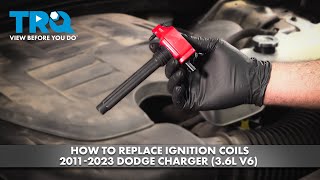
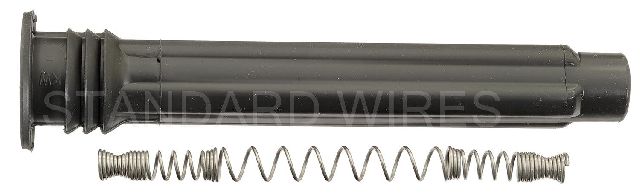
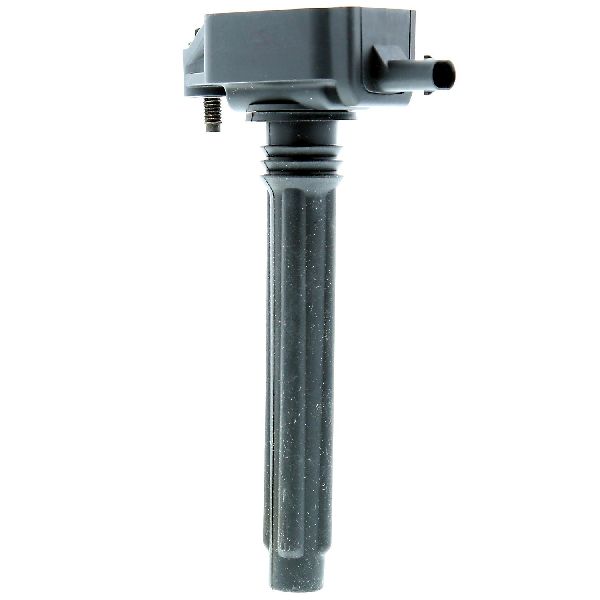
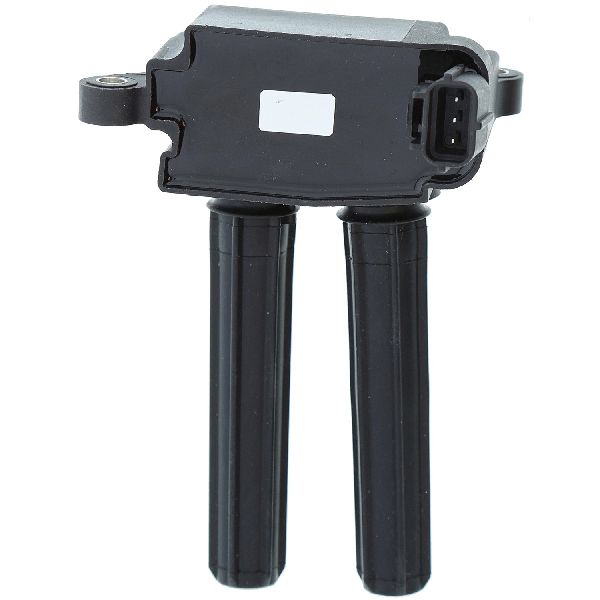
Typical fix: Replace the faulty ignition coil and/or spark plug. 🎬 Watch: Step-by-step guide to replacing ignition coils on the 3.6L V6. It is highly recommended to replace all spark plugs at the same time for even performance and to prevent future misfires. Many owners replace all coils as a preventative measure if they are high mileage.
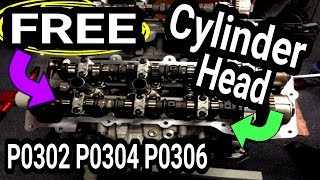
Est. part cost: $25-$75 for a single ignition coil, $5-$20 for a single spark plug. - Failed Left Cylinder Head (2011-2013 3.6L V6 Only) 🔴 High Probability A known manufacturing defect affected the left cylinder head on 2011-2013 Pentastar 3.6L engines, causing premature wear of valve guides and seats. This leads to a loss of compression specifically in cylinders 2, 4, or 6. Chrysler acknowledged this with TSB #09-002-14 and a 10-year/150,000-mile extended warranty (X56). 🎬 See this video for details on the X56 warranty and head failure. [Bulletin #0900214a, Bulletin #0900214]
How to confirm: If basic ignition and fuel checks do not resolve the misfire on an affected 3.6L V6, a cylinder leak-down test is the definitive diagnostic step. The TSB specifies that leakage of 25% or more confirms the need for cylinder head replacement.
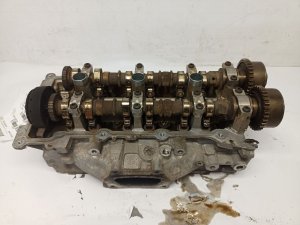
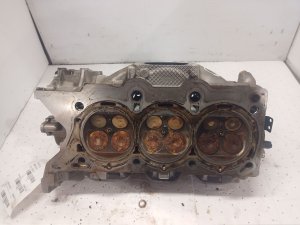
Typical fix: Replacement of the left cylinder head assembly with an updated part. This is a major repair that was covered under the extended warranty.
Est. part cost: $800-$1500+ for the cylinder head assembly and required gaskets. - Clogged or Faulty Fuel Injector 🟡 Medium Probability
How to confirm: After ruling out ignition issues, test the fuel injector. A mechanic can perform a fuel injector balance test. A DIY method is to listen to the injector with a mechanic's stethoscope; it should make a consistent clicking sound. You can also swap the injector with another cylinder to see if the misfire follows, though this is more labor-intensive than swapping a coil.
Typical fix: Clean or replace the faulty fuel injector. It's often recommended to replace them as a set if the vehicle has high mileage.
Est. part cost: $50-$150 for a single fuel injector. - Failed MDS Solenoid (5.7L & 6.4L Hemi V8 Only) ⚪ Low Probability The Multi-Displacement System (MDS) deactivates cylinders (1, 4, 6, and 7) to save fuel. The solenoid for cylinder 4 can fail, get stuck, or become clogged with debris, causing a persistent misfire when the system tries to activate or deactivate the cylinder.
How to confirm: Diagnosis often requires a high-end scan tool capable of commanding the MDS solenoids on and off. Sometimes, a code specific to the MDS solenoid (like P3425) will accompany the misfire code. A visual inspection may reveal physical damage to the solenoid's plastic housing during replacement.
Typical fix: Replace the faulty MDS solenoid for cylinder 4. This involves removing the intake manifold to access the solenoids. 🎬 Watch: How to access and replace the MDS solenoid on a Hemi.
Est. part cost: $40-$100.
Rare But Worth Checking
- Worn Rocker Arms/Lifters (3.6L V6): Separate from the early cylinder head issue, the 3.6L Pentastar is also known for rocker arm bearing failure, which can cause a 'Pentastar Tick'. This failure prevents the valve from opening and closing properly, leading to a misfire. This is more common on mid-to-high mileage engines, including those produced after 2013. The fix involves replacing the affected rocker arms and potentially the camshaft if it has been damaged.
- Vacuum Leak: A vacuum leak, particularly from a failed intake manifold gasket near the cylinder 4 runner, can lean out the air/fuel mixture and cause a misfire. This would typically be accompanied by a lean code (P0171/P0174) and a rough idle.
Diagnosis Steps

- Read the code with an OBD-II scanner to confirm P0304 and check for any other pending or stored codes.
- Identify your engine. If you have a 2011-2013 3.6L V6, be immediately aware of the cylinder head TSB 09-002-14. [Bulletin #0900214]
- Locate cylinder 4. On the 3.6L V6, it is the middle cylinder on the driver's side (left bank). On 5.7L and 6.4L Hemi V8s, it is the second cylinder back on the passenger side (right bank).
- Swap the ignition coil from cylinder 4 with an adjacent, easy-to-access cylinder (like cylinder 2 on V6, or cylinder 6 on V8). Clear the codes and run the engine. If the misfire code moves (e.g., to P0302 or P0306), the coil is bad.
- If the misfire remains on cylinder 4, remove and inspect the spark plug. Look for wear, damage, or fouling (black, wet, or white deposits). Replace if necessary.
- If ignition parts are good, check the fuel injector on cylinder 4. Listen for a steady clicking sound with a stethoscope. Consider swapping it with another cylinder if you have the tools.
- For 2011-2013 3.6L V6: If the misfire persists, a cylinder compression test and a leak-down test are critical. A leak-down rate over 25% points to the cylinder head defect.
- For 5.7L/6.4L Hemi V8: If other tests are inconclusive, investigate the MDS solenoid for cylinder 4. This may require a scan tool that can actuate the solenoids.
- Inspect for vacuum leaks around the intake manifold, especially near the runner for cylinder 4.
Parts You'll Likely Need
- Ignition Coil
(OEM #5149168AJ (for 3.6L V6), 68238603AA (for 5.7L/6.4L Hemi))— This is the most frequent cause of a single-cylinder misfire on most engines.
Trusted brands: Mopar, NGK, Delphi, Denso
OEM price range: $80-$130
Aftermarket price range: $25-$75 - Spark Plug — Spark plugs are a routine maintenance item and a common cause of misfires as they wear out.
Trusted brands: NGK, Champion
OEM price range: $10-$25
Aftermarket price range: $5-$20 - Left Cylinder Head Assembly (3.6L V6)
(OEM #RL141353AC (remanufactured part number cited in TSB))— This is the specific fix for the known defect on 2011-2013 3.6L engines that causes P0304.
Trusted brands: Mopar
OEM price range: $1000-$1600
Aftermarket price range: $700-$1200 - Fuel Injector
(OEM #05184085AD (for 3.6L V6))— Can become clogged or fail electronically
Related Codes That Often Appear With This One
- P0300 — If the underlying cause, like a vacuum leak or major fuel delivery problem, affects multiple cylinders, a P0300 (Random/Multiple Cylinder Misfire) may be stored alongside P0304.
- P0302, P0306 — On 2011-2013 3.6L V6 models, it's common to see misfire codes for other cylinders on the same bank (2, 4, and 6) due to the specific left cylinder head defect. [Bulletin #0900214a]
- P3425 — On Hemi V8 engines, this code (Cylinder 4 Deactivation/Intake Valve Control Circuit) can appear with P0304, pointing directly to a problem with the MDS solenoid for cylinder 4.
Technical Service Bulletins (TSBs) & Recalls
- TSB 09-002-14 (and revisions A and B): Details the diagnosis and repair for the 3.6L V6 left cylinder head, covering P0302, P0304, and P0306 misfires.
- Warranty Bulletin D-14-22 (US) / X56: Announces the 10-year/150,000-mile extended warranty for the left cylinder head on affected 2011-2013 3.6L vehicles.
Platform-Specific Known Issues
- 2011-2013 3.6L Pentastar V6 Cylinder Head Failure: A significant number of these engines experienced premature failure of the left cylinder head, causing misfires on cylinders 2, 4, and/or 6. Chrysler issued TSB #09-002-14 and warranty extension X56 (10 years/150,000 miles) to address this. The repair involves a cylinder leak-down test and, if failure is confirmed, replacement of the entire left cylinder head.
Mechanic-Grade Diagnostic Values
- Ignition Coil Primary Resistance — expected: 0.4 to 2.0 ohms. Failure: A reading outside this range indicates a faulty coil.
- Ignition Coil Secondary Resistance — expected: 6,000 to 10,000 ohms. Failure: A reading outside this range suggests the coil's secondary winding has failed.
- Spark Plug Gap (General) — expected: 0.024 to 0.071 inches. Failure: An incorrect gap can lead to a weak or inconsistent spark.
Hidden / Shadow Codes Worth Checking
- Live Misfire Counters (not a DTC): Dealer-level scan tools like wiTECH can display live and historical misfire counts for each individual cylinder. This is invaluable for diagnosing intermittent misfires or confirming if a repair was successful without waiting for a DTC to be set. (see via Using a Mopar-specific scan tool like wiTECH, navigate to the PCM/ECM, select OBD II monitors, and then select the 'Which cylinder is misfiring' data PID.)
Scan Tool Commands That Help
- wiTECH or equivalent high-end scanner: Cylinder Misfire Counter — Use this function to view real-time misfire events on each cylinder. It helps pinpoint which cylinder is currently misfiring, even if the P0304 code is the only one stored, and can confirm if a repair (like swapping a coil) has moved the problem.
- wiTECH or equivalent high-end scanner: MDS Solenoid Actuation Test (Hemi V8) — For 5.7L or 6.4L engines, this bidirectional command allows a technician to manually activate and deactivate each MDS solenoid, including the one for cylinder 4. If the misfire appears or disappears when the solenoid is commanded, it confirms the solenoid or its circuit is the source of the problem.
Wiring & Ground Locations
- Engine Block to Chassis Ground — On modern Chargers, there is a factory 4-gauge ground cable running from the engine block directly to the chassis. There are also smaller ground straps from the motor mounts to the K-member.. A poor engine ground can cause a weak or inconsistent spark across all cylinders, but it can sometimes manifest as a single-cylinder misfire if the connection to one coil or injector is marginal. Ensuring the main engine ground is clean and tight is a crucial step in diagnosing any electrical or ignition-related fault code.
- Cylinder 4 Ignition Coil Connector — On the 3.6L V6, cylinder 4 is the middle cylinder on the driver's side. On the Hemi V8s, it's the second cylinder from the front on the passenger side. The connector plugs directly onto the ignition coil.. The two primary wires to check are the ASD (Auto Shutdown) relay output, which provides 12V+ power, and the coil driver signal wire from the PCM. A voltage drop or intermittent signal on these wires will cause a misfire on cylinder 4 only.
Real Owner Repair Stories
- ChargerForums user (2012 Dodge Charger 3.6L V6) — P0304 code and audible ticking noise from the engine ('Pentastar Tick').
❌ Tried (didn't work) Replacing spark plugs, Swapping ignition coils
✅ What actually fixed it The problem was ultimately diagnosed as a failed rocker arm on cylinder 4. The owner replaced all 24 rocker arms and lifters as a preventative measure, which resolved both the ticking noise and the P0304 misfire code.
OEM Part Supersession History
5149168AH, 5149168AI→5149168AJ— Standard revision and improvement of the ignition coil for the 3.6L Pentastar V6 engine.5184296AE, 5184296AF, 5184296AG→5184296AH— Updated design for the rocker arms in the 3.6L Pentastar V6 to address premature bearing failure that caused the 'Pentastar Tick'.
Heads up: The newer 'AH' rocker arms are the recommended replacement for all 2011+ 3.6L engines experiencing this issue.
Model Year Variations Within This Range
- 2015-2018: The 2015 model year brought a major exterior and interior refresh. An 8-speed automatic transmission became standard across all engine options. While the core engines (3.6L, 5.7L, 6.4L) remained, the 6.2L Supercharged Hellcat V8 was introduced. The post-2013 3.6L V6 engines use the updated cylinder head design, making the specific P0304 failure from 2011-2013 less likely.
- 2011-2014: These earlier models of the 7th generation featured the original body style. The 2011-2013 3.6L V6 engines are the ones specifically affected by the left cylinder head defect outlined in TSB #09-002-14. [Bulletin #0900214a]
Helpful Videos
Used OEM Parts in Stock


New Aftermarket Parts Available




The information in this article is provided for general reference and educational purposes only. Vehicle specifications, procedures, and part compatibility can vary by production date, trim level, and region. Always consult your vehicle's factory service manual and verify part numbers before purchasing or performing repairs. Safety-critical components such as airbags, seat belts, and braking systems should be installed by a qualified professional.
- Dodge CHARGER:
- 🎬 Helpful Videos
- 🛍️ Shop This Part
- What's Unique About the 2011-2018 Dodge CHARGER
- Diagnostic Flowchart
- Symptoms You May Notice
- Most Likely Causes
- Rare But Worth Checking
- Diagnosis Steps
- Parts You'll Likely Need
- Related Codes That Often Appear With This One
- Technical Service Bulletins (TSBs) & Recalls
- Platform-Specific Known Issues
- Mechanic-Grade Diagnostic Values
- Hidden / Shadow Codes Worth Checking
- Scan Tool Commands That Help
- Wiring & Ground Locations
- Real Owner Repair Stories
- OEM Part Supersession History
- Model Year Variations Within This Range
- 🎟️ Get 5% Off