

P0304 on 2011-2014 Dodge Avenger: Cylinder 4 Misfire Causes and Fixes
P0304 indicates a misfire in cylinder 4. On the 2.4L engine, this is typically a bad spark plug or ignition coil. On the 3.6L V6, while still possibly a plug or coil, it is a strong indicator of a serious, well-documented cylinder head defect that was covered by an extended warranty (X56). It can also be caused by a failing rocker arm, another known issue on the 3.6L engine.
- P0304 is a misfire on cylinder 4.
- The most likely cause on a 2.4L engine is a simple fix like a spark plug or ignition coil.
- On a 3.6L V6 (especially 2011-2013 models), P0304 is a major red flag for a known cylinder head defect, which is a very expensive repair if the extended warranty has expired.
- A flashing check engine light indicates a severe misfire that can quickly damage your catalytic converter. Avoid driving if this occurs.
- Always diagnose by swapping the ignition coil before buying new parts. If the misfire moves, you've found the problem.
What's Unique About the 2011-2014 Dodge AVENGER
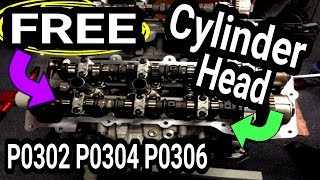
For the 2011-2014 Dodge Avenger, the cause of P0304 depends heavily on the engine. While both the 2.4L I4 and 3.6L V6 can suffer from common ignition failures, the 3.6L Pentastar V6 has a widely known, serious issue. Early versions of this engine (2011-2013 models) were prone to a left cylinder head failure that specifically causes misfires on cylinders 2, 4, and 6. This was so common that Chrysler issued Technical Service Bulletin #09-002-14 REV. B and a 10-year/150,000-mile warranty extension (code X56) 🎬 Watch: Learn about the X56 warranty and cylinder head issues. to address it. Additionally, the 3.6L Pentastar is known for rocker arm failures, which cause a distinct ticking noise and can eventually lead to misfires if not addressed.
Diagnostic Flowchart
Tap your situation to follow the diagnostic path that matches what you're seeing on this vehicle.
Symptoms You May Notice
- Rough or vibrating idle.
- Hesitation or stumbling during acceleration.
- Flashing Check Engine Light.
- Noticeable loss of engine power.
- Reduced fuel economy.
- Unpleasant fuel smell from the exhaust.
- Audible ticking sound from the engine, especially on the 3.6L V6 (indicative of rocker arm failure).
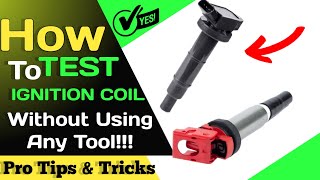
- Replacing only the spark plug without testing the ignition coil first. The coil is a very common failure point and easy to diagnose by swapping its position. 🎬 See this simple trick to test ignition coils without tools.
- On a 3.6L V6, replacing ignition and fuel parts repeatedly without considering the two most likely culprits: the cylinder head defect or a failed rocker arm. A leak-down test and listening for ticking are crucial diagnostic steps.
- Mistaking the 'Pentastar Tick' from a failing rocker arm for a less serious issue like lifter noise.
Most Likely Causes
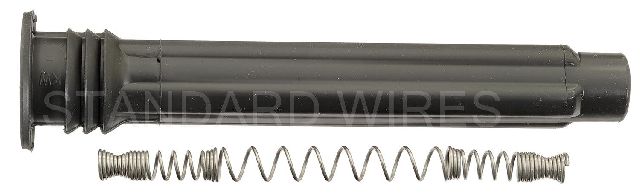
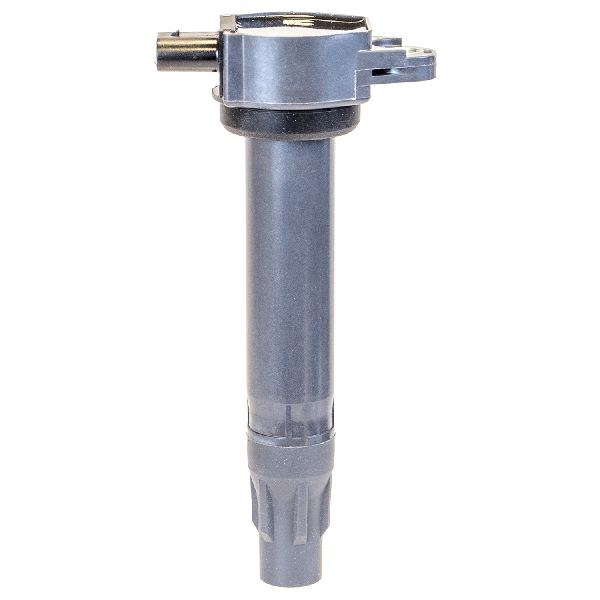
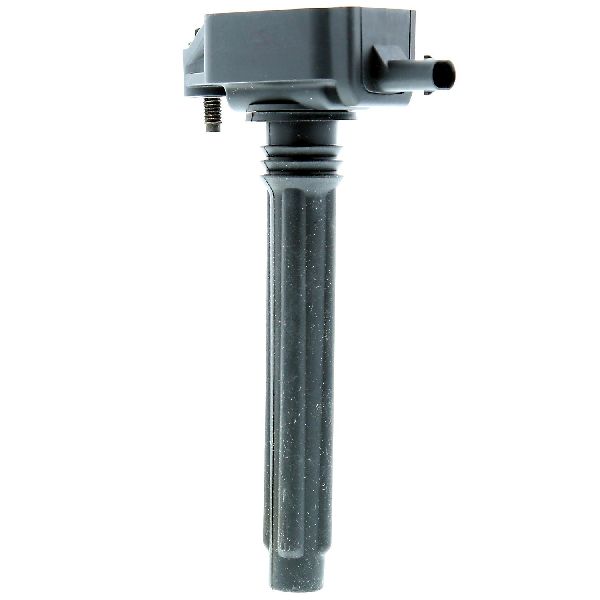
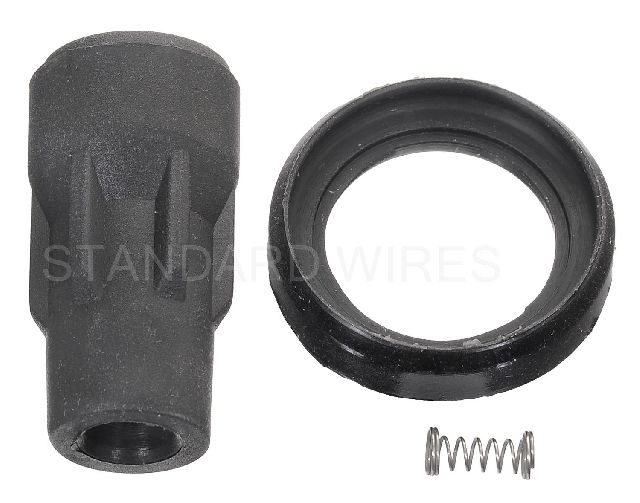
- Faulty Ignition Coil 🔴 High Probability Coil-on-plug systems are common failure points due to constant heat cycles in the engine bay. This is a primary suspect for a single-cylinder misfire on both the 2.4L and 3.6L engines.
How to confirm: Swap the ignition coil from cylinder 4 with another cylinder (e.g., cylinder 2). Clear the codes and drive the vehicle. If the code changes to P0302, the ignition coil is the culprit.
Typical fix: Replace the faulty ignition coil. It is often recommended to replace all coils if they are original and high-mileage.
Est. part cost: $25-$60 - Worn Spark Plug 🔴 High Probability Spark plugs are a regular maintenance item that wear out over time. A worn electrode, incorrect gap, or carbon fouling prevents a strong spark.
How to confirm: Remove the spark plug from cylinder 4 and inspect it for wear, fouling (black, oily, or white deposits), or damage to the insulator. Compare it to a new plug.
Typical fix: Replace the spark plug. It is best practice to replace all spark plugs at the same time for consistent performance.
Est. part cost: $8-$25 per plug - Defective Left Cylinder Head (3.6L V6 Only) 🟡 Medium Probability A known manufacturing defect in early (2011-2013) 3.6L Pentastar engines caused premature wear of valve guides and seats on the left cylinder head, which houses cylinders 2, 4, and 6. This was addressed by TSB #09-002-14 REV. B.
How to confirm: After ruling out ignition and fuel issues, a cylinder leak-down test is the definitive diagnostic step. The TSB specifies that leakage of 25% or greater confirms the failure.
Typical fix: Replace the left cylinder head with the updated part (e.g., Mopar P/N 68141353AC, which supersedes RL141353AC). This is a major repair.
Est. part cost: $800-$1500 for the head, plus gaskets and bolts - Failed Camshaft Follower/Rocker Arm (3.6L V6) 🟡 Medium Probability The 3.6L Pentastar engine is widely known for premature failure of the rocker arm roller bearings, creating the infamous 'Pentastar Tick'. The worn bearing creates excess clearance, leading to noise and eventually, if the roller seizes, it can damage the camshaft lobe and cause a persistent misfire.
How to confirm: A distinct ticking or tapping sound from the top of the engine is the primary symptom. The sound may be louder on a cold start. Visual inspection after removing the valve cover will show a rocker arm with excessive play.
Typical fix: Replace all 24 rocker arms and any damaged camshafts. This is a labor-intensive job. Using updated Mopar rocker arms (Part # 68066266AD) is recommended.
Est. part cost: $150-$300 for a full set of rocker arms - Clogged or Faulty Fuel Injector ⚪ Low Probability
How to confirm: Listen to the injector with a mechanic's stethoscope for a consistent clicking sound. For a more definitive test, swap the injector from cylinder 4 with another cylinder to see if the misfire code follows. This is more labor-intensive, especially on the V6.
Typical fix: Replace the faulty fuel injector.
Est. part cost: $40-$100
Rare But Worth Checking
- Vacuum Leak: A leak in a vacuum hose or the intake manifold gasket can introduce unmetered air, leaning out the air/fuel mixture and causing a misfire.
- Low Fuel Pressure: A weak fuel pump or clogged fuel filter can cause a lean condition and misfires, but this would typically affect multiple cylinders and set a P0300 code as well.
- Cracked Oil Filter Housing (3.6L V6): The original plastic oil filter/cooler housing on the 3.6L is prone to cracking, which can cause oil and coolant leaks. While not a direct cause of P0304, it's a very common related issue on this engine that owners should be aware of. Upgraded aluminum housings are available.
Diagnosis Steps
- Read the codes with an OBD-II scanner and note any other codes present, especially P0300, P0302, or P0306.
- For the 3.6L V6, identify cylinder 4. It is the middle cylinder on the front bank of the engine (closest to the radiator).
- For the 2.4L I4, cylinder 4 is the cylinder closest to the driver's side.
- Swap the ignition coil from cylinder 4 with an adjacent cylinder (e.g., cylinder 2). Clear the codes, run the engine, and see if the misfire code moves to the new cylinder (e.g., P0302). If it does, the coil is bad.
- If the misfire remains on cylinder 4, remove and inspect the spark plug. Look for wear, damage, or deposits. Replace the spark plug if it is worn or fouled.
- If the coil and plug are good, check the wiring and connector to the ignition coil and fuel injector for damage or corrosion.
- Listen to the fuel injector on cylinder 4 with a stethoscope. It should have a steady, rhythmic clicking. Compare its sound to an adjacent injector.
- (3.6L V6 Only) Listen for a distinct ticking sound from the valve cover area. If present, this strongly suggests a failing rocker arm, which requires removing the valve cover for inspection.
- (3.6L V6 Only) If the above steps do not resolve the issue, perform a cylinder leak-down test. This test pressurizes the cylinder and measures how much pressure is lost. Leakage over 25% strongly indicates the cylinder head failure described in TSB #09-002-14 REV. B.
- If a leak-down test passes, a compression test can help identify other mechanical engine problems.
Parts You'll Likely Need
- Ignition Coil
(OEM #Mopar #4606824AC (for 2.4L), Mopar #5149168AI (for 3.6L))— This is a very common failure point causing a single-cylinder misfire. It's easy to diagnose and replace.
Trusted brands: Mopar, NGK, Denso, Delphi
OEM price range: $50-$90
Aftermarket price range: $25-$60 - Spark Plug
(OEM #Mopar #SP00ZFR5AP (for 2.4L), Mopar #SP149125AE (for 3.6L, typically NGK Laser Iridium))— Spark plugs are a routine maintenance item. A worn or fouled plug is a primary cause of misfires.
Trusted brands: NGK, Champion, Bosch
OEM price range: $15-$25
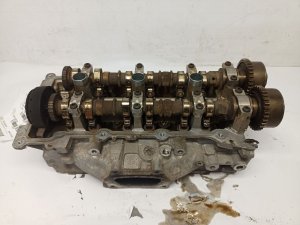
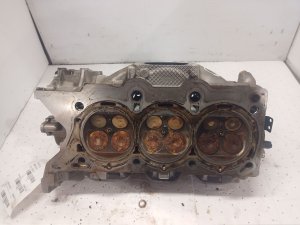
Aftermarket price range: $8-$15 - Left Cylinder Head (3.6L V6)
(OEM #68141353AC (supersedes RL141353AC))— Required to fix the known valve seat/guide defect on 2011-2013 3.6L engines that causes persistent P0302, P0304, or P0306 codes.
Trusted brands: Mopar
OEM price range: $1000-$1500
Aftermarket price range: $800-$1200 - Camshaft Follower / Rocker Arm Set (3.6L V6)
(OEM #Mopar #68066266AD (updated part))— Required to fix the 'Pentastar Tick' caused by failing roller bearings. It is best practice to replace all 24 when the valve covers are off.
Trusted brands: Mopar, Melling
OEM price range: $200-$300
Aftermarket price range: $150-$250
Related Codes That Often Appear With This One
- P0300 — If the underlying cause, like a vacuum leak or low fuel pressure, affects multiple cylinders, a general 'Random/Multiple Cylinder Misfire' code will be stored alongside the specific cylinder code.
- P0302, P0306 (3.6L V6 only) — These codes often appear with P0304 on the 3.6L V6 because all three cylinders (2, 4, and 6) are located on the problematic left cylinder head.
Technical Service Bulletins (TSBs) & Recalls
- 09-002-14 REV. B: MIL Illumination: P0300, P0302, P0304 or P0306 (X56 Warranty Extension)
Platform-Specific Known Issues
- TSB #09-002-14 REV. B (3.6L V6 Only): This Technical Service Bulletin addresses a Malfunction Indicator Lamp (MIL) for misfire codes P0300, P0302, P0304, or P0306. It applies to 2011-2013 Avengers with the 3.6L engine. The procedure involves performing a cylinder leak-down test and replacing the left cylinder head if leakage exceeds 25%.
- Warranty Extension X56 (3.6L V6 Only): Chrysler extended the warranty on the left cylinder head for affected 2011-2013 vehicles to 10 years or 150,000 miles. This coverage has expired for most, if not all, of these vehicles due to age, meaning the owner is now responsible for the costly repair.
- 'Pentastar Tick' (3.6L V6 Only): Independent of the cylinder head issue, the 3.6L engine is notorious for a ticking noise caused by failing rocker arm bearings. If ignored, the rocker arm can seize and destroy the camshaft lobe, leading to a misfire code like P0304. This is a separate mechanical failure from the TSB-related head problem.
Mechanic-Grade Diagnostic Values
- Fuel Pressure (3.6L V6) — expected: 407 kPa +/- 34 kPa (59 psi +/- 5 psi). Failure: Pressure significantly below this range indicates a weak fuel pump or clogged filter.
- Ignition Coil Primary Resistance — expected: Approximately 0.4 to 2.0 ohms. Failure: A reading of OL (over-limit/infinite resistance) or zero ohms indicates a failed coil.
- Ignition Coil Secondary Resistance — expected: Approximately 6,000 to 10,000 ohms. Failure: A reading significantly outside this range suggests the coil's secondary winding is faulty.
- Long-Term and Short-Term Fuel Trims — expected: Between -5% and +5% at idle. Failure: Consistently high positive values (e.g., > +10%) on the bank with cylinder 4 can indicate a vacuum leak or fuel delivery issue causing a lean misfire.
- Cylinder Leak-down Test (3.6L V6) — expected: Under 15-20% leakage. Failure: Leakage of 25% or greater is the threshold specified by Chrysler's TSB to confirm cylinder head failure.
Hidden / Shadow Codes Worth Checking
- Mode 6, Test ID $A2-$A7: This is not a DTC, but a section of scan tool data showing raw misfire counts for each cylinder (Cylinder 1 is $A2, Cylinder 2 is $A3, etc.). Cylinder 4 is Test ID $A5. Viewing this data can show if other cylinders are misfiring at a rate not yet high enough to set a code. (see via A professional scan tool with Mode 6 data capability is required.)
Scan Tool Commands That Help
- wiTECH or equivalent professional scanner: Cylinder Contribution / Power Balance Test — Used to graphically display the relative power contribution of each cylinder, helping to visually confirm the severity of the misfire on cylinder 4 compared to others.
- wiTECH or equivalent professional scanner: Fuel Injector Kill — Allows the technician to disable the fuel injector for cylinder 4. If there is no change in engine RPM or smoothness, it confirms that cylinder was not contributing, pointing to an issue with spark, fuel, or compression on that cylinder.
- wiTECH or equivalent professional scanner: Fuel Pump Actuation — Used during a fuel system flow test to run the fuel pump on command, helping to diagnose if the pump can supply adequate volume and pressure.
Wiring & Ground Locations
- Cylinder 4 Ignition Coil Location (3.6L V6) — Top of the left valve cover (front bank, closest to radiator), middle position.. This is the physical location of the ignition coil that must be tested or replaced for a P0304 code.
- Cylinder 4 Ignition Coil Location (2.4L I4) — Top of the engine, fourth from the passenger side (closest to the driver's side).. This is the physical location of the ignition coil that must be tested or replaced for a P0304 code.
- PCM (Powertrain Control Module) Location — Left rear of the engine compartment.. The PCM sends the signal to fire the coil and injector for cylinder 4. The wiring harness from the PCM to these components can be a point of failure.
- PCM Connector C2, Pin for Coil Driver 4 — The specific pin on the PCM connector that controls the ignition coil for cylinder 4. A wiring diagram is needed for the exact pin number.. Used for advanced electrical diagnosis to test for a signal from the PCM, or for a short/open in the wire between the PCM and the coil.
- Ground G303 — Located on the left 'B' pillar.. While not a primary engine ground, poor body grounds can cause a variety of difficult-to-diagnose electrical issues that could potentially affect PCM operation or sensor readings.
Real Owner Repair Stories
- YouTube channel 'Shahani Motors' (2019 Dodge Grand Caravan 3.6L (same engine and common issue)) — P0302 code (misfire on cylinder 2, same bank as cylinder 4) and misfire felt at idle. Drove fine at speed.
❌ Tried (didn't work) The previous mechanic had already replaced the ignition coil on the misfiring cylinder, which did not fix the problem.
✅ What actually fixed it A cylinder leak-down test was performed. The misfiring cylinder could not hold pressure and air was heard escaping from the exhaust pipe. This confirmed a mechanical failure (bad exhaust valve or valve seat), requiring cylinder head removal/replacement.
"I Checked Everything" — The Actual Cause
- On the 3.6L V6, it is common for all external ignition and fuel components to test perfectly, and for a vacuum smoke test to show no leaks, yet the P0304 persists. The actual cause is often an internal mechanical failure of the cylinder head (bad valve seat) or a failing rocker arm. This can only be found with a compression test and, more definitively, a cylinder leak-down test.
When the Usual Fixes Don't Work
- While the standard diagnostic procedure for a single-cylinder misfire is to check the spark plug and ignition coil, this is often a wasted effort on 2011-2013 3.6L V6 models. There are countless owner and technician accounts where new plugs and coils were installed with no change, only for a leak-down test to later confirm the well-documented cylinder head failure. A mechanic in one documented case noted that a new coil had already been installed by a previous person, and the true cause was found to be a leaking exhaust valve seat, confirming the need for a cylinder head replacement.
OEM Part Supersession History
68141353AA, 68141353AB, RL141353AC→Mopar #68141353AC— The original left cylinder head for the 3.6L V6 had a design/manufacturing defect causing premature valve seat wear. The 'AC' revision is the updated part designed to fix this issue.
Heads up: Using an older revision or a remanufactured head that has not been updated with improved valve seats will likely result in the same failure recurring.68020481AA, 68020481AB→Mopar #68020481AC— Standard part updates and revisions for the fuel pump module assembly.
Heads up: While electrically similar, physical fitment of the module in the tank can vary. Always verify by VIN.
Model Year Variations Within This Range
- 2011-2013 (3.6L V6): These model years are most susceptible to the left cylinder head defect causing misfires on cylinders 2, 4, and 6. Chrysler issued a 10-year/150,000-mile extended warranty (X56) for this specific issue.
- 2011: The 2011 model year was a major refresh. It introduced the 283-hp 3.6L Pentastar V6 and 6-speed automatic transmission, which have their own unique and common causes for P0304 (cylinder head, rocker arms) not present on earlier Avenger generations.
- 2014: By 2014, the 3.6L V6 engines were factory-equipped with the redesigned cylinder head, making the valve seat failure less common, though not impossible. On these later models, a P0304 is more likely to be a failing rocker arm or a standard ignition/fuel component.
Helpful Videos

Used OEM Parts in Stock


New Aftermarket Parts Available

The information in this article is provided for general reference and educational purposes only. Vehicle specifications, procedures, and part compatibility can vary by production date, trim level, and region. Always consult your vehicle's factory service manual and verify part numbers before purchasing or performing repairs. Safety-critical components such as airbags, seat belts, and braking systems should be installed by a qualified professional.
- Dodge AVENGER:
- 🎬 Helpful Videos
- 🛍️ Shop This Part
- What's Unique About the 2011-2014 Dodge AVENGER
- Diagnostic Flowchart
- Symptoms You May Notice
- Most Likely Causes
- Rare But Worth Checking
- Diagnosis Steps
- Parts You'll Likely Need
- Related Codes That Often Appear With This One
- Technical Service Bulletins (TSBs) & Recalls
- Platform-Specific Known Issues
- Mechanic-Grade Diagnostic Values
- Hidden / Shadow Codes Worth Checking
- Scan Tool Commands That Help
- Wiring & Ground Locations
- Real Owner Repair Stories
- "I Checked Everything" — The Actual Cause
- When the Usual Fixes Don't Work
- OEM Part Supersession History
- Model Year Variations Within This Range
- 🎟️ Get 5% Off