

P0304 on 2018-2025 Chrysler Pacifica: Cylinder 4 Misfire Causes and Fixes
P0304 on a Chrysler Pacifica indicates a cylinder 4 misfire. While this can be caused by a simple bad spark plug or ignition coil, it is frequently linked to a more serious and widely documented failure of the cylinder head or head gasket on the 3.6L Pentastar engine, even on later model years. This issue often presents with coolant loss and a misfire on cold starts.
- P0304 signifies a misfire on cylinder 4, the middle cylinder on the rear bank of the engine.
- While the cause can be a simple ignition part like a coil or spark plug, do not rule out a more serious problem.
- This specific vehicle and engine combination has a known issue with cylinder head and head gasket failures that directly cause a P0304 code.
- Check for signs of oil and coolant mixing (milky oil, oily coolant) as a key indicator of the more severe failure.
- Ignoring a persistent misfire can lead to very expensive catalytic converter damage.
What's Unique About the 2018-2025 Chrysler PACIFICA

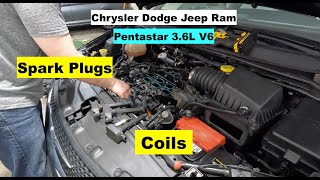
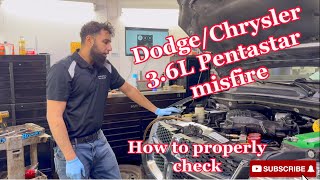
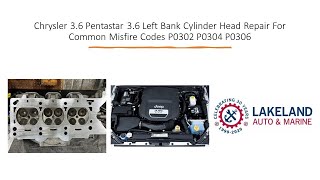
While any vehicle can experience a misfire from a bad spark plug, the 2018-2025 Chrysler Pacifica with the 3.6L Pentastar V6 has a well-documented history of P0304 codes stemming from a much more serious issue: cylinder head failure. Owner complaints and mechanic reports frequently point to leaking head gaskets or other internal cylinder head faults, particularly on the rear bank of cylinders (which includes cylinder 4). A Reddit thread with a purported dealer technician claims this is a common failure between 50-70k miles due to a defective head design that damages the gasket. This means that while starting with ignition components is logical, owners should be highly aware of this more severe underlying possibility, 🎬 See a technician explain common Pentastar misfire codes and causes. especially if basic fixes don't resolve the issue or if there is accompanying coolant loss.
Diagnostic Flowchart

Tap your situation to follow the diagnostic path that matches what you're seeing on this vehicle.
Symptoms You May Notice

- Check Engine Light is on or flashing
- Rough idle or rough running engine.
- Noticeable loss of power and acceleration
- Engine hesitation or stumbling
- Vehicle enters 'limp mode' with a turtle icon on the dashboard.
- Smell of unburned fuel from the exhaust
- Shaking or heavy vibration on cold starts that may resolve after a few seconds
- Audible 'water running' sound from the dashboard area after startup, potentially indicating coolant in the system
- Excessive white smoke from the exhaust, especially on startup, indicating coolant is being burned in the cylinder
- Replacing only the ignition coil and spark plug without investigating further. As noted in owner complaint ODI #11484102, this may provide a temporary fix, but the misfire often returns if the root cause is a failing cylinder head.
- Assuming the problem is solved after swapping a coil and the code disappears, only for it to return a few hundred miles later, as described by a Durango owner on Reddit. This points to an intermittent mechanical issue like a head gasket leak.
Most Likely Causes

- Failed Cylinder Head / Leaking Head Gasket 🔴 High Probability The 3.6L Pentastar V6 has a known history of cylinder head issues, which can cause coolant to leak into the cylinder, leading to a misfire. This is corroborated by numerous owner complaints and mechanic reports specifically for the Pacifica. A technician on a forum noted that 2019+ models commonly blow head gaskets between 50-70k miles due to a head design flaw. The failure often presents as a misfire on a cold start that clears as the engine warms up, accompanied by gradual coolant loss.
How to confirm: Check for milky, frothy residue on the oil cap or dipstick, or an oily film in the coolant reservoir. A professional can perform a cylinder compression test and a leak-down test to confirm an internal engine seal failure. A definitive diagnosis can be made by using a borescope to look for coolant pooled on top of the piston in cylinder 4 after the vehicle has sat overnight. A shiny, clean piston head compared to others can also indicate a coolant leak has been steam-cleaning it.
Typical fix: Replacement of the cylinder head assembly and all associated gaskets. This is a major repair. Due to the nature of the failure, some mechanics recommend replacing the entire cylinder head rather than just the gasket. The redesigned left cylinder head for earlier Pentastar models with this issue is part number RL141353AC.
Est. part cost: $600-$1500 - Faulty Ignition Coil 🟡 Medium Probability
How to confirm: Swap the ignition coil from cylinder 4 with another cylinder (e.g., cylinder 2). Clear the codes and drive the vehicle. If the code changes to P0302, the ignition coil is faulty. Also inspect the coil boot for oil saturation, which indicates a leaking valve cover gasket that can cause the coil to fail.
Typical fix: Replace the faulty ignition coil. The Mopar OEM part number for later models is 68223569AD (supercedes AB and AC). Torque the coil bolt to 71 in-lbs (8 Nm).
Est. part cost: $40-$90 - Worn or Defective Spark Plug 🟡 Medium Probability TSB #09-013-20 REV. A was issued for 2020-2021 Pacificas because a manufacturing issue could cause internal cracks in the spark plugs, leading to misfires. The bulletin advises replacing all six plugs if a misfire is detected.
How to confirm: Remove and inspect the spark plug from cylinder 4. Look for heavy carbon buildup, oil fouling, coolant residue (which may appear as a white, chalky deposit), or a cracked insulator. Compare it to a plug from a different cylinder.
Typical fix: Replace the spark plug. It is recommended to replace all six spark plugs at the same time if they are near their service interval. The recommended OEM plug is a Champion Double Platinum, part number RE14PLP5.
Est. part cost: $10-$25 per plug - Clogged or Faulty Fuel Injector ⚪ Low Probability
How to confirm: A professional can perform a fuel injector balance test with a capable scan tool. A more involved DIY method is to swap the cylinder 4 injector with another cylinder and see if the misfire code follows.
Typical fix: Replace the faulty fuel injector.
Est. part cost: $50-$120
Rare But Worth Checking
- Failed Oil Cooler: Mentioned in one NHTSA complaint (ODI #11552765) in conjunction with a P0304 code and failed cylinder head. A failing oil cooler on the Pentastar is a common issue where its plastic housing cracks, causing coolant and oil to mix, which can lead to overheating and related engine damage that could present as a misfire.
- Vacuum Leak: A leak in the intake manifold gasket near the cylinder 4 runner can lean out the air/fuel mixture and cause a misfire. This is less common than the primary causes but still possible.
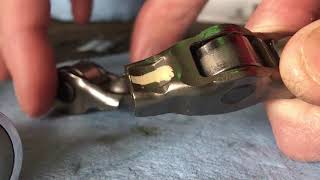
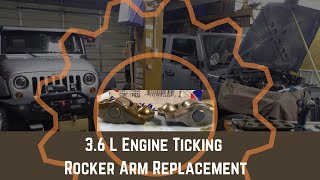
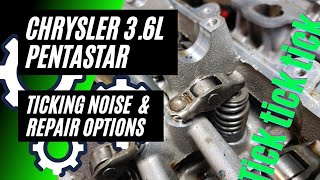
- Rocker Arm/Lifter Failure: A persistent ticking sound accompanying the misfire can be a sign of rocker arm or lifter failure, another known issue with the 3.6L Pentastar engine. This can lead to improper valve operation and a misfire. On 2016+ engines with Variable Valve Lift (VVL), the complex rocker arms can fail, causing intermittent loss of compression.
Diagnosis Steps
- Scan for Codes: Use an OBD-II scanner to confirm P0304 and check for any other pending or active codes. Note if the misfire count is highest during a cold start.
- Visual Inspection & Fluid Check: Before touching parts, check the coolant level in the reservoir; a low level is a major red flag for a head gasket leak. Inspect the oil dipstick and oil filler cap for a milky, white, or brown sludge. Check the coolant for an oily sheen. These are strong indicators of a failed head gasket or cylinder head.
- Swap the Coil: Swap the ignition coil from cylinder 4 with one from another cylinder on the same bank (like cylinder 2 or 6). Clear the codes and run the engine. If the code changes to P0302 or P0306, you have a bad coil.
- Inspect and Replace Spark Plug: If the coil is good, remove the spark plug from cylinder 4. Look for coolant fouling (clean, white deposits), oil fouling (black, greasy), or a cracked insulator. If the plug is old or fouled, replace it. Per TSB 09-013-20 REV. A, it's best practice to replace all six.
- Borescope Inspection (Critical Step): If a head gasket leak is suspected, let the vehicle sit overnight. Then, remove the spark plug from cylinder 4 and insert a borescope. Look for any visible pooling of green or pink liquid (coolant) on the piston head. This is definitive proof of a leak.
- Perform Compression/Leak-Down Test: If you suspect an internal issue and a borescope is unavailable, a cylinder compression test and a leak-down test are necessary. Low compression in cylinder 4 will confirm a mechanical fault (e.g., bad rings, valves, or head gasket leak). A leak-down test can pinpoint where the pressure is escaping (intake, exhaust, or crankcase).
- Check Fuel System: If ignition and mechanical checks pass, the issue could be fuel-related. The fuel injector on cylinder 4 should be tested for proper operation, which can be done by swapping it with another cylinder.
- Seek Professional Help: If a head gasket or cylinder head failure is confirmed, it's time to take the vehicle to a qualified mechanic, as this is a complex and labor-intensive repair.
Parts You'll Likely Need
- Cylinder Head Assembly
(OEM #68293288AA (Right/Rear Bank for Pacifica))— This is the most probable high-cost failure for a persistent P0304 on this engine, as documented in multiple owner complaints and mechanic reports. Cylinder 4 is on the right (rear) bank.
Trusted brands: Mopar
OEM price range: $800-$1500
Aftermarket price range: $600-$1200 - Ignition Coil
(OEM #5149199AA)— A common cause for any isolated cylinder misfire and a logical first part to check/replace.
Trusted brands: Mopar, NGK, Denso
OEM price range: $70-$110
Aftermarket price range: $40-$90 - Spark Plug
(OEM #RE14PLP5 (Champion 7440))— A standard maintenance item and a frequent cause of misfires. TSBs have been issued for defective plugs on this engine.
Trusted brands: Champion, NGK
OEM price range: $15-$25
Aftermarket price range: $10-$20 - Head Gasket Set
(OEM #68284904AB (Right/Rear Bank Gasket))— Required for a cylinder head replacement job.
Trusted brands: Mopar, Fel-Pro
OEM price range: $150-$250
Aftermarket price range: $100-$200
Related Codes That Often Appear With This One
- P0300 — If the condition causing the misfire, such as a widespread vacuum leak or a head gasket leaking into multiple cylinders, is not isolated to just cylinder 4, a P0300 (Random/Multiple Cylinder Misfire) code may also be present.
- P0302, P0306 — Cylinders 2, 4, and 6 are on the same cylinder bank (the left or rear bank). A failing head gasket on this bank can often affect more than one of these cylinders, leading to multiple codes. The cylinder head failure on early Pentastars was most common on the left bank.
- P0456 — A small EVAP leak code can sometimes appear alongside misfire codes, though not directly related, it points to the general aging of rubber and plastic components under the hood.
Technical Service Bulletins (TSBs) & Recalls
- 09-013-20 REV. A: Addresses misfire codes on 2020-2021 models due to internally cracked spark plugs and recommends replacing all six.
- 09-011-25: Mentions misfire DTCs related to engine issues on 2020 models.
- 09-002-14: Related to the cylinder head defect on earlier (2011-2013) Pentastar engines, establishing the history of this type of failure.
Platform-Specific Known Issues
- Documented Cylinder Head/Head Gasket Failures: Numerous owner and technician reports confirm that even on 2018+ models, a P0304 code is a strong indicator of a leaking head gasket, often requiring a major repair under 100,000 miles.
- TSB for Cracked Spark Plugs: TSB 09-013-20 REV. A specifically calls out that 2020-2021 models may have been built with defective spark plugs that can crack internally, causing misfires. The official fix is to replace all six plugs.
Mechanic-Grade Diagnostic Values
- Ignition Coil Primary Resistance — expected: 0.46 Ohms. Failure: A reading significantly higher or lower than the specification.
- Ignition Coil Secondary Resistance — expected: 15.70 kOhms. Failure: A reading significantly higher or lower than the specification.
- Fuel Pressure — expected: Approximately 58 psi (400 kPa). Failure: Low fuel pressure can cause lean misfires across multiple cylinders, but a failing regulator could potentially affect one bank more than another.
Hidden / Shadow Codes Worth Checking
- Mode $06, Test ID $0A-$0C: Mode $06 provides access to raw, non-continuous monitor test results. For misfires, this includes Test IDs like $0A (misfire data for last/current driving cycle), which can show misfire counts per cylinder before they are high enough to trigger a P030x code. Component IDs correspond to specific cylinders. (see via An advanced OBD-II scanner or dealer-level tool like wiTECH that can display Mode $06 test results.)
Scan Tool Commands That Help
- wiTECH or equivalent advanced scanner: Cylinder Misfire / Contribution Test — This function actively measures the contribution of each cylinder to engine speed. It can confirm in real-time that cylinder 4 is underperforming compared to the others, helping to verify the P0304 code is accurate and not an intermittent sensor glitch.
- wiTECH or equivalent advanced scanner: Fuel Injector Kill — This bidirectional command allows a technician to disable the fuel injector for cylinder 4. If the engine's idle quality does not change when the injector is killed, it confirms that the cylinder was not contributing in the first place, pointing away from a fuel injector issue and more towards spark or compression.
Wiring & Ground Locations
- Engine Ground Strap (68316197AA) — There are multiple grounds, but a key engine ground strap connects from the engine block to the chassis on the driver's side of the engine compartment.. A poor engine ground can cause erratic behavior in the ignition system, leading to weak spark and intermittent misfires. While it would typically cause random misfires (P0300), a corroded or loose ground could potentially affect the cylinder with the weakest coil or highest resistance first.
- Cylinder 4 Ignition Coil Connector — On the rear cylinder bank (closest to the firewall), middle cylinder. Access requires removal of the upper intake manifold.. This is the direct electrical connection for the ignition coil. The pins should be checked for corrosion or damage. Voltage tests can be performed here to ensure the coil is receiving the correct trigger signal from the PCM.
Real Owner Repair Stories
- Reddit user Sounds-Made-Up (2017 Chrysler Pacifica, 120,000 miles) — Sudden shimmy at highway speeds, rough running, Check Engine Light on.
❌ Tried (didn't work) Replacing the spark plug in the misfiring cylinder (#3 in this case, but the diagnostic process is identical).
✅ What actually fixed it After the new spark plug didn't work, the owner swapped the ignition coil from the misfiring cylinder with another one. The misfire code followed the coil to the new cylinder (P0301). Replacing the faulty ignition coil resolved the issue. - Reddit user flakonatorchi (2017 Chrysler Pacifica Limited) — Check engine light with misfire code, smell of gas when driving.
❌ Tried (didn't work) Replaced all spark plugs and ignition coils.
✅ What actually fixed it A subsequent scan revealed a code for fuel injector 4. The owner noticed a small fuel leak near the front fuel injectors. Replacing the leaking fuel injector ultimately resolved the problem.
OEM Part Supersession History
68223569AB, 68223569AC→68223569AD— Component revision for improved reliability or manufacturing process change.
Heads up: The earlier part numbers are compatible but the latest revision (AD) is recommended for replacement.Unknown (early Pentastar left cylinder head)→RL141353AC— Redesigned with hardened valve guides and seats to prevent overheating and failure, which caused misfires.
Heads up: This applies to early (2011-2013) Pentastar engines but is relevant context for the known history of head failures on the platform. Pacifica models from 2018-2025 use a later generation engine, but similar head/gasket issues are still reported.
Model Year Variations Within This Range
- 2016-present: For the 2016 model year, the 3.6L Pentastar was upgraded with a two-stage variable valve lift (VVL) system, a higher compression ratio (11.3:1 vs 10.2:1), and cooled EGR. This adds complexity to the valvetrain, introducing VVL solenoids and multi-lift rocker arms as potential, though less common, points of failure for misfires.
Helpful Videos

We Have This Part in Stock



The information in this article is provided for general reference and educational purposes only. Vehicle specifications, procedures, and part compatibility can vary by production date, trim level, and region. Always consult your vehicle's factory service manual and verify part numbers before purchasing or performing repairs. Safety-critical components such as airbags, seat belts, and braking systems should be installed by a qualified professional.
- Chrysler PACIFICA:
- 🎬 Helpful Videos
- 🛍️ Shop This Part
- What's Unique About the 2018-2025 Chrysler PACIFICA
- Diagnostic Flowchart
- Symptoms You May Notice
- Most Likely Causes
- Rare But Worth Checking
- Diagnosis Steps
- Parts You'll Likely Need
- Related Codes That Often Appear With This One
- Technical Service Bulletins (TSBs) & Recalls
- Platform-Specific Known Issues
- Mechanic-Grade Diagnostic Values
- Hidden / Shadow Codes Worth Checking
- Scan Tool Commands That Help
- Wiring & Ground Locations
- Real Owner Repair Stories
- OEM Part Supersession History
- Model Year Variations Within This Range
- 🎟️ Get 5% Off