

P0304 on 2010-2017 Chevrolet Silverado 1500: Cylinder 4 Misfire Causes and Fixes
P0304 on a Chevy Silverado most often means you need to replace the spark plug and/or ignition coil for cylinder 4. However, on V8 models with Active Fuel Management (AFM), this code can be a sign of a more serious internal engine problem with a failed AFM lifter, a widely documented issue for this platform.
- P0304 is a misfire on cylinder 4, which is the second cylinder from the front on the passenger side of V8 engines.
- Start your diagnosis with the simple and cheap fixes: check the spark plug wire, swap the ignition coil with another cylinder, and inspect the spark plug.
- If you hear a ticking or tapping noise from the engine along with the misfire, the cause is very likely a failed Active Fuel Management (AFM) lifter, which is a common but expensive repair.
- Do not drive the vehicle if the Check Engine Light is flashing, as this can destroy your catalytic converter, adding significant cost to the repair.
What's Unique About the 2010-2017 Chevrolet SILVERADO 1500

For the V8 engines in this generation of Silverado, the Active Fuel Management (AFM) system is a major factor. This system deactivates cylinders 1, 7, 4, and 6 to save fuel during light-load conditions. The specialized hydraulic lifters it uses are a known major failure point. A collapsed or stuck AFM lifter is a very common cause for a P0304 code on these trucks, often accompanied by a distinct ticking noise that may disappear as the failure becomes complete. This is a more serious and expensive repair than a simple spark plug change and can lead to bent pushrods or camshaft damage if ignored.
Diagnostic Flowchart

Tap your situation to follow the diagnostic path that matches what you're seeing on this vehicle.
Generation note: This range covers two Silverado 1500 generations. The 2010-2013 models are part of the GMT900 platform, while the 2014-2017 models are the K2XX platform with EcoTec3 engines (5.3L L83, 6.2L L86). While many causes are the same, the K2XX generation has particularly well-documented issues with Active Fuel Management (AFM) lifters causing this code, addressed in TSBs like 15-06-01-002D. The direct injection systems on K2XX models can also suffer from carbon buildup on intake valves and injector seals, which can lead to misfires.
Symptoms You May Notice

- Rough or shaky idle, sometimes causing the whole truck to shake.
- Engine hesitates or stumbles during acceleration.
- Noticeable loss of power, especially when towing or climbing hills.
- Flashing or solid Check Engine Light.
- Smell of unburned fuel from the exhaust.
- Reduced fuel economy.
- Engine ticking or tapping noise, especially on cold starts, which may go away as the engine warms up or as the lifter completely fails.
- Service StabiliTrak or Traction Control lights may illuminate on the dash as a result of the engine running rough.
- Replacing only the spark plug when the ignition coil is the actual problem.
- Replacing ignition components repeatedly when the underlying cause is a failed AFM lifter, leading to the code returning quickly.
- Assuming a ticking noise is normal 'lifter tick' when it is an early warning sign of AFM lifter failure.
Most Likely Causes

- Worn or Fouled Spark Plug 🔴 High Probability Spark plugs are a regular maintenance item. The OEM-specified ACDelco Iridium plugs can become fouled or worn, leading to a weak or nonexistent spark. There has been a part number change from 41-110 to 41-162, with some owners reporting better performance with the older 41-110 plugs.
How to confirm: Remove the spark plug from cylinder 4 and inspect it for wear, oil fouling, or damage. An oil-soaked plug can point to internal engine issues like a bad valve cover gasket or AFM-related problems. Compare it to a new plug or one from a healthy cylinder.
Typical fix: Replace the spark plug for cylinder 4. It is best practice to replace all spark plugs at the same time. 🎬 See a mechanic demonstrate how to change spark plugs on this truck. Use of ACDelco Iridium plugs (41-110 or 41-162) is recommended.
Est. part cost: $15-$25 per plug - Failed Ignition Coil 🔴 High Probability
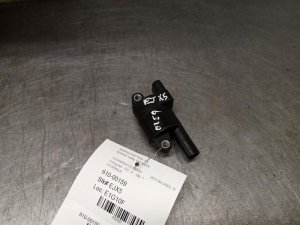
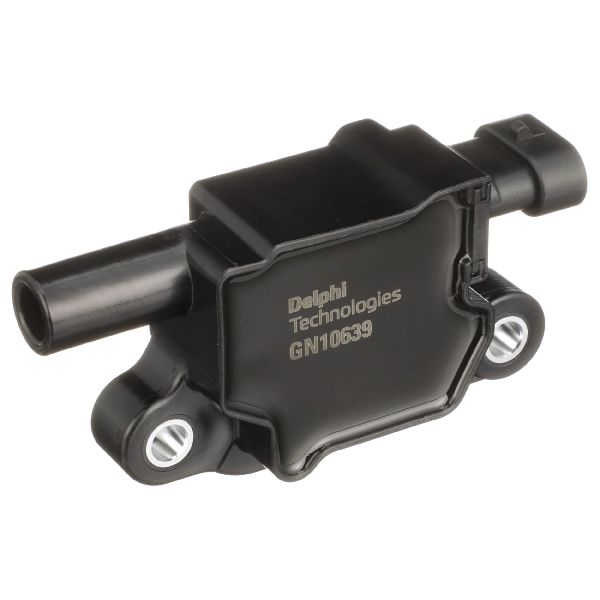
How to confirm: Swap the ignition coil from cylinder 4 with another cylinder (e.g., cylinder 2). Clear the codes and drive the vehicle. If the code changes to P0302, the coil is faulty.
Typical fix: Replace the faulty ignition coil. The OEM part is often ACDelco P/N 12611424.
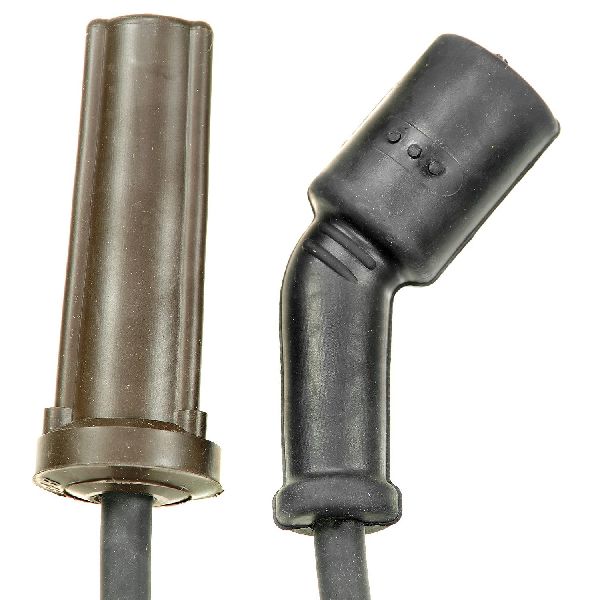
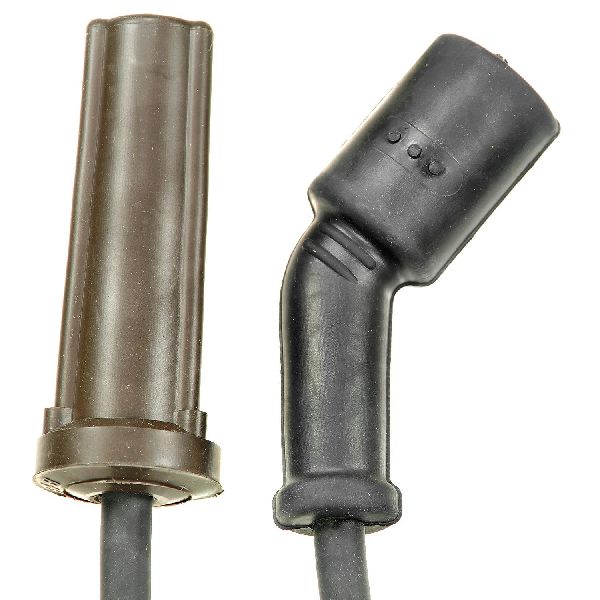
Est. part cost: $40-$80 - Bad Spark Plug Wire 🟡 Medium Probability A GM Technical Service Bulletin (TSB #PIP4819A) specifically calls out loose or faulty spark plug wire terminals as a cause for misfire codes on these trucks. The connection can feel secure but may not be making proper contact.
How to confirm: Inspect the wire for cylinder 4 for visible damage, cracks, or burns. Ensure it is securely clicked onto both the spark plug and the ignition coil. A definitive 'click' should be felt and heard.
Typical fix: Replace the spark plug wire set. ACDelco is a common OEM choice.
Est. part cost: $50-$100 for a set - Failed Active Fuel Management (AFM) Lifter 🟡 Medium Probability The V8 engines use special hydraulic lifters for the AFM system that are known to collapse or get stuck, particularly on cylinders 1, 4, 6, and 7. This is a widely documented problem for this platform, with multiple TSBs (e.g., 15-06-01-002D) and even class-action lawsuits related to the issue.
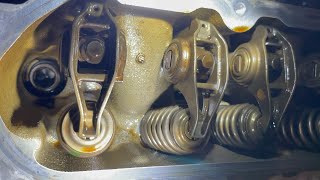
How to confirm: This often starts with a rhythmic ticking noise from the engine, especially when cold. A mechanic can confirm by removing the valve cover to observe a non-moving or lazy rocker arm, or by finding a bent pushrod. A compression test will show low or zero compression on the affected cylinder.
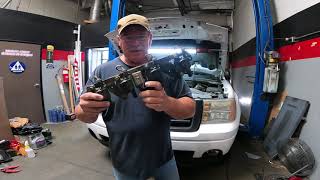
Typical fix: This is a major repair requiring replacement of the affected bank of AFM lifters, lifter guides, and often the Valve Lifter Oil Manifold (VLOM). The camshaft must be inspected for damage and replaced if any lobes are worn. Many owners opt to perform an 'AFM delete' at this time, replacing all AFM components with standard lifters and a non-AFM camshaft. 🎬 Watch this walkthrough on diagnosing and replacing a collapsed AFM lifter.
Est. part cost: $400-$800 for lifters, guides, gaskets, and VLOM - Clogged or Faulty Fuel Injector ⚪ Low Probability On 2014+ models with direct injection (EcoTec3), the injector seals can fail, causing a compression leak and subsequent misfire. Carbon buildup is also a concern.
How to confirm: Listen for a consistent clicking sound from the injector. You can swap the injector with another cylinder to see if the misfire code follows, though this is more labor-intensive than swapping a coil. For direct injection models, a failed seal may show evidence of carbon blow-by around the injector base in the cylinder head.
Typical fix: Clean or replace the fuel injector for cylinder 4. For direct injection, the high-pressure fuel lines and seals must also be replaced.
Est. part cost: $50-$150
Rare But Worth Checking
- Bent Pushrod: Often a direct result of a collapsed or stuck AFM lifter. When the lifter fails, the pushrod can lose its seat and bend. This is confirmed by removing the valve cover. The pushrod itself is inexpensive, but it's a symptom of the larger lifter issue.
- Intake Manifold Gasket Leak: A vacuum leak near the cylinder 4 intake runner can lean out the air/fuel mixture and cause a misfire. This can be diagnosed with a smoke test.
- Low Engine Compression: Beyond a failed lifter, internal mechanical issues like a worn piston ring, a leaking head gasket, or a problem with the cylinder head valves can cause a loss of compression, leading to a misfire. A compression test will diagnose this.
- Failed Valve Lifter Oil Manifold (VLOM): The VLOM directs oil pressure to activate and deactivate the AFM lifters. It contains solenoids and a small filter screen that can become clogged with debris, starving the lifters of oil and causing them to fail. This is often replaced during an AFM lifter job.
Diagnosis Steps
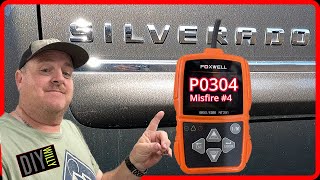
- Read the code with an OBD-II scanner to confirm P0304 and check for any other codes like P0300. Note freeze frame data if available.
- Note the cylinder location: On V8 models, cylinder 4 is the second cylinder from the front on the passenger side of the engine.
- Listen for a distinct, rhythmic ticking noise from the passenger side valve cover area. This is a strong indicator of a potential AFM lifter failure.
- Inspect the spark plug wire for cylinder 4. Ensure it's fully seated on the coil and plug with an audible 'click'. Check for any damage. (Ref: TSB #PIP4819A)
- Swap the ignition coil from cylinder 4 with another cylinder (e.g., cylinder 2). Clear the codes and run the engine. If the code returns as P0302, the ignition coil is bad and needs replacement.
- If the misfire stays on cylinder 4, remove and inspect the spark plug. Look for signs of wear, carbon fouling, or oil contamination. Replace if necessary.
- If ignition parts are good, perform an engine compression test on cylinder 4. A healthy cylinder should have 150+ PSI. Very low or zero compression strongly points to a mechanical failure like a stuck AFM lifter, bent pushrod, or valve issue.
- If compression is good, suspect a fuel issue. Listen for a steady clicking sound from the fuel injector. You can check its resistance with a multimeter or swap it with another cylinder's injector (more labor-intensive).
- If an AFM lifter is suspected, the next step is to remove the passenger side valve cover to visually inspect the valve train. With the engine cranking or running, check for a rocker arm that is not moving or has excessive play, which confirms a collapsed lifter or bent pushrod.
Parts You'll Likely Need
- Ignition Coil
(OEM #12611424)— Ignition coils are a common failure point that directly cause misfires. Swapping coils between cylinders is a key diagnostic step. - Spark Plug
(OEM #41-110 or 41-162)— Spark plugs are a routine maintenance item and the first part to check. A fouled or worn plug is a very common cause of P0304. - AFM Lifters (Set of 8) — For V8 models, a collapsed AFM lifter is a frequent and serious cause of this code. Lifters are typically replaced as a full bank (or all 16).
- Spark Plug Wires (Set) — A loose or damaged spark plug wire can cause a misfire, and GM has issued a TSB regarding this specific issue.
- Valve Lifter Oil Manifold (VLOM) — The VLOM controls the AFM lifters and is often replaced preventatively during a lifter replacement job, as its failure can cause the lifters to fail.
Related Codes That Often Appear With This One
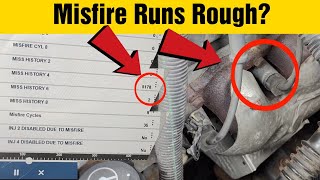
- P0300 — If the misfire is severe or intermittent, a P0300 (Random/Multiple Cylinder Misfire) may appear alongside P0304, especially in the early stages of an AFM lifter failure before the problem isolates to one cylinder.
- P050D — This code for 'Cold Start Rough Idle' can sometimes accompany misfire codes, pointing towards issues that are more pronounced before the engine warms up, such as carbon buildup, injector problems, or early-stage lifter failure.
- P0171/P0174 — If the misfire is caused by a vacuum leak (like an intake gasket), the engine may run lean, triggering 'System Too Lean' codes for Bank 1 or Bank 2.
Technical Service Bulletins (TSBs) & Recalls
- PIP4819A: Addresses misfires caused by loose spark plug wire terminals.
- 15-06-01-002D: Details diagnosis and repair for engine misfire/tick noise caused by a collapsed/stuck AFM lifter.
- 15-06-01-002H: A later revision of the AFM lifter bulletin.
- PIP5163H: A preliminary bulletin discussing potential cylinder bore damage as a cause for misfires and oil consumption, often related to AFM issues.
Platform-Specific Known Issues

- AFM Lifter Failure: The most significant issue for V8 models is the failure of Active Fuel Management (AFM) lifters. Cylinders 1, 4, 6, and 7 are deactivated during light-load operation. The lifters for these cylinders can become stuck or collapse, resulting in a dead cylinder with no valve actuation. This often presents as a P0304 and can be preceded by a ticking noise. The repair is labor-intensive and costly, often exceeding $3,500 at a dealership. There are multiple TSBs from GM regarding this issue, including 15-06-01-002D and PIP5163H.
- Oil Consumption: Related to the AFM system, some engines experience higher than normal oil consumption. Low or dirty oil can accelerate the failure of AFM lifters.
- Carbon Buildup (2014+ EcoTec3): The direct-injection engines introduced in 2014 are more susceptible to carbon buildup on the intake valves and injector tips. This can disrupt airflow or fuel spray, leading to misfires. A failed injector seal can also cause a compression leak, triggering a P0304.
Mechanic-Grade Diagnostic Values
- Low-Pressure Fuel System (2010-2013 GMT900) — expected: 55-65 PSI (key on, engine off). Failure: Pressure is below 50 PSI or drops off quickly.
- High-Pressure Fuel System (2014-2017 K2XX, at idle) — expected: Approx. 700-900 PSI. Failure: Pressure fails to build or is excessively high.
- Ignition Coil Primary Resistance — expected: 0.4 - 2.0 Ohms. Failure: Reading is outside of the specified range, indicating an internal short or open.
- Ignition Coil Secondary Resistance — expected: 6,000 - 11,000 Ohms (6-11 kOhms). Failure: Reading is significantly higher or lower, or shows an open circuit.
- Ignition Coil Ground Fault Test — expected: Open Line (OL) between primary/secondary terminals and the coil's ground strap/mounting point.. Failure: Any resistance reading (e.g., 14 MOhms as seen in one case) indicates an internal short to ground.
Hidden / Shadow Codes Worth Checking
- Mode $06, TID $0C: Provides raw misfire counts for the current or last driving cycle for each cylinder before the count is high enough to trigger a formal P030x trouble code. (see via A professional scan tool or advanced OBD-II app that can access Mode $06 data. The component ID will correspond to the cylinder (e.g., $A4 for cylinder 4 on GMLAN systems).)
Scan Tool Commands That Help
- GDS2 / Tech2 or equivalent professional scanner: Cylinder Power Balance Test — To graphically see the contribution of each cylinder to crankshaft speed. A cylinder with a misfire will show a significant drop in contribution compared to others, confirming the location of the misfire.
- GDS2 / Tech2 or equivalent professional scanner: AFM Solenoid Control — When diagnosing a suspected AFM-related issue, a technician can command the VLOM solenoids on and off to check for response and listen for mechanical changes, helping to isolate a faulty solenoid from a stuck lifter.
- GDS2 / Tech2 or equivalent professional scanner: Fuel Pump Relay / FPCM Command — To test the low-pressure fuel delivery circuit. Commanding the pump on should result in an audible noise from the tank and specified fuel pressure at the rail, verifying the control module and pump are electrically functional.
Wiring & Ground Locations
- G103 — On the front of the passenger side cylinder head.. This is a primary engine ground on the same side as cylinder 4. Poor contact here can affect ignition and sensor performance for the entire cylinder bank.
- G102 — On the driver's side of the engine block, sometimes specified as grounding the ignition coils.. Although on the opposite bank, this ground is critical for the overall ignition system. A poor connection could potentially cause erratic behavior.
- Frame Rail Ground (Passenger Side) — On the frame rail, accessible from the passenger side wheel well. The main negative battery cable often connects here.. Corrosion at this major grounding point on K2XX (2014+) trucks is a known cause of widespread, intermittent electrical problems that can include engine control issues. It's often overlooked in favor of engine-block grounds.
Real Owner Repair Stories
- Chevrolet Forum user (2016 Silverado, 56,000 miles) — Started with a valve lifter tapping noise isolated to cylinder #4. The tapping noise then stopped, and the engine began running rough with a flashing P0304 code.
❌ Tried (didn't work) N/A, diagnosis was direct.
✅ What actually fixed it The diagnosis was a complete failure/collapse of the AFM lifter for cylinder 4. The story confirms that the disappearance of the ticking noise, followed by a hard misfire, signals the final failure of the lifter. - BobIsTheOilGuy forum user (mechanic) (2008 Silverado 1500 5.3L) — Lifter clacking noise and misfire.
❌ Tried (didn't work) A previous mechanic had replaced all AFM lifters with aftermarket (Melling) parts, which failed again after only ~15,000 miles.
✅ What actually fixed it As a 'band-aid' repair for a good customer, the mechanic removed the valve cover, used a hardened tool to manually 'un-stick' the collapsed lifter, and then used tuning software to permanently disable the AFM system to prevent the lifter from collapsing again. This highlights the risk of some aftermarket lifters and provides an unconventional, non-parts-replacement fix.
OEM Part Supersession History
12611424 (GM)→D510C (ACDelco)— This is the ACDelco service part number for the original GM ignition coil.
Heads up: These are cross-compatible part numbers for the same square-style ignition coil.Various 'Old Design' Fuel Pumps→13513407 (Short Box Crew Cab) / 13510918 (Standard Box Crew Cab), among others.— A new design fuel pump module was released to correct an issue with vapor buildup in the fuel feed line, which could cause hesitation or stalling in high ambient temperatures.
Heads up: This is a direct upgrade; the new design should be used. Documented in TSB PIP5411E.
Model Year Variations Within This Range
- 2014-2017 (K2XX Platform): These models feature the Gen V EcoTec3 engines (L83/L86) with direct injection. This introduces a high-pressure fuel system (700+ PSI) and makes carbon buildup on the back of intake valves a potential cause for misfires, which is not a factor on earlier port-injected engines.
- 2010-2013 (GMT900 Platform): These models use Gen IV V8 engines with port fuel injection. Fuel system diagnosis is simpler, focusing on a single low-pressure system operating around 55-65 PSI. They are not susceptible to intake valve carbon buildup in the same way as direct-injected engines.
Helpful Videos
Used OEM Parts in Stock


New Aftermarket Parts Available


The information in this article is provided for general reference and educational purposes only. Vehicle specifications, procedures, and part compatibility can vary by production date, trim level, and region. Always consult your vehicle's factory service manual and verify part numbers before purchasing or performing repairs. Safety-critical components such as airbags, seat belts, and braking systems should be installed by a qualified professional.
- Chevrolet SILVERADO 1500:
- 🎬 Helpful Videos
- 🛍️ Shop This Part
- What's Unique About the 2010-2017 Chevrolet SILVERADO 1500
- Diagnostic Flowchart
- Symptoms You May Notice
- Most Likely Causes
- Rare But Worth Checking
- Diagnosis Steps
- Parts You'll Likely Need
- Related Codes That Often Appear With This One
- Technical Service Bulletins (TSBs) & Recalls
- Platform-Specific Known Issues
- Mechanic-Grade Diagnostic Values
- Hidden / Shadow Codes Worth Checking
- Scan Tool Commands That Help
- Wiring & Ground Locations
- Real Owner Repair Stories
- OEM Part Supersession History
- Model Year Variations Within This Range
- 🎟️ Get 5% Off