

P0304 on 2004-2011 Chevrolet Malibu: Cylinder 4 Misfire Causes and Fixes
P0304 on a 2004-2011 Chevy Malibu means cylinder 4 is misfiring. The most common cause is a failed ignition coil or a worn-out spark plug. Swapping the coil from cylinder 4 with another cylinder is a quick way to diagnose the problem. For 2.4L I4 engines, cylinder 4 is on the driver's side. For V6 engines, it's typically on the front bank.
- P0304 indicates a misfire specifically in cylinder 4.
- The most likely culprits are a bad ignition coil or a worn-out spark plug.
- A simple and effective diagnostic step is to swap the cylinder 4 ignition coil with another cylinder's coil to see if the misfire code follows it.
- Driving with a flashing Check Engine Light can cause expensive damage to your catalytic converter and should be avoided.
- Always identify your engine (I4 or V6) before buying parts, as ignition components differ between them.
What's Unique About the 2004-2011 Chevrolet MALIBU

The 2004-2011 Chevrolet Malibu spans two generations (6th and 7th) with different primary engines. The 6th generation (2004-2007) used the 2.2L Ecotec I4, 3.5L High Value V6, and 3.9L High Value V6. The 7th generation (2008-2011) primarily used the 2.4L Ecotec I4 and the 3.6L High Feature V6. The V6 models from 2004-2010 use spark plug wires, which are a common failure point, whereas the I4 and the later 3.6L V6 engines use a more modern coil-on-plug design. The 3.6L V6 is also a direct injection engine, making it prone to carbon buildup on intake valves, which can also cause misfires. Identifying your specific engine is crucial for accurate diagnosis.
Diagnostic Flowchart

Tap your situation to follow the diagnostic path that matches what you're seeing on this vehicle.
Generation note: This range covers the 6th (2004-2007) and 7th (2008-2012) generations of the Chevrolet Malibu. The 6th gen V6 engines (3.5L/3.9L) have spark plug wires, while the 7th gen engines (2.4L I4/3.6L V6) use a coil-on-plug ignition system. This guide covers both, but diagnosis for ignition issues will differ slightly. Knowing your cylinder layout is key: for the 2.4L I4, the cylinders are numbered 1-2-3-4 from passenger to driver side, making cylinder 4 the furthest left. For the transverse V6 engines, the rear bank (near firewall) is 1-3-5 and the front bank is 2-4-6, making cylinder 4 the middle cylinder on the front, more accessible bank.
Symptoms You May Notice
- Rough or shaking idle.
- Hesitation or stumbling during acceleration.
- Reduced engine power, especially when driving uphill.
- Flashing or solid Check Engine Light.
- Decreased fuel economy.
- Smell of unburned fuel from the exhaust.
- On some models, 'Service ESC' or 'Service Traction' messages may appear during idle.
- Engine may stall or have difficulty starting.
- Replacing only the spark plug when the ignition coil is the actual cause (or vice-versa).
- Replacing the fuel injector before confirming it's faulty, as ignition system issues are far more common and easier to diagnose.
- Ignoring a potential vacuum leak from an intake gasket, which can mimic other component failures.
Most Likely Causes

- Faulty Ignition Coil 🔴 High Probability Ignition coils are a common wear item on coil-on-plug designs (2.2L, 2.4L, 3.6L engines). Over time, heat and vibration cause the internal windings to fail or the boot to develop cracks, preventing them from producing a strong enough spark.
How to confirm: Swap the ignition coil from cylinder 4 with another cylinder (e.g., cylinder 2 or 3). Clear the codes and drive the vehicle. If the code changes to P0302 or P0303, the coil is bad. Inspect the coil boot for white carbon tracks or oil contamination from a leaking valve cover gasket.
Typical fix: Replace the faulty ignition coil. It is often recommended to replace all coils if they are original and high-mileage.
Est. part cost: $40-$75 per coil - Worn Spark Plug 🔴 High Probability Spark plugs have a finite lifespan (typically 80k-100k miles for Iridium plugs). As the electrodes wear, the gap increases, requiring more voltage to create a spark, which can lead to a misfire. Oil from a leaking valve cover gasket can also foul the plug, a common issue on these engines.
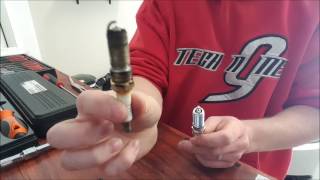
How to confirm: Remove the spark plug from cylinder 4 and inspect it. Look for a worn or fouled electrode, cracks in the porcelain, an incorrect gap, or oil/fuel contamination. Compare it to the other plugs.
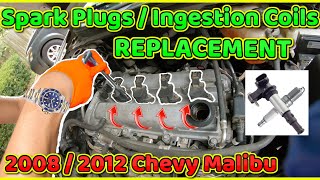
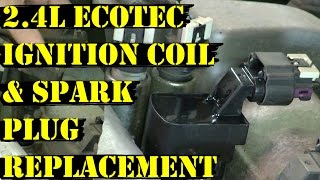
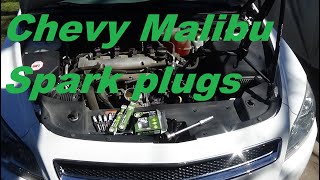
Typical fix: Replace the spark plug. It is best practice to replace all spark plugs at the same time with the correct type (Iridium for most of these engines). 🎬 Follow this walkthrough to change your 2.4L Ecotec spark plugs.
Est. part cost: $10-$25 per plug - Bad Spark Plug Wire (V6 models 2004-2010) 🟡 Medium Probability On the 3.5L and 3.9L V6 engines, the spark plug wires are a wear item. The insulation can degrade over time, causing the spark to become weak or arc to the engine block before reaching the plug.
How to confirm: Visually inspect the wire for cylinder 4 for cracks, burns, or corrosion on the contacts. With the engine running in the dark, you can sometimes see the spark arcing from the wire. You can also test its resistance with a multimeter; high resistance indicates a bad wire.
Typical fix: Replace the entire set of spark plug wires.
Est. part cost: $40-$80 for a set - Clogged or Faulty Fuel Injector ⚪ Low Probability Fuel injectors can become clogged with deposits over time, preventing them from delivering the correct amount of fuel to the cylinder. This is more common on higher mileage vehicles.
How to confirm: Listen to the injector with a mechanic's stethoscope; it should make a consistent clicking sound. A more definitive test is to swap the fuel injector from cylinder 4 with another cylinder. If the misfire code follows the injector, it is faulty. This is more labor-intensive than a coil swap.
Typical fix: Clean or replace the faulty fuel injector. Sometimes running a quality fuel system cleaner can resolve minor clogs.
Est. part cost: $50-$120 per injector
Rare But Worth Checking
- Low Engine Compression: If ignition and fuel system checks don't reveal the problem, a mechanical issue is likely. A compression test is the next step. Low compression can result from worn piston rings, a burnt valve, or a leaking head gasket.
- Intake Manifold Gasket Leak: A vacuum leak near the cylinder 4 intake runner can lean out the air/fuel mixture and cause a misfire, especially at idle. This can sometimes be diagnosed with a smoke test. This may also be accompanied by a P0171 or P0174 lean code.
- Carbon Buildup on Intake Valves (3.6L V6): The 3.6L V6 (LLT) engine uses direct injection, which means fuel is sprayed directly into the cylinder. As a result, fuel doesn't wash over the intake valves, allowing carbon deposits to build up. This can restrict airflow into cylinder 4 and cause a misfire. TSB PIP4910A addresses this issue on similar GM DI engines. An induction cleaning service may be required.
Diagnosis Steps
- Retrieve the trouble code with an OBD-II scanner to confirm P0304 is present. Check freeze frame data to see the engine conditions (speed, temperature) when the misfire occurred.
- Check for any other stored codes. Address codes like P0300, P0171, or P0174 first 🎬 Watch this video to understand why P0300 codes happen on Malibus. as they can provide clues to the root cause.
- Locate Cylinder 4. On 2.4L I4 engines, it's the cylinder on the far driver's side. On V6 engines, it's the middle cylinder on the front bank (closest to the radiator).
- Visually inspect the wiring and connector for the cylinder 4 ignition coil and fuel injector. Look for damage, corrosion, or loose connections.
- If your Malibu has a coil-on-plug system, swap the ignition coil from cylinder 4 with an adjacent cylinder (e.g., cylinder 3).
- Clear the codes and run the engine to see if the misfire moves. If the code changes to P0303, the ignition coil is faulty and needs replacement.
- If the code remains P0304, inspect the spark plug. Remove the plug from cylinder 4. Check for wear, fouling, oil deposits (indicating a valve cover gasket leak), or incorrect gap. If it looks bad, replace it. It's best to replace all plugs as a set if they are near their service life.
- For V6 models with spark plug wires, inspect the wire for cylinder 4 and consider replacing the set if they are old or show any signs of damage.
- If ignition components are good, check the fuel injector. Listen for a consistent clicking sound. If you are comfortable with a more involved repair, swap the injector with another cylinder to see if the misfire moves.
- If the misfire persists, check for a vacuum leak. A smoke test is the most effective way to find leaks from sources like a bad intake manifold gasket.
- If all else fails, perform an engine compression test on all cylinders. A reading on cylinder 4 that is significantly lower (more than 15-20% variance) than the others indicates a mechanical engine problem like bad piston rings, a burnt valve, or a head gasket failure.
Parts You'll Likely Need

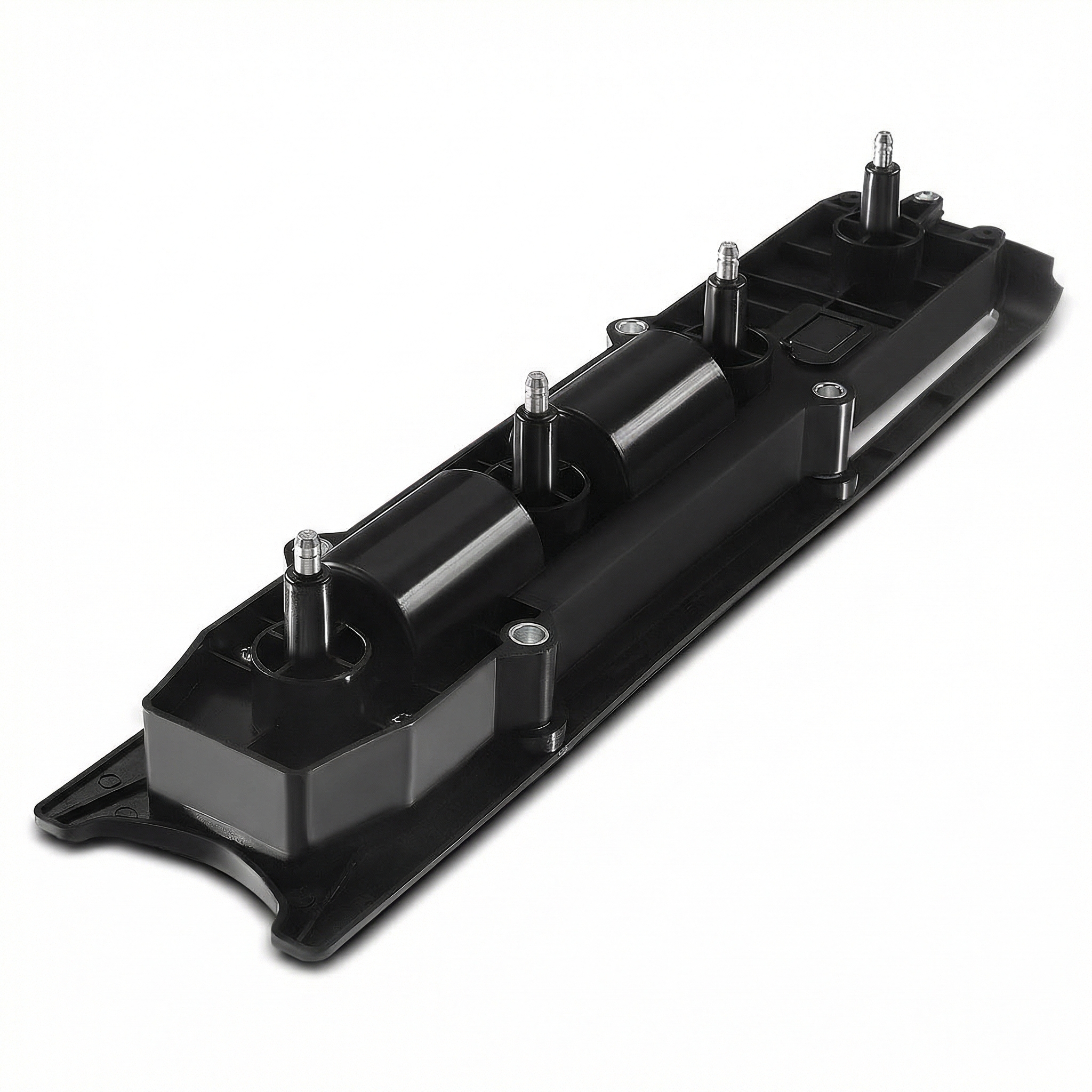
- Ignition Coil
(OEM #ACDelco D522C (V6) or D510C (I4))— This is the most frequent cause of a single-cylinder misfire on coil-on-plug engines.
Trusted brands: ACDelco, Delphi, NGK
Related Codes That Often Appear With This One
- P0300 — If multiple cylinders are misfiring intermittently, a P0300 (Random/Multiple Cylinder Misfire) may be stored alongside P0304. This could point to a systemic issue like a large vacuum leak, low fuel pressure, or a clogged catalytic converter.
- P0171 / P0174 — If the misfire is caused by a vacuum leak, such as a faulty intake manifold gasket, the engine may run lean, triggering a 'System Too Lean' code for the corresponding bank.
Technical Service Bulletins (TSBs) & Recalls
- PIP3333C: Mentions intermittent engine misfires and codes P0300, P0301, and/or P0304, advising technicians to follow standard service information diagnostics.
- PIP4910A: Relates to carbon deposits on the intake valves of direct injection (DI) engines, leading to rough idle and misfire codes. While not specific to P0304, it is a known cause for single cylinder misfires on the 3.6L V6.
Platform-Specific Known Issues

- A Technical Service Bulletin (TSB #PIP3333C) was issued for intermittent misfires on 2004 models, which could present as P0304 among other codes. This bulletin directs technicians to follow standard diagnostics if a cause is not immediately obvious.
- For 3.6L V6 direct injection engines, TSB #PIP4910A discusses carbon buildup on intake valves causing misfires at idle, which could manifest as a P0304. The fix often involves professional top-end cleaning.
Mechanic-Grade Diagnostic Values
- Fuel Pressure (Key On, Engine Off) for Port-Injected Engines (2.2L, 3.5L, 3.9L) — expected: 40.5-47 PSI. Failure: Pressure below this range suggests a weak fuel pump or clogged filter.
- Fuel Rail Pressure at Idle (3.6L Direct Injection V6) — expected: 276–725 PSI (1.9–5.0 MPa). Failure: Pressure outside this range at idle can indicate issues with the high-pressure fuel pump or rail sensor.
- Fuel Pump Module Resistance (2009-2012 models) — expected: 40 Ohms (Full) to 250 Ohms (Empty). Failure: Readings outside this range indicate a faulty fuel level sender, which is part of the pump module.
- TCM/ECM Ground Circuit Resistance — expected: Less than 0.5 Ω. Failure: High resistance points to a corroded or loose ground connection at G106/G107, which can cause various electrical issues including misfires.
Hidden / Shadow Codes Worth Checking
- Mode 6 Misfire Counter: This is not a DTC but a function within an advanced scan tool. It provides real-time and historical counts of misfire events for each specific cylinder, including cylinder 4. This is invaluable for confirming the misfire is isolated to cylinder 4 and assessing its severity before and after repairs. (see via Requires an OBD-II scanner with Mode 6 or Live Data capabilities.)
Scan Tool Commands That Help
- GM Tech 2 / GDS2 or equivalent professional scanner: Cylinder Power Balance Test — This test deactivates one cylinder at a time and measures the corresponding drop in engine RPM. A smaller RPM drop when cylinder 4 is deactivated confirms it is contributing less power than the others, helping to pinpoint the misfire without swapping parts.
- GM Tech 2 / GDS2 or equivalent professional scanner: Fuel Injector Balance Test — This function fires each injector for a set duration and measures the pressure drop in the fuel rail. If the pressure drop for cylinder 4's injector is significantly different from the others, it indicates the injector is clogged or faulty. This is a definitive test before physically replacing the injector.
Wiring & Ground Locations
- G105 (2.4L Engine) — On the engine block, located at cylinder number 4, above the intake camshaft position (CMP) sensor.. This is a critical engine ground. A poor connection here can directly affect the ignition system components for cylinder 4, including the ignition coil and fuel injector, causing erratic behavior or a persistent misfire.
- G107 (2.4L Engine) — On the lower left side of the engine, near the starter generator control module (SGCM) on hybrid models or near the transmission on others.. This is a primary ground for the Engine Control Module (ECM). A corroded or loose G107 can cause a no-start condition or intermittent issues, including the ECM failing to properly command the ignition coil or injector for cylinder 4.
- ECM Connector X1, Pin 73 (Black Wire) — This is the main ground pin on one of the large connectors to the Engine Control Module (ECM), located in the left front of the engine compartment.. This specific pin provides the ground path for the ECM itself. If this connection is compromised between the ECM and the chassis ground point (like G107), the ECM cannot function correctly to control spark and fuel.
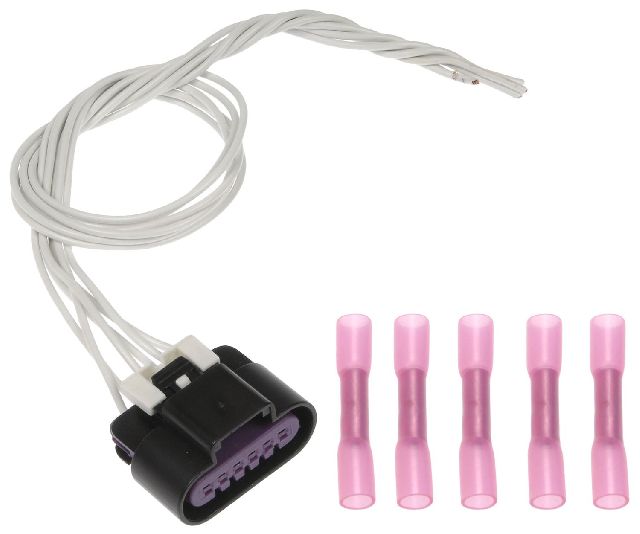
- Ignition Coil #4 Connector — The 4-pin electrical connector on top of the ignition coil for cylinder 4.. The ground for the ignition coil is controlled (pulsed) by the ECM. A poor connection or damaged wire at this connector will prevent the coil from charging and firing correctly, directly causing a P0304. A wiring diagram shows that the ignition coils share a common ground circuit.
Real Owner Repair Stories
- chevymalibuforum.com user (2009 Chevrolet Malibu 2.4L, 170,000 miles) — P0304 code, rough idle, and stalling.
❌ Tried (didn't work) Replaced spark plugs, Swapped ignition coils (misfire did not move), Replaced fuel injector on cylinder 4
✅ What actually fixed it A compression test revealed low compression in cylinder 4. Upon teardown, the piston in cylinder 4 was found to be cracked. Replacing the piston and rings resolved the misfire. - 2CarPros forum user (2008 Chevrolet Malibu 2.4L, 170,000 miles) — No ground signal to any of the fuel injectors, resulting in a no-start condition which could present as a misfire code if intermittent.
❌ Tried (didn't work) Checked all fuses, Replaced the ECM
✅ What actually fixed it The diagnosis pointed towards a bad ECM ground. The user was directed to check ground G107. Cleaning and reattaching the main ECM ground resolved the issue with the injector ground pulse.
OEM Part Supersession History
12570616→ACDelco D510C— This is a common ignition coil for many GM 4-cylinder engines of the era. The D510C is the standard GM Original Equipment replacement part.
Heads up: Some early 2005 models may have a different design. The D510C is specified for square-shaped coils marked with 12570616. Always verify by visual comparison or VIN.12633417→12635273— This is the fuel rail pressure sensor for some 2.4L engines. Part numbers are often updated due to design revisions or supplier changes.
Heads up: This specific sensor is listed for later model years but highlights the importance of checking part numbers for the specific engine and year, as sensor designs changed frequently.
Model Year Variations Within This Range
- 2008-2009: The 2008 model year introduced the 7th generation with the 2.4L Ecotec engine and a standard 4-speed automatic on LS/1LT trims. For 2009, the 6-speed automatic became more widely available on 1LT models and standard on 2LT/LTZ, improving fuel economy and performance characteristics which can affect how the engine behaves under load.
- 2004-2007 vs 2008-2011: The 6th generation (2004-2007) V6 engines (3.5L/3.9L) were pushrod designs (OHV) with spark plug wires. The 7th generation V6 (3.6L) was a more modern dual overhead cam (DOHC) design with coil-on-plug ignition and, on later models, direct injection. Diagnostic procedures for ignition misfires are fundamentally different between these engine families.
Helpful Videos


Used OEM Parts in Stock


New Aftermarket Parts Available

The information in this article is provided for general reference and educational purposes only. Vehicle specifications, procedures, and part compatibility can vary by production date, trim level, and region. Always consult your vehicle's factory service manual and verify part numbers before purchasing or performing repairs. Safety-critical components such as airbags, seat belts, and braking systems should be installed by a qualified professional.
- Chevrolet MALIBU:
- 🎬 Helpful Videos
- 🛍️ Shop This Part
- What's Unique About the 2004-2011 Chevrolet MALIBU
- Diagnostic Flowchart
- Symptoms You May Notice
- Most Likely Causes
- Rare But Worth Checking
- Diagnosis Steps
- Parts You'll Likely Need
- Related Codes That Often Appear With This One
- Technical Service Bulletins (TSBs) & Recalls
- Platform-Specific Known Issues
- Mechanic-Grade Diagnostic Values
- Hidden / Shadow Codes Worth Checking
- Scan Tool Commands That Help
- Wiring & Ground Locations
- Real Owner Repair Stories
- OEM Part Supersession History
- Model Year Variations Within This Range
- 🎟️ Get 5% Off