

P0304 on 2010-2013 Chevrolet Avalanche: Cylinder 4 Misfire Causes and Fixes
P0304 on a 2010-2013 Avalanche indicates a misfire in cylinder 4, which is the second cylinder from the front on the passenger side. The most common causes are a bad spark plug (ACDelco 41-162), a faulty ignition coil (ACDelco 12611424), or a loose/defective spark plug wire. A simple ignition coil swap is a good first diagnostic step. If a ticking noise is present, suspect a more serious Active Fuel Management (AFM) lifter failure. Expect to pay $10-$25 for a spark plug, and $40-$100 for an igni
- P0304 signifies a misfire specifically in cylinder 4, which is the front cylinder on the passenger side of the engine.
- Always check for a loose spark plug wire at the ignition coil first, as this is a known issue cited in a TSB.
- The most common fixes are replacing the spark plug, ignition coil, or spark plug wire for cylinder 4.
- A simple and effective diagnostic step is to swap the ignition coil from cylinder 4 with another cylinder to see if the misfire code follows the coil.
- If the check engine light is flashing, stop driving immediately to prevent costly damage to the catalytic converter.
What's Unique About the 2010-2013 Chevrolet AVALANCHE
For this generation of Chevrolet Avalanche with a V8 engine, ignition system components are a frequent cause of misfires. A specific Technical Service Bulletin (TSB) for the 2010 model year, #PIP4819A, points directly to loose spark plug wires at the ignition coil as a known issue causing misfires. Additionally, these engines feature Active Fuel Management (AFM), also known as Displacement on Demand (DOD). The specialized hydraulic lifters for this system are a significant and well-documented failure point. A failing AFM lifter can become stuck or collapse, often causing a persistent misfire on a single AFM-managed cylinder like P0304, which may be accompanied by a distinct ticking noise.
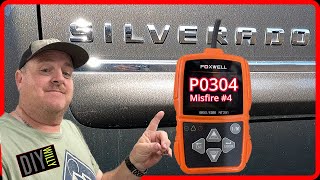
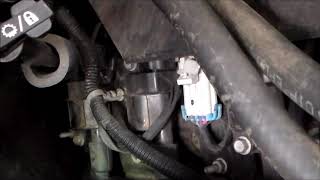
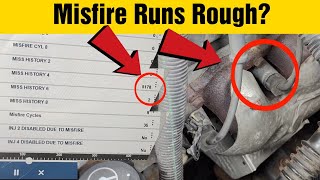
🎬 Watch: Diagnosing intermittent P0304 misfires and ticking sounds.Diagnostic Flowchart
Tap your situation to follow the diagnostic path that matches what you're seeing on this vehicle.
Symptoms You May Notice
- Rough or shaky idle
- Hesitation or stumbling during acceleration
- Noticeable loss of engine power
- Solid or flashing Check Engine Light
- Smell of unburned fuel from the exhaust
- Reduced fuel economy
- A rhythmic, metallic tapping or ticking noise that increases with engine RPM, often pointing to a lifter issue.
- Vehicle may feel like it's running on fewer cylinders, especially under load.
- Replacing oxygen sensors. O2 sensors will report the effects of a misfire (like a rich or lean condition), but they are almost never the cause of a single-cylinder misfire code.
Most Likely Causes
- Worn or Fouled Spark Plug 🔴 High Probability Spark plugs are regular wear items. On these engines, oil consumption, sometimes exacerbated by the AFM system, can lead to oil fouling on the spark plugs, causing a misfire.
How to confirm: Remove the spark plug from cylinder 4 (second from the front on the passenger side) and inspect it. Look for a worn electrode, heavy carbon buildup, oil/fuel contamination, or a cracked ceramic insulator.
Typical fix: Replace the spark plug. It is highly recommended to replace all 8 spark plugs at the same time using OEM-spec Iridium plugs (e.g., ACDelco 41-162) for long life and even performance.
Est. part cost: $10-$25 per plug - Loose or Faulty Spark Plug Wire 🔴 High Probability A manufacturer TSB (#PIP4819A) specifically calls out loose spark plug wires at the ignition coil as a cause for misfires on these vehicles. The wires' connection can become weak, causing an intermittent spark. Wires can also degrade over time from high engine bay heat.
How to confirm: Visually inspect the wire for cylinder 4 for any signs of arcing (white marks), burns, or physical damage. Ensure it is securely clicked onto both the ignition coil and the spark plug. A definitive 'click' should be felt and heard.
Typical fix: Reseat the wire firmly. If the connection is loose or the wire is damaged, replace it. It's good practice to replace the full set (e.g., ACDelco 9748RR) if they are original or high-mileage.
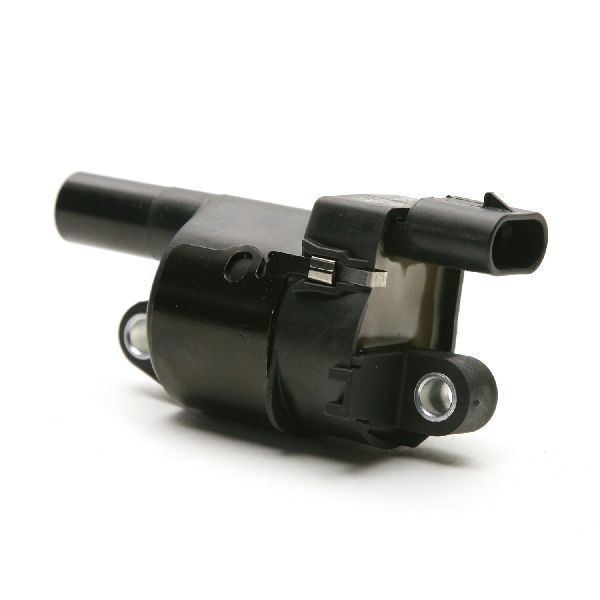
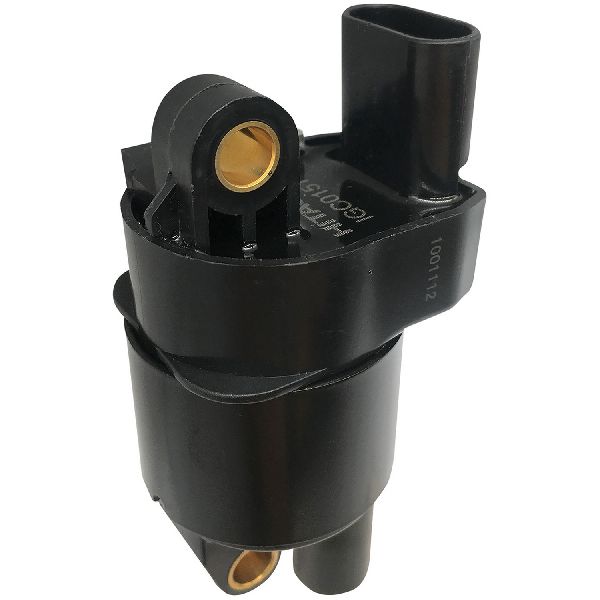
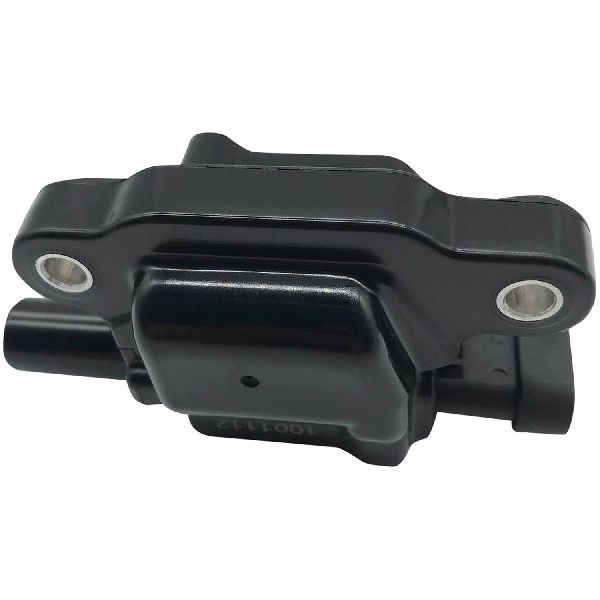
Est. part cost: $50-$100 for a set - Defective Ignition Coil 🔴 High Probability Ignition coils are a common failure point on many modern vehicles, including this platform. Heat and vibration can cause the internal windings to fail over time, resulting in a weak or no-spark condition.
How to confirm: The easiest way is to swap the cylinder 4 ignition coil with another cylinder's coil (e.g., cylinder 2, the first one on the passenger side). Clear the codes and drive the vehicle. If the code changes to P0302, the coil is bad.
Typical fix: Replace the faulty ignition coil with a quality replacement like ACDelco 12611424.
Est. part cost: $40-$100 - Clogged or Faulty Fuel Injector 🟡 Medium Probability Fuel injectors can become clogged with carbon deposits over time, especially with lower-quality fuel, preventing the correct amount of fuel from entering the cylinder and causing a lean misfire.
How to confirm: This is more complex. A professional can perform a fuel injector balance test. A DIY method is to listen to the injector with a mechanic's stethoscope for a consistent clicking sound. Another method is to swap the cylinder 4 injector with another cylinder's and see if the misfire code follows, similar to the coil swap.
Typical fix: Replace the faulty fuel injector. Sometimes, a professional fuel system cleaning or a quality fuel additive can resolve minor clogs.
Est. part cost: $50-$150 - Failed AFM Lifter 🟡 Medium Probability The Active Fuel Management (AFM) system deactivates cylinders 1, 4, 6, and 7 to save fuel. The special lifters used for this system are a notorious failure point. They can collapse or get stuck, causing a permanent misfire and often damaging the camshaft lobe. This is a very common issue on high-mileage 5.3L and 6.2L engines.
How to confirm: This usually presents with a distinct ticking/tapping noise from the engine that follows RPM. A compression test on cylinder 4 will often show lower readings if a lifter has failed. Advanced diagnosis involves removing the valve cover to observe valve movement.
Typical fix: This is a major repair. It requires removing the cylinder head to replace all AFM lifters on that bank, and often the non-AFM lifters as well. The camshaft and Valve Lifter Oil Manifold (VLOM) are frequently replaced at the same time due to collateral damage. Many owners opt to install an AFM-delete kit 🎬 Watch: How a collapsed AFM lifter causes a P0304 code. to prevent future failures.
Est. part cost: $500-$1500+ for parts (lifters, gaskets, camshaft, etc.)
Rare But Worth Checking
- Intake Manifold Gasket Leak: A vacuum leak near the cylinder 4 intake runner can lean out the air/fuel mixture and cause a misfire. This can sometimes be detected by spraying brake cleaner near the gasket with the engine running and listening for a change in idle speed.
- Low Compression: Beyond a failed lifter, low compression can be caused by a worn piston ring, a poorly sealing valve (bent valve, broken valve spring), or a leaking head gasket, indicating more serious internal engine problems that require a compression and leak-down test to diagnose.
Diagnosis Steps
- Read the code with an OBD-II scanner to confirm P0304 is the primary code. Note any other codes.
- Check the freeze frame data to see the engine conditions (RPM, load, temperature) when the misfire occurred.
- Locate cylinder 4: It is the second cylinder from the front on the passenger side of the engine.
- Visually inspect the spark plug wire for cylinder 4. Per TSB PIP4819A, ensure it is fully seated on the ignition coil with an audible 'click'. Check for damage.
- Swap the ignition coil from cylinder 4 with the coil from cylinder 2 (front-most on the passenger side). Clear the codes and run the engine. If the code changes to P0302, the coil is faulty and needs replacement.
- If the code remains P0304, remove and inspect the spark plug from cylinder 4. Look for wear, damage, or fouling. Replace if necessary, preferably as a full set of 8.
- Listen for engine noises. A distinct ticking or tapping sound strongly suggests a failed AFM lifter.
- If the coil and plug are good, consider a fuel system issue. Swap the fuel injector with another cylinder to see if the code follows, or use a mechanic's stethoscope to listen for its operation.
- If the misfire persists, perform a compression test on cylinder 4 to check for mechanical engine problems like a bad valve or a failed AFM lifter. A significant drop in compression compared to other cylinders points to an internal engine issue.
Parts You'll Likely Need
- Ignition Coil
(OEM #12611424)— A very common failure point causing a single-cylinder misfire. Easy to diagnose by swapping with an adjacent coil.
Trusted brands: ACDelco, Delphi, NGK
OEM price range: $70-$110
Aftermarket price range: $40-$80 - Spark Plug
(OEM #41-162)— Spark plugs are a maintenance item and can foul or wear out, causing a weak or non-existent spark. The ACDelco 41-162 is the recommended Iridium plug for these engines.
Trusted brands: ACDelco, NGK
OEM price range: $15-$25
Aftermarket price range: $8-$15 - Spark Plug Wire Set
(OEM #9748RR)— TSB #PIP4819A points to loose wires as a known issue. Wires are also a wear item that can degrade from heat, causing weak or intermittent spark.
Trusted brands: ACDelco, NGK
OEM price range: $60-$90
Aftermarket price range: $40-$70 - AFM Lifters (Set of 8)
(OEM #12645725)— A collapsed or stuck AFM lifter is a very common cause for a single-cylinder misfire on cylinder 4. Usually replaced as a full set for the affected bank.
Trusted brands: ACDelco, Delphi, Michigan Motorsports
OEM price range: $300-$450
Aftermarket price range: $150-$250
Related Codes That Often Appear With This One
- P0300 — If the misfire on cylinder 4 is severe or accompanied by misfires on other cylinders, the more general P0300 'Random/Multiple Cylinder Misfire Detected' code may also be stored. This is common with AFM lifter issues.
- P3425 — This code relates to 'Cylinder 4 Deactivation Control Circuit'. If there's an electrical issue with the AFM solenoid for cylinder 4, it can appear alongside a P0304.
Technical Service Bulletins (TSBs) & Recalls
- PIP4819A: Addresses engine misfires (P0300-P0308) on 2010-2013 V8 models due to loose spark plug wires at the ignition coil. Instructs technicians to inspect and replace any loose wires.
Platform-Specific Known Issues
- TSB PIP4819A: This bulletin specifically addresses engine misfires (P0300-P0308) on 2010-2013 V8 models. It instructs technicians to inspect for loose spark plug wires at the ignition coil and replace any that are found to be loose. This should be one of the first checks performed.
- Active Fuel Management (AFM) Lifter Failure: The V8 engines in these trucks use AFM to improve fuel economy by shutting down four cylinders (1, 4, 6, and 7) under light load. The specialized lifters for this system can fail, typically getting stuck and causing a permanent misfire on the affected cylinder. This is often preceded by a ticking noise and is a more serious and expensive repair than a typical ignition component failure.
Mechanic-Grade Diagnostic Values
- Fuel Injector Resistance — expected: 13.5 - 17.0 ohms. Failure: A reading outside of this range, or a significant deviation (more than 0.5-1.0 ohm) from the other injectors, indicates a faulty injector.
- Ignition Coil Primary Resistance — expected: ~0.8 ohms. Failure: A reading significantly higher or lower, or an open circuit (infinite resistance).
- Ignition Coil Secondary Resistance — expected: ~7.1k ohms. Failure: A reading significantly outside the specification.
- AFM Solenoid Resistance (VLOM) — expected: 7-13 ohms at room temperature.. Failure: A reading outside this range indicates a faulty solenoid in the Valve Lifter Oil Manifold.
- Fuel Pressure (In-tank pump) — expected: Maximum pressure around 88.5 PSI.. Failure: Significantly lower fuel pressure can cause lean conditions and misfires, though it would typically affect multiple cylinders.
- AFM System Oil Pressure — expected: 27 to 66 PSI.. Failure: Pressure below 22 PSI may prevent AFM lifter locking pins from releasing, causing a misfire.
Hidden / Shadow Codes Worth Checking
- Mode 6, Test ID $A5, Component ID $04: This is not a DTC, but a specific monitor within the OBD-II system's Mode 6 data. It tracks the misfire count for cylinder 4 during the current and last 10 driving cycles. A high count confirms the misfire is actively occurring on cylinder 4, even before the P0304 code becomes permanent. (see via Requires an advanced scan tool capable of displaying Mode 6 diagnostic data.)
Scan Tool Commands That Help
- GDS2/Tech2: Cylinder Power Balance — This test allows a technician to disable individual fuel injectors one by one while monitoring engine RPM drop. If disabling cylinder 4 causes little or no change in RPM, it confirms that cylinder is not contributing power, pinpointing the misfire location.
- GDS2/Tech2: AFM Solenoid Control — This bidirectional command allows the technician to manually activate and deactivate the AFM solenoid for cylinder 4. Listening for an audible click from the solenoid and monitoring engine response can help diagnose electrical issues within the VLOM circuit, distinguishing them from mechanical lifter failure.
Wiring & Ground Locations
- G102 — Located at the lower left front of the engine block.. This is a primary ground for the bank of ignition coils. A loose or corroded connection here can cause weak or intermittent spark, leading to misfires that can be difficult to diagnose.
- G103 — Located on the front of the right cylinder head.. This ground is crucial for the Engine Control Module (ECM). A poor connection can cause a wide range of erratic engine management issues, including misfire detection faults.
- Cylinder 4 Fuel Injector Connector — On the fuel rail, at the second injector from the front on the passenger side.. The two pins in this connector are for the injector's power and ground pulse signal from the ECM. Checking for voltage and testing resistance across these pins are key diagnostic steps for a suspected injector failure.
Real Owner Repair Stories
- YouTube video by Ron Williams (Chevy Silverado with 5.3L V8 (similar GMT900 platform)) — Flashing check engine light, P0300 and P0304 codes.
❌ Tried (didn't work) Swapped ignition coil from cylinder 4 to cylinder 2., Swapped spark plug wires.
✅ What actually fixed it A compression test revealed cylinder 4 had only 9.6 PSI (spec is ~160 PSI). The cause was a collapsed AFM lifter that was not allowing the intake valve to open. The final repair required removing the cylinder head and replacing the failed lifter.
"I Checked Everything" — The Actual Cause
- A P0304 code that passes a smoke test (indicating no vacuum leaks) can be caused by a clogged filter screen for the Valve Lifter Oil Manifold (VLOM). This tiny screen, located in the oil passageway under the oil pressure sensor, can get blocked with sludge. This starves the AFM lifters of oil pressure, causing them to fail and trigger a misfire, without creating a vacuum leak.
OEM Part Supersession History
12571595, 12619820, 12639516→12645725, 12680871, 12698946— Updates to the internal design of the AFM lifter to improve durability and reduce failure rates.
Heads up: While newer part numbers are generally backward compatible, it is critical to replace lifters as a set for the affected bank and use new lifter guide trays (e.g., part #12595365) to prevent alignment issues.
Model Year Variations Within This Range
- 2007-2013: GM used both 'square' (e.g., D514A) and 'round' (e.g., marked 12573190) style ignition coils during this period. While electrically similar, they have different housings. It is crucial to visually inspect the existing coils on the engine before ordering replacements to ensure a correct physical fit.
Helpful Videos
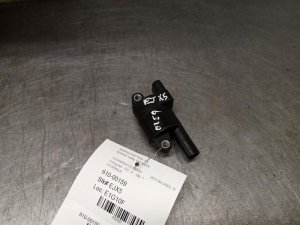
Used OEM Parts in Stock

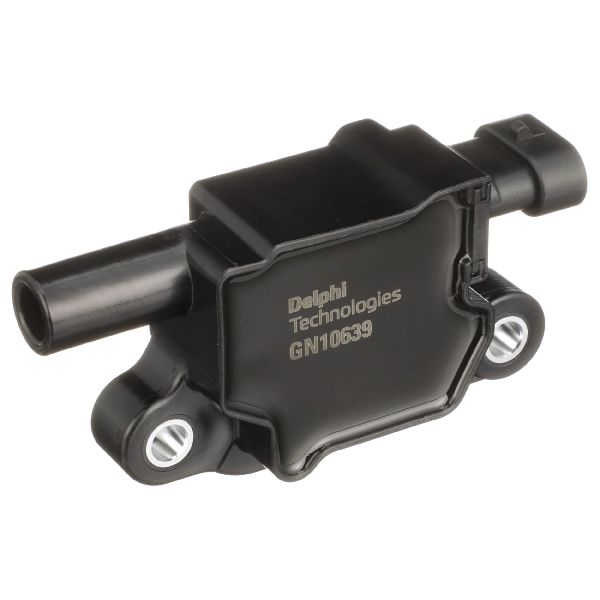
New Aftermarket Parts Available


The information in this article is provided for general reference and educational purposes only. Vehicle specifications, procedures, and part compatibility can vary by production date, trim level, and region. Always consult your vehicle's factory service manual and verify part numbers before purchasing or performing repairs. Safety-critical components such as airbags, seat belts, and braking systems should be installed by a qualified professional.
- Chevrolet AVALANCHE:
- 🎬 Helpful Videos
- 🛍️ Shop This Part
- What's Unique About the 2010-2013 Chevrolet AVALANCHE
- Diagnostic Flowchart
- Symptoms You May Notice
- Most Likely Causes
- Rare But Worth Checking
- Diagnosis Steps
- Parts You'll Likely Need
- Related Codes That Often Appear With This One
- Technical Service Bulletins (TSBs) & Recalls
- Platform-Specific Known Issues
- Mechanic-Grade Diagnostic Values
- Hidden / Shadow Codes Worth Checking
- Scan Tool Commands That Help
- Wiring & Ground Locations
- Real Owner Repair Stories
- "I Checked Everything" — The Actual Cause
- OEM Part Supersession History
- Model Year Variations Within This Range
- 🎟️ Get 5% Off