

P0304 on 2019-2021 Audi A6: Cylinder 4 Misfire Causes and Fixes
P0304 on a 2019-2021 Audi A6 signals a misfire in cylinder 4. The most likely cause is a failed ignition coil or a worn spark plug. A quick and free diagnostic is to swap the ignition coil from cylinder 4 with another cylinder to see if the code follows. In some cases, a simple software update at the dealership may resolve false misfire detection as per Audi TSBs.
- P0304 on a 2019-2021 Audi A6 is a misfire on cylinder 4, most often caused by a bad ignition coil or spark plug.
- The easiest and most effective first diagnostic step is to swap the ignition coil from cylinder 4 to another cylinder and see if the fault code follows.
- Cylinder 4 is the rearmost cylinder (by the firewall) on the 2.0T engine, and the front-most cylinder on the driver's side on the 3.0T V6 engine.
- Do not drive with a flashing check engine light, as this can cause rapid and expensive damage to your catalytic converter.
- While coils and plugs are the likely culprits, be aware that these engines can also suffer from carbon buildup, PCV system issues, and in rare cases, more serious internal engine problems.
What's Unique About the 2019-2021 Audi A6

The 2019-2021 Audi A6 (C8 generation) uses advanced TFSI (Turbocharged Fuel Stratified Injection) direct-injection engines. While efficient, these engines are known for placing high demands on their ignition components. The 3.0T V6 (EA839) in particular has some documented issues within its engine family, such as rocker arm and PCV system failures, that can lead to misfires. Furthermore, Audi has issued several TSBs indicating the misfire detection software was initially too sensitive, especially with certain fuel blends, and can be corrected with an ECM software update. The 3.0T V6 also incorporates a 48V mild-hybrid system, and failures of its Belt Starter Generator (BSG) can cause widespread electrical issues, potentially including misfires, often preceded by an "Electrical system: malfunction!" warning.
Diagnostic Flowchart

Tap your situation to follow the diagnostic path that matches what you're seeing on this vehicle.
Symptoms You May Notice
- Rough or vibrating idle
- Engine hesitation or stumbling during acceleration
- Noticeable loss of power
- Solid or flashing Check Engine Light
- Reduced fuel economy
- Smell of unburned gasoline from the exhaust
- Engine may go into a limited power "limp mode"
- Replacing only the spark plug without testing the ignition coil first. The coil is a more common failure point and easier to test via swapping.
- Assuming a fuel pump is bad for a single-cylinder misfire. A failing fuel pump would typically cause random misfires (P0300) or affect multiple cylinders.
- Replacing hardware (coils, plugs) when a software update is all that is needed to fix overly sensitive misfire detection.
Most Likely Causes

- Faulty Ignition Coil 🔴 High Probability Coil-on-plug ignition systems are a common failure point on modern engines due to high heat and electrical stress. The EA839 engine is known for this issue across multiple platforms including Audi and Porsche.
How to confirm: Swap the ignition coil from cylinder 4 with another cylinder (e.g., cylinder 1 on the 2.0T, or cylinder 5 on the 3.0T). Clear the codes and drive the car. If the code changes to P0301 or P0305 respectively, the ignition coil is faulty.
Typical fix: Replace the faulty ignition coil. It is highly recommended to replace all coils as a set with the latest revision part to ensure reliability and prevent future failures.
Est. part cost: $40 - $70 per coil - Worn or Fouled Spark Plug 🔴 High Probability Turbocharged, direct-injection engines are harder on spark plugs than naturally aspirated ones, leading to a shorter service life. The service interval is typically 30,000-40,000 miles. A worn plug puts extra strain on the ignition coil.
How to confirm: After confirming the coil is good, remove the spark plug from cylinder 4. Inspect it for wear on the electrode (should be sharp, not rounded), carbon fouling, oil, or coolant contamination.
Typical fix: Replace the spark plug in cylinder 4. It is best practice to replace all spark plugs as a set to ensure even performance, especially if they are near the end of their service life.
Est. part cost: $15 - $35 per plug - Faulty Fuel Injector 🟡 Medium Probability Direct injection (DI) fuel injectors operate under extremely high pressure and can become clogged from fuel deposits or fail electronically. A leaky injector can cause hard starting when the engine is warm.
How to confirm: This is more complex. A professional can perform a fuel injector balance test. A DIY method is to swap the injector from cylinder 4 with another cylinder, but this is labor-intensive. An advanced scan tool can also monitor fuel trims for anomalies.
Typical fix: Replace the faulty fuel injector. This requires removing the fuel rail and it is mandatory to replace the Teflon seals and O-rings using special tools to prevent dangerous fuel leaks.
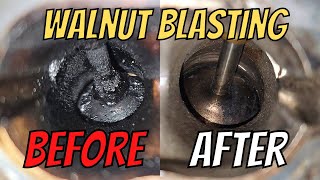
Est. part cost: $100 - $250 per injector - Intake Valve Carbon Buildup 🟡 Medium Probability As a direct-injection engine, fuel is sprayed directly into the cylinder, not over the intake valves. This means there's no fuel to wash away carbon deposits, which can build up, restrict airflow, and cause misfires, especially on cold starts.
How to confirm: Visual inspection of the intake ports and valves using a borescope is the only definitive way to confirm. A cheap borescope that connects to a smartphone can be used for this.
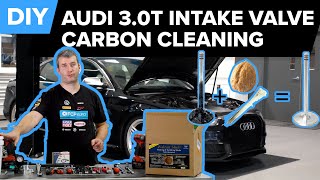
Typical fix: The intake manifold must be removed and the valves cleaned, typically through walnut blasting or manual scrubbing with chemical solvents.
Est. part cost: $0 (if DIY cleaning), materials cost is low. Professional service can cost $600-$1200. 🎬 Watch: How to walnut blast intake valves on an Audi.
- Incorrect Misfire Detection (Software Issue) 🟡 Medium Probability Audi has released multiple TSBs (e.g., A0124212069038_5, A0122312069038_1) for the C8 platform, stating that the original ECM software calibration was too sensitive and could incorrectly flag misfires, particularly with winter-blend fuels.
How to confirm: If coils and plugs are known to be good and the misfires are intermittent or occur under specific conditions (like cold starts), check with an Audi dealer if the vehicle's software is up to date. The TSBs specifically address P0300-P0306 codes.
Typical fix: Update the Engine Control Module (ECM/J623) software at an Audi dealership. This is a non-mechanical fix that recalibrates misfire detection parameters.
Est. part cost: $0 if under warranty, otherwise dealer labor charge for flashing.
Rare But Worth Checking
- Low Cylinder Compression: This indicates a serious mechanical engine problem. On the 3.0T EA839, this could be related to a known (but uncommon) issue with rocker arm needle bearing failure, which can send metal debris into the engine. A compression test is required to diagnose.
- Vacuum Leak: A leak in a vacuum hose, intake manifold gasket, or a failing PCV valve can introduce unmetered air, leaning out the mixture and causing misfires. The PCV system is a known weak point on the EA839 engine; a quick test is to try removing the oil cap while the engine is running. If there is strong suction holding it down, the PCV may have failed.
Diagnosis Steps
- Read the code with an OBD-II scanner to confirm P0304 and check for any other codes. Note freeze frame data to see the engine conditions when the misfire occurred (e.g., idle, high RPM).
- Note if the Check Engine Light is flashing. If so, avoid driving the vehicle to prevent catalytic converter damage.
- Identify Cylinder 4:
- - On the 2.0L I4 engine: Cylinder 4 is the cylinder closest to the transmission/firewall.
- - On the 3.0L V6 engine: Bank 2 (US Driver's Side) contains cylinders 4, 5, and 6, from front to back. Cylinder 4 is the front-most cylinder on the driver's side.
- Test the Ignition Coil: Swap the ignition coil from cylinder 4 with an easily accessible cylinder (like cylinder 1 or 2). Clear the codes, start the engine, and see if the misfire code moves to the new cylinder (e.g., P0301 or P0302). If it does, the coil is bad.
- Inspect the Spark Plug: If the misfire remains on cylinder 4, remove the coil again and inspect the spark plug. Look for signs of wear, carbon fouling, or damage. If it looks worn or is due for replacement, replace it. It's best to replace all plugs at once.
- Check for Software Updates: Before proceeding to more complex parts, consider the TSBs. Contact an Audi dealer with your VIN to see if your ECM has a pending software update for misfire detection.
- Advanced Scan Tool Analysis: Use a tool like VCDS or OBDeleven to monitor the misfire counter for cylinder 4 in real-time. This can help confirm the misfire and see if it happens under specific loads or temperatures.
- Check the Fuel Injector: If the coil, plug, and software are good, the issue may be the fuel injector. Listen for a clicking sound from the injector to ensure it's activating. Swapping injectors is a definitive but advanced test.
- Check for Vacuum Leaks: Inspect all vacuum hoses connected to the intake manifold for cracks or loose connections. Pay attention to the PCV system hoses and test the PCV valve.
- Perform a Compression Test: If the above steps don't reveal the cause, a compression test on cylinder 4 is needed to rule out mechanical engine damage like bad piston rings, valves, or a failing rocker arm.
Parts You'll Likely Need

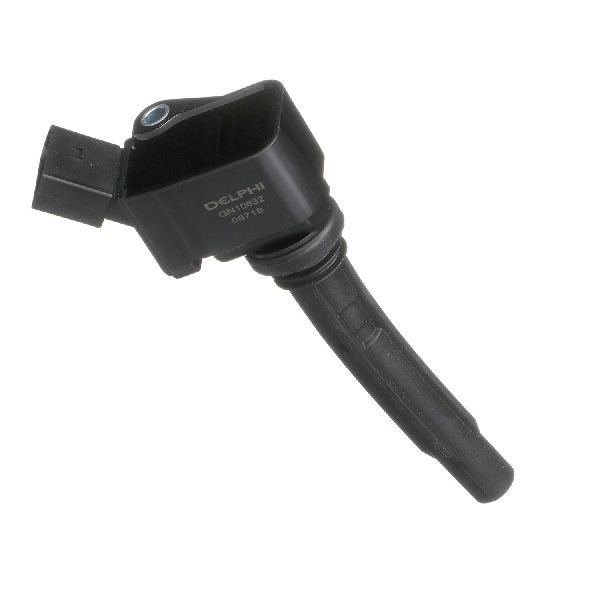
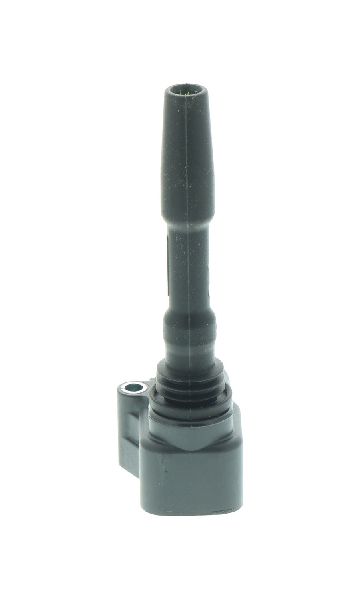
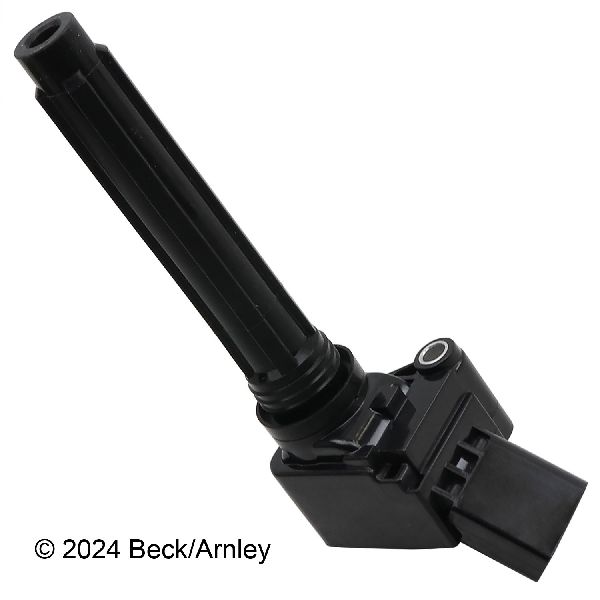
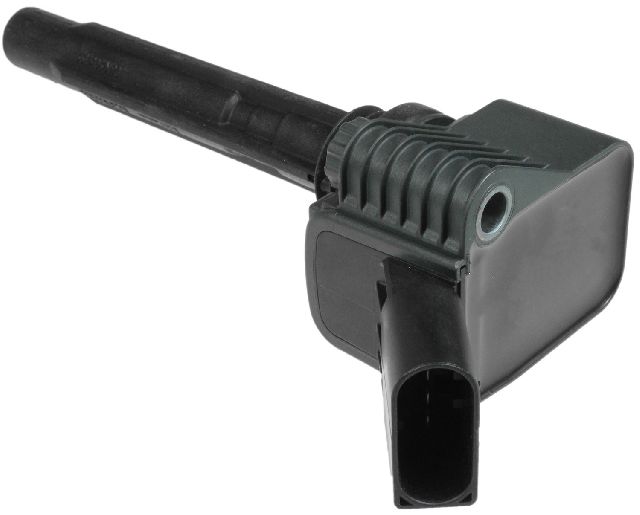
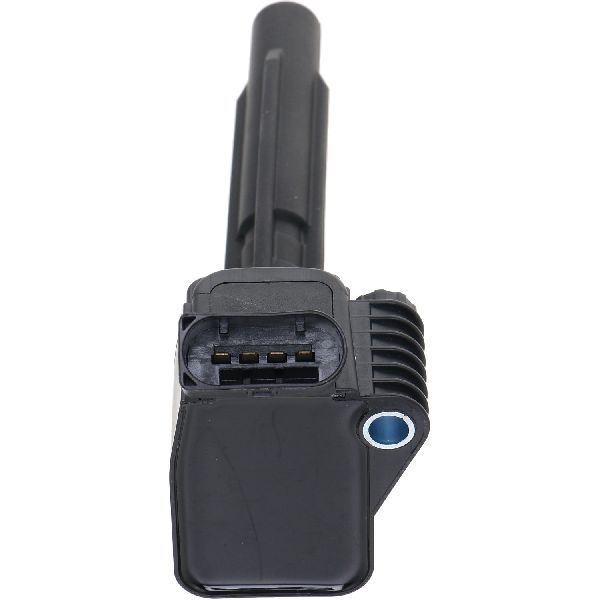
- Ignition Coil
(OEM #06E905115G)— This is the most common cause of a single-cylinder misfire on this platform. They are electronic components that fail from heat and age. Part number 06E905115G replaces previous versions like 115E and 115F; always use the latest revision.
Trusted brands: Bosch, NGK, Eldor, APR
Related Codes That Often Appear With This One
- P0300 — If the misfire is intermittent or begins to affect other cylinders, a P0300 (Random/Multiple Cylinder Misfire) code may appear alongside P0304.
- P0301, P0302, P0303, P0305, P0306 — If other specific cylinder misfire codes are present, it points towards a more systemic issue like a major vacuum leak, fuel delivery problem, or a software issue covered by a TSB.
- P130A — This code for 'Cylinder Disabling' can sometimes accompany a severe misfire code as the ECM intentionally shuts down the cylinder to prevent damage.
- P0CA700, U046900 — These codes, along with an 'Electrical system: fault' message, point to a failing 48V Belt Starter Generator (BSG), a known issue on these models that can cause various electrical problems, including misfires, before a total shutdown.
Technical Service Bulletins (TSBs) & Recalls
- A0124212069038_5: General TSB for an illuminated MIL and cylinder misfire codes P0300-P0306.
- A0123912069038_5: General TSB for an illuminated MIL and cylinder misfire codes P0300-P0306.
- A0123802069038_4: General TSB for an illuminated MIL and cylinder misfire codes P0300-P0306.
- A0123612069038_3: General TSB for an illuminated MIL and cylinder misfire codes P0300-P0306.
- A0123352069038_2: General TSB for an illuminated MIL and cylinder misfire codes P0300-P0306.
Platform-Specific Known Issues
- TSB for Misfires (Software Update): Audi has released multiple Technical Service Bulletins, including A0124212069038_6 and A0122312069038_1, which state that an ECM software update is available to correct overly sensitive misfire detection. This can be the sole cause of the P0304 code and should be investigated before replacing parts.
- TSB for Winter Fuel Misfires: TSB 2058038 specifically notes that software calibrations can cause misfires with winter blend fuels due to higher vapor pressure. The fix is an improved software version.
- EA839 Rocker Arm/Piston Issues: The 3.0T V6 engine family (EA839) has documented cases of rocker arm failure (specifically the needle bearings) and, more rarely, piston ringland failure. These are severe mechanical failures that would cause a persistent misfire and require a compression test to diagnose.
Mechanic-Grade Diagnostic Values
- 48V Battery Voltage — expected: 40V - 50V is normal.. Failure: If voltage is between 0V and 12V, the 48V battery system has a fault. This can be caused by a failing Belt Starter Generator (BSG).
- 12V Battery Voltage (for 48V system diagnosis) — expected: 11.6V - 15V is normal.. Failure: A voltage below 11.6V indicates a discharged or faulty 12V battery, which can cause numerous electrical faults in the MHEV system.
Scan Tool Commands That Help
- VCDS (VAG-COM): Measuring Blocks, Groups 015 & 016 — To monitor the live misfire counter for each individual cylinder. Group 015 shows counters for cylinders 1-3, and Group 016 shows counters for cylinders 4-6. This allows a technician to see if the misfires on cylinder 4 are happening at idle, under load, or during specific temperature ranges, which helps isolate the cause.
- ODIS (Dealer Tool): Guided Fault Finding (GFF) — When diagnosing complex electrical issues, especially those related to the 48V mild-hybrid system. GFF provides step-by-step diagnostic plans based on stored DTCs and can initiate specific procedures like the 48V battery recharge sequence.
Wiring & Ground Locations

- Cylinder 4 Fuel Injector ECU Pin — On an older but similar Audi V6 engine ECU, the cylinder 4 injector is controlled by pin 97 of the main ECU connector.. While the exact pin for the C8 A6 may differ, this indicates the injector is directly controlled by a specific pin on the ECU. A persistent P0304 with a known good injector could be caused by a wiring break between this pin and the injector, or an internal ECU fault, which can be tested with a 'noid' light or multimeter.
Real Owner Repair Stories
- YouTube, 'B9 Audi SQ5 (EA839) Rocker Arm Failure R&R' (2018-2019 Audi B9 SQ5 (Uses the same EA839 3.0T V6 engine)) — Horrible tapping/ticking noise from the engine, accompanied by misfire codes.
❌ Tried (didn't work) The video focuses on direct diagnosis of the mechanical fault rather than trial-and-error parts replacement.
✅ What actually fixed it The cause was a single failed rocker arm on the exhaust camshaft which had lost a needle bearing. The fix was to tear down the top end of the engine and replace all 24 rocker arms with the revised, more robust B9.5 generation parts to prevent future failures. The mechanic noted this is often a lubrication-related failure and recommends using 5W-40 oil instead of the factory 0W-20.
OEM Part Supersession History
06E-905-115-A, B, C, D, E, F→06E-905-115-G— Progressive updates to improve reliability and performance of the ignition coil.
Heads up: All previous versions should be replaced with the latest 'G' revision or newer. While older versions will fit, they are more prone to failure.06M906036K, 06M906036AA, 06M906036AC→06M906036AE, 06M906036T— Revisions to the EA839 fuel injector for improved performance and reliability.
Heads up: When replacing injectors, it is critical to ensure the correct part number is used for the vehicle's specific engine code and emissions standard (e.g., EU5 vs EU6).
Model Year Variations Within This Range
- 2019: The 2019 model year marked the introduction of the C8 platform and the new turbocharged 3.0L V6 (EA839), which replaced the previous generation's supercharged V6. This new engine brought with it the 48V mild-hybrid system and new potential failure points like the rocker arms and Belt Starter Generator (BSG).
- 2021: For the 2021 model year, the 2.0L TFSI engine received a power increase from 248 hp to 261 hp, though the fundamental design remained the same. No major changes affecting a P0304 diagnosis were made to the 3.0T V6.
Helpful Videos




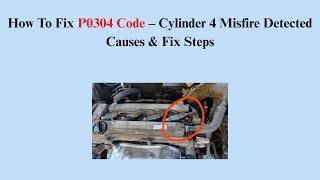
Used OEM Parts in Stock
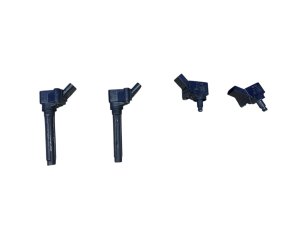
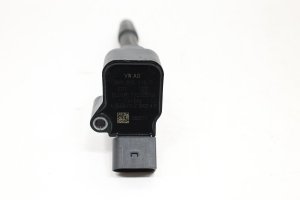
New Aftermarket Parts Available


The information in this article is provided for general reference and educational purposes only. Vehicle specifications, procedures, and part compatibility can vary by production date, trim level, and region. Always consult your vehicle's factory service manual and verify part numbers before purchasing or performing repairs. Safety-critical components such as airbags, seat belts, and braking systems should be installed by a qualified professional.
- Audi A6:
- 🎬 Helpful Videos
- 🛍️ Shop This Part
- What's Unique About the 2019-2021 Audi A6
- Diagnostic Flowchart
- Symptoms You May Notice
- Most Likely Causes
- Rare But Worth Checking
- Diagnosis Steps
- Parts You'll Likely Need
- Related Codes That Often Appear With This One
- Technical Service Bulletins (TSBs) & Recalls
- Platform-Specific Known Issues
- Mechanic-Grade Diagnostic Values
- Scan Tool Commands That Help
- Wiring & Ground Locations
- Real Owner Repair Stories
- OEM Part Supersession History
- Model Year Variations Within This Range
- 🎟️ Get 5% Off