

P0303 on 2012-2013 Subaru Impreza: Cylinder 3 Misfire Causes and Fixes
P0303 on a 2012-2013 Impreza indicates a misfire in cylinder 3. The most common causes are a bad ignition coil or a worn spark plug. A simple diagnostic is to swap the coil from cylinder 3 with another cylinder to see if the code follows. For these specific model years, also be aware of a valve spring recall and TSBs related to camshaft position sensors, which can also cause this code.
- P0303 means cylinder 3 is misfiring.
- The most likely culprits are a bad ignition coil or spark plug, which are simple to diagnose by swapping parts with another cylinder.
- Do not ignore a flashing Check Engine Light, as it signals a severe misfire that can quickly damage your catalytic converter.
- On this specific Subaru, be aware that TSBs link this code to camshaft sensor issues, which may be the root cause if new plugs and coils don't solve the problem.
- Always replace spark plugs as a full set for balanced engine performance.
What's Unique About the 2012-2013 Subaru IMPREZA
For the 2012-2013 Impreza with the 2.0L FB20 engine, a P0303 code has several vehicle-specific considerations. Beyond common ignition faults, Subaru issued a recall for faulty engine valve springs which could fracture and cause misfires or engine stalls. Additionally, multiple Technical Service Bulletins (TSBs), notably #11-130-13R, link misfire codes directly to incorrect clearances on camshaft position sensors, requiring a specific measurement and shimming procedure to fix. This means that while spark plugs and coils are the first check, the root cause can be a known manufacturing or design issue with the valvetrain or cam sensors.
Diagnostic Flowchart
Tap your situation to follow the diagnostic path that matches what you're seeing on this vehicle.
Symptoms You May Notice
- Rough or shaky idle
- Engine hesitation or stumbling during acceleration
- Noticeable loss of power
- Flashing or solid Check Engine Light
- Reduced fuel economy
- Fuel smell from the exhaust
- Engine jerking during acceleration
- Replacing oxygen (O2) sensors. While a misfire can affect O2 sensor readings, the sensors themselves are rarely the cause of a single-cylinder misfire code.
- Replacing the catalytic converter. A misfire can destroy a catalytic converter, but a bad converter does not cause a misfire.
Most Likely Causes
- Failed Ignition Coil 🔴 High Probability Coil-on-plug systems are common failure points on many modern engines as they age from heat and vibration. This is a frequently reported fix in owner forums for the FB20 engine.
How to confirm: Swap the ignition coil from cylinder 3 with another cylinder (e.g., cylinder 1). Cylinder 3 is the front cylinder on the driver's side (USDM). Cylinder 1 is the front cylinder on the passenger's side. Clear the codes and drive the vehicle. If the code changes to P0301, the coil is faulty.
Typical fix: Replace the failed ignition coil. It is often recommended to replace all four coils and spark plugs at the same time, especially on higher mileage vehicles.
Est. part cost: $60-$110 per coil - Worn or Fouled Spark Plug 🔴 High Probability
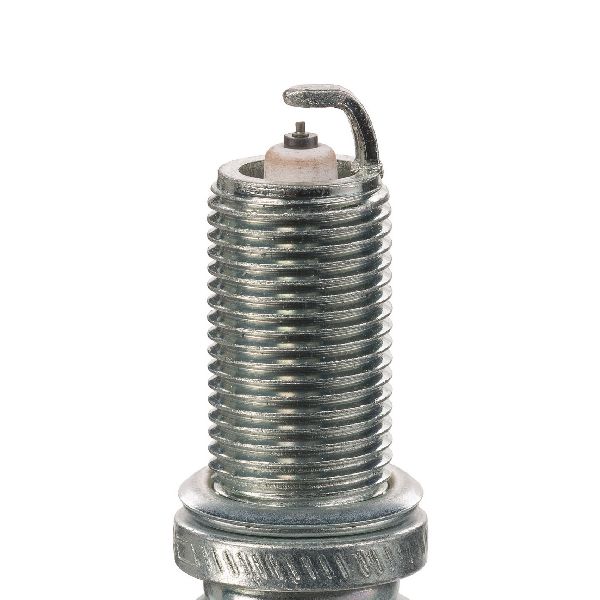
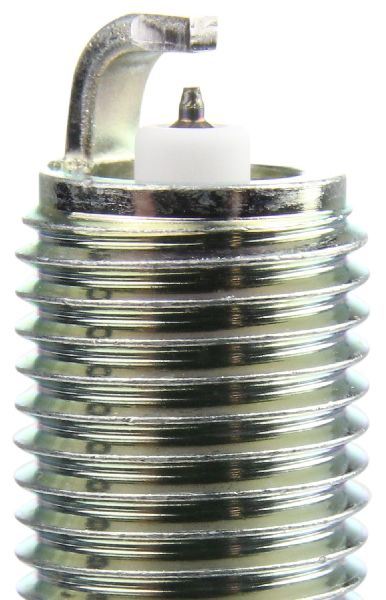
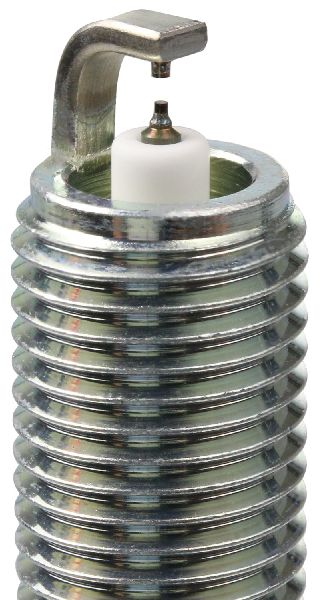
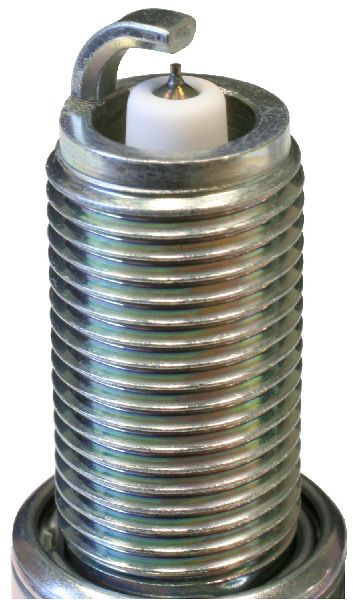
How to confirm: Remove the spark plug from cylinder 3 and inspect it. Look for a worn electrode, heavy carbon buildup, oil fouling, or cracks in the porcelain. Compare it to a plug from a working cylinder.
Typical fix: Replace the spark plug. It is best practice to replace all four spark plugs as a set to maintain consistent performance.
Est. part cost: $10-$25 per plug - Camshaft Position System Fault 🟡 Medium Probability Subaru issued TSB #11-130-13R specifically linking misfire codes (including P0303) to incorrect camshaft position sensor (CPS) clearance on the FB20 engine. This is not just a sensor failure, but a physical clearance issue.
How to confirm: Scan for other accompanying codes like P0340, P0341, P0365, etc. The official fix involves measuring the clearance between the sensor and the sensor plate and installing a specific shim to correct it. This may require professional diagnosis.
Typical fix: Following the procedure in TSB #11-130-13R, measure the CPS clearance and install the correct thickness shim from a shim kit (p/n 10130AA060) to achieve the target gap of 1.25-1.35mm. The sensor's O-ring should also be replaced.
Est. part cost: $50-$150 for a sensor, plus the cost of a shim kit if needed. - Clogged or Faulty Fuel Injector ⚪ Low Probability
How to confirm: Listen for a clicking sound from the injector with a mechanic's stethoscope. A more advanced method is to swap the injector with another cylinder to see if the misfire code follows, though this is more labor-intensive. You can also test the injector's resistance with a multimeter.
Typical fix: Replace the faulty fuel injector.
Est. part cost: $70-$150
Rare But Worth Checking
- Low Engine Compression: This is a more serious mechanical issue. A compression test is needed to confirm. For these specific model years, a known cause of compression loss is a fractured valve spring, which was subject to a safety recall (Subaru recall WTY-84). Other causes can include worn piston rings or a burnt valve.
- Vacuum Leak: A leak in the intake manifold gasket near cylinder 3 could lean out the air/fuel mixture enough to cause a misfire. This would typically be accompanied by a rough idle and potentially a P0300 random misfire code as well.
Diagnosis Steps
- Read the code with an OBD-II scanner and confirm P0303 is present. 🎬 Watch: How to diagnose P0303 spark and coil issues. Note any other codes, especially cam sensor codes.
- Check if the Check Engine Light is flashing. If so, limit driving to prevent catalytic converter damage.
- Check if your vehicle's VIN is covered by the valve spring recall (Subaru recall WTY-84). If so, contact a dealer for a free repair.
- Swap the ignition coil from cylinder 3 (front driver's side on a USDM Subaru boxer engine) with the coil from cylinder 1 (front passenger's side).
- Clear the codes and drive the car until the Check Engine Light returns.
- If the code is now P0301, the ignition coil is bad and needs replacement.
- If the code remains P0303, swap the spark plug from cylinder 3 with cylinder 1. Clear codes and re-test.
- If the code is now P0301, the spark plug was the issue.
- If the code is still P0303, inspect the fuel injector wiring and connector for cylinder 3. Listen for a click from the injector.
- If the above steps do not resolve the issue, the problem may be related to the camshaft position sensor clearance (see TSB #11-130-13R), a clogged fuel injector, a vacuum leak, or a more serious mechanical problem like low compression, which requires professional testing.
Parts You'll Likely Need
- Ignition Coil
(OEM #22433AA652)— This is one of the most frequent failure points for a single-cylinder misfire. The original part number 22433AA650 has been superseded by 22433AA651 and then 22433AA652.
Trusted brands: Denso, NGK, Hitachi, TRQ
OEM price range: $100-$150
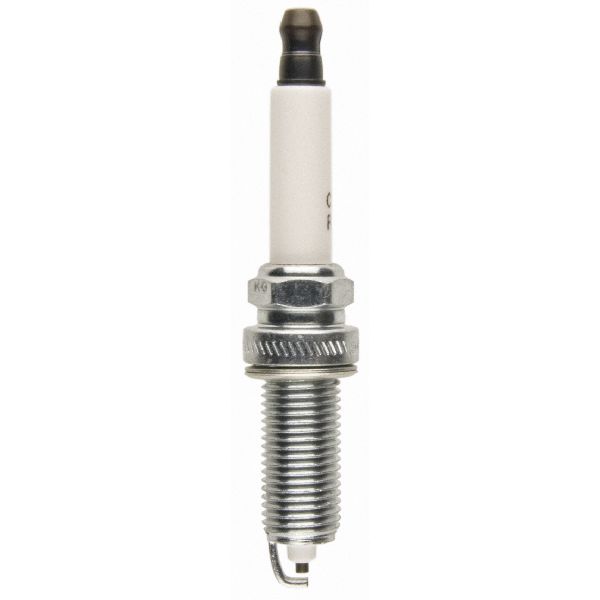
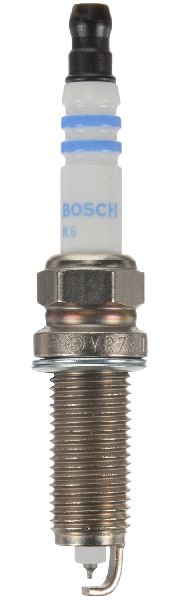
Aftermarket price range: $60-$110 - Spark Plug
(OEM #22401AA781)— Spark plugs are a routine maintenance item and a common cause of misfires as they wear out.
Trusted brands: NGK, Denso
OEM price range: $20-$30
Aftermarket price range: $10-$20
Related Codes That Often Appear With This One
- P0300 — If multiple cylinders are misfiring randomly, you will see P0300 (Random/Multiple Cylinder Misfire) along with specific cylinder codes. This often points to a systemic issue like a vacuum leak or low fuel pressure.
- P0301, P0302, P0304 — These codes indicate misfires in other cylinders. Seeing them together with P0303 points to a problem affecting the whole engine, like low fuel pressure, or a problem affecting one bank of cylinders, like a clogged catalytic converter or timing issue.
- P0340, P0341, P0365, P0366 — As per Subaru TSB #11-130-13R, these camshaft position sensor codes can appear alongside misfire codes and may indicate the root cause of the misfire on this specific vehicle, related to incorrect sensor clearance.
Technical Service Bulletins (TSBs) & Recalls
- 11-130-13R: Links misfire codes P0301-P0304 with camshaft position sensor DTCs and provides inspection and repair procedures involving measuring sensor clearance and installing shims.
- 11-125-12: Mentions misfire DTCs P0301-P0304 in conjunction with camshaft position sensor codes P0365, P0366, P0390, and P0391.
- 11-124-12R: Associates rough idle and misfire codes P0301-P0304 with cam position DTCs P0340, P0341, P0345, or P0346.
Platform-Specific Known Issues
- Subaru Safety Recall WTY-84: Affects 2012-2014 Impreza models. Engine valve springs may fracture, causing the engine to run rough, make noise, stall, and potentially not restart. This can directly cause misfire codes. The fix is a free replacement of the valve springs at a dealership.
- Subaru Technical Service Bulletin #11-130-13R: Explicitly notes that misfire DTCs P0301-P0304 can be caused by incorrect clearance of the intake and exhaust camshaft position sensors. The fix is not just replacing the sensor, but measuring the gap and installing a specific shim to correct it.
- TSB #11-125-12 and #11-124-12R: These earlier TSBs also group these misfire codes with camshaft position sensor DTCs, indicating a known link between the two systems on this platform before being consolidated into TSB 11-130-13R.
Mechanic-Grade Diagnostic Values
- Engine Valve Clearance (Cold Engine) — expected: Intake: 0.10 - 0.16 mm (0.0039 - 0.0063 in), Exhaust: 0.21 - 0.27 mm (0.0083 - 0.0106 in). Failure: Measurements outside of this range, especially if too tight (no clearance), can cause a loss of compression and misfires.
Scan Tool Commands That Help
- Advanced OBD-II Scanner / Subaru Select Monitor (SSM): Live Data Misfire Counter (per cylinder) — Use this to confirm in real-time which cylinder is actively misfiring, even if a code has not been permanently set. This is useful for diagnosing intermittent misfires during a test drive under specific conditions (e.g., high RPM, idle).
Wiring & Ground Locations
- ECU Main Ground — On the top of the intake manifold.. The ECU gets its primary ground reference from the intake manifold. A poor connection here can cause erratic sensor readings and unpredictable issues, including false misfire detection.
- Engine Block Ground Strap — Typically connects from the chassis to the top of the engine block or transmission bell housing, often near the starter motor.. This is a primary ground path for the engine block. A loose or corroded strap can affect the performance of components grounded to the engine, including ignition coils and sensors.
- Cylinder 3 Fuel Injector — Right rear of the engine (passenger side, towards the firewall on a USDM vehicle).. Knowing the physical location is essential for inspecting the connector and wiring for damage or performing a swap diagnostic with another injector.
Real Owner Repair Stories
- Reddit user, r/MechanicAdvice (2012 Subaru Impreza, 73k miles) — Intermittent misfire on cylinder 2 that became more constant. Check engine light would flash then turn off, eventually staying on.
❌ Tried (didn't work) Replaced spark plugs, Replaced ignition coil on the affected cylinder
✅ What actually fixed it The issue started after a valve spring recall. The dealership was stumped but eventually found metal shavings in the oil and 'white silicon everywhere,' leading to the suspicion that the misfire was caused by a botched recall repair, requiring an engine teardown for a definitive diagnosis. - YouTube video - 'P0303 & P0304-Subaru Misfire Codes Solved' (2009 Subaru Forester (EJ Engine, but relevant crankshaft sensor principle)) — P0303 and P0304 codes appearing only during hard acceleration around 5000 RPM. Engine ran smoothly otherwise.
❌ Tried (didn't work) Spark plugs, Plug wires, Ignition coil, Oxygen sensor, Verifying timing belt was correct
✅ What actually fixed it The crankshaft pulley (harmonic balancer) was replaced. The original pulley was suspected to be off-balance or have a bent reluctor tang, which sent an erratic signal to the crankshaft position sensor at high RPM, tricking the ECU into reporting a misfire.
"I Checked Everything" — The Actual Cause
- In a case involving high-RPM misfires (P0303/P0304), after all common ignition and fuel components were checked, the root cause was discovered to be a faulty crankshaft pulley. A standard diagnostic path, including smoke tests for vacuum leaks, would not identify a wobbling or unbalanced pulley that can corrupt the crankshaft position sensor's reading, leading the ECU to falsely detect a misfire.
When the Usual Fixes Don't Work
- While a P0303 code is most commonly a spark plug or ignition coil, owners of the 2012-2013 Impreza should be highly aware of mechanical root causes, especially if the vehicle has undergone the WTY-84 valve spring recall. One owner reported a persistent misfire after the recall service, which was later suspected to be caused by debris or improper assembly during the repair, leading to a required engine teardown. In another case on a similar engine, high-RPM misfires that resisted all common fixes were ultimately traced to a bad crankshaft pulley, a component completely unrelated to the ignition or fuel system of the misfiring cylinder. These cases show that if swapping plugs and coils doesn't work, the next step should be to consider the vehicle's service history and investigate less common mechanical or sensor-related causes.
Model Year Variations Within This Range
- 2012-2013: These models use the early port-injected FB20B engine. It's important to distinguish this from the direct-injected FB20D engine introduced around 2017, as fuel system components and some engine characteristics (like susceptibility to intake valve deposits) differ. The early FB20 engines were also known for potential oil consumption issues which can sometimes lead to oil-fouled spark plugs, contributing to misfires.
Helpful Videos
Used OEM Parts in Stock


New Aftermarket Parts Available

The information in this article is provided for general reference and educational purposes only. Vehicle specifications, procedures, and part compatibility can vary by production date, trim level, and region. Always consult your vehicle's factory service manual and verify part numbers before purchasing or performing repairs. Safety-critical components such as airbags, seat belts, and braking systems should be installed by a qualified professional.
- Subaru IMPREZA:
- 🎬 Helpful Videos
- 🛍️ Shop This Part
- What's Unique About the 2012-2013 Subaru IMPREZA
- Diagnostic Flowchart
- Symptoms You May Notice
- Most Likely Causes
- Rare But Worth Checking
- Diagnosis Steps
- Parts You'll Likely Need
- Related Codes That Often Appear With This One
- Technical Service Bulletins (TSBs) & Recalls
- Platform-Specific Known Issues
- Mechanic-Grade Diagnostic Values
- Scan Tool Commands That Help
- Wiring & Ground Locations
- Real Owner Repair Stories
- "I Checked Everything" — The Actual Cause
- When the Usual Fixes Don't Work
- Model Year Variations Within This Range
- 🎟️ Get 5% Off