

P0303 on 2015-2020 Ram 2500: Cylinder 3 Misfire Causes and Fixes (HEMI & Cummins)
P0303 means cylinder 3 is misfiring. On a 6.4L HEMI V8, this is likely a bad ignition coil or spark plug. On the 6.7L Cummins Diesel, the cause is almost always a faulty fuel injector. A persistent tick on a HEMI may indicate a more serious camshaft/lifter failure, a widely known issue.
- First, identify your engine. The cause of P0303 on a 6.4L HEMI is completely different from a 6.7L Cummins.
- For the 6.4L HEMI, always start by swapping the cylinder #3 ignition coil with another cylinder. This is a fast, free, and definitive test for the most common cause.
- For the 6.7L Cummins, the problem is almost certainly the cylinder #3 fuel injector. Professional diagnosis is recommended before replacing this expensive part.
- On a 6.4L HEMI, a P0303 code combined with a rhythmic ticking sound is a strong warning sign of a potential camshaft/lifter failure, a known and serious issue.
- Do not drive if the check engine light is flashing. This signals a severe misfire that can quickly destroy expensive exhaust components like the catalytic converter or DPF.
What's Unique About the 2015-2020 Ram 2500

For the 2015-2020 Ram 2500, the cause of a P0303 code is entirely dependent on the engine. The 6.4L HEMI V8 gas engines often suffer from simple ignition faults, but are also widely known for a specific valvetrain failure where a collapsed lifter damages the camshaft, presenting as a single-cylinder misfire with a distinct ticking sound. In contrast, the high-pressure common rail fuel system on the 6.7L Cummins diesel makes a faulty fuel injector the most common culprit for a P0303 code, a fact supported by real-world owner complaints and forum discussions. For 2019-2020 Cummins models, this injector failure can be a direct result of the Bosch CP4.2 high-pressure fuel pump failing and sending metal debris through the system, a subject of a major recall.
Diagnostic Flowchart

Tap your situation to follow the diagnostic path that matches what you're seeing on this vehicle.
Generation note: This range covers the Fourth Generation (2015-2018) and the start of the Fifth Generation (2019-2020). The primary engines (6.4L HEMI, 6.7L Cummins) and their common issues related to P0303 are largely consistent. The 5.7L HEMI was phased out of the 2500-series after the 2018 model year. The 6.4L HEMI in HD trucks is a non-MDS (Multi-Displacement System) engine, differentiating it from some versions in other Chrysler vehicles. For 2019-2020 models with the 6.7L Cummins, the engine was equipped with a Bosch CP4.2 high-pressure fuel pump which was subject to a major recall; earlier models in this range used the more robust CP3 pump.
Symptoms You May Notice

- Engine shaking or running rough, especially at idle
- Noticeable loss of engine power and poor acceleration
- Flashing or solid Check Engine Light
- Hesitation or stumbling when accelerating
- Smell of raw fuel from the exhaust
- Decreased fuel economy
- A rhythmic ticking or knocking noise from the engine bay, particularly on the driver's side for the 6.4L HEMI.
- Fuel smell in the engine oil, indicating a leaking injector.
- On HEMI engines, replacing the fuel injector for cylinder 3 when the root cause is a worn camshaft lobe from a failed lifter.
- On Cummins engines, replacing a single injector when the entire fuel system is contaminated by a failing high-pressure fuel pump (a known issue on 2019-2020 models), which will cause the new injector to fail quickly.
- Replacing oxygen sensors, which report on combustion but are almost never the cause of a single-cylinder misfire.
Most Likely Causes
- Faulty Fuel Injector (6.7L Cummins Diesel) 🔴 High Probability The high-pressure common rail fuel system operates at over 26,000 PSI, putting immense stress on injectors and making them a primary wear item. Fuel contamination is a leading cause of premature failure. For 2019-2020 models, failure of the CP4.2 fuel pump can send metal shavings into the fuel system, destroying all six injectors.
How to confirm: Use a scan tool with a cylinder contribution or cutout test to electronically disable cylinder 3 and see if the engine sound changes; no change indicates a dead cylinder. An injector return flow test can also measure leakage. A mechanic can also test the injector's electrical resistance. Resistance should be less than 1.0 Ohm.
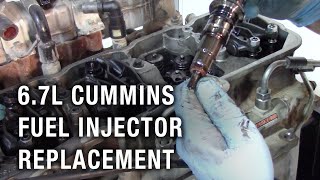
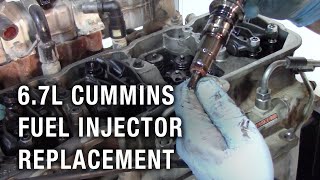
Typical fix: Replace the faulty fuel injector. It is highly recommended to replace all six injectors as a set on high-mileage engines to ensure balanced performance, along with the high-pressure connector tubes. The new injector's IQA code must be programmed into the PCM.
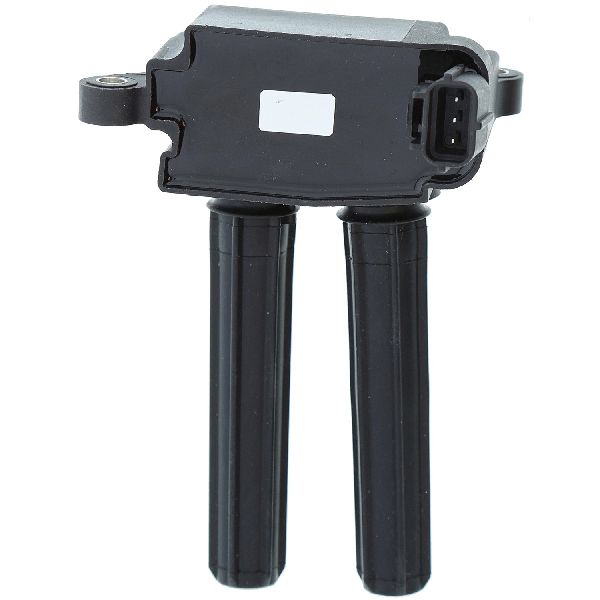
Est. part cost: $300-$600 per injector (e.g., Bosch Remanufactured 0986435518). A full set can cost $1800-$3000+. - Faulty Ignition Coil (6.4L HEMI V8) 🔴 High Probability Coil-on-plug systems are exposed to constant high heat and engine vibration, which causes the internal electronics to fail over time. This is a very common failure point on modern gasoline engines.
How to confirm: Swap the ignition coil from cylinder #3 with another cylinder (e.g., #1). Cylinder #3 is the second one back on the driver's side. Clear the codes and drive. If the code changes to P0301, the coil is bad. A multimeter can also be used to check resistance; primary resistance should be 0.4-2.0 ohms and secondary should be 6k-10k ohms.
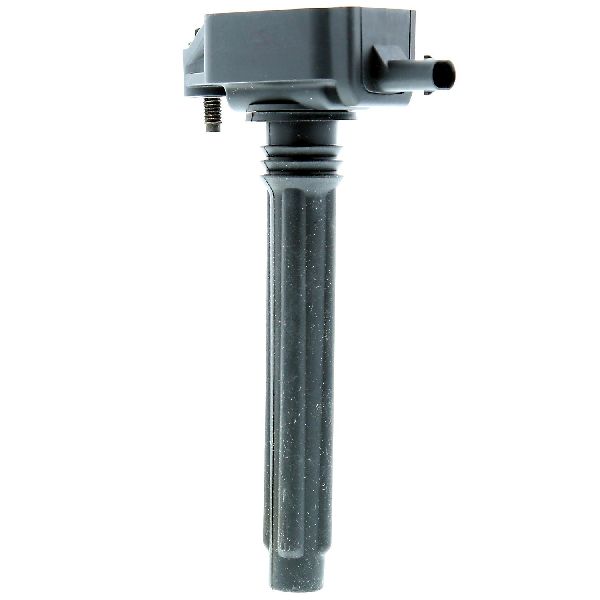
Typical fix: Replace the faulty ignition coil. It is held on by one 10mm bolt and has a single electrical connector. The OEM Mopar part number is typically 68105732AF.
Est. part cost: $40-$80 - Worn or Fouled Spark Plugs (6.4L HEMI V8) 🟡 Medium Probability Spark plugs are a routine maintenance item. The 6.4L HEMI uses two plugs per cylinder (16 total), increasing the chances of a plug-related failure. Plugs can become fouled by carbon or oil, or simply wear out, causing a weak or nonexistent spark.
How to confirm: After ruling out the coil, remove the two spark plugs from cylinder #3. Inspect them for a worn electrode, heavy carbon buildup, oil fouling, or cracks in the ceramic insulator. A fuel-soaked plug indicates a lack of spark.
Typical fix: Replace the spark plugs. It is best practice to replace all 16 spark plugs at the same time for consistent performance. The OEM Mopar part number is SP138239AC.
Est. part cost: $5-$15 per plug - Camshaft and Lifter Failure (6.4L HEMI V8) 🟡 Medium Probability A well-documented issue known as the 'HEMI tick' involves the failure of the lifter's roller bearing. The roller stops rolling and grinds against the camshaft lobe, destroying it and causing a persistent misfire. This issue is widely discussed in owner forums and can occur even at moderate mileage (e.g., 60k-100k miles). The likely cause is traced to defective needle bearings within the lifter's roller.
How to confirm: A persistent, rhythmic ticking noise from the driver's side of the engine that increases with RPM is the primary symptom. A compression test on cylinder #3 may show lower-than-normal readings. Definitive confirmation requires removing the driver's side valve cover and cylinder head to visually inspect the lifters and camshaft lobe for scoring and wear.
Typical fix: This is a major engine repair that involves replacing the camshaft, all 16 lifters, head gaskets, and other related components like pushrods and timing components. Many owners opt for an aftermarket camshaft and lifter kit.
Est. part cost: $800-$1500 for a complete kit (e.g., Mopar part 68144707AA for the head, though often discontinued). Labor is the significant cost.
Rare But Worth Checking
- Low Engine Compression (Both Engines): Although less common, a misfire can be caused by internal mechanical problems like a burnt valve, damaged piston, or worn piston rings. A compression test is necessary to diagnose this.
- PCM Software Issue (Both Engines): Several Technical Service Bulletins list P0303 among many other codes that can be resolved by reprogramming the Powertrain Control Module (PCM) with updated software. For the Cummins, TSB 18-102-22 REV. A specifically addresses misfire codes and other drivability issues, but requires that the CP4 fuel pump recall (Y78) has been completed first.
- Incorrect Valve Lash (6.7L Cummins Diesel): The Cummins engine requires periodic valve lash adjustments (typically every 150,000 miles). If the clearance on cylinder #3's valves is too tight or too loose, it can prevent the valve from seating properly, causing a loss of compression and a misfire.
Diagnosis Steps
- Check for other diagnostic trouble codes. Address any other codes first, especially P0300 (random misfire) or fuel system codes.
- Identify your engine: 6.4L HEMI or 6.7L Cummins. The diagnostic path is completely different.
- FOR 6.4L HEMI: Locate cylinder #3 (second cylinder from the front on the driver's side). Swap the ignition coil with cylinder #1 (front of the driver's side). Clear codes and drive. If the code changes to P0301, the ignition coil is faulty.
- FOR 6.4L HEMI: If the code remains P0303, inspect the two spark plugs in cylinder #3. Replace them if they are worn, fouled, or damaged. Consider replacing all 16 as a set for preventative maintenance.
- FOR 6.4L HEMI: If the misfire persists, listen carefully for a loud, rhythmic ticking noise from the driver's side. If present, a camshaft/lifter failure is highly likely. A compression test should be performed to check for low compression in cylinder #3. Visual inspection of the valvetrain is the definitive diagnostic step.
- FOR 6.7L CUMMINS: Diagnosis typically requires a professional scan tool. A cylinder contribution test can confirm if cylinder #3 is underperforming.
- FOR 6.7L CUMMINS: Check for fuel in the oil by smelling the dipstick. A strong diesel smell suggests a leaking injector.
- FOR 6.7L CUMMINS: If tests point to cylinder #3, an injector return flow test is the next step to measure leakage. For 2019-2020 models, check the fuel filter for metallic 'glitter', a sign of CP4.2 pump failure.
Parts You'll Likely Need
- Fuel Injector (6.7L Cummins)
(OEM #68444307AA)— This is the most common cause of a single-cylinder misfire on the Cummins engine due to the high-pressure fuel system.
Trusted brands: Bosch, Mopar
OEM price range: $450-$600
Aftermarket price range: $300-$500 - Ignition Coil (6.4L HEMI)
(OEM #68238603AA)— A very common and easy-to-replace part for a misfire on a HEMI engine, failing due to heat and vibration.
Trusted brands: Mopar, NGK, Delphi
OEM price range: $60-$90
Aftermarket price range: $40-$70 - Spark Plugs (6.4L HEMI)
(OEM #SP149125AE)— As a routine maintenance item, worn or fouled spark plugs are a frequent cause of misfires. The 6.4L HEMI uses 16 in total.
Trusted brands: NGK, Champion
OEM price range: $10-$20 per plug
Aftermarket price range: $5-$15 per plug - Camshaft and Lifter Kit (6.4L HEMI) — Required for the infamous 'HEMI tick' failure, where a seized lifter destroys the camshaft lobe, causing a persistent P0303.
Trusted brands: Mopar, Melling
OEM price range: $1200-$1800
Aftermarket price range: $800-$1500
Related Codes That Often Appear With This One
- P0300 — This code for 'Random/Multiple Cylinder Misfire' often appears alongside P0303, especially if the underlying issue (like a failing camshaft on a HEMI or a fuel delivery problem on a Cummins) is beginning to affect other cylinders.
- P219A — This code for 'Bank 1 Air-Fuel Ratio Imbalance' can appear with a P0303 on the HEMI engine, as cylinder 3 is on Bank 1. It indicates the computer is detecting a significant fueling difference, often related to a misfire.
- P0301, P0302, P0304, etc. — It is common to see misfire codes for other cylinders logged at the same time, as noted in multiple manufacturer TSBs for PCM software updates. (Bulletins #1810222REVA, #1806623, #1813022REVA, #1810722REVA)
- P0087 — On 2019-2020 Cummins models, 'Fuel Rail/System Pressure - Too Low' is a strong indicator that the P0303 misfire is related to a failing CP4.2 high-pressure fuel pump.
Technical Service Bulletins (TSBs) & Recalls

- 1810222REVA: For 2020 6.7L Cummins, this PCM flash addresses a long list of DTCs, including P0301-P0306, and various drivability issues like idle instability. It explicitly states it should only be performed AFTER the Y78 recall (CP4 fuel pump replacement) is complete.
- 1806623: For 2019 Cummins models, lists P0303 as one of many codes that can be resolved with a PCM software update.
- 1813022REVA: For 2016 Cummins models, a PCM software update that addresses a list of DTCs including P0303, often related to emissions system performance.
- 1810722REVA: For 2015 models (both gas and diesel), a PCM flash to resolve numerous potential DTCs, including the full range of P0301-P0308 misfire codes.
Platform-Specific Known Issues

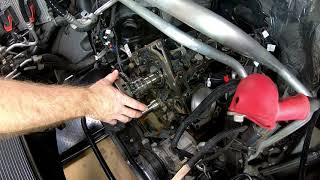
- 6.4L HEMI Camshaft/Lifter Failure ('HEMI Tick'): The most significant known issue for the 6.4L HEMI. A roller lifter (often on the driver's side, e.g., cylinder 3) can seize, causing the roller to stop spinning. This grinds a flat spot on the roller and rapidly wears down the corresponding camshaft lobe. The result is a valve that no longer opens fully, leading to a loss of compression and a persistent misfire on that cylinder (P0303). The primary symptom is a loud, metallic ticking that is distinct from the normal 'HEMI tick' of the injectors and gets faster with engine RPM. This is a major, expensive repair.
- 6.7L Cummins Injector Failure: The most common cause of P0303 on the Cummins. Due to extremely high operating pressures, injectors are a wear item. Failure can manifest as a misfire, rough idle, white smoke, or fuel diluting the engine oil. On 2019-2020 models equipped with the Bosch CP4.2 high-pressure fuel pump, a pump failure can send metal debris throughout the entire fuel system, destroying all injectors and requiring a complete fuel system replacement, a repair that can cost over $10,000.
Mechanic-Grade Diagnostic Values
- 6.4L HEMI Ignition Coil Primary Resistance — expected: 0.4 to 2.0 Ohms. Failure: A reading of OL (over-limit/infinite) or significantly outside the range.
- 6.4L HEMI Ignition Coil Secondary Resistance — expected: 6,000 to 10,000 Ohms (6k-10k Ω). Failure: A reading outside this range.
- 6.7L Cummins Fuel Injector Resistance — expected: Less than 1.0 Ohm. Failure: An infinite reading (OL) or resistance significantly higher than 1.0 Ohm.
- 6.7L Cummins Low-Pressure Fuel (Lift Pump) Pressure — expected: 10-15 PSI at idle. Failure: Pressure significantly below 10 PSI at idle can indicate a weak lift pump.
- 6.7L Cummins High-Pressure Rail (Cranking) — expected: Minimum 4,000-5,000 PSI. Failure: Failure to reach this pressure during cranking will result in a no-start condition, often caused by a leaking injector or failing high-pressure pump.
- 6.7L Cummins High-Pressure Rail (Idle) — expected: ~7,000 PSI. Failure: Unstable or significantly lower pressure at idle suggests issues with the high-pressure pump or injectors.
- 6.7L Cummins Injector Return Flow (Max Leakage) — expected: Maximum of 210 mL in 30 seconds for all injectors combined during a Fuel Pressure Override Test.. Failure: Exceeding this volume, or having a single injector contribute more than 40 mL, indicates excessive leakage and a bad injector.
Hidden / Shadow Codes Worth Checking
- Misfire Counters (Live Data): Chrysler/Ram vehicles have a specific live data PID, often found under 'OBD II Monitors' rather than standard engine data, that shows real-time misfire counts for each cylinder. This is crucial for confirming the misfire is actively occurring on cylinder 3. (see via A professional-level scan tool (like Chrysler's wiTECH) or an advanced consumer tool is required. The data may not be visible if the PCM's 'Adaptive Numerator' has not been learned.)
Scan Tool Commands That Help
- wiTECH or equivalent professional scanner: Cylinder Contribution Test / Injector Kill Test — Used on the 6.7L Cummins to electronically disable fuel to individual cylinders. If disabling cylinder 3 causes no change in engine idle speed or sound, it confirms that cylinder was not contributing power, strongly pointing to a bad injector or compression issue.
- wiTECH or equivalent professional scanner: Fuel Pressure Override Test — Used on the 6.7L Cummins to command maximum rail pressure (e.g., 26,000+ PSI) while the engine is running. This is used in conjunction with an injector return flow test to measure leakage under maximum stress.
- wiTECH or equivalent professional scanner: Adaptive Numerator Re-learn — If a scan tool is not displaying misfire counts on an obvious misfire, the 'Adaptive Numerator' (the PCM's learned profile of the crankshaft) may have been cleared. A specific drive cycle, often involving multiple decelerations from high speed, is required to force the PCM to re-learn the profile and begin counting misfires again.
Wiring & Ground Locations
- G104 / G105 — On the driver's side of the engine block, often on a studded bolt that secures the PCM to the block.. These are the primary ground points for the Powertrain Control Module (PCM). A poor or corroded ground here can cause erratic sensor readings and phantom codes, including misfires. The ground wire typically runs from this point up to the negative battery terminal.
- Injector Harness Pass-Through Connector (6.7L Cummins) — Integrated into the valve cover gasket. The main engine harness connects to it externally, and the internal harness connects from it to the injectors under the valve cover.. The internal injector harness under the valve cover is a common failure point on Cummins engines. Heat and vibration can cause the wiring to break down, leading to an open circuit for a single injector (like P0203) which then causes a misfire code (P0303).
Real Owner Repair Stories
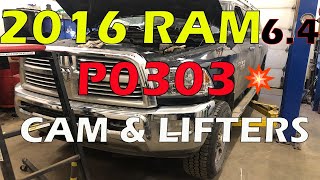
- YouTube channel 'Video Service Information' (2016 Ram 2500 6.4L HEMI with 114,000 miles) — Engine running rough, poor idle, and a distinct engine tick noise.
❌ Tried (didn't work) The technician immediately suspected a mechanical issue due to the ticking noise, bypassing preliminary parts swaps.
✅ What actually fixed it Diagnosis confirmed P0300 and P0303. The noise was isolated to cylinder 3. Teardown revealed flattened and scored lifter rollers and a damaged, gouged camshaft lobe on cylinder 3. The recommended fix was a complete engine replacement due to the high mileage and potential for bearing damage from metal debris.
OEM Part Supersession History
Bosch 0 445 120 187→Bosch 0 986 435 573— Standard part revision and remanufacturing updates for 2013-2018 Ram Cab & Chassis models.
Heads up: These part numbers are specifically for Cab & Chassis models and are not compatible with standard pickup models.Bosch CP4.2 High-Pressure Fuel Pump→Bosch CP3 High-Pressure Fuel Pump (via recall)— The CP4.2 pump was prone to catastrophic failure, leading to a widespread safety recall (Y78 / 21V880).
Heads up: 2019-2020 trucks were originally equipped with the CP4.2. The recall replaces it with the more robust CP3 pump and requires a PCM software reflash to work correctly.
Model Year Variations Within This Range
- 2019-2020: Models with the 6.7L Cummins diesel engine were equipped with the Bosch CP4.2 high-pressure fuel pump. This pump is known for a high failure rate that contaminates the entire fuel system with metal debris, often causing multiple injector failures simultaneously. This was the subject of recall Y78, which retrofits the more reliable CP3 pump.
- 2015-2018: Models with the 6.7L Cummins diesel engine used the more reliable Bosch CP3 high-pressure fuel pump from the factory. While injector failures are still the most common cause of P0303 on these trucks, they are less likely to be caused by a catastrophic pump failure contaminating the whole system.
Helpful Videos
Used OEM Parts in Stock

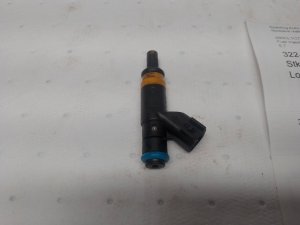


New Aftermarket Parts Available



The information in this article is provided for general reference and educational purposes only. Vehicle specifications, procedures, and part compatibility can vary by production date, trim level, and region. Always consult your vehicle's factory service manual and verify part numbers before purchasing or performing repairs. Safety-critical components such as airbags, seat belts, and braking systems should be installed by a qualified professional.
- Ram 2500:
- 🎬 Helpful Videos
- 🛍️ Shop This Part
- What's Unique About the 2015-2020 Ram 2500
- Diagnostic Flowchart
- Symptoms You May Notice
- Most Likely Causes
- Rare But Worth Checking
- Diagnosis Steps
- Parts You'll Likely Need
- Related Codes That Often Appear With This One
- Technical Service Bulletins (TSBs) & Recalls
- Platform-Specific Known Issues
- Mechanic-Grade Diagnostic Values
- Hidden / Shadow Codes Worth Checking
- Scan Tool Commands That Help
- Wiring & Ground Locations
- Real Owner Repair Stories
- OEM Part Supersession History
- Model Year Variations Within This Range
- 🎟️ Get 5% Off