

P0303 on 2014-2017 Mazda MAZDA6: Cylinder 3 Misfire Causes and Fixes
P0303 on a 2014-2017 Mazda6 most often means a bad ignition coil or a worn-out spark plug on cylinder 3. A simple diagnostic is to swap the coil with another cylinder to see if the code follows. A single coil is about $40-$80 for an aftermarket part. Mazda has also issued a TSB (#01-014-16-3208A) for certain ignition coils failing prematurely.
- P0303 is a misfire on cylinder 3. The most likely culprits are a bad ignition coil or a worn spark plug.
- The easiest DIY diagnostic is to swap the ignition coil from cylinder 3 to another cylinder and see if the misfire code follows.
- Be aware of Mazda-specific issues documented in TSBs, such as fuel injector circuit faults and, in cold climates, a frozen muffler causing exhaust backpressure.
- Like other direct-injection engines, the SKYACTIV-G is prone to carbon buildup on intake valves, which can cause misfires at higher mileage.
- Do not ignore a flashing check engine light, as this indicates a severe misfire that can quickly destroy your catalytic converter.
What's Unique About the 2014-2017 Mazda MAZDA6
While ignition components are the usual suspects, the 2014-2017 Mazda6 has some unique documented issues. Mazda has issued Technical Service Bulletins (TSBs) pointing to specific causes for misfires. TSB #01-014-16-3208A identifies an internal failure of specific 'YUMEBISHI'-brand ignition coils due to temperature fluctuations, recommending replacement with 'MITSUBISHI'-brand coils. Other TSBs point to fuel injector circuit problems and, unusually, exhaust restriction caused by frozen water in the main silencer in cold climates. Additionally, like all direct-injection engines, the 2.5L SKYACTIV-G can be susceptible to carbon buildup on intake valves over time, which can disrupt airflow and cause misfires, though Mazda's design attempts to mitigate this.
Diagnostic Flowchart
Tap your situation to follow the diagnostic path that matches what you're seeing on this vehicle.
Symptoms You May Notice
- Rough idle or shaking at a stop
- Engine hesitation or stumbling during acceleration
- Noticeable loss of engine power
- Flashing or solid Check Engine Light
- Reduced fuel economy
- Fuel smell from the exhaust
- Vehicle enters 'limp mode' with severely restricted power
- Replacing only the spark plugs when the ignition coil is the actual problem.
- Replacing ignition and fuel parts when the issue is carbon buildup on the intake valves.
- Assuming a major engine problem before checking for the specific TSB-related issues like a frozen exhaust or injector wiring.
- Using incorrect, non-OEM specification spark plugs which can cause persistent misfires.
Most Likely Causes
- Faulty Ignition Coil 🔴 High Probability Ignition coils are a common failure point. Mazda TSB #01-014-16-3208A specifically addresses internal failures of YUMEBISHI-brand coils on these vehicles due to temperature changes, making this a well-documented issue. The fix is to replace them with updated MITSUBISHI-brand coils.
How to confirm: Swap the ignition coil from cylinder 3 with another cylinder (e.g., cylinder 2). Clear the codes and drive. If the code changes to P0302, the coil is faulty. This is the most common and effective DIY diagnostic step confirmed by numerous owners.
Typical fix: Replace the faulty ignition coil. It is often recommended to replace all four if they are original and high-mileage, especially if they are the problematic YUMEBISHI brand.
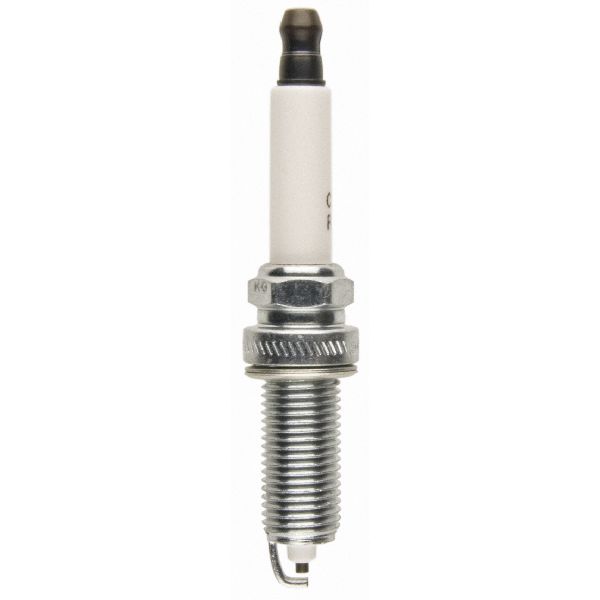
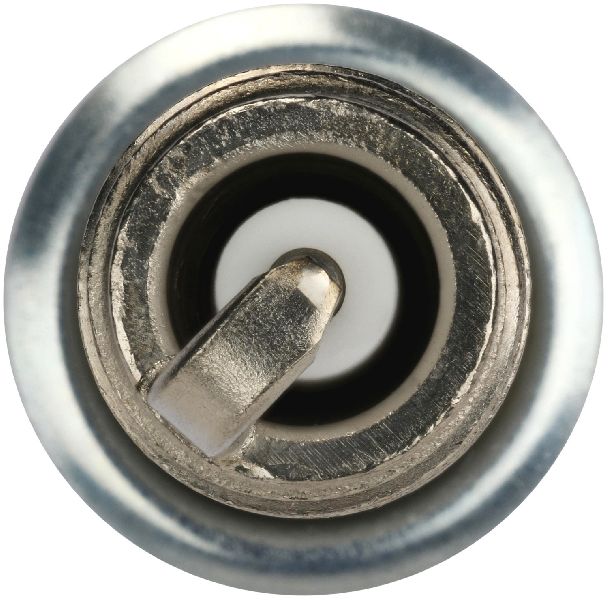
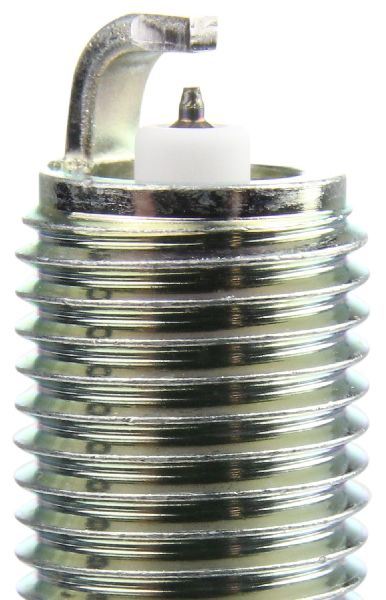
Est. part cost: $40-$80 - Worn or Fouled Spark Plug 🔴 High Probability Spark plugs are a regular maintenance item with a finite lifespan. If the vehicle has high mileage and the plugs have not been changed, they are a very likely cause. A cracked porcelain insulator, not always visible, can also cause a misfire. Using the incorrect spark plug part number is a common mistake that can also cause this code.
How to confirm: After trying a coil swap, swap the spark plug from cylinder 3 to another cylinder. If the misfire follows the plug, it's bad. Visually inspect the plug for wear, oil fouling, or carbon buildup. Ensure the correct OEM-spec plug (e.g., NGK ILKAR7L11) is being used.
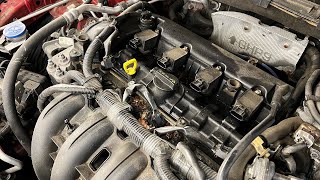
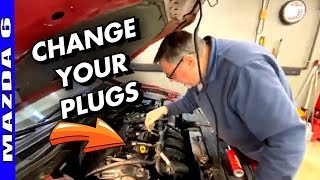
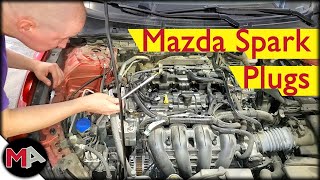
Typical fix: Replace the spark plug. It is best practice to replace all four spark plugs at the same time with high-quality Iridium plugs matching OEM specifications. 🎬 Watch: How to replace spark plugs on a 2.5L Mazda 6.
Est. part cost: $15-$30 per plug - Faulty or Clogged Fuel Injector / Circuit Issue 🟡 Medium Probability Mazda TSBs #01-004-17-3317a and #01-017-16-3242 specifically note that misfire codes like P0303 can be stored with fuel injector circuit codes for paired cylinders (P0202 and P0203). This suggests the issue may be an internal PCM failure affecting the injector driver, rather than a clogged injector itself.
How to confirm: Listen to the injector with a mechanic's stethoscope; it should have a consistent clicking sound. Check for a corresponding P0203 code. If P0202 and P0203 appear together, suspect the PCM per the TSB. A professional may need to perform a fuel injector balance test or check the wiring harness.
Typical fix: If paired with a P0203 code and another injector code, the PCM may need replacement. Otherwise, cleaning or replacing the single faulty fuel injector may be the solution. Sometimes the electrical connector is the problem.
Est. part cost: $70-$150 - Carbon Buildup on Intake Valves 🟡 Medium Probability The 2.5L SKYACTIV-G is a direct-injection (GDI) engine. In GDI engines, fuel is injected directly into the cylinder, so it doesn't wash over and clean the intake valves. Over time, oil vapor from the PCV system can bake onto the valves, restricting airflow and causing misfires, particularly on cold starts. Owners have reported this issue leading to misfire codes at mileages as low as 75,000 miles.
How to confirm: This is difficult to confirm without a borescope inspection of the intake ports and valves, which requires removing the intake manifold. A gradual loss of performance and multi-cylinder misfires (P0300) at high mileage can be indicators.
Typical fix: The intake valves need to be cleaned, typically through a process called walnut blasting. This is a labor-intensive job best left to professionals.
Est. part cost: $0 (service cost is labor, typically $400-$800)
Rare But Worth Checking
- Exhaust Restriction from Frozen Water: As documented in Mazda TSBs #01-007-19-3541, #01-006-18-3429, and #01-002-17-3299a, water can accumulate and freeze in the main silencer (muffler) in cold climates (below 32°F / 0°C), especially on vehicles used for short trips. This creates backpressure that can cause random misfires, including P0303. The fix involves replacing the muffler with a modified part that has drain holes.
- Low Engine Compression: Less common causes include mechanical engine problems like a leaking valve, worn piston rings, or a leaking head gasket. A compression test is the definitive way to diagnose this and should be performed if ignition and fuel system checks do not resolve the issue.
Diagnosis Steps
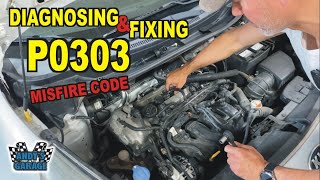
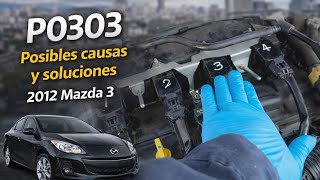
- Read the codes with an OBD-II scanner and note any other codes present, paying close attention to P02xx codes. 🎬 Watch: A helpful guide on diagnosing and fixing P0303 misfire codes.
- To test the ignition coil, swap the coil from cylinder 3 with an adjacent cylinder (e.g., cylinder 2). Note that cylinder 3 is the third cylinder from the front of the engine (belt side).
- Clear the codes and drive the vehicle until the check engine light returns.
- If the code has moved to the other cylinder (e.g., P0302), the ignition coil is faulty and needs to be replaced. Check the coil for a 'YUMEBISHI' brand marking, as these are known to be problematic per TSB #01-014-16-3208A.
- If the code remains P0303, the coil is likely good. Next, swap the spark plug from cylinder 3 with another cylinder.
- If the misfire follows the spark plug, replace all four spark plugs with the correct OEM-spec part.
- If the misfire remains on cylinder 3, inspect the fuel injector wiring and connector for damage. Listen to the injector with a stethoscope for a steady clicking sound.
- If you live in a cold climate and make short trips, investigate TSB #01-007-19-3541 regarding a frozen muffler.
- If the above steps do not identify the issue, consider more advanced diagnostics like a compression test, checking for vacuum leaks, or a borescope inspection for carbon buildup.
Parts You'll Likely Need
- Ignition Coil
(OEM #PE20-18-100A)— This is one of the most common failure points for a single-cylinder misfire, with a specific TSB (#01-014-16-3208A) identifying a faulty original-equipment supplier.
Trusted brands: NGK, Denso, Bosch, Mazda (MITSUBISHI-produced)
OEM price range: $140-$180
Aftermarket price range: $40-$80 - Spark Plug
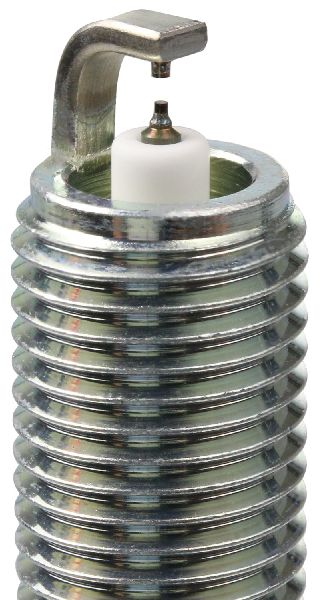
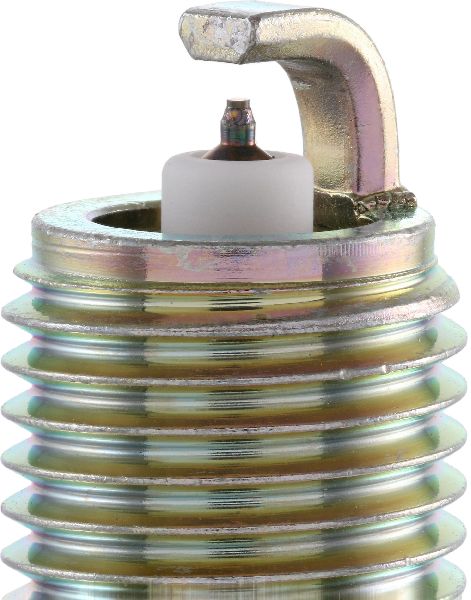
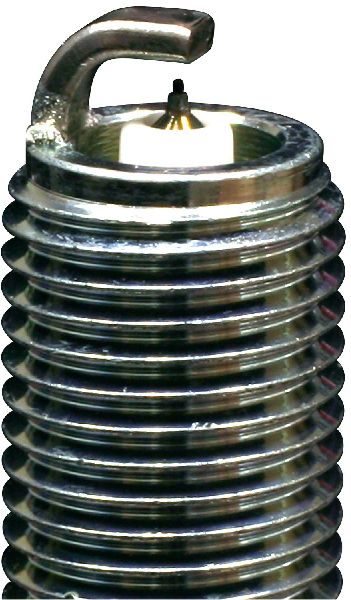
(OEM #PE5R-18-110A (NGK ILKAR7L11))— Spark plugs are a routine wear item and a primary cause of misfires, especially on high-mileage vehicles. Using the correct part is critical.
Trusted brands: NGK, Denso
OEM price range: $25-$35
Aftermarket price range: $15-$30
Related Codes That Often Appear With This One
- P0300 — If the underlying cause, like a vacuum leak, carbon buildup, or a frozen exhaust, affects all cylinders, a P0300 (Random Misfire) may be present.
- P0301, P0302, P0304 — Codes for other cylinders may appear if the cause is not isolated to cylinder 3, such as bad fuel or a clogged exhaust.
- P0203 — This code for 'Fuel Injector Circuit/Open Cylinder 3' is specifically mentioned in Mazda TSBs #01-004-17-3317a and #01-017-16-3242 as appearing alongside P0303, often paired with P0202, pointing to a potential PCM failure.
- P0171 — This code for 'System Too Lean' can appear with a misfire code if the root cause is a vacuum leak, a dirty MAF sensor, or a fuel delivery problem that is affecting the air-fuel ratio.
Technical Service Bulletins (TSBs) & Recalls
- 01-014-16-3208A: Misfires due to internal failure of specific YUMEBISHI-produced ignition coils.
- 01-007-19-3541: Misfire codes due to frozen water in main silencer in cold climates.
- 01-004-17-3317a: Misfire codes stored with fuel injector circuit codes (P0202/P0203), pointing to a potential PCM issue.
- 01-017-16-3242: Superseded by 01-004-17-3317a, also concerning injector circuit codes and misfires.
- 01-002-17-3299a: Another TSB related to misfires from a frozen main silencer.
Platform-Specific Known Issues
- Faulty Ignition Coils: TSB #01-014-16-3208A specifically calls out 'YUMEBISHI'-produced ignition coils for internal failure. The fix is to replace them with 'MITSUBISHI'-produced coils, identifiable by their 5-digit lot numbers.
- Frozen Exhaust: TSBs #01-007-19-3541, #01-006-18-3429, and #01-002-17-3299a describe a condition where water freezes in the muffler, causing an exhaust restriction and leading to multiple misfire codes, including P0303. This applies to vehicles in cold climates making short trips. The fix is a new muffler with drain holes.
- Fuel Injector Circuits / PCM Failure: TSBs #01-004-17-3317a and #01-017-16-3242 highlight that misfire codes are often stored alongside fuel injector circuit codes for paired cylinders (P0202/P0203 or P0201/P0204), suggesting a known issue with the DENSO-produced PCM's injector driver.
Mechanic-Grade Diagnostic Values
- Fuel Injector Resistance — expected: 1.6—2.52 ohms (at 0—80 °C / 32—176 °F). Failure: A reading outside this range, or an open/infinite reading, indicates a failed injector.
- Fuel Injector Resistance (User Reported) — expected: ~12.8 ohms. Failure: A dead injector showed an open circuit (no reading).
Hidden / Shadow Codes Worth Checking
- Mode $06 Misfire Counts: Advanced scan tools can access Mode $06 data, which includes raw misfire counts for each cylinder before they are high enough to trigger a P030x code. This can help identify intermittent or developing misfires. (see via Use a professional scan tool or an advanced consumer OBD-II scanner with Mode $06 capability (e.g., FORScan, some Autel models).)
Scan Tool Commands That Help
- FORScan / M-MDS: Cylinder Power Balance / Injector Kill Test — This function allows a technician to deactivate the fuel injector for cylinder 3. If there is little or no change in engine RPM or smoothness when cylinder 3 is deactivated, it confirms that cylinder was not contributing power, pointing to a fault in that cylinder's ignition, fuel, or compression.
Wiring & Ground Locations
- PCM Connector Pins (Fuel Injector 3) — The PCM is located in the engine compartment. For a P0203 code, which can accompany a P0303, the relevant pins would be for the cylinder 3 injector circuit.. TSB #01-004-17-3317a mentions paired injector circuit codes (P0202 and P0203) can indicate a PCM failure. While specific pinouts for cylinder 3 were not found, a manual for a similar engine shows injector #2 uses pins 1DW and 1DX, and injector #4 uses pins 1DR and 1DS. This confirms that injector circuits can be tested directly at the PCM connector to diagnose wiring or PCM driver faults.
- Fuse F3 (15A) INJECTOR — In the engine compartment fuse block.. This fuse supplies power to the engine control system, which includes the fuel injectors. While a failure would likely affect all cylinders and not just cylinder 3, it's a primary power source to verify.
- Ground G01 — Near the left headlight in the engine compartment.. This is a major engine bay ground point. A poor connection here could potentially cause a variety of sensor and actuator issues, including those that might lead to a misfire.
Real Owner Repair Stories
- Reddit user in /r/mazda6 (2016 Mazda 6) — Check engine light with a P0303 code.
✅ What actually fixed it The user replaced the coil packs and spark plugs on all cylinders to resolve the P0303 code.
OEM Part Supersession History
PE01-18-100, PE01-18-100A, P51B-18-100→PE20-18-100A— The original YUMEBISHI-brand coils were prone to internal failure due to temperature changes. The superseding part is from MITSUBISHI and is more robust.PY01-13-250→PY0113250 (aftermarket equivalent PO0113)— Standard part lifecycle update for fuel injectors.
Heads up: These part numbers apply to the 2.5L Skyactiv-G engine in the 2014-2018 Mazda6 and CX-5.
Model Year Variations Within This Range
- 2014-2017: These model years all use the same non-turbo 2.5L SKYACTIV-G engine. A significant refresh occurred for the 2018 model year, which introduced a redesigned interior and the option for a 2.5L turbocharged engine. The non-turbo engine in 2018+ models received a very slight power bump (184 hp to 187 hp).
- Vehicles before April 7, 2016: Vehicles produced before this date may be equipped with the failure-prone 'YUMEBISHI' ignition coils as identified in TSB #01-014-16-3208A.
- Vehicles before May 23, 2016: Vehicles produced before this date may have a DENSO-produced PCM that is susceptible to an internal failure causing paired injector circuit codes, as identified in TSB #01-017-16-3242.
Helpful Videos
Used OEM Parts in Stock

New Aftermarket Parts Available

The information in this article is provided for general reference and educational purposes only. Vehicle specifications, procedures, and part compatibility can vary by production date, trim level, and region. Always consult your vehicle's factory service manual and verify part numbers before purchasing or performing repairs. Safety-critical components such as airbags, seat belts, and braking systems should be installed by a qualified professional.
- Mazda MAZDA6:
- 🎬 Helpful Videos
- 🛍️ Shop This Part
- What's Unique About the 2014-2017 Mazda MAZDA6
- Diagnostic Flowchart
- Symptoms You May Notice
- Most Likely Causes
- Rare But Worth Checking
- Diagnosis Steps
- Parts You'll Likely Need
- Related Codes That Often Appear With This One
- Technical Service Bulletins (TSBs) & Recalls
- Platform-Specific Known Issues
- Mechanic-Grade Diagnostic Values
- Hidden / Shadow Codes Worth Checking
- Scan Tool Commands That Help
- Wiring & Ground Locations
- Real Owner Repair Stories
- OEM Part Supersession History
- Model Year Variations Within This Range
- 🎟️ Get 5% Off