

P0303 on 2012-2013 Mazda 3: Cylinder 3 Misfire Causes and Fixes
P0303 on a 2012-2013 Mazda 3 almost always means the ignition coil on cylinder 3 has failed. This is a known issue confirmed by a manufacturer TSB. Replacing the coil is a simple, 15-minute DIY job with a part cost of about $35-$100.
- P0303 on a 2012-2013 Mazda 3 is most often caused by a failed ignition coil on cylinder 3.
- Diagnose the problem for free by swapping the cylinder 3 ignition coil with one from another cylinder. If the code follows the coil, you've found the problem.
- This is a very DIY-friendly repair that requires basic tools and can be completed in under 30 minutes.
- If the check engine light is flashing, stop driving to prevent expensive damage to your catalytic converter.
- While less common, worn spark plugs or a clogged fuel injector can also cause this code if the ignition coil is not at fault.
What's Unique About the 2012-2013 Mazda MAZDA3

For the 2012-2013 Mazda 3, particularly models with the Skyactiv engine, this code is strongly linked to a known issue with the original ignition coils. Mazda issued a Technical Service Bulletin (TSB #01-014-16-3208) acknowledging that certain ignition coils, specifically those made by a supplier named 'YUMEBISHI', could fail prematurely due to large temperature swings. The fix involves replacing the faulty coil with an improved part, often made by 'MITSUBISHI'. While spark plugs and fuel injectors can be culprits, the ignition coil is by far the most common point of failure on this specific vehicle.
Diagnostic Flowchart

Tap your situation to follow the diagnostic path that matches what you're seeing on this vehicle.
Symptoms You May Notice

- Rough or shaky idle
- Hesitation or stumbling during acceleration
- Noticeable loss of engine power
- Flashing or solid Check Engine Light
- Reduced fuel economy
- Sputtering or popping sounds from the engine 🎬 Watch: A quick guide to diagnosing these rough running symptoms.
- Replacing the spark plugs when the ignition coil is the actual problem. Always swap the coil first to confirm before spending money on parts.
- Assuming any aftermarket coil will work. Some owners report issues with aftermarket parts and recommend using OEM (Mitsubishi-made) or reputable brands like NGK/Denso.
Most Likely Causes


- Failed Ignition Coil 🔴 High Probability A manufacturer TSB (#01-014-16-3208) was issued for 2012-2013 models, stating that an internal failure of the ignition coil is a likely cause for misfires due to temperature fluctuations. The bulletin specifies that coils from the supplier 'YUMEBISHI' are the problem, while 'MITSUBISHI' coils are the reliable replacement.
How to confirm: The easiest method is to swap the ignition coil from cylinder 3 with another cylinder (e.g., cylinder 2). Cylinder 3 is the third from the left (belt side) of the engine. Clear the codes and drive. If the code changes to P0302, the ignition coil is faulty.
Typical fix: Replace the faulty ignition coil. It is held on by a single 8mm bolt and an electrical connector. 🎬 See this walkthrough on how to replace your ignition coils. Many owners replace only the single failed coil.
Est. part cost: $35-$130 - Worn or Fouled Spark Plug 🟡 Medium Probability Spark plugs are a regular maintenance item with a service interval of 75,000 miles for the Skyactiv engine. If they are old or have excessive carbon buildup, they can fail to produce a strong enough spark. An oil leak from the valve cover gasket can also foul the plug.
How to confirm: After ruling out the ignition coil, remove the spark plug from cylinder 3. Inspect it for wear, carbon deposits, oil, or damage to the electrode. A plug that is wet or covered in black soot is a clear sign it's not firing.
Typical fix: Replace the spark plug. It is highly recommended to replace all four spark plugs at the same time to maintain consistent performance and avoid future misfires. 🎬 Watch: Step-by-step instructions for replacing your Skyactiv spark plugs.
Est. part cost: $10-$25 per plug - Clogged or Faulty Fuel Injector ⚪ Low Probability On direct-injection Skyactiv engines, carbon buildup on intake valves and injectors can become an issue over time, potentially restricting fuel flow. One detailed forum post on ScannerDanner describes a 2013 Mazda 3 with a persistent P0303 where the final solution was a clogged cylinder 3 injector, a known issue on higher mileage Skyactiv motors.
How to confirm: This is more difficult to diagnose. If swapping the coil and plug doesn't solve the issue, a professional may need to test the fuel injector's flow rate and spray pattern using a scan tool's balance test. A user on Reddit with a 2012 Mazda 3 had a P0303 return after replacing coils and plugs, with the next logical step being the fuel injector.
Typical fix: Clean or replace the fuel injector for cylinder 3. This is a more involved job that may require removing the intake manifold.
Est. part cost: $70-$200
Rare But Worth Checking
- Carbon Buildup on Intake Valves: Direct-injection (GDI) engines like the Skyactiv are prone to carbon buildup on the back of the intake valves because fuel is injected directly into the cylinder and doesn't wash over the valves. This can disrupt airflow and cause misfires, especially when cold. A TSB (#01-012-19-3612) mentions this as a possible cause, and some owners on Reddit have been recommended a chemical or walnut-shell cleaning service by dealers for persistent misfires.
- Low Engine Compression: Mechanical engine issues like a worn piston ring or a problem with a valve can cause a loss of compression in the cylinder, leading to a misfire. This is unlikely but should be checked with a compression test if ignition and fuel system components are good.
- High Pressure Fuel Pump Issue: A separate TSB (#01-010/14) exists for 2012-13 Mazda3 Skyactiv models for a faulty high-pressure fuel pump that can cause a P0191 code. While not a direct cause of P0303, erratic fuel pressure could potentially lead to misfire conditions.
Diagnosis Steps
- Read the trouble codes with an OBD-II scanner to confirm P0303 is present.
- Perform a visual inspection of the wiring and connector for the ignition coil on cylinder 3.
- Swap the ignition coil from cylinder 3 with the coil from cylinder 2. They are identical and easy to access with an 8mm socket.
- Clear the codes with the scanner and drive the vehicle until the check engine light returns.
- Re-scan for codes. If the code is now P0302, the ignition coil you moved is faulty and needs to be replaced.
- If the code remains P0303, the problem is not the coil. Proceed to inspect the spark plug in cylinder 3. Check for fouling, wear, or oil in the spark plug tube.
- If the spark plug looks good, the next most likely cause is a faulty fuel injector or, more rarely, a compression issue or carbon buildup. Further professional diagnosis may be needed at this stage.
Parts You'll Likely Need
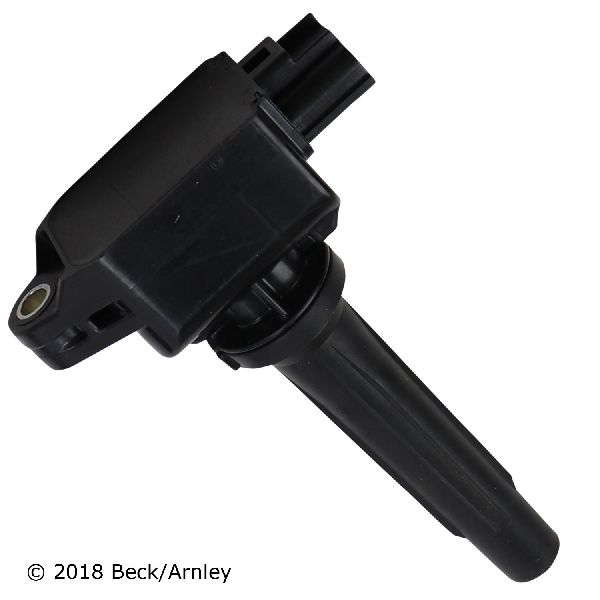
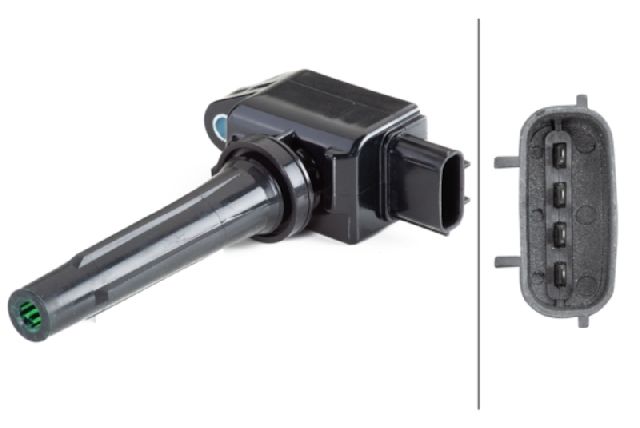
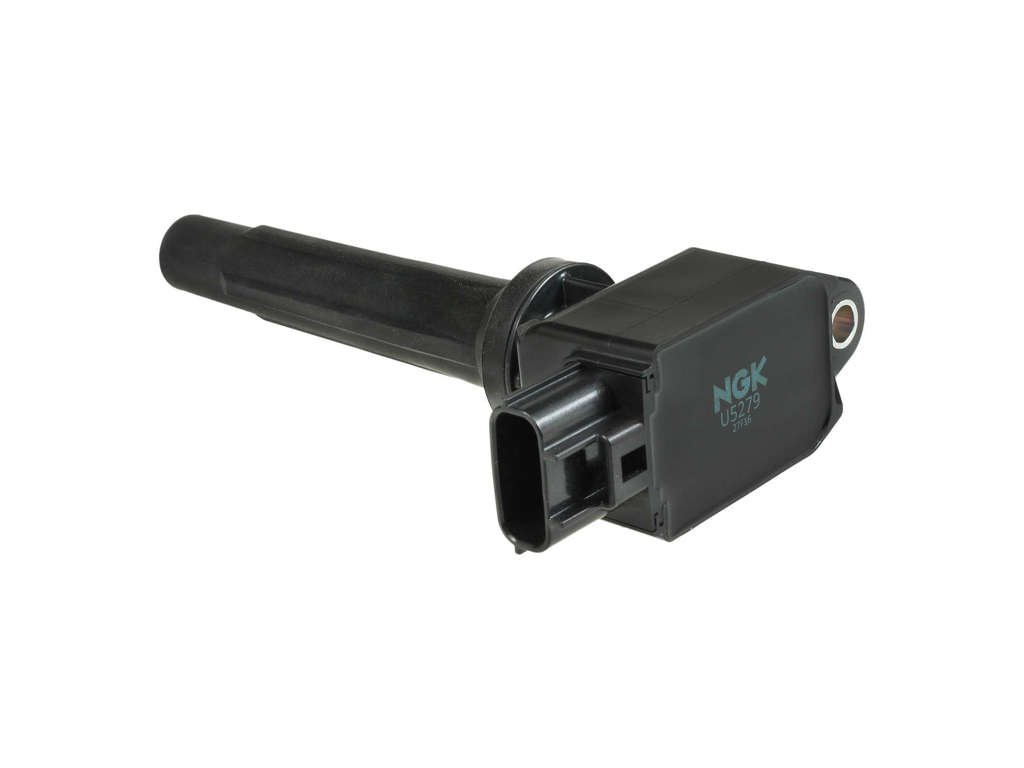
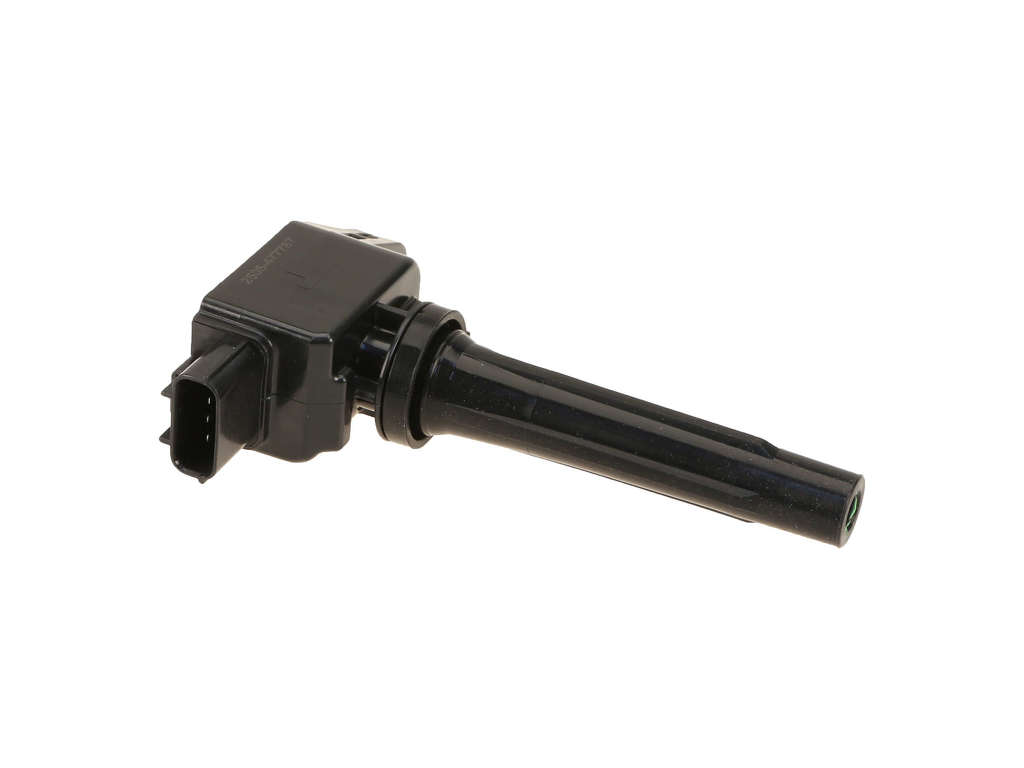
- Ignition Coil
(OEM #PE20-18-100A (supersedes PE01-18-100, PE01-18-100A))— This is the most common failure part for a P0303 code on this vehicle, as documented by manufacturer TSB #01-014-16-3208.
Trusted brands: Mazda (Mitsubishi-produced), NGK, Delphi, Bosch
OEM price range: $100-$160
Aftermarket price range: $35-$100 - Iridium Spark Plug (for Skyactiv)
(OEM #PE5R-18-110A (NGK ILKAR7L11, stock #94124))— If the spark plug is the cause, or if it's due for replacement (75k mile interval), it's a necessary part. It's good practice to replace plugs when replacing a coil.
Trusted brands: NGK, Denso
OEM price range: $20-$30
Aftermarket price range: $10-$20
Related Codes That Often Appear With This One
- P0300 — If the misfire is intermittent or affects multiple cylinders, a P0300 (Random Misfire) code may appear alongside P0303.
- P0301, P0302, P0304 — If other cylinders are also misfiring due to a common problem like bad fuel or widespread ignition coil failure, their specific codes may also be stored.
Technical Service Bulletins (TSBs) & Recalls
- 01-014-16-3208: Notes potential for ignition coil internal failure due to temperature changes, causing misfire DTCs P0300-P0304. Specifically calls out 'YUMEBISHI' coils as faulty.
- 01-012-19-3612: Mentions that carbon deposits around intake valves can cause unstable combustion and misfire DTCs.
- SSB 01-007/16: For Skyactiv models in cold climates, addresses misfires (P0300-P0304) with increased oil level due to fuel dilution. Requires PCM reprogramming.
Platform-Specific Known Issues
- A Technical Service Bulletin (TSB #01-014-16-3208) was issued by Mazda for 2012-2016 models, indicating that ignition coils from a specific supplier (YUMEBISHI) were prone to premature internal failure, causing misfires. The recommended fix is to use the MITSUBISHI-produced part.
- Another TSB (#01-012-19-3612) notes that carbon deposits around the intake valves on Skyactiv engines can cause unstable combustion and misfires, particularly during warm-up.
- A TSB from 2016 (#SSB 01-007/16) also applies to 2012-2013 Mazda3 Skyactiv models, addressing misfires in cold weather due to PCM logic causing fuel to dilute the engine oil. The fix is a PCM reprogram and an oil change.
Mechanic-Grade Diagnostic Values
- High-Pressure Fuel Rail Pressure (Skyactiv GDI) — expected: Approx. 400 PSI at idle, rising to 1600-1850 PSI under load/WOT.. Failure: Pressure that is significantly lower than expected, fails to rise under load, or is stuck at a very high reading (e.g., >2000 PSI) may indicate a pump or sensor issue.
- Ignition Coil Primary Winding Resistance — expected: Approximately 0.49 - 0.57 ohms (general specification).. Failure: A reading outside of this range suggests a faulty coil.
- Ignition Coil Secondary Winding Resistance — expected: Approximately 9.5 - 11.1 kilohms (general specification).. Failure: A reading outside of this range suggests a faulty coil.
Hidden / Shadow Codes Worth Checking
- Mode 6, Test ID $A2-$A7: This is not a DTC, but a function within an advanced scan tool. Mode 6 data allows a technician to view raw misfire counts for each individual cylinder, even if the count is not yet high enough to trigger a P030x code. This can help identify intermittent or developing misfires. (see via An OBD-II scanner with Mode 6 diagnostic capabilities.)
- U0401, U0442: In some cases, a persistent P0303 may be accompanied by U-codes like U0401 (Invalid Data Received From ECM/PCM) or U0442 (Invalid Data Received From PCM). The presence of these codes alongside the misfire code can point a technician away from a simple component failure and towards a more complex issue with the Powertrain Control Module (PCM) itself or its communication network. (see via Standard OBD-II scanner.)
Scan Tool Commands That Help
- Lab Scope / Oscilloscope: Ignition Coil Primary Amperage Waveform Analysis — This advanced test is used when a coil is suspected but the swap test is inconclusive. By clamping the coil's power wire, a technician can visually inspect the amperage pattern. A waveform showing a steep, premature drop-off indicates an internal short circuit within the coil, definitively confirming it's faulty.
Wiring & Ground Locations
- G6 — Left rear of the engine.. This is a primary ground point for the engine control system. A loose or corroded connection here can cause erratic behavior in multiple components, including the PCM and ignition coils, potentially leading to misfire codes.
- G7 — Top rear of the engine.. This ground point is shared by the PCM and the individual ignition coils. A poor ground at this specific location can directly cause weak spark or intermittent coil function, leading to misfires.
- PCM Connector Ground Pins — At the main connector for the Powertrain Control Module (PCM).. Verifying continuity to ground directly at the PCM's own ground pins confirms the module has a solid ground path. This rules out a wiring issue between the PCM and the main chassis grounds (like G6/G7) and is a critical step before condemning an expensive PCM.
Real Owner Repair Stories
- Reddit user in r/mazdaspeed (2012 Mazda 3i, approx. 113k miles) — P0303 code, jerking, flashing check engine light.
❌ Tried (didn't work) Replacing the spark plug on cylinder 3., Replacing the ignition coil on cylinder 3., Swapping plugs and coils to other cylinders (code remained P0303).
✅ What actually fixed it The user was advised by a mechanic that the issue was likely a faulty ECM (Engine Control Module), as the common ignition components had been ruled out. - Reddit user in r/mazda (2012 Mazda 3) — P0303 code.
❌ Tried (didn't work) Replacing all spark plugs., Replacing all ignition coils with aftermarket parts.
✅ What actually fixed it The code returned the next day. A dealer diagnosed the issue as carbon build-up on the valves causing them to stick, a known issue with GDI engines. The recommended fix was a carbon cleaning service. - Reddit user in r/mazda3 (2012 Mazda 3) — P0303 code, but car ran fine with good MPG.
❌ Tried (didn't work) Replacing spark plugs., Swapping ignition coils around.
✅ What actually fixed it After ignition components were ruled out, a responding mechanic noted that the next most likely culprits are fuel (injector) or compression, stating they had seen more injector issues than compression issues on these cars.
When the Usual Fixes Don't Work
- While the overwhelming consensus points to a failed ignition coil as the cause for P0303 on this vehicle, several owner-documented repairs show this is not always the case. In multiple instances, owners replaced both the spark plugs and ignition coils, only for the P0303 code to return. In these scenarios, the diagnosis escalated to less common causes. One owner was told by a dealer that significant carbon buildup on the intake valves was the culprit, requiring a professional cleaning service. Another owner, after swapping all ignition components failed to resolve the issue, was advised by a mechanic that the Engine Control Module (ECM) itself was likely faulty. Finally, the most detailed diagnostic case, already cited in Pass 2, confirmed that after coils, plugs, and even a valve cleaning, the persistent P0303 was ultimately caused by a clogged fuel injector on cylinder 3.
OEM Part Supersession History
P51B-18-100, PE01-18-100, PE01-18-100A→PE20-18-100A— Part revision and improvement by the manufacturer to address reliability issues, likely related to the failures noted in TSB 01-014-16-3208.
Heads up: The older part numbers are the ones prone to failure. When replacing, ensure you are getting the latest revision (PE20-18-100A) or a reputable aftermarket equivalent.
Model Year Variations Within This Range
- 2012: The 2012 model year was the first time the Skyactiv-G engine and its associated technologies were offered in the Mazda3 platform. As an early adoption year, it may have different PCM software versions than the 2013 model.
- 2013: The 2013 model offered minor updates, primarily to the infotainment system (a new touchscreen was available) and trim-level packaging. The core powertrain components related to a P0303 code remained the same as the 2012 Skyactiv models.
Helpful Videos

Used OEM Parts in Stock


New Aftermarket Parts Available


The information in this article is provided for general reference and educational purposes only. Vehicle specifications, procedures, and part compatibility can vary by production date, trim level, and region. Always consult your vehicle's factory service manual and verify part numbers before purchasing or performing repairs. Safety-critical components such as airbags, seat belts, and braking systems should be installed by a qualified professional.
- Mazda MAZDA3:
- 🎬 Helpful Videos
- 🛍️ Shop This Part
- What's Unique About the 2012-2013 Mazda MAZDA3
- Diagnostic Flowchart
- Symptoms You May Notice
- Most Likely Causes
- Rare But Worth Checking
- Diagnosis Steps
- Parts You'll Likely Need
- Related Codes That Often Appear With This One
- Technical Service Bulletins (TSBs) & Recalls
- Platform-Specific Known Issues
- Mechanic-Grade Diagnostic Values
- Hidden / Shadow Codes Worth Checking
- Scan Tool Commands That Help
- Wiring & Ground Locations
- Real Owner Repair Stories
- When the Usual Fixes Don't Work
- OEM Part Supersession History
- Model Year Variations Within This Range
- 🎟️ Get 5% Off