

P0303 on 2016-2020 Mazda CX-9: Cylinder 3 Misfire Causes and Fixes
P0303 on a 2016-2020 Mazda CX-9 indicates a misfire in cylinder 3. The most common causes are a faulty ignition coil or a worn spark plug. A DIY repair for these parts is relatively simple and can cost between $50 and $150. However, this engine is known for two serious, related issues: a cracked cylinder head causing coolant leaks (TSB 01-013/21) and a seizing exhaust manifold valve leading to valve seat wear and compression loss (TSB 01-001-23a). Both can present as a P0303 misfire and require
- P0303 signifies a misfire in cylinder 3.
- Start your diagnosis with the simple and common fixes: swap the ignition coil to another cylinder to see if the code follows, and inspect the spark plug for wear.
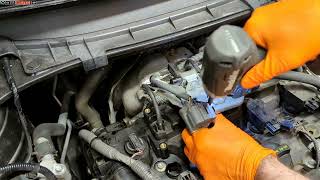
- Accessing the ignition coil and spark plug for cylinder 3 requires moving a metal bracket on top of the engine.
- Be aware that on this specific engine, a persistent P0303 could be a symptom of a more serious, documented issue requiring professional diagnosis and potentially a cylinder head replacement, as outlined in Mazda TSBs.
- If your check engine light is flashing, pull over immediately to prevent expensive damage to your catalytic converter.
What's Unique About the 2016-2020 Mazda CX-9

The 2016-2020 CX-9 uses a 2.5L SkyActiv-G turbocharged direct-injection engine. While standard ignition component wear is common, this specific engine family is subject to two notable Technical Service Bulletins (TSBs). One addresses a seizing valve in the exhaust manifold that can lead to misfires, particularly in cylinders 2 and 3. Another, more serious TSB, points to a potential for unevenly worn exhaust valve seats due to a hot-running exhaust manifold, which can cause compression loss and misfires in any cylinder. Most critically, a widely discussed issue is an engine casting defect that can lead to a cracked cylinder head, often leaking coolant externally behind the exhaust manifold. This issue is so prevalent that Mazda issued TSB 01-013/21 and a warranty extension (CSP11) for some vehicles. A coolant leak can eventually lead to a misfire if coolant enters the cylinder.
Diagnostic Flowchart
Tap your situation to follow the diagnostic path that matches what you're seeing on this vehicle.
Symptoms You May Notice
- Rough or shaky idle
- Hesitation or stumbling during acceleration.
- Flashing Check Engine Light.
- Loss of engine power
- Reduced fuel economy.
- Smell of fuel from the exhaust.
- Sweet coolant smell from the engine bay after driving (indicative of a cracked cylinder head).
- Replacing only the spark plug when the ignition coil is the actual point of failure.
- Replacing ignition components when the underlying cause is a more serious mechanical issue like low compression from the TSB-related valve seat wear.
- Assuming a simple ignition fault without checking for the tell-tale signs of the cracked cylinder head (coolant loss, sweet smell).
Most Likely Causes

- Faulty Ignition Coil 🔴 High Probability Coil-on-plug systems are a common failure point on many modern engines. The high-energy demands of a turbocharged, direct-injection engine can lead to a shorter lifespan for ignition components.
How to confirm: Swap the ignition coil from cylinder 3 with another cylinder (e.g., cylinder 2). Clear the codes and drive the vehicle. If the code changes to P0302, the ignition coil is faulty. 🎬 See how to diagnose misfire codes and test ignition components. This is a standard diagnostic step confirmed by owners on forums.
Typical fix: Replace the failed ignition coil. 🎬 Watch this DIY guide to replacing your coils and plugs. It is often recommended to replace the spark plug at the same time.
Est. part cost: $55-$135 - Worn or Fouled Spark Plug 🔴 High Probability
How to confirm: Remove the spark plug from cylinder 3 and inspect it for wear (worn electrode), carbon fouling (black soot), or oil fouling. Compare it to a new plug. A coolant-fouled plug will appear very clean or have white/greenish deposits, indicating a potential head gasket or cracked head issue.
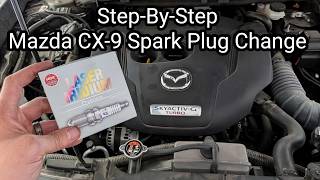
Typical fix: Replace the spark plug. Mazda recommends replacing all four spark plugs at the same time for even performance. The service interval is every 40,000 miles. 🎬 Watch: How to install new spark plugs on this engine.
Est. part cost: $10-$25 per plug - Cracked Cylinder Head (TSB Related) 🟡 Medium Probability A significant number of 2016-2020 2.5T engines suffer from a casting defect causing the cylinder head to crack, typically leaking coolant externally near the exhaust manifold. This is addressed in TSB 01-013/21 and a Customer Service Program (CSP11) warranty extension. While the initial symptom is external coolant loss, if the crack worsens or is internal, it can cause a misfire.
How to confirm: Check for slowly dropping coolant levels in the reservoir, a sweet coolant smell after driving, or white/green crusty residue on the back of the engine block below the turbo. A borescope inspection of the cylinder may show a 'steam-cleaned' appearance. A definitive diagnosis requires a pressure test of the cooling system.
Typical fix: The official repair is a replacement of the cylinder head with a redesigned part. In many cases, Mazda has covered this under warranty or a goodwill program, even for owners outside the standard warranty period. The repair can cost over $5,000 out of pocket.
Est. part cost: $2500-$6000+ - Exhaust Manifold / Valve Seat Issue (TSB Related) 🟡 Medium Probability Mazda TSB 01-001-23a describes how a variable valve in the exhaust manifold can seize, causing excessive heat. This heat leads to uneven wear on the exhaust valve seats, resulting in compression loss and misfires. TSB 01-010-18-3442b specifically notes this can cause P0302 and P0303 on 2016-2017 models.
How to confirm: This requires professional diagnosis. A technician will perform a compression test and a cylinder leak-down test to confirm a loss of compression in cylinder 3.
Typical fix: The repair involves replacing the cylinder head and the modified exhaust manifold, which is a very significant and expensive job. One owner on a forum reported a dealer quote of $6,000, which was negotiated down to $2,000 with Mazda's assistance.
Est. part cost: $2000-$6000+ - Carbon Buildup on Intake Valves ⚪ Low Probability Like many direct-injection (GDI) engines, the SkyActiv-G Turbo does not spray fuel over the intake valves. This allows oil vapors from the PCV system to bake onto the hot valves over time, restricting airflow and potentially causing misfires, especially at idle.
How to confirm: This requires a visual inspection using a borescope inserted into the intake ports. A Reddit user reported a dealer suggesting this as a possible cause after other diagnostics were inconclusive.
Typical fix: The intake manifold must be removed and the valves cleaned, typically by walnut blasting.
Est. part cost: $0 (if cleaning only)
Rare But Worth Checking
- Cracked Cylinder Head: Some owners on forums have reported coolant leaks into the cylinder due to a casting defect in the cylinder head, leading to misfires. This is a major engine repair and often requires engine replacement. One owner on Mazdas247 opted for a full engine replacement at a cost of around $3,700 for parts and shipping.
- Clogged Fuel Injector: A fuel injector that is stuck closed or clogged will prevent fuel from entering cylinder 3, causing a misfire. While less common than ignition issues, some owners have resolved misfires by running injector cleaner through the fuel system or by swapping injectors between cylinders to see if the misfire code follows.
Diagnosis Steps

- Read the code with an OBD-II scanner and note any other codes present.
- If the Check Engine Light is flashing, stop driving as soon as safely possible to prevent catalytic converter damage.
- Check the coolant reservoir level. If it is low, carefully inspect the rear of the engine block for signs of a coolant leak (white or green residue), which points to the known cylinder head issue.
- To test the ignition coil, swap the coil from cylinder 3 with the coil from cylinder 2.
- Clear the codes and drive the car until the check engine light returns.
- If the code is now P0302, the ignition coil is bad and needs to be replaced.
- If the code remains P0303, the coil is likely good. The next step is to inspect the spark plug in cylinder 3.
- Remove the spark plug and check for signs of wear, damage, or fouling. A 'steam cleaned' or white-crusted plug indicates a coolant leak into the cylinder. Replace if necessary.
- If ignition components are good, the issue may be fuel or mechanical. A professional diagnosis, including a fuel pressure test and engine compression test, is recommended.
- If compression is low, refer to Mazda TSBs 01-001-23a and 01-010-18-3442b, as a cylinder head replacement may be required.
Parts You'll Likely Need
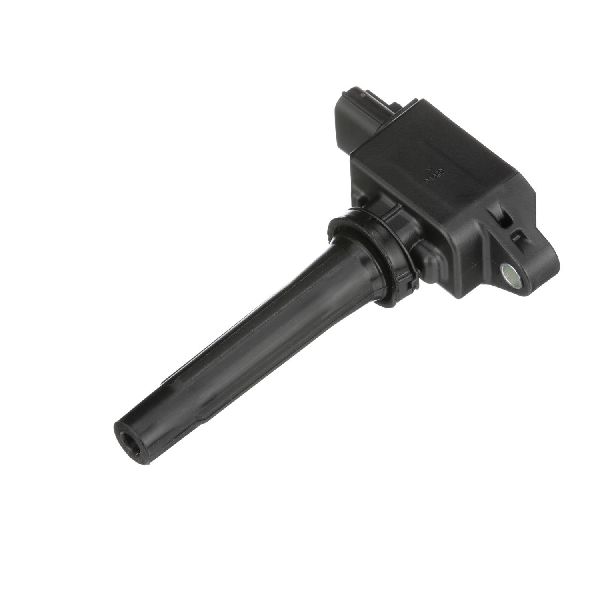
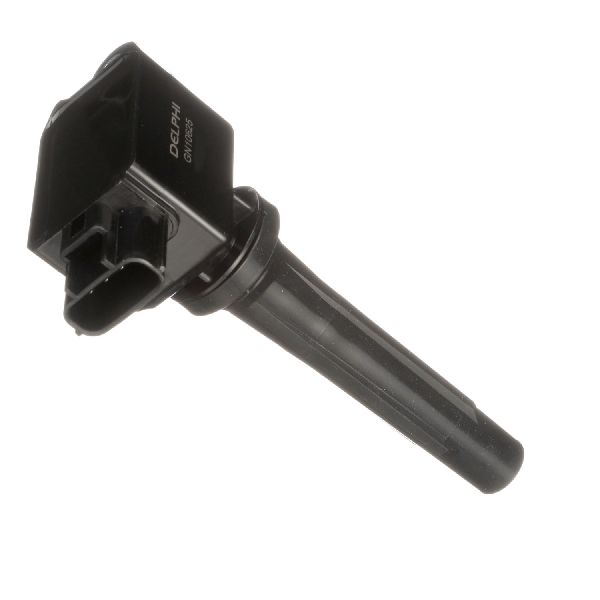
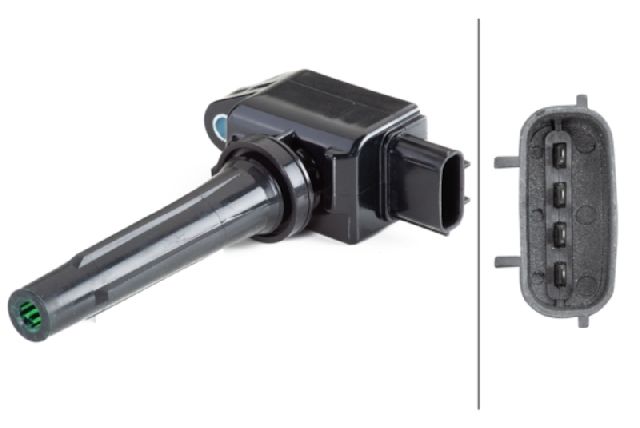
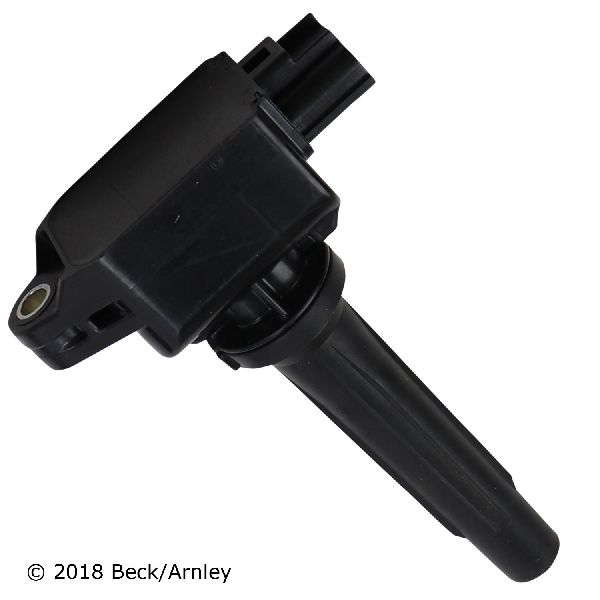
- Ignition Coil
(OEM #CY01-18-100B)
Related Codes That Often Appear With This One
- P0300 — If the condition causing the misfire is not isolated to one cylinder (e.g., a vacuum leak or major fuel delivery issue), a P0300 (Random Misfire) code may appear alongside P0303.
- P0302 — TSB 01-010-18-3442b specifically calls out misfires on cylinders 2 and 3, so it's common to see P0302 and P0303 together when the exhaust manifold valve is the cause.
- U0401 — TSB 01-010-18-3442b also notes that a U0401 (Invalid Data Received From ECM/PCM) code may be stored in the ABS module, even if a misfire DTC is not, indicating a severe misfire event occurred. This code may also appear with P0303 if there are complex electrical or module communication issues.
- P111A — If DTC P111A (Engine Coolant Temperature Sensor 1/2 Correlation) is present with a coolant leak, Mazda's repair procedure for the cracked cylinder head advises against replacing just the head, as engine overheating is suspected and a partial engine replacement may be required.
Technical Service Bulletins (TSBs) & Recalls
- 01-001-23a: Poor acceleration, rough idling, and misfire DTCs (P0301-P0304) on turbo engines due to compression leakage from worn exhaust valve seats.
- 01-010-18-3442b: Misfire during acceleration (P0302, P0303) on 2016-2017 models due to a sticking exhaust manifold variable valve.
- 01-013/21 & 01-002/23: Coolant leaks at the cylinder head around the exhaust manifold due to cracks. Affects 2016-2020 CX-9s with the 2.5T engine.
Platform-Specific Known Issues

- TSB 01-001-23a: Affects 2016-2020 CX-9 models with turbo engines. A seizing variable valve in the exhaust manifold can cause overheating, leading to uneven exhaust valve seat wear and compression loss, resulting in misfire codes (P0301-P0304). The fix is a cylinder head and exhaust manifold replacement.
- TSB 01-010-18-3442b: Affects 2016-2017 CX-9 models produced before Dec. 27, 2016. Addresses misfires during acceleration (P0302, P0303) caused by an out-of-alignment exhaust manifold variable valve shaft sticking when hot. The fix involves replacing the exhaust manifold.
- TSB 01-013/21 (Superseded by TSB 01-002/23): Addresses coolant leaks from cracks in the cylinder head on 2016-2020 CX-9s. This is a widely known issue. Mazda also has a Customer Service Program (CSP11) extending warranty coverage for this specific failure.
Mechanic-Grade Diagnostic Values
- Engine Compression Ratio — expected: 10.5:1. Failure: A compression test showing significantly lower pressure in cylinder 3 compared to other cylinders indicates a mechanical problem (e.g., worn valve seats, piston ring failure).
- High-Pressure Fuel Pump (HPFP) Pressure at Idle — expected: ~400-500 psi. Failure: Pressure that is significantly low or erratic (e.g., fluctuating between 75-190 psi) can indicate a failing HPFP or pressure relief valve, leading to a lean condition and misfires.
- Low-Pressure (In-Tank) Fuel Pump Pressure at KOEO — expected: ~60 psi. Failure: Low pressure from the in-tank pump will starve the high-pressure pump, causing system-wide fuel delivery issues and potential misfires.
Hidden / Shadow Codes Worth Checking
- Mode $06 Misfire Counts: This is not a DTC, but a function within the OBD-II system's diagnostic monitoring tests. It allows viewing of the raw misfire count for each cylinder during the current and last 10 driving cycles. This can reveal intermittent misfires on cylinder 3 before they are frequent enough to trigger the P0303 code and Check Engine Light. (see via An advanced scan tool capable of reading Mode $06 data, such as FORScan or some professional-grade scanners.)
Scan Tool Commands That Help
- FORScan: Misfire Monitor Neutral Profile Correction — This service procedure is used to have the PCM relearn the profile of the crankshaft position sensor. It can be useful after major engine work or if other misfire diagnostics have been exhausted, as it helps the PCM more accurately detect and attribute misfires.
- FORScan: Live Data PID Monitoring (e.g., MISF_COUNT, FUEL_TRIM) — Use this to watch live misfire counts per cylinder to confirm the fault is on cylinder 3. Monitoring short-term and long-term fuel trims (STFT, LTFT) can help diagnose if the misfire is caused by a fuel mixture problem (vacuum leak vs. injector issue).
Wiring & Ground Locations
- Main Engine/Transmission Grounds — Key ground points for the engine harness include a ground on a bracket on top of the transmission housing and a ground on the passenger-side motor mount.. A poor ground connection at these points can cause erratic behavior in the ignition and fuel injection systems, leading to misfires. The ignition coils and injectors for all cylinders rely on a solid ground path to the chassis and battery negative terminal.
- Wiring Diagrams — Complete electrical wiring diagrams, including specific ground point locations and PCM pinouts for the ignition coil and fuel injector circuits, are available through online resources and service manuals.. To diagnose a persistent P0303 where the coil, plug, and injector are known-good, a technician must test for voltage, ground, and signal at the component connector and trace the wiring back to the PCM, which requires a diagram.
Real Owner Repair Stories
- Mazdas247 Forum user kyleylee55 (2019 Mazda CX-5 GTR (2.5T Engine)) — Cracked cylinder head causing coolant leak, as described in TSB 01-013-21. Vehicle was out of warranty at 67,000 miles.
❌ Tried (didn't work) Initial dealer quoted $6,000 for the repair, which the owner contested.
✅ What actually fixed it The owner contacted Mazda USA corporate, who intervened. The dealership ultimately performed the cylinder head replacement TSB, and the owner's final out-of-pocket cost was reduced to $250. This confirms that Mazda may offer 'goodwill' assistance for this specific known issue even outside of the standard warranty period.
When the Usual Fixes Don't Work
- In at least one documented case, an owner of a 2018 CX-9 with P0303 at idle had already replaced the spark plugs and fuel injectors, and a dealer confirmed that compression was good and the fuel pump was operating correctly. Despite these common fixes, the misfire persisted. The dealer's final, unconfirmed diagnosis was carbon buildup on the valves or in the combustion chamber, with no clear solution offered besides a costly engine teardown. This highlights that even after addressing the most common causes, diagnosis can be challenging.
OEM Part Supersession History
Unknown (original-fitment cylinder head)→PYY1-10-SJ0 (Cylinder Head Set)— To address a design/manufacturing defect causing cracks and coolant leaks near the exhaust manifold, Mazda released a modified cylinder head and exhaust manifold gasket.
Heads up: The TSB specifies replacing the cylinder head as a set (PYY1-10-SJ0), which includes the modified head and necessary gaskets. Attempting to use an old-design head or incorrect gaskets will result in a repeat failure.
Model Year Variations Within This Range
- 2016 - early 2019: Engines produced in this range have a different PCV valve design integrated into the valve cover. This earlier design is considered more prone to issues like oil consumption, which can contribute to other problems like premature spark plug fouling or turbocharger issues.
- mid-2019 - 2020: Mazda introduced significant improvements to the 2.5T engine starting in mid-to-late 2019, including an updated PCV system design, to address reliability concerns found in earlier models. These later engines are generally considered more robust.
- 2016-2017: TSB 01-010-18-3442b, which addresses misfires in cylinders 2 and 3 due to an exhaust manifold issue, specifically calls out the 2016-2017 model years.
Helpful Videos
Used OEM Parts in Stock

New Aftermarket Parts Available


The information in this article is provided for general reference and educational purposes only. Vehicle specifications, procedures, and part compatibility can vary by production date, trim level, and region. Always consult your vehicle's factory service manual and verify part numbers before purchasing or performing repairs. Safety-critical components such as airbags, seat belts, and braking systems should be installed by a qualified professional.
- Mazda CX-9:
- 🎬 Helpful Videos
- 🛍️ Shop This Part
- What's Unique About the 2016-2020 Mazda CX-9
- Diagnostic Flowchart
- Symptoms You May Notice
- Most Likely Causes
- Rare But Worth Checking
- Diagnosis Steps
- Parts You'll Likely Need
- Related Codes That Often Appear With This One
- Technical Service Bulletins (TSBs) & Recalls
- Platform-Specific Known Issues
- Mechanic-Grade Diagnostic Values
- Hidden / Shadow Codes Worth Checking
- Scan Tool Commands That Help
- Wiring & Ground Locations
- Real Owner Repair Stories
- When the Usual Fixes Don't Work
- OEM Part Supersession History
- Model Year Variations Within This Range
- 🎟️ Get 5% Off