

P0303 on 2014-2020 Mazda CX-5: Cylinder 3 Misfire Causes and Fixes
P0303 on a Mazda CX-5 most often means a bad ignition coil or a worn-out spark plug on cylinder 3. A TSB confirms ignition coils are a weak point. Replacing a single ignition coil costs about $40-$80 for an aftermarket part and is a 15-minute DIY job.
- P0303 on a 2014-2020 CX-5 is most likely a bad ignition coil on cylinder 3.
- The easiest way to diagnose the problem is to swap the cylinder 3 ignition coil with one from another cylinder and see if the misfire code follows it.
- If the coil isn't the problem, inspect and likely replace the spark plugs, especially if they are old.
- Be aware of the TSBs for this vehicle, especially the one concerning the exhaust manifold on 2.5T engines, if the simple fixes don't work.
- Do not ignore a flashing check engine light, as it signals a severe misfire that could damage your catalytic converter.
What's Unique About the 2014-2020 Mazda CX-5

For the 2014-2020 Mazda CX-5, a P0303 code is frequently linked to specific issues documented by Mazda. A Technical Service Bulletin (TSB #01-014-16-3208A) points to a specific brand of ignition coil (YUMEBISHI) being prone to internal failure. Additionally, for the 2.5L Turbo engines, another TSB (#01-001-23a) identifies a potential defect with the exhaust manifold that can lead to misfires and requires significant repair. While spark plugs and coils are common culprits on any car, these documented issues make them a primary focus on the CX-5.
Diagnostic Flowchart

Tap your situation to follow the diagnostic path that matches what you're seeing on this vehicle.
Generation note: This range covers two generations of the Mazda CX-5: the first generation (KE, 2014-2016) and the second generation (KF, 2017-2020). The common causes like ignition coils and spark plugs apply to both. However, some TSBs are year-specific; for example, TSB #01-001-23a regarding turbo engines applies to 2019-2020 models. The ignition coil TSB #01-014-16-3208A specifically covers 2013-2016 models. The second generation (2017+) featured a redesigned body and interior, and introduced the 2.5T engine option for the 2019 model year.
Symptoms You May Notice

- Rough or shaking idle.
- Hesitation or stumbling during acceleration.
- Noticeable loss of engine power.
- Flashing or solid Check Engine Light.
- Decreased fuel economy.
- Engine stalling.
- Misfire is only noticeable under heavy load or when flooring the accelerator.
- Vehicle enters 'limp mode,' limiting throttle and power.
- Replacing only the spark plug when the ignition coil is the actual culprit. The coil swap test is crucial to avoid this.
- Assuming a fuel system problem when it's a simple ignition component. Always start with the easiest and most common fixes: plugs and coils.
- Using incorrect or poor-quality aftermarket spark plugs. Several owners have fixed persistent misfires by switching to genuine OEM-spec NGK plugs.
Most Likely Causes

- Faulty Ignition Coil 🔴 High Probability Mazda issued TSB #01-014-16-3208A for internal failure of ignition coils, specifically identifying the 'YUMEBISHI' brand coils as problematic. The bulletin recommends replacing them with the 'MITSUBISHI' brand coils.
How to confirm: Swap the ignition coil from cylinder 3 with another cylinder (e.g., cylinder 2). Clear the codes and drive. If the code changes to P0302, the coil is bad. This is a widely confirmed diagnostic step in owner forums.
Typical fix: Replace the faulty ignition coil. Many owners choose to replace all four at the same time as a preventative measure, especially if they are the original YUMEBISHI-produced coils on pre-2016 models.
Est. part cost: $40-$80 per coil (aftermarket) - Worn or Fouled Spark Plug 🔴 High Probability
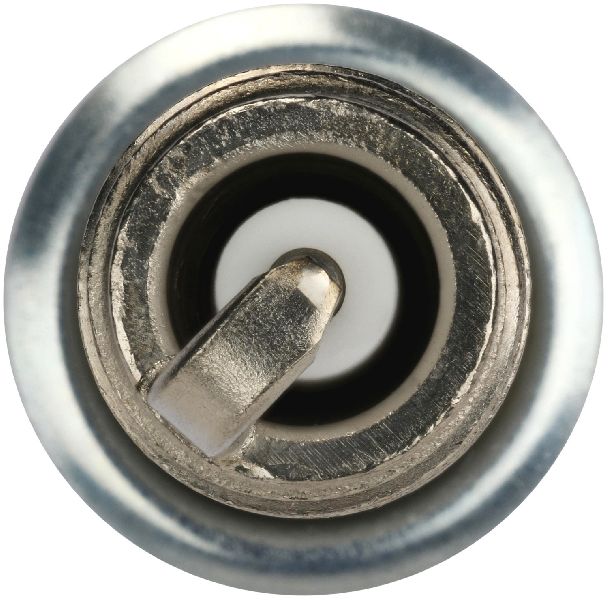
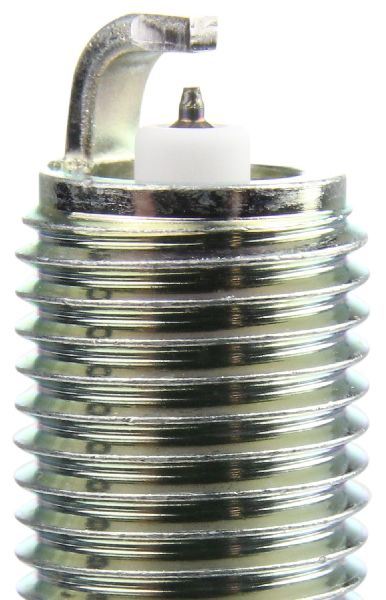
How to confirm: Remove the spark plug from cylinder 3 and inspect it. Look for a worn electrode, cracks in the porcelain, or heavy carbon/oil deposits. You can also swap it with another cylinder's plug to see if the misfire follows. One owner on Mazdas247.com fixed their P0303 issue by discovering their auto parts store sold them the wrong NGK plug; ensuring the part number is correct (e.g., NGK ILKAR7L11) is crucial.
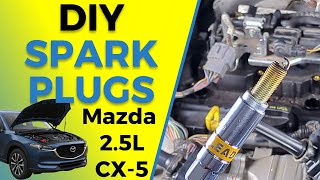
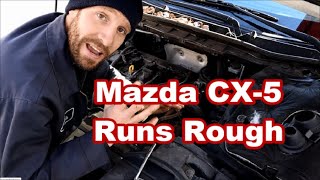
Typical fix: Replace the spark plug. It is best practice to replace all four spark plugs at the same time with the correct OEM-spec type (e.g., NGK Iridium). 🎬 Watch this step-by-step guide to changing your spark plugs A cracked porcelain insulator can cause the spark to ground out before reaching the electrode.
Est. part cost: $10-$25 per plug - Faulty or Clogged Fuel Injector 🟡 Medium Probability A TSB (#01-017-16-3242) notes that fuel injector circuit issues can cause misfires. Furthermore, as a direct injection engine, the injectors can become clogged over time. One owner on the ScannerDanner forum confirmed a clogged cylinder 3 injector was the root cause after plugs and coils didn't fix the issue.
How to confirm: This is more difficult for a DIYer. A professional can perform a fuel injector balance test or use a scan tool to monitor misfire counts while artificially creating rich/lean conditions. A simpler test is to swap the fuel injector from cylinder 3 with another cylinder, but this is labor-intensive as it requires removing the intake manifold.
Typical fix: Replace the faulty fuel injector. Some owners report success with professional injector cleaning services.
Est. part cost: $100-$200 per injector - Carbon Buildup on Intake Valves ⚪ Low Probability Like many direct-injection (GDI) engines, the Skyactiv engines are susceptible to carbon buildup on the intake valves over time, as fuel does not wash over them to keep them clean. This can restrict airflow and cause misfires, sometimes being misdiagnosed by dealers.
How to confirm: Requires a visual inspection of the intake valves with a borescope, which involves removing the intake manifold. This is typically done by a professional.
Typical fix: The intake valves need to be physically cleaned, often through a process called walnut blasting. This service can cost $500-$900.
Est. part cost: $0 (if cleaning yourself) or $500-$900 for professional service
Rare But Worth Checking
- Exhaust Manifold/Valve Seat Wear (2.5T Engine): TSB #01-001-23a applies specifically to 2019-2020 CX-5 2.5T models. A variable valve in the exhaust manifold can seize, causing excessive heat, uneven wear on the exhaust valve seat, and compression loss, leading to misfires. This is a serious issue that requires professional diagnosis via a compression test and often involves cylinder head replacement. One owner on Mazdas247 reported a dealer quote of $6,000 for this repair, which was negotiated down to $2,000 with Mazda's assistance.
- Leaking Valve Cover Gasket: A leaking valve cover gasket can allow oil to seep into the spark plug tubes. This oil can foul the spark plug and degrade the ignition coil boot, causing a misfire. When changing plugs or coils, check for oil in the tube. If present, the valve cover gasket set should be replaced.
- Frozen Water in Exhaust: Two TSBs (#01-007-19-3541 and #01-006-18-3429) mention that water can accumulate and freeze in the muffler (main silencer) in very cold climates, creating an exhaust restriction that can cause random or specific cylinder misfires.
Diagnosis Steps
- Read the code with an OBD-II scanner to confirm P0303 and check for any other codes.
- Swap the ignition coil from cylinder 3 to cylinder 2. Clear the codes, drive the vehicle, and see if the misfire code changes to P0302. If it does, the ignition coil is faulty.
- If the misfire remains on cylinder 3, inspect the spark plug tube for oil. If oil is present, the valve cover gasket is likely leaking.
- If no oil is present, swap the spark plug from cylinder 3 to cylinder 1. If the code changes to P0301, the spark plug is the issue.
- Inspect the wiring harness and connector for the cylinder 3 ignition coil and fuel injector for any visible damage, corrosion, or loose connections.
- If plugs and coils are good, the next likely cause is the fuel injector. This may require professional diagnosis, such as a balance test or swapping injectors between cylinders.
- If the engine is a 2.5T and the issue persists after checking ignition and fuel components, a compression test is necessary to check for the serious valve seat issue described in TSB #01-001-23a.
Parts You'll Likely Need
- Ignition Coil
(OEM #PE20-18-100A (supersedes PE01-18-100, PE01-18-100A))— This is one of the most frequent failure points for a P0303 code on this vehicle, confirmed by manufacturer TSB #01-014-16-3208A.
Trusted brands: Mazda (Mitsubishi-produced), NGK, Denso, Bosch
OEM price range: $90-$120
Aftermarket price range: $40-$80 - Spark Plug
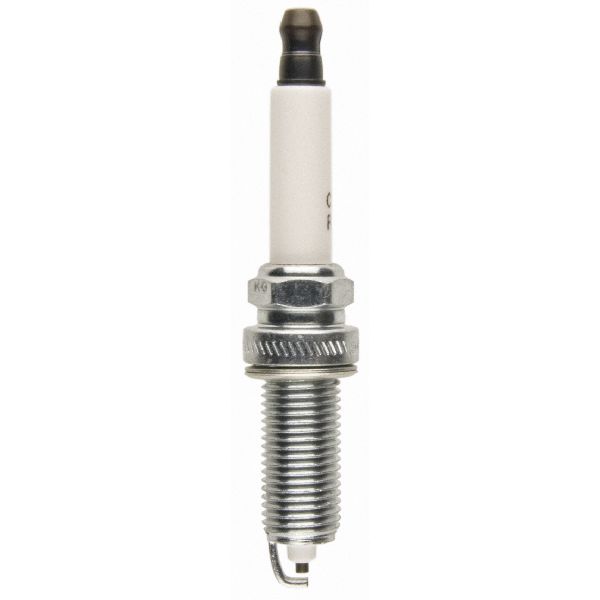
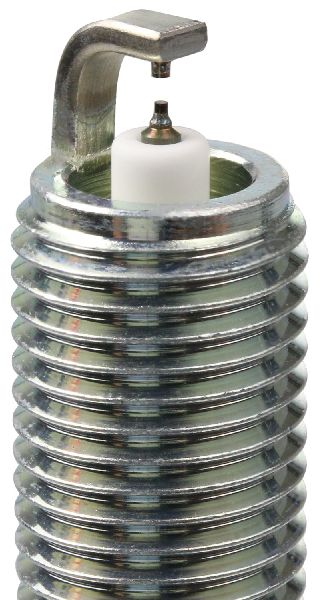
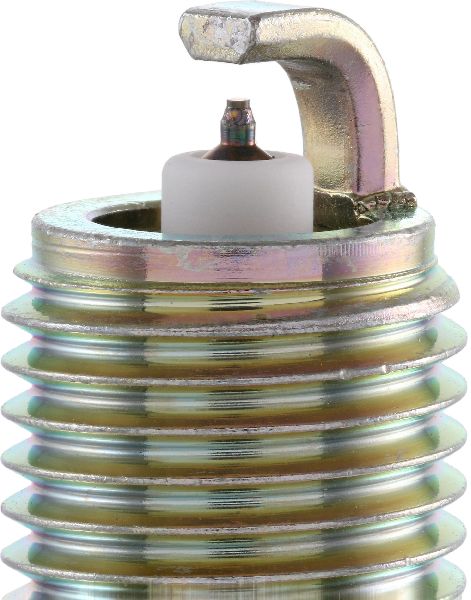
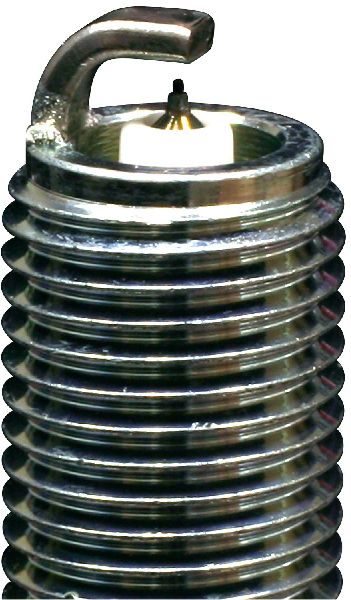
(OEM #PE5R-18-110 (NGK ILKAR7L11, stock #94124))— Spark plugs are a regular maintenance item and a common cause of misfires as they wear out or become fouled. Using the correct plug is critical.
Trusted brands: NGK
OEM price range: $20-$30
Aftermarket price range: $10-$25
Related Codes That Often Appear With This One
- P0300 — If the misfire is intermittent or affecting multiple cylinders, a P0300 (Random Misfire) may be stored alongside P0303. This can happen with systemic issues like a vacuum leak or fuel delivery problem.
- P0301, P0302, P0304 — If other cylinders are also misfiring, their respective codes will appear. This could point to a systemic issue like a vacuum leak, bad fuel, or carbon buildup.
- P0203 — This code for 'Fuel Injector Circuit/Open Cylinder 3' directly points to an issue with the injector or its wiring and is often seen with P0303, as noted in TSB #01-017-16-3242.
- P0171 — This code for 'System Too Lean (Bank 1)' can sometimes accompany a misfire code if the underlying cause is a vacuum leak or a fuel delivery issue affecting the air-fuel ratio.
Technical Service Bulletins (TSBs) & Recalls

- 01-001-23a: Misfires on 2.5T engines due to exhaust manifold valve seizure and subsequent compression loss.
- 01-007-19-3541: Misfires caused by frozen water accumulation in the main silencer (muffler).
- 01-017-16-3242: Misfire codes (P030x) appearing with fuel injector circuit codes (P020x).
- 01-006-18-3429: Misfires caused by frozen water accumulation in the main silencer (muffler).
- 01-014-16-3208A: Misfires due to internal failure of specific YUMEBISHI-produced ignition coils.
Platform-Specific Known Issues
- Ignition Coil Failure: TSB #01-014-16-3208A highlights that YUMEBISHI-produced ignition coils can fail internally, causing misfires like P0303. The fix is to replace with Mitsubishi-produced coils.
- Turbo Engine Exhaust Manifold/Valve Wear: TSB #01-001-23a warns that on 2
Mechanic-Grade Diagnostic Values
- Fuel Injector Resistance — expected: 12-17 ohms. Failure: A reading outside of this range, or an open/dead reading, indicates a failed injector.
- Ignition Coil Primary Resistance — expected: 0.49—0.57 ohms. Failure: A reading outside this specific range indicates the coil should be replaced.
- Ignition Coil Secondary Resistance — expected: 9.5—11.1 kilohms. Failure: A reading outside this specific range indicates the coil should be replaced.
- High-Pressure Fuel Rail Pressure (at idle) — expected: ~300 PSI. Failure: Significantly lower pressure, such as a reading of 69 PSI at idle, points to a failing high-pressure fuel pump.
Hidden / Shadow Codes Worth Checking
- Mode 6, Test ID $A2-$A7: These Test IDs monitor misfire counts for each cylinder (Cylinder 1 through 6, though the CX-5 only uses up to $A5 for Cylinder 4). A high count for Test ID $A4 (Cylinder 3) can confirm the misfire before a permanent DTC like P0303 is set. (see via A professional scan tool or an advanced consumer OBD-II scanner with Mode 6 capability.)
Scan Tool Commands That Help
- Advanced OBD-II Scanner: Injector Balance Test / Power Balance Test — This function allows the user to individually disable the fuel injector for each cylinder. When cylinder 3's injector is disabled, if there is no change in engine RPM or smoothness, it confirms that cylinder 3 was not contributing, pointing to a problem with that cylinder's ignition, fuel, or compression.
Wiring & Ground Locations
- Engine Ground Strap — There are several key ground points. One main ground from the negative battery terminal bolts to a bracket on top of the transmission. Another is located on the passenger-side motor mount. A poor ground at these locations can cause various electrical issues, including misfires.. A weak or corroded ground connection can cause insufficient voltage to reach the ignition coils, leading to a weak spark and misfires. Ensuring these grounds are clean and tight is a crucial, often overlooked, diagnostic step.
- Ignition Coil Connector — The connector is a 3-wire female plug that connects directly to the top of the ignition coil for cylinder 3.. The plastic locking tab can become brittle and break, or the terminals inside can corrode, leading to a poor connection. Wiggling this connector while the engine is running may induce or change the misfire, indicating a bad connector or wiring.
Real Owner Repair Stories
- Mazdas247 forum user 'speedymatt' (2007 Mazda CX-7 2.3L Turbo (Note: While a different model, the diagnostic logic for a direct-injection turbo engine is highly relevant)) — P0303 code appeared at 121,000 miles. A compression test showed cylinder 3 had only half the pressure of the other cylinders.
❌ Tried (didn't work) Replacing the spark plug on cylinder 3., Replacing the ignition coil on cylinder 3.
✅ What actually fixed it The low compression was caused by failed fuel injector seals. Replacing the injector seals (and the injector itself as a precaution) restored compression and resolved the P0303 code. - YouTube channel 'Parts shooter' (Mazda CX-5 2.0L) — Blinking check engine light with a P0303 code that populates consistently at idle. Misfire was only slightly perceptible.
❌ Tried (didn't work) Replacing all four spark plugs with new NGK iridium plugs., Testing ignition coils with a scope (they tested good)., Performing a compression test and cylinder leak-down test (both passed).
✅ What actually fixed it The fuel injector for cylinder 3 was faulty. This was confirmed using a scan tool to perform an injector balance test, which showed cylinder 3 could not maintain stability under forced lean/rich conditions.
OEM Part Supersession History
PE01-18-100, PE01-18-100A, P51B-18-100→PE20-18-100A— Improved design/manufacturing process to address the internal failures noted in TSB #01-014-16-3208A.
Heads up: The newer part PE20-18-100A is backward compatible with vehicles that used the older part numbers.PE20-18-100A→PYFS-18-100 or PX5H-18-100— Different part for engines equipped with cylinder deactivation, which was introduced on some 2.5L models starting in 2018.
Heads up: The standard coil (PE20-18-100A) should not be used on an engine with cylinder deactivation, and vice-versa. The correct part must be selected based on whether the engine has this feature.
Model Year Variations Within This Range
- 2017-2020: The second generation (KF) CX-5 was launched for the 2017 model year, featuring a complete redesign. While base engines were similar, G-Vectoring Control was added for improved handling.
- 2019-2020: The 2.5L Turbo (Skyactiv-G 2.5T) engine became an option. This engine has specific potential failure points, such as the exhaust manifold issue detailed in TSB #01-001-23a, which do not apply to the non-turbo 2.0L and 2.5L engines.
- 2018-2020: Some 2.5L non-turbo engines began featuring cylinder deactivation technology to improve fuel economy. These engines use a different ignition coil part number (e.g., PYFS-18-100) than non-deactivation models.
Helpful Videos
Used OEM Parts in Stock

New Aftermarket Parts Available

The information in this article is provided for general reference and educational purposes only. Vehicle specifications, procedures, and part compatibility can vary by production date, trim level, and region. Always consult your vehicle's factory service manual and verify part numbers before purchasing or performing repairs. Safety-critical components such as airbags, seat belts, and braking systems should be installed by a qualified professional.
- Mazda CX-5:
- 🎬 Helpful Videos
- 🛍️ Shop This Part
- What's Unique About the 2014-2020 Mazda CX-5
- Diagnostic Flowchart
- Symptoms You May Notice
- Most Likely Causes
- Rare But Worth Checking
- Diagnosis Steps
- Parts You'll Likely Need
- Related Codes That Often Appear With This One
- Technical Service Bulletins (TSBs) & Recalls
- Platform-Specific Known Issues
- Mechanic-Grade Diagnostic Values
- Hidden / Shadow Codes Worth Checking
- Scan Tool Commands That Help
- Wiring & Ground Locations
- Real Owner Repair Stories
- OEM Part Supersession History
- Model Year Variations Within This Range
- 🎟️ Get 5% Off