

P0303 on 2011-2015 Lexus CT Hybrid: Cylinder 3 Misfire Causes and Fixes
P0303 on a Lexus CT Hybrid is most often caused by a clogged Exhaust Gas Recirculation (EGR) system, a failed ignition coil, or a worn spark plug. EGR system cleaning is a common, vehicle-specific repair that should be performed preventatively. A bad ignition coil is a quick swap, costing around $50-$100 for a quality part.
- P0303 on a CT200h is not just a simple spark plug issue; it's very often a symptom of a clogged EGR system.
- Always start diagnosis by swapping the ignition coil from cylinder 3 to another cylinder. This is a fast, free way to identify a bad coil.
- If ignition parts are good, the EGR system (cooler, valve, intake ports) is the next place to inspect for heavy carbon buildup.
- Keep an eye on your coolant level. A persistent misfire, especially on cold starts, combined with coolant loss, is a strong indicator of a potential head gasket failure.
What's Unique About the 2011-2015 Lexus CT HYBRID
The Lexus CT Hybrid uses the Toyota 2ZR-FXE engine, which is an Atkinson-cycle engine designed for efficiency. A known weakness of this design is the Exhaust Gas Recirculation (EGR) system. Over time, especially with short trips, carbon builds up and clogs the EGR cooler, valve, and passages in the intake manifold. This restricted flow creates an imbalanced air-fuel mixture, especially during light acceleration when the EGR system is active, leading directly to misfire codes like P0303. This issue is so prevalent that Lexus issued Technical Service Bulletin L-SB-0019-16. If left unaddressed, the increased combustion temperatures from the faulty EGR system can contribute to a much more serious and expensive head gasket failure, another known issue on this platform.
Diagnostic Flowchart
Tap your situation to follow the diagnostic path that matches what you're seeing on this vehicle.
Symptoms You May Notice
- Check engine light is on or flashing
- Rough or shaky idle, sometimes described as a 'rattle'
- Vehicle hesitates or jerks during light acceleration
- Engine knocking or shuddering sound, especially on a cold start 🎬 Watch: How to fix a rough or knocking cold start.
- Reduced engine power and sluggish acceleration
- Decreased fuel economy
- Replacing only spark plugs and ignition coils without addressing the root cause, which is often a clogged EGR system. The misfire will likely return.
- Mistaking the cold-start rattle of a head gasket leak for a simple misfire.
- Assuming a major engine failure before performing basic diagnostic steps like swapping coils or checking for TSBs.
- A dealership in one forum post incorrectly told an owner that clogged intake manifold ports are 'very rare,' contradicting TSB L-SB-0019-16.
Most Likely Causes
- Clogged EGR System (Cooler, Valve, and/or Intake Manifold Passages) 🔴 High Probability This is the most well-documented issue on the 2ZR-FXE engine, confirmed by Lexus TSB L-SB-0019-16. The Atkinson cycle engine's characteristics and frequent short trips contribute to heavy carbon buildup. The passages for cylinders 1 and 3 in the intake manifold are often the first to clog, making P0301 and P0303 common first indicators.
How to confirm: A visual inspection of the EGR pipe, cooler, and intake manifold ports will show heavy, tar-like carbon deposits. Some owners report that temporarily disconnecting the EGR valve connector and driving the vehicle makes the misfire disappear, pointing to a clog. A borescope can be used to inspect the intake manifold ports without full disassembly.
Typical fix: Remove and thoroughly clean the EGR valve, EGR cooler, and intake manifold. Many owners recommend replacing the PCV valve at the same time. Due to the labor involved, some owners opt to replace the clogged components with new ones, preferably with the updated intake manifold design.
Est. part cost: $25-$60 for gaskets and a PCV valve, or $250-$400 for a new intake manifold and EGR components. - Failed Ignition Coil 🔴 High Probability Ignition coils are a common wear-and-tear item on most modern engines, and heat cycles can cause them to fail over time.
How to confirm: Swap the ignition coil from cylinder 3 with another cylinder (e.g., cylinder 1). Clear the codes and drive. If the code changes to P0301, the ignition coil is faulty. This is the easiest and most definitive first diagnostic step.
Typical fix: Replace the failed ignition coil. It is often recommended to replace all four coils and spark plugs at the same time if they are original or high-mileage for preventative maintenance.
Est. part cost: $40-$80 for a quality aftermarket coil (Denso, NGK), $90-$140 for OEM. - Worn or Fouled Spark Plug 🟡 Medium Probability Spark plugs are a routine maintenance item with a 120,000-mile service interval that can be overlooked. Oil consumption or a rich condition can also foul the plugs, causing a misfire.
How to confirm: Remove the spark plug from cylinder 3 and inspect it for wear (worn electrode), damage (cracked porcelain), or fouling (black, oily, or white deposits). Compare it to the other plugs.
Typical fix: Replace the spark plugs. It is best practice to replace all four at once with the correct, updated type (Denso SC16HR11). Ensure they are torqued to specification.
Est. part cost: $10-$20 per plug for OEM-spec plugs. - Leaking Head Gasket ⚪ Low Probability This is a known, but less common, major failure on the 2ZR-FXE engine, often preceded by a long-term clogged EGR issue which increases combustion chamber heat. Coolant leaks into the cylinder overnight, causing a misfire and rough, shaky startup until the coolant is burned off.
How to confirm: Check for symptoms like unexplained coolant loss, white smoke from the exhaust on startup, or a milky appearance in the engine oil. A definitive diagnosis requires a chemical block test (testing for exhaust gases in the coolant) or a cylinder leak-down test, which should be performed by a professional.
Typical fix: This is a major repair requiring removal of the cylinder head to replace the gasket. It is typically performed by a professional and can be very expensive, with dealer quotes around $4,700. 🎬 Watch one owner's experience dealing with major head gasket failures.
Est. part cost: $100-$300 for a gasket set, but labor is the significant cost.
Rare But Worth Checking
- Faulty Fuel Injector: Less common than ignition or EGR issues, but a clogged or failed injector on cylinder 3 can cause a lean misfire. Resistance should be between 11.6 to 12.4 Ω at 20°C (68°F).
- ECM Logic Issue: TSB L-SB-0174-17 mentions that misfire codes can be set in conjunction with a noise from the HV transaxle after a cold soak, which is addressed by an ECM software update. This is a very specific and uncommon scenario.
- Low Compression: Internal engine damage such as a burnt valve or worn piston rings can cause a loss of compression, leading to a persistent misfire. This is a worst-case scenario and should be confirmed with a compression test after other causes are ruled out.
Diagnosis Steps
- Read the trouble codes with an OBD-II scanner and check for any other pending or stored codes, especially P0401.
- Note the freeze-frame data to understand the conditions (engine temp, load, speed) when the misfire occurred. Misfires during light acceleration strongly suggest an EGR issue.
- EASY FIRST STEP: Swap the ignition coil from cylinder 3 to a different cylinder (e.g., cylinder 1). Clear the codes, drive the car, and see if the misfire code moves to P0301. If it does, the coil is bad. If not, proceed.
- If the code remains P0303, inspect the spark plug from cylinder 3. Replace all four plugs if they are due for service or show signs of wear/fouling.
- If ignition components are good, the next logical step for this specific vehicle is to inspect the EGR system. Remove the EGR pipe and inspect for heavy carbon buildup. If the pipe is clogged, it is highly likely the EGR cooler and intake manifold passages are also clogged and require cleaning.
- While the intake manifold is off for EGR cleaning, it is a good time to replace the PCV valve.
- If the EGR system is clean and ignition parts are good, check for signs of a head gasket leak: monitor coolant levels for any loss, check for white exhaust smoke on startup, and inspect oil for a milky appearance.
- For a definitive head gasket diagnosis, a professional should perform a cylinder leak-down test and a chemical block test to check for exhaust gases in the cooling system.
Parts You'll Likely Need
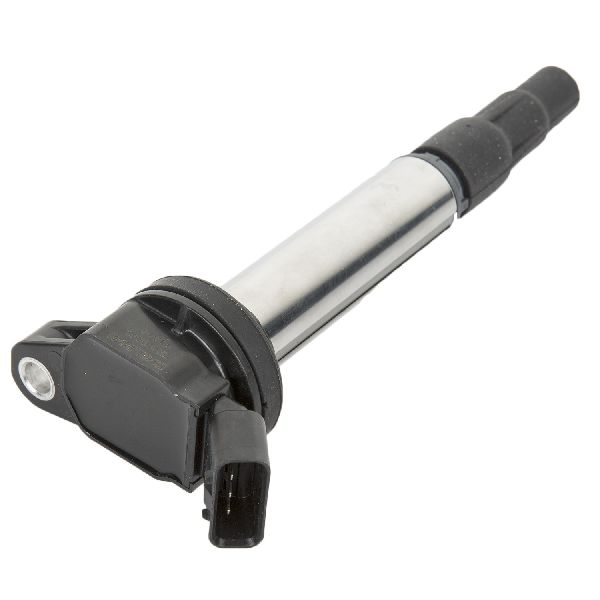
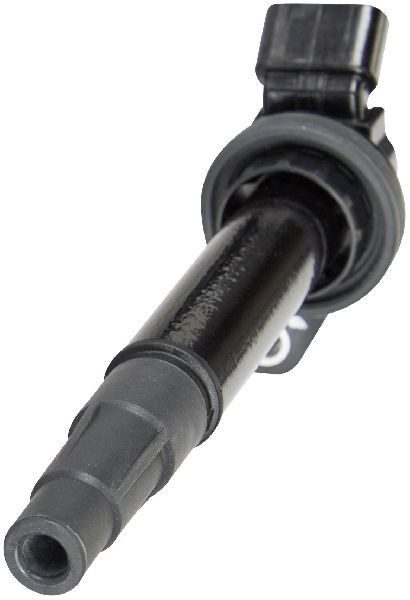
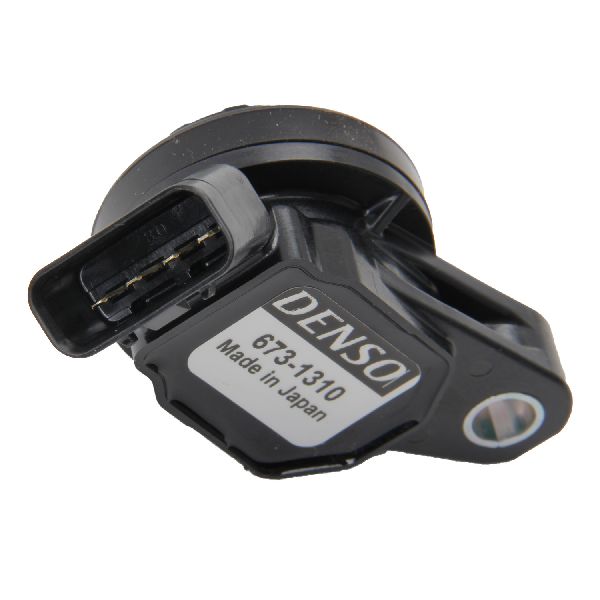
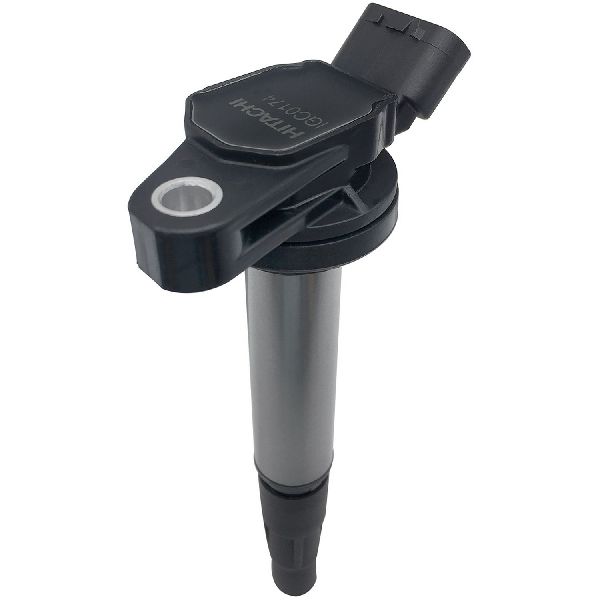
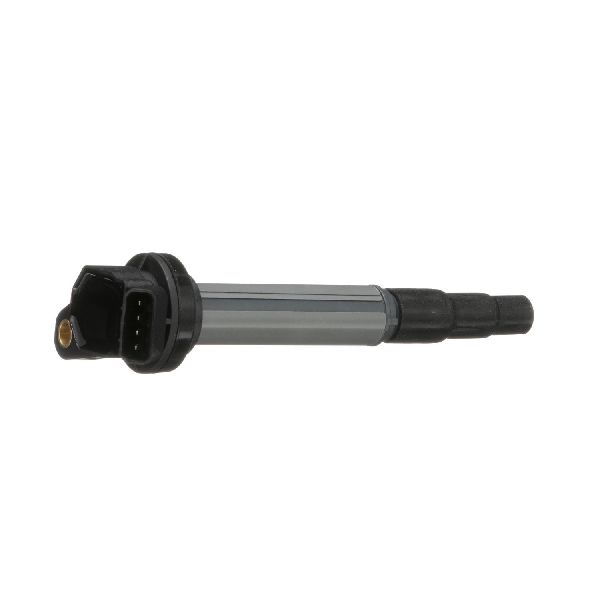
- Ignition Coil
(OEM #90919-02258)— A primary cause of a single-cylinder misfire. It's a common failure point and easy to diagnose by swapping cylinders.
Trusted brands: Denso (OEM), NGK
OEM price range: $90-$140
Aftermarket price range: $40-$80 - Spark Plug
(OEM #Denso SC20HR11 (superseded by SC16HR11))— A standard maintenance item. Toyota/Denso updated the recommendation from the '20' heat range to a hotter '16' heat range plug to improve combustion and potentially reduce carbon buildup.
Trusted brands: Denso
OEM price range: $10-$20
Aftermarket price range: $8-$15 - Intake Manifold
(OEM #17120-37054)— The original manifold design is prone to clogging of the EGR passages. The current OEM part number has superseded several older versions, suggesting a design update to mitigate this issue.
Trusted brands: Lexus (OEM)
OEM price range: $250-$350
Aftermarket price range: $150-$250
Related Codes That Often Appear With This One
- P0300 — If the EGR system is severely clogged or the head gasket is failing, it can affect multiple cylinders, leading to a random misfire code along with the specific cylinder code.
- P0301, P0302, P0304 — Misfire codes for other cylinders often appear with P0303, pointing towards a systemic issue like a clogged EGR or failing head gasket.
- P0401 — This code indicates "EGR Flow Insufficient," which directly points to the clogged EGR system that is the most common cause of misfires on this vehicle. This code is a strong confirmation that EGR cleaning is needed.
Technical Service Bulletins (TSBs) & Recalls
- L-SB-0019-16: Addresses rough running and misfire DTCs (P0300-P0304) caused by clogged EGR ports in the intake manifold during light acceleration. Recommends replacing the intake manifold with an updated part.
- L-SB-0174-17: Mentions misfire DTCs (P0300-P0304) in conjunction with a noise from the HV transaxle after a cold soak, fixed with an ECM update. This is a less common, software-related issue.
Platform-Specific Known Issues
- Clogged EGR System: Lexus TSB L-SB-0019-16 directly links P030x misfire codes during light acceleration to clogged EGR ports in the intake manifold. This is the most common vehicle-specific problem. Forum users on ClubLexus and Reddit frequently document DIY cleaning procedures, showing heavily caked components.
- Head Gasket Failure: While less common, the 2ZR-FXE engine is known to be susceptible to head gasket failure, often as a result of long-term issues with the EGR system causing excessive heat. Symptoms often start with a cold-start misfire and rattle, along with coolant loss. A ClubLexus forum thread shows a user quoted $4,700 by a dealer for this repair at 157k miles.
Mechanic-Grade Diagnostic Values
- Fuel Injector Resistance — expected: 11.6 to 12.4 Ω at 20°C (68°F). Failure: Resistance outside of the specified range indicates a faulty injector.
- Fuel System Pressure — expected: Approximately 40 PSI, constant at idle and when revving. Failure: Significantly lower pressure (e.g., 24 PSI) indicates a fuel delivery problem, such as a weak fuel pump or clogged filter.
- Ignition Coil Primary Resistance — expected: Approximately 0.4 to 2.0 ohms (general value, not model-specific). Failure: A reading of infinity (open loop) or zero ohms (short) indicates a bad coil. This test may not catch heat-related failures.
- Ignition Coil Secondary Resistance — expected: Approximately 5,000 to 15,000 ohms (general value, not model-specific). Failure: A reading outside the manufacturer's specified range indicates a bad coil.
Hidden / Shadow Codes Worth Checking
- Mode 6 Data (TID $A2-$A5, CID $0C): A professional scan tool can access Mode 6 data to view raw misfire counts for each cylinder (Cylinder 1-4) from the current and last 10 driving cycles. This includes the 'EWMA MISFIRE' (Exponentially Weighted Moving Average) and 'MISFIRE RATE' values. These counters can show an intermittent misfire on cylinder 3 before it's frequent enough to set the P0303 code and turn on the check engine light. (see via Professional OBD-II scanner or Toyota Techstream software with Mode 6 viewing capability.)
Scan Tool Commands That Help
- Toyota Techstream: Active Test: Control the Cylinder Injection — This bidirectional command allows a technician to individually disable the fuel injector for each cylinder. When cylinder 3's injector is turned off, if there is no change in engine RPM or smoothness, it confirms that cylinder 3 was not contributing, helping to isolate the fault.
- Toyota Techstream: Active Test: Control the EGR Valve Step Position — This allows the technician to command the EGR valve to open at various steps while monitoring engine RPM at idle. A functioning EGR system should cause the engine to stumble or stall when the valve is opened at idle. If there is no change, it confirms the EGR passages are completely clogged.
Wiring & Ground Locations
- Cylinder 3 Ignition Coil Connector — On top of the engine, third from the front (passenger side on LHD models), under the plastic engine cover.. This is the connector for the coil. A technician would probe here to check for 12V power, ground, and the IGT (ignition trigger) signal from the ECM. A pinout for the related 2ZR-FE shows the trigger signal on pin B28 of the ECM.
- Cylinder 3 Fuel Injector Connector — On the fuel rail, below the intake manifold, corresponding to the third cylinder.. This connector provides power and the control signal to the fuel injector. A technician would test for 12V power and the pulsed ground signal from the ECM. A pinout for the related 2ZR-FE shows the injector control signal on pin B11 of the ECM.
- Engine Ground Points (e.g., EA, EB) — There are multiple critical ground points in the engine bay. Service manual diagrams show ground points bolted to the cylinder head, engine block, and chassis near the transaxle.. A corroded or loose engine ground can cause a weak spark or erratic sensor readings, leading to misfires. Verifying the integrity of the main engine-to-chassis and cylinder head grounds is a crucial step in diagnosing persistent electronic issues.
Real Owner Repair Stories
- ClubLexus user @Donovan951 (2012 Lexus CT200h, 220,000 miles) — Random P0300, P0301, and P0303 codes. Misfire only occurs when the gas engine starts after running on battery. Pushing the accelerator mitigates it quickly.
❌ Tried (didn't work) Replaced all spark plugs, Replaced all ignition coils, Cleaned EGR pipe, Used fuel system cleaner and high-octane gas
✅ What actually fixed it The user reported zero coolant loss, a key symptom of a head gasket leak. However, another forum member suggested that given the high mileage and the fact all common fixes failed, it was likely a slowly failing head gasket that wasn't sealing consistently, causing the random misfire on startup. The thread did not have a final confirmation, but this represents a critical diagnostic path when standard repairs fail.
OEM Part Supersession History
Denso SC20HR11→Denso SC16HR11— Toyota/Denso changed the specification to a hotter plug (heat range 16 vs 20). A hotter plug helps burn off carbon deposits more effectively, which can help mitigate issues related to this engine's tendency for carbon buildup.
Heads up: Using the older, colder SC20HR11 plug may contribute to faster carbon fouling, especially with short-trip driving patterns. The updated SC16HR11 is the recommended part for all years.17120-37050, 17120-37051, 17120-37052, 17120-37053→17120-37054— The intake manifold design was updated. The multiple supersessions strongly suggest revisions were made to address the known issue of EGR passages clogging within the manifold.
Heads up: While older manifold versions will fit, they are prone to the original clogging issue. If replacing the manifold, using the latest part number (17120-37054) is highly recommended to prevent a recurrence of EGR-related misfires.
Model Year Variations Within This Range
- 2014-2015 (vs 2011-2013): Forum discussions suggest the 2014 facelift model year and newer vehicles have an improved EGR system design from the factory, making them less susceptible to the severe clogging and subsequent head gasket failures seen in earlier models. This is supported by the intake manifold part number supersession history.
- 2011-2014 (pre-VIN JTHKD5BH#E2180953): Lexus issued TSB L-SB-0096-16 for some 2011-2014 models that may exhibit excessive oil consumption. The fix involves new pistons and piston rings. While not a direct cause of P0303, excessive oil consumption can foul spark plugs and contribute to carbon buildup in the EGR system, indirectly leading to misfires.
Helpful Videos
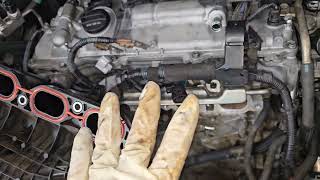
![My Lexus had a MAJOR HeadGasket Failure Not Once but TWICE! [Long Term Update CT200h]](https://img.youtube.com/vi/rpCycYygyjI/mqdefault.jpg)
Used OEM Parts in Stock


New Aftermarket Parts Available


The information in this article is provided for general reference and educational purposes only. Vehicle specifications, procedures, and part compatibility can vary by production date, trim level, and region. Always consult your vehicle's factory service manual and verify part numbers before purchasing or performing repairs. Safety-critical components such as airbags, seat belts, and braking systems should be installed by a qualified professional.
- Lexus CT HYBRID:
- 🎬 Helpful Videos
- 🛍️ Shop This Part
- What's Unique About the 2011-2015 Lexus CT HYBRID
- Diagnostic Flowchart
- Symptoms You May Notice
- Most Likely Causes
- Rare But Worth Checking
- Diagnosis Steps
- Parts You'll Likely Need
- Related Codes That Often Appear With This One
- Technical Service Bulletins (TSBs) & Recalls
- Platform-Specific Known Issues
- Mechanic-Grade Diagnostic Values
- Hidden / Shadow Codes Worth Checking
- Scan Tool Commands That Help
- Wiring & Ground Locations
- Real Owner Repair Stories
- OEM Part Supersession History
- Model Year Variations Within This Range
- 🎟️ Get 5% Off