

P0303 on 2012-2019 Land Rover Range Rover Evoque: Cylinder 3 Misfire Guide
P0303 on a Range Rover Evoque means cylinder 3 is misfiring. The most common fix is replacing the ignition coil and spark plug for that cylinder. Expect to pay $40-$120 for these parts for a DIY fix. However, be aware of engine-specific issues: Ford-based engines (2012-17) can suffer from coolant intrusion requiring major engine work, while JLR Ingenium engines (2018-19) may have faulty VVT solenoids covered by a TSB.
- P0303 indicates a misfire specifically in cylinder 3.
- The most likely culprits are a bad ignition coil or a worn spark plug, which are simple DIY fixes.
- Use the 'swap-nostic' technique: swap the coil and then the plug with a neighboring cylinder to pinpoint the bad part without special tools.
- Do not ignore a flashing check engine light, as this signals a severe misfire that can quickly destroy your catalytic converter.
- If basic steps don't resolve the issue, refer to the vehicle-specific TSBs, as the cause could be more complex, involving fuel trim or software issues.
What's Unique About the 2012-2019 Land Rover RANGE ROVER EVOQUE
For the 2012-2019 Evoque, P0303 can be more than a simple ignition issue. This model range used two different 2.0L engines with distinct, serious failure modes. The Ford-derived unit (2012-2017) shares a known issue with its Ford counterparts where coolant can intrude into the cylinders, causing misfires and potentially requiring a long block replacement. The JLR Ingenium engine (2018-on) has a specific issue identified in TSB SSM74161 where a bad batch of Variable Valve Timing (VVT) solenoids can cause P0303 along with other timing-related codes.
Diagnostic Flowchart
Tap your situation to follow the diagnostic path that matches what you're seeing on this vehicle.
Symptoms You May Notice
- Rough or vibrating idle
- Engine hesitation or stumbling during acceleration
- Noticeable loss of power
- Flashing or solid Check Engine Light
- Reduced fuel economy
- Smell of unburnt fuel from the exhaust
- Replacing oxygen sensors. While a faulty O2 sensor can cause fuel trim issues that lead to misfires, it will almost always set its own specific code and is unlikely to cause a consistent misfire on only one cylinder.
- Replacing the catalytic converter. A misfire can damage a catalytic converter, but a bad converter does not cause a misfire.
Most Likely Causes
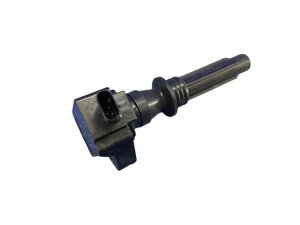
- Faulty Ignition Coil 🔴 High Probability Coil-on-plug ignition systems are common failure points on many modern turbocharged engines due to high heat exposure in the cylinder head. It's the most frequent and easiest-to-diagnose cause for a single-cylinder misfire.
How to confirm: The easiest diagnostic step is to swap the ignition coil from cylinder 3 with another cylinder (e.g., cylinder 2 or 4). Clear the codes and drive the vehicle. If the misfire code changes to the cylinder you moved the coil to (e.g., P0302 or P0304), the coil is bad.
Typical fix: Replace the faulty ignition coil. Many technicians recommend replacing all coils if they are original and high-mileage.
Est. part cost: $30-$80 - Worn or Fouled Spark Plug 🔴 High Probability Turbocharged direct-injection engines are hard on spark plugs. Incorrect gap, carbon fouling, or simple wear can prevent a strong spark. A plug fouled by coolant or oil can also be a symptom of a deeper engine issue.
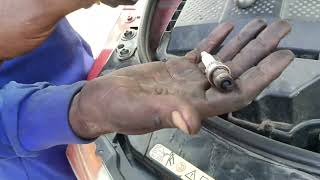
How to confirm: After moving the coil, if the P0303 code returns, perform the same swap test with the spark plug. Move the cylinder 3 plug to another cylinder. If the code follows the plug, the plug is the issue. Visually inspect the plug for wear, oil, or carbon fouling.
Typical fix: Replace the spark plug. It is best practice to replace all spark plugs at the same time to ensure consistent performance.
Est. part cost: $15-$35 per plug - Faulty Fuel Injector 🟡 Medium Probability Direct injection fuel injectors operate under high pressure and can become clogged or fail electronically over time, leading to poor fuel atomization.
How to confirm: This is more difficult to diagnose. A professional can perform a fuel injector balance test. A DIY method involves listening to the injector with a mechanic's stethoscope to ensure it's clicking, or checking its resistance with a multimeter.
Typical fix: Replace the faulty fuel injector. This is a more involved and expensive job than plugs or coils.
Est. part cost: $450-$510 (Part only, labor is additional)
Rare But Worth Checking
- Coolant Intrusion / Leaking Head Gasket (2012-2017 Ford EcoBoost Engine): A known issue on the 2.0L EcoBoost engine family is coolant leaking into the cylinders, often between cylinders 2 and 3. This can be due to a faulty head gasket or a crack in the engine block's open-deck design. Symptoms include a rough run condition, white exhaust smoke, and a low coolant level. 🎬 See a real-world diagnosis of Evoque misfire and overheating issues. Ford TSB 19-2346 for related engines lists P0303 as a resulting code and recommends engine replacement. Forum users have also linked P0303 with coolant leaks.
- Faulty VVT Solenoid (2018-2019 JLR Ingenium Engine): TSB SSM74161 specifically identifies that on Ingenium engines, P0303 can be caused by a faulty Variable Valve Timing (VVT) solenoid from a bad manufacturing batch. This is often accompanied by other codes like P054A, P0014, or P000B. The fix is to replace the solenoid with a part manufactured after August 23, 2018.
- Internal Engine Issues (Low Compression): Though less common for a single-cylinder misfire, issues like a worn piston ring, a leaking or burnt valve, or a worn camshaft lobe can cause P0303 by reducing compression. A compression test is the definitive diagnostic step for this.
- Vacuum Leak: A vacuum leak near the intake manifold runner for cylinder 3 could lean out the air/fuel mixture and cause a misfire. This would typically be accompanied by other codes, like a lean condition code (P0171/P0174).
Diagnosis Steps
- Read all stored fault codes with an OBD-II scanner. Note any other codes present, as they are critical for diagnosis (e.g., timing codes vs. random misfire codes).
- Clear the codes and test drive the vehicle to confirm the P0303 code returns.
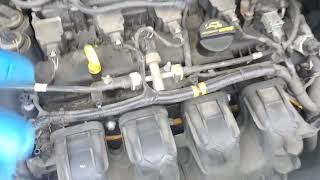
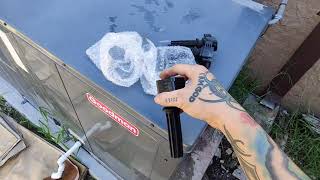
- Swap the ignition coil from cylinder 3 with cylinder 4. Clear codes and re-test. If the code changes to P0304, the ignition coil is faulty. 🎬 Watch this quick walkthrough on how to swap a coil pack.
- If the code remains P0303, swap the spark plug from cylinder 3 with cylinder 4. Clear codes and re-test. If the code changes to P0304, the spark plug is faulty.
- Inspect the wiring and connector for the cylinder 3 ignition coil and fuel injector for any visible damage, corrosion, or loose connections.
- If P0303 persists, investigate engine-specific issues. For 2012-2017 models, check for signs of coolant loss (low level in reservoir, white smoke) which could indicate head gasket failure. For 2018-2019 models, check if other timing codes (P000B, P0014) are present, pointing to the VVT solenoid issue.
- If fuel delivery is suspected, listen to the cylinder 3 fuel injector with a mechanic's stethoscope; it should have a regular, audible clicking sound.
- If the above steps do not identify the issue, a more advanced diagnosis is needed. This includes a fuel pressure test, an engine compression test, and a cylinder leak-down test to check for internal mechanical problems.
Parts You'll Likely Need
- Ignition Coil
(OEM #LR084889)— This is the most common failure point for a single-cylinder misfire on modern engines.
Trusted brands: Bosch, Delphi, NGK
OEM price range: $60-$100
Aftermarket price range: $30-$80 - Spark Plug
(OEM #LR123892)— Spark plugs are a regular maintenance item and can wear out or become fouled, causing a weak or non-existent spark.
Trusted brands: NGK, Bosch, Denso
OEM price range: $25-$40
Aftermarket price range: $15-$30 - Variable Valve Timing (VVT) Solenoid (for 2018-2019 Ingenium)
(OEM #LR073778)— A known failure item on Ingenium engines causing misfires, as identified in TSB SSM74161.
Trusted brands: Genuine Land Rover
OEM price range: $150-$200
Aftermarket price range: $80-$130
Related Codes That Often Appear With This One
- P0300 — If multiple cylinders are misfiring randomly, P0300 (Random/Multiple Cylinder Misfire) will be stored alongside the specific cylinder codes.
- P0301, P0302, P0304 — These codes indicate misfires in other cylinders. Seeing them together with P0303 points to a systemic issue like bad fuel quality, low fuel pressure, or a major vacuum leak.
- P000B, P0014, P054A (Ingenium Engines) — As per TSB SSM74161, these camshaft position and timing codes appearing with P0303 strongly suggest the cause is a faulty VVT solenoid on the JLR Ingenium engine.
- P0316 — This code indicates a misfire was detected within the first 1000 engine revolutions on startup. It often appears with specific cylinder misfire codes and can point to issues like coolant seeping into a cylinder overnight.
Technical Service Bulletins (TSBs) & Recalls
- SSM74161Attachme: Illumination of MIL with DTCs P054A-00, P0014-71, P000B-00 and/or P0341-00, P054A-00, P0303-00 and P0302-00 stored. Points to faulty VVT solenoid on Ingenium engines.
- LTB00902NAS2: Misfire-related DTCs (P0300-P0304) stored with fuel trim codes P2096-00 or P2097-00.
- LTB01101NAS3/LTB01101NAS4/LTB01101NAS2: Poor starting and/or MIL on with misfire codes P0300-P0304 and/or P1315 stored.
- Ford TSB 19-2346 (Informational): While not a JLR TSB, it applies to the same Ford 2.0L EcoBoost engine family and links P0301-P0304 misfire codes to coolant intrusion into the cylinders, a major potential failure.
Platform-Specific Known Issues
- TSB SSM74161: VVT Solenoid Failure (2018-2019 Ingenium Engine): On some 2019 models with the JLR Ingenium engine, P0303 may appear with other timing-related DTCs (P054A, P0014, P000B) without any noticeable performance issue. The cause is a faulty VVT solenoid from a bad batch. The official fix is to replace the solenoid with a part manufactured on or after 23rd August 2018.
- Potential for Coolant Intrusion (2012-2017 Ford EcoBoost Engine): The Ford-based 2.0L engine is susceptible to coolant leaking into the cylinders, which can cause a P0303 misfire. This is a serious issue that may present with white exhaust smoke or a dropping coolant level. A related Ford TSB (19-2346) for the same engine family confirms this issue and lists engine replacement as the ultimate repair.
- TSB LTB00902NAS2: Fuel Trim Related Misfires: This TSB links misfire codes like P0303 with post-catalyst fuel trim codes (P2096/P2097), indicating the root cause may be related to the air/fuel mixture control system, pointing diagnosis towards fuel delivery or exhaust leaks rather than just ignition components.
Mechanic-Grade Diagnostic Values
- Low-Pressure Fuel System (2012-2017 EcoBoost) — expected: Approx. 65 PSI at idle, jumping to 80-90 PSI on snap throttle or during cranking.. Failure: Pressure dropping below 50 PSI under load or failing to reach ~90 PSI during cranking can indicate a weak in-tank fuel pump.
- VVT Solenoid Resistance (Ingenium Engine) — expected: Generally between 5 and 25 Ohms, but vehicle-specific manual should be checked.. Failure: A reading that is too high, too low, or shows infinite resistance (open circuit) indicates a faulty solenoid.
- Ignition Coil Current Ramp (Advanced) — expected: A healthy coil on an Evoque should show a current draw of approximately 6-9 amps with a smooth, sharp ramp-up on an oscilloscope.. Failure: A weak coil will show a significantly lower peak amperage (e.g., 4 amps) and a jagged or limited ramp, indicating an internal failure.
Hidden / Shadow Codes Worth Checking
- Mode $06, Test ID $A2-$AF: This data, accessible with advanced scan tools, shows raw misfire counts for each cylinder (Cylinder 1 is $A2, Cylinder 2 is $A3, etc.). For P0303, you would check Test ID $A4 for Cylinder 3. This allows you to see misfires that haven't yet reached the threshold to set a formal trouble code, which is useful for diagnosing intermittent issues. (see via An OBD-II scanner with Mode $06 functionality.)
Scan Tool Commands That Help
- JLR SDD/Pathfinder: Power Balance Test — This function allows the technician to individually disable each cylinder's fuel injector and observe the corresponding drop in engine RPM. If disabling cylinder 3 results in little or no change in RPM, it confirms that cylinder 3 was not contributing power, pinpointing the misfire.
- JLR SDD/Pathfinder: Fuel Injector Flow Test / Bi-directional control — This allows for the activation of a specific fuel injector while monitoring fuel pressure drop. It can help determine if an injector is clogged or failing to open, which would cause a misfire.
- JLR SDD/Pathfinder: VVT Solenoid Actuation Test — For Ingenium engines (2018+), if timing codes are present with P0303, this command can actuate the VVT solenoids to verify their mechanical operation, helping to confirm a failure as suggested by TSB SSM74161.
Wiring & Ground Locations
- G1D130C — Located on the left front of the engine compartment.. This is a primary ground point for multiple engine components, including the ignition coils. A corroded or loose connection here can cause intermittent and hard-to-diagnose misfires on one or more cylinders.
- Engine to Chassis Ground Strap — The main engine ground point for jump-starting is a bolt on an engine mounting bracket, just behind the windshield washer filler cap.. While not the direct ground for the coil, a poor main engine ground can create floating voltages and unstable electrical conditions for all engine electronics, including the PCM and ignition system, potentially leading to misfire codes.
- Cylinder 3 Ignition Coil Connector — On top of the valve cover, connected to the third ignition coil from the front of the engine (on the transverse-mounted I4).. The connector itself or the wiring leading to it can become brittle from heat and vibration, causing a poor connection. The PCM sends the trigger signal to the coil through this connector; a fault here will prevent the coil from firing.
Real Owner Repair Stories
- YouTube channel 'Parts shooter' (2017 Range Rover Evoque (2.0L EcoBoost), 163,161 miles) — Intermittent misfire complaint. Initially had a cylinder 4 misfire, swapped coils between cylinder 4 and 1. The car ran fine for weeks, then returned with a misfire now on cylinder 1.
❌ Tried (didn't work) Simple code reading was inconclusive due to the intermittent nature and the fact the misfire moved after the coil swap.
✅ What actually fixed it Using an oscilloscope with an amp clamp on the power feed to the ignition coils, the technician proved that the coil originally from cylinder 4 (now on cylinder 1) was weak. It was only drawing ~4 amps, while healthy coils were drawing ~6 amps. Replacing the weak ignition coil definitively solved the problem. - YouTube channel 'No Nonsense Know How' (2014 Range Rover Evoque (2.0L EcoBoost)) — Overheating and misfire codes on cylinders 2 and 3.
❌ Tried (didn't work) A standard compression test was likely insufficient to find the root cause.
✅ What actually fixed it An advanced diagnosis using an in-cylinder pressure transducer and a coolant system pressure sensor revealed that compression from cylinders 2 and 3 was leaking into the cooling system. This indicated a failed head gasket between cylinders 2 and 3, a known issue on this engine block design. The fix was a head gasket replacement and head resurfacing.
OEM Part Supersession History
LR030637, LR033979→LR084889— Component revision and consolidation for the ignition coil used on the 2.0L EcoBoost engine.
Heads up: The newer part number LR084889 is the correct replacement for the earlier versions.LR121741, LR162954, LR163188→LR177464— Component revision for the VVT solenoid on 3.0L Ingenium engines, indicating a pattern of revisions for Ingenium VVT components generally.
Model Year Variations Within This Range
- 2012-2017 (Ford EcoBoost Engine): These models are susceptible to coolant intrusion between cylinders 2 and 3 due to engine block/head gasket design. A P0303 on these years, especially if accompanied by coolant loss, strongly points to this mechanical issue.
- 2018-2019 (JLR Ingenium Engine): These models are subject to TSB SSM74161, where faulty VVT solenoids can cause P0303 along with timing codes. They also feature a different PCV system design integrated into the valve cover, which is a common failure point leading to vacuum leaks and lean misfires.
Helpful Videos

Used OEM Parts in Stock

New Aftermarket Parts Available


The information in this article is provided for general reference and educational purposes only. Vehicle specifications, procedures, and part compatibility can vary by production date, trim level, and region. Always consult your vehicle's factory service manual and verify part numbers before purchasing or performing repairs. Safety-critical components such as airbags, seat belts, and braking systems should be installed by a qualified professional.
- Land Rover RANGE ROVER EVOQUE:
- 🎬 Helpful Videos
- 🛍️ Shop This Part
- What's Unique About the 2012-2019 Land Rover RANGE ROVER EVOQUE
- Diagnostic Flowchart
- Symptoms You May Notice
- Most Likely Causes
- Rare But Worth Checking
- Diagnosis Steps
- Parts You'll Likely Need
- Related Codes That Often Appear With This One
- Technical Service Bulletins (TSBs) & Recalls
- Platform-Specific Known Issues
- Mechanic-Grade Diagnostic Values
- Hidden / Shadow Codes Worth Checking
- Scan Tool Commands That Help
- Wiring & Ground Locations
- Real Owner Repair Stories
- OEM Part Supersession History
- Model Year Variations Within This Range
- 🎟️ Get 5% Off