

P0303 on 2018-2025 Jeep Wrangler: Cylinder 3 Misfire Causes and Fixes
P0303 on a Jeep Wrangler means cylinder 3 is misfiring. The most common fix is replacing the ignition coil and spark plug for that cylinder. For Wranglers with the 3.6L V6 engine, this code can also point to a more serious internal engine issue like a failed rocker arm, often preceded by a ticking noise. On the 3.6L, cylinder 3 is on the driver's side, under the intake manifold, making it more labor-intensive to access.
- P0303 means your Jeep Wrangler has a misfire in cylinder 3.
- Start your diagnosis with the simple and most likely culprits: the ignition coil and spark plug.
- The easiest diagnostic step is to swap the cylinder 3 ignition coil with one from another cylinder to see if the misfire code follows it.
- If you have the 3.6L V6 engine and hear a ticking noise, be prepared for a potential internal engine issue like a failed rocker arm, which is a known problem on this platform.
- Driving with a flashing check engine light can cause expensive damage to your catalytic converter, so address the issue promptly.
What's Unique About the 2018-2025 Jeep WRANGLER

For the 2018-2025 Jeep Wrangler (JL), a P0303 code can range from a simple fix to a significant engine repair, especially on the popular 3.6L Pentastar V6. While basic ignition or fuel issues are common, this engine has a known history of valvetrain problems, specifically with rocker arms and lifters, that can cause persistent misfires. Forum discussions among owners frequently point to these more complex mechanical issues, sometimes at relatively low mileage. Additionally, one Technical Service Bulletin (TSB #18-003-23) notes that the misfire light may only appear under specific conditions like being in 4WD-LO, suggesting potential software or sensor-related triggers that can be resolved with a PCM update. The 2.0L Turbo engine can also set this code, with some owners reporting issues that point towards head gasket leaks or sensor malfunctions.
Diagnostic Flowchart

Tap your situation to follow the diagnostic path that matches what you're seeing on this vehicle.
Generation note: The 2018 model year was an overlap between the older Wrangler JK and the newer JL generation. This guide primarily focuses on the Wrangler JL (2018-2025), though many diagnostic principles and the notorious 3.6L Pentastar rocker arm issue also apply to the later model JKs (2012-2018).
Symptoms You May Notice
- Rough or shaky idle
- Hesitation or stumbling during acceleration
- Noticeable loss of engine power
- Flashing Check Engine Light (especially under load)
- Increased fuel consumption
- Engine ticking noise (particularly on 3.6L V6 models, a strong indicator of rocker arm/lifter issues)
- Sweet burning smell at startup (can indicate a coolant leak into the cylinder from a bad head gasket)
- Replacing only the spark plugs when the ignition coil is the actual culprit.
- Replacing ignition components when the underlying issue is a mechanical problem like a bad rocker arm on the 3.6L V6.
- Assuming the misfire is on the easily accessible passenger-side bank, when cylinder 3 is on the driver's side under the intake manifold.
Most Likely Causes

- Faulty Ignition Coil 🔴 High Probability Coil-on-plug systems are common failure points on modern engines due to constant heat and vibration. Aftermarket coils have also been reported to fail prematurely.
How to confirm: The easiest way is to swap the ignition coil from cylinder 3 with another cylinder (e.g., cylinder 1). Clear the codes and drive. If the code changes to P0301, the coil is bad. Note: On the 3.6L V6, cylinder 3 is on the driver's side and requires removing the upper intake manifold 🎬 Watch: How to replace spark plugs and save on labor. for access, making this a more involved diagnostic step.
Typical fix: Replace the faulty ignition coil. It is often recommended to replace all three coils on the same bank (driver's side for cylinder 3) and the intake gaskets at the same time to avoid duplicate labor in the future.
Est. part cost: $30-$70 per coil - Worn or Defective Spark Plug 🔴 High Probability
How to confirm: Remove the spark plug from cylinder 3 and inspect it for wear, fouling (black, oily, or white deposits), or damage to the electrode or ceramic. A plug that appears 'steam cleaned' can indicate a coolant leak. You can also swap it with another cylinder's plug to see if the misfire follows.
Typical fix: Replace the spark plug. It is best practice to replace all spark plugs at the same time to maintain consistent performance, especially if they are near the end of their service life (typically 100k miles).
Est. part cost: $10-$25 per plug - Faulty Fuel Injector 🟡 Medium Probability
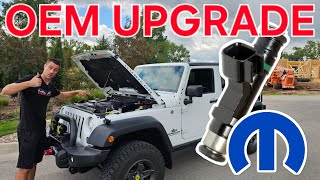
How to confirm: Use a multimeter to test the resistance of the injector; it should be around 12 ohms. You can also listen for a clicking sound from the injector using a mechanic's stethoscope to confirm it's operating. A more definitive test is to swap the injector with another cylinder, but this requires significant disassembly on the 3.6L V6. 🎬 See this walkthrough for replacing the fuel injectors.
Typical fix: Replace the faulty fuel injector. Some owners have noted that injectors from the newer JL can be an upgrade for the JK.
Est. part cost: $50-$150 per injector - Failed Rocker Arm / Lifter (3.6L Pentastar V6) 🟡 Medium Probability The 3.6L Pentastar engine is known for issues where the roller bearing on a rocker arm seizes, causing it to wear down the camshaft lobe. This is often preceded by a distinct ticking noise from the top of the engine, which may be more noticeable between 2700-3500 RPM.
How to confirm: This requires removing the valve cover to visually inspect the camshaft lobes and rocker arms for wear or damage on cylinder 3. A compression test may also show lower-than-normal compression in the affected cylinder.
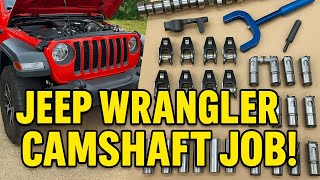
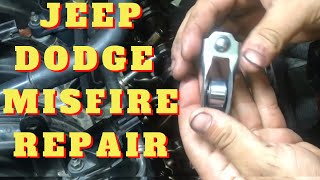
Typical fix: Requires replacement of the affected rocker arms (all 24 are often recommended), lifters, and potentially the camshaft if the lobes are damaged. This is a labor-intensive repair. 🎬 Watch: Step-by-step guide to replacing rocker arms and camshafts.
Est. part cost: $200-$1000+ depending on camshaft replacement
Rare But Worth Checking
- Leaking Head Gasket / Cracked Cylinder Head: A known issue on some 3.6L Pentastars, even at moderate mileage (55-70k miles). Coolant can leak into the cylinder, causing a misfire that may be worse on a cold start. A leak-down test pressurizing the cylinder and watching for bubbles in the coolant reservoir can confirm this. A sweet smell from the exhaust is another symptom.
- Intake Manifold Gasket Leak: A vacuum leak near the intake runner for cylinder 3 can lean out the air/fuel mixture and cause a misfire. This can sometimes be detected by spraying brake cleaner near the gasket with the engine running and listening for a change in idle speed. Since the upper intake manifold must be removed to access cylinder 3 on the 3.6L, replacing these gaskets during a coil or plug change is standard practice.
Diagnosis Steps

- Read the freeze frame data to understand the engine conditions (RPM, load, temperature) when the code was set.
- Identify the location of cylinder 3. On the 3.6L V6, it is the middle cylinder on the DRIVER'S side (left bank), under the upper intake manifold. On the 2.0L I4, it is the third cylinder from the front.
- For the 3.6L V6, listen for a distinct ticking sound from the driver's side valve cover, which is a strong indicator of rocker arm failure.
- If easily accessible (2.0L engine), swap the ignition coil from cylinder 3 with another cylinder. Clear codes and see if the misfire moves. If it does, the coil is bad.
- If the misfire stays, swap the spark plug. If the code moves, the plug is bad.
- For the 3.6L V6, accessing the coil/plug requires removing the upper intake manifold. It is advisable to have new intake gaskets on hand before starting this job.
- While the intake is off, inspect the wiring and connector for the ignition coil and fuel injector on cylinder 3 for damage or corrosion.
- Test the fuel injector on cylinder 3 by checking its resistance with a multimeter (should be ~12 ohms) or listening for its operation.
- If ignition and fuel systems check out, perform a compression and/or leak-down test on cylinder 3 to check for mechanical engine problems like bad rings, valves, or a head gasket leak.
- If a mechanical issue is suspected on a 3.6L V6, remove the driver's side valve cover to visually inspect the rocker arms and camshaft lobes for scoring, wear, or damage.
Parts You'll Likely Need

- Ignition Coil (3.6L V6)
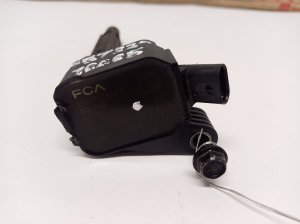
(OEM #5149168AJ (replaces 5149168AH, 5149168AI))— This is one of the most frequent failure points for a single-cylinder misfire. Heat and vibration cause the internal windings to fail over time.
Trusted brands: Mopar, NGK, Delphi
OEM price range: $60-$90
Aftermarket price range: $30-$70 - Spark Plug (3.6L V6)
(OEM #SP225755AB (Mopar, replaces 68225755AA))— Spark plugs are a regular maintenance item and a worn electrode or cracked insulator will cause a misfire. They are typically replaced alongside a faulty coil.
Trusted brands: Champion (OEM supplier), NGK, Denso
OEM price range: $15-$30
Aftermarket price range: $10-$25 - Rocker Arm (3.6L V6)
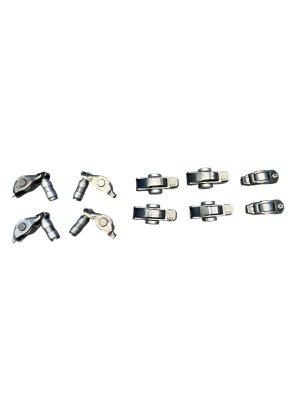
(OEM #5184296AH (Mopar))— A known weak point on the 3.6L Pentastar engine that can lead to a P0303 code, often accompanied by a ticking noise. The roller bearing fails, damaging the camshaft.
Trusted brands: Mopar, Melling (MR-1332)
OEM price range: $10-$20 per arm
Related Codes That Often Appear With This One
- P0300 — If multiple cylinders are misfiring, a P0300 (Random/Multiple Cylinder Misfire) will be stored alongside the specific cylinder code.
- P219A — This code indicates an Air-Fuel Ratio Imbalance on Bank 1. A misfire on cylinder 3 (which is on Bank 1, the driver's side, in the 3.6L V6) can cause this code to appear as the oxygen sensor detects an incorrect mixture.
- P000A — Indicates a slow response from the Bank 1 Camshaft Position sensor. This can appear alongside a P0303 if a failing rocker arm has damaged the camshaft, affecting its timing and position.
Technical Service Bulletins (TSBs) & Recalls
- Bulletin #18-003-23: Flash: Powertrain Control Module (PCM) Updates. Addresses an issue where misfire codes, including P0303, may set only when operating in 4WD-LO. The solution is a software update.
- Bulletin #1805223 (also listed as 18-052-23): Flash: Powertrain Control Module (PCM) Updates. This TSB also involves a PCM software update to address a list of DTCs including P0303, and to improve low-speed idle and engine restart performance.
Platform-Specific Known Issues
- 3.6L Pentastar V6 Valvetrain Wear: Many owners of Wranglers with the 3.6L engine have experienced premature failure of rocker arms, which stops the valve from opening correctly and causes a misfire. This is often accompanied by a ticking noise and can require replacing the rocker arms, lifters, and sometimes the camshafts.
- Misfire in 4WD-LO Only: TSB #18-003-23 addresses a specific software issue where a cylinder 3 misfire (and others) may only occur and illuminate the check engine light when the vehicle is in 4WD-LO mode. The fix is a PCM software update, not a mechanical repair.
- Head Gasket Failures: Forum threads show a pattern of head gasket failures on the 3.6L engine around 50,000-70,000 miles, which can present as a persistent single-cylinder misfire like P0303.
Mechanic-Grade Diagnostic Values
- Fuel Injector Resistance (3.6L Pentastar) — expected: Approximately 12.0 - 12.5 Ohms. Failure: A significantly higher reading (e.g., over 25 Ohms) or an open circuit (infinite resistance) indicates a failed injector. One real-world example showed a bad injector reading over 60 Ohms.
- Camshaft Position Sensor Voltage (3.6L Pentastar) — expected: The sensor should show a 5-volt reference signal when probed with a voltmeter (ignition on, engine off).. Failure: When the engine is cranked or a metallic object is passed by the sensor tip, the voltage should rapidly switch between 5V and 0V. A lack of switching indicates a faulty sensor or reluctor wheel issue.
- Engine Compression (3.6L) — expected: While specific values vary, all cylinders should be within 10-15% of each other.. Failure: A cylinder reading significantly lower than others (e.g., 135 psi when others are 160-175 psi) points to a mechanical issue like worn rings, a bad valve, or a leaking head gasket.
Hidden / Shadow Codes Worth Checking
- Mode 6, Test ID $A2-$AC, Component ID $01-$0C: These are not shadow codes but are part of the standard OBD-II diagnostics (Mode 6) that can reveal misfire count data for each cylinder. A high count for cylinder 3 (Test ID $A4 for Cyl 3) before the P0303 code becomes active can help confirm the issue. (see via Requires an advanced scan tool capable of displaying Mode 6 data. Not all basic code readers show this.)
Scan Tool Commands That Help
- wiTECH (dealer tool) or advanced aftermarket scanner: Cylinder Misfire Counter — To monitor live misfire events on cylinder 3 and compare them to other cylinders during a test drive under various load conditions. This helps confirm if the misfire is constant or intermittent.
- Advanced bidirectional scan tool: Fuel Injector Kill / Balance Test — Used to diagnose a suspected bad fuel injector. By commanding the cylinder 3 injector off, the technician can listen for a change (or lack of change) in engine idle smoothness. If disabling the injector causes no change, it confirms that cylinder was not contributing, likely due to a bad injector.
- wiTECH or equivalent: PCM Replacement / Programming — This function is required if the Powertrain Control Module (PCM) is determined to be the cause of the misfire and needs to be replaced. The new PCM must be programmed with the vehicle's VIN and configuration.
Wiring & Ground Locations
- PCM Ground Strap — On the 3.6L engine, a ground strap is physically attached to one of the bolts holding the PCM to its bracket on the driver's side of the engine bay.. A loose or corroded PCM ground can cause erratic behavior, including false sensor readings and misfire codes. It must be clean and tight.
- Main Chassis Ground — The main battery negative cable connects to a welded stud on the chassis/frame in the area of the battery tray on the passenger side.. A poor main ground can affect the entire electrical system, including the ignition and fuel systems responsible for proper combustion.
- Engine Bay Ground Points (Driver Side) — A ground stud is located on the driver's side inner fender, near the brake booster.. The ignition coils and fuel injectors for Bank 1 (including cylinder 3) may use this or nearby grounds. A poor connection here could specifically affect the driver's side cylinders.
- Engine Bay Ground Points (Passenger Side) — A set of three ground studs is located by the battery, with another farther forward toward the air box.. These are primary grounding locations for various engine bay components and sensors.
Real Owner Repair Stories
- jlwranglerforums.com user 'TexasMojitoRubi' (2020 Jeep Wrangler Rubicon (JLUR) 3.6L V6 at 28,000 miles) — Engine running rough, P0303 code active.
❌ Tried (didn't work) Swapped ignition coil from cylinder 3 to cylinder 1; the P0303 misfire code remained on cylinder 3.
✅ What actually fixed it Initially, swapping the spark plug from cylinder 3 to 1 caused the code to move to P0301, and a new plug seemed to fix it. However, the owner later updated that a combustion test failed, and the ultimate root cause was a blown head gasket, which was replaced under warranty. - YouTube channel 'yellerlife' (2015 Jeep Wrangler JKU 3.6L V6) — P0303 code with an audible engine misfire.
❌ Tried (didn't work) Swapped ignition coils between cylinders; misfire did not move., Swapped spark plugs between cylinders; misfire did not move.
✅ What actually fixed it An ohms test on the fuel injectors showed the cylinder 3 injector had a resistance of ~65 ohms, while good injectors measured ~12 ohms. The final fix was replacing all six original 4-hole injectors with upgraded 8-hole injectors from a newer Jeep Wrangler (JL), part number 05281427-AA.
When the Usual Fixes Don't Work
- In one documented case for a 2020 Wrangler with only 28k miles, the common diagnostic step of swapping spark plugs correctly identified a bad plug. However, the failure of a spark plug at such low mileage prompted further investigation, which revealed the true underlying cause was a failed head gasket causing coolant to foul the plug. This demonstrates that even when a simple component swap appears to solve the problem, the reason for that component's failure should be questioned, especially on a low-mileage vehicle.
OEM Part Supersession History
5184296AD, 5184296AE, 5184296AF, 5184296AG→5184296AH— Progressive updates to the rocker arm design to improve durability and address the known roller bearing failure issue in the 3.6L Pentastar engine.OEM JK 3.6L Fuel Injector (e.g., 0280158233)→OEM JL 3.6L Fuel Injector (05281427-AA)— This is considered an upgrade rather than a direct supersession. The JL injector features an 8-hole nozzle compared to the JK's 4-hole nozzle, potentially offering better fuel atomization. Owners have reported it as a successful, plug-and-play fix for failed JK injectors.
Heads up: While widely reported as compatible for a JK, this is not an official Mopar-sanctioned replacement path.
Model Year Variations Within This Range
- 2018-2025: The 3.6L Pentastar engine in the JL is the 'Pentastar Upgrade' (PUG), which has several internal revisions compared to the version in the 2012-2017 JK. However, the fundamental design and susceptibility to rocker arm failure remain similar.
- 2018-2025: The availability of the 3.6L V6 with the eTorque mild-hybrid system adds a 48-volt battery and a belt-starter-generator (BSG). While not directly linked to P0303 in available data, this system adds significant electrical complexity that could introduce unique diagnostic paths compared to the non-eTorque engine.
- 2018-2025: The optional 2.0L Turbo I-4 engine is a completely different powertrain. For the 2.0L, cylinder 3 is the third cylinder from the front, and accessing its coil and plug does not require removing the intake manifold. The PCM is located on the driver's side fender.
Helpful Videos
We Have This Part in Stock



The information in this article is provided for general reference and educational purposes only. Vehicle specifications, procedures, and part compatibility can vary by production date, trim level, and region. Always consult your vehicle's factory service manual and verify part numbers before purchasing or performing repairs. Safety-critical components such as airbags, seat belts, and braking systems should be installed by a qualified professional.
- Jeep WRANGLER:
- 🎬 Helpful Videos
- 🛍️ Shop This Part
- What's Unique About the 2018-2025 Jeep WRANGLER
- Diagnostic Flowchart
- Symptoms You May Notice
- Most Likely Causes
- Rare But Worth Checking
- Diagnosis Steps
- Parts You'll Likely Need
- Related Codes That Often Appear With This One
- Technical Service Bulletins (TSBs) & Recalls
- Platform-Specific Known Issues
- Mechanic-Grade Diagnostic Values
- Hidden / Shadow Codes Worth Checking
- Scan Tool Commands That Help
- Wiring & Ground Locations
- Real Owner Repair Stories
- When the Usual Fixes Don't Work
- OEM Part Supersession History
- Model Year Variations Within This Range
- 🎟️ Get 5% Off