

P0303 on 2025-2026 Jeep Compass: Cylinder 3 Misfire Causes and Fixes
P0303 on a 2025-2026 Jeep Compass signifies a misfire in cylinder 3. The most common causes are a faulty ignition coil or a worn spark plug. Swapping the coil and plug from cylinder 3 to another cylinder is a quick way to diagnose the issue. Less common but possible causes on this direct-injection engine include a faulty fuel injector or carbon buildup on the intake valves.
- P0303 means cylinder 3 is misfiring.
- The most likely culprits are a bad ignition coil or spark plug.
- A simple coil swap is the fastest way to diagnose the problem.
- On this direct-injection engine, do not rule out fuel injectors or carbon buildup.
- Driving with a flashing check engine light can cause expensive catalytic converter damage.
What's Unique About the 2025-2026 Jeep COMPASS
The 2025-2026 Jeep Compass comes standard with a 2.0L turbocharged four-cylinder engine, part of the Stellantis Global Medium Engine (GME) family. 🎬 Watch this breakdown of how the 2.0L GME engine works. While these specific model years are too new for long-term data, issues on modern direct-injection turbo engines often go beyond simple spark plugs. The provided TSBs for this platform already link misfire codes like P0303 to other codes for fuel pressure (P0087) and turbo pressure correlation (P006C), suggesting that fuel system or sensor issues can be a root cause. Furthermore, as a direct-injection engine, it is susceptible to carbon buildup on intake valves over time, which can lead to misfires. Some owners of platform-mate vehicles with this engine have also reported more serious mechanical issues like head gasket leaks causing misfires specifically on cold starts.
Diagnostic Flowchart
Tap your situation to follow the diagnostic path that matches what you're seeing on this vehicle.
Symptoms You May Notice
- Check Engine Light is on or flashing.
- Rough or unstable idle.
- Reduced engine power and acceleration.
- Engine hesitation or stumbling.
- Poor fuel economy.
- Fuel smell from the exhaust
- Replacing only the spark plug without testing the ignition coil first. The simple coil-swap diagnostic test can save time and prevent replacing good parts. 🎬 Watch: A step-by-step guide to diagnosing a P0303 misfire code.
- Assuming the issue is always ignition-related. Given the TSBs linking misfires to fuel pressure, a persistent P0303 could be a fuel delivery problem.
- Replacing the high-pressure fuel pump (HPFP) when the in-tank low-pressure fuel pump is the actual cause of a P0087 code that is present with the misfire.
Most Likely Causes
- Faulty Ignition Coil 🔴 High Probability Ignition coils are a common failure point on most modern engines, responsible for delivering high voltage to the spark plugs. Constant heat cycles and vibration can cause them to fail over time.
How to confirm: Swap the ignition coil from cylinder 3 with another cylinder (e.g., cylinder 2). Clear the codes and drive the vehicle. If the code changes to P0302, the ignition coil is faulty. This is the most common and cost-effective first diagnostic step.
Typical fix: Replace the faulty ignition coil. It is often recommended to replace all coils at the same time for preventative maintenance, but it's not strictly necessary.
Est. part cost: $40-$90 - Worn or Fouled Spark Plug 🔴 High Probability Spark plugs are a regular maintenance item. On direct-injection engines like the 2.0L GME, carbon buildup can sometimes foul plugs prematurely. Using incorrect (non-OEM spec) plugs is also a known cause of misfires on this engine family.
How to confirm: After confirming the coil is good, remove the spark plug from cylinder 3. Inspect it for wear, carbon deposits, oil fouling, or damage to the electrode. Compare it to a plug from a working cylinder.
Typical fix: Replace the spark plug in cylinder 3. It is best practice to replace all four spark plugs at the same time to ensure consistent performance and prevent future misfires.
Est. part cost: $15-$40 per plug - Faulty Fuel Injector 🟡 Medium Probability Direct-injection fuel injectors operate under very high pressure and can become clogged or fail electronically. The presence of fuel pressure-related TSBs (like #09-016-25 mentioning P0087) on this platform suggests the fuel system can be a source of issues. A forum post on a platform-mate vehicle detailed a P0303 that was resolved by replacing the cylinder 3 injector.
How to confirm: Listen to the injector with a mechanic's stethoscope; it should have a consistent clicking sound. A more advanced method is to use a scan tool to perform a fuel injector balance test. Swapping the injector with another cylinder is also possible but is more labor-intensive than a coil swap.
Typical fix: Replace the faulty fuel injector. This is more involved than a spark plug or coil change and may require special tools.
Est. part cost: $70-$200
Rare But Worth Checking
- Intake Valve Carbon Buildup: As a Gasoline Direct Injection (GDI) engine, the 2.0L Turbo does not spray fuel over the intake valves, which allows oil deposits from the PCV system to bake onto the valves. Over time, this can restrict airflow or prevent the valve from seating correctly, causing a misfire. This is a known long-term issue with GDI engines.
- Low Engine Compression: This is a serious mechanical issue. On platform-mate vehicles with the 2.0L GME engine, there are documented owner experiences of P0303 being caused by a leaking head gasket or, in severe cases, failed piston rings, requiring significant engine teardown 🎬 See what a head gasket failure looks like on this engine. to diagnose and repair. A compression test and a cylinder leak-down test are required to confirm this after all ignition and fuel system checks have passed.
- Intake Air / Vacuum Leak: A leak in the intake manifold or a vacuum hose near cylinder 3 can lean out the air-fuel mixture, causing a misfire. This is sometimes overlooked.
- Cracked Coolant Reservoir: A known issue on the 2.0L GME engine platform is that the plastic coolant reservoir, located near the hot turbocharger, can develop hairline cracks. This leads to a slow loss of coolant and can cause the engine to run hotter than normal, potentially contributing to component stress and failure over time, though it's not a direct cause of a single-cylinder misfire.
Diagnosis Steps
- Read the trouble codes with an OBD-II scanner and note any other codes present, especially P0300 or P0087.
- Check for any relevant Technical Service Bulletins (TSBs) for your vehicle's VIN. Software updates can sometimes resolve false misfire detection.
- Locate cylinder 3 on the 2.0L Turbo engine (it is the third cylinder from the front/belt side of the engine).
- Swap the ignition coil from cylinder 3 with the coil from cylinder 2.
- Clear the codes, start the engine, and let it run to see if the misfire code returns. If code P0302 appears, the ignition coil is bad.
- If the code remains P0303, swap the spark plug from cylinder 3 with the one from cylinder 1. Clear codes and re-test. If P0301 appears, the spark plug is bad.
- If the misfire still persists on cylinder 3, inspect the fuel injector wiring for damage. Listen for a steady clicking from the injector using a mechanic's stethoscope.
- If ignition and fuel injector seem okay, inspect the oil for a strong smell of gasoline, which could indicate a serious fuel system issue like a leaking high-pressure fuel pump.
- Check for vacuum leaks around the intake manifold, especially near the runner for cylinder 3. A smoke test is the most effective method.
- As a final step for persistent issues, perform an engine compression test and a cylinder leak-down test on cylinder 3 to rule out mechanical problems like bad valves, piston rings, or a leaking head gasket.
Parts You'll Likely Need
- Ignition Coil
(OEM #68590423AC (Pre chamber passive) or 68544183AC (Main chamber smart coil))— This is one of the most frequent causes of a single-cylinder misfire and is easy to diagnose by swapping. The 2.0L GME engine may use different coils; always verify with VIN.
Trusted brands: Mopar, NGK, Delphi
OEM price range: $70-$120
Aftermarket price range: $40-$90 - Spark Plug
(OEM #68540598AB (Main Chamber) or 68506398AA (Pre Chamber))— Spark plugs are a standard wear item and can become fouled or worn, leading to weak or inconsistent spark. The 2.0L GME engine may use different plugs; always verify with VIN.
Trusted brands: NGK, Champion
OEM price range: $25-$50
Aftermarket price range: $15-$40
Related Codes That Often Appear With This One
- P0300 — If the misfire is intermittent or affects multiple cylinders, a P0300 (Random/Multiple Cylinder Misfire) code may be stored alongside P0303. This is noted in TSBs #14-003-26, #14-009-25 REV. D, #09-026-25, and #09-016-25.
- P0301, P0302, P0304 — Codes for other specific cylinders may appear if the root cause (like a fuel pressure issue or vacuum leak) is affecting more than just cylinder 3. These are also mentioned in the provided TSBs.
- P0087 — TSB #09-016-25 explicitly lists 'P0087 - Fuel Rail Pressure Too Low' along with misfire codes, indicating a potential fuel delivery problem as the root cause for the misfire. This could be caused by a failing low-pressure or high-pressure fuel pump.
- P1339 — This is a manufacturer-specific code for a catalyst-damaging misfire on cylinder 3. TSB #09-026-25 defines it as 'Combustion misfiring (impact on catalytic converter) : Cylinder 3'. It is more severe than a standard P0303.
Technical Service Bulletins (TSBs) & Recalls
- Bulletin #14-003-26: Notes P0303-00 among other misfire codes and symptoms like unstable idle.
- Bulletin #14-009-25 REV. D: Lists P0303-00 with other misfire codes.
- Bulletin #09-026-25: Cites P0303-00 as 'Cylinder 3 - Misfire Detected'.
- Bulletin #09-016-25: Connects P0303 with fuel pressure (P0087) and MAP sensor codes (P006C), pointing to potential fuel or air metering issues as a root cause.
Platform-Specific Known Issues
- Head Gasket Leak Causing Cold Start Misfire: An owner of a 2020 Jeep Wrangler with the same 2.0L Turbo engine reported a persistent P0303 code that was worse on cold starts. After replacing the fuel injector did not solve the issue, the dealer found a defective head gasket was allowing a small amount of coolant into the cylinder, causing the misfire. This was confirmed by another owner who used a borescope to see coolant on top of the piston.
Mechanic-Grade Diagnostic Values
- Ignition Coil Primary Resistance — expected: 0.56 - 0.68 Ohms. Failure: A reading outside this range indicates a faulty primary winding in the coil.
- Ignition Coil Secondary Resistance — expected: 7.8 - 9.6 kOhms. Failure: A reading outside this range indicates a faulty secondary winding in the coil.
- Fuel Injector Resistance — expected: Approximately 12 Ohms. Failure: A reading significantly higher or lower suggests a failed injector coil.
- Low-Pressure Fuel Pump Pressure (In-Tank) — expected: 58 - 64 PSI (Key On, Engine Off). Failure: Pressure below this range can indicate a weak fuel pump, leading to lean conditions and misfires.
- High-Pressure Fuel Pump Pressure (Direct Injection) — expected: Up to 2,900 PSI (under load). Failure: Significantly lower pressure under load, often accompanied by code P0087, indicates a failing HPFP.
- Stock Turbocharger Boost Pressure — expected: ~19.5 PSI. Failure: This is a baseline reading; deviations could indicate boost leaks or other turbo issues that may be related to misfires.
Hidden / Shadow Codes Worth Checking
- P1339: This is a manufacturer-specific code for 'Combustion misfiring (impact on catalytic converter) : Cylinder 3'. It indicates a misfire severe enough to potentially damage the catalytic converter and is more urgent than a standard P0303. (see via Most comprehensive OBD-II scanners and the dealer wiTECH tool will display this code.)
Scan Tool Commands That Help
- wiTECH (OEM Dealer Tool): Clear Mis-fire TLC (Tooth Learn Correction) — After a repair that could affect crankshaft timing perception, such as replacing a crank sensor or flywheel, this function in the PCM's 'Misc. Functions' tab should be used to clear the learned correction values.
- wiTECH (OEM Dealer Tool): Misfire Monitor Readiness Test — To force the PCM to check for misfires after a repair, warm the engine to at least 140°F (60°C), then perform a brief wide-open throttle stab up to 6000 RPM and let it return to idle. This will change the misfire monitor status from 'Waiting' to 'In Progress', allowing for faster verification of the fix.
- wiTECH (OEM Dealer Tool): Proxy Configuration Alignment — After replacing or reprogramming certain modules, a proxy alignment may be necessary to ensure all vehicle modules can communicate correctly. An alignment mismatch can sometimes cause unexpected fault codes.
Wiring & Ground Locations
- Main Engine Ground Strap — Typically located underneath the vehicle, connecting the engine/transmission assembly to the vehicle's chassis/frame.. On the GME engine family, corrosion or looseness of this main ground is a known critical failure point. It can increase electrical resistance, causing a weak spark at the plugs. This can lead to intermittent misfires that are hard to diagnose, as well as a host of other electrical problems or even a no-start condition.
- Radio Ground Engine Strap (P/N 68606639AA) — On the 2.0L GME engine.. While designated for the radio, all ground points are critical for overall vehicle electrical stability. A fault here could contribute to electrical noise that might affect sensor readings.
Real Owner Repair Stories
- JLwranglerforums.com user report (2020 Jeep Wrangler with 2.0L Turbo engine (GME), 1852 miles) — Persistent P0303 code, white smoke from exhaust on cold start.
❌ Tried (didn't work) Resetting the ECU (dealer suspected bad gas)., Replacing the cylinder 3 fuel injector, seal, and fuel line.
✅ What actually fixed it The root cause was a defective head gasket leaking coolant into the cylinder. The repair required removing the cylinder head. Another owner with the same engine and code confirmed this diagnosis by using a borescope to see coolant on top of the piston. - YouTube user Max Shepherd (Alfa Romeo Giulia with 2.0L Turbo engine (GME)) — Check engine light with misfire codes.
❌ Tried (didn't work) Driving with the issue, which was persistent.
✅ What actually fixed it The problem was caused by using aftermarket Champion brand spark plugs. The misfire was completely resolved after replacing them with the OEM-specification NGK spark plugs.
"I Checked Everything" — The Actual Cause
- A persistent P0303, especially on cold starts with white smoke, that is not resolved by ignition or fuel part swaps may be caused by an internal head gasket leak. A smoke test for vacuum leaks will come back clean. Diagnosis requires a cooling system pressure test, a compression test, a leak-down test, or a visual inspection with a borescope.
- An intermittent, hard-to-trace misfire could be caused by a corroded main engine-to-chassis ground strap. This creates high resistance for the ignition system, resulting in a weak spark. Standard diagnostic tests on individual coils may not identify this systemic electrical issue.
OEM Part Supersession History
50050430 (Alfa Romeo)→68211953AA (Mopar)— Part number consolidation across Stellantis brands (Jeep, Alfa Romeo, etc.) that use the 2.0L GME engine.
Heads up: The parts are interchangeable and refer to the same ignition coil.
Model Year Variations Within This Range
- 2023-2026: The 2.0L GME Turbo engine became the standard and only engine for the North American Jeep Compass starting in model year 2023. Pre-2023 models primarily used a 2.4L 'Tigershark' engine with different ignition components, fuel system, and common failure points (e.g., MultiAir valvetrain issues). Parts are not interchangeable.
Helpful Videos
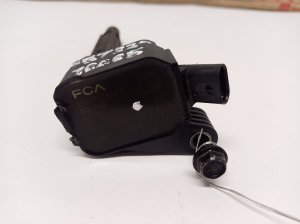
We Have This Part in Stock

The information in this article is provided for general reference and educational purposes only. Vehicle specifications, procedures, and part compatibility can vary by production date, trim level, and region. Always consult your vehicle's factory service manual and verify part numbers before purchasing or performing repairs. Safety-critical components such as airbags, seat belts, and braking systems should be installed by a qualified professional.
- Jeep COMPASS:
- 🎬 Helpful Videos
- 🛍️ Shop This Part
- What's Unique About the 2025-2026 Jeep COMPASS
- Diagnostic Flowchart
- Symptoms You May Notice
- Most Likely Causes
- Rare But Worth Checking
- Diagnosis Steps
- Parts You'll Likely Need
- Related Codes That Often Appear With This One
- Technical Service Bulletins (TSBs) & Recalls
- Platform-Specific Known Issues
- Mechanic-Grade Diagnostic Values
- Hidden / Shadow Codes Worth Checking
- Scan Tool Commands That Help
- Wiring & Ground Locations
- Real Owner Repair Stories
- "I Checked Everything" — The Actual Cause
- OEM Part Supersession History
- Model Year Variations Within This Range
- 🎟️ Get 5% Off