

P0303 on 2014-2019 Jeep Cherokee: Cylinder 3 Misfire Causes and Fixes
P0303 on a Jeep Cherokee indicates a misfire in cylinder #3. The most common fix is replacing a faulty ignition coil or spark plug. Start by swapping the coil from cylinder 3 with another cylinder to see if the code follows. For the 3.2L V6, cylinder #3 is the middle cylinder on the front bank (closest to the radiator). For the 2.4L I4, it is the third cylinder from the left (driver's side).
- P0303 means cylinder #3 is misfiring.
- The easiest and cheapest first step is to swap the ignition coil from cylinder #3 with another cylinder to see if the code moves.
- If the coil is good, inspect and likely replace the spark plugs, especially if they are old.
- Be aware that while ignition parts are the most likely cause, this vehicle can have more serious issues like faulty fuel injectors or internal engine damage leading to low compression. [ODI #11343233]
- Do not ignore a flashing check engine light, as it signals a severe misfire that can quickly damage your catalytic converter.
What's Unique About the 2014-2019 Jeep CHEROKEE

For the 2014-2019 (KL) generation Cherokee, a P0303 code can range from a simple ignition part failure to more serious internal engine problems. The 3.2L Pentastar V6, while generally reliable, is part of an engine family known for potential rocker arm/lifter failure, which can cause a misfire and damage the camshaft. The 2.4L MultiAir engine can suffer from issues related to its unique valvetrain technology, which uses oil pressure to actuate the intake valves; low or incorrect oil can lead to misfires. An owner of a 2016 model reported a P0303 code was diagnosed as low compression in cylinder #3, indicating an internal failure. [ODI #11343233]
Diagnostic Flowchart

Tap your situation to follow the diagnostic path that matches what you're seeing on this vehicle.
Symptoms You May Notice

- Rough or shaking engine idle.
- Hesitation or stumbling during acceleration.
- Noticeable loss of power.
- Flashing Check Engine Light (indicates a severe misfire).
- Reduced fuel economy.
- Engine stalling.
- Smell of unburnt gasoline from the exhaust.
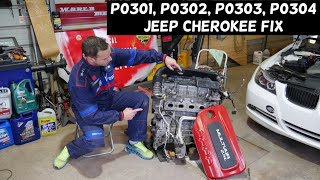
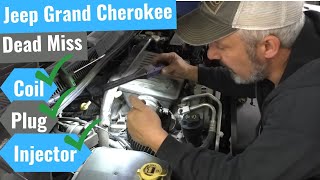
- Replacing only the spark plugs when the ignition coil is the actual problem. The coil-swap test is the fastest way 🎬 Watch this video to see a P0303 diagnosis and coil swap. to differentiate between the two.
- Assuming a fuel system cleaner will fix a misfire. While helpful for maintenance, it will not fix a failed injector or ignition component.
- Replacing ignition and fuel parts when the underlying cause is mechanical, such as a failed rocker arm on the 3.2L V6.
Most Likely Causes

- Faulty Ignition Coil 🔴 High Probability Coil-on-plug systems are common failure points on most modern engines as they age. Oil leaking from the valve cover gasket can also saturate the coil boot and cause failure.
How to confirm: Swap the ignition coil from cylinder #3 with another cylinder (e.g., cylinder #1 on the same bank). Clear the codes and drive the vehicle. If the code changes to P0301, the ignition coil is faulty. On the 3.2L V6, cylinder 3 is the middle cylinder on the front bank.
Typical fix: Replace the faulty ignition coil. It is often recommended to replace all coils at the same time, especially on higher mileage vehicles.
Est. part cost: $30-$70 per coil - Worn or Defective Spark Plug 🔴 High Probability Spark plugs are a regular maintenance item. The 2.4L MultiAir engine is sensitive to correct spark plug type and gap. Incorrectly gapped or low-quality plugs can cause misfires.
How to confirm: After ruling out the coil, remove the spark plug from cylinder #3. Inspect it for wear, oil fouling, carbon tracking, or damage to the ceramic insulator. A wet or fuel-smelling plug indicates it's not firing. You can also swap it with another cylinder's plug to see if the misfire code moves.
Typical fix: Replace the spark plug. It is best practice to replace all spark plugs at the same time with OEM-spec plugs. For the 2.4L, Mopar Iridium plugs are recommended with a gap of 0.047 inches.
Est. part cost: $10-$25 per plug - Faulty Fuel Injector 🟡 Medium Probability Injectors can become clogged or fail electrically over time, leading to a lean misfire.
How to confirm: After ruling out ignition components, test the resistance of the fuel injector with a multimeter. A healthy injector on the 3.2L V6 should read between 12-14 ohms. A reading outside this range or that is unstable indicates a bad injector. You can also listen for a clicking sound from the injector with a mechanic's stethoscope to confirm it's activating.
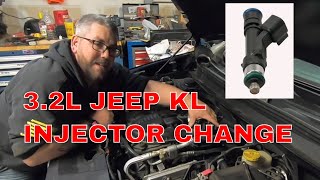
Typical fix: Replace the faulty fuel injector. On the 3.2L V6, this requires removing the upper intake manifold. 🎬 See this walkthrough on how to replace a bad fuel injector.
Est. part cost: $50-$120
Rare But Worth Checking
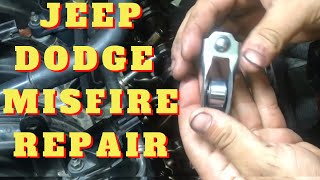
- Failed Rocker Arm / Lifter (3.2L V6): The 3.2L Pentastar engine family can suffer from failed needle bearings in the rocker arms, causing the roller to seize and grind against the camshaft lobe. This results in a ticking noise and a persistent misfire code (like P0303) that isn't resolved by ignition or fuel system parts. A YouTube video by 'That Car Guy' documents this exact failure causing a P0301, where the roller was found to be completely flat, damaging the cam. Diagnosis requires removing the valve cover for visual inspection. 🎬 Watch this teardown to see a failed Pentastar rocker arm.
- Low Engine Compression / Internal Engine Failure: This is a severe issue but has been reported by owners. An NHTSA complaint for a 2016 Cherokee with P0303 cited 'low compression on cylinder number 3' as the cause. [ODI #11343233] This can be caused by worn piston rings, a failed head gasket, or valve train issues like the rocker arm failure mentioned above. A compression test and/or leak-down test is required to confirm this.
- Variable Valve Actuation (VVA) System Fault (2.4L MultiAir): The 2.4L engine uses oil pressure to control intake valves via the 'MultiAir brick'. Low oil level, incorrect oil type (must meet Chrysler MS-6395 spec), or a faulty VVA solenoid can cause misfires and low compression symptoms. TSB 18-081-19 also mentions a software update to resolve an idle tick/tap issue related to the MultiAir solenoids.
- Leaking Valve Cover Gasket / Spark Plug Tube Seals: A common issue is oil leaking from the valve cover gasket and pooling in the spark plug tubes. This can saturate the ignition coil boot and cause a misfire. If you find oil on the coil or plug when you remove it, the valve cover gasket set needs to be replaced.
Diagnosis Steps
- Read the code with an OBD-II scanner to confirm P0303 and check for any other codes. Note the freeze frame data, which shows engine conditions when the code was set.
- Perform an ignition coil swap. Move the coil from cylinder #3 to another cylinder (e.g., cylinder #1). Clear the codes and run the engine. If the code changes to P0301, the coil is bad.
- If the code remains P0303, inspect the spark plug. Remove the plug from cylinder #3 and check for wear, damage, or fouling. Replace if necessary.
- Check for oil in the spark plug tube. If oil is present, the valve cover and spark plug tube seals are leaking and must be replaced.
- If ignition parts are good, test the fuel injector. Listen for a steady clicking sound. For a more definitive test, measure its electrical resistance with a multimeter, expecting 12-14 ohms on the 3.2L.
- Inspect for vacuum leaks around the intake manifold, especially near cylinder #3.
- For the 3.2L V6, listen for a distinct ticking or tapping sound from the valve cover area, which could indicate a failed rocker arm.
- If all else fails, perform an engine compression test. A significant loss of compression in cylinder #3 points to a serious mechanical problem like worn piston rings, a bad valve, or a failed head gasket. [ODI #11343233]
Parts You'll Likely Need
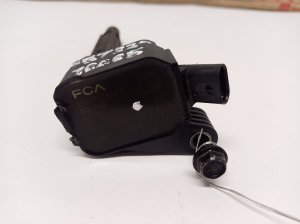
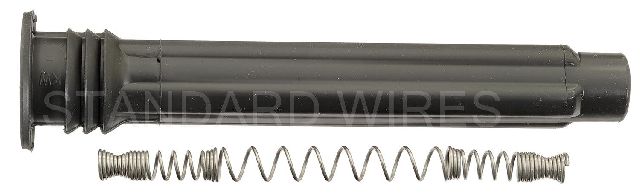
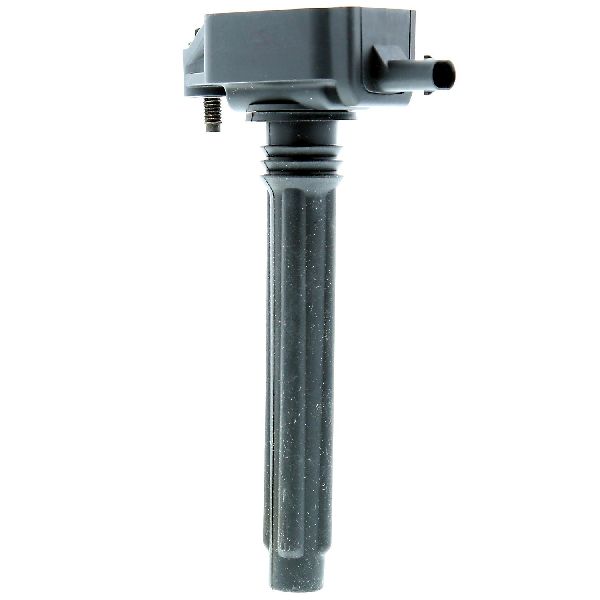
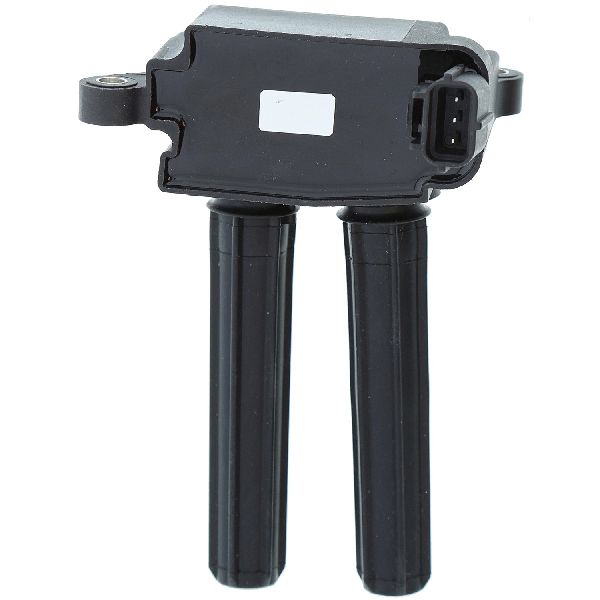
- Ignition Coil
(OEM #Mopar 5149168AJ (or superseding part number) for 3.2L V6; Mopar 68242286AB for 2.4L I4.)— This is one of the most frequent causes of a single-cylinder misfire and is easy to diagnose by swapping its position.
Trusted brands: Mopar, NGK, Delphi
OEM price range: $50-$90
Aftermarket price range: $30-$70 - Spark Plug
(OEM #Mopar SP149125AD (Champion) for 3.2L V6; Mopar SP148183AD (Iridium) for 2.4L I4.)— Spark plugs are a routine wear item. A fouled, cracked, or worn-out plug is a very common cause of P0303.
Trusted brands: Champion, NGK
OEM price range: $15-$25
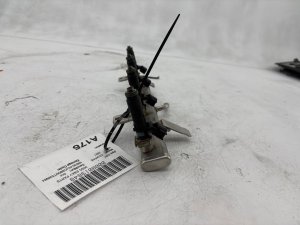
Aftermarket price range: $8-$15 - Fuel Injector — Less common than ignition parts, but a known failure point that can cause a persistent P0303 after plugs and coils are replaced.
Trusted brands: Mopar, Bosch
OEM price range: $90-$150
Aftermarket price range: $50-$100
Related Codes That Often Appear With This One
- P0300 — If the misfire is intermittent or affecting other cylinders, a P0300 (Random/Multiple Cylinder Misfire) code may appear alongside P0303. [TSB #18-110-20]
- P0301, P0302, P0304, etc. — These codes indicate misfires in other specific cylinders. Seeing them together with P0303 points to a problem affecting the whole engine, like a vacuum leak, low fuel pressure, or a failing crankshaft position sensor. [TSB #08-027-20]
Technical Service Bulletins (TSBs) & Recalls
- 18-110-20: For 2017 models with the 2.4L engine, this TSB involves reprogramming the PCM with updated software to address several DTCs, including P0303, which may be falsely triggered.
- 08-027-20: Mentions P0303 in conjunction with a rough running engine condition on 2015 models, suggesting a potential software or component issue addressed by FCA. [TSB #08-027-20]
- 18-004-16 REV. A: Includes P0303 in a list of potential diagnostic trouble codes that can be addressed by a PCM software update for 2014 models. [TSB #18-004-16 REV. A]
- 18-081-19: For 2.4L engines, this TSB addresses customer complaints of excessive oil consumption and idle tick/tap noises, both of which can be related to a P0303 misfire, via a PCM software update.
Platform-Specific Known Issues
- A complaint filed with the NHTSA for a 2016 Jeep Cherokee with a P0303 code was diagnosed by a mechanic as having low compression in cylinder #3, indicating an internal engine failure. [ODI #11343233]
- On the 2.4L MultiAir engine, issues with the variable valve actuation system (which relies on oil pressure) can lead to misfires and compression loss, sometimes triggering a P0303 code.
- Multiple Technical Service Bulletins (TSBs), including #18-110-20, #08-027-20, and #18-004-16 REV. A, list P0303 as a potential code related to software updates for the powertrain control module to improve misfire detection logic or address other system faults. [TSB #18-110-20, TSB #08-027-20, TSB #18-004-16 REV. A]
- For the 3.2L V6, a known failure point in the larger Pentastar engine family is rocker arm failure, which can destroy the camshaft and cause a persistent misfire that is not fixed by new plugs or coils.
Mechanic-Grade Diagnostic Values
- Fuel Injector Resistance (3.2L V6 & 2.4L I4) — expected: 11.0 - 16.0 Ohms. Failure: A reading that is significantly higher (into kilo-ohms), shows as an open circuit, or is unstable and fluctuates wildly indicates a failed injector.
- Fuel Pressure (Key on, engine off) — expected: ~55 psi. Failure: Significantly lower pressure indicates a weak fuel pump or a leak in the system.
Hidden / Shadow Codes Worth Checking
- Mode 6, Test ID $0B: Misfire cylinder 3, Average value over the last 10 Driving Cycles. This shows a historical trend of misfires. (see via A professional scan tool capable of reading Mode $06 data.)
- Mode 6, Test ID $0C: Misfire cylinder 3, count in the current or last completed Driving Cycle. This shows recent misfire events. (see via A professional scan tool capable of reading Mode $06 data.)
Scan Tool Commands That Help
- wiTECH (OEM Chrysler/Jeep Tool): View Cylinder Misfire Counts — To see live misfire counts for each cylinder to confirm which one is faulting, especially when a P0300 (random misfire) is present or the misfire is intermittent. The path is: Select PCM -> 'Monitors' tab -> OBD II monitors -> 'Which cylinder is misfiring'.
Wiring & Ground Locations
- Main Engine/Chassis Grounds — Common locations on Jeeps include a strap from the back of the cylinder head to the firewall, grounds on the inner fender, and a ground point near the engine dipstick tube stud.. A poor ground connection for the engine block or PCM can cause erratic sensor readings and weak spark, leading to misfire codes. Cleaning the main ground points is a crucial, low-cost step when diagnosing electrical issues.
Real Owner Repair Stories
- YouTube channel 'Project Venture' (2015 Jeep Cherokee) — Engine misfire code.
❌ Tried (didn't work) The diagnosis immediately focused on the fuel injector after likely ruling out plugs/coils.
✅ What actually fixed it The fuel injector for the misfiring cylinder was faulty. A resistance test confirmed the failure: a good injector read 12.3 ohms, while the bad one was unstable and read over 27 ohms. Replacing the single faulty fuel injector resolved the issue. - YouTube channel 'Alex's Automotive' (2016 Ram Promaster (with 3.6L Pentastar, similar to Cherokee's 3.2L)) — P0303 - Cylinder 3 Misfire.
❌ Tried (didn't work) Swapping ignition coils, Swapping spark plugs, Swapping fuel injectors
✅ What actually fixed it The misfire was caused by a mechanical failure. The intake camshaft lobe for cylinder 3 was completely ground down due to a seized rocker arm roller bearing. The fix required replacing the intake camshaft, two rocker arms, and two lifters for cylinder 3.
"I Checked Everything" — The Actual Cause
- While no stories explicitly mentioned a passed smoke test, the rocker arm failure on Pentastar engines is a classic example of this pattern. Technicians may exhaust all ignition, fuel, and vacuum leak checks (which would all pass) only to find the root cause is a purely mechanical failure inside the engine, requiring valve cover removal to diagnose.
When the Usual Fixes Don't Work
- In several documented cases, particularly with the 3.2L V6 engine, owners and technicians have replaced spark plugs, ignition coils, and even fuel injectors only to find the P0303 code persists. The ultimate cause was often found to be a mechanical failure of the valvetrain, specifically a failed rocker arm roller that damaged the camshaft lobe for cylinder 3. This highlights that if standard ignition and fuel system fixes do not resolve the misfire, a mechanical inspection of the valvetrain should be the next step.
OEM Part Supersession History
68080580AB, 68242286AA→68242286AB— Standard part revision and improvement by the manufacturer.
Heads up: The newest part number (68242286AB) is the correct replacement for the 2.4L engine and is backward compatible with the older parts.68166589AA, 68166589AC, 68109894AB→SP7247M (Aftermarket consolidation), 68166589AB (OEM)— Part consolidation and revision for the fuel pump module assembly.
Heads up: Multiple part numbers exist for the fuel pump module. It is critical to verify fitment by VIN, as there can be variations.
Model Year Variations Within This Range
- 2019+: A facelift in 2019 introduced revised exterior styling and a new optional 2.0L turbocharged four-cylinder engine. This adds a third engine possibility for this code, alongside the 2.4L I4 and 3.2L V6.
- 2014-2018: Earlier models with the 9-speed automatic transmission were more prone to complaints of rough shifting and hesitation. While software updates were released to mitigate this, it's a factor to consider as engine hesitation can sometimes be confused with a misfire.
Helpful Videos
Used OEM Parts in Stock



New Aftermarket Parts Available

The information in this article is provided for general reference and educational purposes only. Vehicle specifications, procedures, and part compatibility can vary by production date, trim level, and region. Always consult your vehicle's factory service manual and verify part numbers before purchasing or performing repairs. Safety-critical components such as airbags, seat belts, and braking systems should be installed by a qualified professional.
- Jeep CHEROKEE:
- 🎬 Helpful Videos
- 🛍️ Shop This Part
- What's Unique About the 2014-2019 Jeep CHEROKEE
- Diagnostic Flowchart
- Symptoms You May Notice
- Most Likely Causes
- Rare But Worth Checking
- Diagnosis Steps
- Parts You'll Likely Need
- Related Codes That Often Appear With This One
- Technical Service Bulletins (TSBs) & Recalls
- Platform-Specific Known Issues
- Mechanic-Grade Diagnostic Values
- Hidden / Shadow Codes Worth Checking
- Scan Tool Commands That Help
- Wiring & Ground Locations
- Real Owner Repair Stories
- "I Checked Everything" — The Actual Cause
- When the Usual Fixes Don't Work
- OEM Part Supersession History
- Model Year Variations Within This Range
- 🎟️ Get 5% Off