

P0303 on 2010-2014 Jaguar XJ: Cylinder 3 Misfire Causes and Fixes
P0303 on a 2010-2014 Jaguar XJ indicates a misfire in cylinder 3. The most common causes are a faulty ignition coil (Part #AJ811378) or spark plug. Swapping the coil from cylinder 3 with another cylinder is the fastest way to diagnose the problem. A new OEM-quality coil costs around $60-$100, while aftermarket options are cheaper.
- P0303 means your Jaguar's cylinder #3 is misfiring.
- The most likely cause is a bad ignition coil, followed by a bad spark plug.
- A simple diagnostic test is to swap the ignition coil from cylinder 3 to another cylinder and see if the misfire code follows the coil.
- Avoid driving if the Check Engine Light is flashing to prevent expensive damage to your catalytic converter.
- Cylinder 3 is the middle cylinder on the passenger-side (US) of the engine.
What's Unique About the 2010-2014 Jaguar XJ
The 2010-2014 Jaguar XJ (X351 generation) uses the AJ133 5.0L V8 and its derivative, the AJ126 3.0L V6. While generally robust, these direct-injection engines are sensitive to ignition and fuel system health. A single cylinder misfire like P0303 is most often a simple ignition component failure, but it's important to address it promptly. TSB SSM-63697 specifically notes that poor fuel quality can cause misfires on these engines by restricting fuel injector flow. Additionally, TSB JTB00533NAS1 points to a fuel injection software calibration issue that can cause misfires on a cold start, which may require a PCM update at a dealership.
Diagnostic Flowchart
Tap your situation to follow the diagnostic path that matches what you're seeing on this vehicle.
Symptoms You May Notice
- Check Engine Light (CEL) is on (solid or flashing)
- Rough or vibrating idle
- Engine hesitation or stumbling during acceleration
- Reduced engine power and "Restricted Performance" message on the dash
- Noticeable smell of gasoline from the exhaust
- Jerking during acceleration
- Engine sound changes or sounds rougher than usual
- Replacing all ignition coils and spark plugs without performing a swap test first. While not harmful, it can be an unnecessary expense if the issue is a single faulty component.
- Assuming a major engine failure before checking the simple and most common causes like coils and plugs.
- Replacing a fuel injector before thoroughly ruling out the much more common and easier-to-replace ignition coil and spark plug.
Most Likely Causes
- Faulty Ignition Coil 🔴 High Probability Ignition coils are a very common failure item on the AJ133/AJ126 engines as they age, often due to heat cycles. They are the primary culprit for single-cylinder misfires. Multiple owner forums confirm this is the first part to check.
How to confirm: Swap the ignition coil from cylinder 3 with an adjacent cylinder (e.g., cylinder 1 on the same bank). Clear the codes and run the engine. If the code changes to P0301, the ignition coil is faulty. This is the standard DIY diagnostic procedure recommended across owner communities.
Typical fix: Replace the faulty ignition coil. The coil is held by a single T30 Torx or 8mm bolt. It is often recommended to replace the spark plug at the same time.
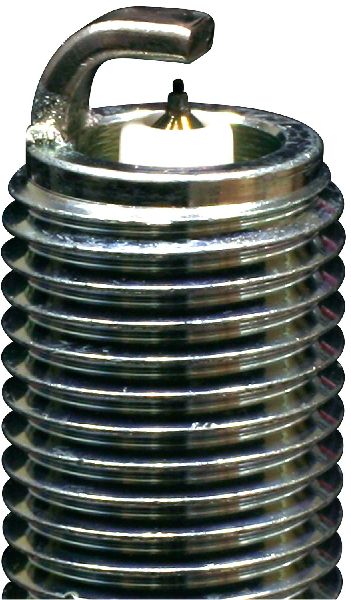
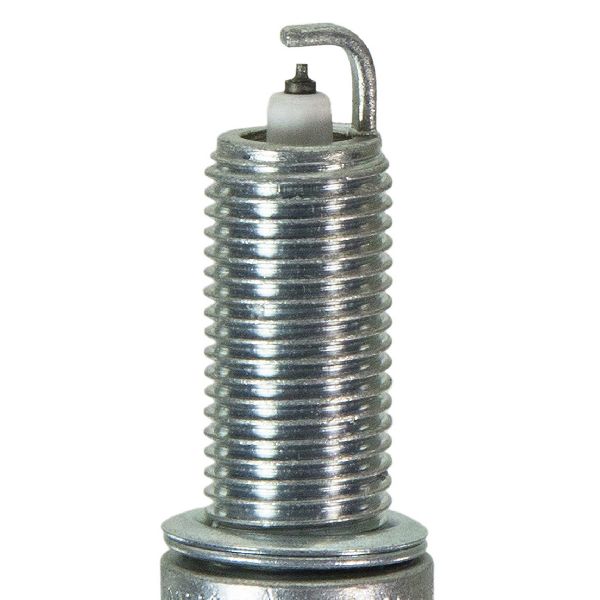
Est. part cost: $40-$100 - Worn or Fouled Spark Plug 🟡 Medium Probability Spark plugs are a regular maintenance item with a finite lifespan. If they are past their service interval or have been fouled by oil or carbon, they can fail to produce an adequate spark, leading to a misfire.
How to confirm: After ruling out the coil, inspect the spark plug from cylinder 3. Look for a worn electrode, cracks in the ceramic insulator, or heavy black soot or wetness, which indicates it is not firing correctly.
Typical fix: Replace the spark plug. It is best practice to replace all spark plugs as a set if they are near the end of their service interval (typically recommended around 100,000 miles). Ensure new plugs are gapped correctly, even if pre-gapped.
Est. part cost: $15-$25 per plug - Faulty Fuel Injector ⚪ Low Probability These engines use direct injection, and injectors can become clogged or fail electronically. TSB SSM-63697 directly links injector issues from poor fuel quality to misfire codes. In a JaguarForums.com thread, an owner of a 2013 XF with the 3.0L engine ultimately traced P0303 and P0305 codes to bad fuel injectors after coils and plugs didn't solve the issue.
How to confirm: This is more difficult for a DIYer. A professional can use a scan tool to monitor injector performance. Swapping injectors between cylinders is possible but is a much more labor-intensive job than swapping coils.
Typical fix: Replace the faulty fuel injector. This is a more involved job on direct injection systems and often requires new seals.
Est. part cost: $80-$150
Rare But Worth Checking
- Low Compression: If ignition and fuel components are confirmed to be good, a compression test should be performed. A low reading on cylinder 3 would indicate a more serious internal engine problem like a bad valve, worn piston rings, or a leaking head gasket.
- Vacuum Leak: A vacuum leak isolated to the intake manifold runner for cylinder 3 could cause a lean misfire. This is rare but possible, especially if intake manifold gaskets are failing.
- Carbon Buildup on Intake Valves: As a direct-injection engine, the AJ133/AJ126 does not spray fuel over the back of the intake valves. Over time, oil vapors from the PCV system can bake onto the valves, restricting airflow and causing misfires. While not as severe as on some other German DI engines, it is a known issue on higher-mileage JLR vehicles.
Diagnosis Steps
- Read the codes with an OBD-II scanner. Confirm P0303 is present and note any other codes like P0316 or P0353.
- Determine the location of Cylinder 3. For Jaguar V-engines, cylinder numbering starts at the right-hand (passenger side in US) bank, front to back. On the V8, the right bank is 1-3-5-7. On the V6, the right bank is 1-3-5. Cylinder 3 is the second cylinder back on the right-hand bank. 🎬 See a walkthrough for replacing coils on the 3.0L engine.
- Swap the ignition coil from Cylinder 3 with the coil from Cylinder 1 (the front cylinder on the same bank). The coil is held by a single T30 Torx or 8mm bolt and has an electrical connector to unplug.
- The torque spec for the coil bolt is very low (around 7 Nm), so just make it snug. Do not overtighten.
- Clear the fault codes using the scanner.
- Start the engine and let it run. Wait for the Check Engine Light to reappear or re-scan for codes.
- If the code is now P0301, the ignition coil you moved is faulty and needs replacement.
- If the code remains P0303, the coil is likely good. The next step is to inspect the spark plug. Swap the spark plug from Cylinder 3 with Cylinder 1 and repeat the process.
- If the code still remains P0303 after swapping the coil and plug, the issue is likely with the fuel injector or, in rare cases, a mechanical engine problem (compression) or wiring issue. At this point, professional diagnosis may be required.
Parts You'll Likely Need
- Ignition Coil
(OEM #AJ811378 (supersedes C2D28240))— This is the most frequent cause of a single-cylinder misfire on this platform. The part is also listed under Land Rover part number LR010687.
Trusted brands: Bosch, Denso, NGK, Delphi
OEM price range: $60-$100
Aftermarket price range: $40-$80 - Spark Plug
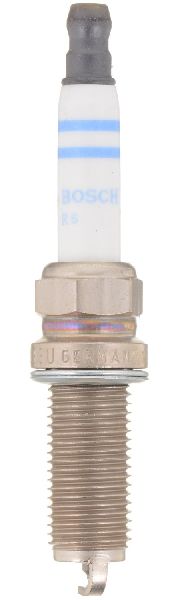
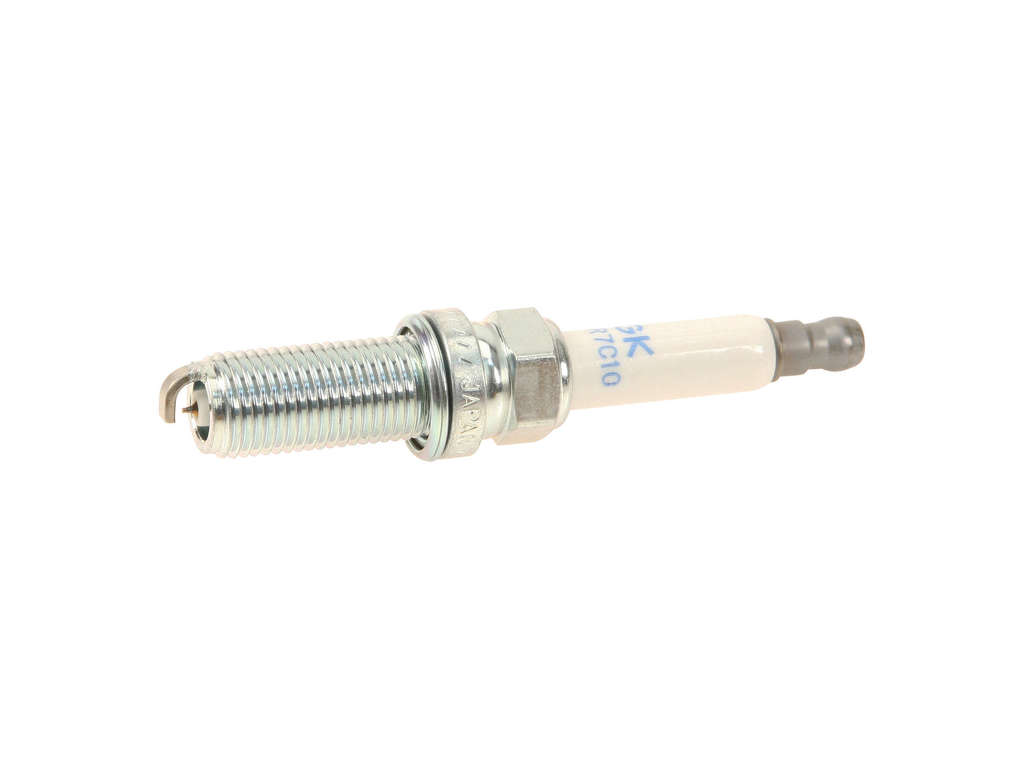
(OEM #C2P1600)— A worn or fouled spark plug is the second most likely cause. It's good practice to replace it when replacing the coil.
Trusted brands: NGK, Bosch
OEM price range: $20-$30
Aftermarket price range: $15-$25 - Ignition Coil Retaining Bolt
(OEM #AJ810552)— While reusable, this small bolt can be dropped or damaged during repair. It's a good idea to know the part number in case a replacement is needed.
Trusted brands: Jaguar (OEM)
OEM price range: $5-$10
Related Codes That Often Appear With This One
- P0300 — If the misfire is intermittent or affects multiple cylinders, a P0300 (Random/Multiple Cylinder Misfire) may be stored alongside P0303.
- P0316 — Indicates a misfire was detected within the first 1,000 engine revolutions on startup. This code is explicitly mentioned with P0303 in TSB #JTB00533NAS1 and TSB #SSM-63697.
- P0353 — This code means 'Ignition Coil 'C' (Cylinder 3) Primary/Secondary Circuit Malfunction.' If you see this code along with P0303, it points much more specifically to a problem with the ignition coil itself or its wiring connector, rather than a plug or injector.
Technical Service Bulletins (TSBs) & Recalls
- JTB00533NAS1: Addresses misfires (P0300-P0308) accompanied by P0316 on cold starts. Caused by a fuel injection calibration issue, the prescribed fix is to update the Powertrain Control Module (PCM) software.
- SSM-63697: Links misfire codes (P0301-P0308) to poor fuel quality or contamination causing fuel injector issues.
Platform-Specific Known Issues
- TSB SSM-63697 notes that poor fuel quality or fuel contamination can clog injectors and cause misfire codes on these vehicles. The recommended action is to identify the faulty injector and submit a quality report.
- TSB JTB00533NAS1 identifies a potential software issue where a cold engine (below 75°C / 167°F) can misfire on startup due to a fuel injection calibration issue. The fix is a PCM software update performed by a dealer.
- While not directly causing a single-cylinder misfire, the AJ133 5.0L V8 engines in early models (around 2010-2012) were known for premature timing chain guide wear, which would typically present with rattling noises and timing-related codes, not an isolated P0303.
Mechanic-Grade Diagnostic Values
- High-Pressure Fuel Rail Pressure (at idle) — expected: 3.0-8.0 MPa (435-1160 PSI), will increase with engine speed.. Failure: Reads approximately 700-900 KPa (101-130 PSI) and does not increase with engine speed.
- Low-Pressure Fuel System Pressure (engine running) — expected: Approximately 40-80 PSI.. Failure: Pressure significantly below 40 PSI may indicate a weak in-tank fuel pump.
- Fuel Injector Resistance — expected: 10-16 ohms for high-impedance injectors. All injectors should measure within 0.5 ohms of each other.. Failure: A reading of infinite resistance (open circuit) or significantly outside the range of the other injectors indicates a faulty injector.
- Ignition Coil Primary Resistance — expected: Approximately 0.75 - 1.0 ohms. Note: This is not a definitive test, as a coil can test good when cold and fail when hot.. Failure: A reading of 'open' or significantly different from a known-good coil.
Scan Tool Commands That Help
- Jaguar SDD (Symptom Driven Diagnostics): Gasoline Fuel System Diagnostic Application — To perform a non-intrusive, guided test of the entire fuel system, from the low-pressure pump to the high-pressure pumps and sensors. It provides pass/fail results for each component.
- Jaguar SDD (Symptom Driven Diagnostics): High-Pressure Fuel Pump Individual Control — Within the fuel system diagnostic application for AJ126/AJ133 engines, this bidirectional control allows a technician to switch off each of the two high-pressure pumps individually to isolate a faulty unit.
- Jaguar SDD (Symptom Driven Diagnostics): Datalogger - Fuel Rail Pressure Signals — To monitor live data for 'Fuel rail pressure - Low range sensor' and 'Fuel rail pressure (ECM)' to verify the readings against expected values during idle and under load.
Wiring & Ground Locations
- Main Engine Ground Strap — Typically located under the starter motor, connecting the engine block/transmission to the vehicle's frame on the right (passenger) side.. A poor engine ground can cause a host of electrical issues, including weak spark or erratic sensor readings that could lead to misfire codes.
- G1D121AR / G1D122AR — These are examples of official Jaguar ground point identifiers located in the engine compartment on the right-hand side A-pillar area.. The Powertrain Control Module and its related sensors rely on clean ground points. Corrosion or looseness at these specific locations can cause intermittent issues.
- Ignition Coil Connector — A multi-pin connector directly on top of each ignition coil.. The P0353 code specifically points to a fault in this circuit. The connector or its wiring to the PCM could be damaged, corroded, or loose, preventing the coil from firing correctly.
- Central Junction Box (CJB) — Located behind the left rear seat backrest.. The CJB contains fuses and relays that supply power to various engine management components. A fault within the CJB could interrupt power to the ignition or fuel systems.
"I Checked Everything" — The Actual Cause
- The misfire occurs only on cold starts and is accompanied by code P0316. A standard diagnostic check of coils, plugs, and vacuum lines may show no faults. The actual cause can be a fuel injection software calibration issue that requires a PCM update by a dealer, as outlined in TSB JTB00533NAS1.
- Misfires appear after refueling or are persistent despite good ignition components. The cause may be clogged fuel injectors due to poor fuel quality or contamination, a known issue addressed by TSB SSM-63697.
- The engine has high mileage and a persistent, sometimes random, misfire that doesn't resolve with new coils or plugs. The cause can be significant carbon buildup on the intake valves, which restricts airflow to the cylinder. This is common on direct-injection engines and requires physical cleaning (e.g., walnut blasting) as fuel additives do not clean the back of the valves.
When the Usual Fixes Don't Work
- If P0303 occurs consistently on cold starts, especially with P0316, replacing the ignition coil and spark plug may not fix the issue. The root cause is likely a known software calibration problem in the Powertrain Control Module (PCM) that requires a dealer-installed update per TSB JTB00533NAS1.
- In cases where the misfire persists after ignition components have been verified as good, the problem may not be spark-related at all. TSB SSM-63697 points to poor fuel quality causing fuel injector restrictions, which would necessitate injector cleaning or replacement, not further ignition system work.
OEM Part Supersession History
C2D28240→AJ811378— Standard part revision and improvement by the manufacturer.
Model Year Variations Within This Range
- 2013-2014: The 3.0L Supercharged V6 was introduced as a base engine option, replacing the naturally aspirated 5.0L V8 in some trims. This affects engine-specific parts and cylinder layout (V6 vs V8).
- 2013-2014: An 8-speed ZF automatic transmission replaced the previous 6-speed automatic across all models, which can affect diagnostic procedures related to the powertrain control module.
- 2013-2014: An All-Wheel Drive (AWD) system became available, but only paired with the 3.0L V6 engine. RWD models were still standard.
- 2014: The high-performance XJR model with a supercharged V8 replaced the previous 'Supersport' trim. Soft-close doors also became a standard feature.
Helpful Videos

Used OEM Parts in Stock

New Aftermarket Parts Available


The information in this article is provided for general reference and educational purposes only. Vehicle specifications, procedures, and part compatibility can vary by production date, trim level, and region. Always consult your vehicle's factory service manual and verify part numbers before purchasing or performing repairs. Safety-critical components such as airbags, seat belts, and braking systems should be installed by a qualified professional.
- Jaguar XJ:
- 🎬 Helpful Videos
- 🛍️ Shop This Part
- What's Unique About the 2010-2014 Jaguar XJ
- Diagnostic Flowchart
- Symptoms You May Notice
- Most Likely Causes
- Rare But Worth Checking
- Diagnosis Steps
- Parts You'll Likely Need
- Related Codes That Often Appear With This One
- Technical Service Bulletins (TSBs) & Recalls
- Platform-Specific Known Issues
- Mechanic-Grade Diagnostic Values
- Scan Tool Commands That Help
- Wiring & Ground Locations
- "I Checked Everything" — The Actual Cause
- When the Usual Fixes Don't Work
- OEM Part Supersession History
- Model Year Variations Within This Range
- 🎟️ Get 5% Off