

P0303 on 2010-2012 Honda Crosstour: Cylinder 3 Misfire Causes and Fixes
On the 2010-2012 Honda Crosstour V6, a P0303 code is most often caused by an oil-fouled spark plug in cylinder 3. This is a well-known issue related to the VCM (Variable Cylinder Management) system. The simplest fix is replacing the spark plug, but the underlying cause may require more extensive engine repair (piston rings) or installing a VCM disabling device to prevent recurrence.
- P0303 on a 2010-2012 Crosstour is almost always caused by an oil-fouled spark plug in cylinder 3.
- This is a known design flaw related to Honda's Variable Cylinder Management (VCM) system, confirmed by TSB A13-079.
- The easiest and most immediate fix is to replace the spark plug in cylinder 3.
- For a long-term solution to prevent the misfire from returning, consider installing an aftermarket VCM disabling device.
- Always check the spark plug first before replacing more expensive parts like the ignition coil.
What's Unique About the 2010-2012 Honda CROSSTOUR

The 2010-2012 Crosstour uses the J35Z2 V6 engine equipped with Variable Cylinder Management (VCM). This system deactivates cylinders, including cylinder 3, to improve fuel economy. A widely documented side effect is that oil can seep past the piston rings on these deactivated cylinders, leading to carbon buildup and fouling the spark plugs. This specific issue prompted a class-action lawsuit and a warranty extension from Honda (TSB A13-079), making it the most probable cause for a P0303 code on this vehicle. The VCM system deactivates cylinders 1, 2, and 3 on the rear bank, making them particularly susceptible to this issue.
Diagnostic Flowchart

Tap your situation to follow the diagnostic path that matches what you're seeing on this vehicle.
Symptoms You May Notice
- Check Engine Light is on or flashing
- Rough or erratic idle
- Engine hesitation or stumbling during acceleration
- Reduced engine power
- Noticeable shaking or vibration from the engine
- Decreased fuel economy
- Fuel smell from the exhaust
- Excessive oil consumption
- Replacing only the ignition coil without inspecting the spark plug. The plug is the most common failure point and its condition is the key piece of evidence pointing to the underlying VCM oil consumption problem.
- Replacing fuel injectors. This is rarely the cause on these engines compared to the overwhelming prevalence of the VCM-related spark plug fouling.
Most Likely Causes

- Oil-Fouled Spark Plug in Cylinder 3 🔴 High Probability This is a direct consequence of the VCM system design on the J35Z2 engine. When cylinder 3 is deactivated, oil is sucked past the piston rings, fouling the spark plug with oil and carbon. Honda TSB A13-079 explicitly identifies this as the cause for P0301-P0304 codes.
How to confirm: Remove the spark plug from cylinder #3 (rear bank, driver's side). Inspect the electrode for black, oily, or carbon-caked deposits. Compare it to a plug from a cylinder not affected by VCM, like #5 or #6, which will likely appear much cleaner.
Typical fix: Replace the fouled spark plug. This is often a temporary fix, with the misfire potentially returning within a few weeks or months if the underlying oil consumption issue is not addressed. For a long-term solution, the piston rings may need to be replaced, or a VCM disabling device can be installed to prevent the VCM from activating.
Est. part cost: $15-$30 for a single OEM-spec spark plug. - Failed Ignition Coil 🟡 Medium Probability While less common than a fouled plug, ignition coils are a standard wear item. Heat and vibration can cause them to fail over time. However, on this platform, the coil is usually replaced unnecessarily when the real issue is the spark plug.
How to confirm: Swap the ignition coil from cylinder #3 with another cylinder (e.g., cylinder #1 or #2). Clear the codes and drive the vehicle. If the code changes to P0301 or P0302 respectively, the ignition coil is faulty.
Typical fix: Replace the failed ignition coil on cylinder #3. It is recommended to use OEM or reputable brands like Denso or Hitachi.
Est. part cost: $50-$100 for a quality aftermarket coil, $90-$125 for OEM. - Clogged or Failed Fuel Injector ⚪ Low Probability Honda fuel systems are generally reliable, making this a less common cause for a single-cylinder misfire.
How to confirm: Requires more advanced diagnostics, such as listening to the injector with a mechanic's stethoscope for a consistent clicking sound or performing a fuel injector balance test with a professional scan tool.
Typical fix: Replace the fuel injector for cylinder #3. This is more labor-intensive as it requires removing the fuel rail.
Est. part cost: $70-$150
Rare But Worth Checking
- Internal Engine Damage (Piston Rings): While a fouled plug is the immediate cause, the root problem is often worn or stuck piston rings, as acknowledged by Honda's TSB A13-079. This is a major repair that involves disassembling the engine to clean pistons and replace rings. This was covered under an extended warranty to 8 years/unlimited miles, which has expired for all 2010-2012 vehicles. The cost for this repair out-of-pocket can range from $1,800 to over $4,000.
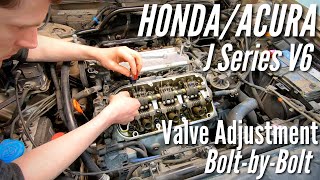
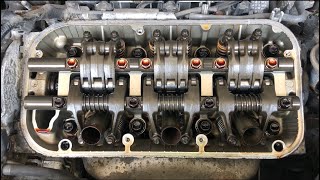
- Incorrect Valve Clearance: Improperly adjusted valves can lead to a loss of compression and cause misfires. While not as common as the VCM issue, it's a possibility, especially on higher-mileage engines. A valve adjustment is a potential maintenance item that could resolve misfires if plugs and coils are good. 🎬 Watch: How to perform a valve adjustment on the J-Series engine.
Diagnosis Steps
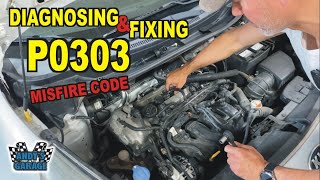
- Read the code with an OBD-II scanner to confirm P0303 and check for any other codes 🎬 Watch: A step-by-step guide to diagnosing a Cylinder 3 misfire. like P0301, P0302, P0304, or P0420.
- Check the engine oil level. Low oil is a strong indicator of the underlying VCM oil consumption issue.
- Locate cylinder #3. On the J35Z2 V6, it is on the rear bank (closest to the firewall) on the driver's side. The rear bank cylinders are 1-2-3 from passenger to driver side.
- Remove the ignition coil and spark plug from cylinder #3.
- Inspect the spark plug for heavy carbon deposits, oil, or wetness. This is the key indicator of the VCM issue. A clean plug suggests a different problem.
- If the plug is fouled, replace it with a new OEM-spec plug (NGK or Denso Iridium). This is the most likely immediate fix, though it may be temporary.
- If the plug looks clean, test the ignition system. Swap the ignition coil from cylinder #3 with another cylinder (e.g., #2). Clear the codes and see if the misfire moves to the new cylinder (P0302). If it does, the coil is bad.
- If the misfire remains on cylinder #3 after a new plug and a tested-good coil, the issue could be a clogged fuel injector or a mechanical problem like low compression from bad rings or incorrect valve clearance.
- For a long-term preventative fix, consider installing a VCM disabling device ('VCM muzzler' or 'S-VCM Controller'). This device tricks the engine computer to prevent it from activating VCM, which stops the oil consumption and plug fouling problem at its source. This is a very popular and effective solution in the owner community.
Parts You'll Likely Need
- Spark Plug
(OEM #12290-R70-A01 (NGK ILZKR7B11) or 12290-R40-A02 (Denso SXU22HCR11S))— This is the most common part to fail due to oil fouling from the VCM system. It is the direct cause of the misfire.
Trusted brands: NGK, Denso
OEM price range: $20-$30
Aftermarket price range: $10-$20 - Ignition Coil
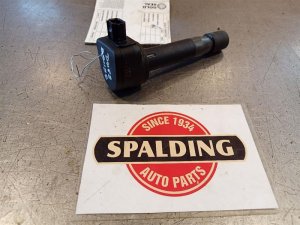
(OEM #30520-R70-A01 (superseded by 30520-R70-S01))— A standard potential failure point for any misfire code. Less common than a fouled plug on this vehicle, but still a possibility.
Trusted brands: Denso, Hitachi, NGK
OEM price range: $90-$125
Aftermarket price range: $40-$80 - VCM Disabling Device — An aftermarket solution that prevents the root cause of the spark plug fouling by keeping all cylinders active. This is a preventative measure to stop the misfire from recurring and is widely recommended by owners. 🎬 See how to install a VCM disabler to prevent engine damage.
Trusted brands: VCMTuner II, S-VCM Controller
Aftermarket price range: $100-$150
Related Codes That Often Appear With This One
- P0300 — If the misfire condition is severe or affects multiple cylinders (often cylinders 1-4), a P0300 (Random/Multiple Cylinder Misfire) code may appear alongside the specific cylinder code.
- P0301, P0302, P0304 — These codes indicate misfires in cylinders 1, 2, and 4. Honda's TSB A13-079 specifically groups these four codes together as they are all related to the VCM system deactivating the rear bank of cylinders, leading to widespread spark plug fouling.
- P0420 — This code indicates 'Catalyst System Efficiency Below Threshold (Bank 1)'. A persistent misfire on cylinders 1, 2, or 3 (which are on Bank 1) can dump unburnt fuel into the exhaust, damaging the catalytic converter and triggering this code.
Technical Service Bulletins (TSBs) & Recalls

- A13-079: Warranty Extension: MIL Comes On With DTCs P0301 Through P0304. This TSB directly links the code to spark plug fouling caused by piston ring issues related to the VCM system.
Platform-Specific Known Issues
- Honda Technical Service Bulletin (TSB) A13-079 was issued for 2010-2012 V6 Crosstour models for this exact problem. It acknowledges that piston rings on cylinders 1-4 can align due to VCM operation, causing spark plug fouling and setting codes P0301, P0302, P0303, and P0304.
- A class-action lawsuit (Soto et al. v. American Honda Motor Co., Inc.) was settled regarding this issue, which led to an extended warranty (8 years/unlimited miles) for the piston ring repair. This warranty has now expired for all affected model years.
Mechanic-Grade Diagnostic Values
- Fuel Injector Resistance — expected: 10 - 13 Ohms. Failure: A reading significantly outside this range, especially a very low reading (short) or an open circuit (infinite resistance), indicates a faulty injector.
- Ignition Coil Primary Resistance — expected: 0.49 - 0.57 Ohms. Failure: A reading outside this range indicates a fault in the primary winding of the coil.
- Ignition Coil Secondary Resistance — expected: 9.5 - 11.1 kOhms. Failure: A reading outside this range indicates a fault in the secondary winding of the coil.
Hidden / Shadow Codes Worth Checking
- Mode $06, Test ID $A2-$AF: This is not a hidden code, but rather raw data from the PCM's continuous monitoring. Professional scan tools can access this data to show live misfire counts for each cylinder (Cylinder 1 is $A2, Cylinder 2 is $A3, Cylinder 3 is $A4, etc.). This allows a technician to see misfires as they happen, even if they aren't frequent enough to set a Check Engine Light. (see via Requires a professional-grade scan tool or an advanced OBD-II app that can display Mode $06 data. Basic code readers will not show this.)
Scan Tool Commands That Help
- Honda HDS, Autel, Snap-on, or other professional scan tools: Power Balance Test / Cylinder Cut Test — This bidirectional command is used when a misfire is felt, but it's unclear if it's caused by ignition, fuel, or compression. The tool commands the PCM to sequentially shut off fuel to each cylinder. If disabling cylinder 3 causes no change in engine RPM, it confirms that cylinder 3 was not contributing in the first place. If disabling another cylinder (e.g., #4) causes a significant RPM drop, it confirms that cylinder was working properly.
Wiring & Ground Locations
- G101 — Located on the right side of the engine. On many Honda V6 engines, this is the main ground point for the engine wiring harness and is often found on the thermostat housing or nearby on the engine block.. G101 is a primary ground for the Powertrain Control Module (PCM) and multiple sensors. A loose or corroded G101 can cause erratic sensor readings and weak spark or injector pulses, leading to intermittent and hard-to-diagnose misfires on any cylinder, including P0303.
Real Owner Repair Stories
- Reddit user in r/hondafit (2008 Honda Fit, 100,600 miles) — P0303 misfire code. Low compression on cylinder 3.
❌ Tried (didn't work) Replacing all spark plugs, Swapping ignition coils (code did not move), Replacing the fuel injector for cylinder 3
✅ What actually fixed it A valve adjustment. The owner reported that the valve gaps were 'way off,' and adjusting them to the correct specification resolved the low compression and the P0303 misfire code. - YouTube review and multiple forum discussions (2014 Honda Odyssey (same J35 engine family and VCM system)) — Recurrent misfires, fouled spark plugs, and excessive oil consumption, which are the classic symptoms leading to P0301-P0304 codes on the Crosstour.
❌ Tried (didn't work) Repeatedly replacing spark plugs, which would only fix the issue temporarily.
✅ What actually fixed it Installing an aftermarket VCM disabling device (VCM Muzzler). The device prevents the VCM system from deactivating cylinders, which stops the oil consumption and spark plug fouling at its source. A long-term review after 5 years and 70,000 miles reported no fouled plugs or oil consumption since installation.
OEM Part Supersession History
30520-R70-A01→30520-R70-S01— Standard part revision by the manufacturer. The new part is a direct replacement for the old one.
Heads up: No known incompatibility issues; 30520-R70-S01 is the correct service part.
Helpful Videos

We Have This Part in Stock


The information in this article is provided for general reference and educational purposes only. Vehicle specifications, procedures, and part compatibility can vary by production date, trim level, and region. Always consult your vehicle's factory service manual and verify part numbers before purchasing or performing repairs. Safety-critical components such as airbags, seat belts, and braking systems should be installed by a qualified professional.
- Honda CROSSTOUR:
- 🎬 Helpful Videos
- 🛍️ Shop This Part
- What's Unique About the 2010-2012 Honda CROSSTOUR
- Diagnostic Flowchart
- Symptoms You May Notice
- Most Likely Causes
- Rare But Worth Checking
- Diagnosis Steps
- Parts You'll Likely Need
- Related Codes That Often Appear With This One
- Technical Service Bulletins (TSBs) & Recalls
- Platform-Specific Known Issues
- Mechanic-Grade Diagnostic Values
- Hidden / Shadow Codes Worth Checking
- Scan Tool Commands That Help
- Wiring & Ground Locations
- Real Owner Repair Stories
- OEM Part Supersession History
- 🎟️ Get 5% Off