

P0303 on 2017-2018 Honda CR-V: Cylinder 3 Misfire Causes and Fixes
P0303 on a 2017-2018 Honda CR-V with the 1.5L Turbo engine is most often caused by faulty fuel injectors or fouled spark plugs, which are known issues for this platform. The root cause is frequently fuel dilution of the engine oil. A software update (TSB 19-032) and potential fuel injector replacement under an extended warranty may be required to permanently fix the issue.
- P0303 on a 2017-2018 CR-V is not a simple, isolated misfire; it's often a symptom of the engine's known fuel dilution problem.
- Before paying for repairs, check with a Honda dealer about warranty extensions and TSB 19-032, as the fix (software update, new injectors) may be covered.
- The most common parts to fail are the fuel injectors and spark plugs, often at the same time.
- Always check for code P0172 (Fuel System Too Rich) alongside P0303, as it strongly points to the specific fuel-related issues on this platform.
- While rare, a P0303 code on this vehicle has been linked to serious head gasket failures in multiple owner complaints, so it should not be ignored.
What's Unique About the 2017-2018 Honda CR-V

The 2017-2018 CR-V with the 1.5L Turbo (L15B7) direct-injection engine is known for a specific issue where gasoline can dilute the engine oil. This problem is exacerbated by short trips in cold weather where the engine doesn't reach a high enough temperature to evaporate the fuel from the oil. 🎬 Watch: A deep dive into the Honda oil dilution issue. This fuel-laden oil has reduced lubricating properties and contributes to premature failure of components. Honda issued warranty extensions (extending the powertrain warranty to 6 years/unlimited miles for specific components) and software updates (TSB 19-032) to address the resulting drivability complaints, including misfire codes like P0303 and the related P0172 (Fuel System Too Rich). Consequently, P0303 on this vehicle is frequently a symptom of this larger systemic issue, often manifesting as failed fuel injectors or fouled spark plugs. [17, ODI #11611127, ODI #11407338]
Diagnostic Flowchart

Tap your situation to follow the diagnostic path that matches what you're seeing on this vehicle.
Symptoms You May Notice

- Check engine light is on or flashing
- Rough or shaking idle
- Engine hesitation or stumbling during acceleration
- Reduced engine power and poor fuel economy
- Fuel smell from the exhaust or in the engine oil
- Vehicle may enter 'limp mode' with multiple dashboard warning lights on (e.g., traction control, power steering). [32, 33, ODI #11682852]
- Replacing only the spark plug or ignition coil without addressing the root cause. A Reddit user described a frustrating experience of replacing plugs and coils, then a single injector, only for the P0303 code to return every 50 miles until all injectors were replaced with OEM parts.
- Using aftermarket parts. In the same owner's story, the dealership suggested that non-OEM parts were the problem, a common but sometimes misleading diagnostic path when the real issue is a faulty injector or software.
Most Likely Causes

- Faulty Fuel Injectors 🔴 High Probability The 1.5L Turbo engine has a well-documented issue with fuel dilution causing injectors to fail. Honda acknowledged this and issued a warranty extension that may cover replacement. NHTSA complaints and forum discussions for P0303 on this vehicle overwhelmingly cite fuel injector replacement as the ultimate fix, often after spark plugs and coils were tried first. [33, ODI #11611127, ODI #11692547]
How to confirm: A mechanic can perform a fuel injector balance test. Diagnosis is often made by ruling out spark plugs and ignition coils first. If the misfire persists on cylinder 3 after swapping the coil and plug, the injector is the prime suspect.
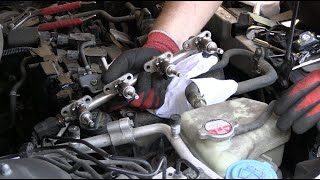
Typical fix: Replace all four fuel injectors with the updated part. Honda sells them as a kit that includes all four injectors and a new high-pressure fuel pipe, which is recommended to be replaced at the same time. 🎬 Watch: Step-by-step guide to replacing these fuel injectors.
Est. part cost: $400-$800 for a full set - Fouled or Worn Spark Plugs 🔴 High Probability Fuel and oil dilution can cause spark plugs to foul prematurely with fuel or carbon. They are a common failure point for any misfire, but especially on this engine where they are often a symptom of the larger fuel system issue.
How to confirm: Remove the spark plug from cylinder 3 and inspect it. Look for a wet, black, fuel-smelling electrode or heavy carbon deposits. Compare it to a plug from a non-misfiring cylinder to spot the difference.
Typical fix: Replace all four spark plugs. It is highly recommended to replace them as a set. However, if the root cause (like a bad injector) isn't fixed, the new plug may foul again.
Est. part cost: $60-$120 - Failed Ignition Coil 🟡 Medium Probability
How to confirm: Swap the ignition coil from cylinder 3 with another cylinder (e.g., cylinder 2). Clear the codes and drive the vehicle. If the code changes to P0302, the ignition coil is faulty. This is a standard and effective diagnostic step. 🎬 See how to test your ignition coil before buying parts.
Typical fix: Replace the failed ignition coil. It's often recommended to use OEM or high-quality brands like Denso or NGK, as some owners report issues with cheaper aftermarket coils.
Est. part cost: $50-$100 - Outdated ECU Software 🟡 Medium Probability Honda released TSB 19-032 to update the engine (ECU) and A/C control unit software. This update changes engine operating parameters to help warm the engine faster and mitigate the fuel dilution problem that leads to misfires. A vehicle that has not had this update is more susceptible.
How to confirm: A Honda dealership or qualified shop with access to Honda's service network can check the vehicle's VIN to see if the software update has been performed.
Typical fix: Update the ECU software at a dealership. This is often the first step in the official diagnostic procedure.
Est. part cost: $0 if covered under warranty extension, otherwise $100-$200
Rare But Worth Checking
- Leaking Head Gasket: While less common, multiple NHTSA complaints for the 2017-2018 CR-V report a P0303 code leading to a head gasket replacement. [ODI #11692547, ODI #11599538] This is a serious mechanical failure where coolant enters the cylinder, causing a misfire. Symptoms include loss of coolant, white smoke from the exhaust, and a spark plug that appears steam-cleaned.
- Internal Engine Damage (Camshafts): Honda's warranty extension explicitly covers camshafts and rocker arm assemblies, which can be damaged by the poor lubrication from fuel-diluted oil. A failure here would cause misfires and would likely be accompanied by a distinct engine noise, described in TSBs as a 'whirling noise'.
- Carbon Buildup on Intake Valves: As a direct-injection engine, the L15B7 does not have fuel washing over the intake valves. Over time, this can lead to carbon deposits that restrict airflow, causing a lean condition and misfires. This is a less common cause for a single-cylinder misfire but is a known long-term maintenance issue for this engine type. The fix is typically walnut blasting or chemical cleaning of the valves.
Diagnosis Steps
- Read the trouble codes with an OBD-II scanner. Note all active codes, especially P0172 or other misfire codes (P0300, P0301, P0302, P0304).
- Contact a Honda dealer with your VIN to check the warranty extension status and to see if TSB 19-032 (software update) has been performed. If not, this is a critical first step.
- Swap the ignition coil from cylinder 3 to cylinder 2. Clear the codes and drive. If the code returns as P0302, the coil is bad.
- If the misfire remains on cylinder 3, swap the spark plug from cylinder 3 to cylinder 1. Clear codes and drive. If the code returns as P0301, the spark plug is bad.
- Inspect the spark plug from cylinder 3. A wet, black, fuel-soaked plug points to a faulty fuel injector. A white, clean, or 'steam-cleaned' appearance can indicate a coolant leak from a head gasket. Heavy, dry black soot can indicate an oil consumption or carbon buildup issue.
- If ignition components are good and the software is up to date, the fuel injector is the next most likely culprit. A professional diagnosis with an injector balance test is the definitive confirmation, but at this point in the diagnostic tree, replacement is often the assumed next step.
- If the issue persists after addressing fuel and ignition, perform a cylinder compression test and a leak-down test to check for mechanical engine problems like a bad head gasket, worn piston rings, or valve issues.
Parts You'll Likely Need
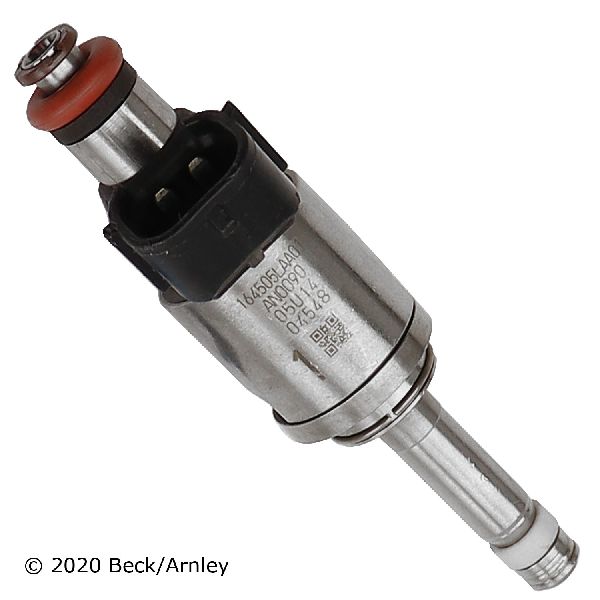
- Fuel Injector Kit
(OEM #06160-5PA-305)— Faulty fuel injectors are a primary cause of P0303 on this engine. This is the updated OEM part number, which supersedes the older 16010-5PA-305. The kit includes all four injectors and the high-pressure fuel pipe, and it is strongly recommended to replace all components as a set.
Trusted brands: Honda (OEM)
OEM price range: $750-$850
Aftermarket price range: $400-$600 - Spark Plug
(OEM #12290-5PA-A01)
Related Codes That Often Appear With This One
- P0172 — Stands for 'Fuel System (Bank 1) Too Rich.' It frequently appears with P0303 on this engine because a leaking or poorly controlled fuel injector dumps excess gasoline into the cylinder, which the oxygen sensors detect as a rich condition. [9, ODI #11611127, ODI #11407338]
- P0300 — 'Random Misfire Detected.' This indicates misfires are happening on multiple cylinders, not just cylinder 3. It strongly points to a systemic issue like failing fuel injectors, widespread spark plug fouling, or the need for the software update.
- P0301, P0302, P0304 — These are misfire codes for cylinders 1, 2, and 4, respectively. Seeing them alongside P0303 reinforces that the problem affects multiple cylinders, which is characteristic of the fuel injector and dilution issue on this platform. [ODI #11407338, ODI #11560452]
Technical Service Bulletins (TSBs) & Recalls
- A19-032 / 19-032: 'Warranty Extension: 2017-18 CR-V: Software Update with A/C Replacement; DTC P0300, P0301, P0302, P0303, P0304, or P0172'. This is the primary TSB addressing the root cause of misfires and fuel system issues on this vehicle.
Platform-Specific Known Issues
- Fuel in Oil Dilution: The 1.5L Turbo direct-injection engine in 2017-2018 CR-Vs is subject to a widely documented problem where gasoline seeps past the piston rings and mixes with the engine oil, particularly in cold climates or during frequent short trips. This degrades the oil's lubricating properties and can lead to premature wear and faults in fuel system and internal engine components.
- Warranty Extension & TSB 19-032: In response to the oil dilution and resulting drivability issues (including misfires), Honda issued Technical Service Bulletin 19-032 and extended the warranty to 6 years/unlimited miles for affected components. This covers software updates for the ECU and A/C control unit, and replacement of fuel injectors, spark plugs, or even major engine components like camshafts if they are found to be damaged as a result of the oil dilution.
Mechanic-Grade Diagnostic Values
- Ignition Coil Primary Resistance — expected: Approximately 0.46 Ohms. Failure: A reading significantly higher or lower than the specification, or an open circuit (infinite resistance).
- Ignition Coil Secondary Resistance — expected: Approximately 15.70 kOhms (15,700 Ohms). Failure: A reading significantly outside the expected range.
- Spark Plug Torque — expected: 16 ft-lbs. Failure: N/A - This is an installation specification.
- Spark Plug Gap — expected: 0.027 - 0.029 inches. Failure: N/A - This is an installation specification.
- High Pressure Fuel System (Direct Injection) — expected: Can exceed 2,000 PSI; specific values depend on engine load and RPM.. Failure: Pressure that does not respond to engine demand, or is significantly low, may indicate a failing high-pressure fuel pump. This requires a scan tool capable of reading high-pressure fuel data.
Hidden / Shadow Codes Worth Checking
- Mode $06, TID $A2-$A5: Mode $06 provides raw data from the PCM's self-tests. For misfires, specific Test IDs (TIDs) correspond to misfire counts for each cylinder (e.g., $A2 for cylinder 1, $A3 for cylinder 2, etc.). A technician can view these counters to see if misfires are occurring even if they haven't reached the threshold to set a P030x code. This is invaluable for diagnosing intermittent issues. (see via An advanced OBD-II scan tool that supports Mode $06 data display. The tool will show the raw count value for each cylinder's misfire monitor.)
Scan Tool Commands That Help
- Honda HDS (Honda Diagnostic System): Cylinder AF Test — This function test can help determine the air-fuel ratio contribution of individual cylinders. A failing injector on cylinder 3 would show a significant deviation. However, a known issue exists where the test may fail to complete if the engine is at operating temperature and the cooling fans turn on.
- Honda HDS (Honda Diagnostic System): Misfire Data — The HDS provides a detailed live data list that includes misfire counters for each cylinder, similar to Mode $06 but integrated into the Honda-specific software. This is the primary tool a dealer technician would use to confirm which cylinder is misfiring and how frequently.
Wiring & Ground Locations
- G101 — Located on the left rear of the engine.. This is a primary engine ground. A loose or corroded G101 ground can cause a variety of erratic electrical issues, including poor signals from the crankshaft position sensor or inconsistent power to ignition coils, potentially leading to misfire codes.
- Transmission Ground Strap — A ground wire typically connects the transmission case to the vehicle's chassis, often near the air filter box.. Owners have reported that this ground point can become corroded and crusty. Since many engine sensors ground through the engine block and transmission, a poor connection here can cause unpredictable sensor readings and trigger false or 'ghost' misfire codes.
Real Owner Repair Stories
- Reddit user in /r/Honda (2018 CR-V) — Multiple warning lights came on the dashboard simultaneously.
❌ Tried (didn't work) Replaced spark plugs., Replaced ignition coils.
✅ What actually fixed it After replacing plugs and coils didn't solve the issue, a compression test was performed and came back normal. The dealership then replaced all four fuel injectors under Honda's extended warranty for this specific issue, which resolved the problem. - Reddit user in /r/Honda (2017 CR-V with 88,000 km) — 12 simultaneous system failure warnings on the dash while idling. Codes pulled indicated 3 of 4 fuel injectors were bad.
❌ Tried (didn't work) Owner was advised by family to try fuel injector cleaner, but a Honda technician in the thread noted this would be ineffective on a direct injection engine.
✅ What actually fixed it The confirmed fix was the replacement of the fuel injectors by the dealership. A Honda technician in the thread confirmed this is a very common issue and the correct fix for the symptoms and codes (P0172 and misfires).
OEM Part Supersession History
16010-5PA-305→06160-5PA-305— The original fuel injectors were prone to failure. The new part number is for a kit that includes four updated injectors and a new high-pressure fuel pipe, intended to be a complete fix for the common P0172 and related misfire issues.
Heads up: It is strongly recommended to replace all four injectors as a set using the new kit (06160-5PA-305) rather than replacing a single injector with an older part number.
Model Year Variations Within This Range
- 2017-2018: While the core engine is the same, Honda issued several software updates under TSBs (like 19-032 and 19-037) to address the fuel dilution and misfire issues. A 2017 or 2018 model that has not had these updates performed at a dealership is more susceptible to codes P0303 and P0172 than a vehicle that has been updated.
Helpful Videos
Used OEM Parts in Stock

New Aftermarket Parts Available



The information in this article is provided for general reference and educational purposes only. Vehicle specifications, procedures, and part compatibility can vary by production date, trim level, and region. Always consult your vehicle's factory service manual and verify part numbers before purchasing or performing repairs. Safety-critical components such as airbags, seat belts, and braking systems should be installed by a qualified professional.
- Honda CR-V:
- 🎬 Helpful Videos
- 🛍️ Shop This Part
- What's Unique About the 2017-2018 Honda CR-V
- Diagnostic Flowchart
- Symptoms You May Notice
- Most Likely Causes
- Rare But Worth Checking
- Diagnosis Steps
- Parts You'll Likely Need
- Related Codes That Often Appear With This One
- Technical Service Bulletins (TSBs) & Recalls
- Platform-Specific Known Issues
- Mechanic-Grade Diagnostic Values
- Hidden / Shadow Codes Worth Checking
- Scan Tool Commands That Help
- Wiring & Ground Locations
- Real Owner Repair Stories
- OEM Part Supersession History
- Model Year Variations Within This Range
- 🎟️ Get 5% Off