

P0303 on 2010-2012 GMC Canyon: Cylinder 3 Misfire Causes and Fixes
P0303 on a 2010-2012 GMC Canyon means cylinder 3 is misfiring. The most likely cause is a failed ignition coil or a worn spark plug. Swapping the coil from cylinder 3 to another cylinder is a quick, no-cost diagnostic step. A replacement coil costs about $40-$80. While less common on these model years than earlier ones, a persistent misfire could indicate a mechanical engine issue like a valve problem, requiring a compression test.
- P0303 means your GMC Canyon's cylinder #3 is misfiring.
- The most likely fix is replacing the ignition coil or spark plug for cylinder 3.
- A simple diagnostic is to swap the coil from cylinder 3 to another cylinder and see if the misfire code follows it.
- Be aware that on the I4 and I5 engines, a persistent P0303 could be a sign of a more serious mechanical engine problem (worn valve seats) that requires a compression test to confirm.
- Do not ignore a flashing check engine light, as it signals a severe misfire that can quickly destroy your catalytic converter.
What's Unique About the 2010-2012 Gmc CANYON
For the 2010-2012 GMC Canyon equipped with the 2.9L I4 and 3.7L I5 (Atlas family) engines, a P0303 code can be more than a simple tune-up issue. While these model years feature a revised cylinder head design that is less prone to the infamous valve seat failure of the earlier 2004-2006 models, a mechanical flaw is still a possibility. Premature wear of the valve seats or a broken valve spring can lead to a loss of compression and a persistent misfire that ignition or fuel parts won't solve. Therefore, while you should always check ignition parts first, be aware that a deeper mechanical issue is a documented possibility on this platform. Additionally, a GM Technical Service Bulletin (PIP4819A) specifically mentions that loose spark plug wire/coil connections can cause misfires on these trucks.
Diagnostic Flowchart
Tap your situation to follow the diagnostic path that matches what you're seeing on this vehicle.
Symptoms You May Notice
- Rough or shaky idle
- Hesitation, stumbling, or jerking during acceleration
- Noticeable loss of engine power
- Flashing or solid Check Engine Light
- Reduced fuel economy
- Fuel smell from the exhaust
- Replacing only the spark plug when the ignition coil is the actual failure.
- Replacing fuel system components before performing a compression test, potentially missing a mechanical engine issue like worn valve seats or a broken valve spring.
- Replacing the accelerator pedal for a misfire code; this is incorrect as pedal sensor issues would trigger different codes like P2138.
Most Likely Causes
- Failed Ignition Coil 🔴 High Probability The coil-on-plug design is common, and constant heat cycles eventually cause the coil's internal windings to fail, leading to a weak or no-spark condition.
How to confirm: Swap the ignition coil from cylinder 3 with an adjacent cylinder (e.g., cylinder 2 or 4). Clear the codes and drive the vehicle. If the code changes to P0302 or P0304, the coil is faulty.
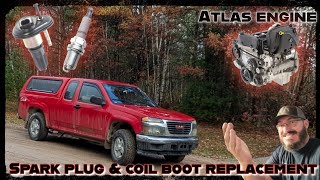
Typical fix: Replace the failed ignition coil. It is often recommended to replace all coils and spark plugs 🎬 Watch: Step-by-step spark plug and coil replacement walkthrough. at the same time if they are original and high-mileage.
Est. part cost: $40-$80 - Worn or Fouled Spark Plug 🔴 High Probability
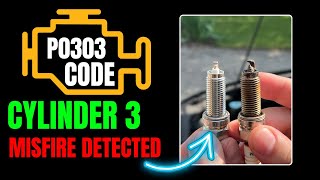
How to confirm: Remove the spark plug from cylinder 3 and inspect it. Look for a worn electrode, heavy carbon buildup, oil fouling, or a cracked insulator. Compare it to a plug from a healthy cylinder.
Typical fix: Replace the spark plug. It is best practice to replace all spark plugs at the same time using the correct type (Iridium for these engines).
Est. part cost: $10-$25 - Loose Spark Plug Wire / Coil Connection 🟡 Medium Probability A GM Technical Service Bulletin (PIP4819A) specifically calls out inspecting for loose spark plug wires (the boot connecting the coil to the plug) as a cause for misfires on 2010 models.
How to confirm: Visually inspect and physically check the connection of the ignition coil onto the spark plug for cylinder 3. Ensure it is fully seated and the electrical connector is secure.
Typical fix: Reseat the ignition coil boot firmly onto the spark plug. Apply a small amount of dielectric grease to the inside of the boot to ensure a good seal and prevent it from getting stuck in the future.
Est. part cost: $5-$15 - Clogged or Faulty Fuel Injector ⚪ Low Probability
How to confirm: Use a 'noid light' to verify the electrical pulse to the injector. To confirm a clog, you can swap the cylinder 3 injector with another cylinder's injector. If the misfire code follows the injector (e.g., becomes P0302), it is the cause.
Typical fix: Replace the faulty fuel injector. Sometimes professional fuel system cleaning can resolve a minor clog.
Est. part cost: $50-$120
Rare But Worth Checking
- Worn Valve Seats / Low Compression: This is a well-documented, serious issue, particularly on the Atlas I4 and I5 engines. Premature wear of the valve seats leads to a loss of compression, causing a misfire that ignition or fuel parts won't fix. A compression test and cylinder leak-down test are required to diagnose this. Repair involves replacing the cylinder head, which can cost over $4,000.
- Leaking Intake Manifold Gasket: A vacuum leak near the cylinder 3 intake runner can lean out the air/fuel mixture enough to cause a misfire. This would typically be accompanied by a lean code (P0171) and a rough idle. A smoke test is the most effective way to confirm a leak.
- Broken Valve Spring: Though less common, a broken valve spring will cause a loss of compression and a persistent misfire. This may be accompanied by a ticking or chirping noise from the top of the engine. Diagnosis requires removing the valve cover for visual inspection or performing a cylinder leakage test.
Diagnosis Steps
- Read the code with an OBD-II scanner to confirm P0303 is present and check the freeze frame data to see when the misfire occurred.
- Check the misfire counter for cylinder 3 using a capable scan tool (e.g., Tech2 or GDS2) to see if it is actively misfiring.
- Inspect the ignition coil on cylinder 3. Ensure the electrical connector is secure and the coil boot is firmly seated on the spark plug, per TSB PIP4819A.
- Swap the ignition coil from cylinder 3 with the coil from cylinder 2. Clear the codes, run the engine, and re-scan. If the code is now P0302, the ignition coil is bad and needs replacement.
- If the code remains P0303, swap the spark plugs between cylinders 3 and 2. Clear codes and re-test. If the code becomes P0302, the spark plug is faulty.
- If the misfire still remains on cylinder 3, inspect the fuel injector wiring and consider swapping the injector with another cylinder to see if the problem moves.
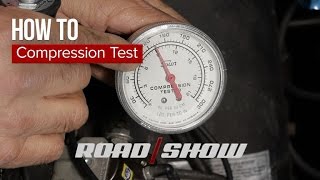
- If all ignition and fuel components test good, perform a cylinder compression test. 🎬 See how to easily perform a compression test yourself. A reading on cylinder 3 that is more than 15-20% lower than the other cylinders points to a mechanical issue.
- Perform a cylinder leak-down test to pinpoint the source of compression loss (intake valve, exhaust valve, or piston rings). This is critical for diagnosing the known valve seat problem or a broken valve spring.
Parts You'll Likely Need
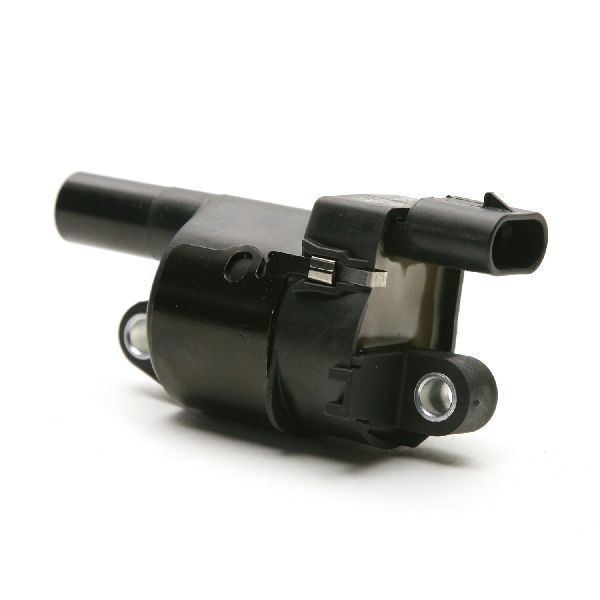
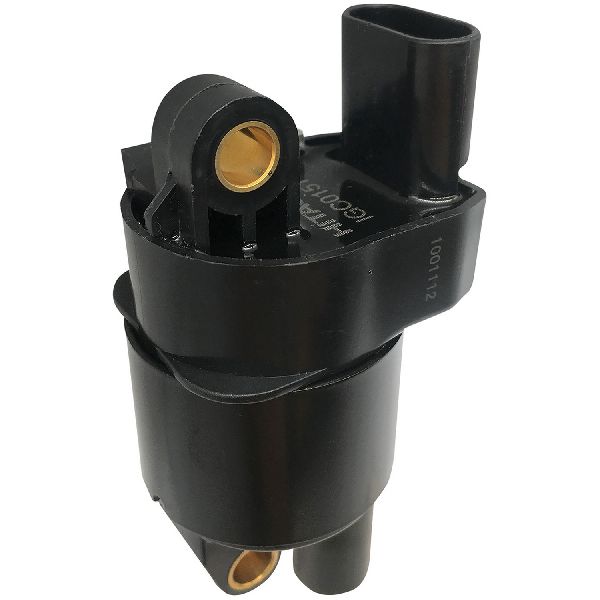
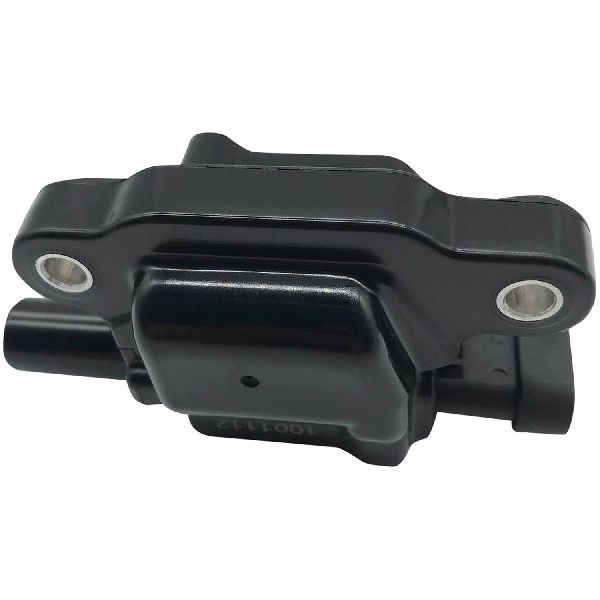
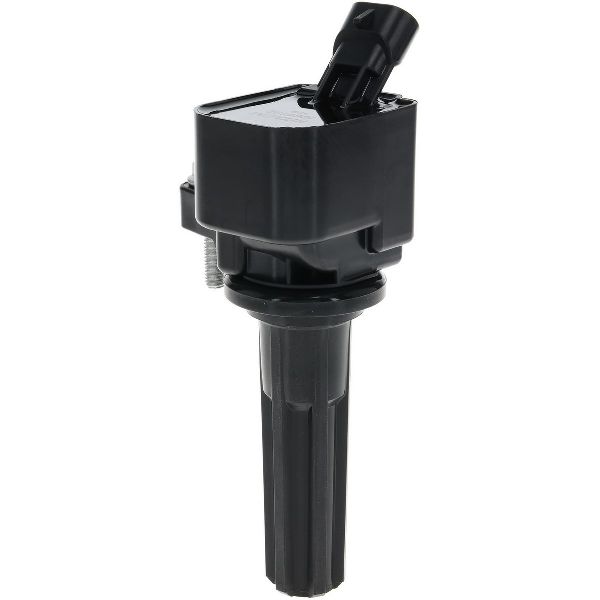
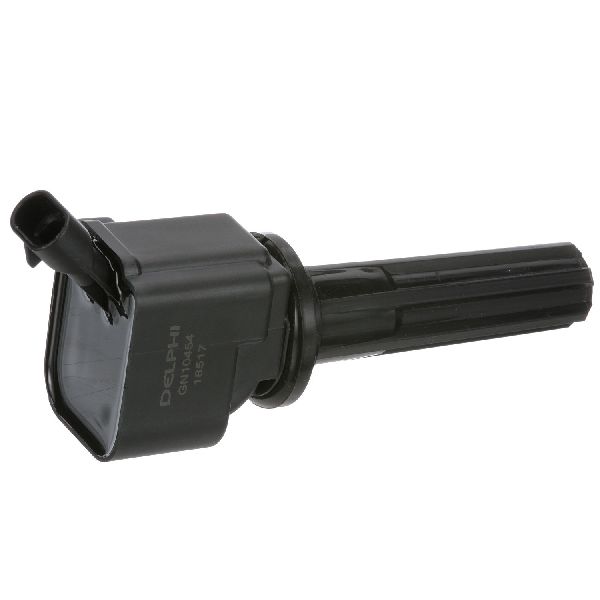
- Ignition Coil
(OEM #19421261 (ACDelco))— This is the most common failure point for a single-cylinder misfire. The coil provides the high voltage needed to create a spark.
Trusted brands: ACDelco, Delphi (often the OE manufacturer), NGK, Denso
OEM price range: $60-$90
Aftermarket price range: $40-$70 - Iridium Spark Plug
(OEM #41-103 (ACDelco))— Spark plugs are a routine maintenance item and can foul or wear out, causing a weak or nonexistent spark. The correct plug gap is critical.
Trusted brands: ACDelco, NGK
OEM price range: $15-$25
Aftermarket price range: $10-$20
Related Codes That Often Appear With This One
- P0300 — If the misfire is intermittent or affects other cylinders, a P0300 (Random/Multiple Misfire) code may appear alongside P0303.
Technical Service Bulletins (TSBs) & Recalls
- PIP4819A: Advises technicians to inspect for loose spark plug wires (coil boots) as a potential cause for misfire codes (P0300-P0308) on 2010 models.
- PIP4138K: Details diagnosis for misfires that may be caused by internal mechanical issues like a worn camshaft lobe, sticking valve, or broken valve spring, which are relevant if basic fixes fail.
Platform-Specific Known Issues
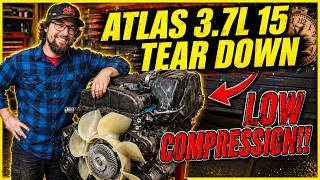
- Cylinder Head Valve Seats (2.9L I4 & 3.7L I5): The most notable issue for the Atlas engine family is premature wear of the valve seats, causing loss of compression and a persistent misfire. While the issue was most prominent on 2004-2006 engines, it can still occur on the 2007-2012 models with the revised head. If basic ignition and fuel fixes do not solve the P0303 code, a compression test is critical. Repair requires replacing the cylinder head with an updated part. 🎬 Watch a complete teardown of the Atlas 5-cylinder engine.
Mechanic-Grade Diagnostic Values
- Fuel Injector Resistance (2.9L I4, 3.7L I5) — expected: Approx. 12.6 Ohms. Failure: A reading significantly higher or lower, or an open circuit (infinite resistance). Readings should be consistent across all injectors.
- Ignition Coil Primary Resistance — expected: 0.4 to 2.0 Ohms. Failure: A reading outside of the specified range.
- Ignition Coil Secondary Resistance — expected: 6,000 to 11,000 Ohms (6k-11k Ω). Failure: A reading outside of this range indicates internal coil failure.
Hidden / Shadow Codes Worth Checking
- Mode $06, Test ID $A2-$AC, Component ID $03: While not a hidden code, professional scan tools can access OBD-II Mode $06 data to view raw misfire counts for each cylinder. For GM, Test IDs $A2 through $AC typically correspond to misfire data for the last 10 driving cycles. Component ID $03 would correspond to Cylinder 3. Exceeding the manufacturer's threshold count here, even without setting a CEL, confirms a misfire event. (see via A professional-grade scan tool with Mode $06 capability.)
Scan Tool Commands That Help
- Tech2 / GDS2 (or equivalent pro-level scanner): Cylinder Power Balance Test — This test helps to identify a weak cylinder in real-time by sequentially disabling the fuel injector to each cylinder and measuring the corresponding drop in RPM. If disabling cylinder 3 results in little or no RPM drop compared to other cylinders, it confirms it is not contributing power correctly.
- Tech2 / GDS2 (or equivalent pro-level scanner): Fuel Injector Balance Test — This command pressurizes the fuel rail and then fires a specific injector for a precise amount of time, measuring the pressure drop. It can identify a clogged or restricted injector on cylinder 3 if the pressure drop is less than that of the other cylinders.
Wiring & Ground Locations
- G101, G102, G103 — Located on the lower left (driver's) side of the engine block.. These are primary engine block grounds. The ignition coils for all cylinders share these ground points. A loose or corroded connection at these locations can cause intermittent and hard-to-diagnose misfires on any cylinder.
- G104 — Located on the left (driver's) side of the cylinder head.. A poor ground connection directly at the cylinder head can create a weak path for spark, leading to misfires. This ground is critical for the ignition system's performance.
- Ignition Coil Connector — The 3-pin electrical connector on top of the ignition coil for cylinder 3.. The terminals within this connector can become loose or corroded, interrupting the power, ground, or signal from the PCM to the coil. The connector itself or the pigtail wiring can fail, mimicking a bad coil.
When the Usual Fixes Don't Work
- While a P0303 code is most often a simple fix like an ignition coil or spark plug, a significant number of cases on this platform are not resolved by a basic tune-up. If swapping the coil and plug does not move the misfire to another cylinder, a deeper issue is likely. Before assuming a major mechanical failure like the known valve seat issue, technicians should perform a thorough check of the fuel injector, the integrity of the wiring to the coil and injector, and critical engine ground points (G101-G104). In rare instances where all components and wiring test good and a compression test is inconclusive, the fault can lie with the PCM's internal driver for that cylinder.
OEM Part Supersession History
12596547, 12612369, 12629472→19421261 (ACDelco D517A)— Part has been updated or consolidated by the manufacturer over time for improved durability or to streamline inventory.
Model Year Variations Within This Range
- 2010-2012: No significant mechanical or electrical system changes affecting a P0303 diagnosis occurred within the 2010-2012 model year range for the GMC Canyon. The available engines (2.9L I4, 3.7L I5, 5.3L V8) and their management systems remained consistent.
Helpful Videos
![How To Perform a Compression Test - [EASY]](https://img.youtube.com/vi/3VmmL0YAO14/mqdefault.jpg)
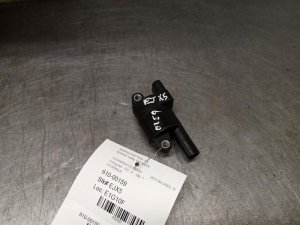
Used OEM Parts in Stock

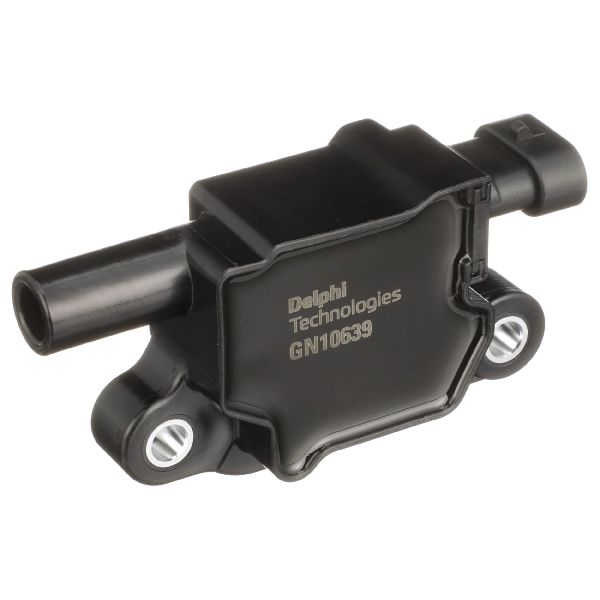
New Aftermarket Parts Available

The information in this article is provided for general reference and educational purposes only. Vehicle specifications, procedures, and part compatibility can vary by production date, trim level, and region. Always consult your vehicle's factory service manual and verify part numbers before purchasing or performing repairs. Safety-critical components such as airbags, seat belts, and braking systems should be installed by a qualified professional.
- Gmc CANYON:
- 🎬 Helpful Videos
- 🛍️ Shop This Part
- What's Unique About the 2010-2012 Gmc CANYON
- Diagnostic Flowchart
- Symptoms You May Notice
- Most Likely Causes
- Rare But Worth Checking
- Diagnosis Steps
- Parts You'll Likely Need
- Related Codes That Often Appear With This One
- Technical Service Bulletins (TSBs) & Recalls
- Platform-Specific Known Issues
- Mechanic-Grade Diagnostic Values
- Hidden / Shadow Codes Worth Checking
- Scan Tool Commands That Help
- Wiring & Ground Locations
- When the Usual Fixes Don't Work
- OEM Part Supersession History
- Model Year Variations Within This Range
- 🎟️ Get 5% Off