

P0303 on 2017-2021 Ford GT: Cylinder 3 Misfire Causes and Fixes
On a 2017-2021 Ford GT, a P0303 code is most often caused by a fouled spark plug, frequently due to short trips without a full engine warm-up, a condition explicitly noted in Ford TSBs. Before replacing parts, consider the vehicle's recent usage. If parts are needed, a new Motorcraft SP-580 spark plug and/or a Motorcraft DG-567 ignition coil for cylinder 3 are the most common fixes.
- P0303 on a Ford GT means cylinder 3 is misfiring.
- Before buying parts, consider if the car was started multiple times without being fully warmed up and driven; this can foul the spark plugs per a Ford TSB.
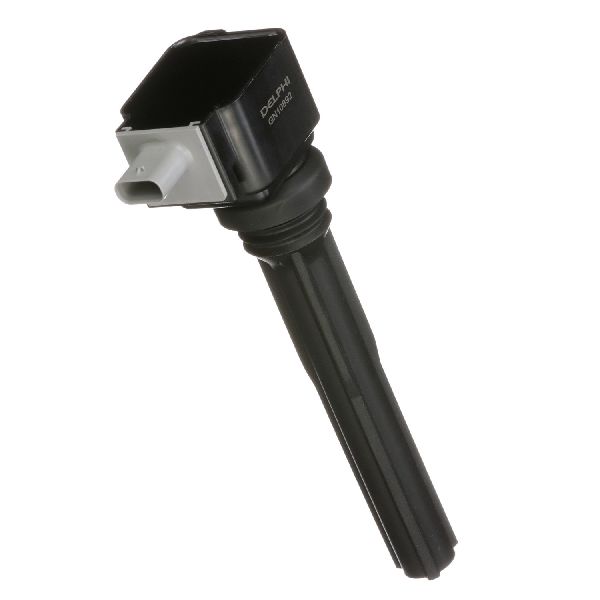
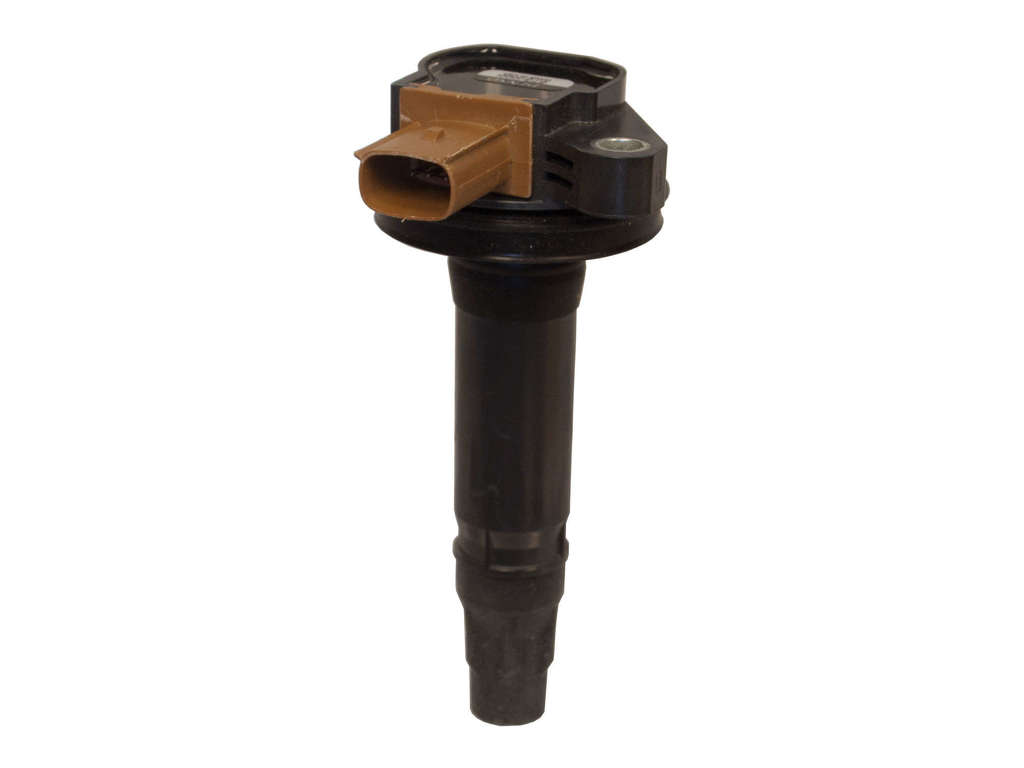
- The most common fixes are replacing the spark plug (Motorcraft SP-580) and/or the ignition coil (Motorcraft DG-567) for cylinder 3.
- Driving with a flashing check engine light can cause rapid and expensive damage to the catalytic converters.
What's Unique About the 2017-2021 Ford GT
The Ford GT, as a high-performance supercar, often experiences unique driving patterns, such as infrequent use and short-duration engine starts for repositioning. Ford has issued Technical Service Bulletins (TSBs SSM 50616, 49536, 49028) specifically acknowledging that multiple cold starts without driving the car long enough to reach full operating temperature can lead to fouled spark plugs and cause misfire codes like P0303. This usage pattern is a critical first diagnostic check before assuming a component has failed, as the solution may be as simple as cleaning or replacing a fouled plug caused by usage rather than a defect.
Diagnostic Flowchart
Tap your situation to follow the diagnostic path that matches what you're seeing on this vehicle.
Symptoms You May Notice
- Check Engine Light is on or flashing (a flashing light indicates a severe misfire)
- Rough or unstable idle
- Engine hesitation or stumbling during acceleration
- Noticeable loss of power and performance
- Hard starting, especially after short trips
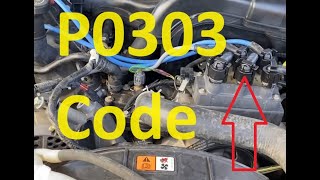
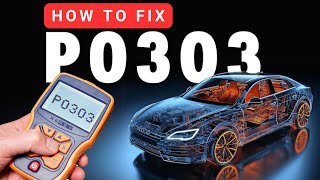
- Fuel smell from the exhaust 🎬 Watch: A breakdown of common P0303 causes and fixes.
- Immediately replacing the ignition coil or fuel injector without first inspecting the spark plug and considering the vehicle's recent driving history. Per Ford's TSBs, spark plug fouling from short trips is a very common cause and should be the first check.
Most Likely Causes
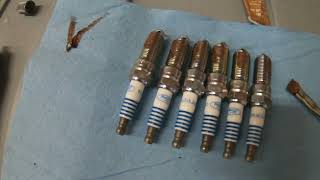
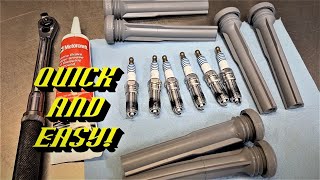
- Fouled or Worn Spark Plug 🔴 High Probability Ford TSBs SSM 50616, 49536, and 49028 directly state that operating conditions like multiple cold starts without a full warm-up can cause misfires, pointing towards spark plug fouling. The GT's high-output engine also places high demand on plugs, which are normal wear items. The correct OEM part is Motorcraft SP-580. 🎬 See this walkthrough for replacing 3.5L EcoBoost spark plugs.
How to confirm: Visually inspect the spark plug from cylinder 3. Look for black, sooty deposits (carbon fouling), oil, or excessive wear on the iridium electrode. The TSB specifically advises this inspection first.
Typical fix: Replace the spark plug for cylinder 3. Best practice is to replace all six spark plugs with OEM Motorcraft SP-580 plugs to ensure balanced performance and prevent future misfires. Ensure they are gapped correctly per factory specification.
Est. part cost: $20-$50 per plug - Failed Ignition Coil (Coil-on-Plug) 🟡 Medium Probability Coil-on-plug units are a common failure point on modern engines due to extreme heat cycles and vibration. The high-output, twin-turbo nature of the GT's engine generates significant heat in a compact, mid-engine bay, accelerating wear. The OEM part is Motorcraft DG-567.
How to confirm: Swap the ignition coil from cylinder 3 with another cylinder (e.g., cylinder 1). Clear the codes with a scanner and drive the vehicle. If the code returns as P0301, the coil is confirmed to be faulty.
Typical fix: Replace the failed ignition coil with a new Motorcraft DG-567. Some owners choose to replace the coil and spark plug for the affected cylinder at the same time.
Est. part cost: $75-$160 - Faulty Fuel Injector ⚪ Low Probability The 3.5L EcoBoost uses a sophisticated dual-injection system (both port and direct injection). A clogged or failing direct injector can cause a lean misfire in a specific cylinder. While less common than ignition components, it's a known failure mode in the EcoBoost engine family.
How to confirm: This is more complex and typically requires professional diagnostic tools. A technician can monitor fuel trims for cylinder 3 and perform an injector balance test to check flow rates.
Typical fix: Professionally clean or replace the fuel injector for cylinder 3. This is a more labor-intensive job due to the injector's location.
Est. part cost: $100-$300
Rare But Worth Checking
- Carbon Buildup on Intake Valves: As a Gasoline Direct Injection (GDI) engine, the 3.5L EcoBoost is susceptible to carbon buildup on the back of the intake valves over time, which can impede airflow and cause misfires. This is less likely on a low-mileage vehicle but is a known long-term characteristic of the engine family. It typically presents as a rough idle or misfires at startup.
- Low Cylinder Compression: A mechanical engine issue such as a damaged piston, worn piston rings, or a problem with a valve not seating correctly could cause a loss of compression and a persistent misfire. This is a rare but serious cause. A compression test followed by a cylinder leak-down test can confirm this. A leak-down test is more definitive as it can pinpoint the source of the leak (intake valve, exhaust valve, or piston rings).
- Wiring Harness or Connector Issue: The wiring to the ignition coil or fuel injector for cylinder 3 could be damaged, loose, or corroded. This can cause an intermittent connection and trigger a misfire code. A visual inspection of the harness and wiggling the connectors while the engine is running (with caution) can sometimes identify the issue.
Diagnosis Steps
- Check the vehicle's recent usage history. Ask the owner if the car has been started multiple times without being driven long enough to reach full operating temperature (e.g., moved in and out of a garage). This is the scenario described in Ford TSB SSM 50616.
- If the above condition is met, the primary suspect is a fouled spark plug. Remove and inspect the spark plug from cylinder 3 (rearmost on passenger side) for black, sooty carbon deposits.
- If the spark plug appears normal or the usage pattern doesn't fit, swap the ignition coil from cylinder 3 with another cylinder (e.g., cylinder 1).
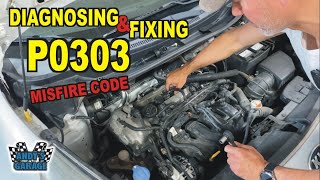
- Clear the diagnostic codes using an OBD-II scanner. 🎬 Watch: How to diagnose and clear a P0303 misfire code.
- Start the engine and perform a test drive to see if a new code appears. If the code changes to P0301, the ignition coil is the faulty component.
- If the code remains P0303 after the coil swap, the issue is likely with the spark plug, fuel injector, or a mechanical problem in cylinder 3.
- If the spark plug and coil are confirmed to be good, the next step is to investigate the fuel system. This typically requires professional tools to test the fuel injector for cylinder 3.
- If all ignition and fuel components are ruled out, a mechanical issue is possible. Perform a cylinder compression test, followed by a cylinder leak-down test, to check for internal engine problems like poor valve seating or worn piston rings.
Parts You'll Likely Need
- Spark Plug
(OEM #Motorcraft SP-580)— This is the most likely cause, especially if the vehicle is used for short trips, as noted in Ford TSBs. It is a standard maintenance item and the first part to inspect.
Trusted brands: Motorcraft (OEM), NGK
OEM price range: $25-$50
Aftermarket price range: $20-$40 - Ignition Coil
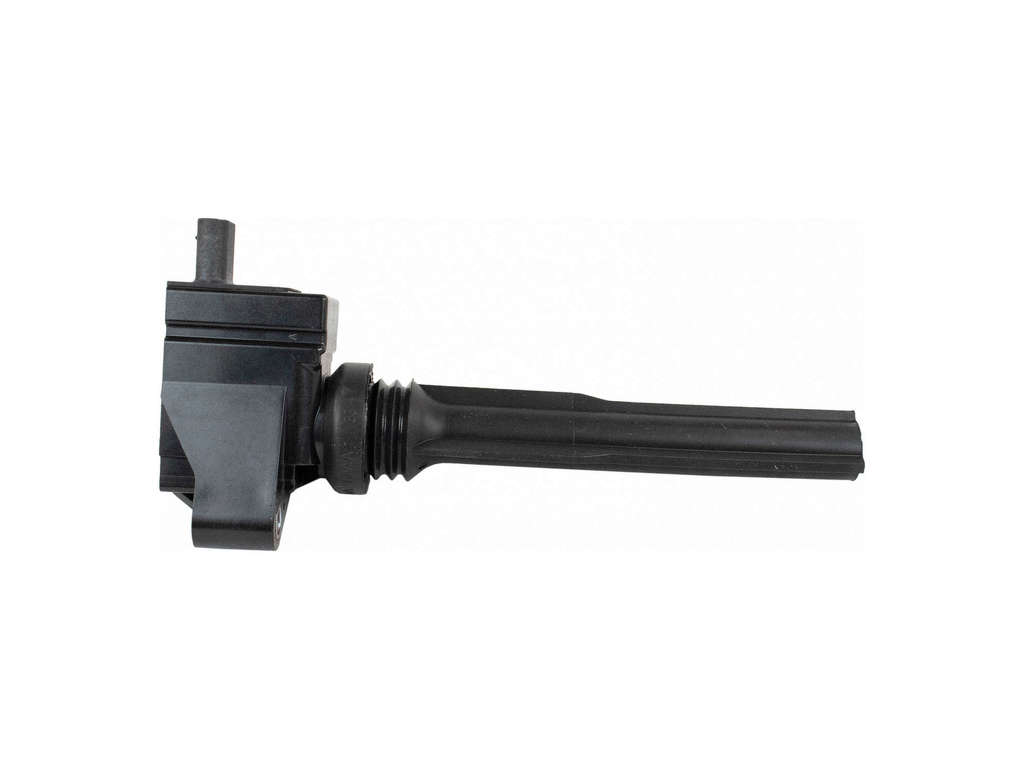
(OEM #Motorcraft DG-567 (supersedes JT4Z-12029-A))— The second most common cause of a single-cylinder misfire. They are prone to failure from the high heat environment of the GT's engine bay.
Trusted brands: Motorcraft (OEM), Denso, NGK
OEM price range: $100-$160
Aftermarket price range: $70-$120
Related Codes That Often Appear With This One
- P0300 — If the conditions causing the misfire are intermittent or beginning to affect other cylinders, a P0300 (Random/Multiple Cylinder Misfire) may be stored alongside P0303.
- P0316 — This code indicates a misfire was detected within the first 1,000 engine revolutions on startup. It is often seen with other P030x codes and is specifically mentioned in the Ford TSBs for the GT, reinforcing the 'cold start' issue.
Technical Service Bulletins (TSBs) & Recalls
- SSM 50616: Runs rough or hard start with various misfire DTCs. Advises checking operating conditions before diagnostics.
- SSM 49536: Runs rough or hard start with various misfire DTCs. Advises checking for multiple cold starts and inspecting spark plugs before other diagnostics.
- SSM 49028: Runs rough or hard start with various misfire DTCs. Advises checking operating conditions before diagnostics.
Platform-Specific Known Issues
- Ford Technical Service Bulletins (SSM 50616, SSM 49536, SSM 49028) are the most critical piece of information for this code on this vehicle. They highlight that these cars can exhibit misfire DTCs (P0300-P0306, P0316) due to 'multiple cold engine start-ups without the vehicle being driven to normal operating temperature'. The official recommendation is to investigate this usage pattern and inspect the spark plugs for fouling before proceeding with any other, more complex diagnostics.
Mechanic-Grade Diagnostic Values
- Ignition Coil Primary Resistance — expected: Approximately 0.5 Ohms. Failure: Significant deviation from 0.5 Ohms, or an open/infinite reading.
- Ignition Coil Secondary Resistance — expected: Approximately 6.0 - 6.2K Ohms. Failure: Significant deviation from the 6.0-6.2K Ohm range.
- Direct Fuel Injector Resistance — expected: 1 to 2 Ohms. Failure: An open circuit (infinite resistance) or a reading significantly outside this range. Comparing with a known-good injector is recommended.
- Low-Side Fuel Pressure (at idle) — expected: 40-60 PSI. Failure: Pressure significantly below this range can indicate a weak in-tank fuel pump.
- High-Side Fuel Pressure (under load) — expected: Up to 2,150+ PSI. Failure: If the actual pressure lags the requested pressure by more than 200 PSI, it could indicate a failing high-pressure fuel pump (HPFP).
Hidden / Shadow Codes Worth Checking
- Mode 6, Test ID $A2-$AF: This is not a DTC, but a standard OBD-II test monitor that records misfire counts per cylinder for the current and last 10 driving cycles. For CAN bus vehicles, the Component IDs will be $A2 for cylinder 1, $A3 for cylinder 2, $A4 for cylinder 3, and so on. A technician can view these counts to identify intermittent misfires that haven't yet met the threshold to trigger a P0303 code. (see via A professional scan tool with Mode 6 capability, such as Ford's IDS or advanced tools like FORScan.)
Scan Tool Commands That Help
- Ford IDS (Integrated Diagnostic System): Power Balance Test — This is a key bidirectional function used to diagnose misfires. The tool graphically displays the power contribution of each cylinder in real-time. A technician can observe a significant drop in the graph for cylinder 3, confirming it is not contributing power correctly. The tool can also be used to selectively disable fuel injectors on other cylinders to see if the engine RPM drop is consistent, further isolating the faulty cylinder.
- Ford IDS / FORScan: Misfire Monitor Neutral Profile Correction — This procedure should be performed after any major engine repair, especially involving the crankshaft, flywheel, or timing components. The PCM learns the minor variations of the crankshaft position sensor's signal to accurately detect misfires. If this profile is not relearned after a repair, the PCM may falsely flag misfires. If P0303 persists after all common causes are ruled out, performing this relearn is a critical step.
Wiring & Ground Locations
- Cylinder 3 Location — On the longitudinally-mounted 3.5L EcoBoost V6 in the Ford GT, the cylinders are numbered 1-2-3 on the passenger side (right bank) from front to back, and 4-5-6 on the driver's side (left bank). Cylinder 3 is the rearmost cylinder on the passenger side.. Correctly identifying cylinder 3 is the first step for any hands-on diagnosis, such as swapping coils or inspecting the spark plug.
- Engine Block Ground — There are multiple ground points. A primary engine-to-chassis ground is typically located on the front of the engine block, connecting to the frame near the front passenger tire area. Another key ground point is on the cylinder head, often a single bolt where a harness ground eyelet is attached.. A poor or corroded engine ground can cause a weak spark across all cylinders, but can sometimes manifest as an intermittent misfire on a single cylinder due to voltage drop and resistance issues in the wiring harness.
- Ignition Coil Connector — The connector plugs directly into the top of the ignition coil for cylinder 3. The wiring harness runs along the valve cover.. Damage to the wiring or a loose/corroded connector for the cylinder 3 coil will prevent it from firing correctly, directly causing a P0303. A wiggle test on the connector while the engine is idling can sometimes reveal a bad connection.
Real Owner Repair Stories
- Ford F150 Forum (2018 Ford F-150 with 3.5L EcoBoost (engine and GDI system are highly relevant to the Ford GT)) — P0303, P00C6 (Fuel Rail Pressure Too Low), white smoke from exhaust, raw gasoline dripping from the exhaust pipe.
❌ Tried (didn't work) Initial diagnosis was inconclusive.
✅ What actually fixed it A high-pressure direct fuel injector on cylinder 3 was found to be stuck open. This flooded the cylinder with fuel, causing the misfire, smoke, and raw fuel smell. Replacing the injector resolved all symptoms.
OEM Part Supersession History
JT4Z-12029-A→Motorcraft DG-567— Standard part revision and update by the manufacturer for improved reliability or material changes.BL3Z-12029-A/B→BL3Z-12029-C— Part revision for the broader EcoBoost family, often cited for F-150s but relevant as an example of Ford's iteration on coil packs.
Model Year Variations Within This Range
- 2020-2021: For the 2020 model year, Ford increased the engine's power output from 647 hp to 660 hp. This was achieved through revised engine calibration, gallery-cooled pistons, and higher-energy ignition coils. While the fundamental causes of P0303 remain the same, the higher-energy coils on 2020+ models may have different failure characteristics or longevity.
Helpful Videos
We Have This Part in Stock


The information in this article is provided for general reference and educational purposes only. Vehicle specifications, procedures, and part compatibility can vary by production date, trim level, and region. Always consult your vehicle's factory service manual and verify part numbers before purchasing or performing repairs. Safety-critical components such as airbags, seat belts, and braking systems should be installed by a qualified professional.
- Ford GT:
- 🎬 Helpful Videos
- 🛍️ Shop This Part
- What's Unique About the 2017-2021 Ford GT
- Diagnostic Flowchart
- Symptoms You May Notice
- Most Likely Causes
- Rare But Worth Checking
- Diagnosis Steps
- Parts You'll Likely Need
- Related Codes That Often Appear With This One
- Technical Service Bulletins (TSBs) & Recalls
- Platform-Specific Known Issues
- Mechanic-Grade Diagnostic Values
- Hidden / Shadow Codes Worth Checking
- Scan Tool Commands That Help
- Wiring & Ground Locations
- Real Owner Repair Stories
- OEM Part Supersession History
- Model Year Variations Within This Range
- 🎟️ Get 5% Off