

P0303 on 2007-2014 Ford Edge 3.5L: Cylinder 3 Misfire Causes and Fixes
P0303 on a 2007-2014 Ford Edge with the 3.5L V6 engine indicates a misfire in cylinder #3. The most common causes are a failed ignition coil or a worn-out spark plug. Cylinder #3 is on the rear bank against the firewall, making access more difficult and requiring removal of the upper intake manifold to perform the repair.
- P0303 means your Ford Edge has a misfire in cylinder #3.
- Cylinder #3 is on the rear bank (by the firewall), so accessing its ignition coil and spark plug requires removing the upper intake manifold.
- The most likely cause is a bad ignition coil or a worn spark plug.
- Due to the high labor involved, it is highly recommended to replace all three rear ignition coils and all six spark plugs at the same time.
- Do not drive if the Check Engine Light is flashing, as this can cause expensive damage to the catalytic converter.
What's Unique About the 2007-2014 Ford Edge

On the 3.5L V6 in the Ford Edge, the key challenge for a P0303 code is physical access. The cylinders are arranged with Bank 1 (cylinders 1-2-3) against the firewall and Bank 2 (cylinders 4-5-6) at the front of the vehicle. Therefore, cylinder #3 is on the difficult-to-reach rear bank, on the driver's side. Unlike a misfire on the front bank (e.g., P0304, P0305, P0306) where parts are easily accessible, fixing a P0303 requires removing the upper intake manifold to get to the ignition coil and spark plug.
Generation note: The 2007-2014 year range covers the entire first generation of the Ford Edge, including the 2011-2014 facelift. The 3.5L V6 engine and its ignition system are fundamentally the same across these years, so the causes and repair procedures for a P0303 code are consistent. The naturally aspirated 3.5L Cyclone V6 was the standard engine during this period.
Symptoms You May Notice
- Rough or shaking idle
- Hesitation or stumbling during acceleration
- Flashing or solid Check Engine Light
- Reduced engine power
- Poor fuel economy
- Engine sounds different or has a noticeable 'dead miss'
- White tail pipe vapor on cold starts, as noted in NHTSA ODI #11670214
- Replacing only the spark plug without testing the ignition coil. Given the labor to access the rear bank, it's wise to diagnose thoroughly and replace related components (all rear coils and plugs) while the intake is off.
- Assuming the cause is a vacuum leak elsewhere on the engine, when the issue is isolated to a single cylinder's components.
- Replacing coils and plugs with cheap, low-quality aftermarket parts, which may fail quickly or be defective out of the box, leading to a repeat of the P0303 code.
Most Likely Causes

- Failed Ignition Coil (Coil-on-Plug) 🔴 High Probability Ignition coils are a common wear item. Heat cycles and vibration eventually cause the internal windings or epoxy to fail, leading to a weak or no spark. Aftermarket coils, especially inexpensive ones found online, have a reputation for premature failure on Ford engines.
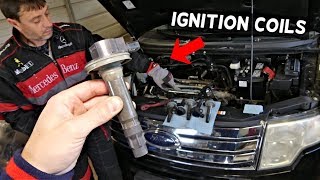
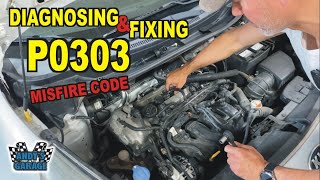
How to confirm: The most effective diagnostic is to swap 🎬 Watch: Step-by-step guide to diagnosing and fixing a P0303 code. the cylinder #3 ignition coil with another cylinder's coil (e.g., cylinder #4 on the accessible front bank). Clear the codes and drive the vehicle. If the code changes to P0304, the ignition coil is confirmed to be faulty. This requires removing the upper intake manifold.
Typical fix: Replace the faulty ignition coil. Since accessing the rear bank is labor-intensive, many owners and mechanics choose to replace all three rear coils and all six spark plugs at the same time to avoid future failures and duplicate labor.
Est. part cost: $30-$70 per coil - Worn or Fouled Spark Plug 🔴 High Probability Spark plugs have a finite service life, typically 60,000 to 100,000 miles. As the electrodes wear, the gap increases, requiring more voltage to create a spark. They can also become fouled with carbon, oil, or fuel, preventing a proper spark. In some instances, a physical failure can occur; for example, NHTSA ODI #11616179 describes a technician finding a cracked spark plug in the 3rd cylinder.
How to confirm: After removing the intake manifold and ignition coil, remove the spark plug from cylinder #3. Inspect it for wear (worn electrodes), carbon tracking (a black line down the ceramic), oil, or fuel fouling. A worn plug gap can cause a misfire under load.
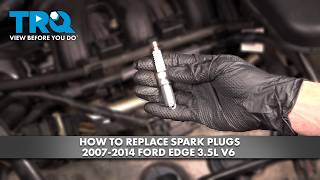
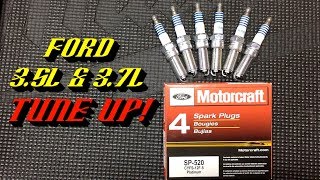
Typical fix: Replace the spark plug. It is best practice to replace all six spark plugs at once to ensure even performance and avoid repeating the intake manifold removal. Using the correct Motorcraft plugs is highly recommended. 🎬 Watch: How to replace spark plugs on 2007-2014 Ford Edge models.
Est. part cost: $8-$25 per plug - Faulty Fuel Injector 🟡 Medium Probability Injectors can become clogged with fuel deposits over time or fail electrically, preventing the correct amount of fuel from being delivered to cylinder #3. This can sometimes trigger a P0203 (Injector Circuit/Open - Cylinder 3) code alongside the P0303.
How to confirm: After ruling out the ignition system, a fuel injector is the next suspect. This can be tested by listening for the injector's 'click' with a mechanic's stethoscope, checking for electrical signal with a 'noid' light, or swapping it with another injector to see if the misfire follows. Fuel trim data can also point to a faulty injector.
Typical fix: Replace the faulty fuel injector. This also requires the removal of the intake manifold and fuel rail. It is often recommended to replace all injectors on the affected bank if they are original and high-mileage.
Est. part cost: $50-$120 per injector
Rare But Worth Checking
- Intake Manifold Gasket Leak: A leak in the upper or lower intake manifold gasket specific to the runner for cylinder #3 can cause a lean misfire. When the intake manifold is removed for service, the gaskets should always be replaced as they are considered a single-use part to prevent vacuum leaks.
- Low Engine Compression / Internal Coolant Leak: Mechanical engine issues like a burnt valve or worn piston rings can cause a loss of compression. Additionally, NHTSA ODI #11548978 reports a case where air pockets were found in the coolant and a subsequent test confirmed coolant was entering cylinder #3, resulting in a P0303 code. Similarly, NHTSA ODI #11653051 describes a technician using a camera to confirm coolant was leaking into the engine after the code appeared.
- Faulty Purge Valve: A stuck-open EVAP purge valve can sometimes cause misfires, often affecting multiple cylinders or at random (P0300). While less likely to cause an isolated P0303, it's a known issue on these vehicles and worth considering if other diagnostics are inconclusive.
- PCM/Wiring Issue: In very rare cases, a fault in the Powertrain Control Module (PCM) or a damaged wire in the harness leading to the coil or injector for cylinder #3 could be the cause. This should be investigated last after all other possibilities are exhausted.
Diagnosis Steps

- Confirm the P0303 code using an OBD-II scanner. Note any other codes present, like P0203 or P0316.
- Note the cylinder layout: Bank 1 (rear, by firewall) is 1-2-3 (passenger to driver); Bank 2 (front, by radiator) is 4-5-6. Cylinder #3 is on the rear bank, driver's side.
- Due to the location of cylinder #3, the upper intake manifold must be removed to access the ignition components. This involves disconnecting the air intake, various hoses (PCV, brake booster), and electrical connectors.
- Once the intake is removed, swap the ignition coil from cylinder #3 with one from the front bank (e.g., cylinder #4). This is the most definitive test for a bad coil.
- While access is available, inspect the spark plug well for any oil or coolant contamination, which would indicate other issues like a leaking valve cover gasket.
- Reassemble the intake manifold (using new gaskets is highly recommended), clear the codes, and start the engine. Let it run until the Check Engine Light returns.
- Scan for codes again. If the code has moved to P0304, the ignition coil is the faulty part. Replace the bad coil.
- If the code remains P0303, the issue is likely the spark plug or fuel injector. Disassemble again. It is highly advisable to replace all six spark plugs at this stage due to the labor involved. Use Motorcraft plugs for best results.
- If the problem persists after coil and plug replacement, the fuel injector for cylinder #3 should be tested (using a noid light) and likely replaced.
- If ignition and fuel components are confirmed good, perform a relative or mechanical compression test on cylinder #3 to check for mechanical engine problems like a bad valve or piston ring issue.
Parts You'll Likely Need

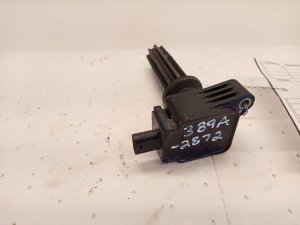
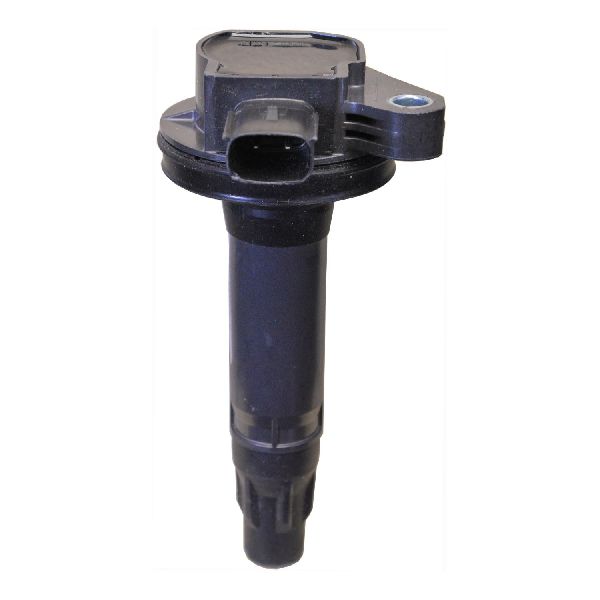
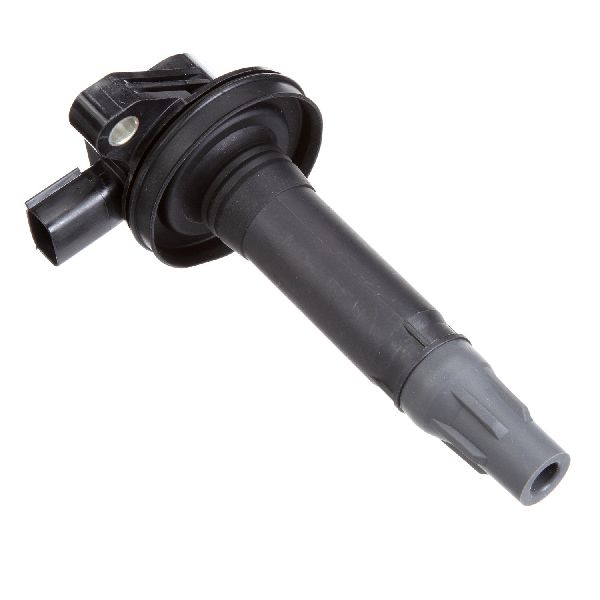
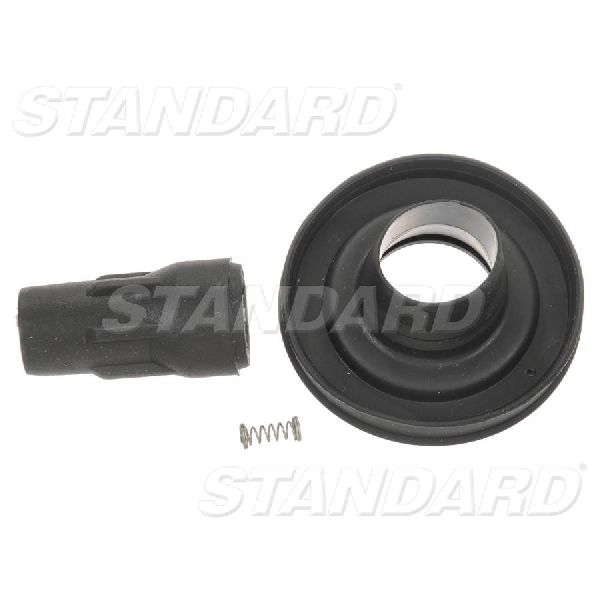
- Ignition Coil
(OEM #7T4Z-12029-E (Motorcraft DG525))— This is the most frequent cause of a single-cylinder misfire on this engine.
Trusted brands: Motorcraft, Denso, NGK
OEM price range: $60-$90
Aftermarket price range: $30-$60 - Spark Plug
(OEM #SP-589 (CYFS-12Y-T6))— Spark plugs are a routine maintenance item and a common cause of misfires as they wear out. The original SP-520 was superseded by SP-589.
Trusted brands: Motorcraft, NGK, Bosch
OEM price range: $10-$15
Aftermarket price range: $8-$12 - Upper and Lower Intake Manifold Gaskets
(OEM #8L3Z-9E436-A (Upper), 7T4Z-9439-A (Lower))— These must be replaced anytime the intake manifold is removed to prevent vacuum leaks. They are single-use and crucial for a proper seal.
Related Codes That Often Appear With This One
- P0300 — If the misfire is intermittent or beginning to affect other cylinders, a P0300 (Random/Multiple Cylinder Misfire) code may appear alongside P0303.
- P0420 — A long-term misfire can lead to a P0420 (Catalyst System Efficiency Below Threshold) code, as unburned fuel from cylinder #3 damages the catalytic converter for Bank 1.
- P0203 — This code for 'Injector Circuit/Open - Cylinder 3' points directly to a problem with the fuel injector or its wiring for cylinder #3, and is often seen with a P0303 if the injector is the root cause.
- P0316 — Misfire Detected on Startup (First 1000 Revolutions). This code often accompanies a specific cylinder misfire code and indicates the fault is present from the moment the engine is started.
Technical Service Bulletins (TSBs) & Recalls
- While no TSB is specific to a P0303 on the naturally aspirated 3.5L Edge, several TSBs exist for misfires on related 3.5L EcoBoost engines under certain conditions (e.g., TSB 13-3-3 for humidity-related misfires on F-150s), highlighting Ford's ongoing attention to ignition and fuel delivery on the broader engine family.
- Manufacturer service bulletin TSB 22-2229 and TSB 19-2208 have been cited by owners in NHTSA reports (ODI #11548978 and #11472683) regarding coolant leaking into the engine, which can manifest as a P0303 code and may ultimately require engine replacement.
Platform-Specific Known Issues
- Intake Manifold Removal is Non-Negotiable: Unlike many other vehicles where all cylinders are accessible, the transverse mounting of the 3.5L V6 places cylinders 1, 2, and 3 directly against the firewall. Any service on these cylinders' plugs, coils, or injectors requires the complete removal of the upper intake manifold, adding significant labor time and complexity to the repair.
- Cylinder Numbering Confusion: Owners can be confused by cylinder numbering vs. firing order. For diagnostic trouble codes, the cylinders are numbered sequentially. Bank 1 (rear/firewall) contains cylinders 1, 2, and 3 from passenger side to driver side. Bank 2 (front/radiator) contains 4, 5, and 6 from passenger to driver. P0303 always refers to the rearmost cylinder on the driver's side.
Mechanic-Grade Diagnostic Values
- Fuel Injector Resistance — expected: 11 - 15 Ohms. Failure: A reading of infinite resistance (open circuit) or near-zero (short circuit) indicates a failed injector.
- Ignition Coil Primary Resistance — expected: ~0.5 Ohms. Failure: A significant deviation from this value suggests a fault in the coil's primary winding.
- Ignition Coil Secondary Resistance — expected: ~5.95k Ohms. Failure: A significant deviation from this value suggests a fault in the coil's secondary winding.
- Fuel System Pressure (Engine Running) — expected: 400 kPa (58 psi). Failure: Low pressure indicates a weak fuel pump or clogged filter. High pressure is less common but could indicate a regulator issue (though the regulator is typically in-tank).
- Mode $06 Misfire Count — expected: A very low or zero count for cylinder 3 during a drive cycle.. Failure: A high or rapidly increasing count under Test ID $53 (TID $53) for the corresponding component ID confirms the PCM is detecting misfires, often before the CEL is triggered.
Hidden / Shadow Codes Worth Checking
- Mode $06, TID $53: This is not a DTC but raw data from the PCM's misfire monitor. It shows the number of misfire events counted per cylinder during a drive cycle. It can reveal intermittent misfires that haven't yet met the threshold to set a P0303 code. (see via Requires a professional-grade scan tool capable of viewing Mode $06 data.)
Scan Tool Commands That Help
- Ford IDS (Integrated Diagnostic System) or equivalent pro-level scanner: Power Balance Test / Cylinder Contribution Test — This bidirectional command allows a technician to disable fuel to each cylinder one by one while monitoring the drop in engine RPM. A cylinder that shows little or no RPM drop when disabled is the one that is not contributing, confirming the location of the misfire without disassembly.
Wiring & Ground Locations
- BCM (Body Control Module) — Part of the main fuse box located in the driver's side kick panel area.. The BCM is a central hub for many vehicle electronics and can be a source of various electrical signals and power distribution. A fault here, while rare, could affect systems related to engine management.
- PCM Connector C212 / C215 — At the Powertrain Control Module, typically located in the engine bay near the firewall.. These connectors contain the wiring for the ignition coils and fuel injectors. A visual inspection for corrosion or backed-out pins is a valid diagnostic step after checking the component-side connectors. A wiring diagram is needed to identify the specific pins for the cylinder 3 coil and injector.
Real Owner Repair Stories
- YouTube Diagnosis by 'Barber's Autohelp' and 'Craig's Car Care' (2007-2008 Ford Edge 3.5L) — Engine running very poorly, misfiring, overheating, no power, and eventually a cam/crank correlation code (P0016). Coolant was low and oil was overfilled and looked like a 'milkshake'.
❌ Tried (didn't work) Initial suspicion by other shops was a blown head gasket due to coolant in the oil.
✅ What actually fixed it The internal, timing-chain-driven water pump had failed. The bearing failure caused the pump to leak coolant directly into the crankcase (mixing with oil) and also caused enough slack/wobble in the timing chain to throw off cam/crank correlation, leading to misfires and timing codes. The fix was a full timing job including a new water pump, timing chains, and tensioners. - NHTSA ODI #11670214 — An owner reported a persistent P0303 code and rough idle even after a tune-up at 48.2K miles.
✅ What actually fixed it The repair involved replacing the spark plugs, air filter, and the cylinder 3 ignition coil pack, along with using a fuel system cleaner. - NHTSA ODI #11472683 — An owner experienced a P0303 code and replaced the spark plug and coil, but the code returned.
❌ Tried (didn't work) Replacing the ignition coil and spark plug did not resolve the issue.
✅ What actually fixed it A dealership diagnosis determined that coolant was leaking into the engine, necessitating a full engine replacement.
"I Checked Everything" — The Actual Cause
- A common diagnostic path for misfires is a smoke test to find vacuum leaks. However, on the 3.5L Cyclone, a catastrophic failure of the internal water pump can cause misfires and timing codes. A smoke test would pass because the fault is not an air leak in the intake; it's a coolant leak into the engine's crankcase, which contaminates the oil and can cause the timing chain to jump.
OEM Part Supersession History
SP-520 (CYFS-12F-5)→SP-589 (CYFS-12Y-T6)— Updated design/materials for improved performance and longevity.
Heads up: The new part is a direct replacement for the old one. Using the older SP-520 is not recommended if the updated SP-589 is available.
Model Year Variations Within This Range
- 2007 vs 2008-2014: The 2007 model year features a Schrader valve (test port) on the fuel rail for easily checking fuel pressure. This port was removed for the 2008 model year and onwards, which requires a special T-adapter to be installed in the fuel line for pressure testing.
- 2007-2010 vs 2011-2014: The 2011-2014 engines were upgraded to Twin Independent Variable Camshaft Timing (Ti-VCT), controlling both intake and exhaust cams. This increased horsepower from 265 to 285. The 2007-2010 engines only have VCT on the intake cams. This difference is important when diagnosing timing-related misfires, as the 2011+ models have more complex VCT systems (more solenoids and phasers) that can be potential failure points.
Diagnostic Flowchart
Other Known Issues on This Vehicle
Issues unrelated to this code that are worth knowing about as an owner of this generation:
- Internal Water Pump Failure 🔴 High — Common after 80,000-120,000 miles. A wear item that is extremely labor-intensive to replace.
- AWD Power Transfer Unit (PTU) Failure 🔴 High — Common on AWD models, can occur as early as 50,000 miles.
- Persistent 'Door Ajar' Light 🟡 Low — Very common, especially on 2011-2013 models. NHTSA investigated over 1,500 complaints. (Ref: TSB 14-0011)
- Brake Booster Diaphragm Tear 🟠 Medium — Common on 2007-2015 models. (Ref: Warranty Extension Program (13N02))
- Timing Chain Wear/Stretch 🟠 Medium — Can occur in higher mileage vehicles, often manifesting as rattling noises or engine performance issues.
Used vs. New Parts: Buying Guide for This Vehicle
When a used part is the smart pick: For this repair, used parts are generally not recommended due to the high labor cost of access. However, if the intake manifold itself is damaged during removal, a used manifold from a reputable salvage yard is a viable option.
Donor-vehicle mileage cap: roughly under 80000 miles for the part to have meaningful remaining life.
What to inspect on the donor part:
- For an intake manifold, ensure there are no visible cracks, especially around bolt holes and gasket surfaces.
- Check that all threaded inserts are intact and not stripped.
- Verify the donor vehicle did not suffer an engine fire or have signs of heavy sludge, indicating poor maintenance.
OEM-only on this vehicle (don't cheap out):
- Ignition Coils: Aftermarket coils, especially cheap online sets, are notorious for premature failure on this platform. Stick with Motorcraft (DG525) to avoid repeat repairs.
- Spark Plugs: Use the specified Motorcraft (SP-589) plugs. Incorrect heat ranges or plug designs can cause performance issues.
- Internal Water Pump: Given the catastrophic failure mode and immense labor to replace, using anything other than a new, high-quality OEM or OE-equivalent pump is extremely risky.
Aftermarket brands forum-validated for this vehicle:
- Denso (for ignition coils, as they are often the OE manufacturer)
- NGK (for ignition coils and spark plugs)
Brands owners have reported issues with on this vehicle:
- Unbranded, 'white-box' ignition coil sets sold on auction sites and large online marketplaces.
Real Owner Stories
Aggregated from forums and TSBs cited above. Mileages and costs reflect what owners reported in those sources.
Ford Edge 3.5L
Symptoms: The owner experienced both a misfire and an injector circuit code specifically for cylinder 3. They noted the high labor involved in accessing the rear bank.
What fixed it: The owner contemplated replacing all 6 injectors and all spark plugs simultaneously due to the intake manifold removal requirement.
Source hint: FordEdgeForum.com - 'P0203 & P0303 - 3.5L'
Ford Edge 3.5L
Symptoms: A user reported a P0303-C code and sought assistance regarding the specific cylinder layout and access requirements for the 3.5L engine.
What fixed it: The community confirmed the cylinder numbering (1-2-3 on the firewall) and the necessity of accessing the rear bank to resolve the misfire.
Source hint: FordEdgeForum.com - 'P0303-C assistance - 3.5L'
Ford Edge 3.5L
Symptoms: An owner reported misfiring during acceleration and a P0303 code (NHTSA ODI #11616179).
What fixed it: A mechanic discovered a cracked spark plug in the 3rd cylinder. The owner directed the replacement of all spark plugs to resolve the issue.
Related OBD-II Codes
Frequently Asked Questions
Where is cylinder #3 located on my 2007-2014 Ford Edge 3.5L?
Can I replace the cylinder #3 spark plug without removing the intake manifold?
Which spark plugs should I use for my Ford Edge to prevent P0303 from returning?
Is there a TSB for misfires on the naturally aspirated 3.5L Edge?
Should I replace all the coils if only cylinder #3 is misfiring?
Could my P0303 code be related to the internal water pump issue?
Helpful Videos
Used OEM Parts in Stock



New Aftermarket Parts Available


The information in this article is provided for general reference and educational purposes only. Vehicle specifications, procedures, and part compatibility can vary by production date, trim level, and region. Always consult your vehicle's factory service manual and verify part numbers before purchasing or performing repairs. Safety-critical components such as airbags, seat belts, and braking systems should be installed by a qualified professional.
- Ford Edge:
- 🎬 Helpful Videos
- 🛍️ Shop This Part
- What's Unique About the 2007-2014 Ford Edge
- Symptoms You May Notice
- Most Likely Causes
- Rare But Worth Checking
- Diagnosis Steps
- Parts You'll Likely Need
- Related Codes That Often Appear With This One
- Technical Service Bulletins (TSBs) & Recalls
- Platform-Specific Known Issues
- Mechanic-Grade Diagnostic Values
- Hidden / Shadow Codes Worth Checking
- Scan Tool Commands That Help
- Wiring & Ground Locations
- Real Owner Repair Stories
- "I Checked Everything" — The Actual Cause
- OEM Part Supersession History
- Model Year Variations Within This Range
- Diagnostic Flowchart
- Other Known Issues on This Vehicle
- Used vs. New Parts: Buying Guide for This Vehicle
- Real Owner Stories
- Ford Edge 3.5L
- Ford Edge 3.5L
- Ford Edge 3.5L
- Related OBD-II Codes
- Frequently Asked Questions
- 🎟️ Get 5% Off